

 English
 Español
 日本語
日本語Sliding doors have quietly revolutionized the way we think about space, light, and movement in buildings. Among all the options available, top hung sliding doors remain the preferred choice when you want clean floors, silent operation, and the ability to handle very large or very heavy panels. At the center of every successful top hung system are the rollers — small, often overlooked components that carry the entire performance burden. Choose wisely and the door will feel almost weightless for decades; choose poorly and you'll fight sticking, squeaking, and eventual failure. This article walks you through every practical consideration you need to make an informed, project-specific decision.
Understanding Top Hung Sliding Door Systems
In a top hung system the door panel is literally hung from an overhead track, with no load-bearing wheel or guide on the floor. All the weight and movement forces are transferred through the rollers into the structural header above. This design keeps the floor threshold completely free (ideal for wheelchair access, easy cleaning, and minimalist aesthetics) and prevents the track from filling with dirt, leaves, or water.
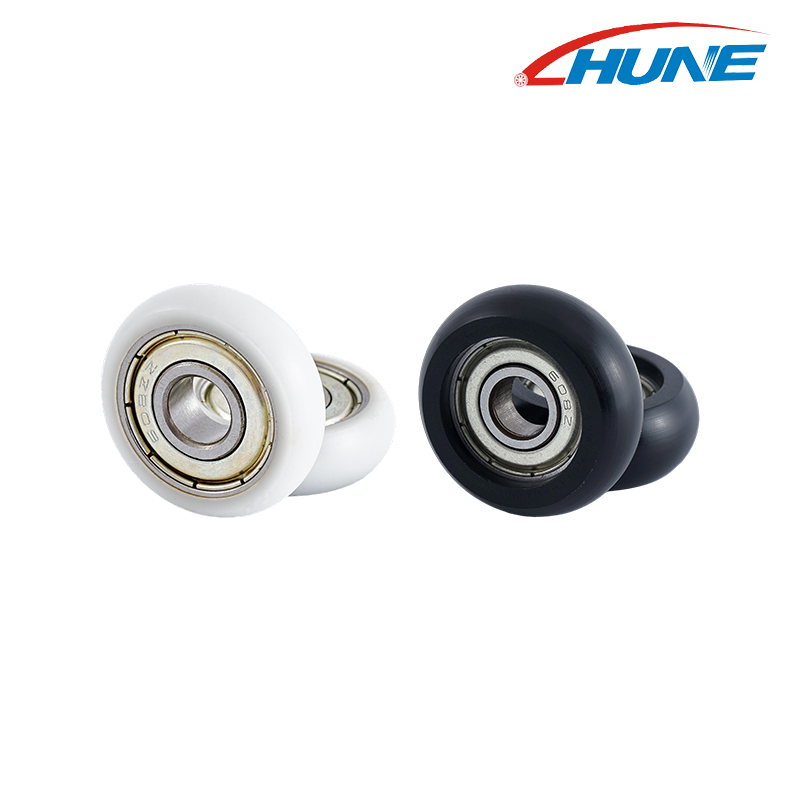
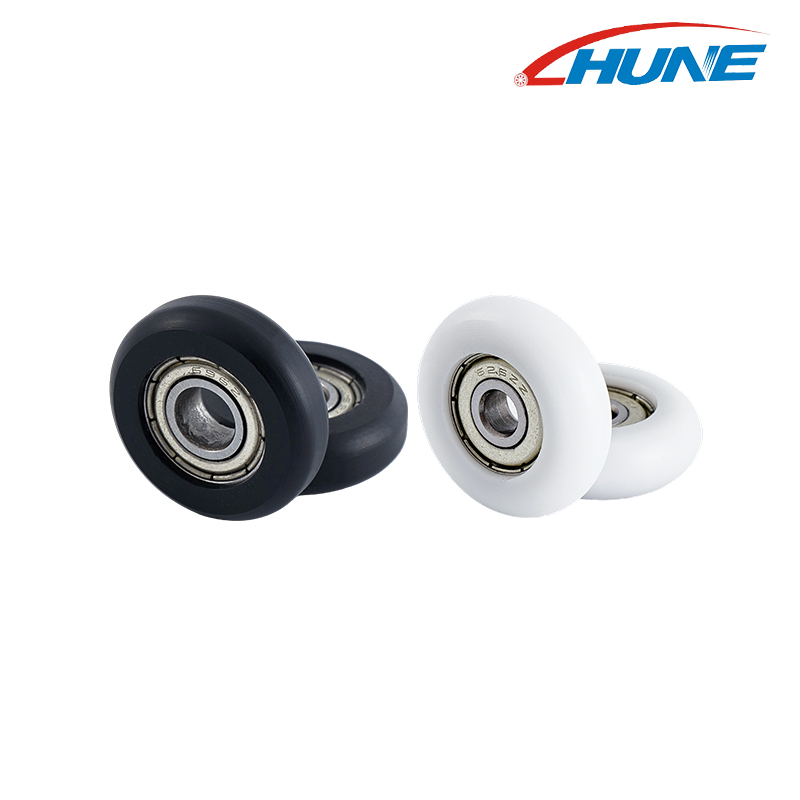
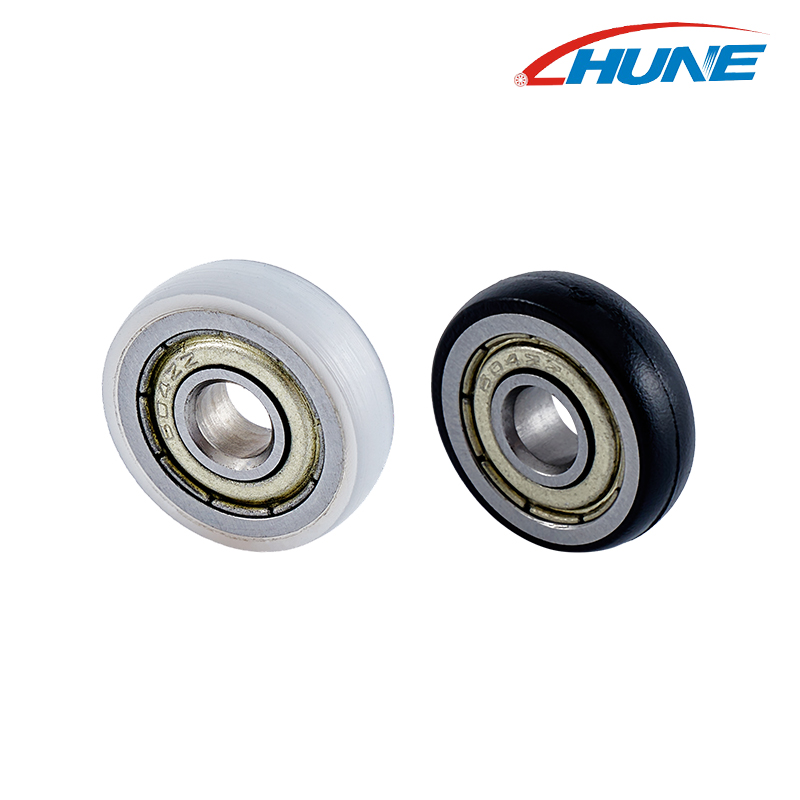
Typical applications include residential patio doors, internal room dividers, commercial shopfronts, barn-style feature doors, wardrobe systems, and even industrial sliding partitions weighing several hundred pounds per panel. The rollers themselves consist of one or more wheels mounted in a carriage that is screwed or bolted to the top edge of the door. The wheels run inside a purpose-designed aluminum or steel track that is fixed to the soffit or a reinforced lintel.
Because the entire system relies on only two roller assemblies, there is no room for compromise on quality or suitability.
Key Factors to Consider When Selecting Top Hung Sliding Door Rollers
1. Weight Capacity and Load Distribution
Never trust a roller rated exactly to the weight of your door. Always allow a generous safety margin.
- Light residential interior doors: 150–200 lb rated rollers are ample.
- Standard glass patio doors: choose 300–400 lb rated rollers.
- Large frameless glass or heavy timber doors: insist on 600–1,000 lb rated tandem or quadruple roller sets.
Multiple-wheel carriages spread the load over a larger area of track and reduce point loading, dramatically extending service life. They also handle minor track imperfections far better than single-wheel designs.
2. Material and Durability
Wheel material must match both the environment and the track material:
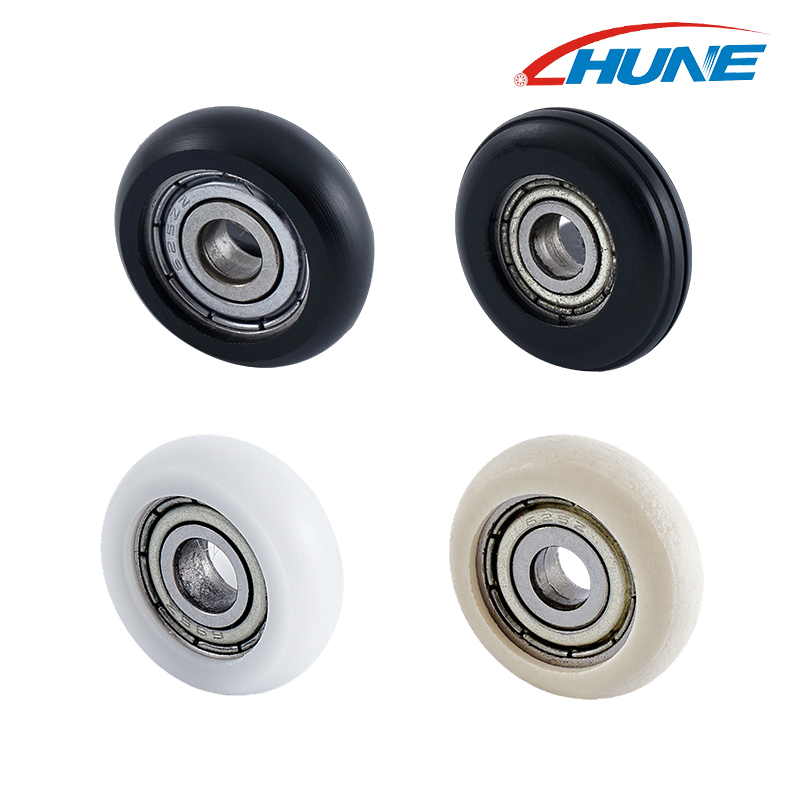
- Precision-molded nylon or acetal: quiet, low-cost, perfect for interior wardrobe or light office doors on clean aluminum track.
- Thermoplastic polyurethane (PU): excellent shock absorption, good chemical resistance, slightly grippy — ideal for exterior doors or slightly uneven tracks.
- 304 or 316 stainless steel wheels with stainless axles and sealed stainless bearings: the only sensible choice for coastal, high-salt areas, swimming pool enclosures, or food-processing facilities.
- Hard-anodized aluminum wheels with stainless bearings: a premium indoor/outdoor compromise when absolute silence is required.
The carriage body should be die-cast zinc, stainless steel, or heavy-gauge galvanized steel — never mild steel or thin pressed tin.
3. Track Compatibility and Design
The roller and track form a matched pair. Common track profiles include:
- Single-channel straight track (most common)
- Double or triple track for bypass or pocket doors
- Curved or radius track for architectural features
- Soft-close or self-closing integrated track systems
Wheel diameter, axle offset, and hanger bolt pattern must correspond exactly to the track you have chosen. A 1 mm mismatch in groove width can cause binding or premature track wear.
Look for anti-lift or anti-derailment tabs on the carriage — essential for exterior doors subject to wind pressure.
4. Bearing Type and Smoothness of Operation
- Plain bronze or polymer bushings: acceptable only for very light, low-frequency doors.
- Sealed precision ball bearings: the industry standard for residential and light commercial use.
- Double-row or angular-contact bearings: used in heavy commercial and industrial rollers for extreme side loads.
- Needle-roller bearings: found in the very highest capacity units.
A good roller with sealed stainless ball bearings will have a starting resistance of less than 2–3 lb of push force on a 400 lb door — the panel should move with one finger.
5. Environmental and Installation Considerations
- Salt spray zones → 316 stainless everything, no exceptions.
- Temperature extremes → check that grease remains effective from –30 °C to +80 °C.
- Dusty or fibrous environments → fully sealed bearings and dust shields.
- Height adjustment range → most quality rollers offer ±10–15 mm vertical adjustment to allow perfect alignment after the track is installed.
- Ease of removal → quick-release hanger plates save hours when a panel needs to be taken down for cleaning or re-glazing.
Key Factors to Consider When Selecting Top Hung Sliding Door Rollers
|
Key Factor |
Considerations |
|
Weight Capacity & Load Distribution |
Choose rollers with a safety margin above door weight. Use multi-wheel carriages to spread load and extend service life. |
|
Material & Durability |
Select wheel and carriage materials suited to environment: nylon/PU for light interior, stainless steel for coastal/exterior, heavy-gauge metals for durability. |
|
Track Compatibility & Design |
Match roller to track type and profile. Ensure correct wheel diameter, axle offset, and hanger pattern. Anti-lift tabs recommended for exterior doors. |
|
Bearing Type & Smoothness |
Sealed precision ball bearings standard for smooth operation. Heavy-duty rollers may use double-row or needle bearings. Low push force indicates quality. |
|
Environmental & Installation Factors |
Consider corrosion, temperature, dust, and adjustability. Quick-release hangers simplify maintenance and panel removal. |
Step-by-Step Guide to Selecting and Installing Rollers
- Weigh the complete door panel (glass + frame + handles + locks) on a bathroom scale or crane scale.
- Decide on track type and obtain its exact technical drawing.
- Add your safety margin and environmental requirements to create a shortlist of 3–4 roller models.
- Request physical samples and test them in a short length of your actual track.
- Install the track perfectly level and straight.
- Attach rollers to the door using the correct screws or bolts for the material.
- Hang the door and adjust height so the bottom gap is uniform and the panel hangs plumb.
- Apply a light coat of silicone spray or dry PTFE lubricant to the track — never WD-40 or oil.
Common Pitfalls and How to Avoid Them
- Using interior rollers outside → corrosion within months.
- Mixing roller brands on the same door → different wheel diameters cause binding.
- Installing the track out of level → one roller carries almost the entire load.
- Forgetting wind load on large exterior panels → rollers without anti-lift devices allow the door to blow off the track.
- Choosing concealed "invisible" rollers for doors over 200 lb → they simply aren't strong enough.
The perfect top hung sliding door roller is the one you never have to think about again. By carefully matching load capacity, material specification, bearing quality, and track compatibility to your exact project conditions, you create a system that will deliver silent, effortless operation for decades. The small initial investment in premium rollers always pays for itself many times over in avoided repairs, replacements, and frustration.
Take the time to get it right once, and your sliding doors will reward you with flawless performance day after day, year after year.