


 English
 Español
 日本語
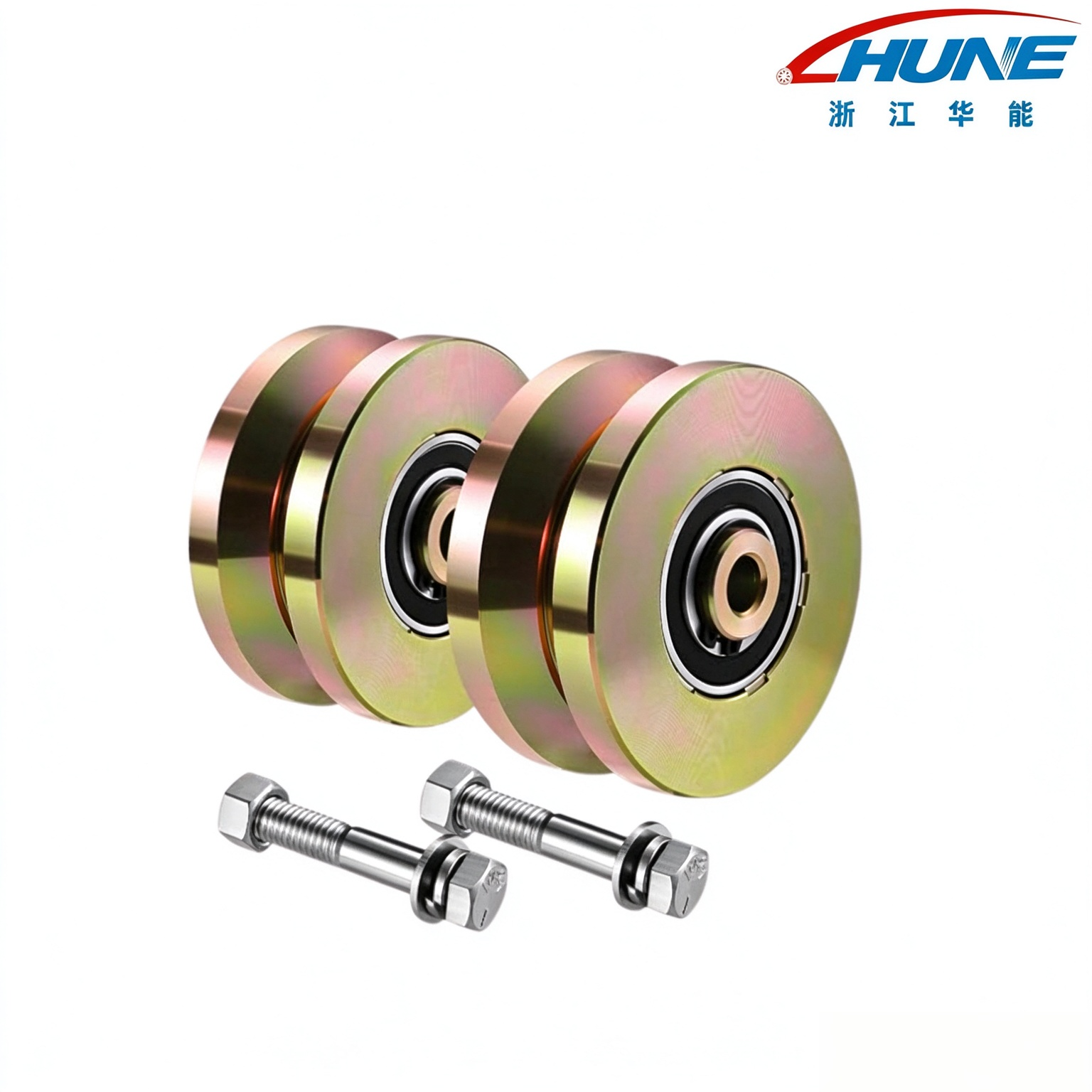
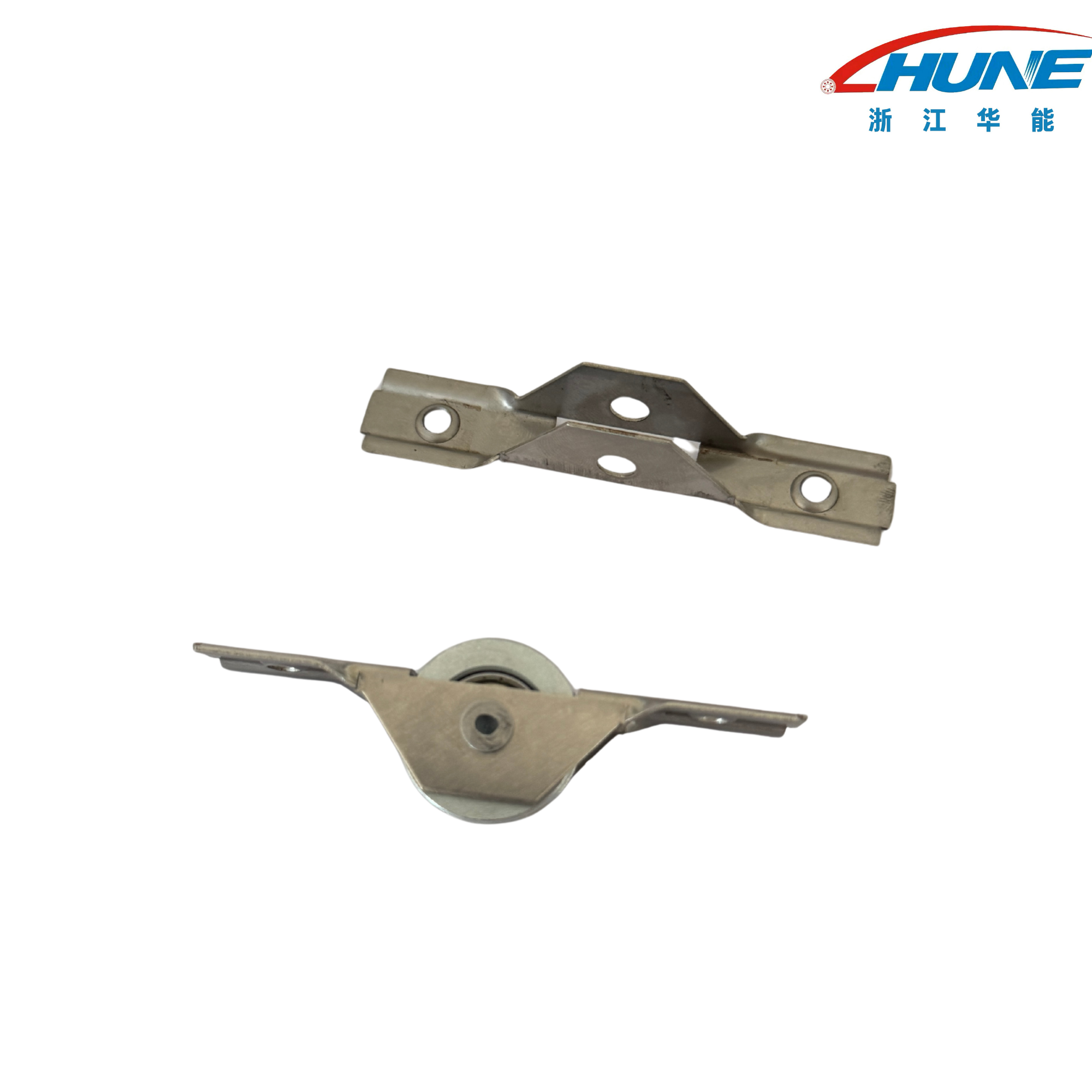
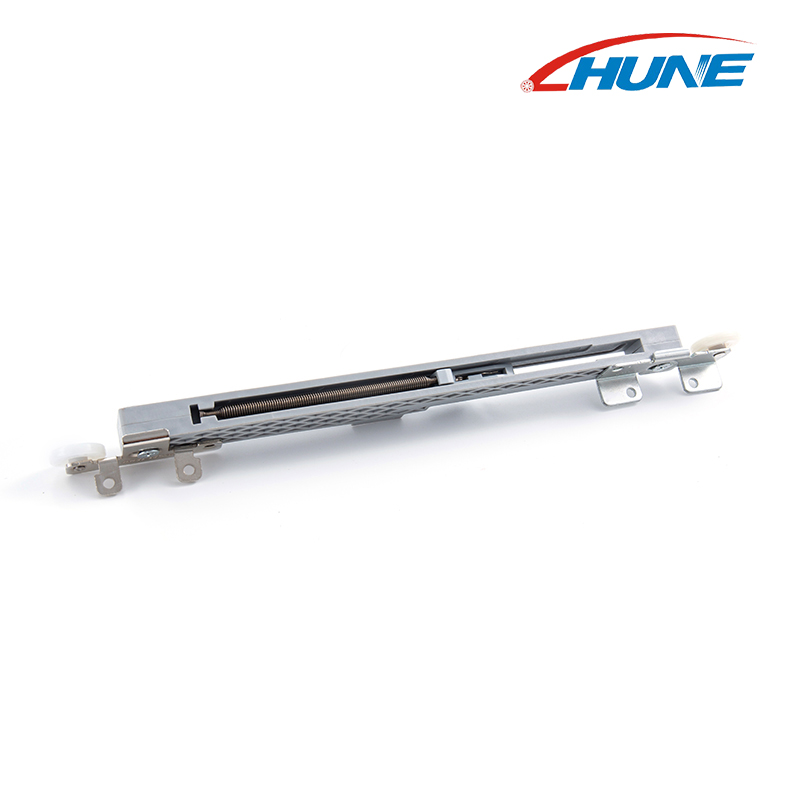
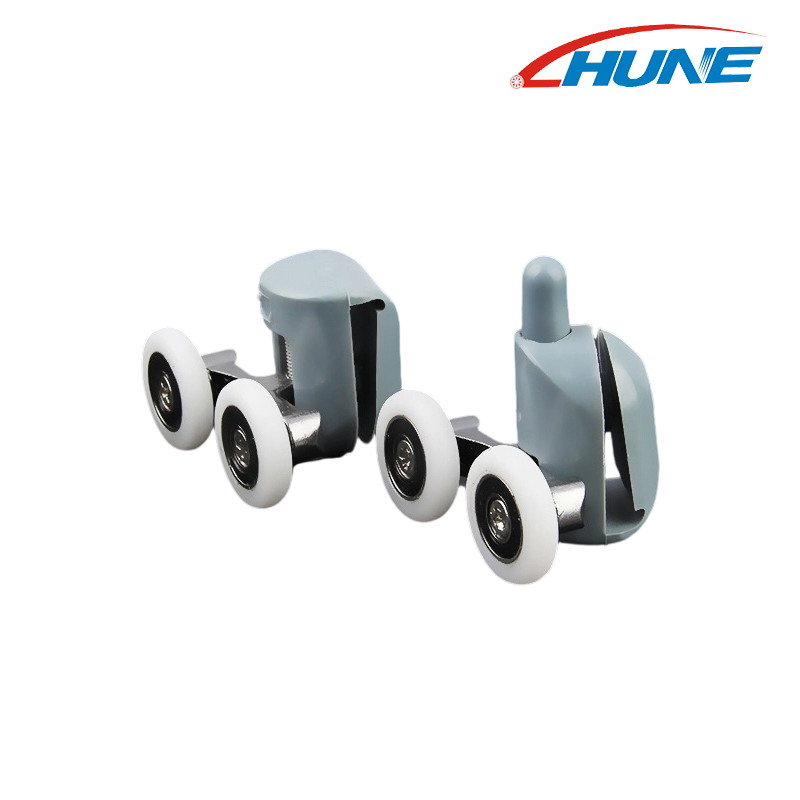
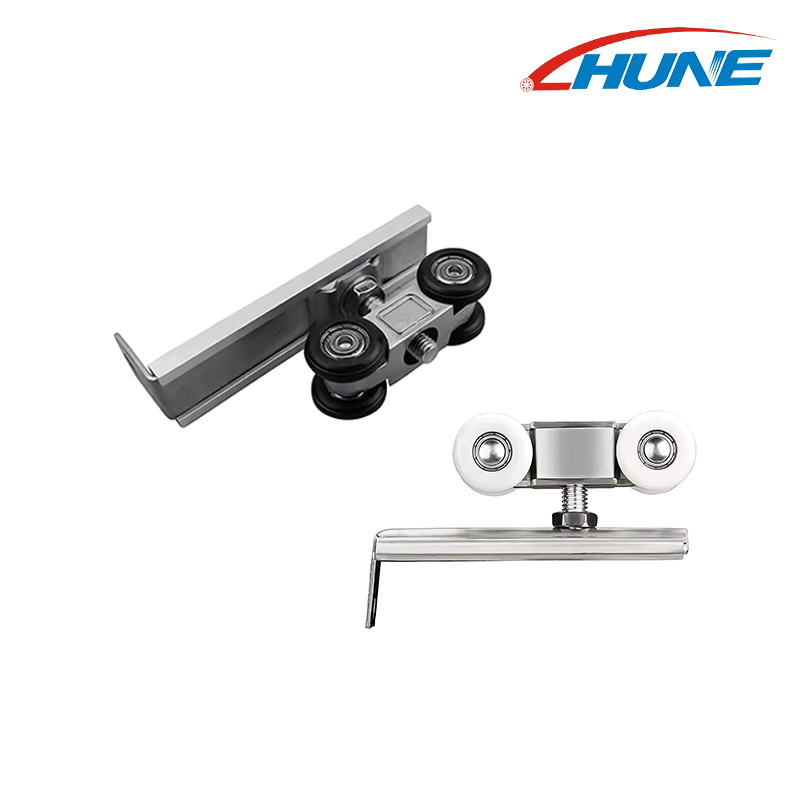
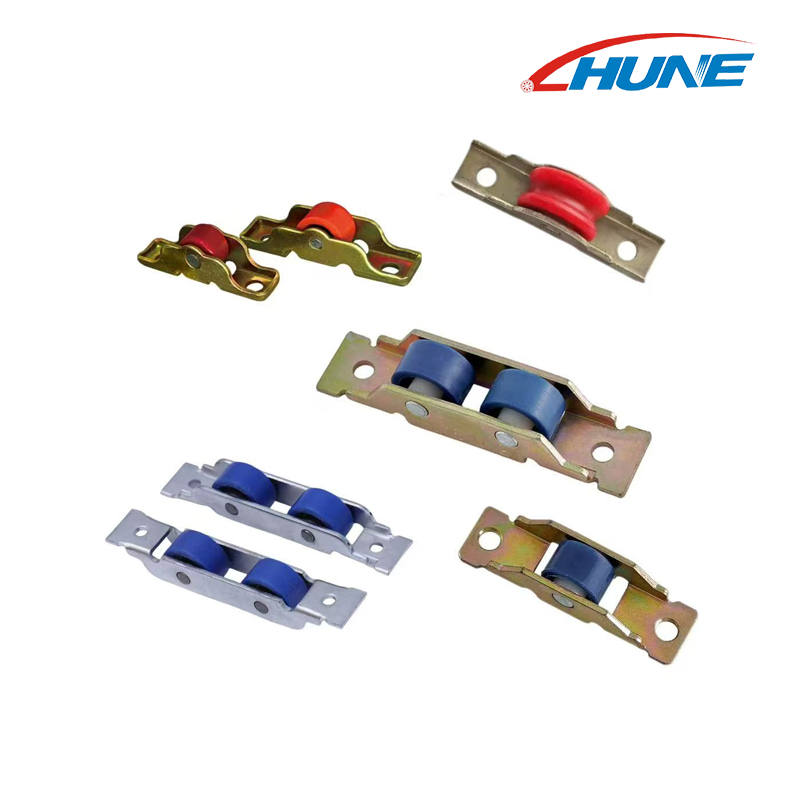
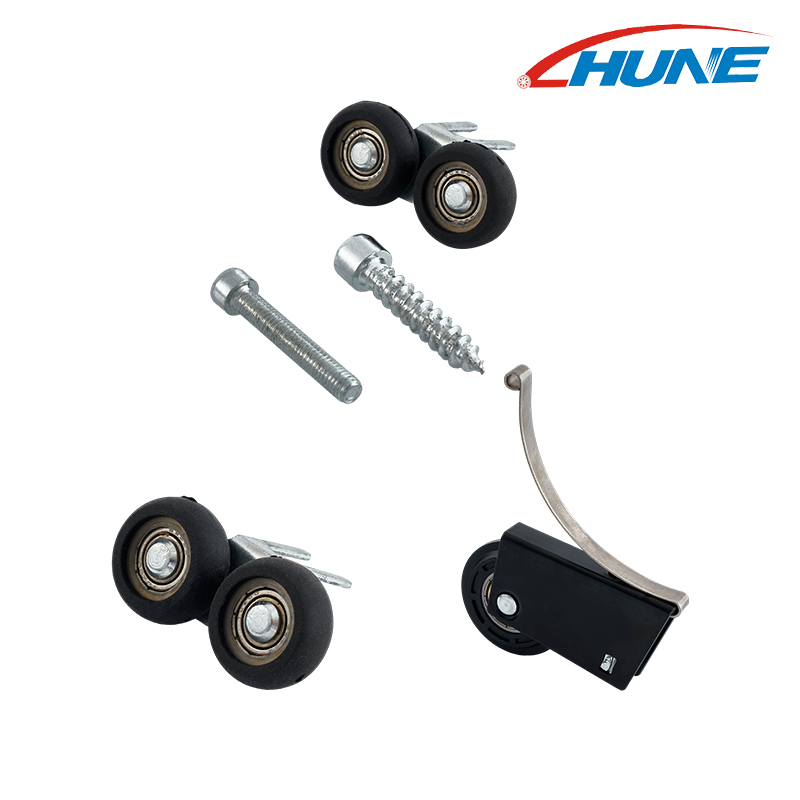
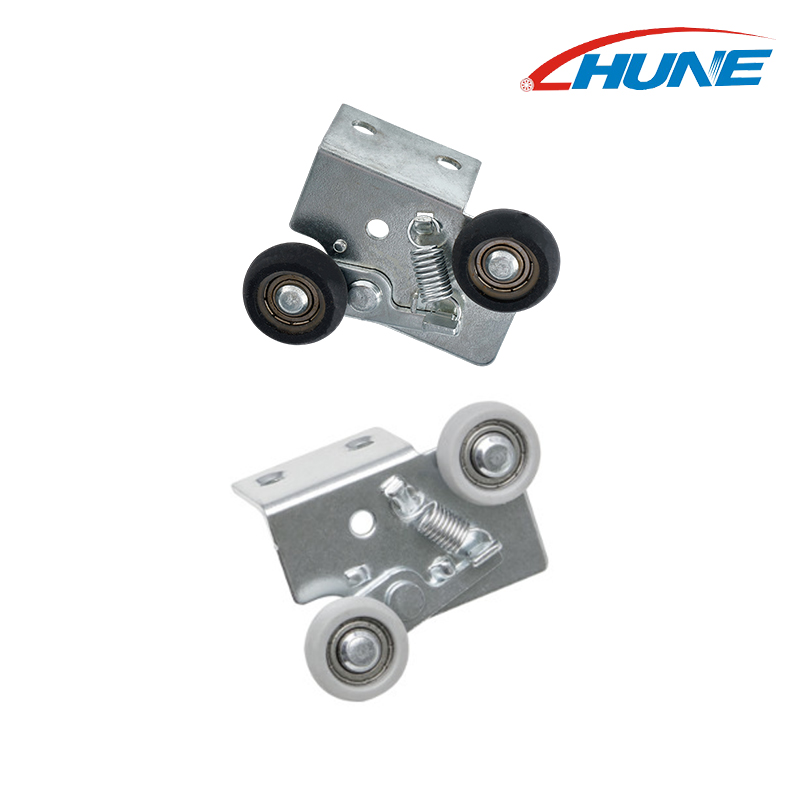
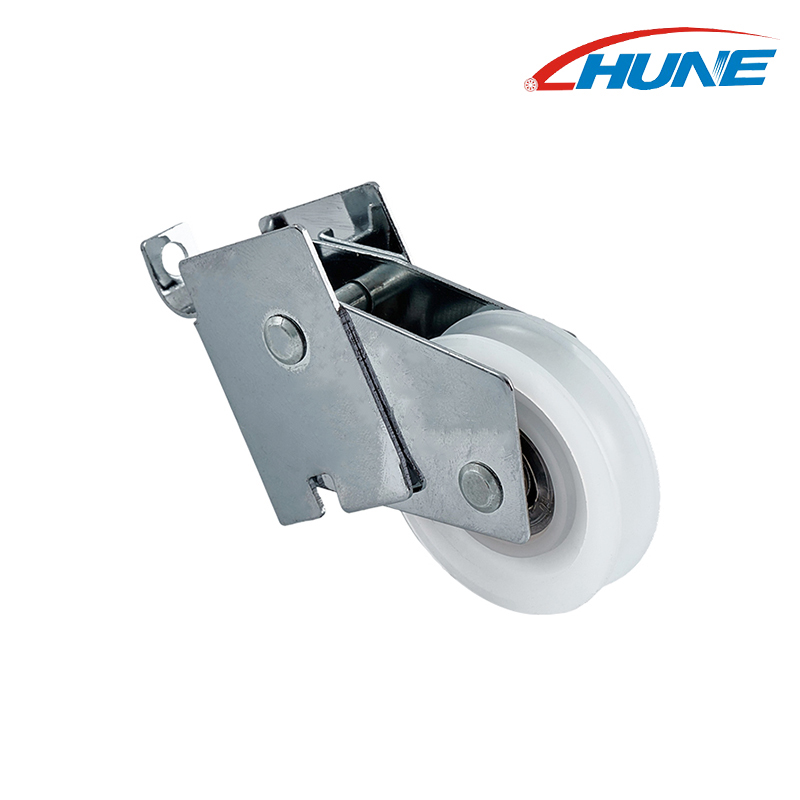
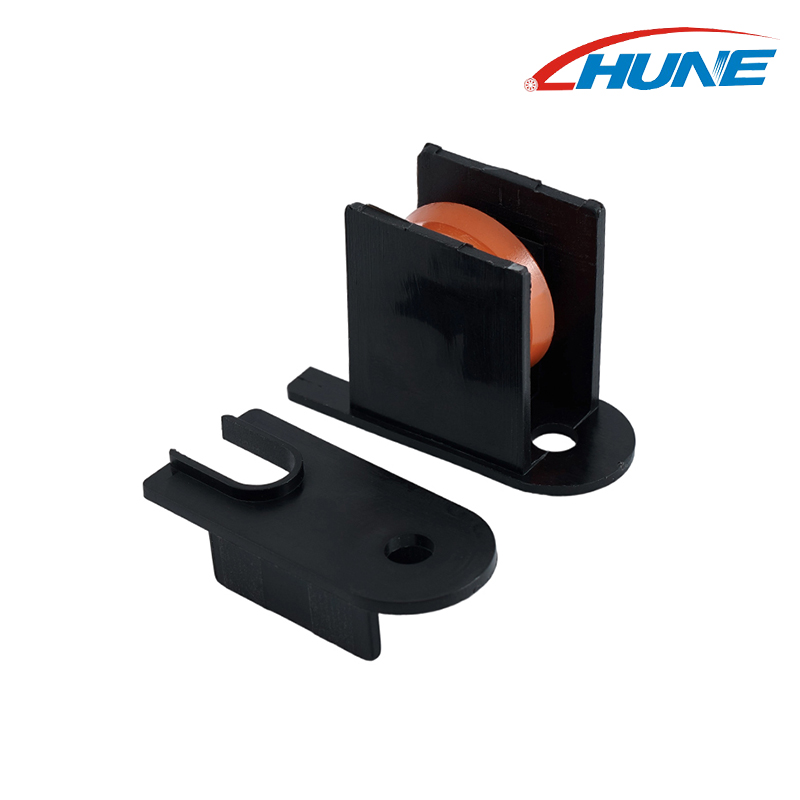
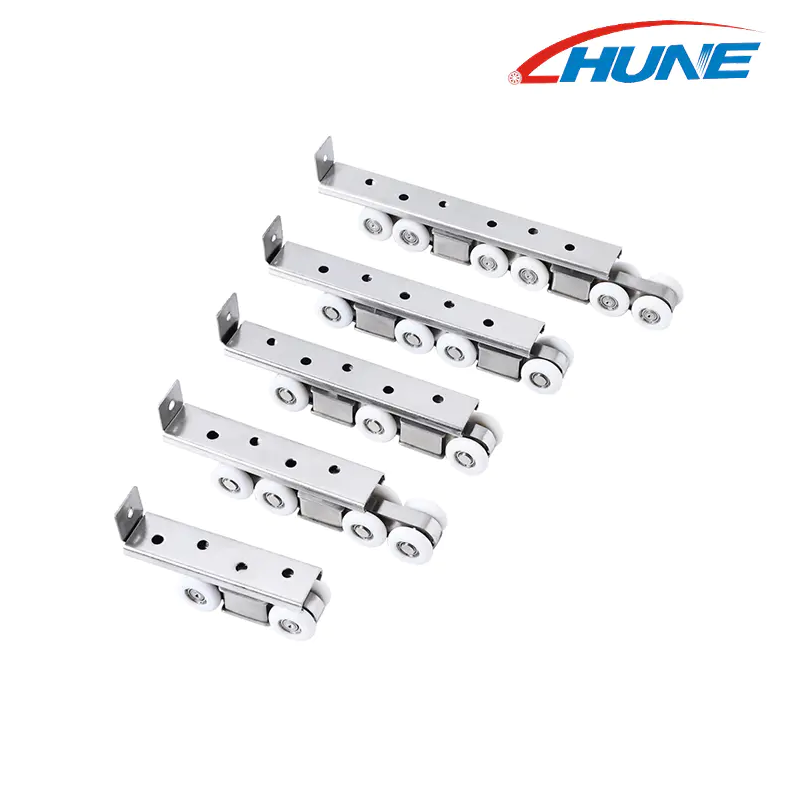
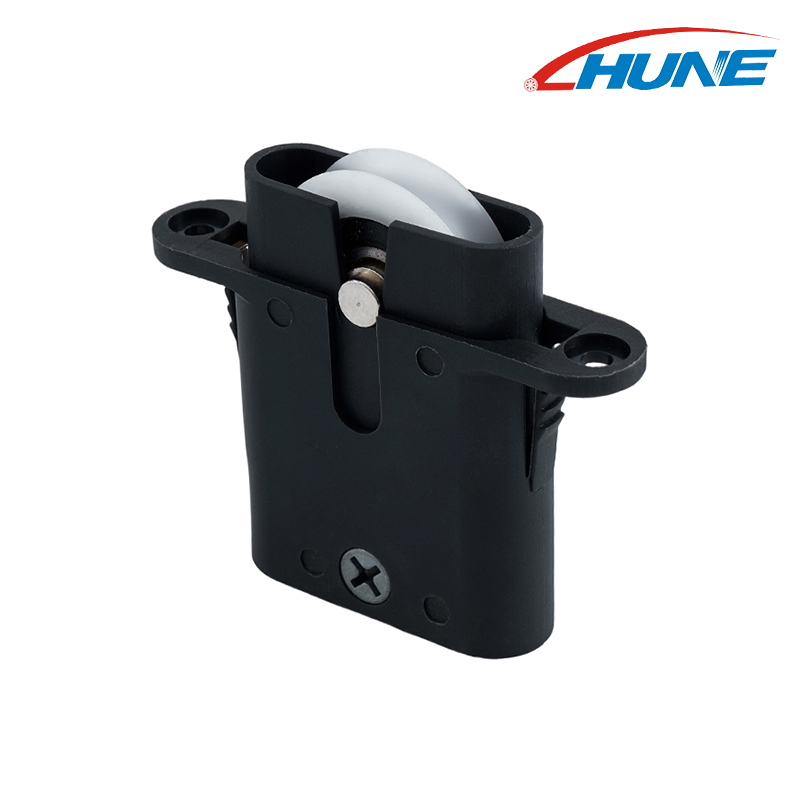
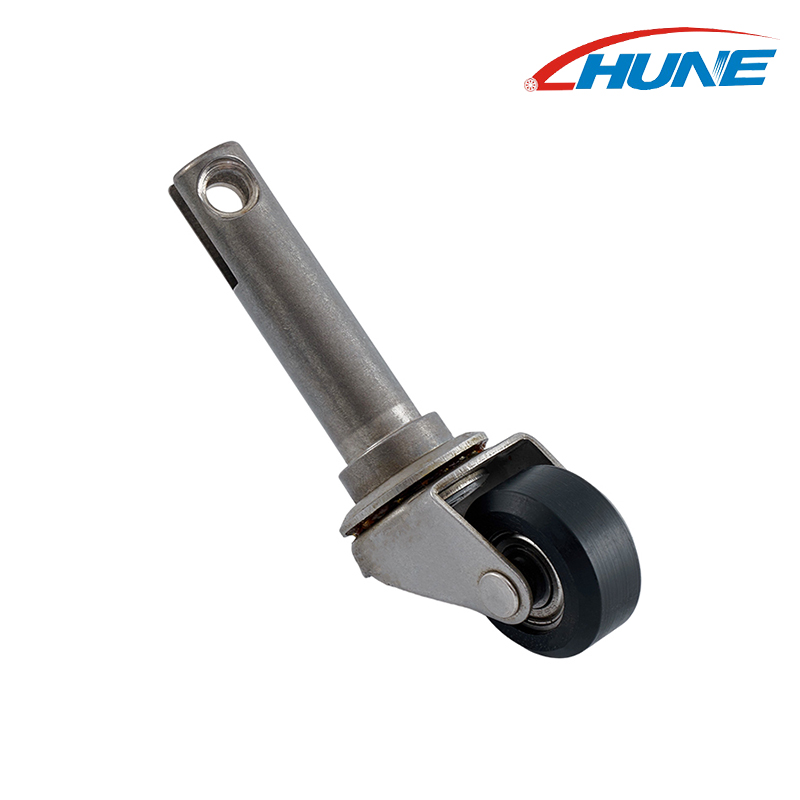




Hune Door & Window Roller Hardware for Different Sliding Systems
A sliding door can look simple from the outside. Behind the frame, however, a small roller assembly does much of the work: it carries the panel, follows the track, and helps the door move without dragging or rattling.
Door & Window Roller Hardware is used in sliding windows, sliding doors, shower glass doors, wardrobe sliding doors, cabinet sliding doors, furniture sliding panels, and larger panel sliding systems. The right assembly depends on more than panel weight. Track shape, installation space, exposure to moisture, and the amount of adjustment available all matter.
A typical assembly combines a housing, bracket, adjustment structure, shaft, bearing, and one or more roller wheels. Hune / Hunepulley / Zhejiang Huaneng Micro Bearing Co., Ltd. develops bearing-based roller hardware for these sliding applications, including standard designs and assemblies made to fit specific frames and tracks.
What Is Door & Window Roller Hardware?
Door & Window Roller Hardware refers to the wheel-based components that support and guide a sliding panel along a track. Depending on the system, the roller may carry the panel's weight, keep it aligned, or do both.
The category covers door roller hardware, window roller hardware, sliding door roller hardware, sliding window roller hardware, glass door roller hardware, shower door roller hardware, wardrobe door roller hardware, cabinet sliding door roller products, and furniture sliding door roller products. It also includes adjustable roller assembly, sliding door wheel assembly, and roller bracket assembly designs.
A complete assembly may contain a roller wheel, bearing, housing, bracket, adjustment screw, shaft or axle, mounting plate, fasteners, and a dust cover or sealing structure. Not every design needs every part. The essential job remains the same: support the panel and guide its movement with controlled friction.
How Door and Window Roller Hardware Works
As a panel moves, its roller wheel travels along the track. A bearing allows the wheel to rotate around the shaft, while the housing and bracket keep the assembly attached to the panel or frame. Where fitted, an adjustment structure changes the panel height to improve alignment.
These parts have to work as a system. A smooth bearing cannot compensate for a wheel that does not fit the rail. Likewise, a correctly shaped wheel may still run poorly if its bracket flexes or the panel sits at an angle. Good sliding performance starts with matching the roller, track, frame, and load.
Single Wheel, Double Wheel, and Tandem Designs
The number and arrangement of wheels depend on the available space and how the panel's weight must be supported.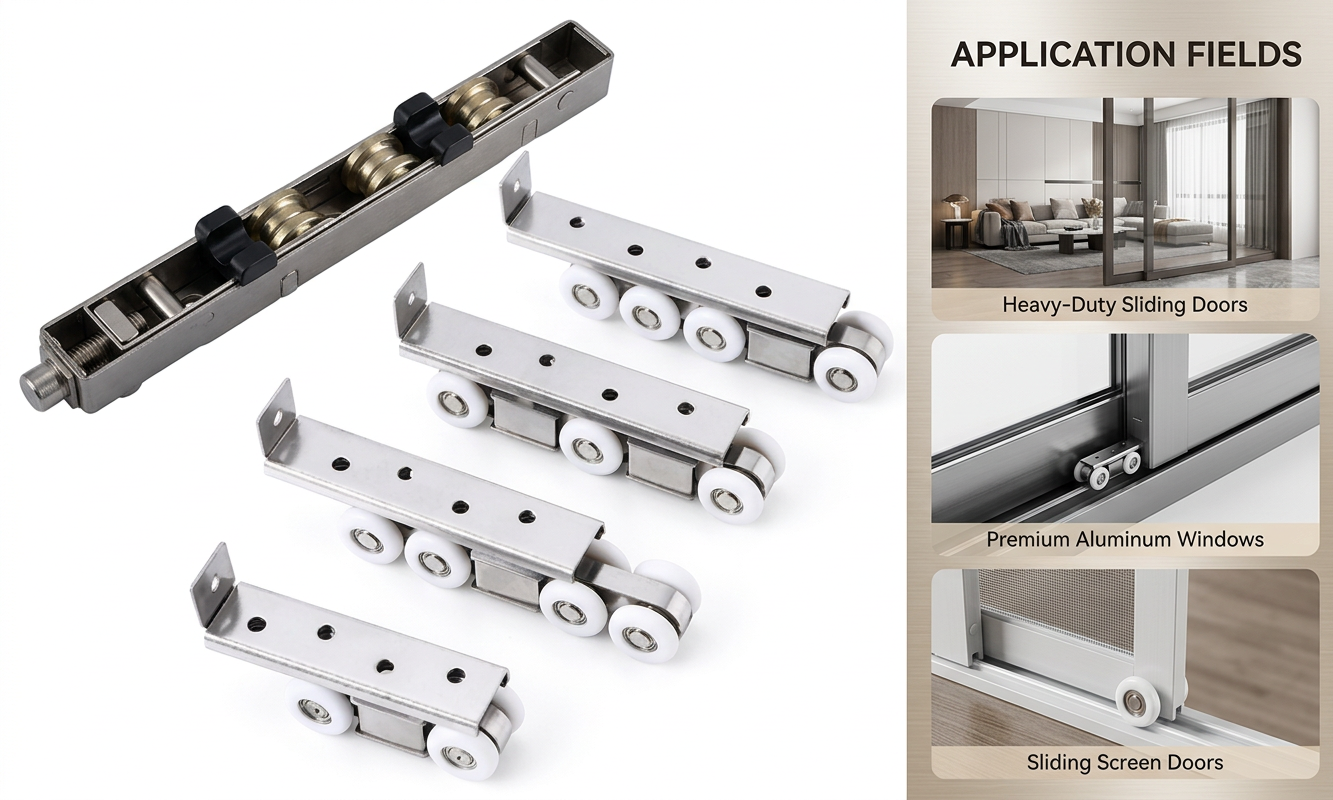
- Single wheel roller assembly: A compact option often used where space is limited or the panel is relatively light.
- Double wheel roller assembly: Uses two wheels to share the load and help the panel track steadily.
- Tandem roller assembly: Places multiple wheels in an arrangement suited to wider or heavier panels.
- Adjustable roller assembly: Adds a mechanism for correcting panel height after installation.
- Recessed roller assembly: Sits within a frame or channel when a concealed installation is required.
The appropriate design should be selected against the actual panel weight, track profile, frame geometry, and adjustment range—not wheel count alone.
Silent Sliding: Why Noise Reduction Starts Inside the Roller
A noisy sliding door does not always need a softer wheel. Noise can come from bearing play, a loose bracket, an uneven track, panel misalignment, or debris caught in the rail. Finding the source is more useful than changing one component at random.
Bearing Precision
The bearing influences how consistently the wheel turns under load. Rough rotation or excessive play may create vibration that becomes audible through the frame.
A suitable bearing fit can help limit rattling, uneven rotation, and premature wear. Because Hune works with bearings as well as roller assemblies, bearing selection can be considered alongside the wheel and mounting structure.
Wheel Material
Nylon and POM are common choices for door and window rollers where smooth, low-noise contact is important. Nylon is valued for toughness; POM offers low friction and good dimensional stability. Neither is automatically a choice for every track or load.
Bracket Rigidity
If the bracket bends or moves during operation, the wheel may no longer contact the track as intended. A stable bracket helps maintain alignment and reduces one potential source of vibration.
Track Matching
Wheel diameter, width, groove shape, and contact surface should suit the rail. Even a well-made roller can run noisily when paired with the wrong track profile.
Height Adjustment
A panel that sits unevenly may place extra side pressure on its rollers. Height adjustment allows the installer to correct its position, improving track contact and helping reduce rubbing and uneven wear.
Main Components of Door & Window Roller Hardware
A roller assembly is small, but each part has a distinct role. Reviewing the complete assembly is usually more useful than comparing wheels in isolation.
Roller Wheel
The wheel contacts the track and allows the panel to move. Its diameter, profile, material, and roundness affect rolling resistance, noise, track wear, and load support.
Depending on the application, wheels may use nylon, POM, metal, or a coated contact surface.
Bearing
The bearing supports rotation between the wheel and shaft. Options may include deep groove ball bearings, sealed bearings, shielded bearings, stainless steel bearings, bearing steel bearings, or a dual bearing structure.
Selection should account for load, operating environment, available space, and the required feel of movement.
Housing
The housing positions and protects the working parts of the roller. It may be stamped, machined, die-cast, or molded to suit the assembly design.
Bracket
The bracket secures the roller assembly to the door or window frame. Its shape, strength, and dimensional accuracy affect how reliably the wheel stays aligned.
Adjustment Screw or Height Adjustment Structure
This feature raises or lowers the panel within the designed adjustment range. It is particularly helpful when installation tolerances or later settling leave the panel slightly out of position.
Shaft or Axle
The shaft supports the wheel and bearing. It must hold its position under load so the wheel can rotate without tilting.
Mounting Plate and Fasteners
Mounting plates and fasteners connect the assembly to the frame. Correct hole positions and secure fastening are important for a stable installation.
Dust Cover or Sealing Structure
A dust cover or sealed bearing arrangement helps limit contamination from dust, moisture, and track debris. The level of protection needed depends on where the roller will operate.
Common Materials Used in Door and Window Roller Assemblies
Most roller assemblies combine several materials. The wheel, bearing, shaft, and bracket face different demands, so specifying one material for the entire assembly rarely tells the full story.
| Material | Main characteristics | Typical uses |
| 201 Stainless Steel | Practical strength; corrosion suitability depends on exposure | Indoor brackets and selected window or furniture hardware |
| 304 Stainless Steel | Good corrosion resistance for many humid settings | Shower doors and moisture-exposed hardware |
| 316 Stainless Steel | Improved resistance in more demanding moisture or salt-exposure conditions | Selected coastal or high-humidity systems |
| No. 45 Carbon Steel | Strong mechanical support when appropriately finished | Shafts, brackets, and heavier-duty parts |
| Bearing Steel | Hardness and wear resistance suited to bearing components | Bearings within roller assemblies |
| Nylon | Tough, impact-resistant wheel material | Sliding doors, wardrobes, and windows |
| POM | Low friction and dimensional stability | Furniture panels and smooth-running rollers |
| Zinc Alloy | Suitable for formed or cast structural shapes | Housings and brackets |
| Aluminum Alloy | Lightweight and corrosion resistant | Selected housings and frame-related parts |
| Rubber or PU Coating | Softer contact surface for specific track designs | Coated wheels and selected quiet-sliding applications |
Material selection should follow the application, not a blanket ranking. A shower door, an indoor wardrobe door, and a large exterior-adjacent panel place different demands on the same basic assembly.
Applications of Door & Window Roller Hardware
Door and window roller hardware appears in systems of very different sizes. Each application brings its own constraints for space, load, moisture protection, and noise.
Sliding Windows
Sliding window roller hardware supports the sash within a compact frame profile. Track fit, smooth rotation, corrosion protection, and limited installation space are common selection concerns.
Sliding Doors
Sliding door roller hardware may carry a substantial share of the panel’s weight. Wheel profile, bearing arrangement, bracket strength, and adjustment range should be checked against the door and track design.
Shower Glass Doors
Shower door roller hardware operates around moisture and cleaning products. Suitable corrosion-resistant materials, bearing protection, and compatibility with the glass mounting design are important.
Wardrobe Sliding Doors
Wardrobe door roller hardware is often used close to bedrooms and living areas, where noise is particularly noticeable. Compact construction, steady tracking, and accessible height adjustment can make daily use more comfortable.
Cabinet Sliding Doors
A cabinet sliding door roller generally needs to fit a small furniture track. Low-friction movement and unobtrusive installation tend to matter more than a large adjustment range.
Furniture Sliding Doors
Furniture sliding door roller hardware can be found in storage units, display furniture, and movable interior panels. Dimensions, finish, track fit, and movement feel may all influence the design.
Large Panel Sliding Systems
Larger panels call for careful load distribution. Depending on the system, a stronger bracket, larger bearing, or tandem roller structure may be needed to keep movement stable.
Aluminum Frame Doors and Windows
Aluminum frame systems often leave little room for dimensional variation. The roller’s housing, mounting holes, and wheel profile must fit the frame and rail.
Interior Partition Doors
Interior partitions are opened frequently and are often close to occupied spaces. Quiet movement, stable guidance, and a clean integration with the frame are useful priorities.
Patio or Balcony Doors
Patio and balcony doors may encounter dust, moisture, and changing temperatures. Wheel strength, bearing protection, corrosion resistance, and the ability to keep the track clean deserve attention.
Types of Door and Window Roller Hardware
Roller hardware can be grouped by wheel layout, mounting position, or intended application. The names below describe common approaches; final dimensions and load suitability still depend on the specific design.
Single Wheel Roller Assembly
A single wheel roller assembly uses one wheel in a compact housing. It is commonly considered for narrow profiles and lighter panels.
Double Wheel Roller Assembly
A double wheel roller assembly shares contact across two wheels. This can improve load distribution and tracking when the frame provides enough room.
Tandem Roller Assembly
Tandem roller assemblies use multiple wheels arranged to support wider or heavier panels. They are selected as part of a complete load-bearing system, including the track and frame.
Adjustable Roller Assembly
An adjustable roller assembly provides a means of changing panel height after fitting. It helps correct gaps, tilt, and uneven contact.
Recessed Roller Assembly
A recessed roller assembly fits inside a frame or bottom channel, keeping much of the hardware out of view.
Bottom Roller Assembly
In many sliding door systems, bottom rollers carry the principal panel load. Their capacity and track compatibility are therefore central to the design.
Top Guide Roller
A top guide roller helps keep the panel upright and on course. In systems where the bottom rollers carry the weight, the top guide has a different job and should not be sized as though it were the main load-bearing component.
Glass Door Roller Hardware
Glass door roller hardware is configured for shower doors, partitions, and other sliding glass systems. Mounting details and the operating environment require particular care.
Wardrobe Door Roller Hardware
Wardrobe door roller hardware is designed around furniture profiles and everyday indoor use, with an emphasis on compact fit and comfortable movement.
Custom Roller Bracket Assembly
A custom roller bracket assembly addresses track shapes, frame profiles, mounting positions, or adjustment needs that standard hardware cannot accommodate.
How to Select the Right Door or Window Roller Hardware
Start with the complete sliding system, not a catalogue photo of the wheel. The roller must fit the frame, contact the intended part of the track, and support the panel under real operating conditions.
Check these points before choosing a design:
- Panel weight and size: Establish the load the roller arrangement must support, including how that load is shared.
- Track profile: Confirm the rail shape and contact position.
- Wheel geometry: Match diameter, width, and U groove, V groove, flat, concave, or custom profiles to the track.
- Wheel material: Consider load, noise, track material, and operating environment.
- Bearing type: Choose an appropriate bearing arrangement and protection level for dust or moisture exposure.
- Housing and bracket: Check strength, available installation space, and mounting accuracy.
- Adjustment range: Allow enough correction for installation without relying on adjustment to fix a fundamentally poor fit.
- Use conditions: Account for opening frequency, corrosion exposure, and maintenance access.
A mismatch may show up as difficult movement, panel tilt, noise, uneven wheel wear, track damage, or a shortened bearing life. Testing the roller with its intended track is the clearest way to assess fit.
Why Adjustment Structure Matters in Roller Hardware
Frames and tracks are not always perfectly level after installation. They may also shift slightly as a building or furniture system settles. An adjustment structure provides a practical way to correct the panel’s position without replacing the whole assembly.
Height adjustment can help address small installation tolerances, panel sagging, uneven gaps, and unequal load sharing between rollers. It is especially useful in sliding doors, wardrobe doors, shower glass doors, aluminum frame systems, and large panel sliding systems.
Adjustment has limits, though. It works when the roller, track, and panel have been correctly specified in the first place.
Customization Options for Door & Window Roller Hardware
Standard hardware is not always a good match for a proprietary frame or unusual rail. For those projects, Hune can develop custom door roller hardware and custom window roller hardware using drawings, samples, track details, and application requirements.
Depending on the project, customization may cover:
- Roller diameter, width, material, and wheel groove profile
- Bearing type and shaft diameter
- Housing shape and bracket thickness
- Mounting hole position and adjustment screw structure
- Surface treatment and corrosion-resistance requirements
- Noise-related design details and load requirements
- Tooling or mold development
Custom roller assemblies may be developed for sliding doors, sliding windows, glass doors, shower doors, wardrobe doors, cabinet doors, furniture panels, and larger sliding panel systems. Providing the mating track and frame details early helps avoid a roller that fits on paper but not in the installed system.
Why Choose Hune Door & Window Roller Hardware
Hune / Hunepulley / Zhejiang Huaneng Micro Bearing Co., Ltd. focuses on bearing-based roller hardware for sliding systems. Its product scope includes door and window roller hardware for sliding doors, sliding windows, glass doors, shower doors, wardrobe doors, cabinet doors, furniture panels, and larger panel applications.
Roller and Bearing Integration
A roller’s movement depends on both its outer wheel and its internal bearing. Considering these parts together supports better decisions about fit, rotation, and load.
Noise Reduction Capability
Quiet operation is a system result. Hune considers bearing rotation, wheel material, bracket stability, and track compatibility when developing rollers for applications where noise matters.
Multiple Material Options
Material combinations may include nylon, POM, stainless steel, carbon steel, bearing steel, zinc alloy, aluminum alloy, and PU-coated components. Selection depends on the product design and operating environment.
Custom Assembly Development
Where a standard part does not fit, Hune can work from drawings, samples, frame structures, or track requirements to develop the housing, bracket, adjustment structure, wheel, shaft, and bearing configuration.
Application Coverage
Hune door and window roller hardware covers sliding windows, sliding doors, shower glass doors, wardrobe sliding doors, cabinet sliding doors, furniture sliding doors, aluminum frame systems, interior partitions, and larger panel sliding systems.
Attention to Fit and Function
The useful question is not simply whether a wheel turns. It is whether the complete assembly fits securely, adjusts as intended, and runs consistently on its specified track. Bearing smoothness, dimensional tolerance, surface finish, and mounting accuracy all contribute to that result.
FAQ About Door & Window Roller Hardware
What is door and window roller hardware used for?
It supports or guides sliding panels as they move along a track. Common applications include sliding doors, windows, shower glass doors, wardrobes, cabinets, furniture panels, and larger sliding systems.
What is the difference between single wheel and double wheel roller hardware?
Single wheel roller hardware uses one wheel and is often suited to compact or lighter-duty designs. Double wheel roller hardware uses two wheels to share the load and support stable movement, provided the track and frame are designed for it.
Why is an adjustable roller assembly important?
It allows the panel height to be corrected after installation. Proper adjustment can reduce rubbing, improve gaps, and help the wheels contact the track as intended.
What materials are used for door and window rollers?
Common choices include nylon, POM, stainless steel, bearing steel, No. 45 carbon steel, zinc alloy, aluminum alloy, rubber, and PU-coated materials. Different parts of one assembly may use different materials.
Can door roller hardware be customized for different tracks?
Yes. Roller diameter, wheel width, groove profile, bearing type, housing, bracket, shaft, mounting holes, and adjustment structure can be developed to suit a particular track and frame.
What causes sliding door rollers to become noisy or hard to move?
Possible causes include track debris, a worn bearing, wheel damage, loose mounting, corrosion, panel misalignment, excessive load, or a wheel profile that does not match the rail.
How do I choose roller hardware for a shower glass door or wardrobe door?
For a shower glass door, pay particular attention to moisture exposure, bearing protection, and mounting compatibility. For a wardrobe door, compact fit, low noise, smooth movement, and height adjustment are often priorities.
Why does bearing quality matter in sliding door roller hardware?
The bearing affects how smoothly the wheel rotates under load. Poor rotation or excessive play can increase friction, vibration, noise, and wear.
When should tandem roller assemblies be considered?
Consider a tandem roller assembly when a wider or heavier panel needs load sharing and stable tracking. The final choice should be checked against the track, frame, and required load.
Door & Window Roller Hardware works when the wheel, bearing, bracket, adjustment structure, and track are specified together. Hune provides standard and custom roller hardware solutions—including adjustable roller assembly, sliding door wheel assembly, roller bracket assembly, glass door roller hardware, and wardrobe door roller hardware—for different sliding-system designs.