A curved shower door lives or dies on its roller wheel. This small plastic component sits at the intersection of glass weight, arc-shaped rail geometry, and daily wear — and it's usually the first thing to fail when a shower enclosure starts feeling cheap, even if the glass and frame are top quality.
For manufacturers, hardware brands, importers, distributors, and OEM/ODM teams sourcing this part, the stakes are higher than they might look on a spec sheet. A curved door that sticks, rattles, or grinds after six months of daily use turns into warranty claims and brand damage — regardless of how well-designed the rest of the enclosure is. The roller wheel is a small line item on a BOM, but it's disproportionately responsible for whether the finished product feels premium or falls apart under normal use.
This guide breaks down what actually matters when sourcing this component: how it's structured, what type and material options exist, how bearing choice affects long-term performance, where quality control tends to catch problems, what drives cost up or down, and how to evaluate a supplier before committing to a production run.
What Is a Plastic Roller Wheel for Curved Bathroom Shower Door?
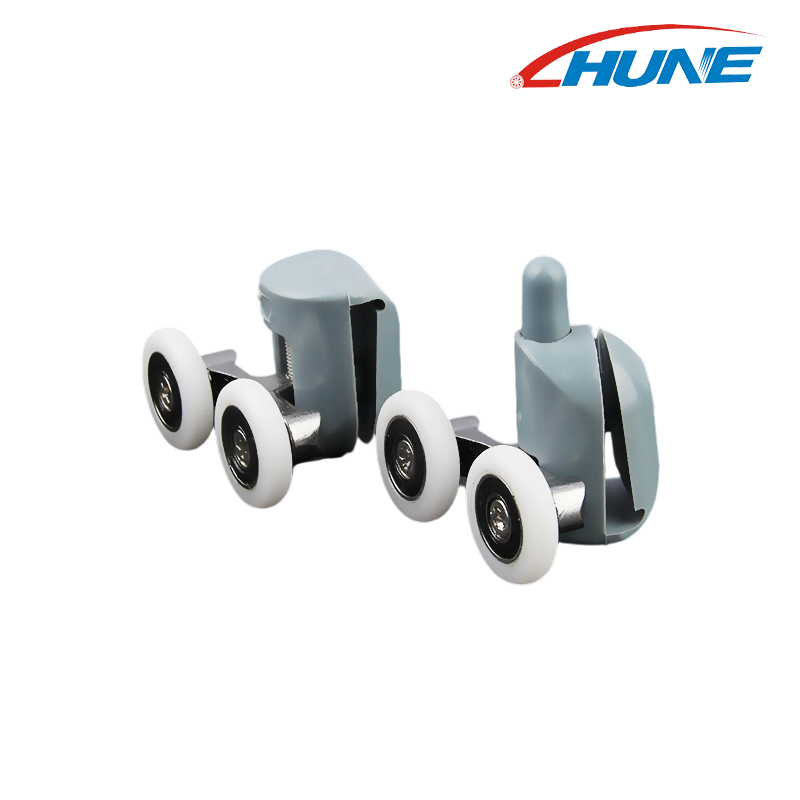
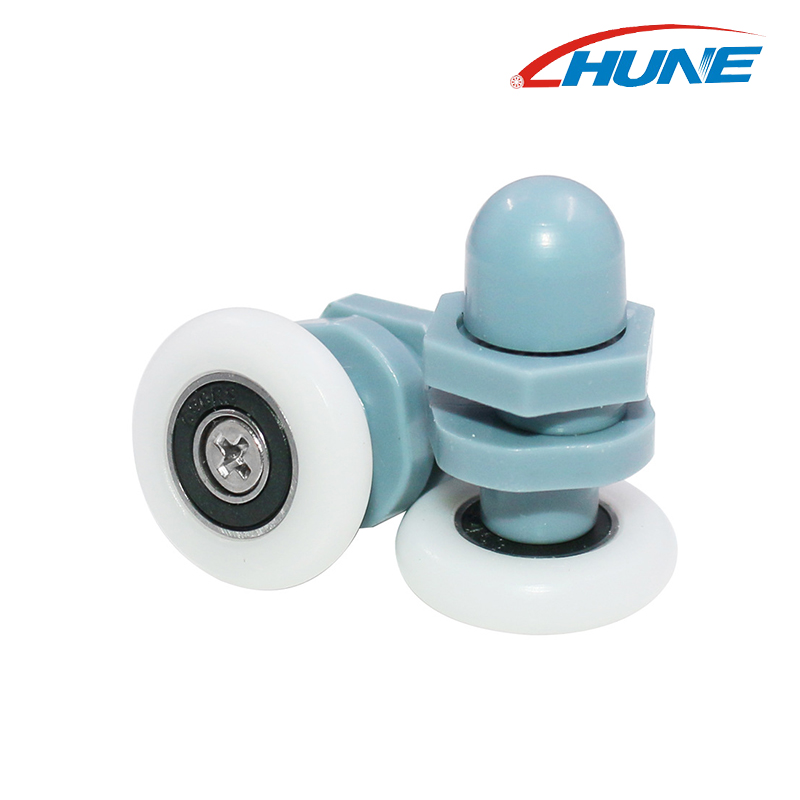
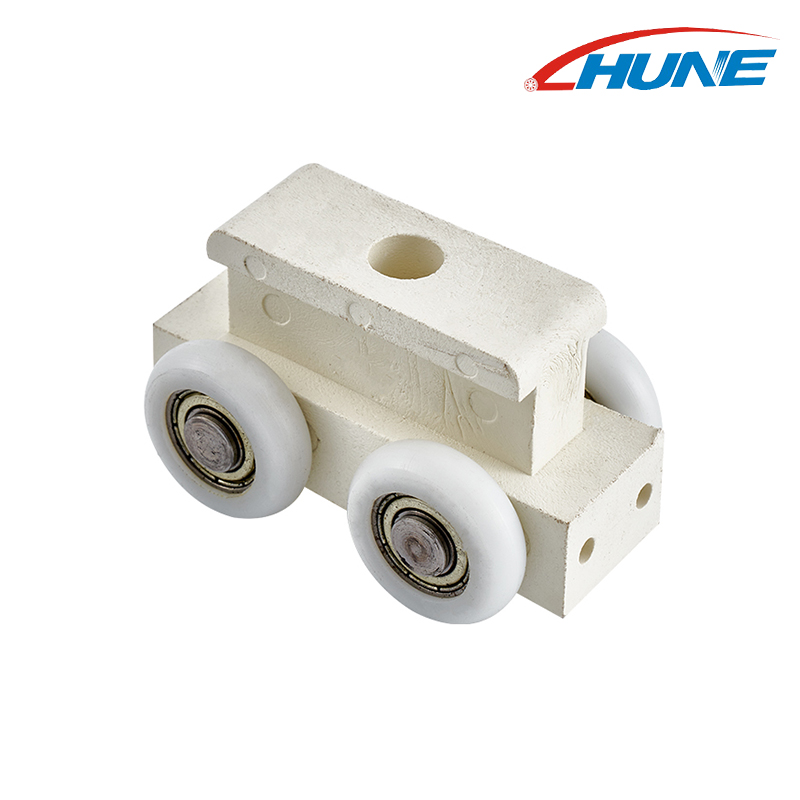
A plastic roller wheel for a curved shower door mounts at the top or bottom of the glass panel and does three jobs simultaneously: it carries the weight of the glass, keeps the panel guided along the rail, and stabilizes the door so it doesn't wobble or bind mid-slide.

The complication with curved doors specifically is that the roller isn't tracking a straight line — it's following an arc. That changes the engineering requirements noticeably. Wheel alignment has to hold up through continuous directional change, rotation needs to stay smooth across the whole curve rather than just at the center point, and the bearing has to perform consistently even when installation tolerances aren't perfectly uniform along the arc. A roller built for straight-track systems doesn't automatically translate to curved applications — the geometry demands more from the structure.
What's Inside a Typical Assembly
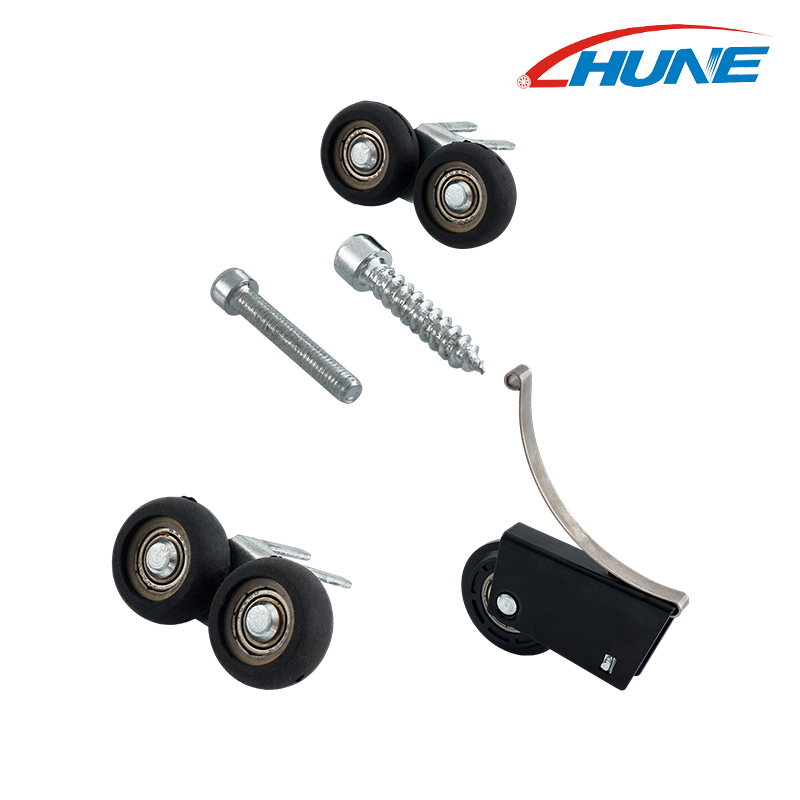
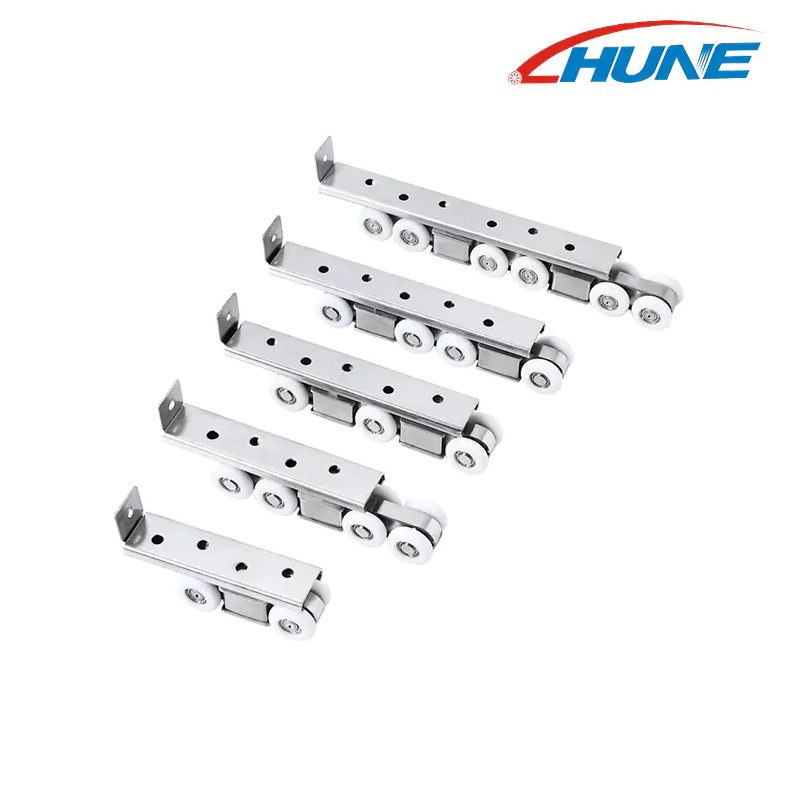
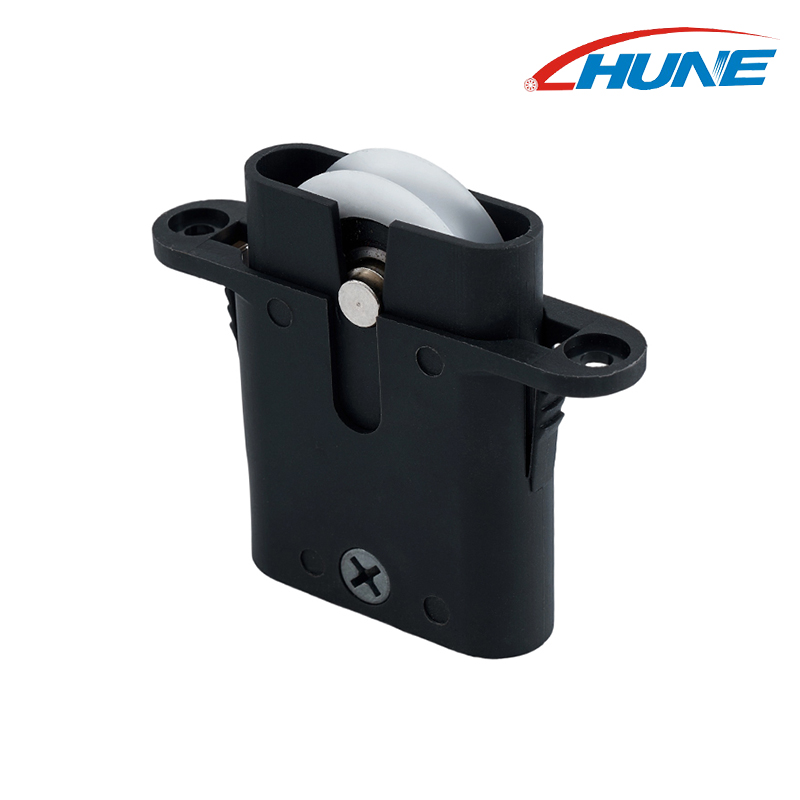
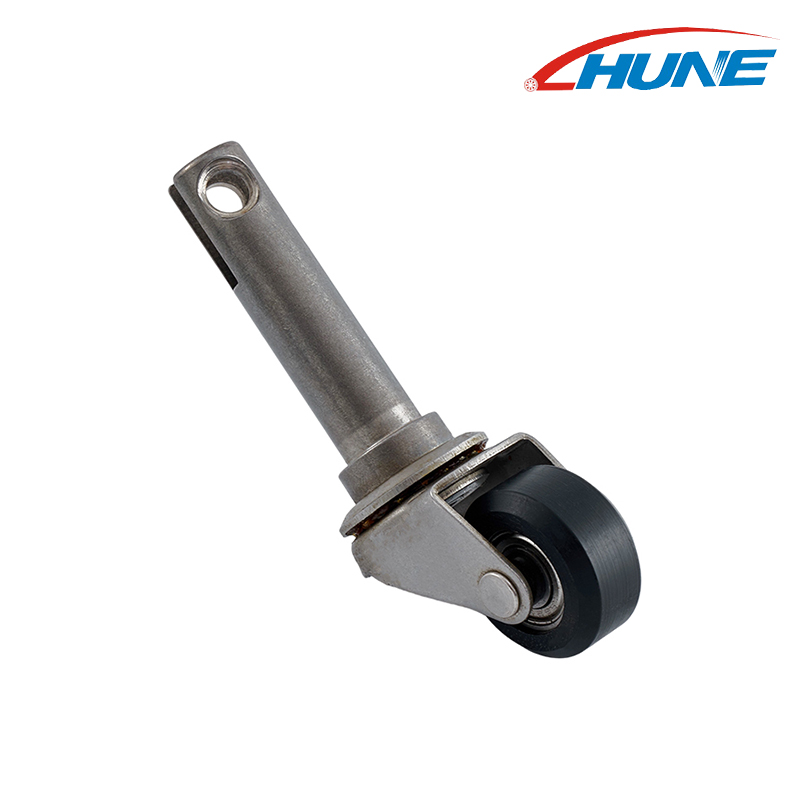
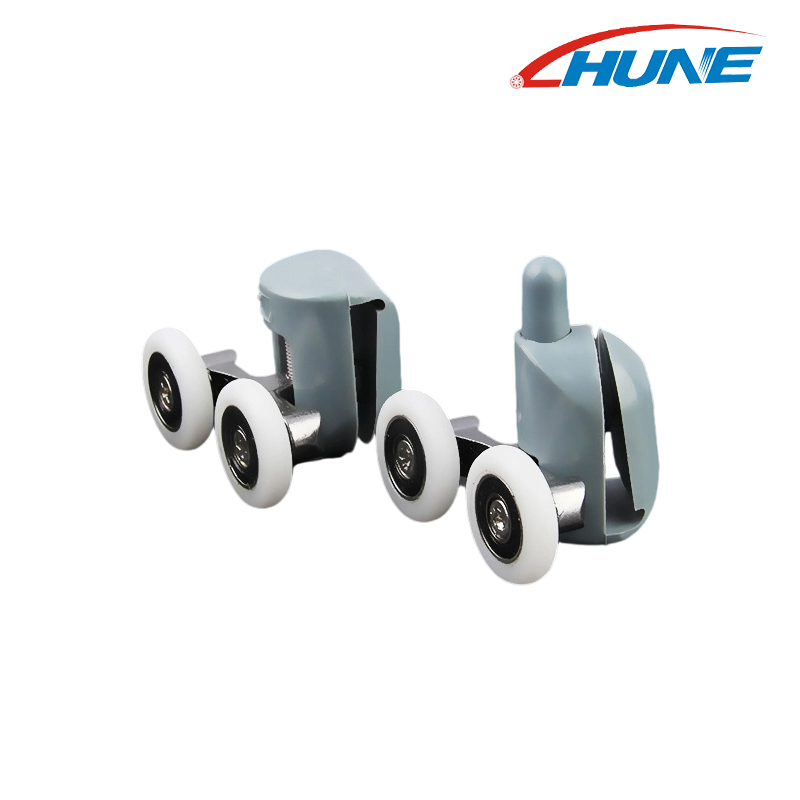
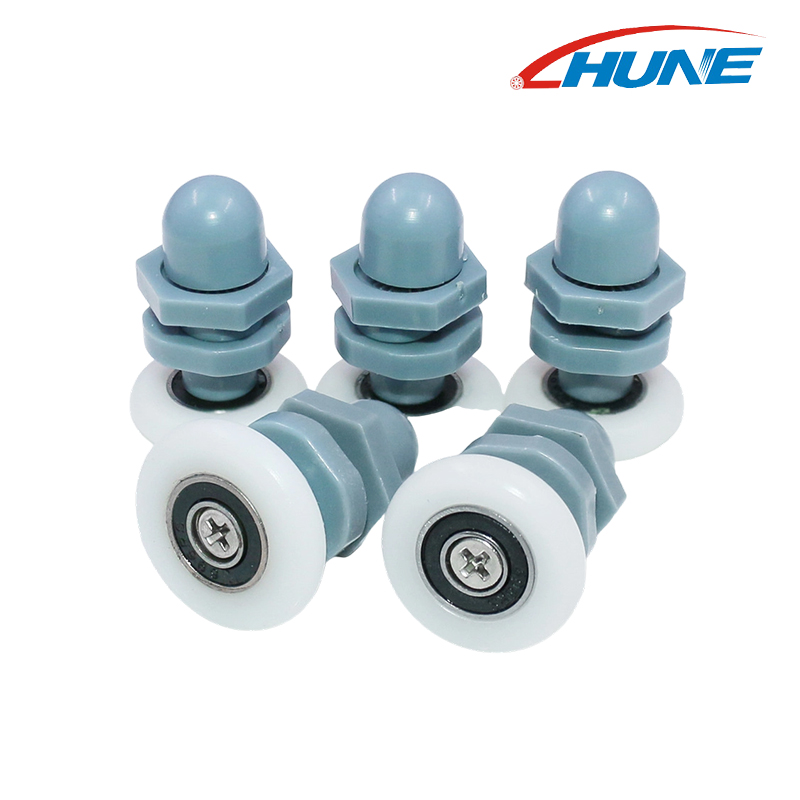
A full roller build for this application generally combines some or all of the following:
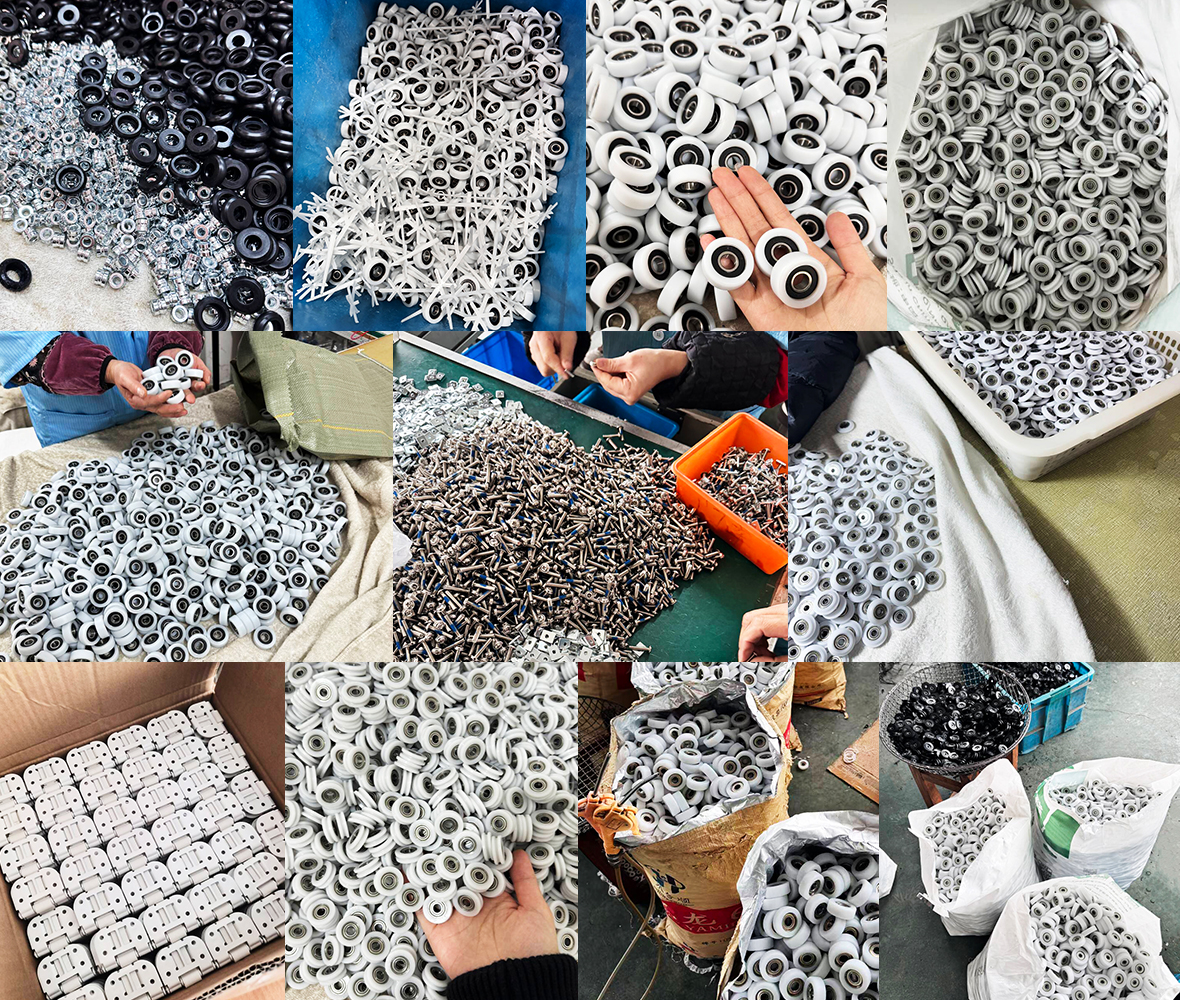
- Plastic or nylon wheel
- Inner bearing
- Stainless steel or steel shaft
- Screw and nut
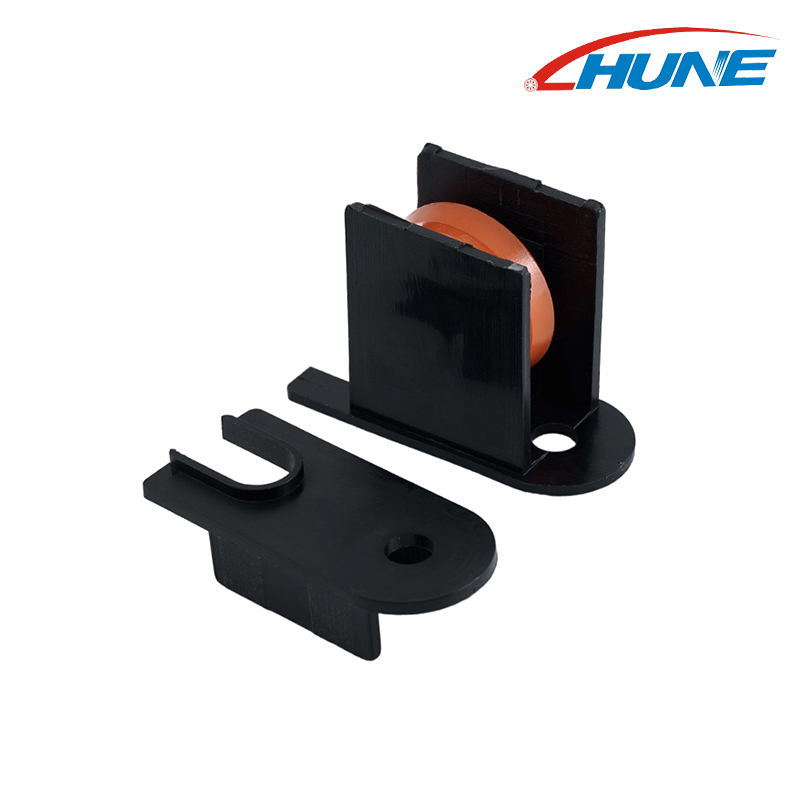
- Plastic cover
- Screw cover cap
- Spring-loaded component
- Dustproof bearing cover
- Adjustable mounting structure
Given the shower environment, every one of these parts also has to hold up against humidity, water vapor exposure, and regular contact with cleaning agents — on top of the mechanical stress from daily open-close cycles.
Common Types of Plastic Roller Wheels for Curved Bathroom Shower Door
Not every curved shower shower door needs the same roller architecture. The right structure depends on glass weight, channel position, and whether the part is going into new production or a replacement program. Here's how the main configurations differ and where each one actually fits.
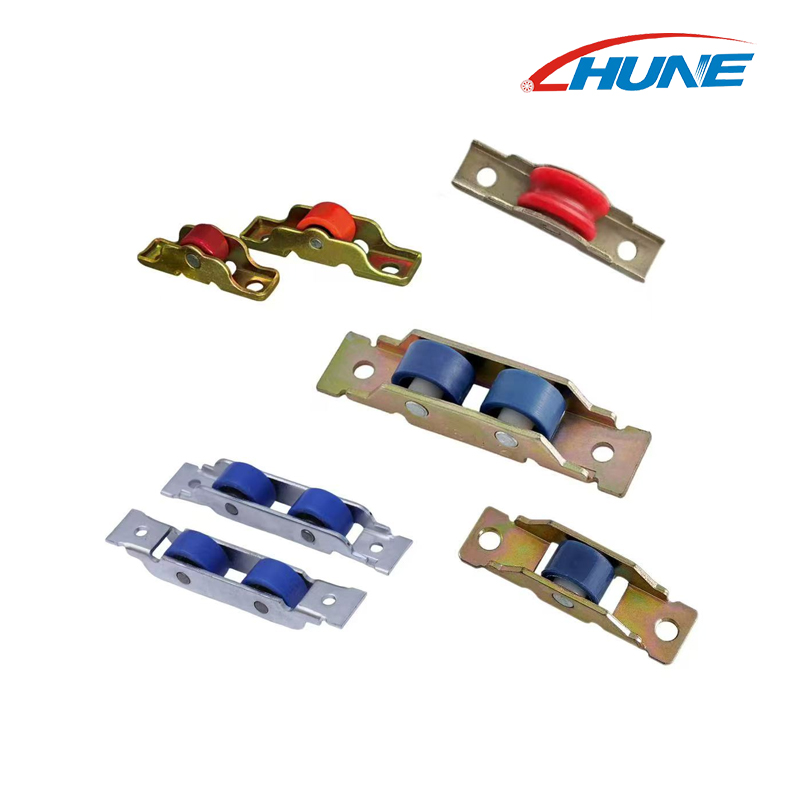
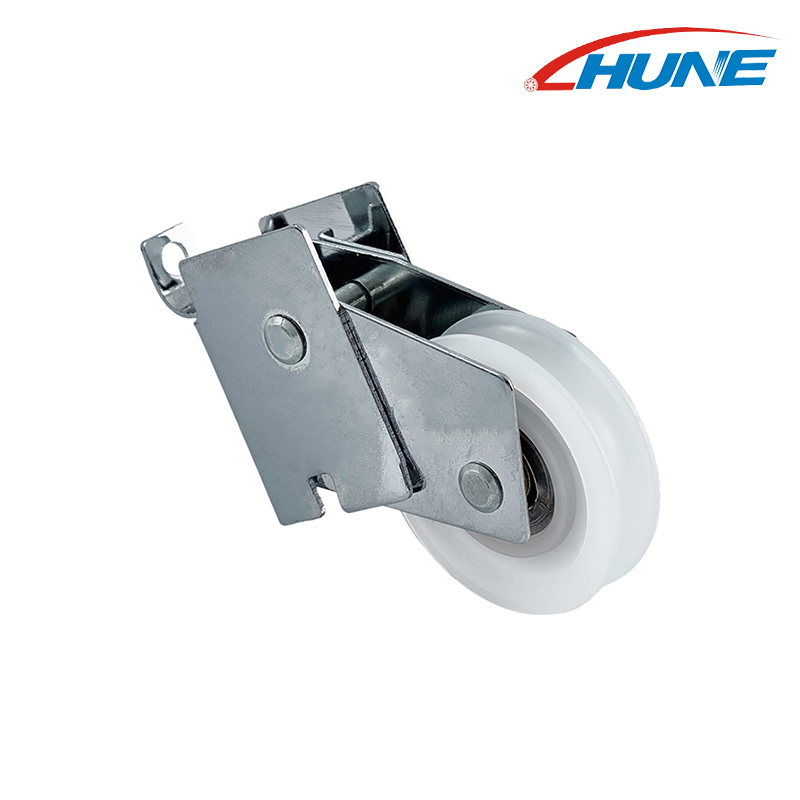
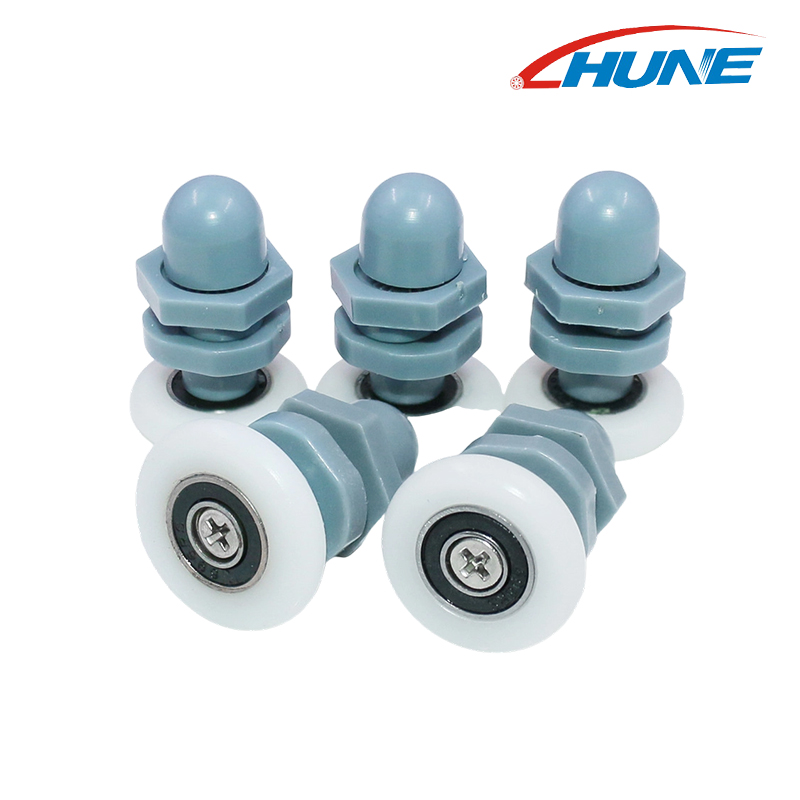
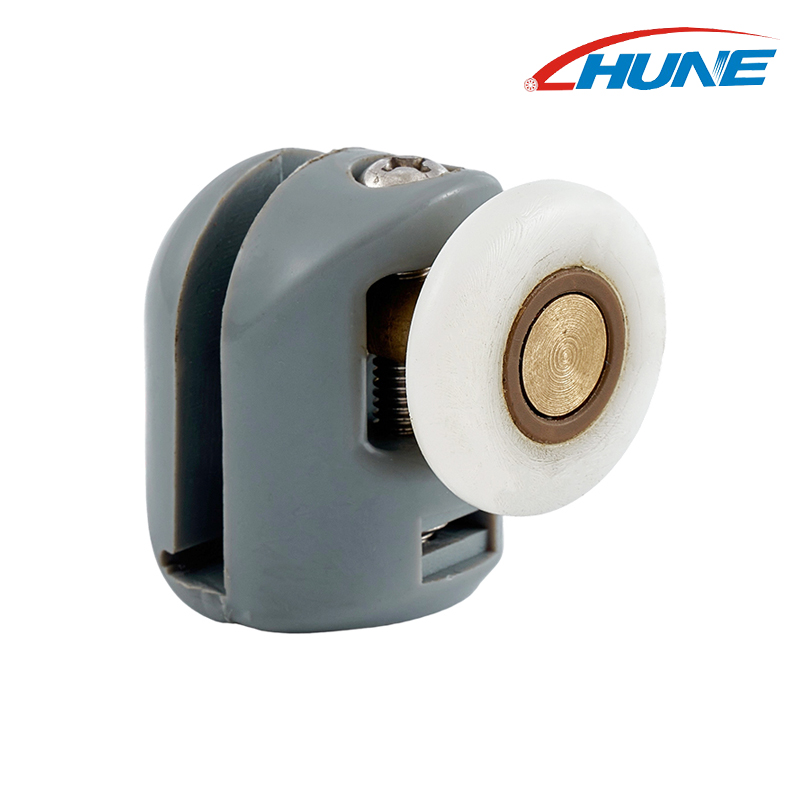
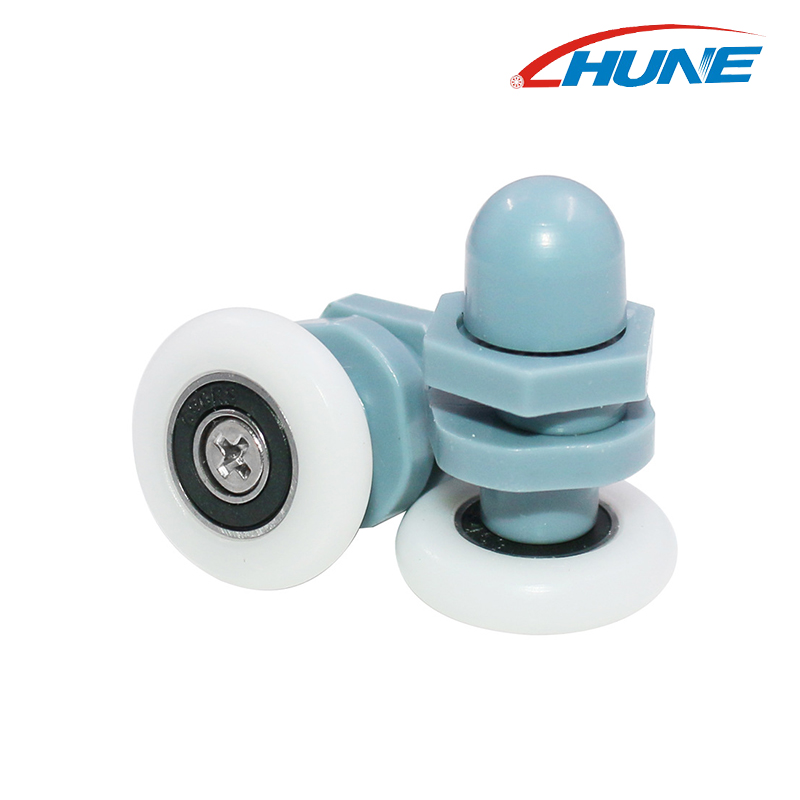
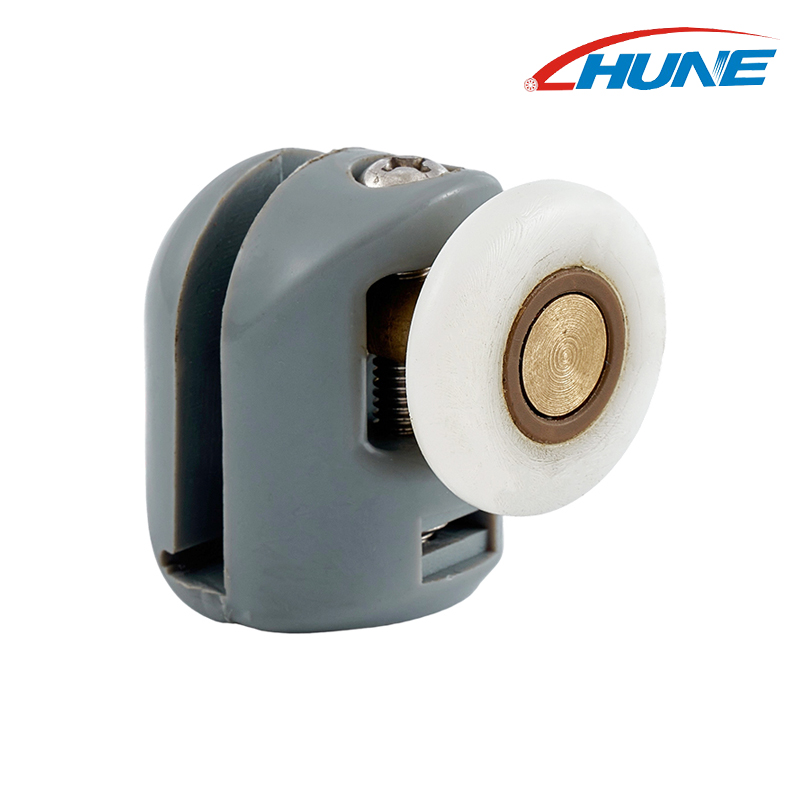
Single Wheel Roller
The simplest build: one wheel, one bearing, one shaft, one screw assembly. It's compact, cheap to produce, and easy to install — which is exactly why it dominates the standard and replacement segments of the market.
Works best for:
- Standard curved shower doors
- Lighter glass panels
- Replacement hardware programs
- Cost-sensitive product lines
- Compact enclosure designs
The trade-off is capacity. Single wheel designs hold up fine when the door weight is moderate and the rail itself provides most of the structural guidance — push beyond that and load distribution starts to matter more than this structure can offer.
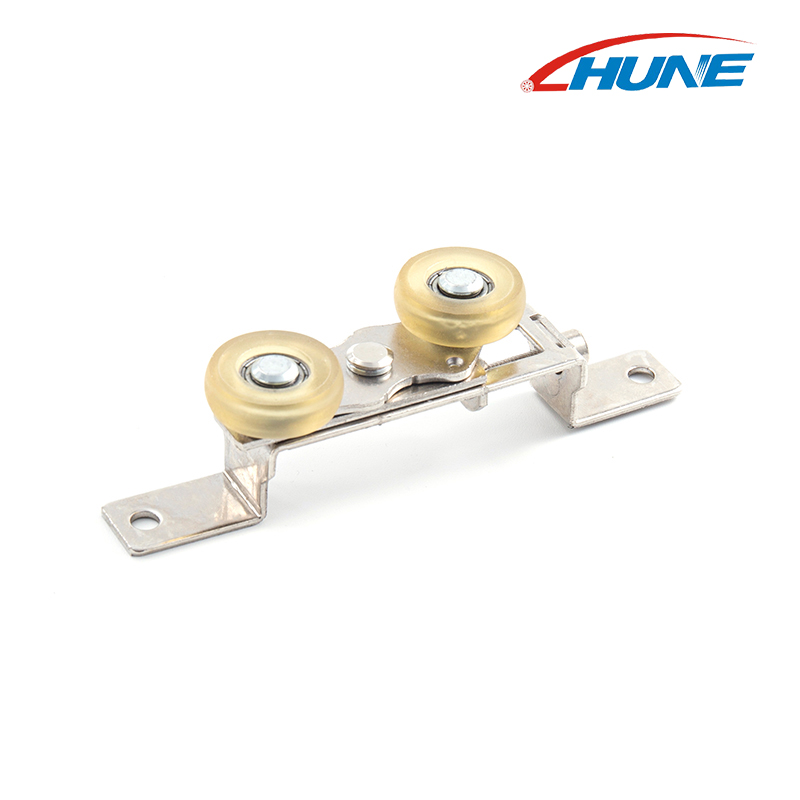
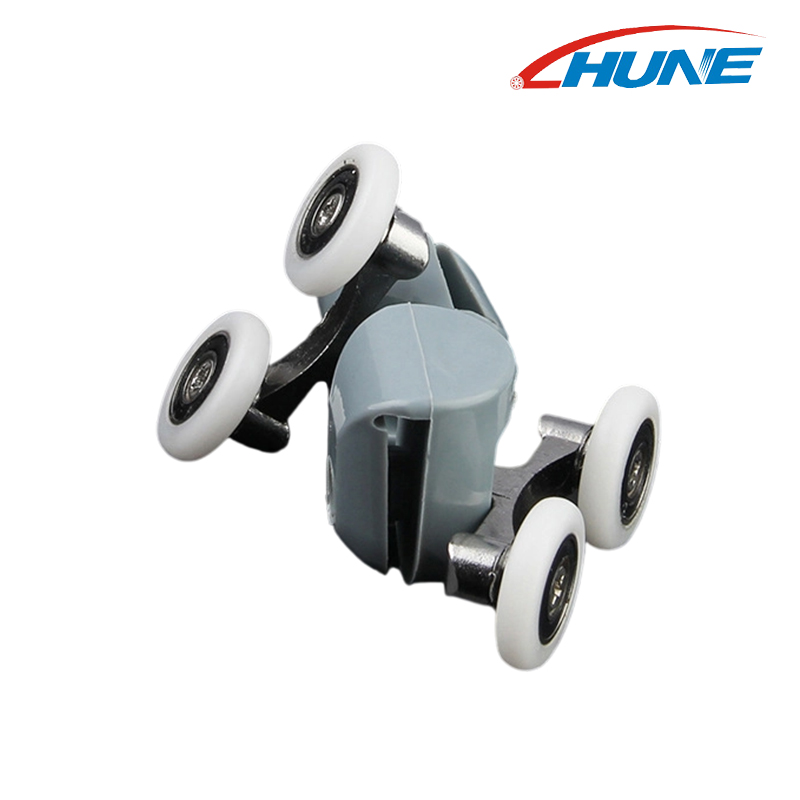
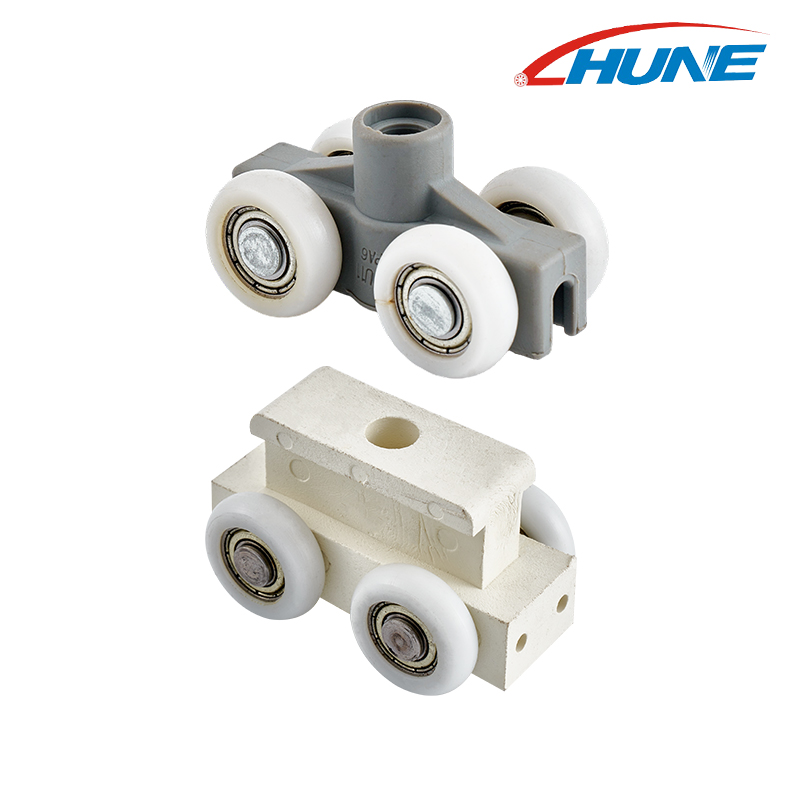
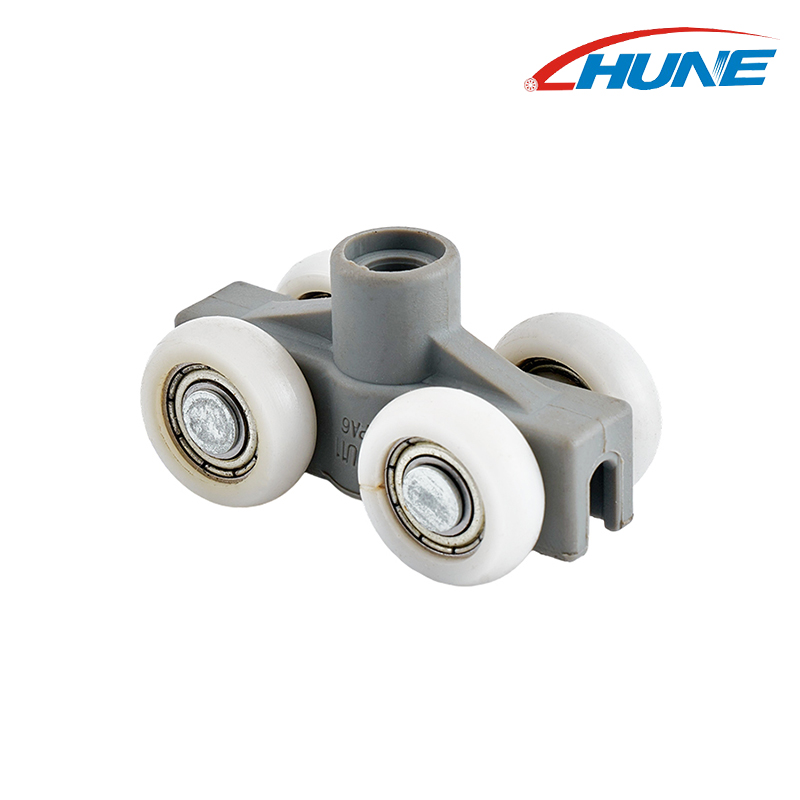
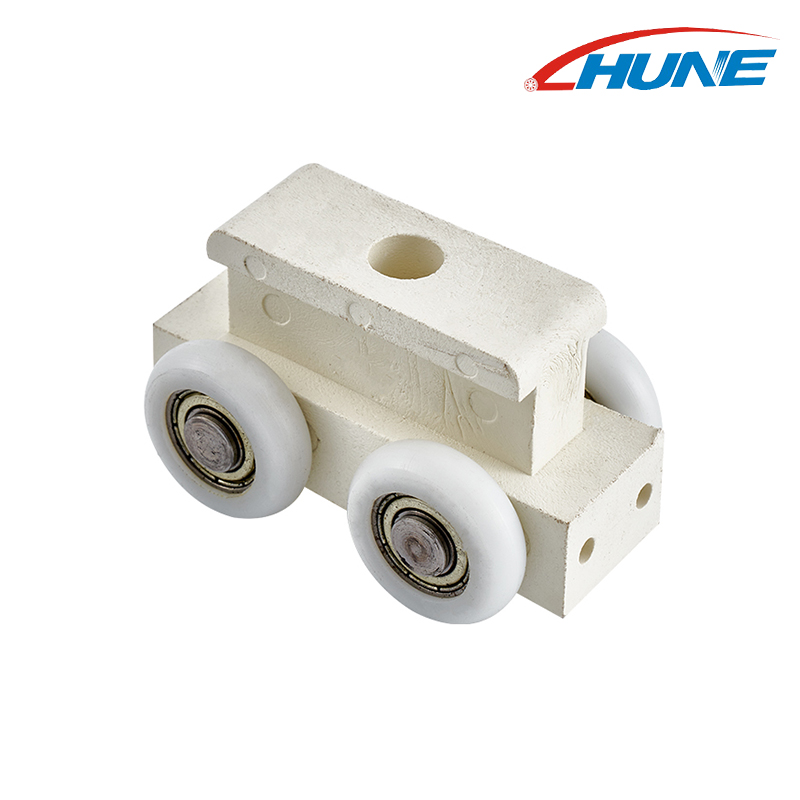
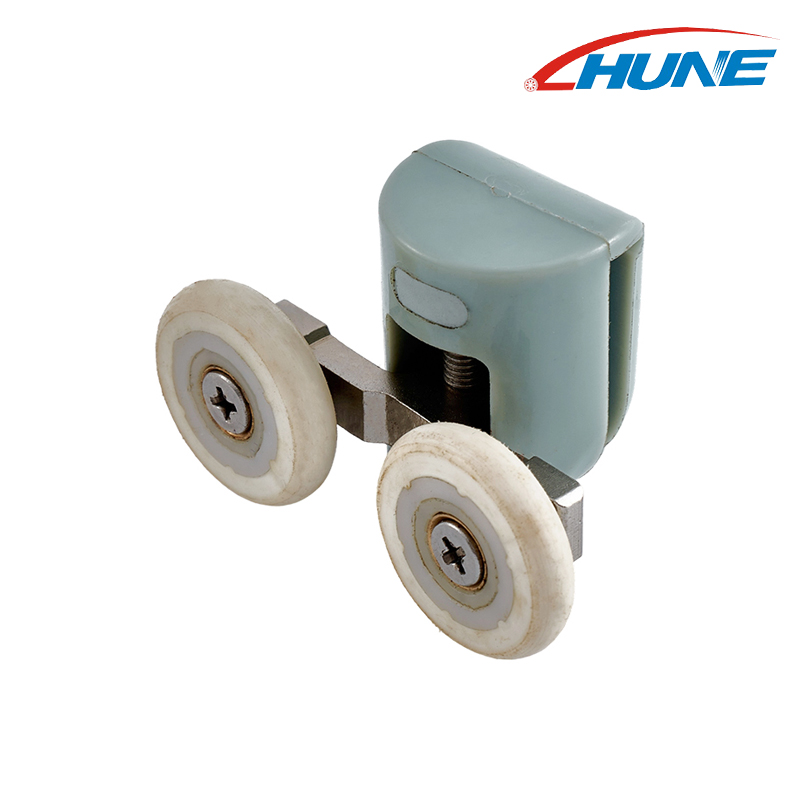
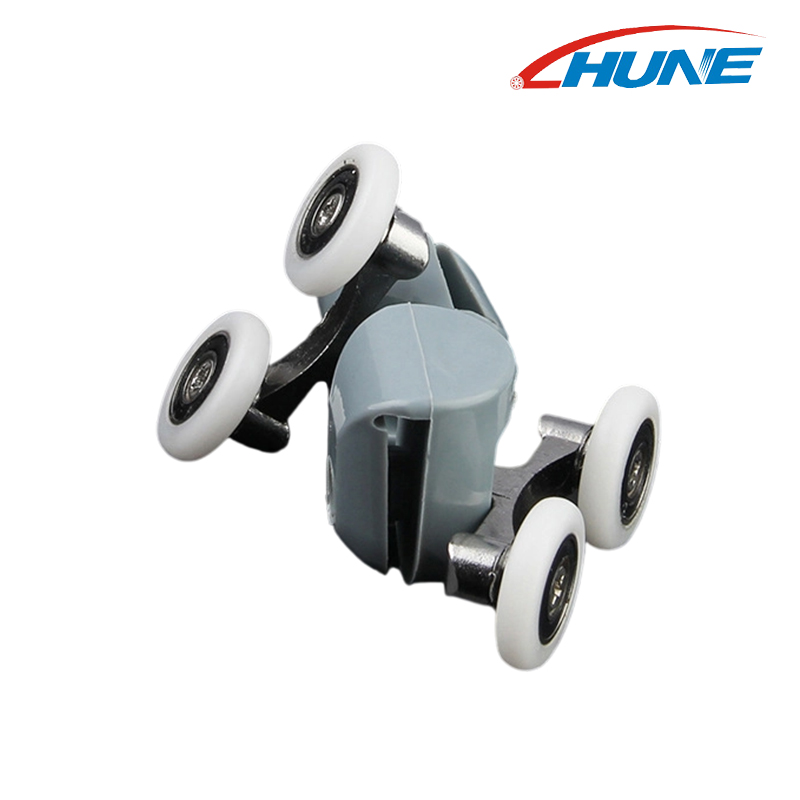
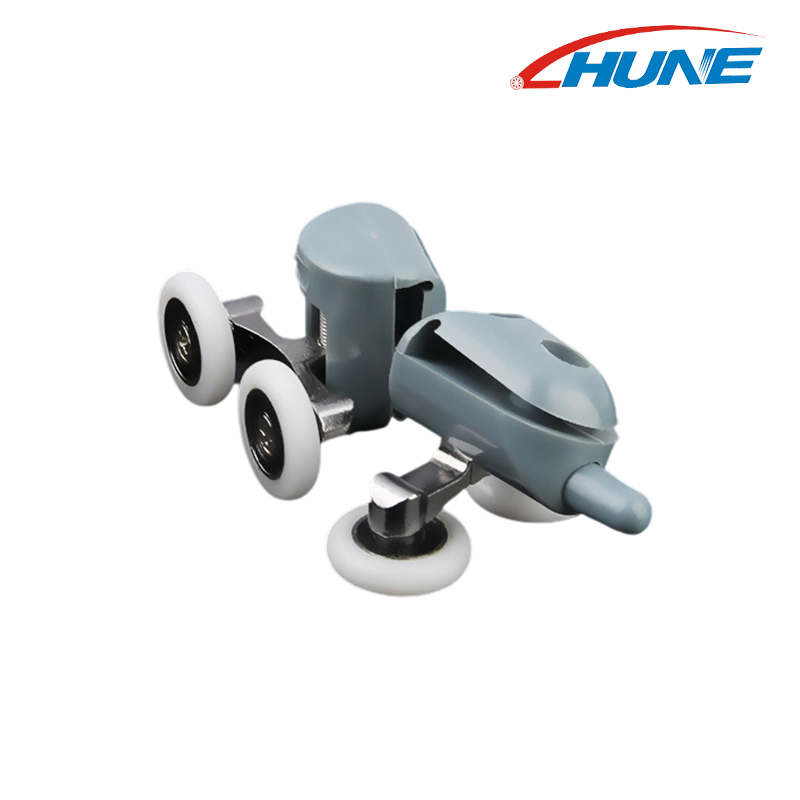
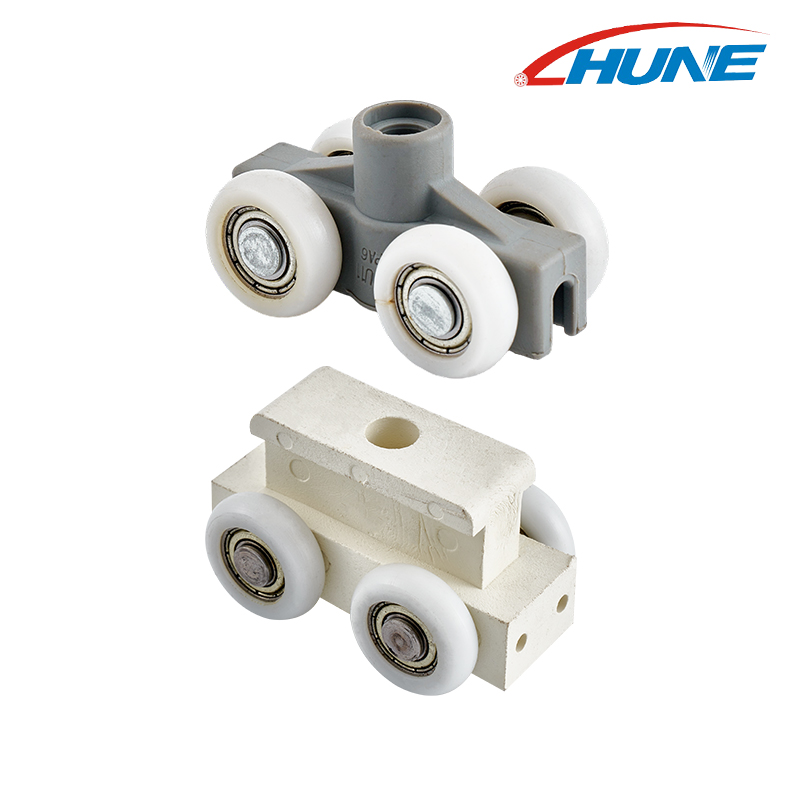
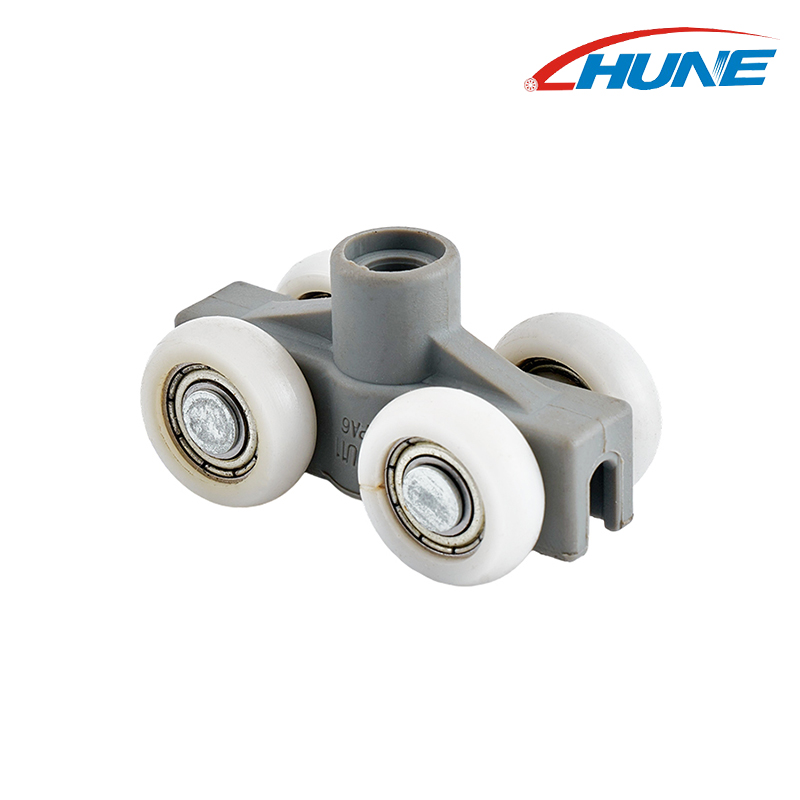
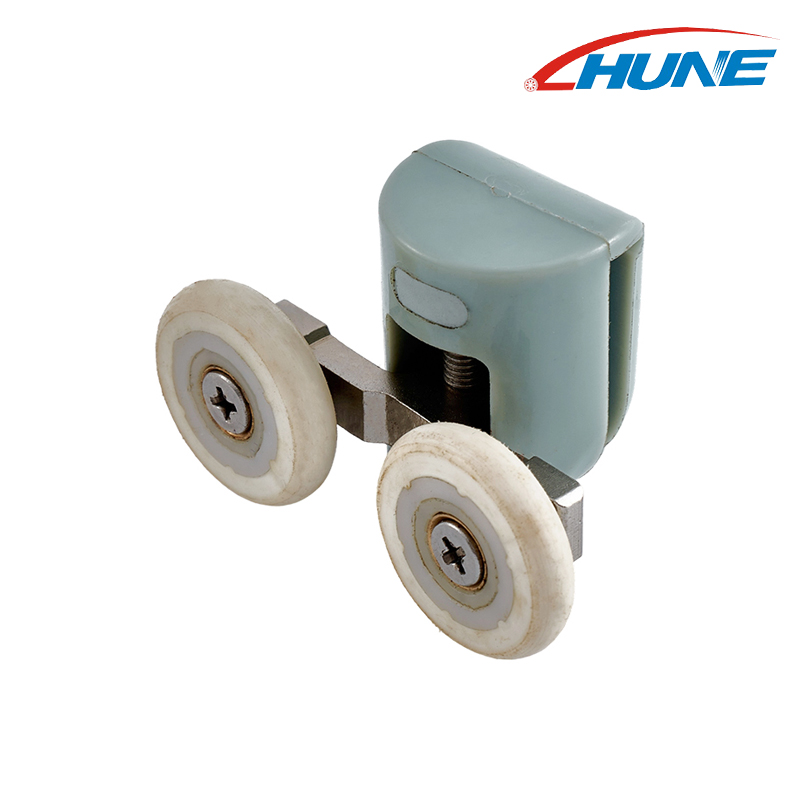
Double Wheel Roller
Two wheels in one assembly split the load and improve balance across the rail. This is the step up when a single wheel starts to feel undersized for the door.
Works best for:
- Larger curved doors
- Heavier glass panels
- Premium enclosure lines
- Commercial bathroom installations
- Projects prioritizing sliding stability
The gain here isn't just load capacity — it's reduced shake, better sustained contact with the track, and generally longer service life under frequent daily cycling.
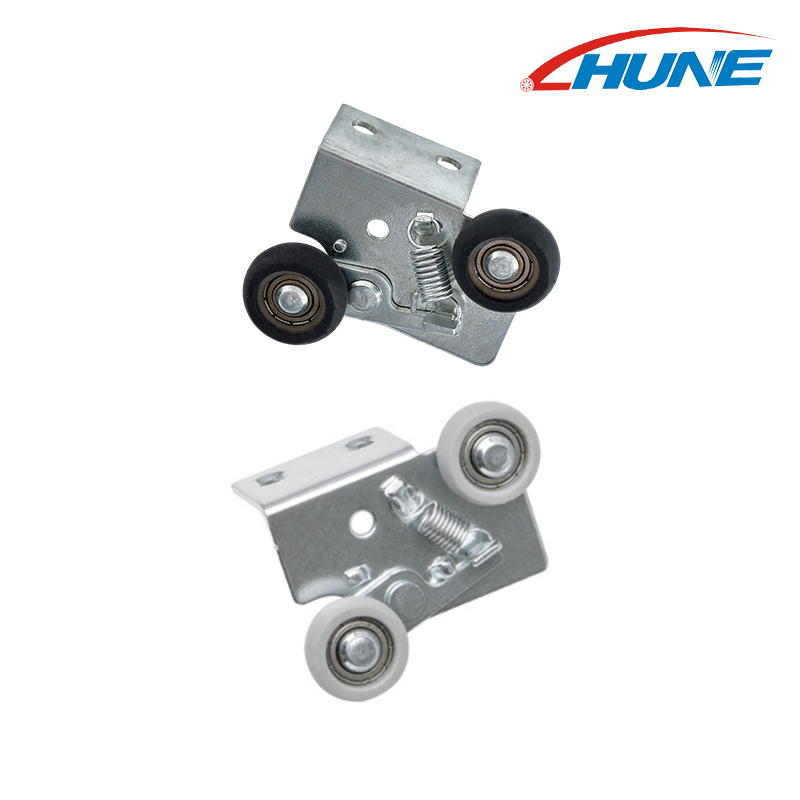
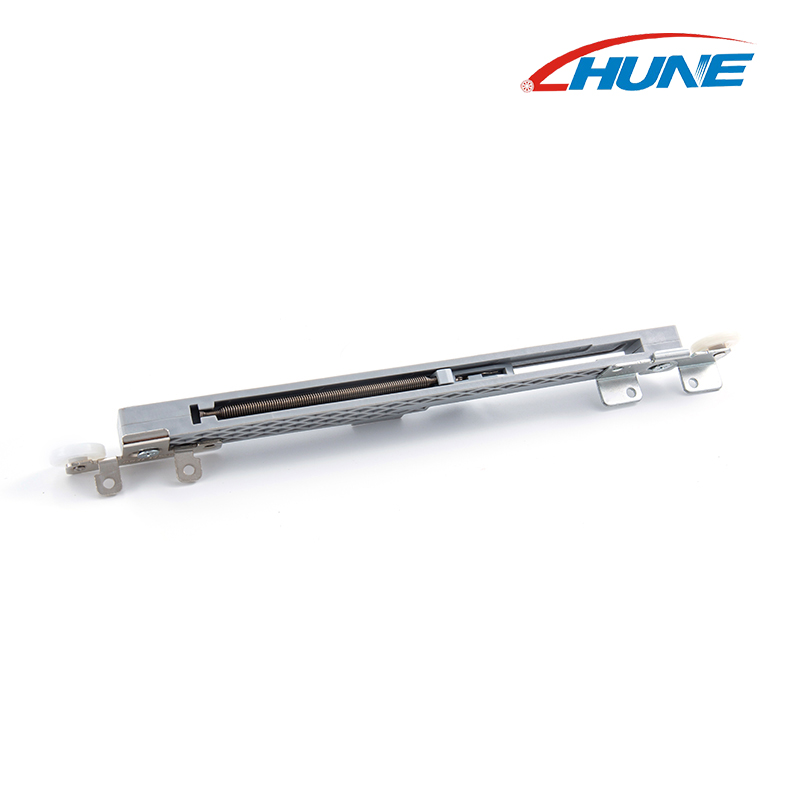
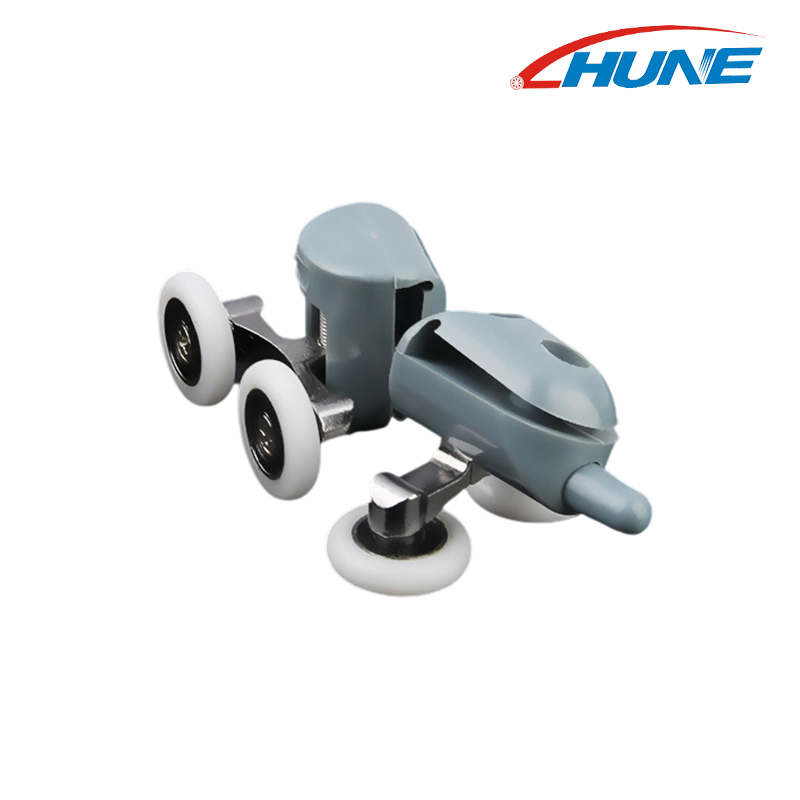
Spring-Loaded Roller
This design uses an elastic element to keep the wheel pressed against the rail consistently, which matters a lot on curved tracks where installation tolerance rarely comes out perfectly uniform.
Works best for:
- Curved shower door systems specifically
- Arc-shaped rails
- Top and bottom roller pairings
- Replacement roller kits
- Installations where alignment flexibility is a priority
The spring absorbs small variances in fit that would otherwise cause binding or intermittent contact loss — which is precisely the failure mode curved rails are prone to.
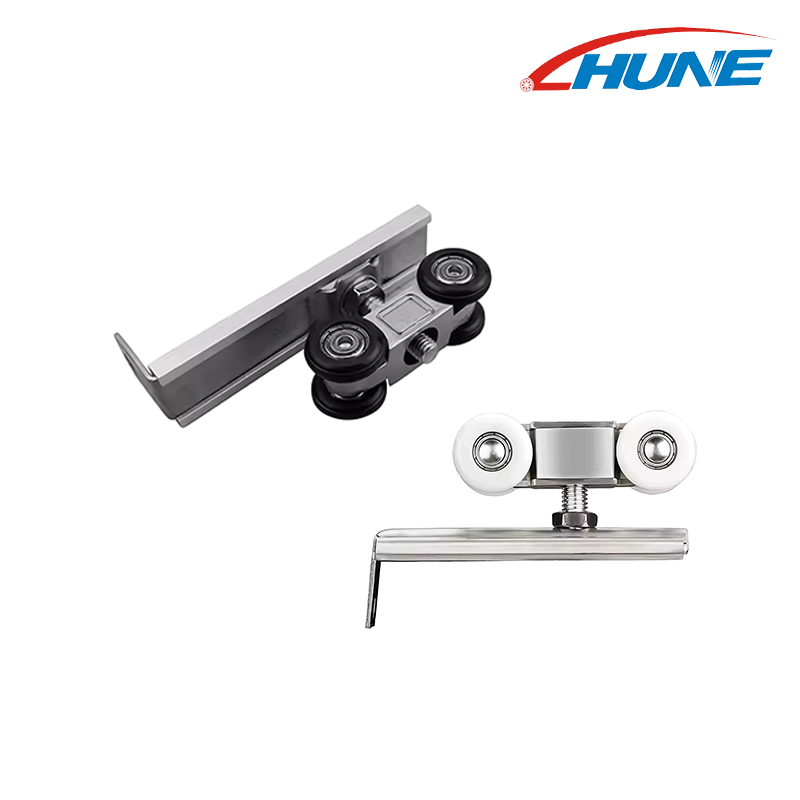
Adjustable Roller
Height or position can be fine-tuned during installation, which gives the installer room to correct alignment issues after the door is already mounted rather than before.
Works best for:
- Glass shower door manufacturing
- Renovation and retrofit projects
- Variable glass thickness applications
- Higher-tier bathroom hardware lines
- Situations where installation accuracy is hard to guarantee upfront
This flexibility tends to matter most when the same roller needs to accommodate slightly different glass or rail specs across a product range.
Top vs. Bottom Rollers
Position changes the functional role significantly, even when the wheel itself looks similar.
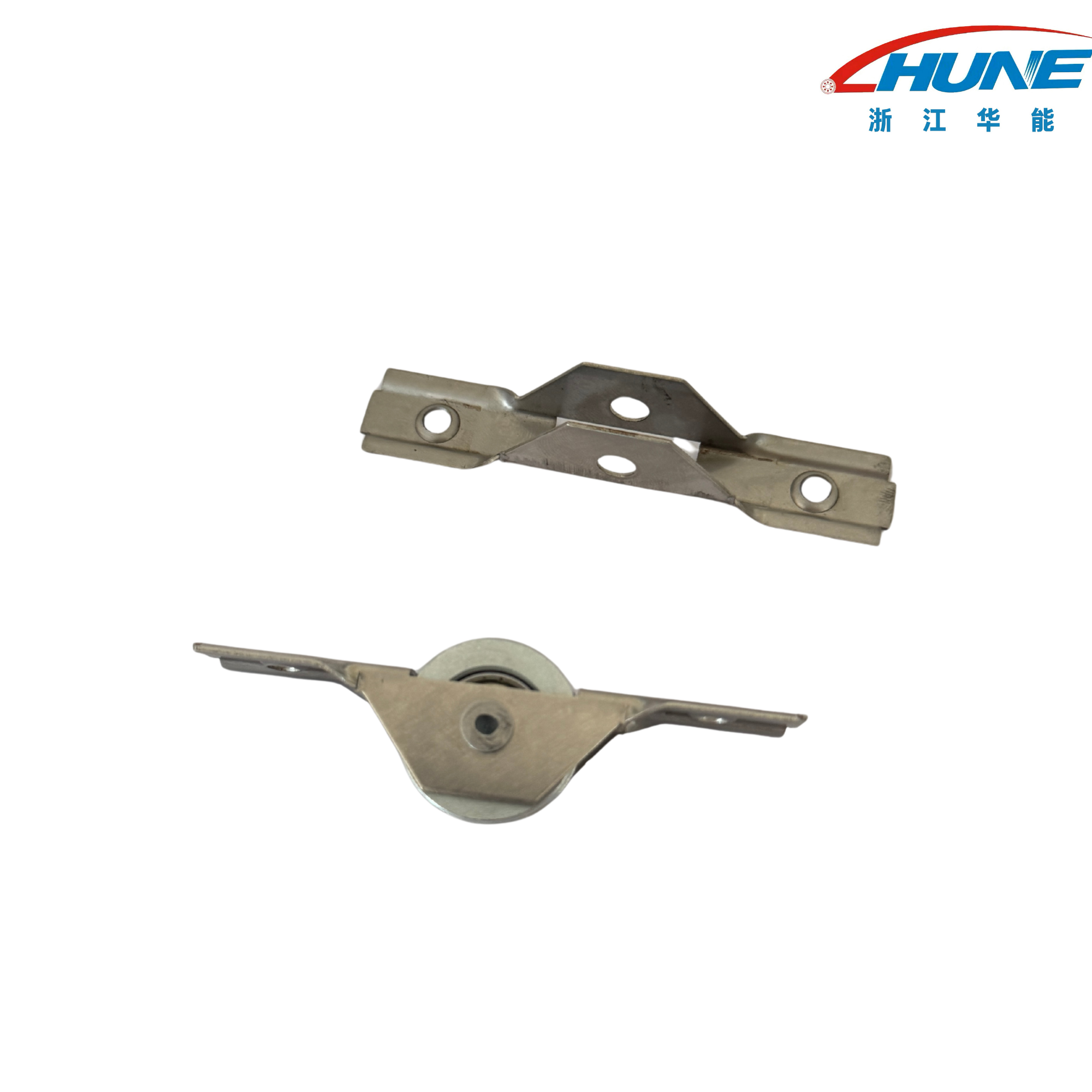
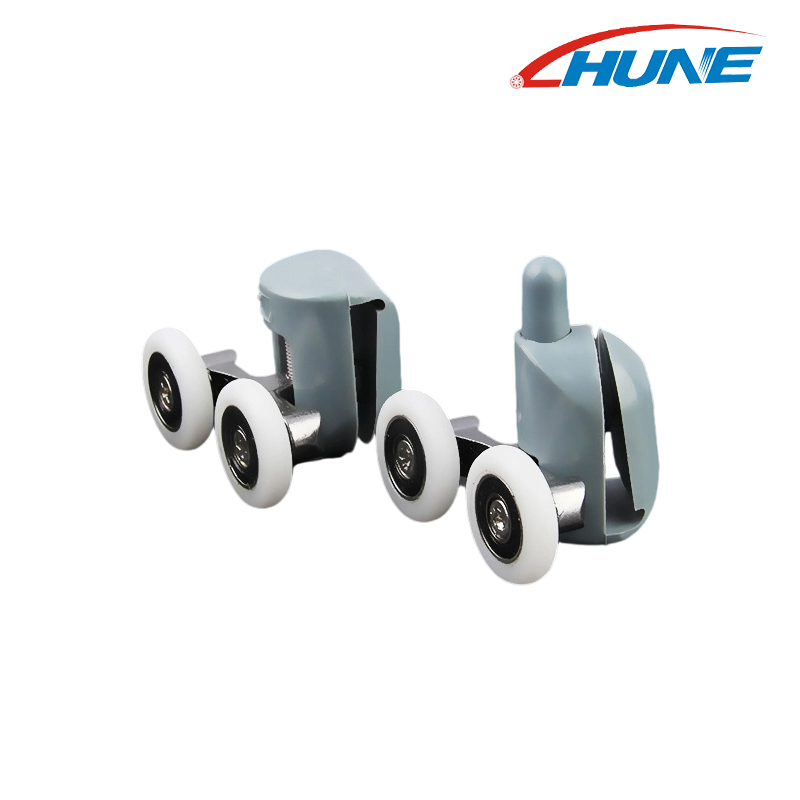
Top rollers guide the panel and hold it stable through the swing, sometimes carrying part of the load depending on the enclosure design. These typically pair with upper rail systems and top-and-bottom combination setups.
Bottom rollers carry more of the functional movement pressure in most systems — they're what actually keeps the door tracking cleanly against the lower rail as it slides.
Top and bottom units should always be matched to the original enclosure structure rather than swapped independently — mismatching the two is one of the more common replacement mistakes we see in the field.
Materials Used in Plastic Roller Wheels for Curved Bathroom Shower Door
Material selection on a shower door roller isn't just a spec sheet checkbox — it directly shapes unit cost, how long the part lasts, how quiet it runs, and where the finished product can realistically be positioned in the market. For this specific application, two constraints dominate everything else: the part sits in a wet environment permanently, and it needs to slide without generating friction noise that customers will notice.
Plastic Wheels
Plastic remains the default choice across most shower door hardware for straightforward reasons — it's light, cheap to produce, and simply doesn't corrode regardless of moisture exposure.
What it delivers:
- Solid resistance to humidity
- Low weight, which reduces stress on the rest of the assembly
- Clean, moldable surface finish
- Flexibility to shape into different wheel profiles
- Color options for aesthetic matching
- A good baseline fit for standard enclosure hardware
Where it needs attention: wear resistance varies significantly by grade, so specifying the right resin matters more than the word "plastic" alone suggests. It also isn't the right call for heavier load scenarios unless the design compensates with reinforcement, and dimensional consistency comes down almost entirely to mold quality and process control — two things worth verifying with any supplier before committing to volume.
This tier fits standard shower room hardware and general replacement roller kits well.
Nylon Wheels
Nylon steps in when a project needs more than plastic can reliably deliver — better toughness, quieter operation, and wear characteristics that hold up under repeated daily cycling.
What it delivers:
- Strong wear resistance over time
- Quiet sliding performance
- Higher toughness than standard plastic
- Better impact resistance
- Reliable performance under frequent use
- Good compatibility across different track profiles
This is generally the material of choice for mid-range and higher-grade shower door roller programs — it's the point where performance starts to justify a step up in cost.
Reinforced Nylon Wheels
When a product needs to carry heavier glass panels or simply needs a longer service life than standard nylon can guarantee, reinforcement is the logical next step.
What it delivers:
- Increased mechanical strength
- Better resistance to deformation under load
- Extended service life
- Higher load-bearing capacity
- More consistent dimensional stability over time
This tier is built for premium enclosure hardware and any project where performance requirements exceed what standard nylon can reliably support.
Engineering Plastics
For applications with genuinely specialized requirements — chemical exposure, temperature extremes, or wear conditions outside the normal range — engineering plastics fill the gap that standard nylon or plastic can't cover.
Typically specified for:
- Custom roller designs built to unique performance targets
- High-performance bathroom hardware lines
- Non-standard rail systems
- Product development work where material properties are being engineered from scratch rather than selected off a shelf
This is the option to reach for when the answer to "can standard plastic or nylon handle this?" is genuinely no.
Stainless Steel Structural Parts
The wheel gets most of the attention, but the metal hardware around it — shafts, screws, nuts — carries just as much of the structural burden. In a wet environment, corrosion resistance on these parts isn't optional.
Common stainless steel components:
- Shaft
- Screw
- Nut
- Washer
- Mounting pin
- Structural connector
The payoff: dependable corrosion resistance, stable mechanical strength over years of exposure, suitability for genuinely wet bathroom conditions, and a cleaner finish on any part that stays visible after installation.
Bearing Steel
Precision bearings typically rely on bearing steel specifically because, with proper heat treatment and lubrication, it delivers both strong wear resistance and smooth rotational performance — qualities that plastic bearing components generally can't match at the same level.
For bathroom applications, though, the steel alone isn't enough. Sealing, anti-rust grease, and protective covers all need to be part of the spec to keep moisture away from the bearing surface — skip this layer, and even the best bearing steel will corrode faster than expected in a shower environment.
Material Comparison for Shower Door Roller Wheels
The table below provides a practical reference for selecting suitable materials.
| Material |
Main Benefit |
Typical Use |
Cost Level |
| Plastic |
Lightweight and moisture-resistant |
Standard shower rollers |
Low to medium |
| Nylon |
Quiet, durable, wear-resistant |
Shower doors and sliding systems |
Medium |
| Reinforced Nylon |
Stronger and longer-lasting |
Higher-grade shower hardware |
Medium to high |
| Engineering Plastic |
Custom performance |
Special shower roller designs |
Medium to high |
| Stainless Steel |
Rust resistance and strength |
Screws, shafts, nuts |
Medium to high |
| Bearing Steel |
Smooth bearing rotation |
Inner bearing structure |
Medium |
For most curved bathroom shower doors, a practical structure is plastic or nylon wheel + sealed bearing + stainless steel screw or shaft.
Bearing Options for Curved Shower Door Rollers
The bearing is what separates a roller that glides for years from one that starts grinding after a few months. It governs rotation smoothness directly, and that in turn shapes noise output, how much load the wheel can actually support in practice, and how long the whole assembly holds up before service is needed.
Standard Bearings
For general shower enclosure production where cost control matters as much as performance, standard bearings do the job without overengineering it.
What they offer:
- Consistent, stable rotation
- Cost structure that scales with volume
- A solid baseline fit for common roller builds
- Straightforward integration with plastic or nylon wheels
This is the default spec when a project doesn't have a specific noise or corrosion requirement pushing it toward a premium option.
Quiet Bearings
When silent operation is part of the product's selling point rather than a nice-to-have, this is where the spec shifts. Pairing a quiet bearing with a nylon wheel and the right lubrication typically brings the noise level down to where customers actually notice the difference.
Where this comes up most:
- Premium shower enclosure lines
- Hotel bathroom installations
- High-end apartment bathroom fit-outs
- Sliding systems marketed specifically on quiet operation
- Brand product lines built around a refined, smooth feel
Stainless Steel Bearings
Corrosion is the slow failure mode in bathroom hardware, and stainless steel bearings are the direct answer to environments where moisture exposure is constant rather than occasional.
Recommended for:
- Shower enclosures
- Steam rooms
- Coastal-region installations
- General wet bathroom systems
- Products positioned around long-term replacement reliability
Sealed Bearings
Sealing is what keeps the internal rolling elements isolated from dust, moisture, and general contamination — extending the interval before wear becomes a problem.
Common designs include:
- Metal shielded bearings
- Rubber sealed bearings
- Dustproof cover assemblies
- Grease-filled bearing structures
- Long-life lubrication systems built for extended service intervals
For curved shower door rollers specifically, sealed bearings tend to be the preferred default — the curved geometry already introduces more variables into rotation consistency, and keeping moisture out of the bearing helps that consistency hold up over time rather than degrading after the first few months of humid daily use.
Quality Control Points for Plastic Shower Door Rollers
A shower door roller is a small component, but the margin for error on it is thinner than most people expect — a deviation of a fraction of a millimeter in the wrong place can turn into a door that jams, shakes, or wears unevenly within months of installation. That's why quality control on this product has to go well beyond a visual check at the end of the line.
Dimensional Accuracy
Fit compatibility with the rail and glass panel comes down to a specific set of measurements, and any one of them being off can cascade into an installation problem.
The dimensions that actually matter:
- Outer diameter
- Inner diameter
- Wheel width
- Total height
- Screw size
- Shaft diameter
- Bearing fit
- Cover cap size
- Mounting hole position
Holding these to tight tolerance is what keeps a batch of rollers interchangeable across different production runs — inconsistency here is one of the most common root causes behind field complaints.
Rotation Smoothness
A roller that jams, shakes, or rotates roughly usually isn't failing because of one bad part — it's the combined result of bearing quality, spacer design, wheel roundness, and how precisely the assembly was put together. Testing rotation in isolation misses this; it needs to be evaluated as a system-level outcome, not a single-component spec.
Noise Performance
Quiet sliding is a functional requirement for shower enclosure hardware, not a cosmetic preference. When noise shows up, it usually traces back to one of a few sources — bearing quality that's below spec, grease that isn't matched to the application, a wheel surface that isn't smooth enough, or a mismatch between the wheel profile and the track. Isolating which of these is causing a given noise issue is usually more productive than treating "noise" as a single generic defect category.
Load Stability
The roller has to carry the glass panel safely through repeated cycles of opening and closing without the performance degrading over time. This is less about peak load capacity and more about consistency — a roller that handles the load fine on day one but starts to shift or wear unevenly by month three hasn't actually passed the test, even if it looked fine during initial inspection.
Moisture and Corrosion Resistance
Given the environment this product lives in, corrosion resistance deserves specific verification rather than being assumed from the material spec sheet. Stainless steel screws, properly sealed bearings, anti-rust grease, and moisture-resistant wheel material all contribute directly to how long the roller actually performs before service is needed — and each one should be checked individually rather than treated as a package deal.
Surface Finish
Surface quality gets inspected for burrs, cracks, deformation, rust, and sharp edges — defects that can affect both function and safety, not just appearance. Because parts of the roller assembly often remain visible after the shower enclosure is installed, surface finish also carries a practical weight on how finished the final product looks, which matters more on premium enclosure lines than on basic replacement hardware.
How to Choose the Right Plastic Roller Wheels for Curved Bathroom Shower Door
Choosing a roller isn't a matter of picking from a catalog and hoping it fits — it's a matching exercise between the product and the specific enclosure system it's going into. Skip a step in this process, and the mismatch usually doesn't show up until the part is already installed. Here's the sequence that actually prevents that.
Step 1: Identify the Enclosure Structure
Before anything else, the underlying system configuration needs to be confirmed:
- Curved rail or straight rail
- Top roller or bottom roller
- Single wheel or double wheel
- Spring-loaded or fixed
- Adjustable or non-adjustable
This isn't a checklist to skim — the structural type determines almost every downstream decision, from wheel profile to bearing choice. Getting this wrong at the start tends to invalidate everything measured afterward.
Step 2: Take the Actual Dimensions
Assumptions based on "standard sizing" are one of the more frequent causes of replacement mismatches. The dimensions worth measuring directly:
- Wheel diameter
- Wheel width
- Inner hole diameter
- Total height
- Screw diameter
- Glass hole size
- Glass thickness
- Rail width
- Rail curve radius
Measuring rather than estimating any one of these is what keeps the final part from arriving close-but-not-quite-right.
Step 3: Confirm Glass Thickness
Glass thickness varies across shower door products, and it directly affects screw length, mounting design, and how the roller structure needs to be built. A roller sized for 8mm glass won't necessarily transfer cleanly to a 10mm or 12mm panel — this needs to be confirmed on its own rather than assumed from the enclosure type.
Step 4: Match the Rail Profile
The wheel groove has to correspond precisely to the rail it rides on. A profile mismatch here doesn't fail quietly — it tends to show up as noise, intermittent jamming, visible shaking during operation, or in worse cases, the door coming off the track entirely.
Step 5: Choose the Bearing Type
Bathroom humidity makes sealed bearings the sensible default in most cases. For product lines positioned higher up the market, quiet bearings paired with appropriate grease add a noticeably smoother sliding feel that separates premium hardware from standard replacement parts.
Step 6: Select the Material
Standard plastic wheels cover general-use applications well. When durability and smoother long-term movement matter more, nylon or reinforced nylon becomes the more sensible choice. On the hardware side, stainless steel screws and shafts are worth specifying by default in any humid installation environment, regardless of which wheel material gets selected.
Step 7: Plan the Packaging
Packaging requirements shift depending on where the product is headed next, and this is often decided too late in the process rather than upfront.
| Packaging Type |
Typical Use Case |
| Plastic bag |
Bulk or low-cost distribution |
| Inner box |
Standard retail protection |
| Export carton |
Bulk international shipping |
| Color box |
Retail shelf presentation |
| Blister pack |
Point-of-sale display |
| E-commerce package |
Direct-to-consumer shipping |
| Private-label package |
Branded distribution programs |
| Project labeling |
Bulk contract or B2B project orders |
Beyond basic protection during transit, the right packaging choice also makes specification identification straightforward at the receiving end — which matters more than it seems once multiple SKUs are moving through the same supply chain.
What Information Should Be Confirmed Before Requesting a Quotation?
The speed and accuracy of any quotation depends almost entirely on how complete the information is going in — vague requests lead to vague quotes, and vague quotes lead to revisions that cost everyone time. Here's what actually needs to be on the table before a supplier can price a job properly.
Product Specifications
The core technical details that define the part itself:
- Product name and intended application
- Wheel diameter and width
- Inner diameter and total height
- Screw size and shaft size
- Bearing type
- Wheel material
- Color
- Cover cap requirement
- Spring-loaded or fixed design
- Adjustable or non-adjustable structure
- Top or bottom installation position
Missing even a few of these forces back-and-forth clarification before pricing can even start — worth compiling upfront rather than iteratively.
Shower Door System Details
Because the roller has to integrate with an existing or planned enclosure, the system context matters just as much as the part spec:
- Glass thickness
- Glass door weight
- Track shape and dimensions
- Curved rail radius
- Installation position
- Existing sample photos
- Dimensioned drawings
This is the information that determines feasibility — a roller spec that looks fine in isolation can still be wrong for a specific track profile or glass weight.
Packaging and Market Context
Beyond the product itself, commercial details shape both cost and lead time:
- Required quantity
- Target market
- Packaging style
- Logo and label requirements
- Delivery destination
- Expected delivery timeline
- Any testing requirements
The Most Reliable Path: Drawings or Samples
Written specifications get interpretation right most of the time — but not always. The most reliable route to an accurate quote is providing something concrete to evaluate directly:
- A physical sample
- 2D drawing
- 3D file
- Product photo with measurements marked
- A sample of the track itself
- Assembly drawing
With any of these in hand, a factory can confirm feasibility, identify tooling requirements, finalize material selection, and price the job with far less back-and-forth than a spec sheet alone would require.
OEM/ODM Development: What's Actually Customizable
Huaneng supports full OEM and ODM development across shower door rollers and related sliding hardware — not as an add-on service, but as a core part of how the factory operates.
Product-Level Customization
| Category |
Available Options |
| Wheel diameter |
Custom sizing per drawing |
| Wheel material |
Plastic, nylon, or reinforced nylon |
| Bearing type |
Standard, quiet, stainless steel, or sealed |
| Hardware |
Stainless steel screws or shafts |
| Mechanism |
Spring-loaded action available |
| Adjustability |
Adjustable mounting structure |
| Finishing |
Screw cover caps, plastic cover design |
| Appearance |
Custom color options |
Packaging-Level Customization
Available formats span standard export cartons, individual plastic bags, inner boxes, color boxes, blister packaging, barcode labels, instruction sheets, private-label packaging, retail display packaging, and e-commerce-ready packaging — configured based on whether the product is headed for retail shelves, online fulfillment, project supply, or distribution.
Huaneng manufactures plastic roller wheels for curved bathroom shower doors, shower enclosure rollers, curved shower door rollers, sliding door rollers, nylon pulley wheels, bearing pulley wheels, and customized door and window roller hardware.
To move forward on product confirmation, send over drawings, samples, dimensioned photos, glass thickness, track information, material preferences, and packaging requirements. From there, Huaneng handles sample evaluation, specification confirmation, quotation, OEM/ODM development, and packaging recommendations across retail, e-commerce, project supply, and distribution channels.





 English
 Español
 日本語
日本語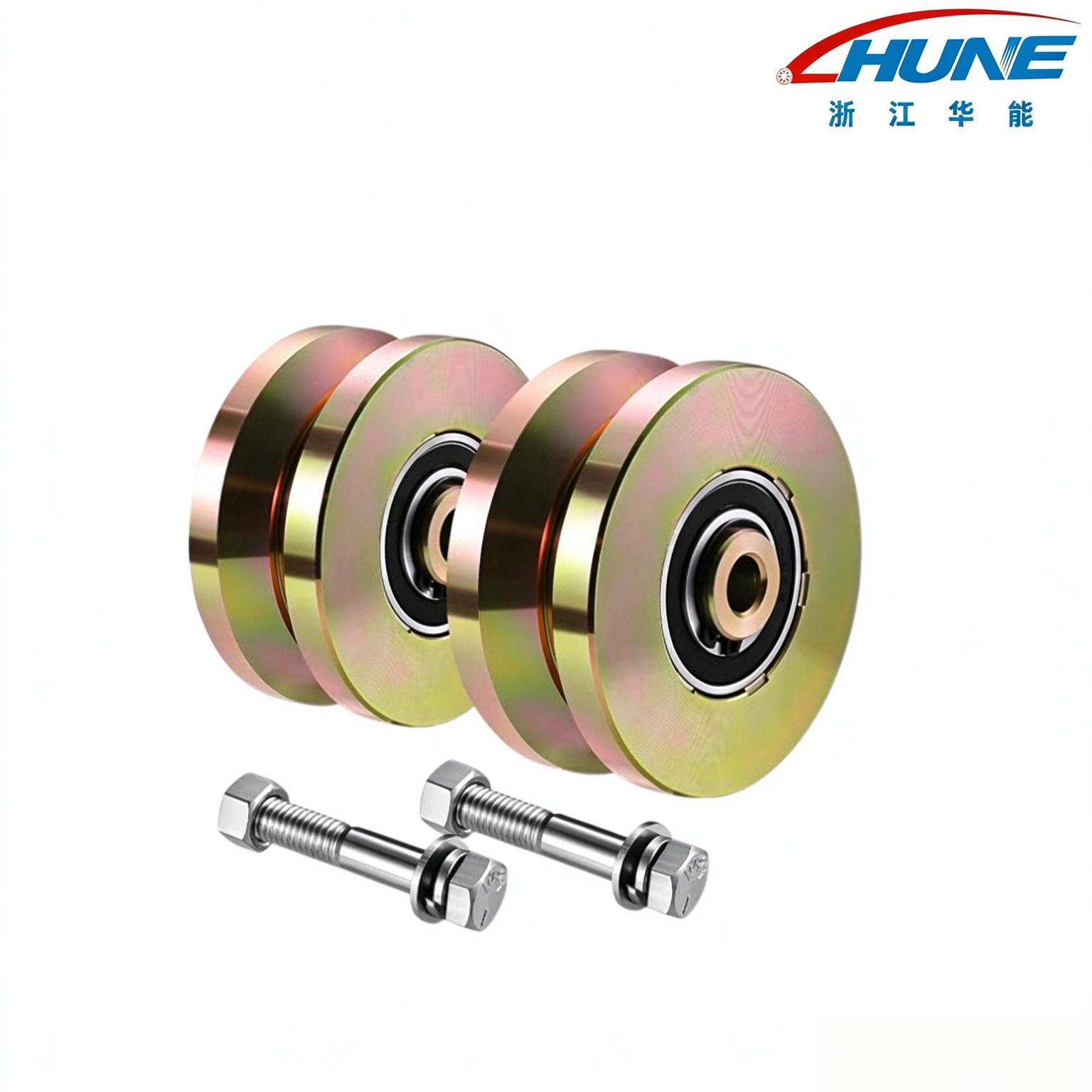
 +86-15058997617