


 English
 Español
 日本語
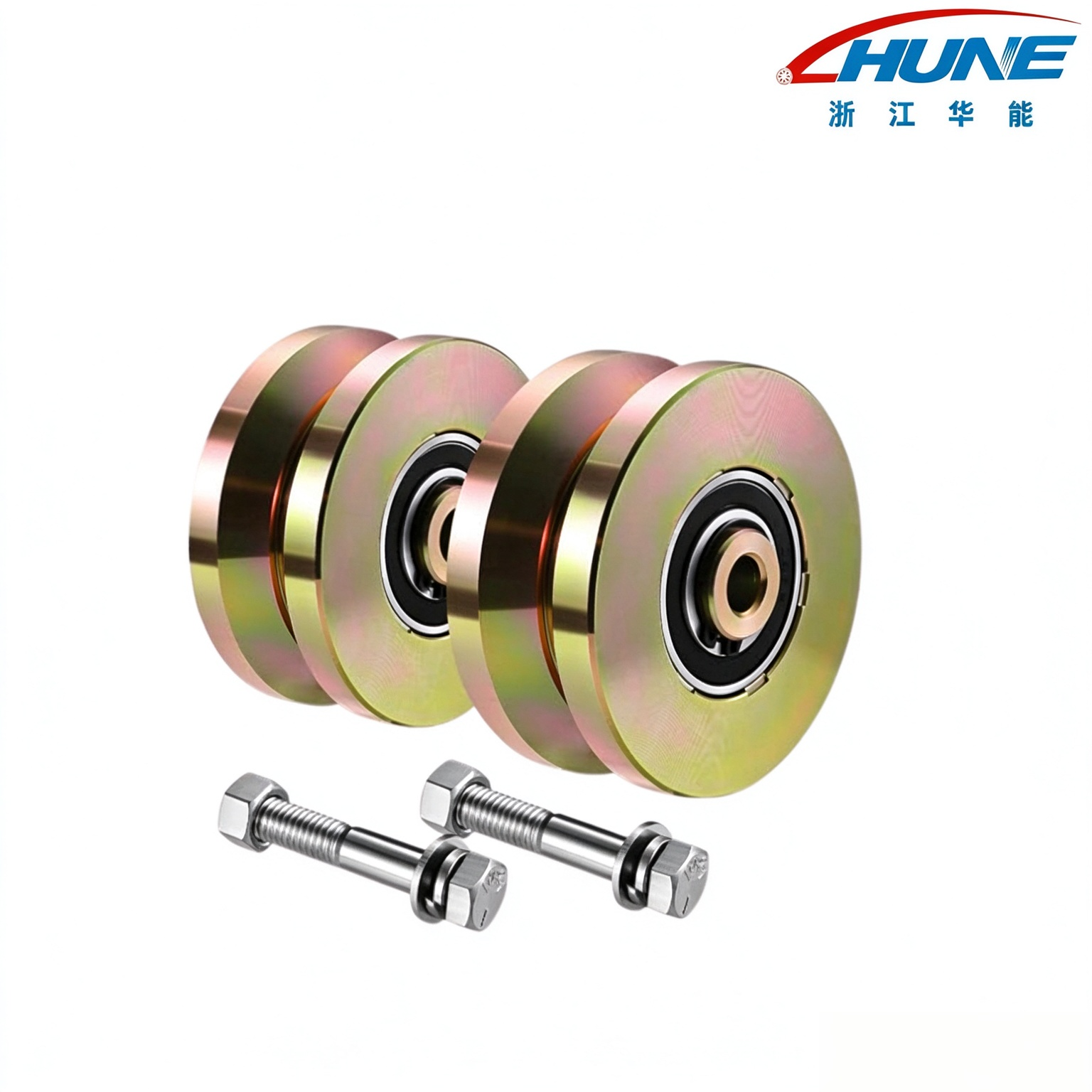
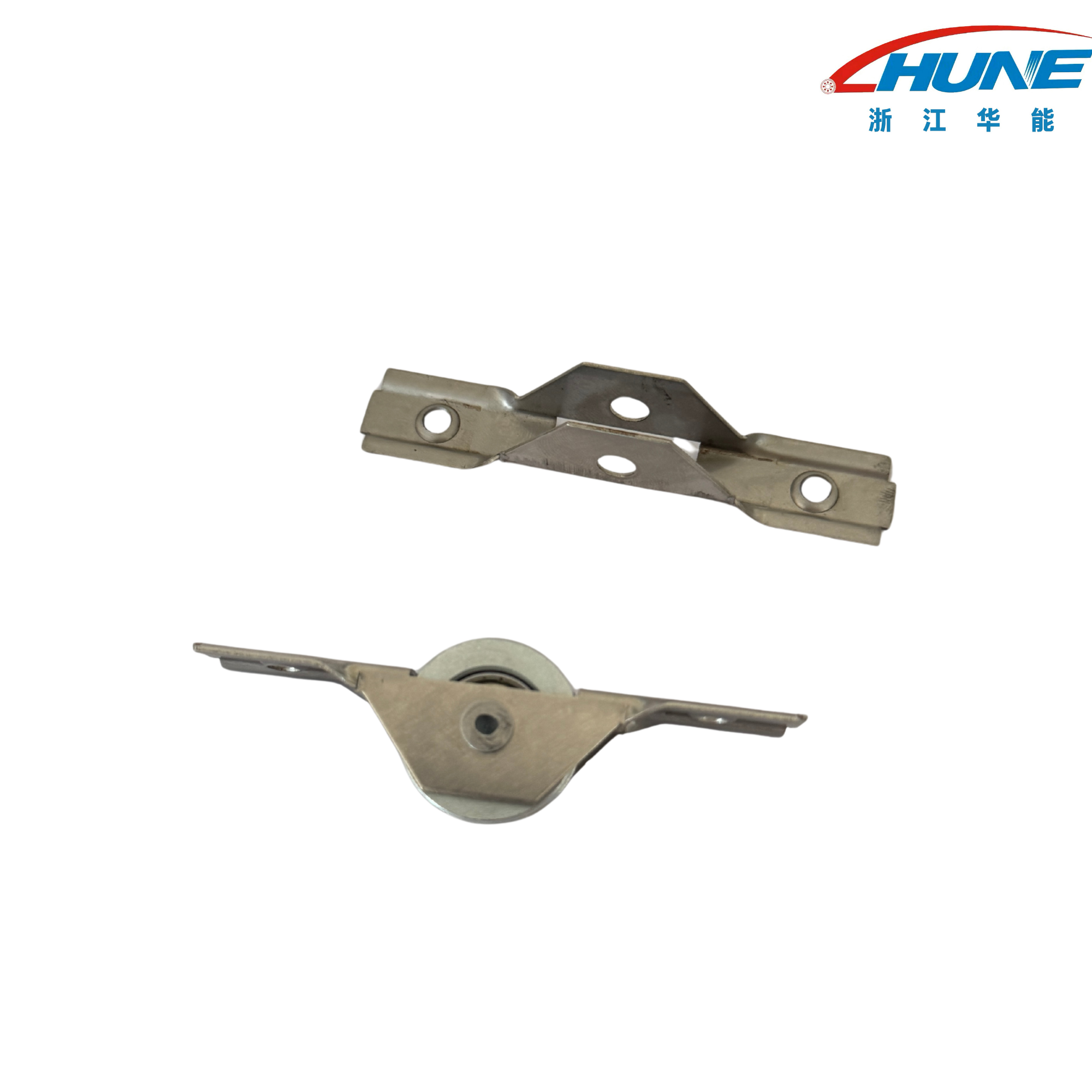
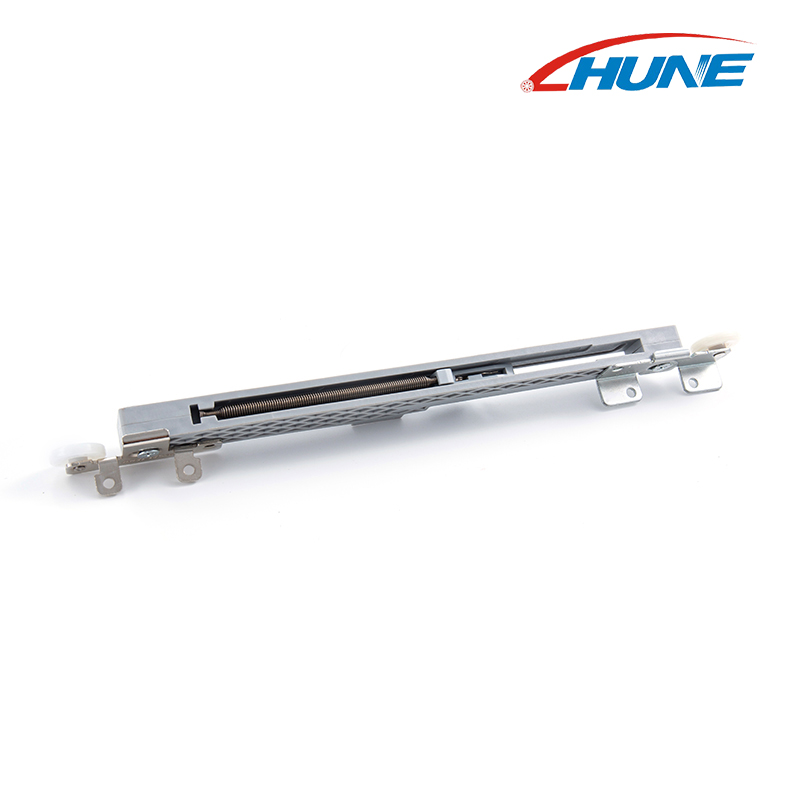
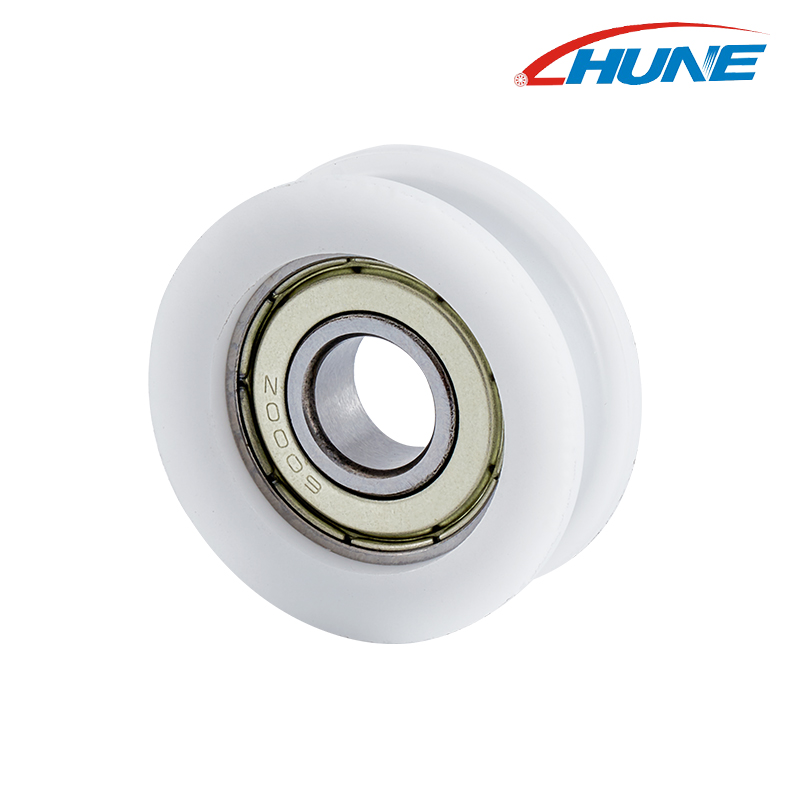
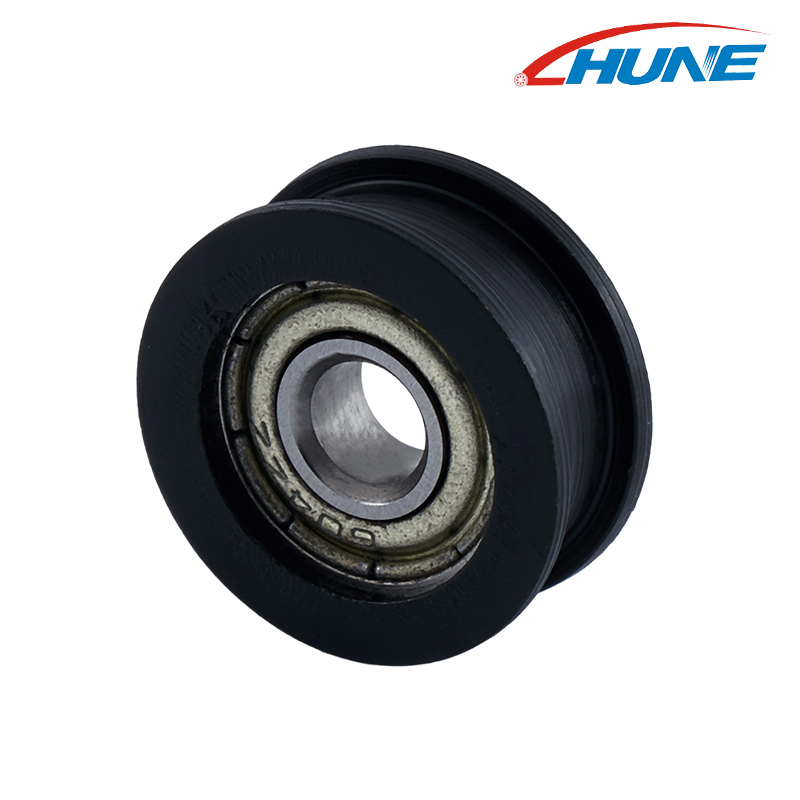
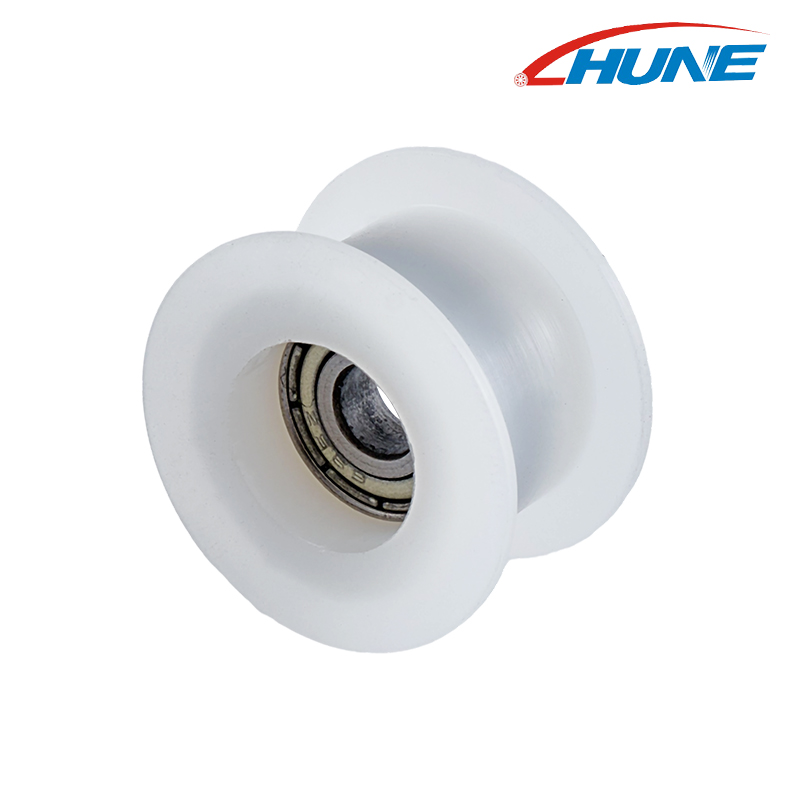
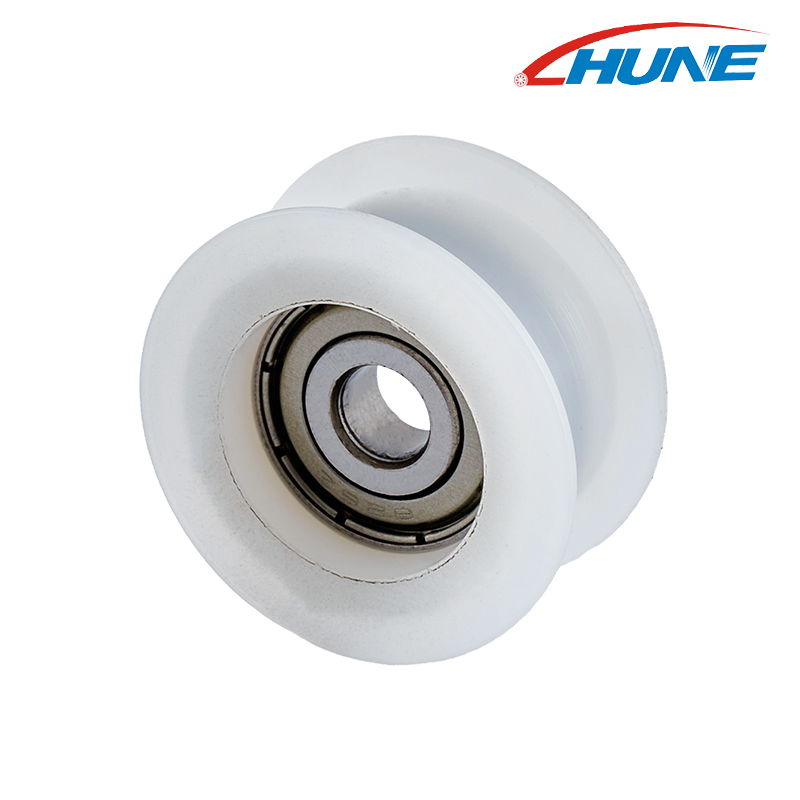


What Is an H-shaped Bearing Pulley? Flat Bottom Design, Side Flanges, Load Support, and Custom Options
A flat-running wheel can carry a load, but it may need another component to keep it on course. An H-shaped Bearing Pulley brings those functions into one wheel profile: a central running surface provides contact, while flanges on either side can help position a compatible track, belt, tape, or guide.
The profile is particularly useful where installation space is limited. In a sliding door roller or drawer roller, the wheel may need to fit a narrow track without drifting sideways. In a belt guide pulley or tape guide pulley, the central channel must accommodate a flexible material without damaging its edges. Those applications may look similar in a product photograph, but they place different demands on the wheel.
Hune provides H-shaped Bearing Pulley, H type bearing roller, small pulleys with bearings, small pulley bearings, nylon pulley wheel, POM bearing pulley, POM plastic H-shaped bearing pulley, low-noise sliding roller, and custom bearing pulley solutions for matched sliding and guide assemblies.
What Is H-shaped Bearing Pulley?
An H-shaped Bearing Pulley is a bearing-integrated wheel with a central running surface and flanges on both sides. Viewed in cross-section, the wheel profile resembles an “H.” Depending on the design, its center may be described as a flat bottom surface or a central contact channel.
A typical pulley may combine:
- A nylon, POM, or other plastic wheel body
- A built-in ball bearing with a central bore
- Bearing shields or seals, where specified
- A shaft, bolt, or pin for mounting
- A central running surface and two side flanges
The bearing allows the wheel body to rotate around its mounting point. The outer profile determines how the wheel meets its track or guided material. H-shaped is a description of the profile, not a standardized dimension: central width, flange height, and wheel diameter must be specified for each assembly.
An H type bearing roller may be supplied as an individual wheel or installed within a sliding door roller, window roller pulley, drawer roller, belt guide pulley, tape guide pulley, or custom guide structure.
How a H-shaped Bearing Pulley Works
The bearing supports rotation between the shaft and wheel body. As the pulley moves, its central surface rolls against a mating part. The two flanges provide boundaries on either side of that contact area.
What happens at those boundaries depends on the application. On a raised track, the flanges may help keep the wheel aligned. With a flat belt or tape, they may limit sideways travel—but should not continuously pinch or abrade its edges. The flange is a guide feature, not a remedy for a badly aligned track or a belt that runs off-center.

The finished pulley's behavior depends on central channel width, flange height, wheel diameter, bearing fit, shaft alignment, load direction, and the mating surface. Material matters too: a POM or nylon wheel avoids direct metal-to-metal contact, but neither material guarantees quiet operation if the bearing is loose or the profile rubs the guide.
Compact designs may use a 624ZZ bearing pulley, 625ZZ bearing pulley, or 626ZZ bearing pulley. A 6000 bearing pulley allows for a different, larger bearing envelope. The bearing model should follow the required shaft size and wheel structure rather than be selected by application name alone.
Why H-shaped Profile Design Matters
The profile determines which part of the wheel carries the working load and when its flanges make contact. Small dimensional differences can change the contact pattern.
Flat Bottom Contact Surface
The flat bottom surface is the intended running area in many H-shaped designs. Its width must suit the track, belt, tape, or other mating component.
A wider surface does not automatically distribute load evenly. Alignment, surface shape, material stiffness, and operating force determine the actual contact area. For a flexible tape, surface finish may matter as much as width; for a rigid track, profile tolerances may matter more.
Double Side Flanges
The two flanges provide lateral boundaries. They can help limit movement across a track or keep a belt within the pulley's central area.
Their height and clearance must be appropriate. Flanges that are too low may provide little guidance. Flanges that are too high or too close together may interfere with adjacent parts or rub the edges of a belt or tape.
Central Contact Channel
The central contact channel should be dimensioned for the part it carries or follows. A belt needs room to run without edge damage. A raised rail needs sufficient clearance to avoid binding while still receiving the intended guidance.
These are different contact conditions; one standard H shaped pulley should not be assumed suitable for both.
Load Transfer and Stability
A well-matched profile helps the load pass through the wheel, bearing, shaft, and bracket as intended. Side forces also need attention. If a flange repeatedly carries substantial side load, wear and rolling resistance may increase even though the central running surface appears sound.
Main Structures of H-shaped Bearing Pulley
H-shaped pulleys can share the same general cross-section while using different materials, bearings, and mounting arrangements.
H Type Bearing Roller
An H type bearing roller has a central running area bounded by side flanges. It may guide a track or another mating component when its dimensions and loading are suitable.
Small Pulleys with Bearings
Small pulleys with bearings combine compact wheel bodies with internal ball bearings. They are used where the available space limits wheel diameter, width, or shaft size.
Small Pulley Bearings
Small pulley bearings refers to bearing-based components used in compact pulley assemblies. The term should be accompanied by the actual bearing model and wheel dimensions when specifying a product.
Nylon Pulley Wheel with Sealed Bearing
A nylon pulley wheel with sealed bearing combines a nylon running surface with a bearing selected for additional protection. The seal type and its suitability for dust or moisture exposure should be checked for the operating environment.
POM Plastic H-shaped Bearing Pulley
A POM plastic H-shaped bearing pulley offers a stable molded or machined profile and a smooth plastic contact surface. It may suit compact guides, drawer rollers, and other assemblies where channel dimensions need close control.
Low-noise Sliding Roller
A low-noise sliding roller is designed around the complete contact system: wheel material, bearing condition, profile fit, track finish, and mounting alignment. The name describes a design objective, not a noise rating by itself.
Sliding Door Roller
An H-shaped sliding door roller can carry a panel along a compatible track. The door load, track profile, bracket, and number of rollers determine the working conditions.
Window Roller Pulley
A window roller pulley usually has limited installation space. Profile fit, bearing protection, and exposure to moisture should be considered with the window frame design.
Drawer Roller
A drawer roller provides compact rolling support in a slide assembly. The central width and flange clearance must work with the drawer rail throughout its full travel.
Belt Guide Pulley
A belt guide pulley supports a compatible belt on its central surface. Flanges may limit lateral movement, but belt tracking should primarily be addressed through pulley alignment and the overall drive or guide design.
Tape Guide Pulley
A tape guide pulley handles tape, film, or another flat flexible material. Surface finish, channel width, and edge clearance are especially important where the material is thin or easily marked.
Double-flange Bearing Pulley
A double-flange bearing pulley has side boundaries on both edges of its running surface. Flange height and side clearance should reflect the guide material and expected lateral movement.
Custom Bearing Pulley
A custom bearing pulley can be specified from a drawing or sample, together with track, belt, tape, shaft, and bracket dimensions. The mating-part details are essential to defining a useful H-shaped profile.
Common Bearing Options for H-shaped Bearing Pulley
Bearing choice establishes the bore and influences the space available for the wheel body. Potential configurations include:
- 6000 bearing pulley
- 624ZZ bearing pulley
- 625ZZ bearing pulley
- 626ZZ bearing pulley
- 6000 sealed bearing pulley
- 624ZZ POM bearing pulley
- 625ZZ drawer roller
- 626ZZ sliding door roller
A ZZ shielded bearing has metal shields on both sides. These help limit the entry of larger particles, but are not equivalent to a sealed bearing specified for a moisture-prone environment. Seal construction should be checked rather than inferred from a general product description.
A 624ZZ design can serve a compact wheel, while a 6000 bearing pulley requires a larger bearing envelope. Neither designation states the load capacity of the assembled pulley. Wheel material, bearing seating, shaft support, bracket strength, and load direction must also be evaluated.
Common Materials Used in H-shaped Bearing Pulley
The wheel body, bearing, and shaft have different jobs. The table below is a starting point for material selection, not a substitute for checking a particular grade or formulation.
| Material | Main characteristics | Typical applications |
| Nylon | Tough plastic suited to many repeated-contact designs | Nylon pulley wheel, sliding door roller, guide roller |
| POM | Dimensionally stable with a smooth running surface | POM bearing pulley, drawer roller, compact guides |
| PA | Polyamide material family used in molded wheels | Plastic bearing pulley, furniture sliding systems |
| Engineering Plastic | Allows compact or specialized molded profiles | H type bearing roller, custom bearing pulley |
| PU or Rubber Coating | Compliant contact, depending on formulation | Selected belt guide pulley and guide roller designs |
| Bearing Steel | Common material for bearing rings and rolling elements | 6000, 624ZZ, 625ZZ, and 626ZZ bearings |
| Stainless Steel Bearing | Improved corrosion resistance, depending on grade | Selected humid or exposed assemblies |
| Carbon Steel Shaft or Bolt | Mounting support when suitably specified | Axles, bolts, and pulley brackets |
PA is a polyamide family that includes materials commonly called nylon. Material grade, molding method, load, temperature, and exposure conditions are more useful specifications than a broad material label alone.
Key Functions of H-shaped Bearing Pulley
Depending on its profile and installation, an H-shaped Bearing Pulley may provide:
- Rolling support: The built-in bearing allows rotation around the shaft.
- Guided movement: The central surface and flanges work with a compatible guide.
- Load support: The wheel, bearing, shaft, and bracket carry the applied load together.
- Flat material support: The running surface can support a suitable belt, tape, or strip.
- Lateral positioning: Flanges can limit sideways movement within designed clearances.
- Track following: A matched profile can follow a raised rail or sliding track.
- Surface separation: Plastic or coated wheels can avoid direct contact between harder parts.
Noise reduction, vibration control, and wear reduction are possible outcomes of a properly matched assembly. They should be verified in the intended system rather than assumed from the H-shaped profile.
Applications of H-shaped Bearing Pulley
A door track, a drawer slide, and a tape path may all use double-flanged wheels. Their loads and acceptable contact patterns, however, are different.
Sliding Door Rollers
In sliding door roller systems, an H-shaped Bearing Pulley may support the panel on a matching track. Specify track width and shape, door weight, wheel diameter, bearing, and bracket arrangement together.
Window Roller Pulley Systems
Window roller pulley systems require compact parts that fit the frame profile. Bearing protection, sash load, available adjustment, and exposure to moisture can influence the design.
Drawer Rollers
Drawer rollers must fit within a restricted slide path. Check wheel width, flange height, rail clearance, and operation across the full drawer travel—not just at the closed position.
Belt Guide Pulley Systems
A belt guide pulley should support the belt without persistent edge rubbing. Belt width, central running width, speed, alignment, and any tension in the system all matter.
Tape Guide Pulley Systems
For a tape guide pulley, the tape or film may be more vulnerable than the wheel. Running-surface finish, flange clearance, and the material's allowable bending path deserve particular attention.
Furniture Sliding Systems
Cabinets, wardrobes, and sliding panels may use a nylon pulley wheel or POM bearing pulley. Quiet operation depends on track condition and mounting fit as well as wheel material.
Guide Roller Systems
A guide roller may experience both rolling load and lateral contact. Concentricity, bearing fit, and flange wear should be checked against the actual guide geometry.
Household Appliances
Small pulleys with bearings may guide a cover, tray, or moving part inside an appliance. Temperature, repeated movement, and nearby materials affect wheel and bearing selection.
Small Machinery
Small machinery may use an H-shaped wheel for a belt, tape, or guided component. The shaft fit, operating speed, working load, and available maintenance access should be defined.
Custom Rotating Assemblies
Custom rotating assemblies may require a special channel width, unequal flange dimensions, a particular bearing, or a non-standard mounting method. Testing against the actual mating component is especially valuable.
How to Select the Right H-shaped Bearing Pulley
Begin with what the central surface will contact. A rigid track, flat belt, and thin tape require different clearances and surface conditions.
- Measure the mating part. Record track profile or belt/tape width, including normal dimensional variation.
- Define the wheel profile. Specify outer diameter, wheel width, flat bottom width, central channel width, and flange height.
- Identify the loads. Include rolling load, side force, speed, and movement frequency.
- Select the bearing and shaft. Confirm bearing model, bore, retention method, and protection against the actual environment.
- Choose wheel material. Match nylon, POM, another engineering plastic, or a coating to the contact surface and temperature.
- Check installation clearance. Ensure the flanges do not interfere with the bracket or surrounding parts.
- Test in the assembly. Look for edge rubbing, unstable tracking, noise, and wear under representative conditions.
An unsuitable pulley may bind on a track, allow a belt to rub a flange, mark a tape edge, or loosen at its bearing seat. These issues cannot be solved by bearing selection alone.
Customization Options for H-shaped Bearing Pulley
Hune can review custom bearing pulley requirements using drawings, samples, and dimensions of the mating track, belt, tape, shaft, and bracket.
Custom specifications may cover:
- Wheel outer diameter and width
- Flat bottom width and central channel width
- Flange height and double-flange profile
- Nylon, POM, PA, engineering plastic, or specified coating
- Bearing model, bore, clearance, and shield or seal type
- Color and material hardness
- Shaft or bolt matching
- Mold development and assembly method
- Application-specific surface finish and inspection requirements
For a belt guide pulley or tape guide pulley, provide material width and edge-clearance requirements. For a sliding track, provide its full cross-section. These details turn a general H-shaped concept into a workable component drawing.
Why Choose Hune H-shaped Bearing Pulley
Hune / Hunepulley / Zhejiang Huaneng Micro Bearing Co., Ltd. works with plastic bearing pulleys, miniature bearings, door and window roller hardware, drawer rollers, and guide components. This background supports consideration of the wheel profile and bearing within the complete mounting structure.
Experience with Plastic Bearing Pulley Systems
Hune's product scope includes H-shaped Bearing Pulley, nylon pulley wheel, POM bearing pulley, POM plastic H-shaped bearing pulley, low-noise sliding roller, sliding door roller, window roller pulley, drawer roller, belt guide pulley, and tape guide pulley designs.
Matching of Wheel Body, Profile, Bearing and Shaft
The critical fits are the central channel against its mating part, the bearing in the wheel body, and the bearing on the shaft. Hune can review these interfaces together with the available installation space.
Bearing Options for Different Applications
Potential configurations include 6000 bearing pulley, 624ZZ bearing pulley, 625ZZ bearing pulley, and 626ZZ bearing pulley. The appropriate option depends on bore size, wheel dimensions, load, and operating conditions.
Material and Structure Options
Depending on the design, options may include nylon, POM, PA, other engineering plastics, PU or rubber coating, shielded or sealed bearings, and custom double-flange profiles.
Attention to Functional Details
Channel width, flange clearance, concentricity, bearing fit, running-surface condition, and shaft mounting affect how an H-shaped wheel performs after installation.
Application Coverage
H-shaped Bearing Pulley designs may be specified for sliding door rollers, window roller pulley systems, drawer rollers, belt guide pulley systems, tape guide pulley systems, furniture sliding systems, guide roller systems, household appliances, small machinery, and custom rotating assemblies.
An H-shaped Bearing Pulley is most useful when its central running surface and two flanges are dimensioned for a specific track or guided material. The bearing enables rotation; the profile establishes contact and lateral clearance; the shaft and bracket hold the arrangement in position.
Hune provides H-shaped Bearing Pulley, H shaped pulley, H type bearing roller, small pulleys with bearings, small pulley bearings, plastic bearing pulley, bearing pulley wheel, nylon pulley wheel, POM bearing pulley, POM plastic H-shaped bearing pulley, low-noise sliding roller, 6000 bearing pulley, 624ZZ bearing pulley, 625ZZ bearing pulley, 626ZZ bearing pulley, and custom bearing pulley options for appropriately matched sliding and guide assemblies.