


 English
 Español
 日本語
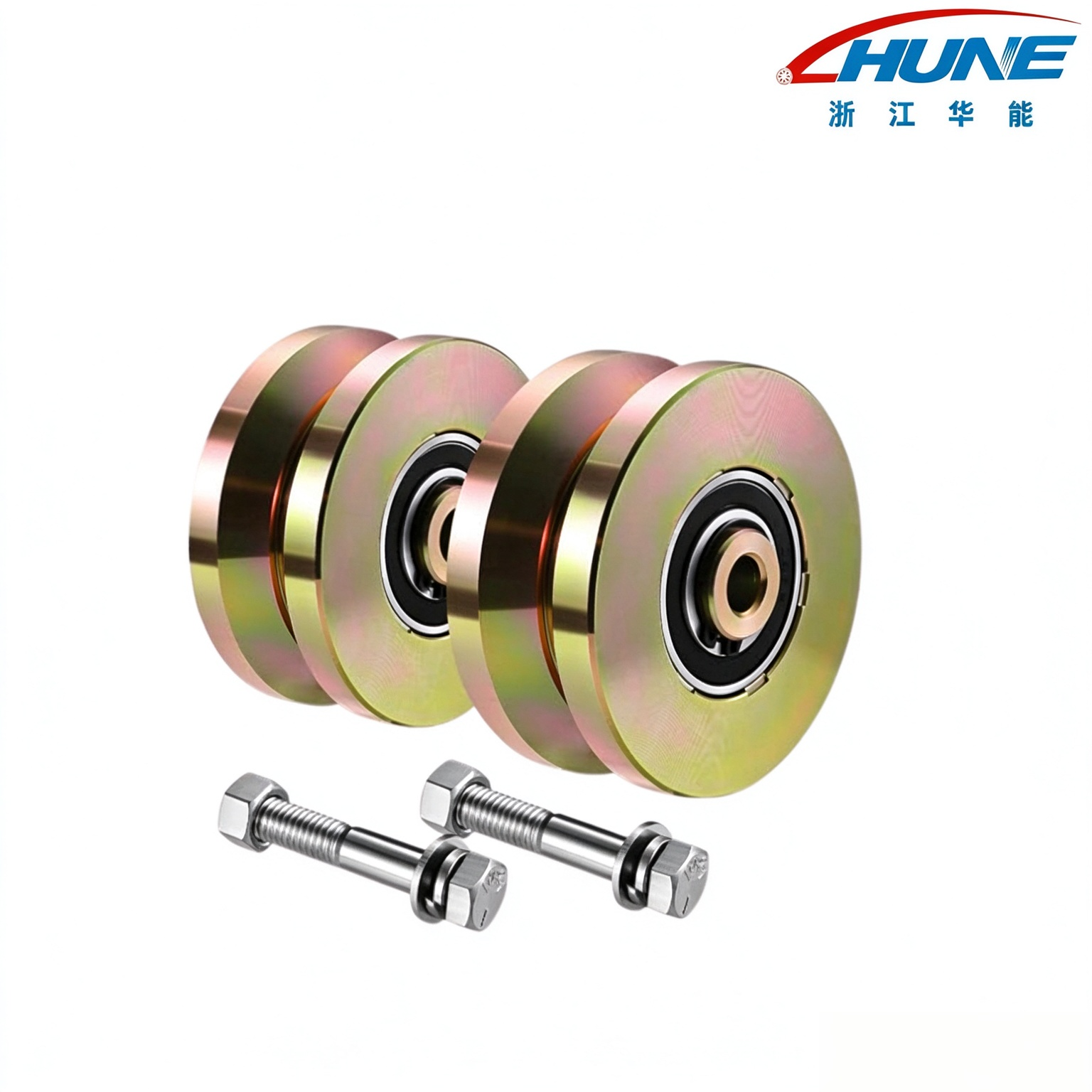
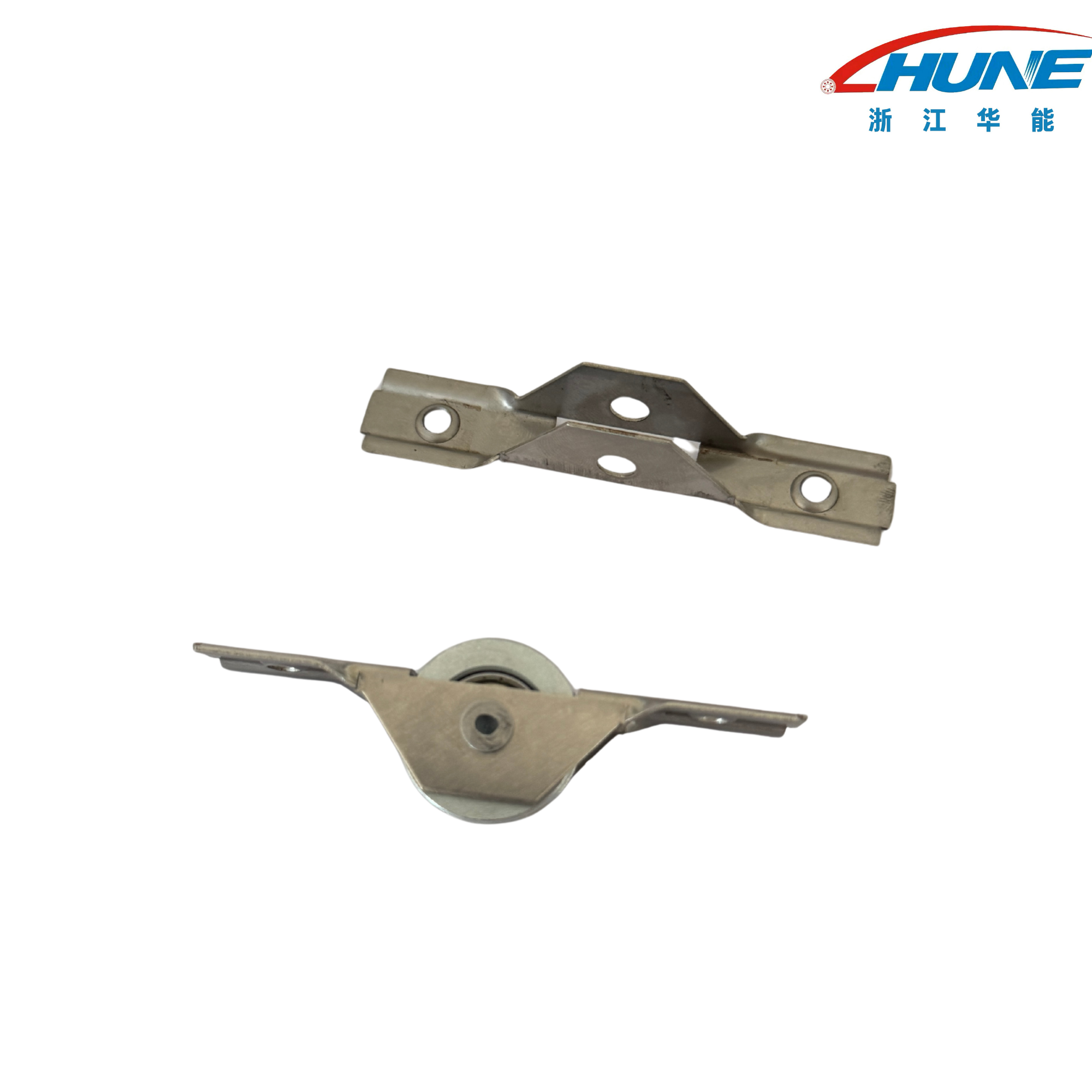
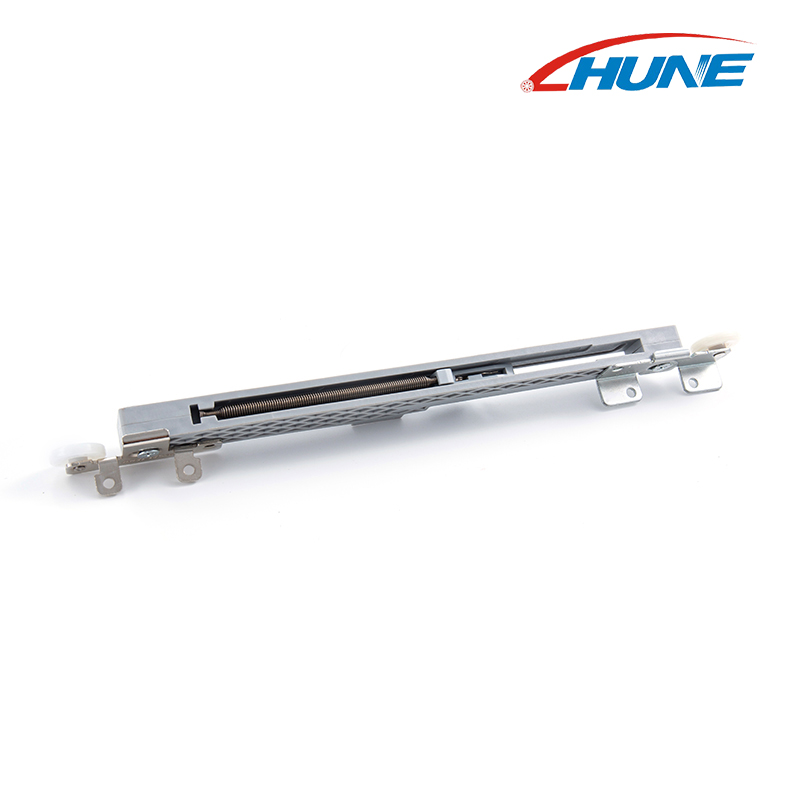


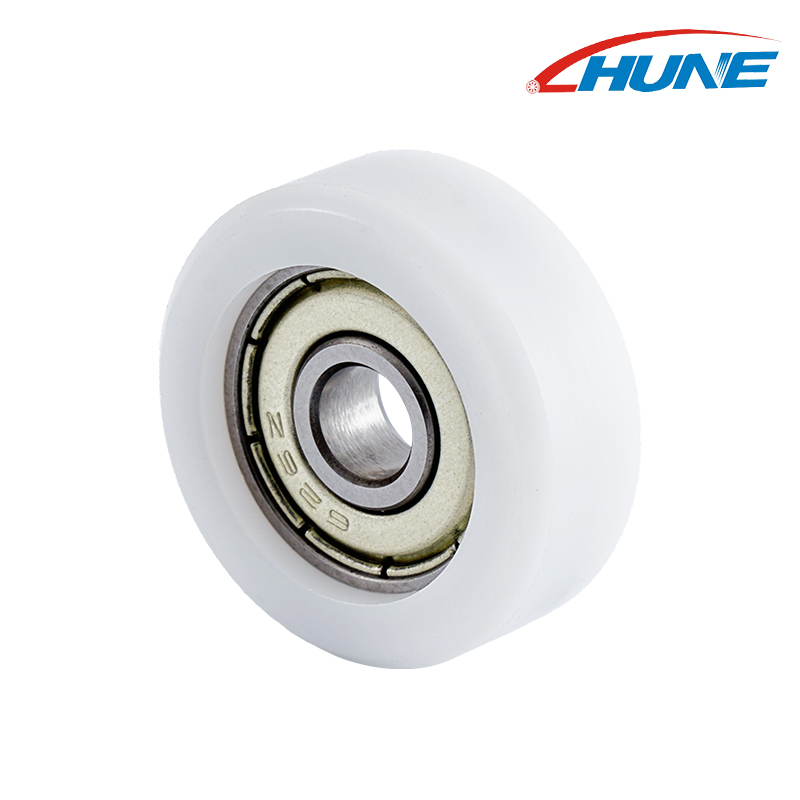


F-shaped Bearing Pulley for Sliding Door Pressure Wheels, Drawer Slide Rail Rollers, Guide Systems, and Conveyor Wheels
In a narrow sliding mechanism, a few millimeters of wheel profile can determine whether the roller follows its guide or rubs against it. That is where an F-shaped Bearing Pulley differs from a plain bearing wheel: its flange, shoulder, or stepped surface is shaped to meet a particular rail, panel, or contact point.
The name F-shaped describes a family of profiles rather than one standardized cross-section. Depending on the drawing, the wheel may act as a side guide, a sliding door pressure wheel, a drawer slide rail roller, or an idler pulley. An internal ball bearing supports rotation around a shaft, bolt, or pin; the outer profile determines how the wheel contacts the rest of the assembly.
Hune works with F-shaped Bearing Pulley, Plastic Bearing Roller F Type, F type bearing roller, POM idler pulley, nylon pulley wheel, rubber coated bearing pulley, PU guide roller, polyurethane guide roller, and custom bearing pulley designs for sliding hardware and mechanical guide systems.
What Is F-shaped Bearing Pulley?
An F-shaped Bearing Pulley is a bearing-integrated wheel with an asymmetric or stepped outer profile. Depending on the design, that profile may include a side flange, shoulder edge, offset running surface, or separate pressure contact area.
A typical assembly combines a POM, nylon, or other plastic wheel body with a built-in ball bearing. Some versions have a PU or rubber-coated contact surface. The bearing is mounted around a shaft or bolt, while the wheel's shaped exterior contacts a rail, panel edge, slide, or other mating part.
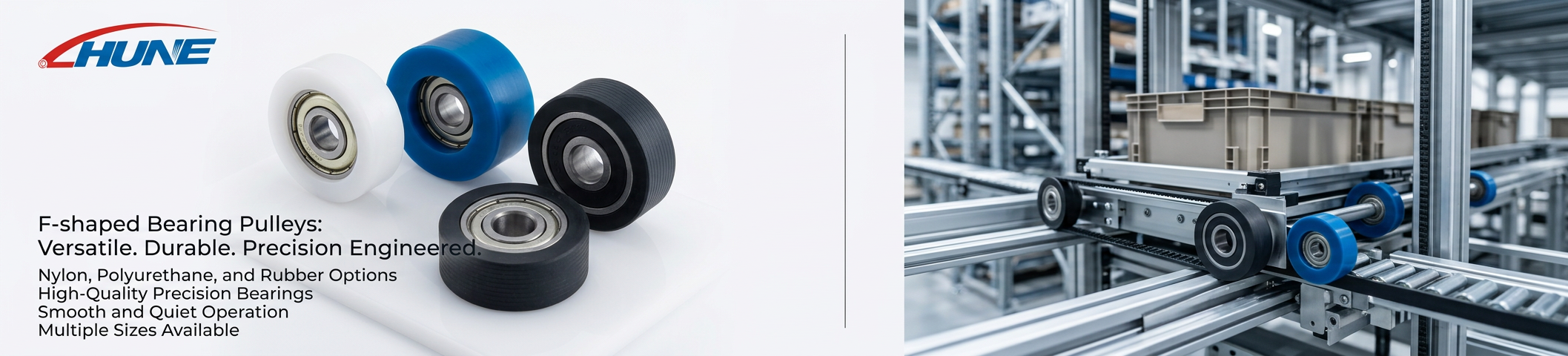
The term F type bearing roller does not specify universal flange dimensions. Two F-shaped wheels may have different contact widths, step heights, and mounting offsets. For replacement or new-product development, the mating-part drawing is more useful than the profile name alone.
How a F-shaped Bearing Pulley Works
The bearing lets the wheel rotate relative to its mounting shaft. As the assembly moves, one part of the outer profile rolls on the main contact surface, while a flange or shoulder may help locate the wheel beside an edge.
Those contact points must be designed deliberately. In a sliding door pressure wheel, for example, the bracket and its adjustment determine how firmly the wheel presses against the door or guide. The wheel profile provides the intended contact surface; it does not create controlled pressure by itself.
Likewise, a flanged roller can help maintain lateral position, but its flange should not be treated as an unlimited side-load bearing surface. Excessive side force may cause rubbing, heat, or wear even when the main wheel rotates smoothly.
Wheel diameter, flange height, step size, material hardness, bearing clearance, shaft fit, and mounting alignment all influence the finished result.
Why F-shaped Profile Design Matters
The outer profile determines which surfaces touch, where they touch, and how much clearance remains throughout the mechanism's travel.
Side Positioning
A flange or shoulder can help a wheel follow a rail edge. It should contact the guide as intended, without continuous heavy rubbing caused by a misaligned bracket.
Pressure Contact
A defined running face can be useful in a pressure-wheel assembly. Contact force still needs to be set by the mounting or adjustment structure and checked against the panel or guide material.
Gap Control
A step can place the wheel's running surface at a different level from its bearing or mounting face. This helps fit a compact rail, drawer slide, or bracket layout where a flat roller would not reach the correct contact position.
Wear Reduction
A matching profile avoids unintended contact with nearby edges. If a flange is too tall, a step is too narrow, or the bracket sits at an angle, the shaped wheel may wear faster than a simpler one.
Movement Consistency
Consistent travel depends on the complete fit: profile geometry, bearing seating, shaft location, and the dimensional variation of the rail or panel. Checking the wheel only while it is off the assembly will not reveal every interference point.
Main Structures of F-shaped Bearing Pulley
Different products use the F-shaped concept for different contact arrangements. The structures below should be matched to their intended hardware rather than treated as interchangeable versions.
Plastic Bearing Roller F Type
Plastic Bearing Roller F Type uses a molded wheel body with an integrated bearing. Its stepped profile can be formed to suit compact furniture hardware, guide structures, or equipment assemblies.
F Type Bearing Roller
F type bearing roller is a general description for a bearing wheel with an F-shaped or stepped running profile. Its precise function depends on which face carries the load and whether the flange serves as a guide.
F Shaped Pulley with Side Flange
A side flange provides a lateral reference next to the main running surface. The flange needs sufficient clearance to prevent unwanted friction during normal travel.
Stepped Bearing Pulley Wheel
A stepped bearing pulley wheel has contact surfaces at different diameters or axial positions. It may fit a rail or slide that cannot be served by a flat wheel.
POM Idler Pulley
A POM idler pulley provides a dimensionally stable plastic running surface. As an idler, it rotates without driving the system directly; any belt or component tension is established by the surrounding mechanism.
Nylon Pulley Wheel
A nylon pulley wheel offers a tough contact surface for many repeated-movement applications. The nylon grade, wheel shape, and load still need to be specified for the operating conditions.
Rubber Coated Bearing Pulley
A rubber coated bearing pulley adds a compliant contact layer. Coating thickness, hardness, wear, and bonding to the core matter when contact pressure is repeated.
PU Guide Roller
A PU guide roller or polyurethane guide roller provides a compliant running surface for a compatible rail, panel, or conveyed part. Softer contact may help with impact or surface protection, but the coating must suit the load.
Sliding Door Pressure Wheel
A sliding door pressure wheel contacts a door panel or guide surface to help control movement. Its mounting arrangement determines the working pressure and available adjustment.
Drawer Slide Rail Roller
A drawer slide rail roller fits within a compact slide structure. Step dimensions, wheel width, and rail clearance are particularly important.
Sliding Conveyor Wheel
A sliding conveyor wheel may guide or support a moving component in handling equipment. Load cycle, contact material, and contamination exposure influence its design.
Custom Bearing Pulley
A custom bearing pulley can be specified for a particular rail, panel, slide, bracket, or contact position. Drawings of the surrounding assembly help establish the profile more reliably than a wheel sample alone.
Common Bearing Options for F-shaped Bearing Pulley
Bearing size affects bore dimensions, available wheel geometry, and mounting layout. Depending on the product design, configurations may include:
- 608ZZ idler pulley
- 6002ZZ idler roller
- 626ZZ bearing pulley
- 625ZZ bearing pulley
- 608ZZ bearing roller
- 6002ZZ bearing roller
- 626ZZ nylon pulley wheel
- 625ZZ sliding door pressure wheel
The ZZ designation indicates metal shields on both sides of the bearing. These help limit the entry of larger particles, but should not be assumed to provide the same moisture protection as a bearing selected specifically for wet conditions.
A 6002ZZ idler roller, for example, uses a bearing with a different bore and envelope from a compact 626ZZ design. Neither model number establishes the capacity of the complete pulley. The wheel body, bearing seat, shaft, bracket, and direction of load must also be checked.
Common Materials Used in F-shaped Bearing Pulley
The material at the contact surface affects movement differently from the material inside the bearing. Selection should account for both.
| Material | Main characteristics | Typical considerations |
| POM | Stable dimensions and a smooth plastic running surface | POM idler pulley, drawer slide rail roller |
| Nylon | Tough material for repeated contact | Nylon pulley wheel, door hardware, guide rollers |
| PA | Polyamide material family used in molded wheel designs | F type bearing roller and equipment components |
| PU Coating | Compliant contact; properties depend on formulation | PU guide roller, polyurethane guide roller |
| Rubber Coating | Softer contact surface with application-specific grip and damping | Rubber coated bearing pulley, pressure wheel |
| Engineering Plastic | Can be molded into complex wheel profiles | Plastic Bearing Roller F Type, custom bearing pulley |
| Bearing Steel | Common material for bearing rings and rolling elements | 608ZZ, 6002ZZ, 626ZZ, and 625ZZ bearings |
| Stainless Steel Bearing | Improved corrosion resistance, depending on grade | Selected humid or exposed assemblies |
| Carbon Steel Shaft or Bolt | Structural mounting support when suitably specified | Shafts, bolts, and pulley brackets |
PA is a type of polyamide, commonly called nylon; it is not a separate performance category in every specification. The selected grade, coating formulation, and service conditions are more informative than the broad material name.
Key Functions of F-shaped Bearing Pulley
An F-shaped Bearing Pulley may provide one or several of these functions when the assembly is designed for them:
- Smooth rolling: The internal bearing allows rotation around the mounting shaft.
- Guided movement: A shoulder or running face follows a compatible guide.
- Side positioning: A flange can help limit lateral movement.
- Pressure contact: A specified wheel surface can contact a panel or rail under controlled force.
- Load support: The wheel, bearing, shaft, and bracket carry the applied load together.
- Idler rotation: The pulley can redirect or support movement without acting as the driver.
- Gap control: A stepped profile can place the contact surface at the required offset.
- Surface protection: A suitable plastic or coating may separate harder mating surfaces.
Noise and wear depend on fit, alignment, bearing condition, and contact force. They cannot be determined from the F-shaped profile alone.
Applications of F-shaped Bearing Pulley
The intended contact arrangement changes from one application to the next. The following examples illustrate where an F-shaped profile may be useful.
Sliding Door Pressure Wheels
A sliding door pressure wheel may maintain contact with a guide or panel to limit unwanted movement. Specify its running surface and adjustment arrangement together; too much pressure can increase rolling resistance and wear.
Drawer Slide Rail Rollers
A drawer slide rail roller must fit the rail over its full travel. Check the step height, flange clearance, wheel width, and available mounting space, including points where the rail profile changes.
Shower Door Rollers
Shower door rollers operate in a moisture-prone environment. Profile matching, corrosion-resistant components, bearing protection, and compatibility with the glass mounting structure are important.
Furniture Sliding Systems
Cabinets, wardrobes, partitions, and storage units may use a POM idler pulley, nylon pulley wheel, PU guide roller, or rubber coated bearing pulley. In these indoor systems, quiet movement matters, but correct rail fit remains the first requirement.
Guide Roller Systems
A shaped flange can follow a guide edge. Side loads should be assessed separately from the load on the main rolling surface.
Idler Pulley Assemblies
An idler pulley may redirect a belt or support a moving part. Bearing speed, applied load, running-surface profile, and the mechanism's tensioning arrangement should be considered.
Sliding Conveyor Wheels
A sliding conveyor wheel may contact a rail or conveyed component repeatedly. Coating wear, contamination, contact pressure, and access for inspection are relevant to selection.
Small Machinery
Small machinery often leaves little room for a bearing wheel. Compact models such as 626ZZ bearing pulley and 625ZZ bearing pulley may suit certain layouts, provided the shaft and profile also fit.
Industrial Equipment
Industrial equipment can expose a roller to frequent cycles, side force, dust, or temperature changes. The duty should be specified before choosing the wheel material and bearing protection.
Custom Rotating Assemblies
Custom rotating assemblies may need an unusual flange, contact offset, coating, or mounting arrangement. Testing the proposed wheel in its intended bracket and guide is especially valuable.
How to Select the Right F-shaped Bearing Pulley
Start with the mating rail, panel, slide, or guide and identify the surfaces that should carry the load. Then specify the wheel around those contact points.
- Map the contact geometry. Record rail dimensions, panel thickness, contact position, and required clearance.
- Define the profile. Specify wheel diameter and width, flange height, step size, shoulder shape, and contact-surface width.
- Establish the forces. Distinguish between rolling load, side load, and any applied pressure.
- Choose bearing and mounting. Confirm bore size, shaft fit, bearing protection, and how the wheel is retained.
- Select material or coating. Consider wear, noise, surface protection, temperature, and moisture.
- Check the full travel. A roller may fit at one point yet interfere elsewhere along a drawer slide or track.
- Evaluate the assembly. Observe rolling feel, contact pattern, noise, and wear under representative conditions.
Incorrect selection can cause binding, inconsistent pressure, lateral drift, flange wear, damage to a guide surface, or looseness at the bearing seat.
Customization Options for F-shaped Bearing Pulley
An F-shaped profile is often tied closely to its surrounding hardware. Hune can review custom bearing pulley requirements from drawings, samples, mating-part dimensions, and expected working conditions.
Custom details may include:
- Wheel outer diameter and width
- Flange height, step size, and shoulder profile
- Running-face width and pressure contact surface
- POM, nylon, PA, engineering plastic, PU, or rubber material specifications
- Bearing model, bore, clearance, and shield or seal type
- Coating thickness, hardness, and color
- Shaft or bolt fit and assembly method
- Mold development and application-specific inspection criteria
For a pressure wheel, specify how pressure is applied and adjusted. For a guide roller, provide the guide-edge dimensions and expected side force. Those details are more useful than requesting an “F-shaped wheel” without an assembly drawing.
Why Choose Hune F-shaped Bearing Pulley
Hune / Hunepulley / Zhejiang Huaneng Micro Bearing Co., Ltd. works with bearing-based pulley wheels, door and window roller hardware, guide rollers, and related rotating components. For an F-shaped wheel, that background supports a practical review of the profile, bearing, shaft, and mating hardware as one assembly.
Experience with F Type Bearing Roller Systems
Hune's product scope includes F-shaped Bearing Pulley, Plastic Bearing Roller F Type, POM idler pulley, nylon pulley wheel, rubber coated bearing pulley, PU guide roller, polyurethane guide roller, sliding door pressure wheel, drawer slide rail roller, and sliding conveyor wheel designs.
Matching of Wheel Body, Profile, Bearing and Shaft
The wheel must fit at several interfaces. Hune can review the flange and step against the guide, the bearing against the wheel body, and the bore against the shaft or bolt.
Bearing Options for Different Applications
Possible configurations include 608ZZ idler pulley, 6002ZZ idler roller, 626ZZ bearing pulley, and 625ZZ bearing pulley. Selection depends on the mounting dimensions and working conditions rather than model popularity.
Material and Coating Options
POM, nylon, PA, other engineering plastics, PU coating, and rubber coating offer different contact characteristics. Bearing steel or suitable stainless steel bearing components may be considered according to the environment.
Focus on Functional Details
Flange clearance, step accuracy, bearing fit, concentricity, and coating condition determine whether the assembled roller makes contact where intended.
Application Coverage
Potential uses include sliding door pressure wheels, drawer slide rail rollers, shower door rollers, furniture sliding systems, guide roller systems, idler pulley assemblies, sliding conveyor wheels, small machinery, industrial equipment, and custom rotating assemblies.
An F-shaped Bearing Pulley combines an internal bearing with a flange, shoulder, or stepped outer profile. Its value lies in fitting a specific guide, panel, slide, or pressure-contact arrangement—not simply in having a distinctive wheel shape.
For reliable selection, evaluate profile dimensions, bearing and shaft fit, contact force, material, and mounting alignment together. Hune provides F-shaped Bearing Pulley, Plastic Bearing Roller F Type, F type bearing roller, POM idler pulley, nylon pulley wheel, rubber coated bearing pulley, PU guide roller, polyurethane guide roller, and custom bearing pulley options for appropriately matched sliding and rotating assemblies.