


 English
 Español
 日本語
日本語
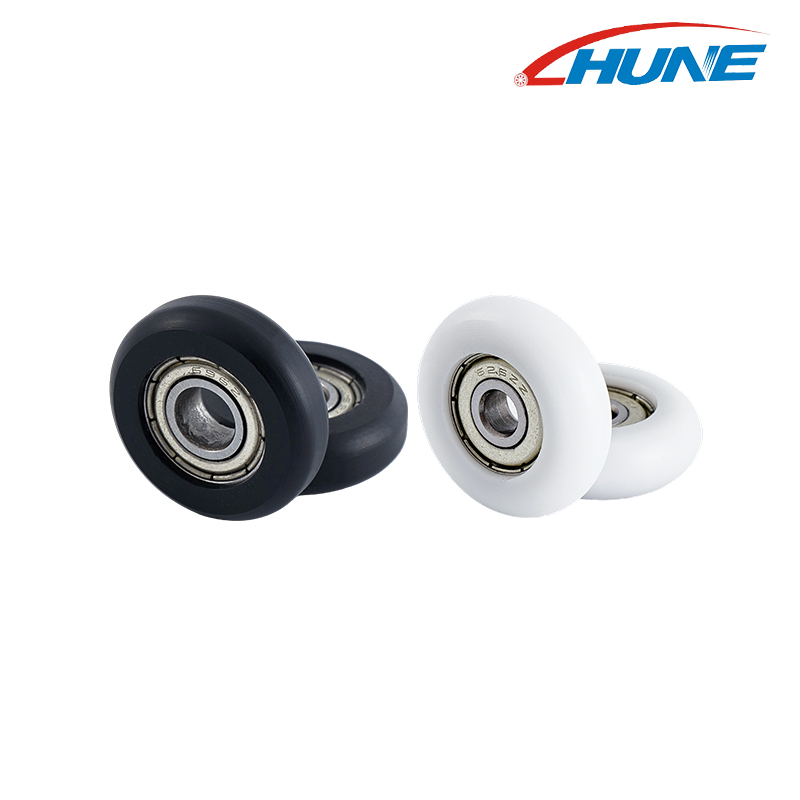
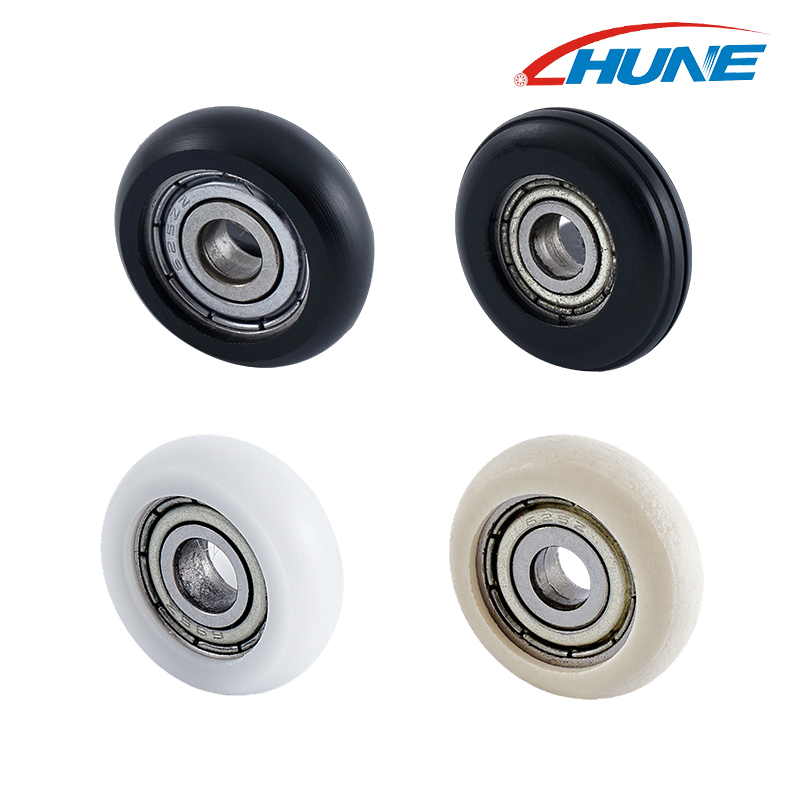
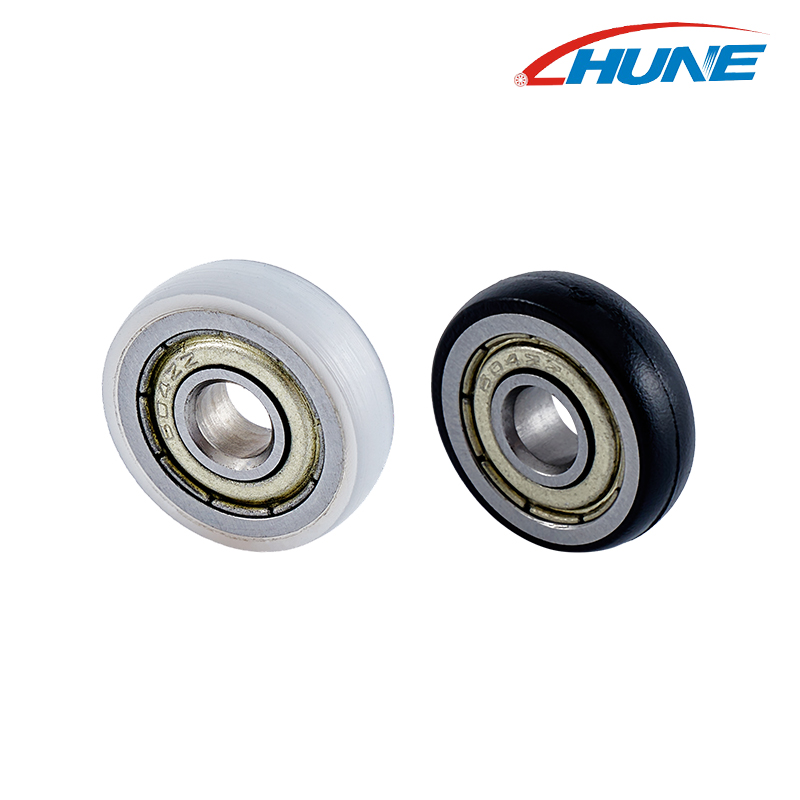
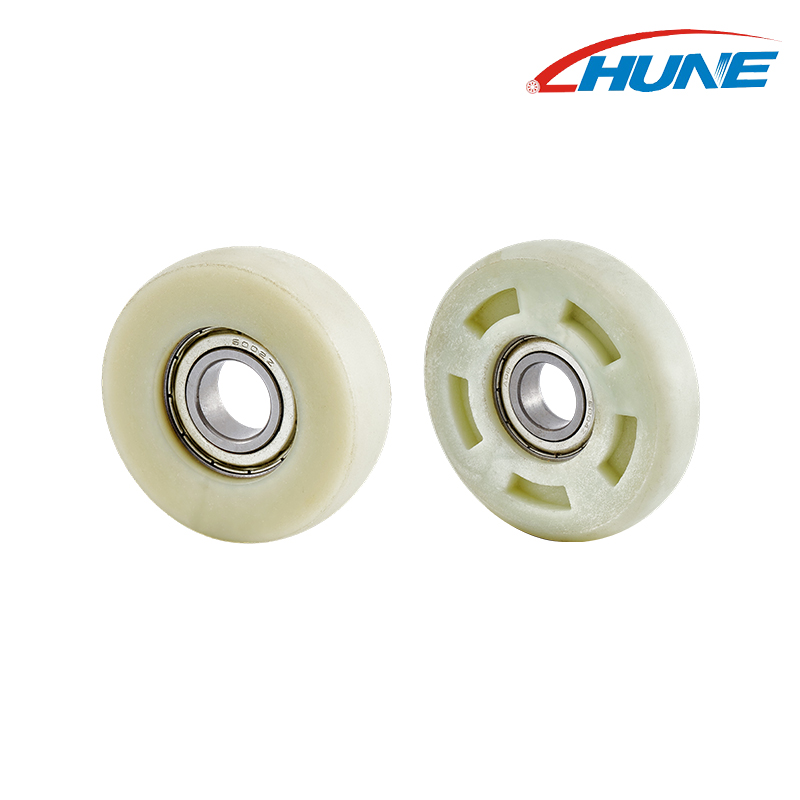
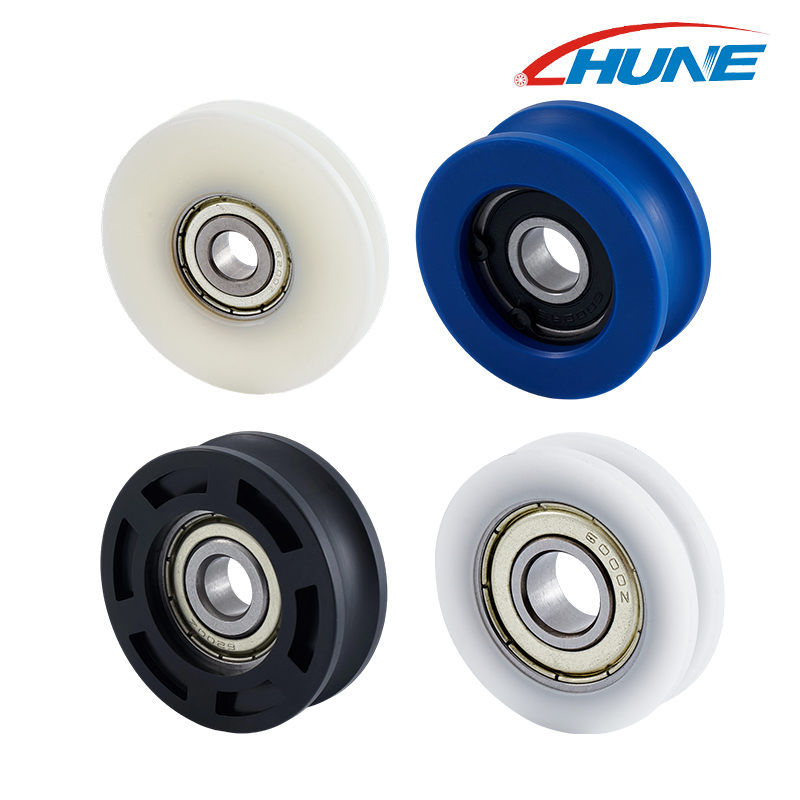
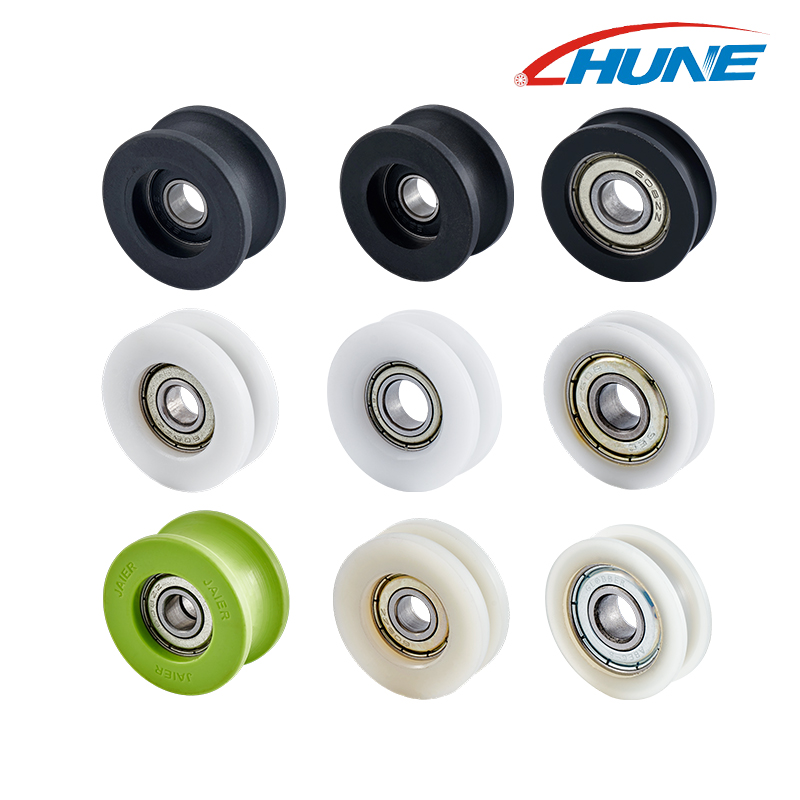
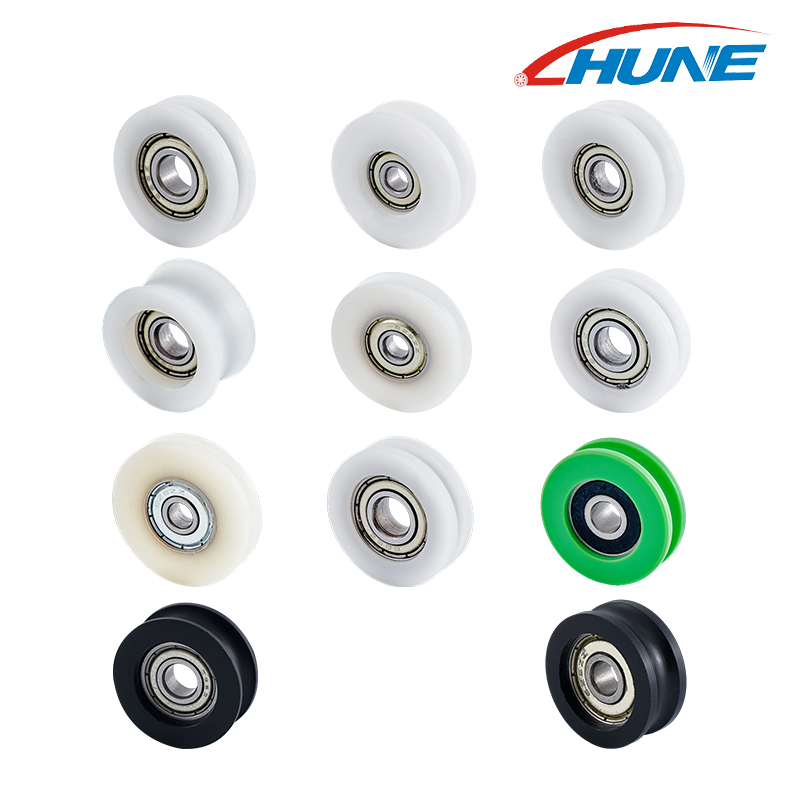
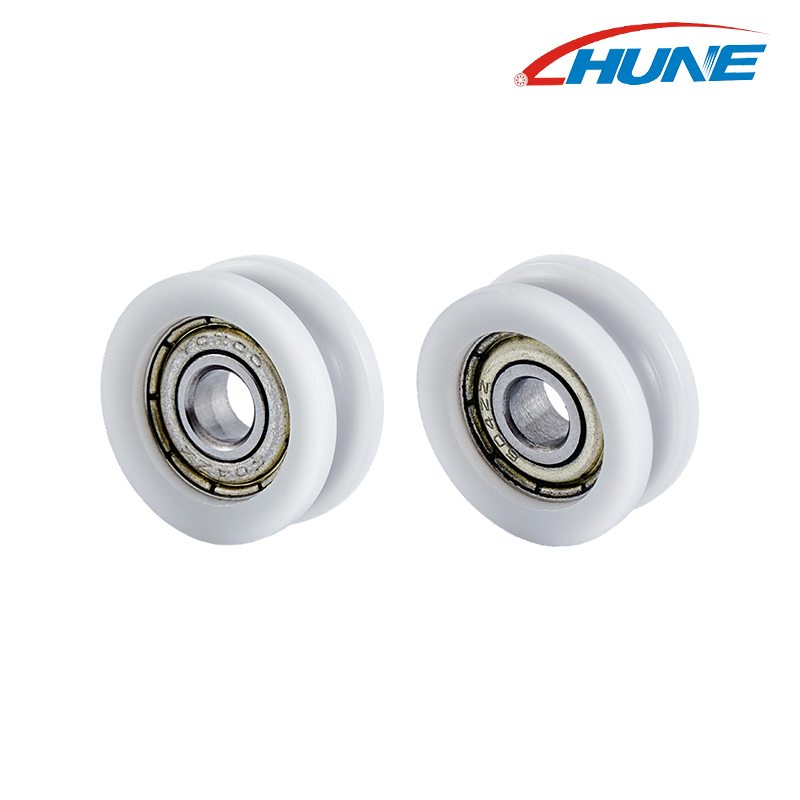
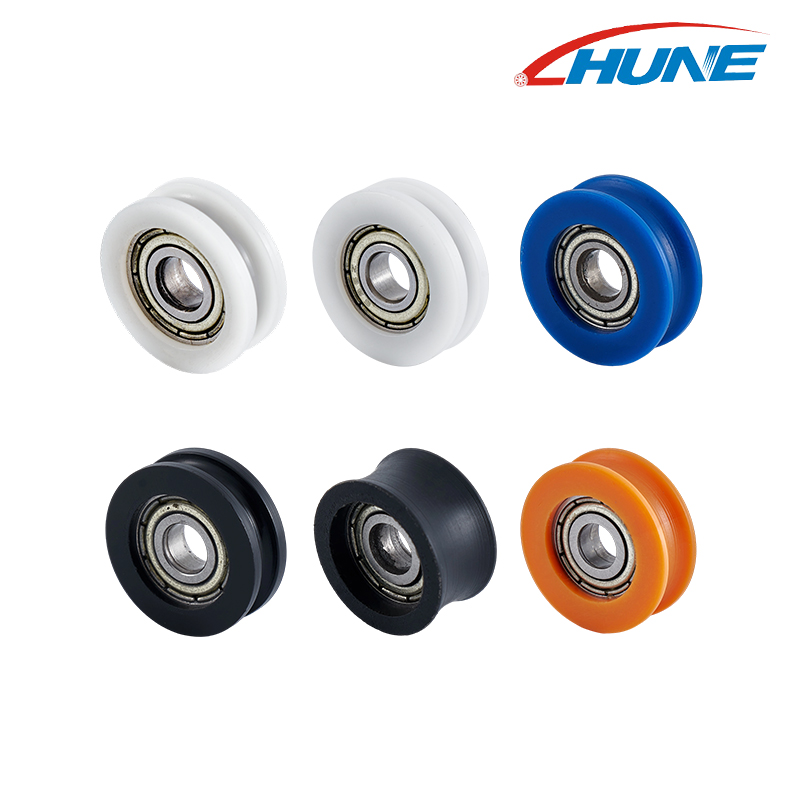
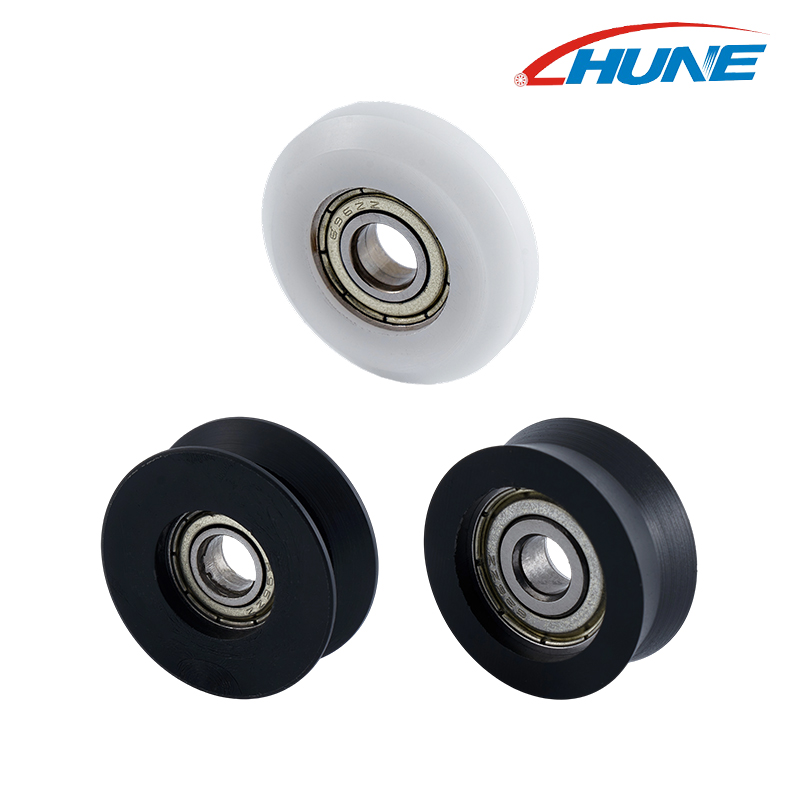
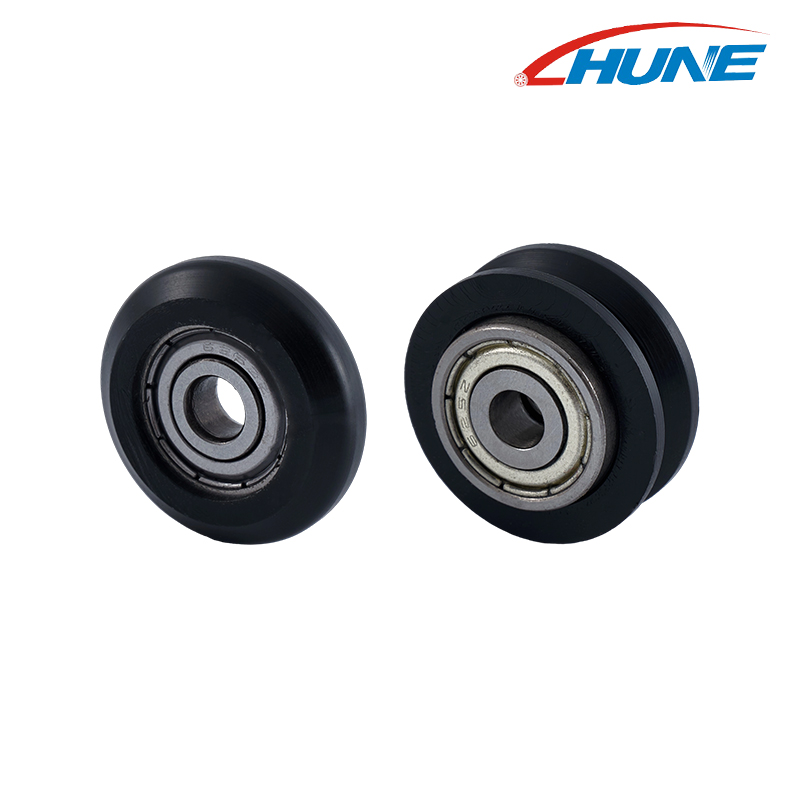


Plastic Bearing Pulley Guide: Materials, Structures, Applications, and Custom Design Options
Plastic Bearing Pulley is small, often no bigger than a coin, yet it decides whether a sliding or guiding system feels smooth and quiet or cheap and rough.
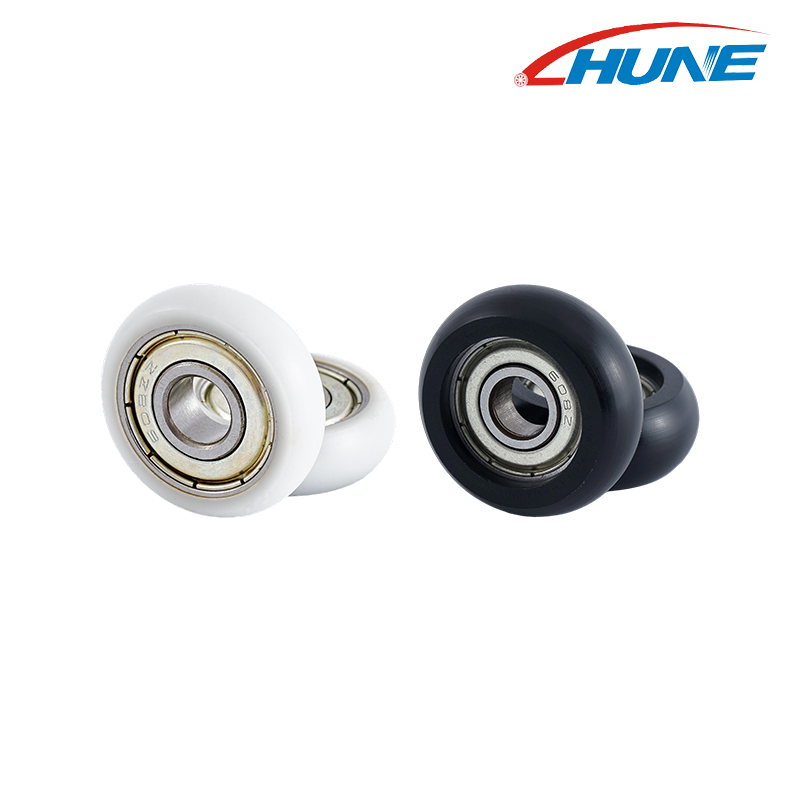
The idea is simple. Take a plastic wheel, press a steel bearing into its hub, and you get a roller that turns freely on its axle while the plastic tread does the work of touching the track, rope, cable, or aluminum profile. Because the tread is plastic rather than steel, it runs quieter, weighs less, and is far kinder to the surface it rolls on.
You will find this kind of pulley in sliding doors and windows, wardrobe tracks, awning systems, roller shutter mechanisms, rope and cable guide systems, fitness equipment cable guides, machinery guide structures, 3D printer profile guides, CNC aluminum profile systems, furniture sliding hardware, and display mechanisms.
At Huaneng we make plastic pulley wheels, plastic coated bearing pulleys, guide pulleys, cable guide pulleys, and custom plastic pulley assemblies for exactly these systems. Every job starts from the working conditions, and from there we settle on the plastic grade, groove shape, bearing type, shaft hole, coating, color, and mounting method that make sense.
What Is Plastic Bearing Pulley?
A Plastic Bearing Pulley is a rolling component in which a plastic wheel body (or a plastic outer layer over a core) carries a bearing inside its hub. The bearing takes care of rotation around the shaft. The plastic wheel takes care of contact with whatever is moving: a track, a steel cable, a rope, a rail, or a guide surface.
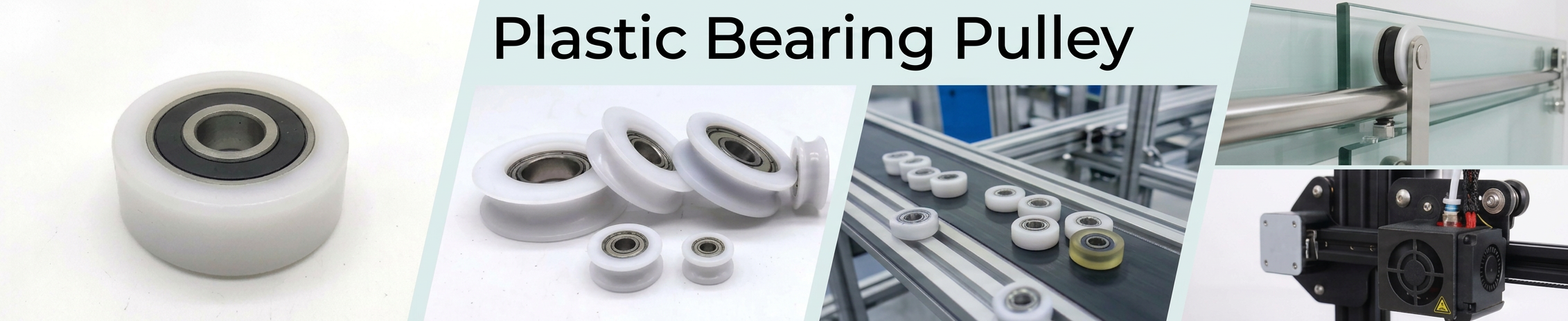
Splitting these two jobs is what makes the design work. Steel-on-steel rotation is handled inside the bearing where it belongs, and the outside stays plastic where softness and quietness matter. Compared with an all-metal pulley wheel of the same size, a plastic bearing pulley is typically lighter, noticeably quieter, and less likely to scar an anodized profile or fray a coated cable. It also gives the designer much more freedom in groove shape, since molded plastic can take almost any profile at low tooling cost.
Depending on the job, a plastic bearing pulley may be built from some or all of the following:
- A molded plastic wheel body
- A plastic or PU coated outer layer bonded to a core
- One built-in bearing, sometimes two
- A plain shaft hole or a metal sleeve insert
- A bearing in chrome bearing steel or stainless steel
- A dust cover, shield, or seal
- A U groove, V groove, flat, concave, convex, or custom groove profile
- A bracket, clip, or other fixing structure
No single industry owns this part. Wherever something needs to roll under control, redirect a cable, follow a track, or turn in a tight space, a plastic bearing pulley tends to show up.
How a Plastic Bearing Pulley Works
The mechanics are not complicated, but the details matter. The wheel spins on a central bearing. The bearing separates the turning wheel from the stationary shaft so that almost no sliding friction occurs there. Meanwhile the outer plastic surface rolls against the rope, cable, belt, rail, or track and steers it.
Three things decide whether a given pulley runs well:
1. The bearing carries the rotation.
Rolling elements inside the bearing replace what would otherwise be a plastic bore rubbing on a steel pin. Starting torque drops, heat stays low, and the wheel keeps turning freely after thousands of cycles.
2. The plastic wheel manages the contact.
Tread material, hardness, and finish set how the pulley behaves against aluminum, steel wire, fiber rope, or a painted track. This is where noise, grip, and wear on the mating part are decided.
3. The groove keeps everything on line.
A groove that fits the rope or rail resists side thrust, damps vibration, and spreads wear evenly around the circumference. A groove that is too wide lets the cable wander; one that is too narrow pinches it and chews the jacket.
The groove profiles we produce most often:
- U groove – wire rope, jacketed cable, rounded tracks
- V groove – V rails, round belts, guided linear motion
- Flat wheel – flat tracks and plain sliding surfaces
- Concave wheel – round rails, cable seating
- Convex wheel – special track contact where a crown is needed
- Custom groove profile – non-standard rails, ropes, belts, or extruded profiles
Get the groove right and the pulley is quiet and predictable. Get it wrong and you invite noise, jamming, off-track running, and premature wear, no matter how good the bearing is.
Common Materials Used for Plastic Pulley Wheels
Material is the first decision, and it drives almost everything else: how much load the wheel takes, how loud it is, how fast it wears, and whether it survives the environment. In practice we mix plastics and metals within one assembly, so the table below covers both.
| Material | Main Characteristics | Typical Applications |
| POM / Acetal | Very low friction, holds dimensions tightly, turns smoothly | 3D printer guides, CNC profile guides, furniture sliding systems |
| Nylon / PA | Tough, absorbs impact, wears well in real-world use | Sliding doors, cable guide pulleys, machinery guide wheels |
| PA6 | Strong and forgiving, molds cleanly for pulley wheels | Door tracks, equipment guides, rope pulleys |
| PA66 | Higher strength and heat resistance than PA6 | Mechanical guide systems, higher-load plastic pulleys |
| PP | Light, resists many chemicals, economical | Light-duty guide pulleys, simple roller structures |
| ABS | Molds easily, good surface finish, takes color well | Display mechanisms, furniture hardware, light-duty rollers |
| PU Coating | Softer tread, quieter, better grip on cable and rail | Cable pulleys, coated track rollers, quiet movement systems |
| Bearing Steel | Hard, dimensionally stable, standard for bearings | Built-in bearings in general pulley assemblies |
| Stainless Steel | Corrosion resistant, clean look | Shafts, bearings, sleeves, visible hardware |
| Carbon Steel | Strong once plated or treated | Shafts, brackets, structural inserts |
A few rules of thumb from the shop floor. Indoor furniture and wardrobe hardware nearly always ends up in POM or nylon, because customers care about silence and effortless glide more than raw strength. Cable guidance and fitness equipment lean toward nylon or a PU-coated wheel, since the tread has to protect the cable. For 3D printer and CNC profile guide pulleys, POM wins because groove accuracy and roundness matter more than anything, and acetal holds its shape after molding better than most alternatives.
Applications of Plastic Bearing Pulley
The common thread across every application is the same: something has to move along a defined path, quietly and with low resistance, and a plastic bearing pulley is the cheapest reliable way to make that happen. What changes from one use to the next is the balance between load, noise, size, and environment.
Sliding Doors and Windows
Door and window carriages ride on plastic bearing pulleys so the panel opens with a fingertip instead of a shove. The plastic tread keeps track noise down; the bearing keeps rotation consistent through years of daily use.
Selection focus:
- Wheel diameter
- Track profile
- Bearing smoothness
- Load requirement
- Noise level
- Installation space
Wardrobe and Closet Door Tracks
Bedroom furniture has almost no tolerance for noise, and the hardware pocket is usually shallow. Plastic pulley wheels suit this job because they remove metal-to-metal contact entirely and can be made small without losing rigidity.
Selection focus:
- Low-noise movement
- Compact wheel size
- Track compatibility
- Smooth bearing rotation
Awning Systems
Retractable awnings route cords, straps, or small cables through guide pulleys at the arms and headbox. A plastic wheel with a matched groove keeps the cord tracking straight and cuts the drag felt at the crank or motor.
Selection focus:
- Rope or strap compatibility
- Outdoor-adjacent material performance
- Smooth rotation
- Wear resistance
Roller Shutter Mechanisms
Shutter systems use small guide pulleys to redirect straps and cords in a space that is often only a few millimeters wide. The plastic wheel lowers friction on the strap and tolerates the dust that accumulates in shutter boxes.
Selection focus:
- Groove profile
- Contact surface
- Shaft stability
- Dust resistance
Rope and Cable Guide Systems
A rope guide pulley or cable guide pulley changes the direction of a line while keeping it seated. The groove radius should sit just above the rope or cable diameter; too loose and the line rides up the flange, too tight and the jacket wears through.
Selection focus:
- U groove or custom groove profile
- Cable diameter
- Wheel width
- Bearing structure
- Surface hardness
Fitness Equipment Cable Guides
Cable machines cycle steel wire over pulleys many thousands of times a month. Nylon or PU-coated pulley wheels protect the cable jacket and keep the machine quiet enough for a commercial gym floor.
Selection focus:
- Cable groove accuracy
- Load requirement
- Bearing durability
- Smooth rotation
- Coating adhesion if PU is used
Machinery Guide Systems
In automation frames, light conveyors, and positioning fixtures, plastic bearing pulleys serve as guide wheels that steer a carriage or belt without marking it. Tolerance and bearing retention take priority here because the pulley is often part of a larger dimensional chain.
Selection focus:
- Material strength
- Bearing retention
- Load and speed
- Dimensional tolerance
- Wear resistance
3D Printer Profile Guides
Many desktop and mid-size printers run carriages on POM guide wheels riding in the slot of a 2020 or 2040 aluminum extrusion. Any flat spot or eccentricity on the wheel shows up directly on the printed part, so roundness and groove accuracy are non-negotiable.
Selection focus:
- Wheel roundness
- Groove accuracy
- Bearing smoothness
- Low vibration
- Profile compatibility
CNC Aluminum Profile Guides
Profile-based CNC gantries and light linear stages use the same principle at slightly higher loads. The groove must match the extrusion geometry closely so contact stays on the intended faces rather than on a corner.
Selection focus:
- Groove shape
- Profile matching
- Wear resistance
- Low-friction material
- Accurate bearing fit
Furniture Sliding Structures
Cabinet doors, sliding panels, and movable shelves all benefit from small plastic roller pulleys that hide inside the hardware and roll without being heard.
Selection focus:
- Small size
- Quiet rolling
- Smooth finish
- Hidden installation
- Track fit
Display and Exhibition Mechanisms
Trade-show fixtures and retail displays often expose their moving parts, so the pulley has to look good as well as work well. Plastic bearing pulleys can be color-matched and molded with a clean tread, and they keep the whole mechanism light enough to ship and assemble easily.
Selection focus:
- Appearance
- Noise control
- Compact design
- Stable rotation
- Custom color or profile
How to Select the Right Plastic Bearing Pulley
Pulley selection goes wrong most often when someone picks a wheel in isolation. The wheel, the bearing, the groove, the shaft, and the surface it runs on form one system, and each choice constrains the others.
Work through these factors in roughly this order:
- Load requirement – sets the wheel material, bearing size, and shaft strength. Static load and shock load are not the same thing.
- Wheel diameter – larger wheels roll more easily over track joints and debris; smaller wheels fit tighter spaces.
- Wheel width – must suit the track, rope, cable, or guide surface without overhang.
- Groove profile – U groove, V groove, flat, or custom, matched to the actual contact object rather than a nominal size.
- Bearing type – sealed, shielded, stainless steel, or double-row, chosen by environment and load.
- Shaft diameter – fits the bearing bore and the mounting structure with the correct clearance.
- Material selection – POM, nylon, PA66, PU-coated, or another plastic, weighed by friction, strength, and noise needs.
- Noise requirement – softer treads and quality bearings cut noise, at some cost in load capacity.
- Contact surface – aluminum profile, steel cable, fiber rope, belt, or painted track each want a different tread.
- Operating speed – faster movement demands accurate roundness and stable bearing performance.
- Environment – temperature, humidity, dust, UV, and chemical exposure narrow the material list.
- Installation space – compact assemblies need precise wheel and bracket dimensions from the start.
Skip one of these and the result is familiar: noise, uneven wear, poor tracking, jamming, bearing damage, a scored track, or motion that never quite feels right.
Why Plastic Outer Wheels Are Used with Bearings
The pairing works because it lets each part do the one thing it is good at. The plastic wheel handles the outside world: track, cable, rope. The bearing handles the inside: rotation around a shaft. Neither material would do the other's job well.
What this buys you in practice:
- Lower rolling noise
- Reduced friction
- Less weight than an equivalent metal pulley
- Gentler contact with aluminum profiles, coated tracks, ropes, and cables
- Freedom to mold almost any groove shape
- Easy fit into compact assemblies
- Smooth motion across light and medium-duty systems
- Less wear on the mating parts
In most of these applications the pulley's real job is not just to hold up a load. It is to make movement quiet, consistent, and repeatable, and that is where the plastic-plus-bearing combination earns its place.
Bearing Configuration in Plastic Pulley Design
A good plastic wheel with the wrong bearing, or the wrong fit, is a wasted part. Poor rotation, noise, and play between hub and bearing almost always trace back to bearing choice or retention rather than the plastic itself.
Configurations we work with regularly:
- Deep groove ball bearings for general smooth rotation at low cost
- Double-row bearings where radial load is higher or the wheel sees moment loading
- Sealed bearings for dusty or humid conditions
- Shielded bearings for general dust protection with lower drag
- Stainless steel bearings where corrosion resistance matters
- Ceramic ball options for non-magnetic or other special environments
- Press-fit bearing retention for a stable bearing-to-hub connection
- Snap-ring retention when the application needs extra bearing security
The interface between bearing outer ring and plastic hub deserves particular attention. Too loose and the bearing spins in the hub, producing noise and vibration. Too tight and the plastic squeezes the outer race out of round, and the bearing that felt perfect on the bench turns gritty in service. Plastic also creeps and shrinks with temperature, so the fit has to be designed for the operating range, not just room temperature.
Surface and Coating Options for Plastic Pulley Wheels
The tread is where the pulley meets the world, so its surface is often specified separately from the body. Some wheels run on the as-molded plastic. Others receive an overmolded or coated outer layer to change hardness, grip, or appearance.
Options include:
- Smooth molded plastic surface
- Textured surface for added grip
- PU-coated outer layer
- Rubber-like soft coating
- Low-durometer coating for quiet operation
- Custom color surface
- Track-specific contact profile
A PU-coated plastic pulley grips steel cable and rail better than bare plastic and runs quieter still. The catch is adhesion. If the bond between the plastic core and the PU layer is weak, the coating will eventually shear off or peel at the edge, usually well before the wheel itself wears out. We control this through core surface preparation and matched material pairs rather than relying on the coating alone.
FAQ About Plastic Bearing Pulley
What is a plastic bearing pulley used for?
It guides, supports, or redirects movement in sliding doors and windows, wardrobe tracks, awnings, roller shutters, rope systems, cable guides, fitness equipment, machinery, 3D printers, CNC profile systems, furniture, and display mechanisms.
What is the difference between a plastic pulley wheel and a metal pulley wheel?
A plastic pulley wheel is lighter, quieter, and gentler on tracks, cables, and coated surfaces. A metal pulley wheel carries more load and tolerates more heat. Which one is right depends on load, environment, noise limits, and what the wheel runs against.
Can plastic bearing pulleys be used for sliding doors and windows?
Yes. They are one of the most common carriage wheels in door and window hardware, chosen for low friction, quiet operation, and smooth travel along the track.
What materials are commonly used for plastic pulley wheels?
POM, nylon, PA6, PA66, PP, ABS, and PU-coated structures cover most needs. The bearings inside are typically bearing steel or stainless steel, depending on the environment.
How does the groove profile affect pulley performance?
The groove decides how the wheel contacts the rope, cable, rail, or track. A well-matched groove holds the line on center, limits side movement, and spreads wear evenly.
Can plastic bearing pulleys be used for cable or rope guidance?
Yes. U groove, V groove, and custom groove plastic bearing pulleys are standard for cable and rope guidance in equipment, awnings, fitness machines, and mechanical guide systems.
Can plastic bearing pulleys be customized for different tracks?
Yes. Wheel diameter, width, groove shape, bearing type, shaft hole, material, coating, bracket design, and color can all be tailored to a specific track, cable, rope, or profile.
What causes a plastic bearing pulley to become noisy or stuck?
Usually one of these: debris in the track, a groove that does not match the rope or rail, a worn bearing, a deformed wheel, a shaft that fits poorly, overload, or contamination inside the bearing.
Is POM suitable for precision pulley applications?
Yes. POM is the usual choice where low friction, dimensional stability, and smooth motion matter, including guide wheels, 3D printer components, CNC profile guides, and furniture sliding systems.
When is a PU-coated plastic pulley useful?
When you need lower noise, better grip, and softer contact with cables, rails, or coated surfaces than bare plastic can provide.
A Plastic Bearing Pulley is a small part with an outsized effect on how a mechanism feels. By pairing a plastic pulley wheel with a built-in bearing, it lowers friction, quiets movement, and protects the track, cable, rope, or profile it rides on.
The same basic component serves sliding doors and windows, wardrobe tracks, awning systems, roller shutter mechanisms, rope and cable guide systems, fitness equipment cable guides, machinery guide systems, 3D printer profile guides, CNC aluminum profile guides, furniture sliding structures, and display mechanisms.
Performance comes down to the choices made up front: material, bearing configuration, groove profile, wheel dimensions, load, surface finish, and working environment. Hunepulley supplies plastic bearing pulley, plastic pulley wheel, plastic coated bearing pulley, guide pulley, cable guide pulley, rope guide pulley, and custom plastic pulley solutions built around those choices for sliding and guiding systems of every kind.