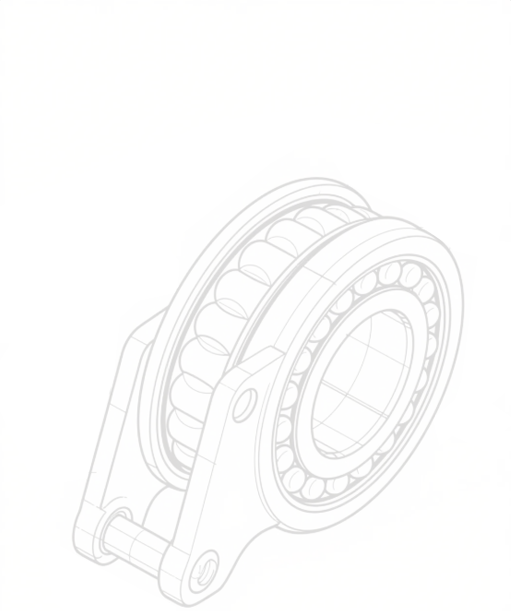
Industry Knowledge: How Heavy Duty V Groove Gate Wheels Improve Sliding Gate Performance
Ask anyone who has rebuilt a sagging driveway gate and they'll tell you the same thing: the wheels were the problem. A sliding gate can weigh several hundred pounds, and every bit of that weight rides on two or four small rollers. If those rollers wobble, bind, or rust, the whole gate feels heavy and sounds terrible—no matter how well the frame was built.
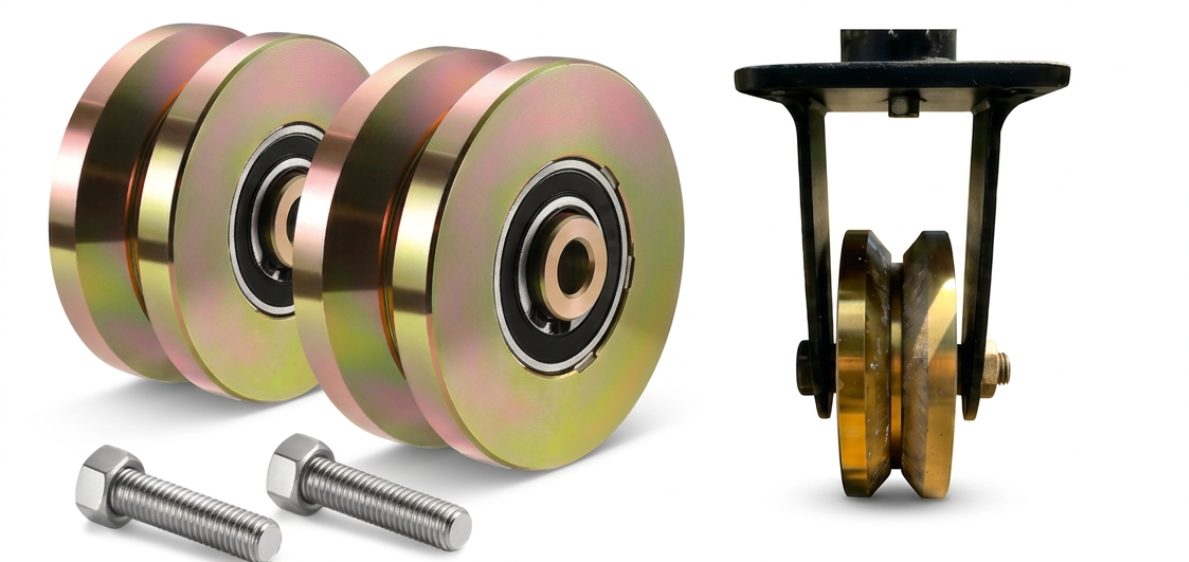
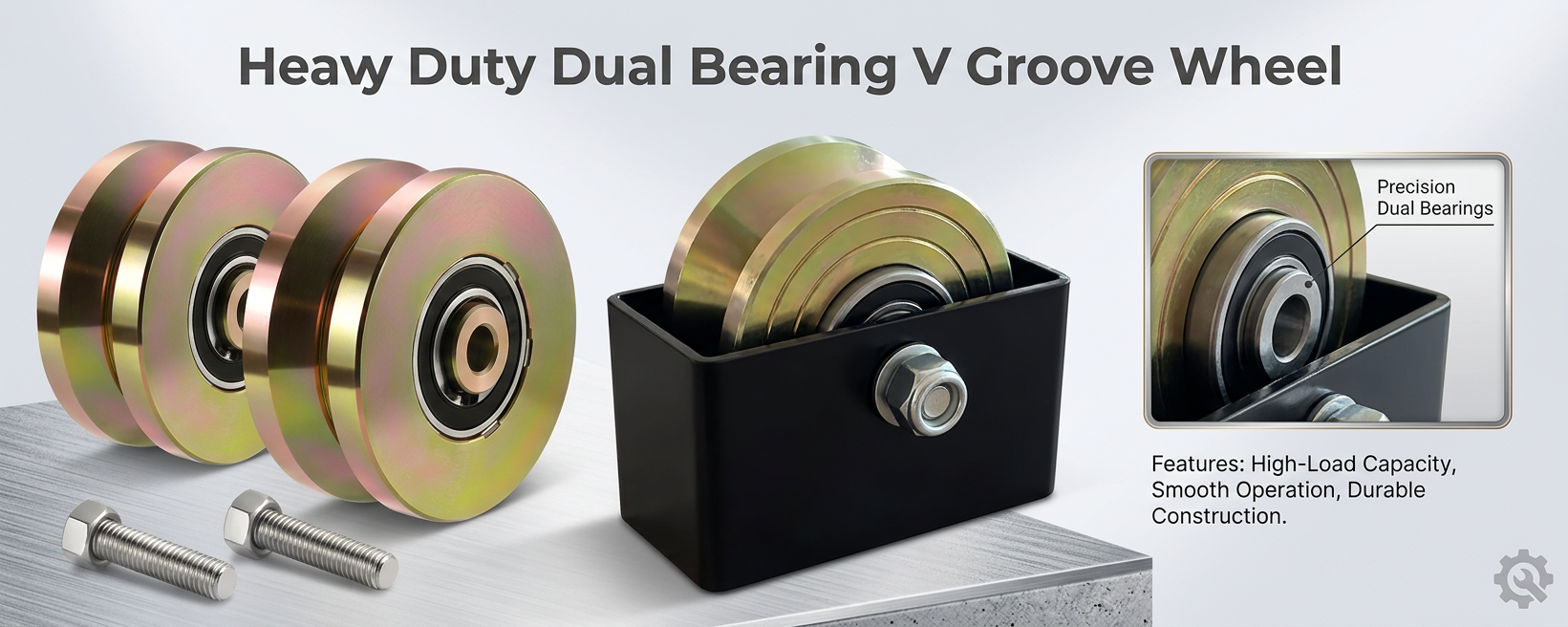
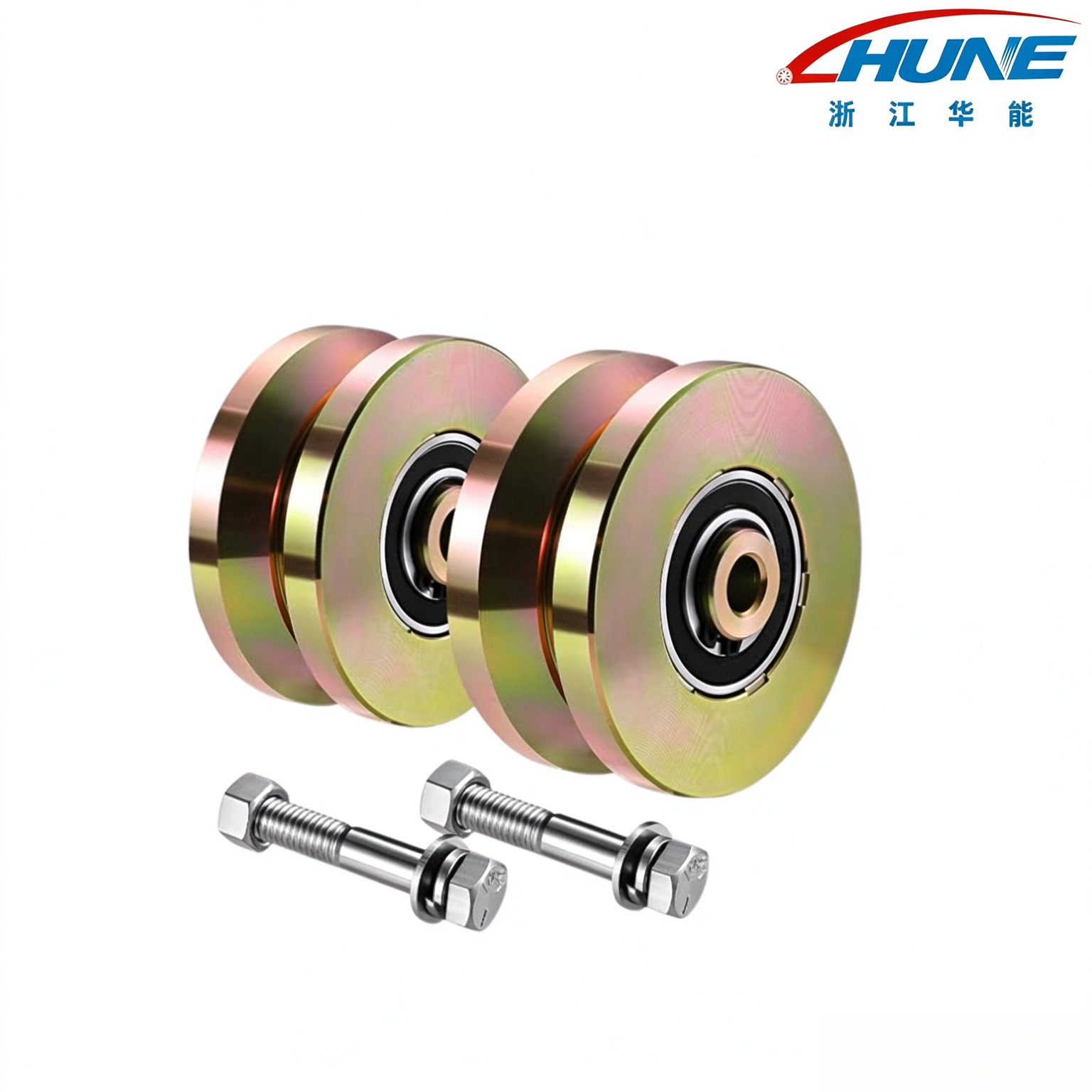
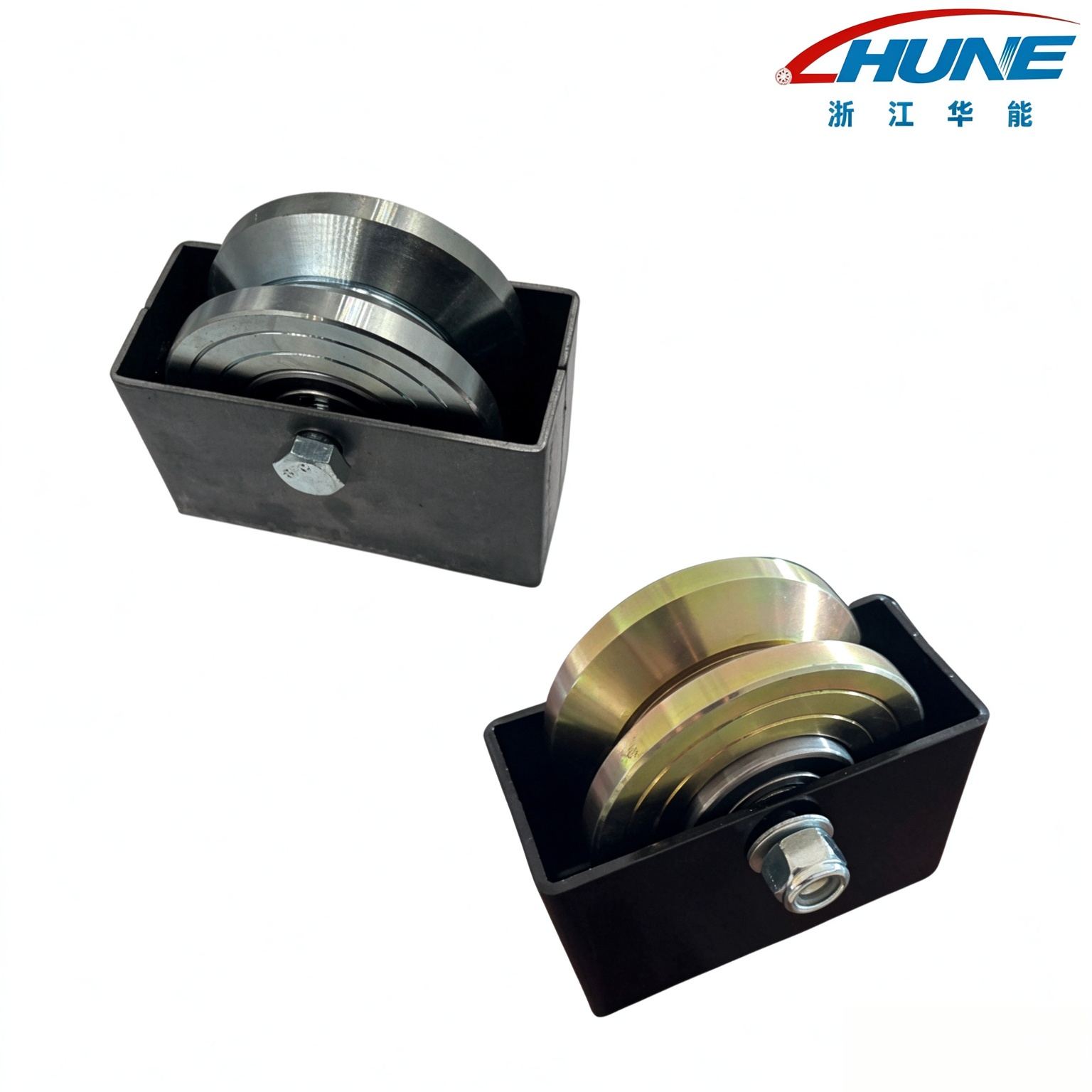
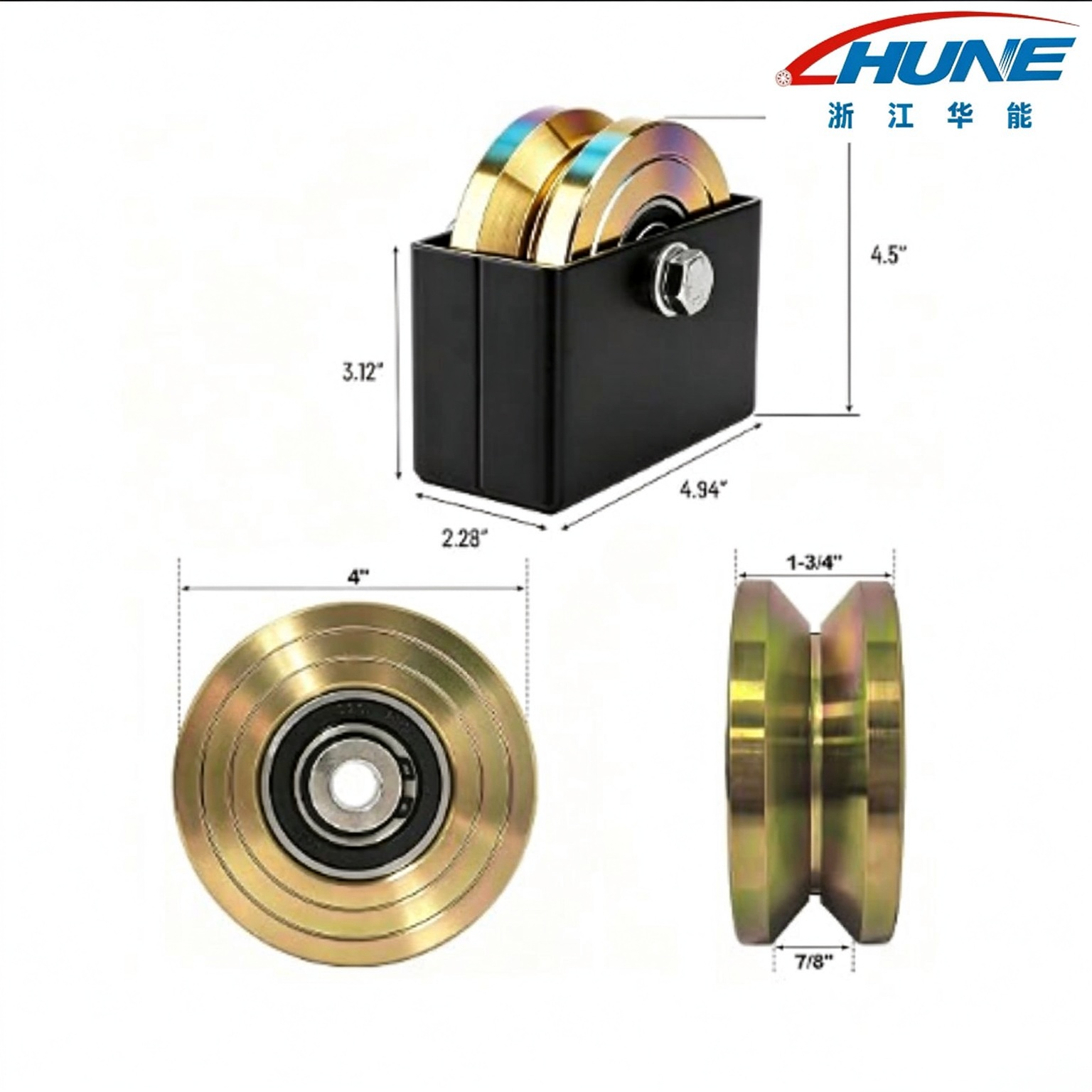
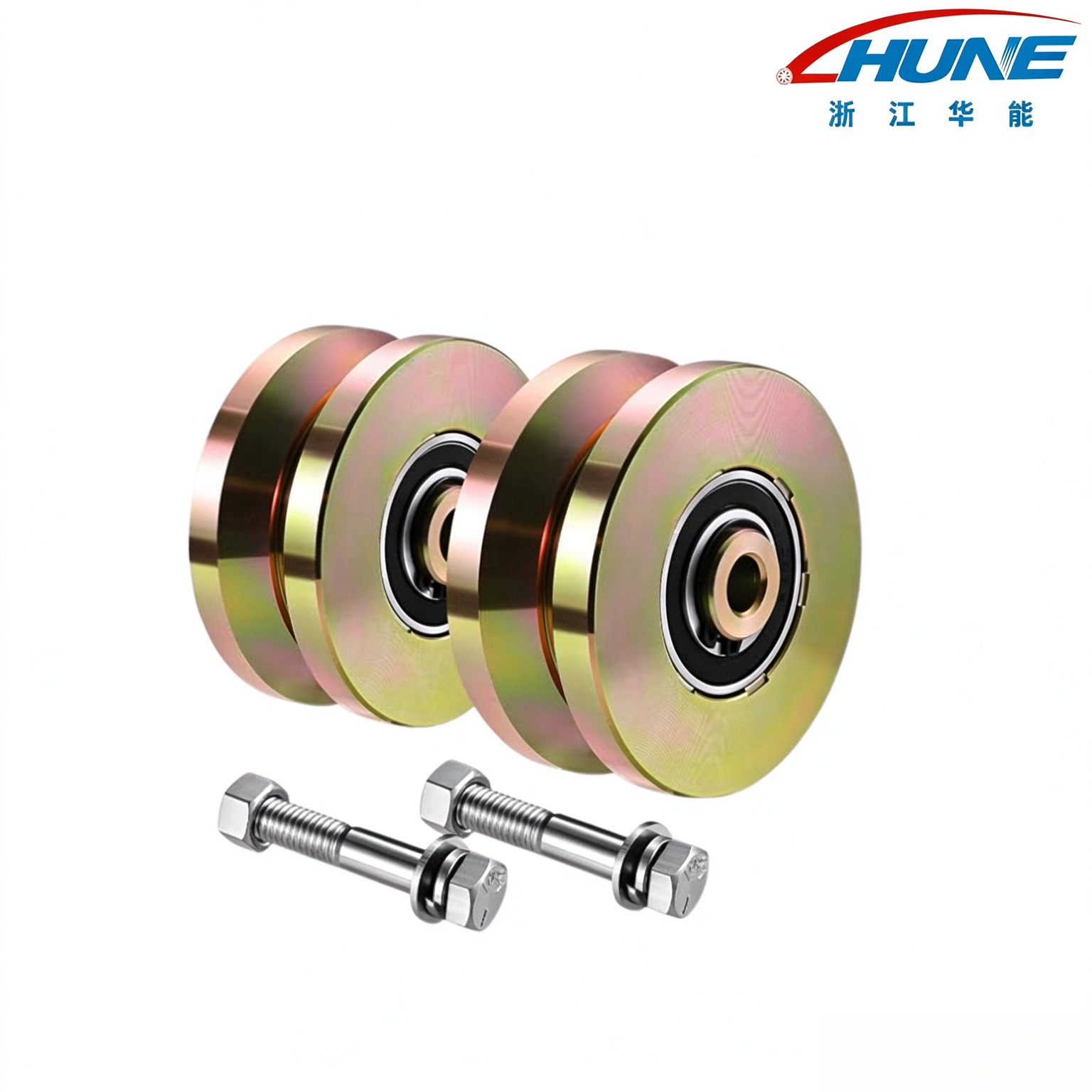
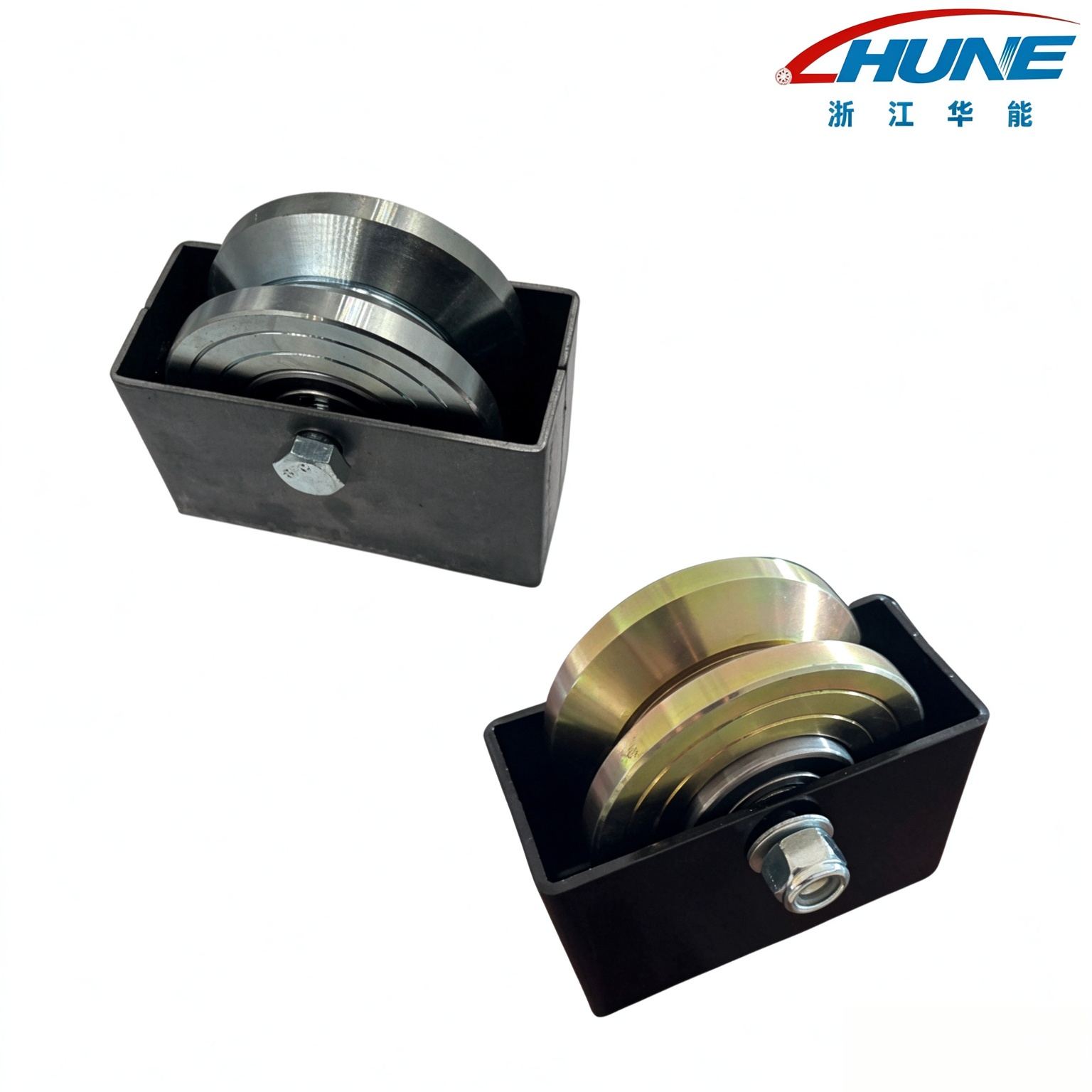
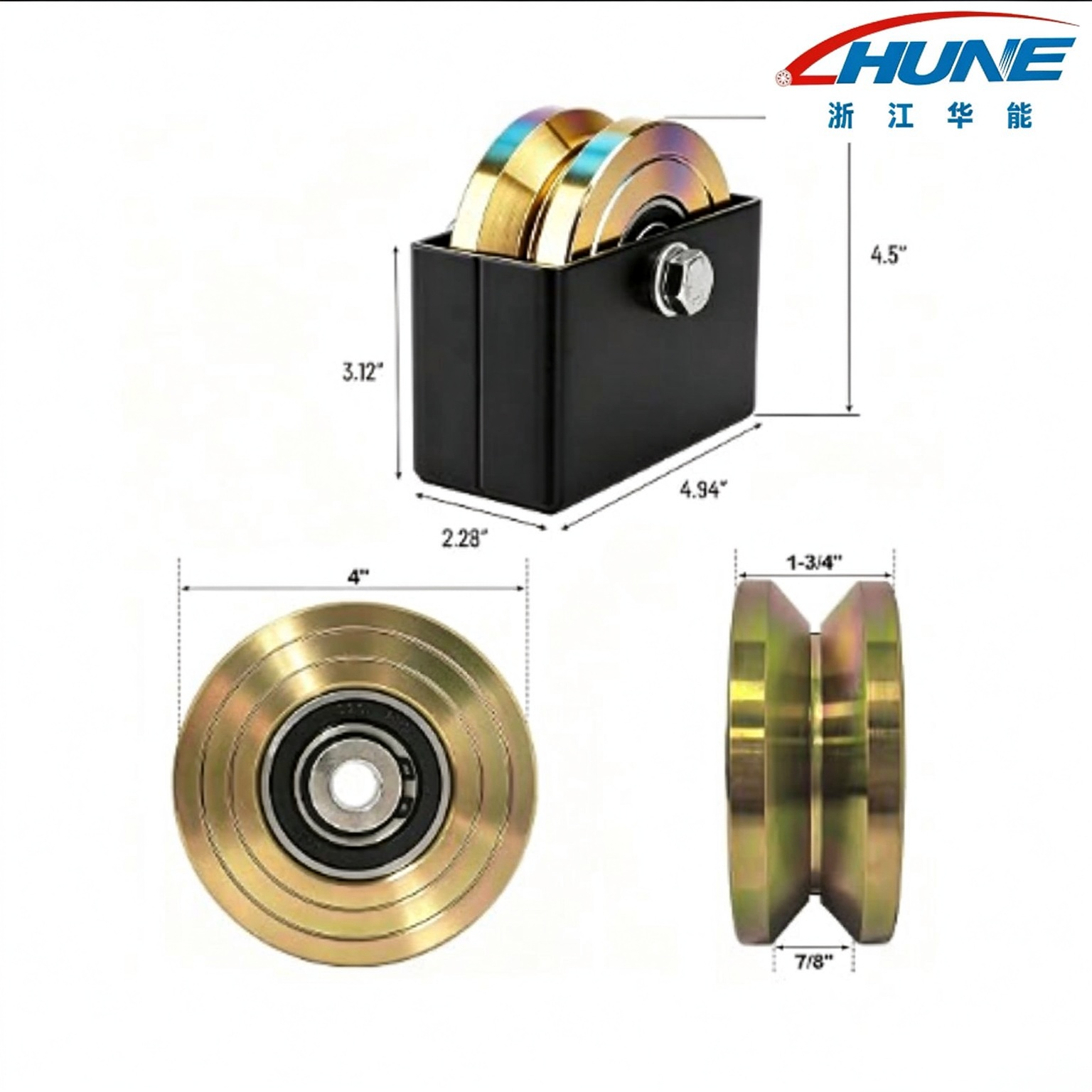
A heavy duty dual bearing V groove gate wheel is built for bottom-running gate systems where the gate rolls along a V track, angle iron rail, or a fabricated steel guide set into the ground. The version discussed here combines a 45# steel roller, dual built-in bearings, colorful zinc plating on the wheel, an electroplated axle, and a black electrophoretic steel housing. That package covers most residential, commercial, farm, and light industrial sliding gates without needing anything exotic.
What Is a V Groove Gate Wheel?
Picture a steel wheel with a notch cut around its rim—not a flat tread, but a V-shaped channel. That channel is machined to sit over the top edge of a matching rail, usually a V track or a length of angle iron turned corner-up.
The groove does one thing well: it keeps the wheel where it belongs. A flat wheel on a flat surface will wander. A V groove wheel on a V rail has nowhere to go but forward or back. The gate follows the rail line, stays square, and doesn't scrape the posts at either end.
Common Names in the Industry
Depending on who you're talking to—a fence contractor, a fabricator, a hardware distributor—the same part goes by different names:
- Heavy duty V groove gate wheel
- Sliding gate wheel
- Rolling gate wheel
- Driveway gate wheel
- Weld-on gate wheel
- Steel gate roller
- V groove roller wheel
- Bottom rolling gate wheel
- Gate wheel with bracket
- Dual bearing gate wheel
If you're sourcing parts or searching for replacements, it helps to know all of these. The fencing trade, metal fabrication shops, and sliding door suppliers each tend to favor a different term.
How a Bottom-Running Sliding Gate System Works
The idea is straightforward. Wheels mounted along the bottom edge of the gate carry the weight, and the gate rolls sideways on a rail anchored to the ground or a concrete strip. Nothing hangs from above; the ground track does the work.
A typical bottom-running sliding gate system includes:
- Gate frame
- V groove wheels
- Ground track or angle iron rail
- Guide rollers or upper stabilizers
- End stops
- Locking or automation hardware
The wheels handle the vertical load—every pound of the gate. The upper guide rollers are there for a different reason: they stop the gate from tipping or swaying in the wind. They carry almost no weight themselves.
That division of labor is why wheel quality matters so much. The steel grade, the bearing arrangement, the axle diameter, and the housing all decide whether the gate rolls easily for fifteen years or starts grinding after two.
Why V Groove Wheels Are Commonly Used for Sliding Gates
Fabricators keep coming back to V groove wheels because they solve the alignment problem on their own. Once the wheel drops onto the rail, it finds center by itself. Nobody has to add side guides at ground level, and the gate won't drift off the track when someone pushes it at an angle.
Main Advantages of V Groove Gate Wheels
- Good directional stability—the groove steers the wheel
- Smooth movement on matching tracks
- Strong load support for steel gates
- Suitable for outdoor sliding systems
- Easy to integrate into welded gate frames
- Compatible with manual and motorized gates
- Practical for driveway, fence, farm, and workshop applications
For a plain steel sliding gate, it's hard to beat: simple to install, simple to replace, and forgiving of the minor misalignments that show up in real-world construction.
Why Dual Built-In Bearings Matter
The bearing is what lets the wheel spin freely on the axle. Without it, steel would grind on steel and the gate would be nearly impossible to move. With a poor bearing, you get the same result—just slower.
A dual built-in bearing structure puts two bearings inside the wheel body instead of one, spaced apart along the axle. That spacing is the point. With two support points, the wheel can't rock on the axle, and the gate load is shared rather than concentrated on a single race.
Benefits of Dual Bearings
- Smoother rolling under heavier loads
- Lower friction during repeated movement
- Better wheel balance on long tracks
- Improved resistance to side pressure—important when the gate is pushed from an angle
- More stable support for steel gate frames
- Longer operating life compared with weak bearing structures
On a gate that opens and closes twenty times a day, the difference between one bearing and two is the difference between replacing wheels every few years and forgetting they're there.
Material Knowledge: Why 45# Steel Is Used for Gate Wheels
The wheel outer ring is made from 45# steel, also called No. 45 carbon steel. It's a medium-carbon steel that machinists know well—strong enough for load-bearing parts, hard enough to resist wear, and easy to cut a clean V groove into.
The carbon content of 45# steel is approximately:
0.45%0.45%
That places it between soft low-carbon steel (which would dent and wear quickly on a rail) and high-carbon tool steel (which would be brittle and expensive for a part like this). You'll find 45# steel in shafts, gears, rollers, pins, and other components that see constant mechanical contact.
Advantages of 45# Steel for V Groove Wheels
- Stronger than many low-carbon steels
- Good wear resistance under rolling contact
- Suitable for machined V groove profiles
- Stable performance under mechanical load
- Compatible with zinc plating and other surface treatments
- Practical for outdoor gate wheel applications
Consider what the groove goes through: it's pressed against a steel rail under hundreds of pounds and rolled back and forth thousands of times. A softer wheel would slowly flatten or widen its groove until it no longer fits the track. 45# steel holds its shape.
Surface Treatment: Why Colorful Zinc Plating Is Important
A gate wheel lives a few inches off the ground. It gets rained on, splashed with mud, buried in leaves, and—in colder climates—coated with road salt every winter. Bare steel in that environment starts showing rust within a season.
This product uses colorful zinc plating on the 45# steel wheel. You may also hear it called yellow zinc plating or rainbow zinc plating; the gold-to-iridescent tint comes from the chromate layer applied over the zinc.
Benefits of Colorful Zinc Plating
- Helps improve corrosion resistance
- Provides a protective layer on the steel surface
- Gives the wheel a recognizable gold-toned appearance
- Reduces surface oxidation during storage and use
- Supports better durability in outdoor gate systems
The zinc acts as a sacrificial layer—it corrodes first, slowly, so the steel underneath doesn't. The chromate topcoat slows down even that. It's a common finish on quality hardware for exactly this reason: it works, and it looks finished.
Electroplated Axles for Better Load Support
Everything meets at the axle. The wheel spins on it, the bearings sit on it, and the housing holds it. When a gate is pushed hard or hits the end stop, the axle takes the shock. Over years of use it faces bending stress, vibration, and constant friction at the bearing seats.
This product uses electroplated axles. The plating isn't decorative—it protects the bearing contact surfaces where corrosion would do the most damage.
Why Axle Treatment Matters
- Reduces surface oxidation
- Improves appearance and finish quality
- Helps protect metal contact areas
- Supports longer service life
- Improves reliability under load
We've seen plenty of gate wheels where the wheel itself was fine but the axle had rusted at the bearing seat, seized, and taken the bearing with it. The axle is the quiet weak point on cheap hardware. Treating it properly avoids that failure.
Weld-On Installation in DIY Gate Projects
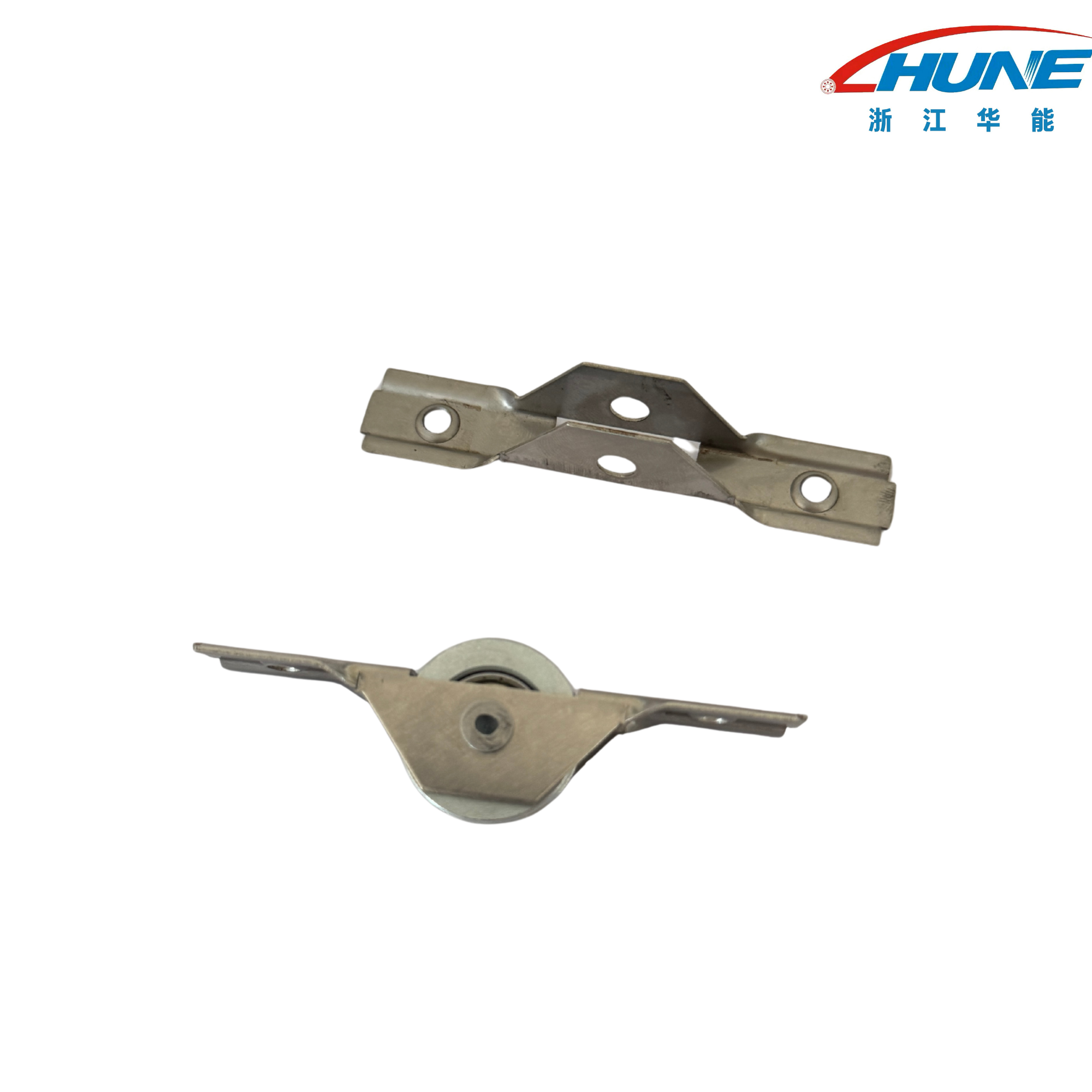
In the United States especially, a large share of sliding gates are built by the owner or a local fabricator, not bought as a kit. In those projects the wheel housing is usually welded straight onto the gate frame—no bolt holes, no brackets to buy separately.
This type of installation is common for:
- Driveway sliding gates
- Farm entrance gates
- Metal fence gates
- Workshop sliding doors
- Outdoor equipment frames
- Rolling steel platforms
- Custom track-based structures
The appeal is control. A weld-on gate wheel can be placed exactly where the frame needs it, at exactly the height that puts the groove on the rail with the right ground clearance. Bolt-on hardware forces you to work around its hole pattern; weld-on hardware works around your design.
Important Welding Considerations
- Keep the wheel aligned with the center of the track
- Avoid applying excessive heat near the bearings—weld in short passes and let the housing cool
- Confirm the gate frame is level before welding
- Use proper spacing between wheels
- Make sure both wheels share the load evenly
- Test rolling movement before final finishing
- Add upper guide rollers for better stability
Alignment is the part people get wrong. A wheel welded even a few degrees off the track line will drag on one side of the groove. The gate gets loud, gets hard to push, and wears a flat spot into the wheel. Tack the housings first, set the gate on the rail, roll it end to end, and only then finish the welds.
Matching V Groove Wheels with Tracks
The groove and the rail have to agree. If the groove angle is too wide for the rail, the wheel rides on its edges and wears fast. If it's too narrow, the wheel sits high and can pop off under a side push.
Common Track Types
| Track Type |
Description |
Typical Use |
| V Track |
A raised V-shaped rail fixed to the ground |
Driveway gates and rolling fence gates |
| Angle Iron Rail |
Steel angle installed with the edge upward |
DIY gate and workshop applications |
| Steel Guide Rail |
Custom fabricated rail for special structures |
Industrial or custom sliding systems |
| Embedded Track |
Track partially set into the ground surface |
Cleaner appearance and protected installation |
Angle iron is the go-to for DIY builds because it's cheap and available at any steel yard. A standard 90° angle turned corner-up matches most V groove wheels well. Purpose-made V track costs more but gives a cleaner ride and is easier to anchor level over long runs.
Get the match right and the gate rolls quietly with almost no vibration. Get it wrong and you'll be replacing both wheel and rail sooner than you'd like.
Load Capacity Factors for Gate Wheels
A wheel's rated load is a starting point, not a guarantee. What the wheel can actually carry in service depends on everything around it: how it's mounted, what it rolls on, and how the gate is balanced.
Main Factors Affecting Load Capacity
- Wheel diameter
- Wheel thickness
- Bearing structure
- Axle diameter
- Steel grade
- Housing thickness
- Welding strength
- Track material
- Gate frame weight
- Ground levelness
- Number of wheels used
- Frequency of operation
A few practical rules. Bigger wheels roll easier and handle rough track better. A gate that's heavy on one end loads one wheel far more than the other, so balance the frame or add a third wheel. And a rail that dips in the middle will overload whichever wheel is in the low spot—level the track before blaming the hardware.
Common Applications of Heavy Duty V Groove Gate Wheels
You'll find these wheels wherever something heavy needs to roll in a straight line along the ground. Homeowners use them; so do fabrication shops and farm equipment builders.
Typical Application Areas
- Sliding driveway gates
- Rolling fence gates
- Farm gates
- Ranch gates
- Steel security gates
- Workshop sliding doors
- Warehouse sliding doors
- Outdoor rolling frames
- Metal carts and trolleys
- Custom welded structures
- Bottom-running gate systems
- Track-guided moving platforms
The common thread is weight plus horizontal travel. Any time a structure is too heavy to hang from an overhead track but still needs to slide, a bottom-running V groove wheel is the usual answer.
How to Select the Right V Groove Gate Wheel
Buying by diameter alone is a common mistake. A 4-inch wheel rated for a light gate and a 4-inch wheel built for a 600-pound security gate look similar in a photo but behave very differently. Look at the whole system before choosing.
Selection Checklist
| Selection Factor |
Why It Matters |
| Gate Weight |
Determines wheel size, bearing type, and axle strength |
| Track Type |
V groove must match the rail profile |
| Operating Environment |
Outdoor use requires better corrosion protection |
| Installation Method |
Weld-on and bolt-on structures require different brackets |
| Gate Length |
Longer gates may need better load distribution |
| Usage Frequency |
Frequent movement requires smoother bearings |
| Ground Condition |
Uneven ground can increase stress on the wheel |
| Noise Requirement |
Bearing quality and track finish affect noise |
| Corrosion Risk |
Plating and coating improve service life |
For any gate that stays outdoors year-round, put corrosion protection and bearing quality at the top of the list. Those two factors decide service life more than anything else on the chart.
Maintenance Tips for Longer Service Life
Heavy duty doesn't mean maintenance-free. A gate wheel sits at ground level and collects whatever the weather delivers—grit, water, leaves, small stones. Left alone, that debris grinds into the groove and the rail.
Recommended Maintenance Practices
- Keep the track clean and free from debris—a stiff broom once a month is usually enough
- Check wheel alignment regularly
- Inspect bearings for noise or rough rotation
- Tighten nuts and axle hardware when needed
- Remove rust from exposed metal surfaces
- Apply suitable lubrication if the bearing design allows
- Check welded joints for cracks or deformation
- Make sure the gate does not drag against the ground
- Replace worn wheels before track damage occurs
A wheel that starts clicking or squeaking is telling you something. Catching a tired bearing early costs one wheel; ignoring it until the groove wears out costs a wheel and a section of track.
FAQ: Heavy Duty V Groove Gate Wheels
What is a V groove gate wheel used for?
It carries and guides sliding gates—driveway gates, rolling fence gates, workshop doors—and any other structure that rolls along a ground-mounted track.
Why does the wheel have a V-shaped groove?
The groove sits over the rail and steers the wheel. It keeps the gate tracking straight on a V track or angle iron rail and stops sideways drift.
What does dual bearing mean?
There are two bearings inside the wheel body, spaced along the axle. This spreads the load, stops the wheel from rocking, and gives smoother rotation than a single bearing.
Is 45# steel suitable for gate wheels?
Yes. 45# steel (No. 45 carbon steel) has the strength and wear resistance the groove needs to hold its shape under years of rolling contact with a steel rail.
What is colorful zinc plating?
A zinc coating with a chromate topcoat, giving the wheel its gold or rainbow tint. It protects the steel from rust and slows oxidation in outdoor use.
What is black electrophoretic coating?
A uniform black coating applied to the steel housing by electro-deposition. It resists rust and chipping better than paint and leaves a clean finish on the bracket.
Can this gate wheel be used for DIY welded gates?
Yes. The steel housing is designed to be welded directly to gate frames, custom brackets, and fabricated sliding structures.
How can gate wheel life be extended?
Keep the track clean, check alignment, listen for bearing noise, keep hardware tight, and make sure the groove matches the rail. Avoid side loads from a gate that's out of square.
The gate wheel is small, but it's the part that decides whether a sliding gate is a pleasure or a chore. A heavy duty dual bearing V groove gate wheel earns its place in bottom-running systems by getting several things right at once: a hard-wearing wheel, two bearings instead of one, a properly sized axle, a solid housing, protective finishes on every steel surface, and a groove that fits the rail.
The specific combination here—45# steel V groove wheel, dual built-in bearings, colorful zinc plating, electroplated axle, and black electrophoretic steel housing—covers sliding driveway gates, rolling fence gates, outdoor steel frames, and DIY welded gate systems without compromise.
Match the wheel to the track, weld it in line, and give it a quick look a few times a year. Do that, and the gate will roll smoothly for a very long time.





 English
 Español
 日本語
日本語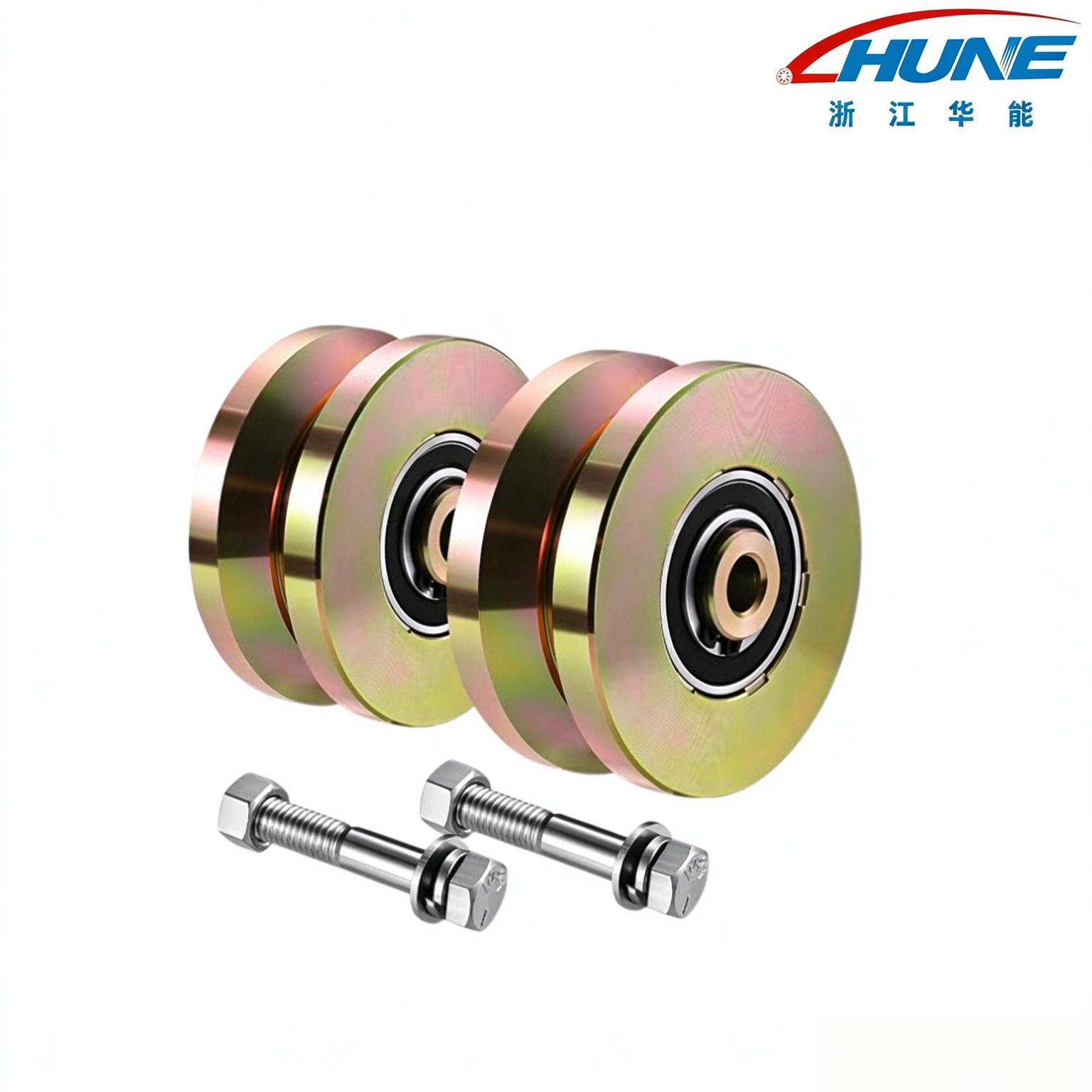
 +86-15058997617