ABS U-Groove Bearing Pulley Wheel: Material Properties, Groove Design, and Selection Guide
A pulley does more than spin. In a guided system, its groove has to match the track, its material has to suit the working environment, and its bearing has to sit correctly on the shaft and in the wheel body. The ABS U-groove bearing pulley wheel brings these parts together: a molded plastic running surface, a U-shaped channel, and a bearing that lets the wheel turn. Knowing how these features interact makes it easier to judge fit, movement stability, wear, and upkeep. The sections below walk through how the pulley works, how to choose the right configuration, and which manufacturing and inspection points matter when you develop a custom unit.
What Is an ABS U-Groove Bearing Pulley Wheel?
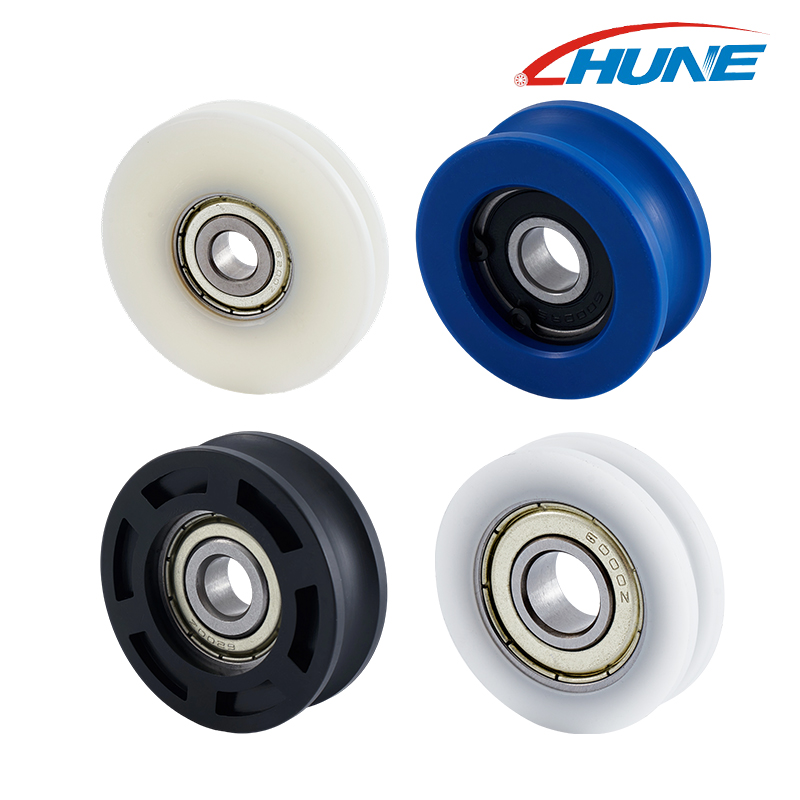
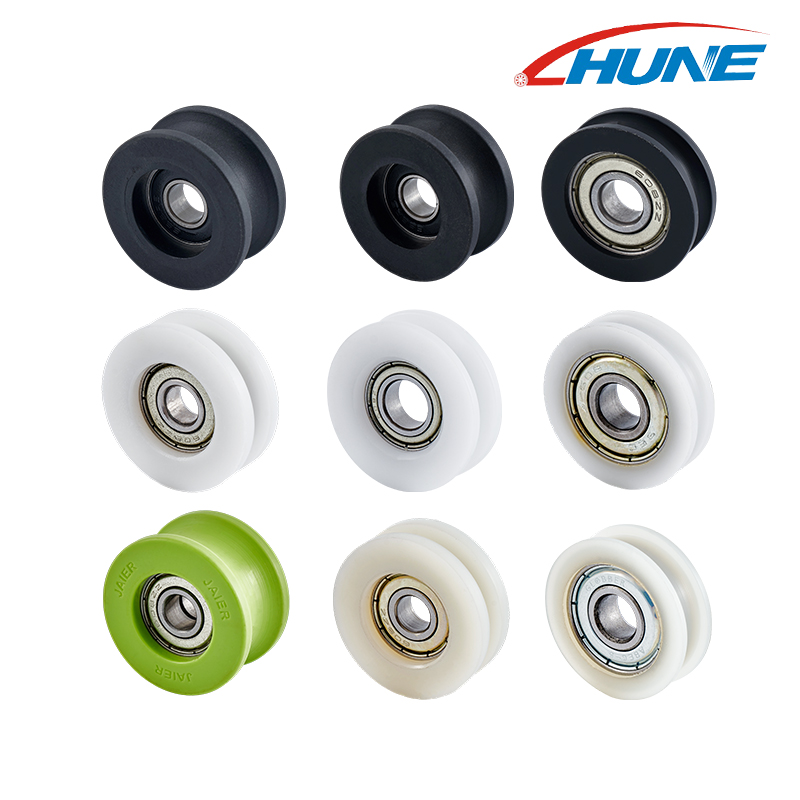
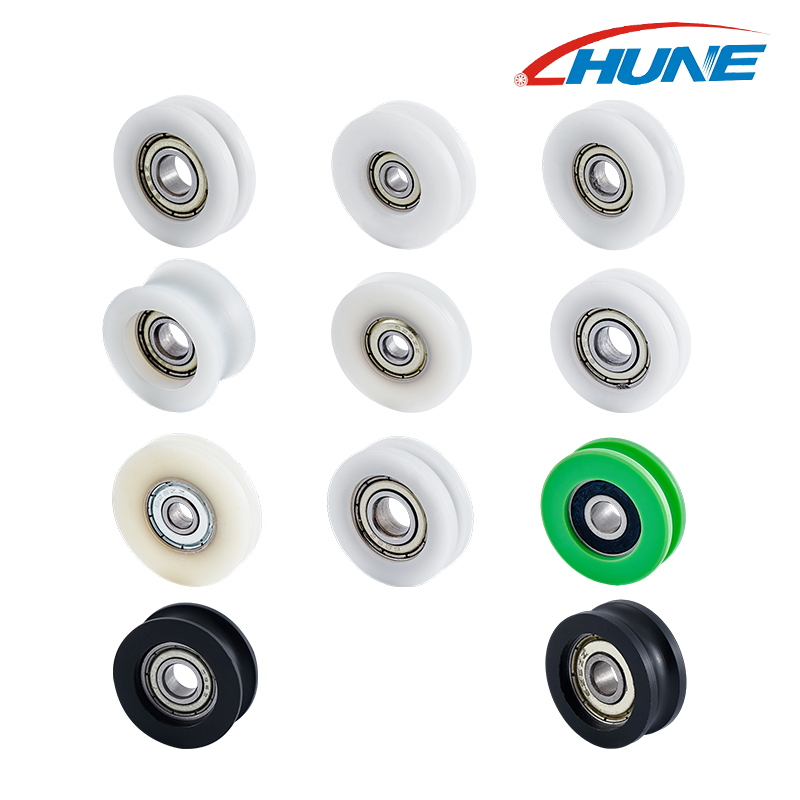
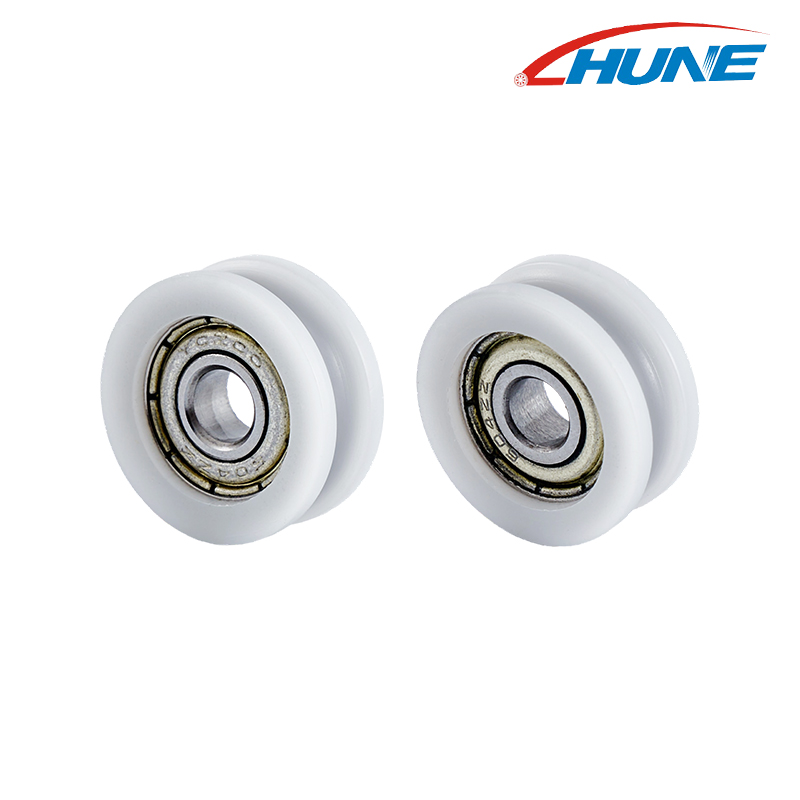
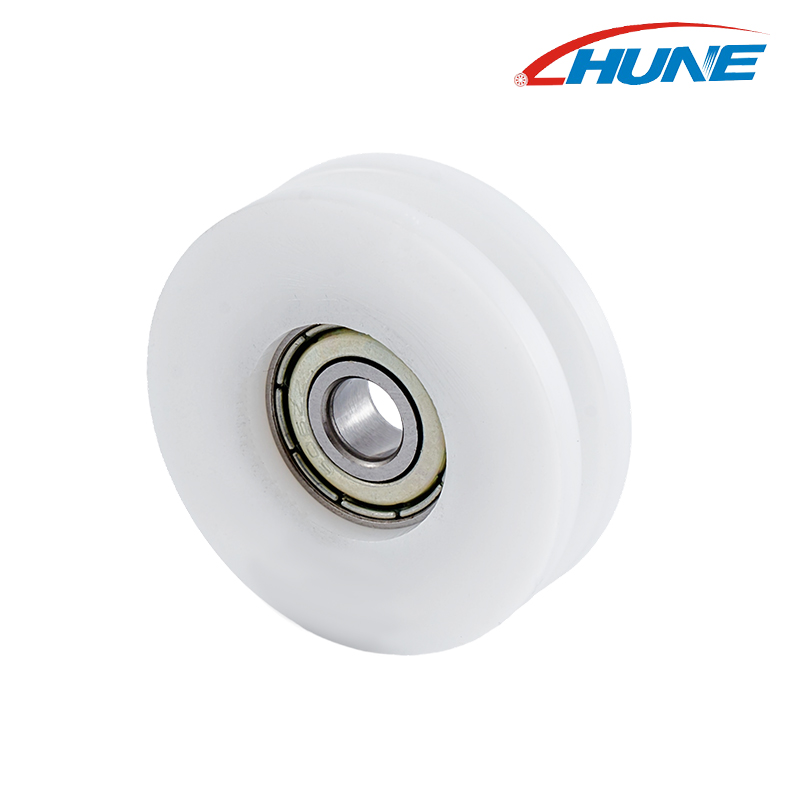
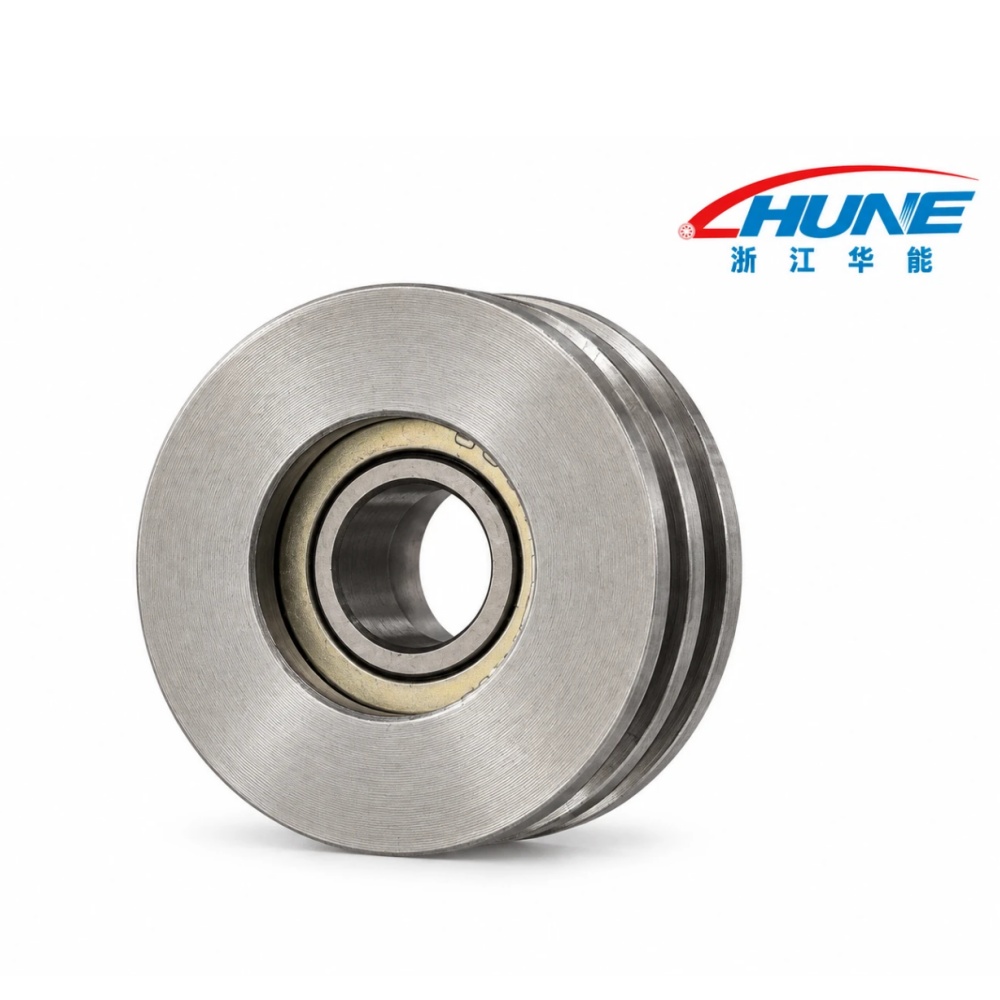
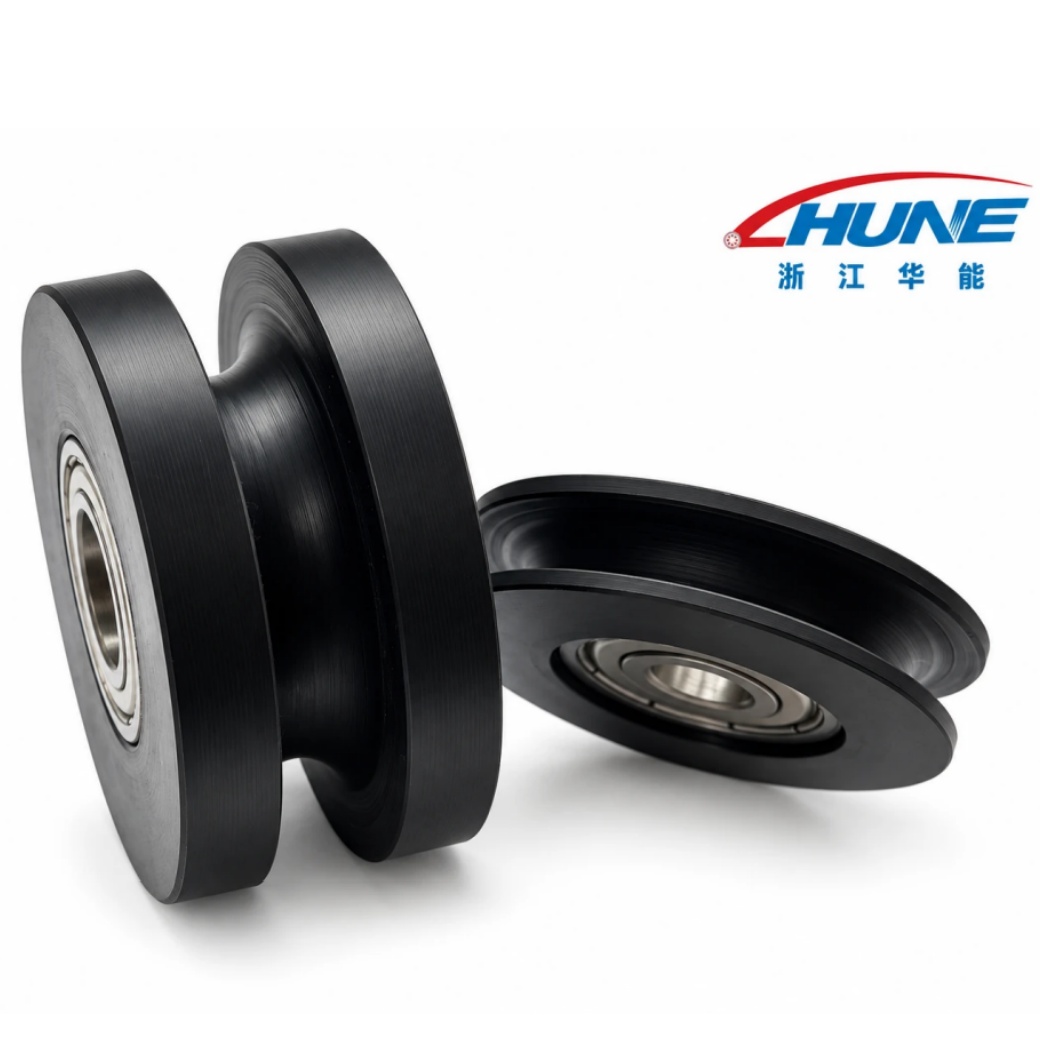
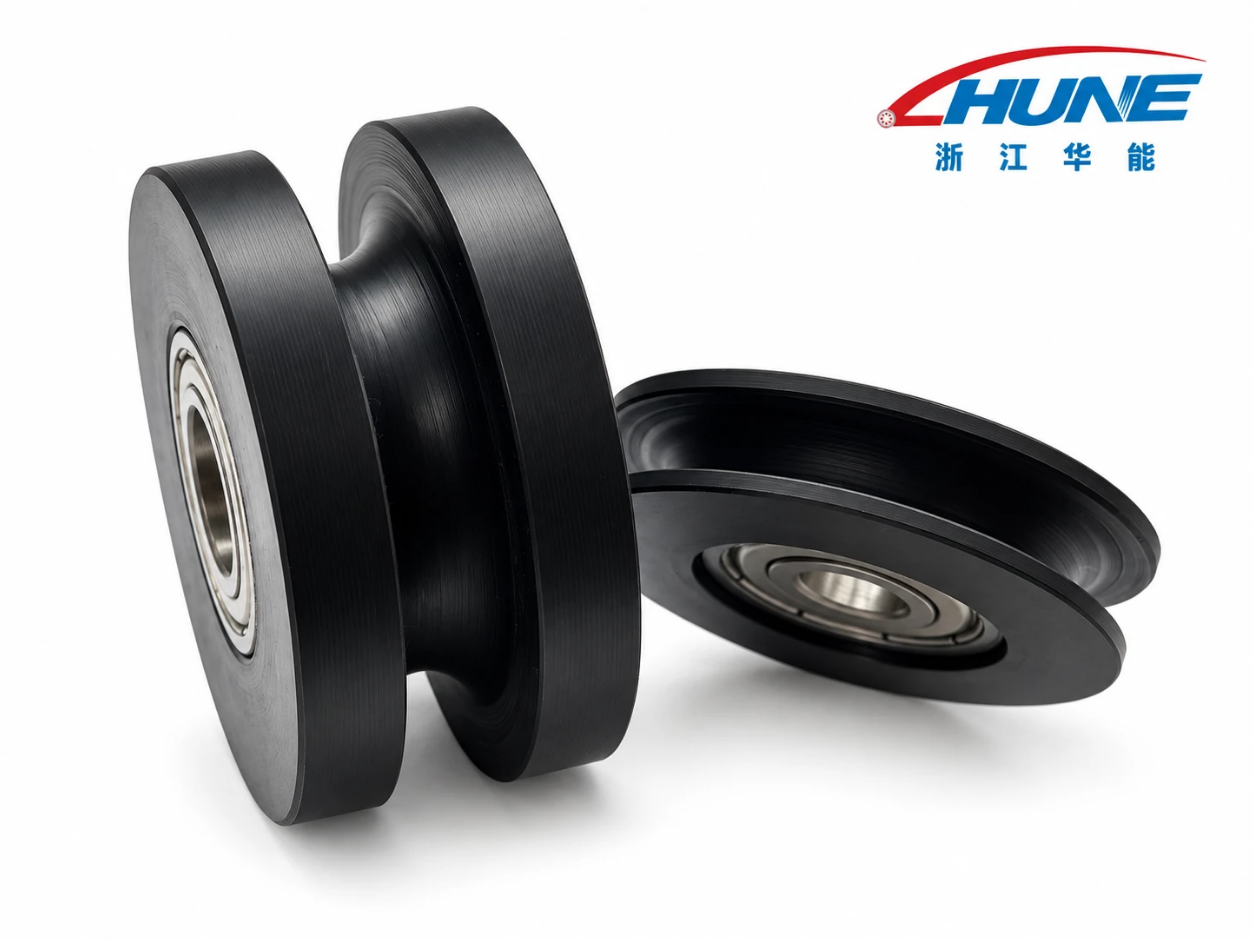
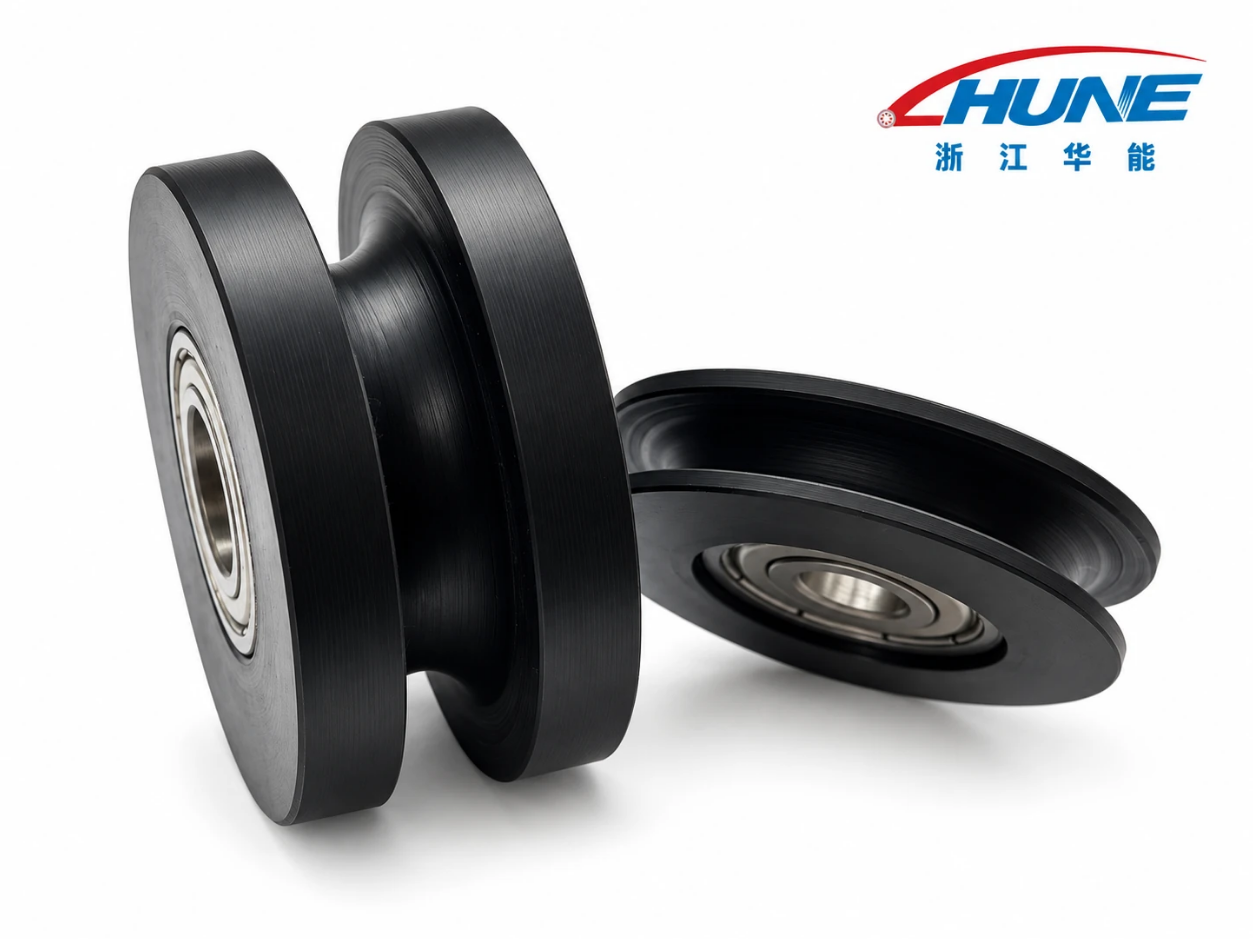
An ABS U-groove bearing pulley wheel has a molded ABS body, a U-shaped running groove, and a bearing that supports rotation. The groove follows a compatible guide or contact profile. The bearing lets the wheel rotate around a shaft, bolt, or pin.

Structure, dimensions, and bearing type vary from model to model. Check the technical drawing and product specifications before you commit to a pulley for any assembly.
Main Components of an ABS U-Groove Bearing Pulley
A typical unit combines the following parts:
| Component |
Function |
Key Considerations |
| ABS Wheel Body |
Forms the outer running surface and groove profile |
Material grade, dimensions, stiffness, and wear behavior |
| U-Shaped Groove |
Guides the wheel along a compatible track or contact profile |
Groove width, depth, side-wall shape, and clearance |
| Ball Bearing |
Allows rotation between the wheel and the shaft |
Bore, outside diameter, width, load rating, and shielding |
| Shaft or Mounting Bolt |
Carries the pulley and attaches it to the assembly |
Diameter, alignment, retention, and mounting clearance |
| Spacer or Retaining Element |
Keeps the pulley in its intended position, where used |
Thickness, fit, and compatibility with adjacent parts |
Each part depends on the others. A smooth-turning bearing can't make up for a groove sized wrong, a poor wheel material, or a bracket that isn't aligned.
What Is ABS Plastic?
ABS, or acrylonitrile butadiene styrene, is a thermoplastic widely used for molded parts and housings. It balances rigidity, impact resistance, surface quality, and ease of molding.
In pulleys, ABS makes it practical to produce precise wheel profiles in a range of colors and shapes. Whether it performs well depends on the grade, wall thickness, groove geometry, operating temperature, and load.
When you specify an ABS pulley, pay attention to these points:
- Rigidity: The wheel should hold its shape under the rated working load.
- Impact resistance: Grade and design determine how the wheel handles occasional knocks.
- Dimensional stability: The wheel must stay within tolerance in the expected operating conditions.
- Surface condition: Molding quality and finishing affect how the wheel contacts its guide.
- Environmental compatibility: Temperature, moisture, UV light, and chemicals can all change material behavior.
ABS isn't the right choice for every pulley. If the application involves heavy sustained loads, high heat, severe abrasion, or demanding chemical exposure, test the material against those actual conditions first.
How Does a U-Groove Bearing Pulley Work?
A U-groove bearing pulley has two contact points that matter. The first is inside the wheel, where the bearing supports rotation around the shaft. The second is on the outside, where the groove meets the guide, rail, rounded profile, or other compatible part.
As the assembly moves, the bearing lets the wheel turn, and the groove keeps the wheel positioned against its guide. How much sideways control you get depends on the groove profile, the guide dimensions, the clearance between them, and how the assembly is mounted.
A well-matched groove helps limit lateral movement. It does not, however, prevent derailment or guarantee stable tracking by itself. The whole assembly has to be designed for its intended motion and loads.
How Does U-Groove Geometry Affect Performance?
The groove shape determines how the wheel meets its mating part. Several dimensions drive that interaction:
- Groove width sets the clearance between the wheel and the guide.
- Groove depth controls how far the guide sits inside the wheel profile.
- Side walls influence lateral positioning and how the wheel responds to side loads.
- Groove base determines how the wheel contacts a rounded or compatible guide surface.
- Wheel diameter affects the space needed for installation and the rolling behavior.
- Wheel width influences the contact area and how the wheel fits the surrounding structure.
If the groove is too narrow, the wheel can bind against the guide. If it's too wide, the wheel can wander sideways. Incorrect depth can push the guide onto an unintended section of the wheel. For that reason, size the groove from the actual mating profile, not from the nominal pulley diameter alone.
ABS vs. Nylon vs. POM vs. PU-Coated Pulley Wheels
Each wheel material offers a different mix of rigidity, compliance, wear behavior, and environmental tolerance. The table below summarizes the trade-offs.
| Material |
General Characteristics |
Selection Considerations |
| ABS |
Rigid thermoplastic with good moldability and impact resistance |
Grade, working load, temperature, and contact wear |
| Nylon |
Tough engineering plastic with useful wear and impact properties |
Moisture-related dimensional change, grade, and load |
| POM |
Engineering plastic with strong dimensional stability and a smooth running surface |
Groove accuracy, friction, temperature, and loading |
| PU Coating |
Compliant outer layer that adds cushioning and surface protection |
Coating hardness, thickness, adhesion, and contact pressure |
The right material depends on the guide surface and working conditions. A rigid plastic wheel suits a fixed guide profile well, while a PU-coated surface may be better where cushioning matters. Verify the actual load and contact requirements before choosing either.
Key takeaway: Material choice affects wear, noise, and dimensional stability as much as cost, so match the material to the contact conditions rather than to general reputation.
How to Choose the Right ABS U-Groove Bearing Pulley Wheel for Different Applications
Picking the right pulley means reviewing the mating guide, the load, the installation space, the bearing, and the operating environment together. A pulley that fits the mounting hole can still be wrong if its groove doesn't match the guide or its body can't handle the conditions.
Identify the Intended Application
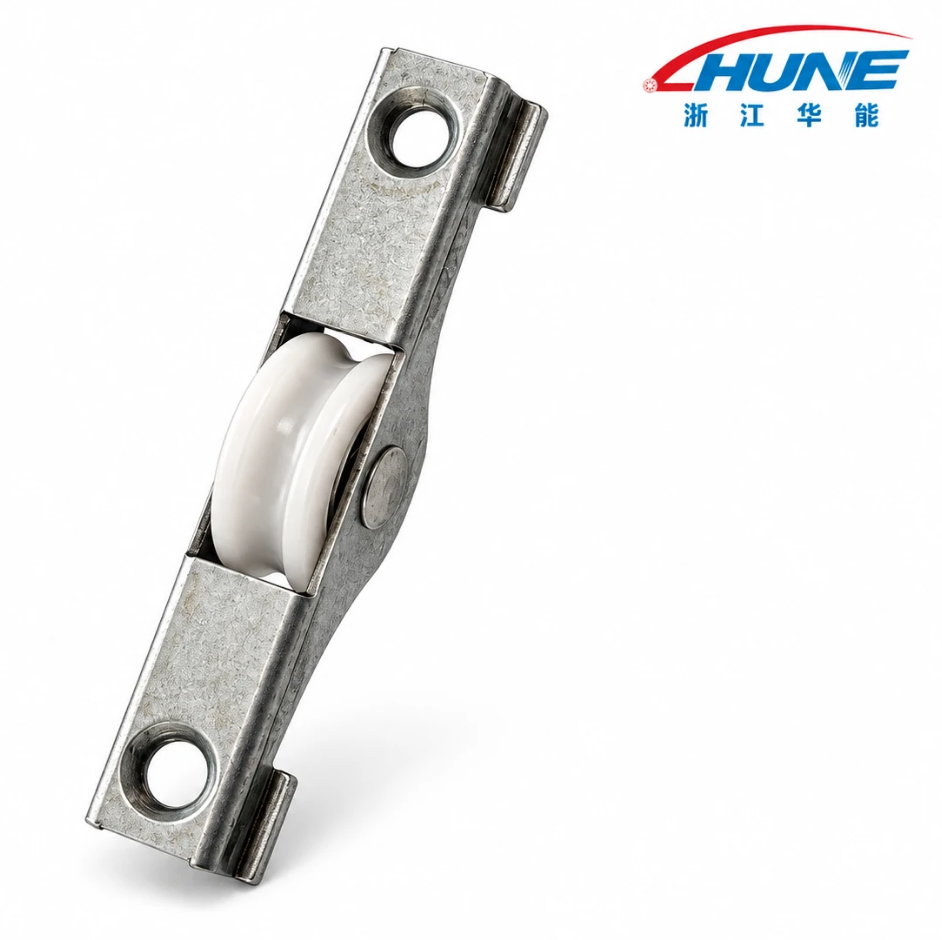
ABS U-groove bearing pulleys may suit light-duty sliding and guiding mechanisms, such as:
- Furniture sliding mechanisms
- Cabinet and wardrobe hardware
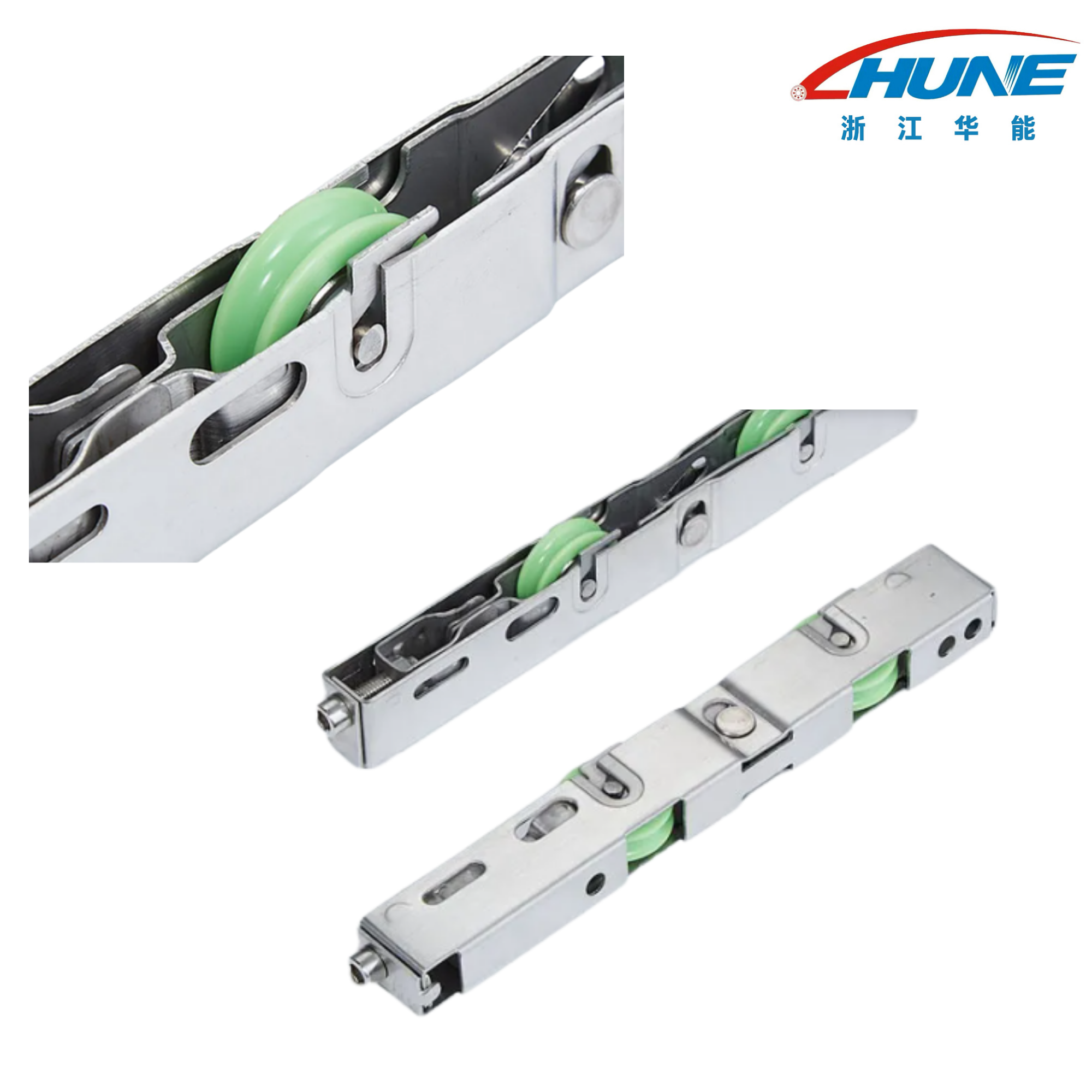
- Door and window guide systems
- Appliance mechanisms
- Small equipment guide assemblies
- Custom plastic roller systems
These are potential uses, not a guarantee that a specific model will work in each one. Compatibility depends on the product specifications and the full assembly. For sliding doors and windows, check panel weight, track geometry, mounting space, and the number of supporting wheels. For machinery, consider how often the wheel moves, its speed, contamination, and any side loads.
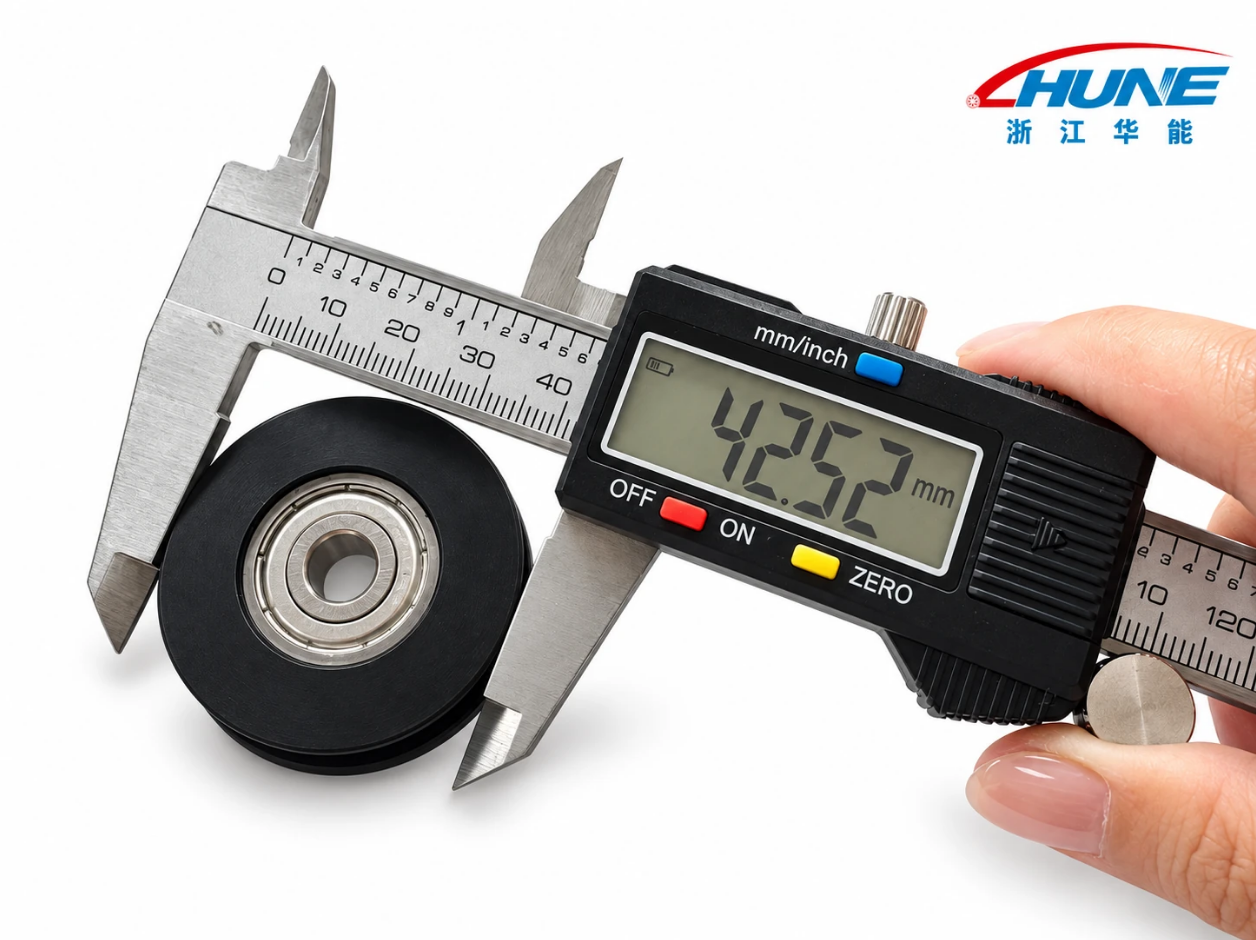
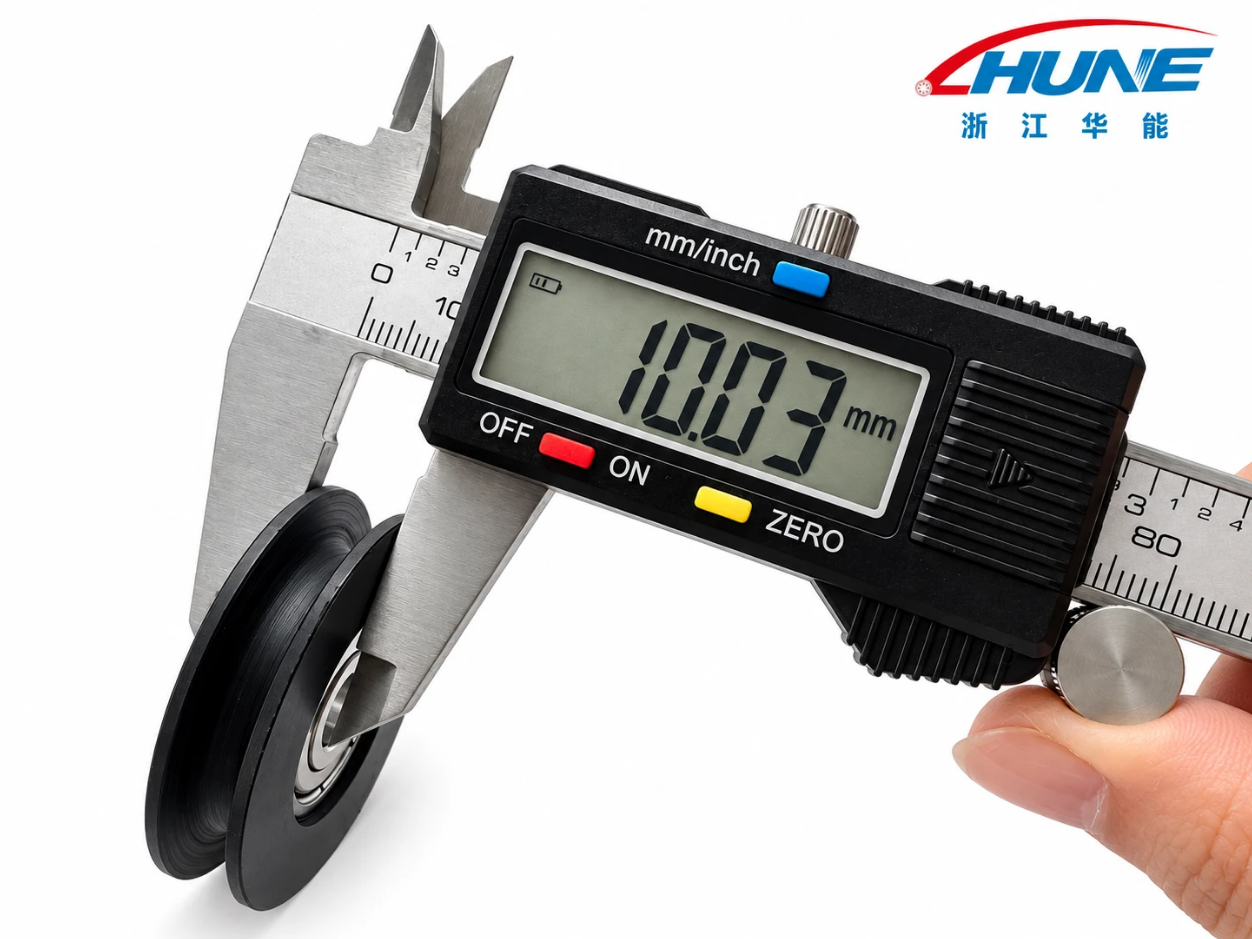
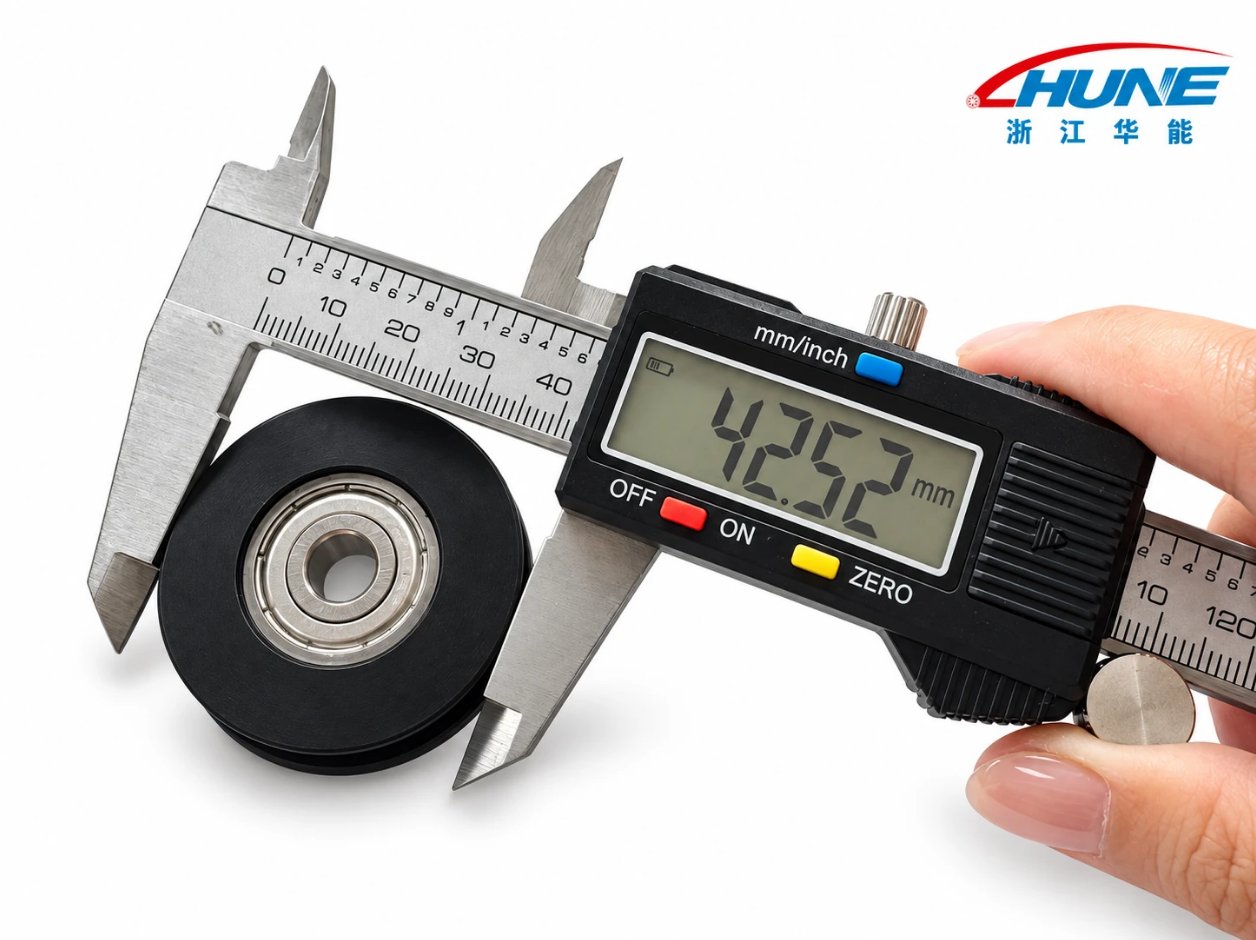
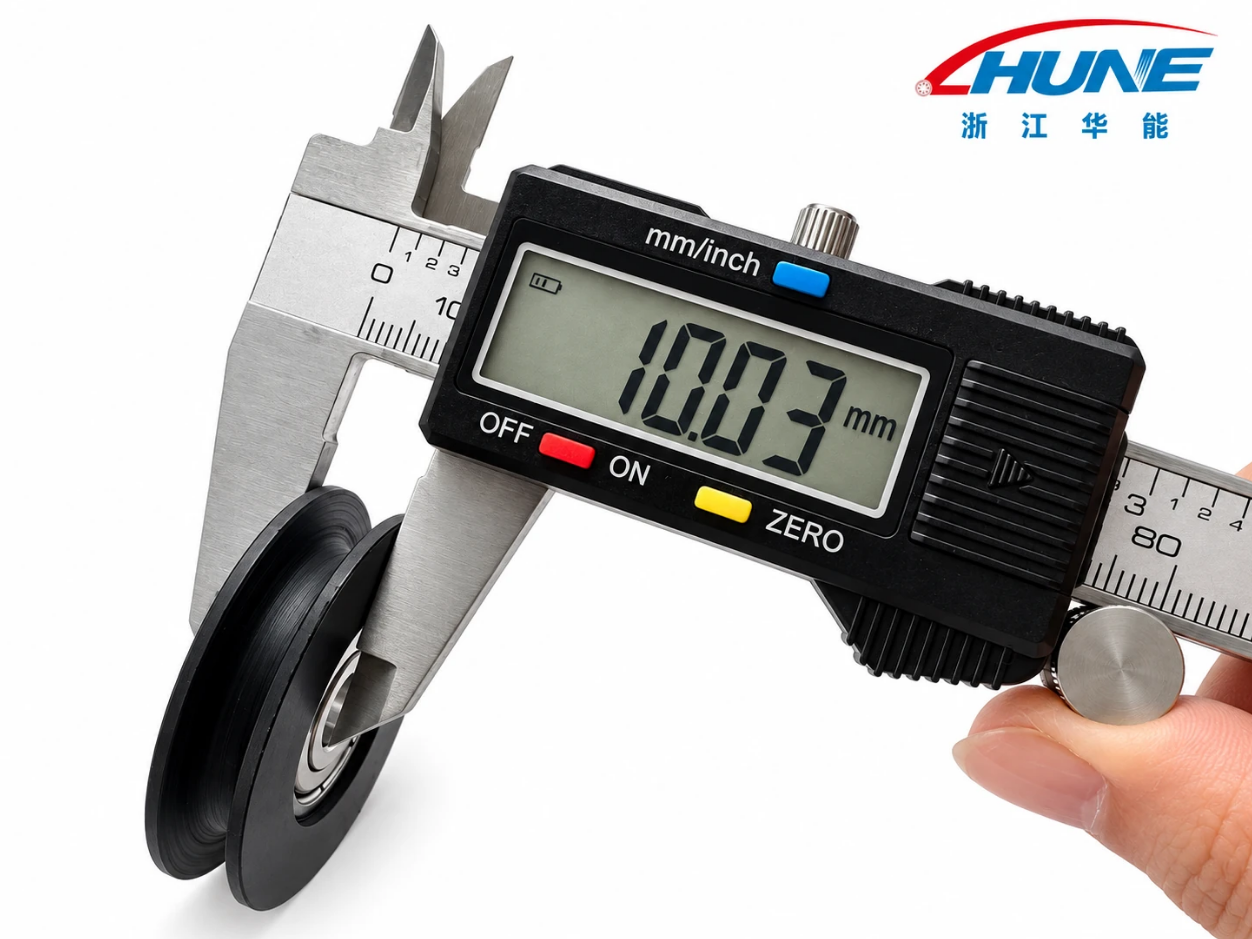
Check the Main Dimensions
Before you choose a pulley, measure these against the mating parts and the mounting structure:
| Parameter |
What to Check |
Why It Matters |
| Outer Diameter |
Overall wheel diameter |
Determines clearance and rolling geometry |
| Wheel Width |
Total width of the running body |
Affects fit within the mounting space |
| Groove Width |
Internal width of the U-shaped channel |
Sets clearance around the guide |
| Groove Depth |
Depth of the channel |
Influences guide engagement and contact position |
| Bearing Bore |
Internal diameter of the bearing |
Must match the shaft or mounting bolt |
| Bearing Outside Diameter |
External diameter of the bearing |
Determines the required bearing seat |
| Bearing Width |
Axial width of the bearing |
Affects the wheel body and mounting arrangement |
| Overall Assembly Dimensions |
Wheel, bearing, shaft, and bracket dimensions |
Confirms the complete part fits the mechanism |
Use the same reference points as the product drawing. If the guide has a specified tolerance, build that tolerance into the groove design.
Key takeaway: Dimensional checks should cover the whole assembly. A groove that is correct on paper can still fail if the bearing seat or bracket doesn't line up.
Evaluate Load Capacity
Load capacity depends on the wheel body, bearing, shaft, mounting structure, and load direction. The outer diameter alone tells you very little about it.
Consider these load types:
- Static load: The force applied while the pulley is stationary.
- Dynamic load: The force acting while the wheel is moving.
- Impact load: Extra force from sudden contact, movement, or track irregularities.
- Side load: Force acting across the wheel instead of along its direction of travel.
- Load distribution: How the total load is shared among the pulleys in the assembly.
- Operating frequency: How often the wheel moves and how many cycles it will see.
In multi-wheel systems, don't simply divide the total load by the number of wheels. Alignment, tolerances, mounting stiffness, and uneven loading all change the split. Both the bearing and the plastic wheel must suit the expected forces. If no verified load rating exists, request technical data or run an application-specific evaluation before finalizing the design.
Match the Bearing to the Shaft and Operating Conditions
The bearing supports rotation, but its suitability depends on more than its nominal size. Pay attention to:
- Bearing bore and shaft diameter
- Bearing outside diameter and wheel seat dimensions
- Bearing width and available space
- Internal clearance and fit
- Shield or seal configuration
- Lubrication requirements
- Expected speed and load
- Exposure to dust, moisture, and other contaminants
A shielded bearing helps keep out larger particles, but the level of protection depends on its construction. If the pulley will face water or fine dust, check whether a different protection arrangement is needed. The bearing also has to stay firmly in the wheel body. Too much interference or too little retention can hurt rotation and long-term stability.
Consider Temperature and Environmental Conditions
ABS properties shift with temperature and exposure. A pulley for indoor furniture faces different demands than one near a heat source, in a humid space, or in equipment that gets washed with cleaning chemicals.
Before you select ABS, review:
- Operating and storage temperature
- Moisture and humidity
- Contact with oils, cleaners, or other chemicals
- Dust and abrasive particles
- UV exposure, where relevant
- Movement frequency
- Required service life and inspection schedule
For demanding conditions, compare ABS with other materials using verified material data rather than general descriptions.
Common Selection Problems and Their Causes
| Problem |
Possible Cause |
Recommended Check |
| Wheel binds during movement |
Insufficient groove clearance or guide misalignment |
Measure the groove and guide, then check the mounting angle |
| Excessive sideways movement |
Groove too wide or loose mounting structure |
Check guide fit, bracket position, and shaft retention |
| Uneven groove wear |
Wrong contact profile, side loading, or poor alignment |
Inspect the guide and the wheel's contact pattern |
| Abnormal noise |
Bearing wear, contamination, loose mounting, or track irregularities |
Inspect the bearing, shaft, track, and installation |
| Wheel wobbles |
Bearing seat issues, eccentricity, or loose mounting |
Check concentricity, bearing retention, and shaft fit |
| Plastic deformation |
Material or geometry unsuited to the load or temperature |
Review material grade, loading, and operating conditions |
| Bearing hard to rotate |
Contamination, damage, excessive fit pressure, or unsuitable loading |
Inspect the bearing and the assembled wheel |
Swapping out a noisy wheel without finding the root cause often leaves the problem in place. Evaluate the guide, mounting, bearing, and wheel together.
ABS U-Groove Bearing Pulley vs. Other Pulley Designs
The U-groove is one of several wheel profiles. The right choice depends on the shape of the component it runs against.
| Pulley Type |
Typical Contact Profile |
Key Selection Factor |
| U-Groove Pulley |
Channel-shaped profile |
Compatibility with the guide or rounded contact surface |
| V-Groove Pulley |
Angled groove |
Match to a V-shaped rail or guide |
| Flat Pulley Wheel |
Flat running surface |
Contact with a flat track or surface |
| Concave Roller |
Inward-curved running surface |
Fit around a compatible rounded guide |
| PU-Coated Roller |
Compliant coated surface; profile varies by design |
Coating properties, contact pressure, and surface protection |
Don't swap a U-groove pulley for a V-groove or flat wheel without checking the contact geometry. A different profile changes the load path, lateral movement, and wear pattern.
Key takeaway: Profile compatibility matters more than the wheel's size or appearance.
How Are ABS U-Groove Bearing Pulley Wheels Manufactured, Tested, and Customized?
Making an ABS U-groove bearing pulley wheel means molding the profile, preparing the bearing seat, assembling the parts, and checking the finished unit against its requirements. The exact sequence depends on the design, material, tooling, and assembly method.
Typical Manufacturing Process
A typical production route for an ABS plastic bearing pulley runs through these stages:
- Product design and dimension review: The drawing sets the outer diameter, width, groove profile, bearing seat, and mounting requirements. It should account for the guide geometry and expected load.
- ABS wheel molding: Wheel bodies are commonly injection molded. Mold design, material grade, processing conditions, and cooling all affect final dimensions and surface quality. Confirm the molding method against the production specification for the specific Hune model.
- Bearing preparation: The bearing is checked against the required bore, outside diameter, width, and performance specs, and its type must suit the operating environment.
- Wheel and bearing assembly: The bearing is pressed or fitted into the wheel body. The fit has to hold the bearing securely without adding so much pressure that internal clearance or rotation suffers.
- Dimensional and functional inspection: The assembly is checked against the drawing and acceptance criteria. Depending on the application, this may include groove measurements, runout, bearing retention, rotational smoothness, and a trial fit on the intended guide.
- Packaging and identification: Finished parts are protected from contamination and damage, with labeling that follows the applicable specification.
Important Quality Control Points
Inspection should cover the wheel body, the bearing, and the assembled unit together.
| Inspection Item |
Purpose |
| Outer diameter and wheel width |
Confirm dimensional compatibility |
| Groove width and depth |
Verify the intended guide clearance |
| Groove surface condition |
Find burrs, defects, or irregularities |
| Bearing seat dimensions |
Check bearing fit and retention |
| Concentricity and runout |
Detect wobble or dimensional imbalance |
| Rotational smoothness |
Identify binding or abnormal resistance |
| Bearing noise |
Spot defects or assembly problems |
| Shaft and mounting fit |
Confirm correct installation geometry |
| Trial movement |
Test the pulley on a compatible guide |
| Load-related testing |
Check performance against defined requirements |
Acceptance limits belong on the drawing or in the technical agreement. Don't assume tolerances, test methods, or load limits without documentation behind them.
Customization Options for ABS U-Groove Bearing Pulley Wheels
A standard pulley may not match every guide or mounting layout. Customization becomes worth considering when the existing dimensions, bearing arrangement, or wheel material don't fit the application. Possible parameters include:
- Wheel outer diameter and overall width
- U-groove width, depth, and profile
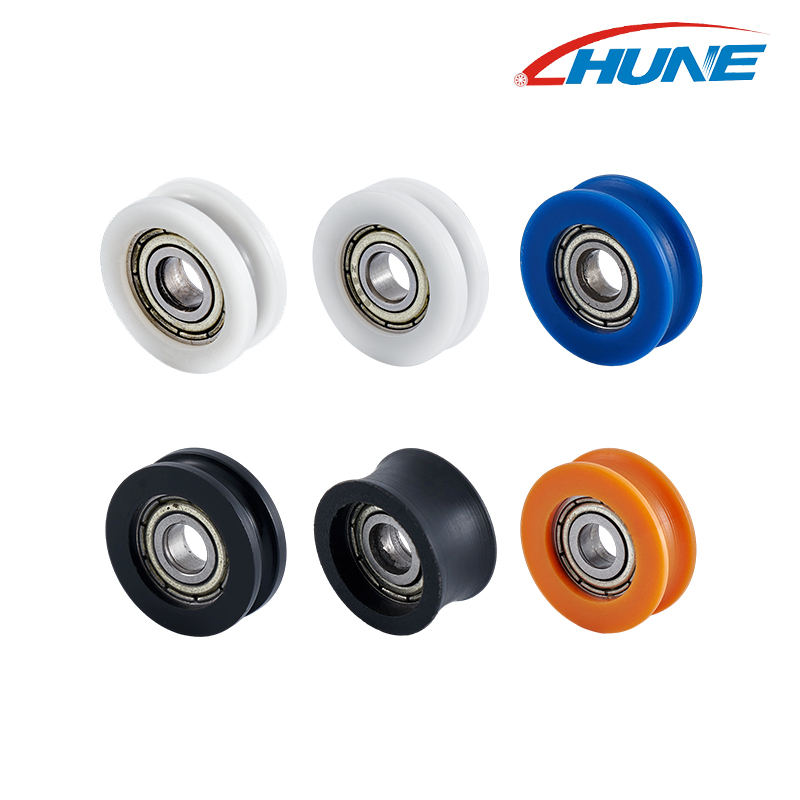
- ABS material grade and color
- Bearing model and dimensions
- Shaft bore and mounting arrangement
- Bearing retention structure
- Wheel body geometry
- Surface finish and other design details
What's feasible depends on the required dimensions, tooling, material, and production process.
Information Needed for a Custom Pulley
To evaluate a custom design, gather as much of the following as you can:
- A product drawing or physical sample
- Outer diameter, wheel width, groove width, and groove depth
- Dimensions and profile of the mating track or guide
- Bearing model or required bearing dimensions
- Shaft diameter and mounting arrangement
- Expected static and dynamic loads
- Movement frequency and operating speed
- Operating temperature and environmental conditions
- Space restrictions and surrounding component dimensions
- Inspection criteria and intended service conditions
A drawing of the full assembly is especially useful. It shows how the wheel, bearing, shaft, and guide interact, which often reveals fit problems that a wheel drawing alone would miss.
How Hune Can Support Pulley Specification and Development
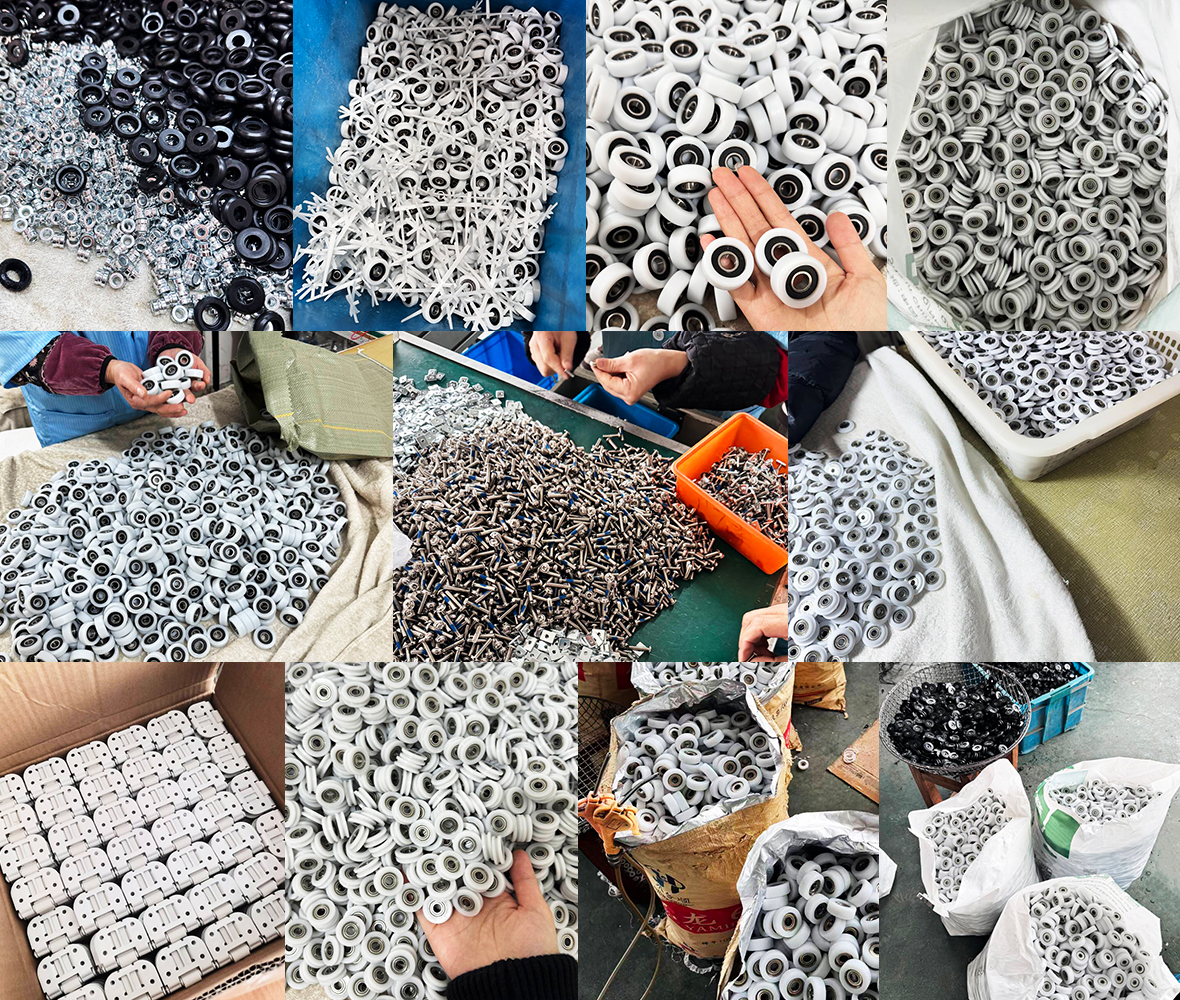
Hune, associated with Zhejiang Huaneng Micro Bearing Co., Ltd., offers bearing and pulley product categories that include plastic bearing pulleys and U-shaped bearing pulley designs. Depending on the model and technical requirements, development discussions can cover wheel dimensions, groove geometry, bearing selection, material options, and mounting compatibility.
Confirm the exact product specification for each ABS U-groove bearing pulley. Dimensions or bearing arrangements from another model don't automatically carry over. A drawing, a sample, and details about the intended guide will establish the required configuration.
Frequently Asked Questions
What is the function of the U-shaped groove?
The groove positions the wheel on a compatible guide and influences lateral movement. Its dimensions have to match the mating profile to avoid binding, excess play, or uneven wear.
How do I choose the correct U-groove size?
Measure the guide or track, including its width, shape, and tolerance. Compare those measurements with the pulley's groove width, depth, and profile, and allow for the operating clearance you need.
Is ABS suitable for every bearing pulley application?
No single plastic suits every condition. ABS can work well for certain molded pulleys, but load, temperature, abrasion, chemical exposure, and dimensional requirements all need evaluating before you select it.
What information is needed to develop a custom ABS bearing pulley?
Useful inputs include a drawing or sample, wheel and groove dimensions, bearing requirements, shaft size, guide geometry, expected load, operating environment, and space restrictions.
Can an ABS U-groove pulley be used on a rope or wire?
It can be considered when the groove geometry, material, load, and contact surface are designed for that specific rope or wire. Standard plastic pulleys should not be assumed suitable for lifting or other safety-critical loads without proper engineering verification.
What causes noise in a U-groove bearing pulley?
Common causes include bearing wear, contamination, incorrect groove clearance, guide misalignment, loose mounting hardware, or an unsuitable contact profile. Inspecting the whole assembly is the most reliable way to find the source.
Can the wheel material and bearing be customized?
It may be possible, depending on the product design and manufacturing requirements. Confirm the exact options with the technical team, using your drawing, sample, and application details.
An ABS U-groove bearing pulley wheel combines a molded plastic running surface, a channel-shaped groove, and a bearing-supported hub, and its performance depends on how all three work with the guide, the mounting, the load, and the environment. Groove dimensions, bearing fit, wheel material, and alignment should be evaluated together rather than one at a time. Hune's bearing and pulley range gives you a starting point for comparing configurations and discussing custom specifications. Begin with the actual guide profile and application requirements, and you'll be in a strong position to choose a pulley that suits your mechanism.





 English
 Español
 日本語
 +86-15058997617