Sliding Door and Window Roller Assembly: Components, Selection, and Custom Manufacturing
A sliding door can look effortless, but its smooth movement depends on how well the roller assembly, bearing, housing, and track work together. When one part is mismatched, the result is often noise, a sticking panel, or a frustrating installation. A well-built roller assembly keeps the panel on its track and handles the stress of thousands of opening and closing cycles. Once you understand its structure, wheel setup, materials, and dimensions, choosing the right part for aluminum windows, glass doors, wardrobes, or furniture becomes much simpler.
What Is a Sliding Door and Window Roller Assembly? Components and Working Principles
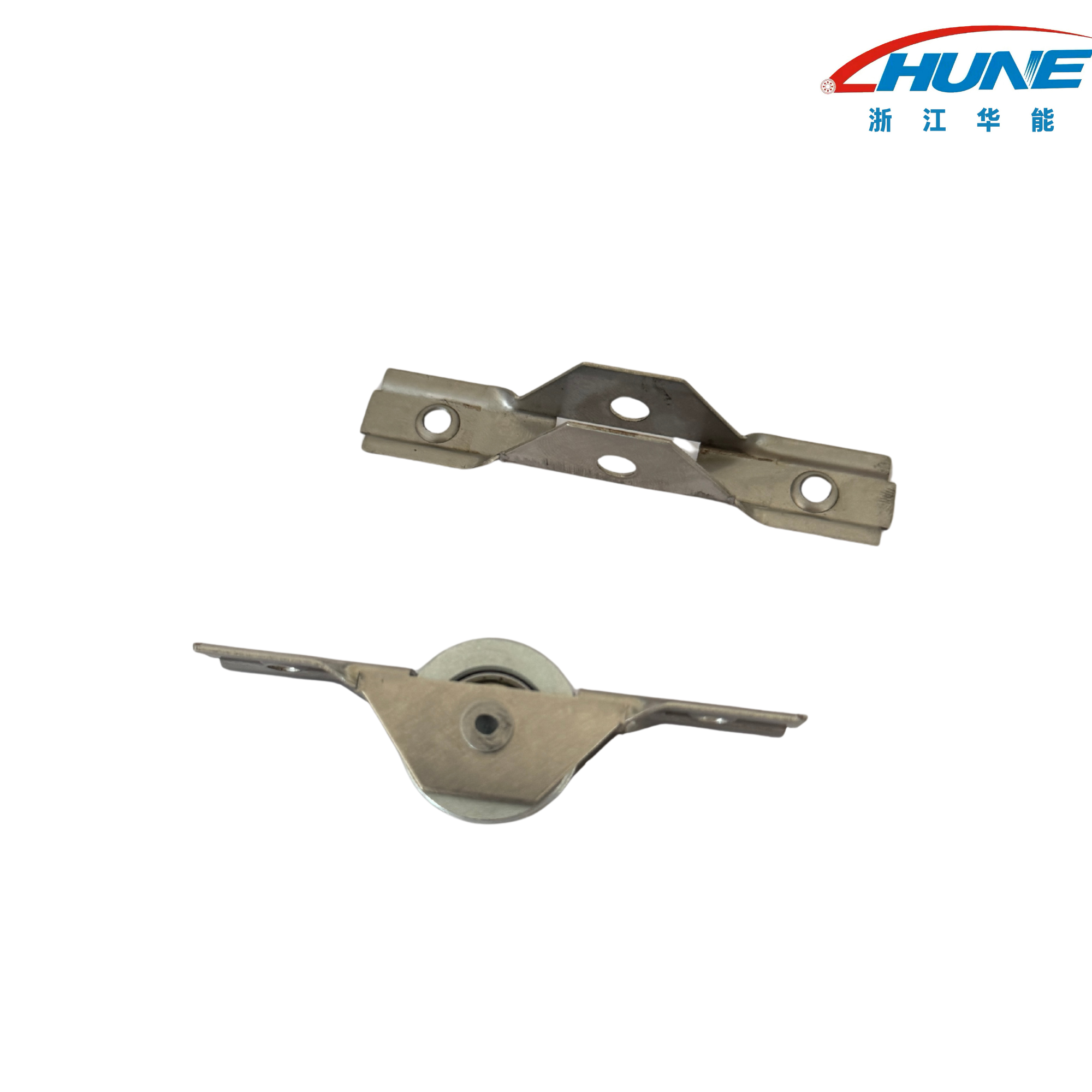
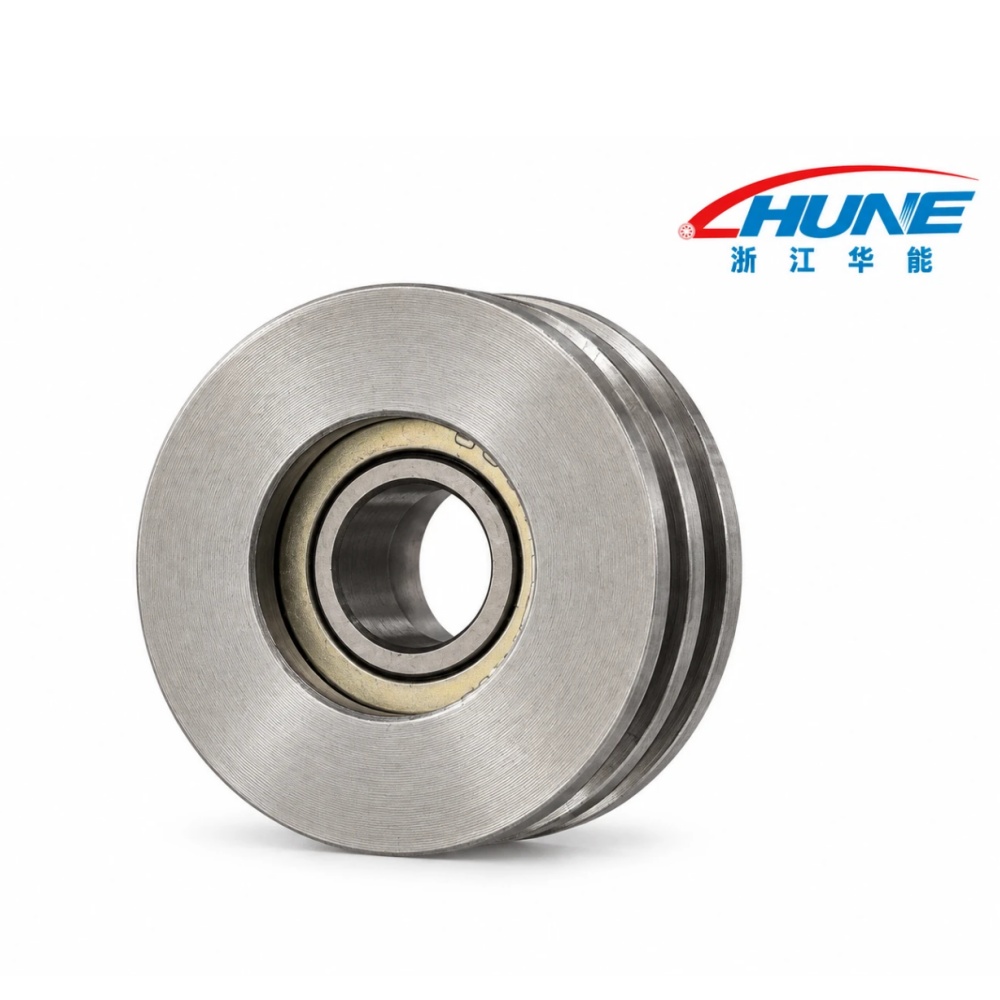
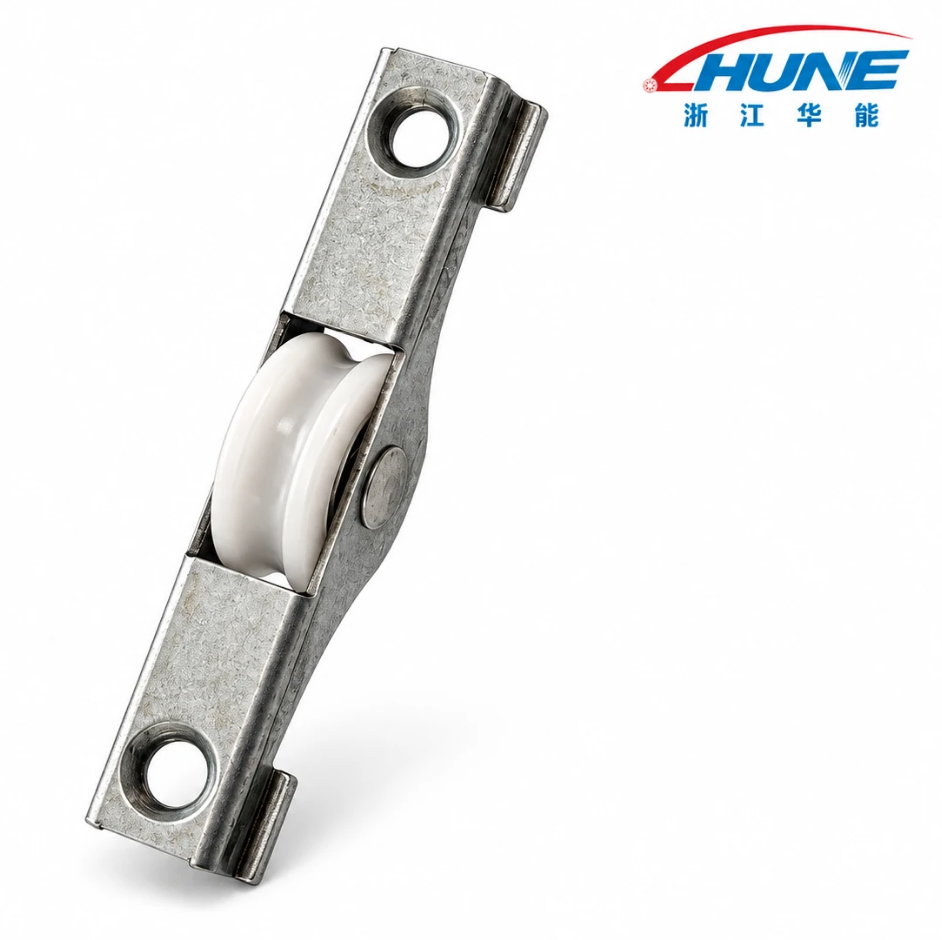
A roller assembly is the mechanical unit that carries or guides a sliding panel along its track. Most designs pair one or more wheels with supporting parts such as a bearing, a shaft, a housing, and mounting features. Some also include a height adjuster or a protective cover.

A single wheel is only one piece of the picture. A complete assembly packages everything needed to fix that wheel into a door or window frame. Its size and layout must suit the frame, the track profile, the panel weight, and the space available.
Main Components of a Roller Assembly
Each component affects how the panel moves, lines up, and holds its position.
| Component |
Function |
Key Selection Considerations |
| Roller Wheel |
Makes contact with the track and rolls as the panel slides |
Diameter, width, material, and wheel profile |
| Bearing |
Lets the wheel turn and keeps rotational friction low |
Bearing dimensions, load rating, sealing, and lubrication |
| Shaft or Axle |
Holds the wheel and bearing in position |
Diameter, length, material, and fit |
| Housing or Bracket |
Fixes the assembly inside the door or window frame |
Shape, thickness, mounting layout, and rigidity |
| Spacer |
Keeps the right gap between internal parts |
Dimensions, fit, and clearance |
| Dust Cover or Seal |
Keeps dust and debris out, depending on the design |
Coverage, sealing structure, and operating environment |
| Adjustment Mechanism |
Lets the installer change height or position, if provided |
Adjustment range, screw access, and frame compatibility |
Not every assembly includes all of these parts. The final configuration depends on the application and the product design.
How Does a Sliding Door and Window Roller Assembly Work?
The principle is simple: the wheel rolls along the track, and the panel rides on it.
- Panel support: The assembly attaches to the door or window frame. The panel's weight passes through the mounting structure into the wheels and track.
- Wheel rotation: As the panel moves, the wheels roll. The bearing lets the wheel spin around its shaft and reduces resistance.
- Track guidance: The wheel profile and track shape work together to keep the panel on its intended path.
- Position adjustment: If the assembly has an adjuster, the installer can correct height or alignment within the permitted range.
- Repeated operation: Each cycle brings rolling contact, vibration, and shifting loads. Material choice, dimensional accuracy, and installation quality all affect long-term performance.
Smooth movement comes from the whole system, not the wheel alone. A high-quality bearing can't make up for a worn track, an unsuitable wheel profile, or a bracket that's out of alignment.
Common Roller Assembly Configurations
Different sliding systems call for different wheel layouts and mounting styles.
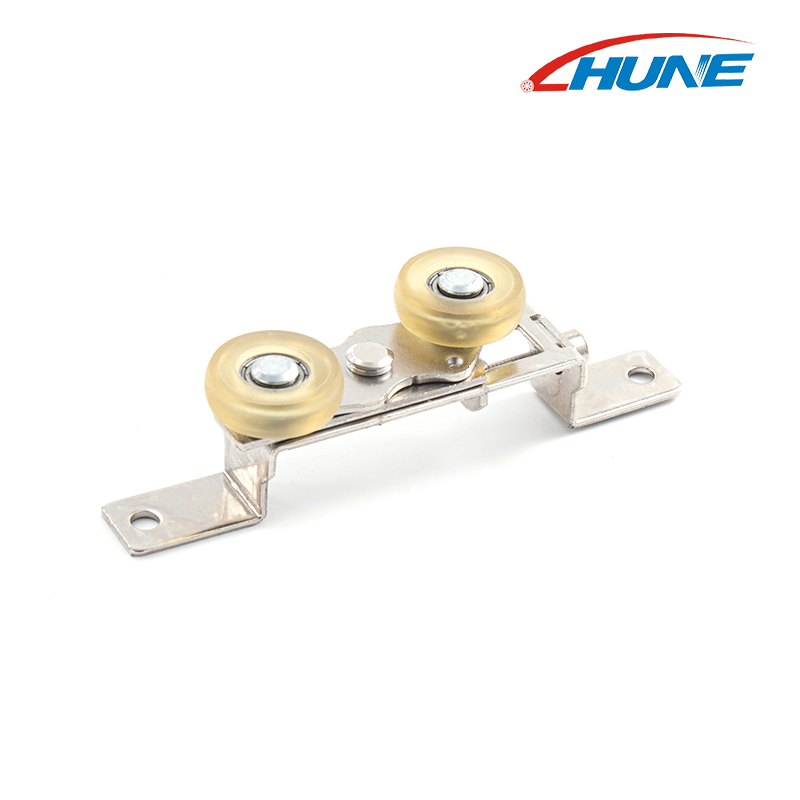
- Single-Wheel Roller Assembly: This type uses one wheel inside its housing. It works well in compact systems where the frame space and load requirements fit the design.
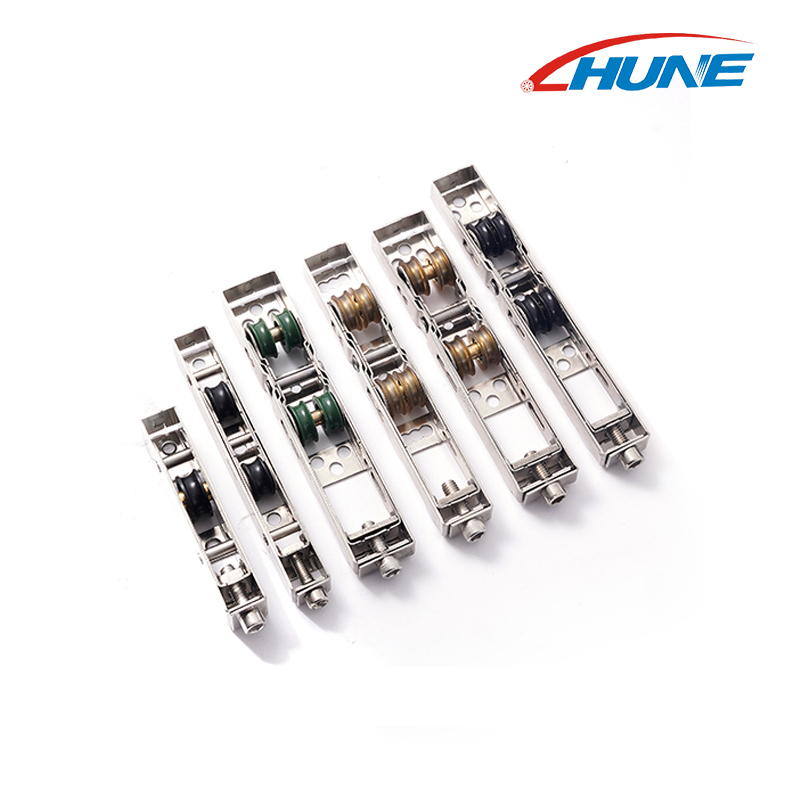
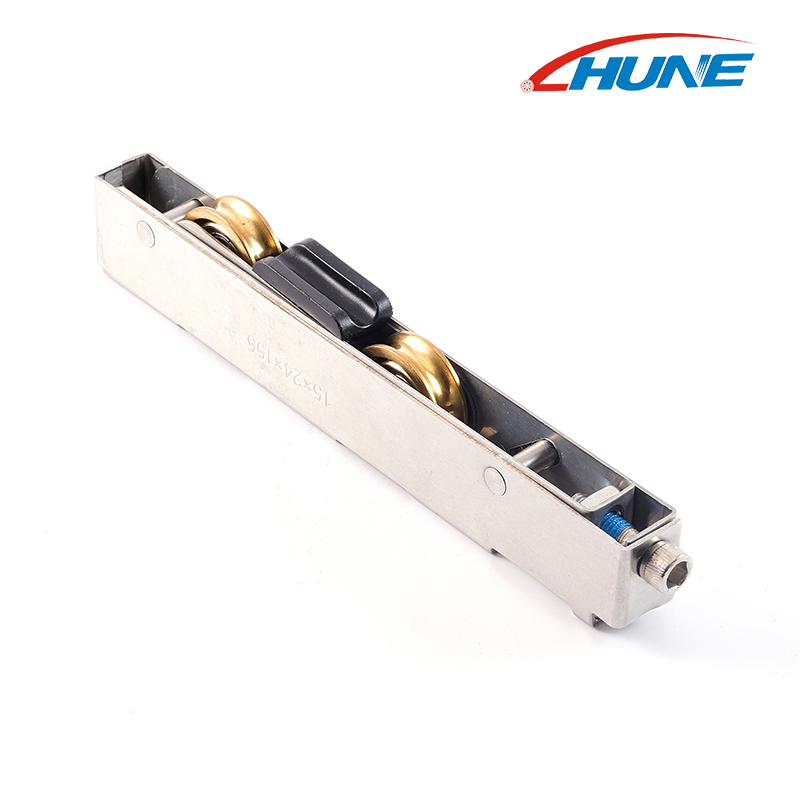
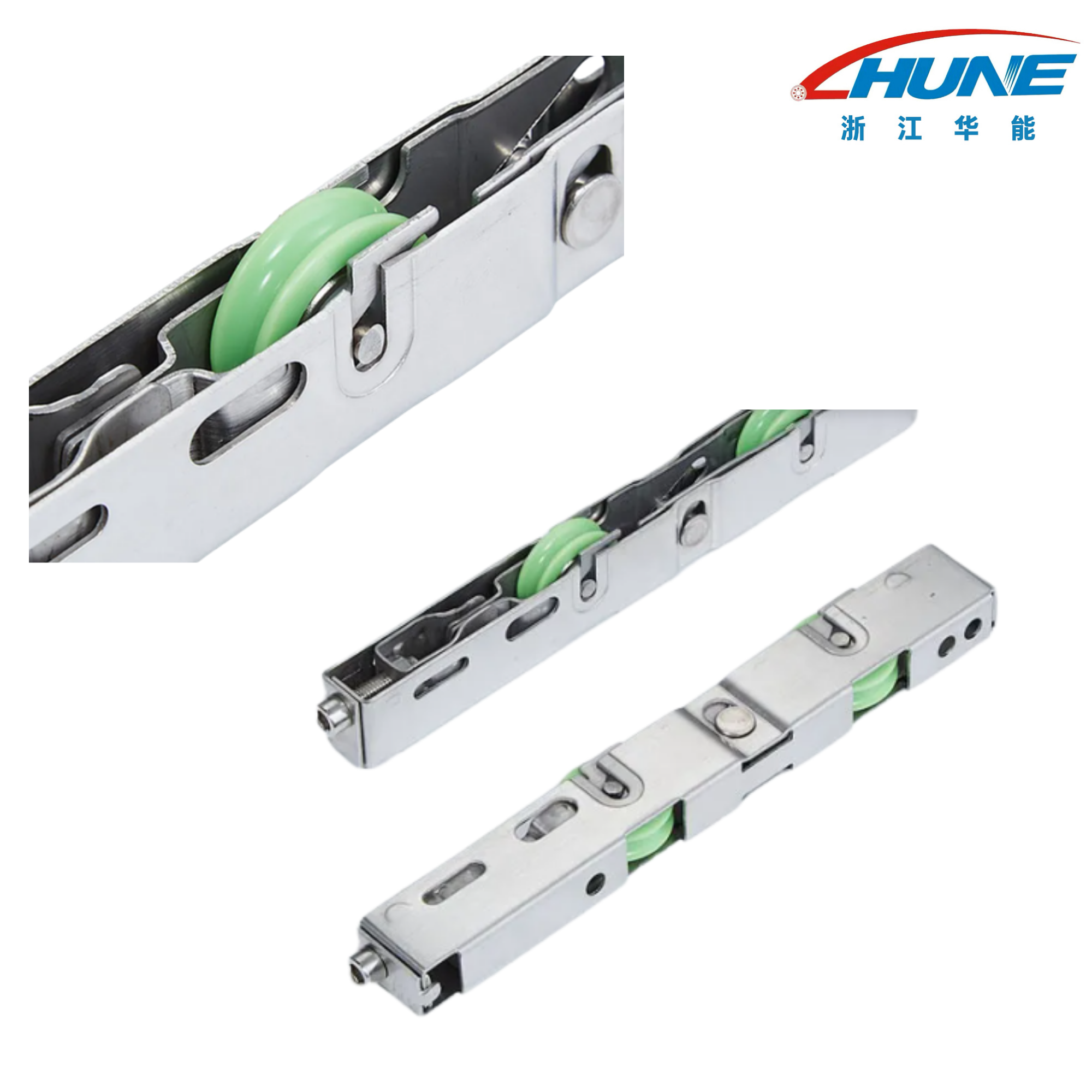
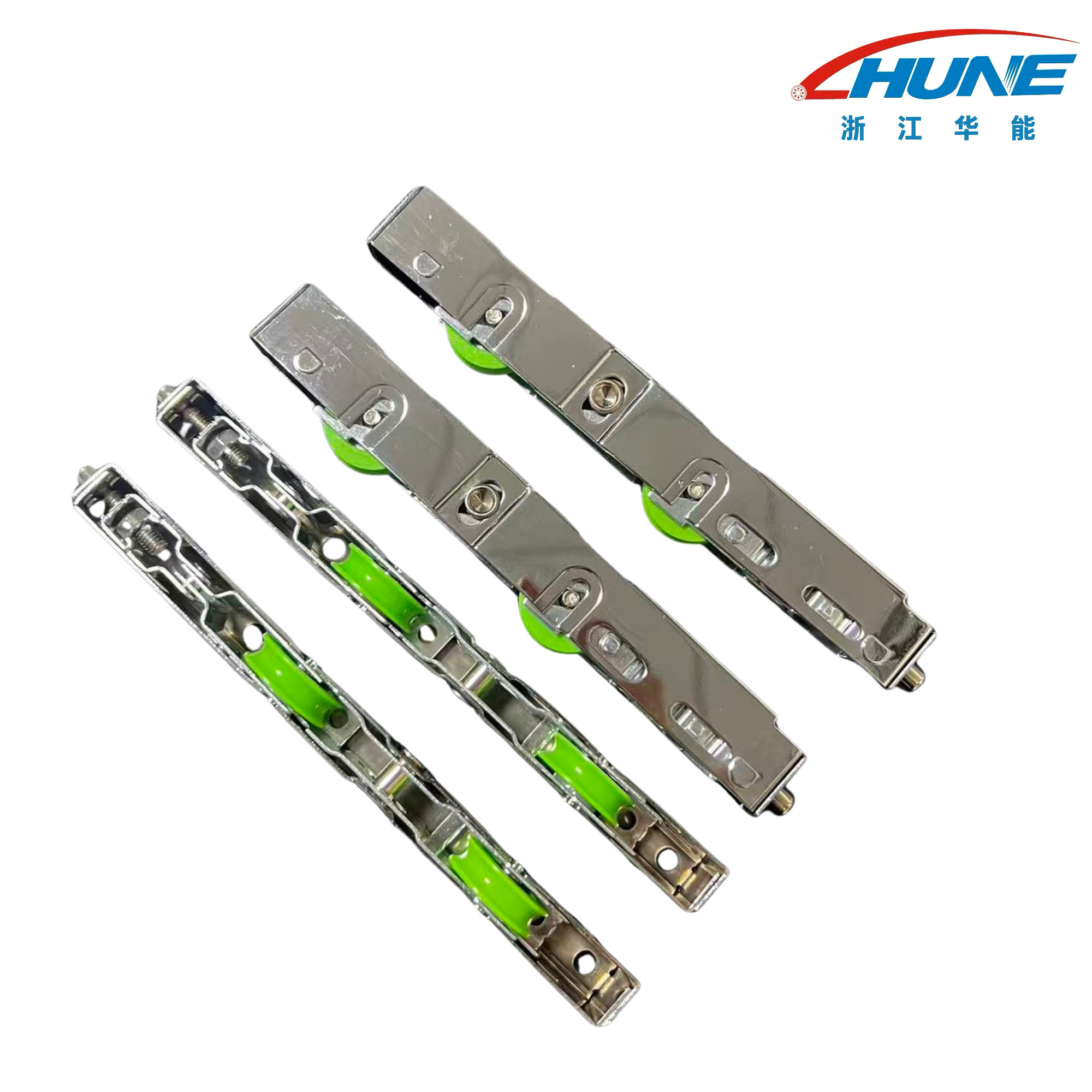
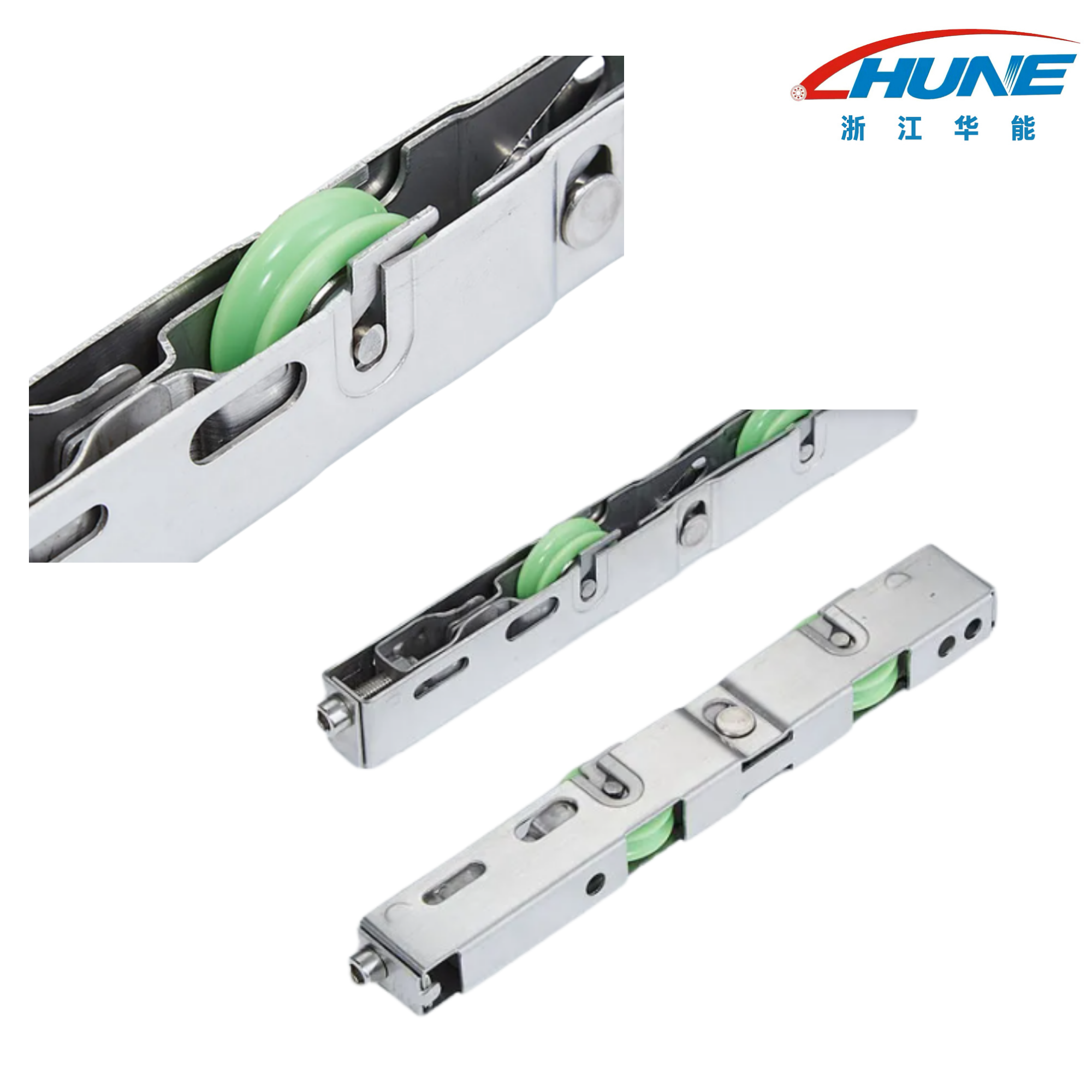
- Tandem Roller Assembly: A tandem assembly places two wheels in line inside one housing. The two wheels create two points of track contact, which can support steady movement when the assembly is correctly matched to the frame and rail.
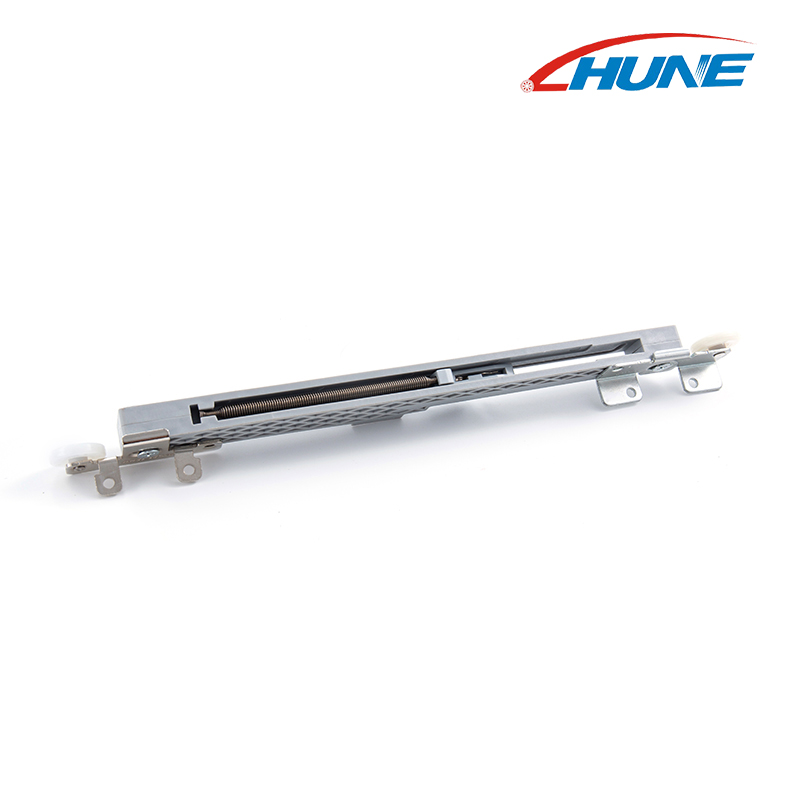
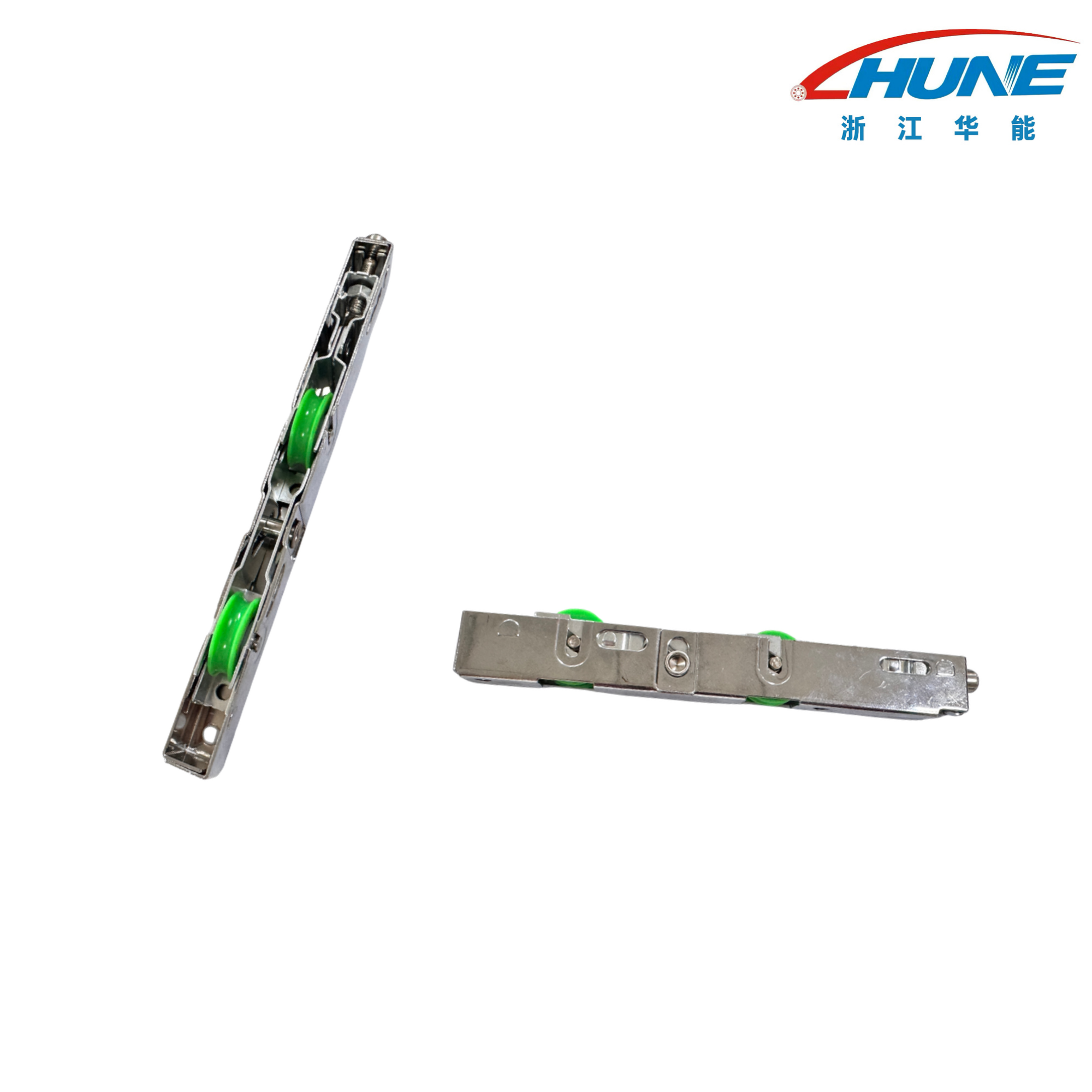
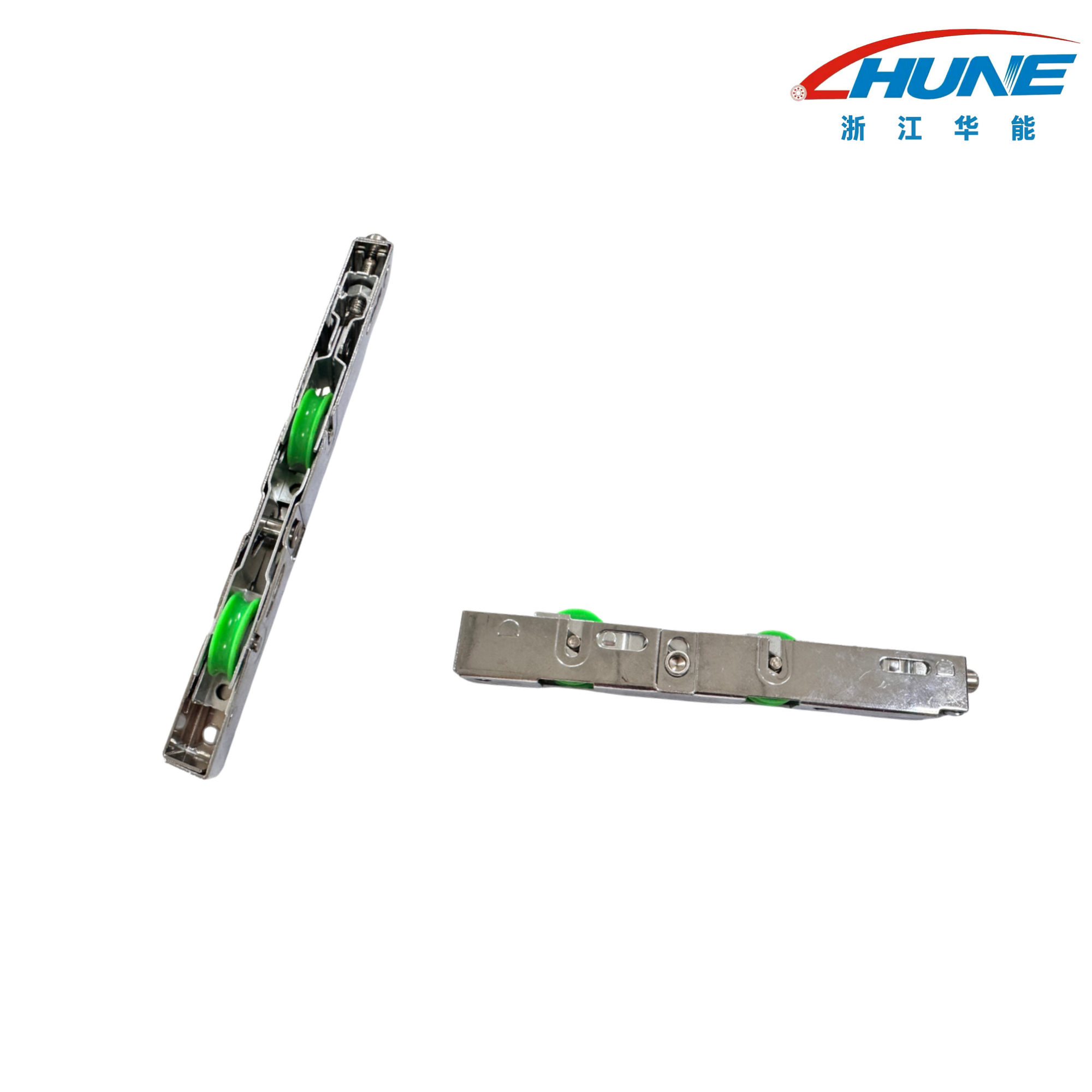
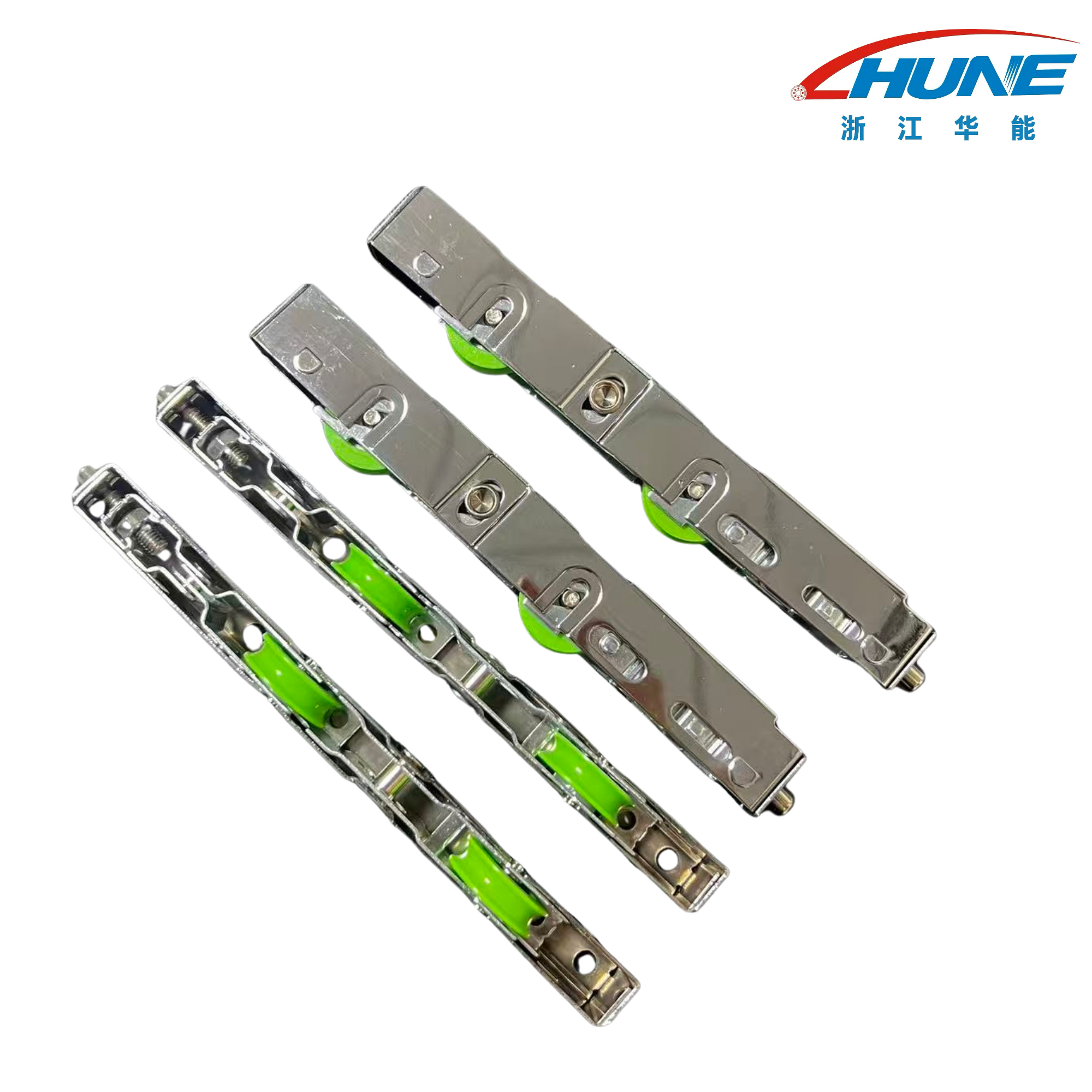
Hune's 158 mm tandem sliding door and window roller assembly is one example of this design. Its listed overall dimensions are 158 × 12.5 × 20 mm, and it has two green wheels set along a narrow metal housing. Treat these dimensions as a starting point for compatibility checks, not as a universal fit. The wheel material, groove profile, mounting-hole layout, and load rating should all be verified against the relevant technical drawing.
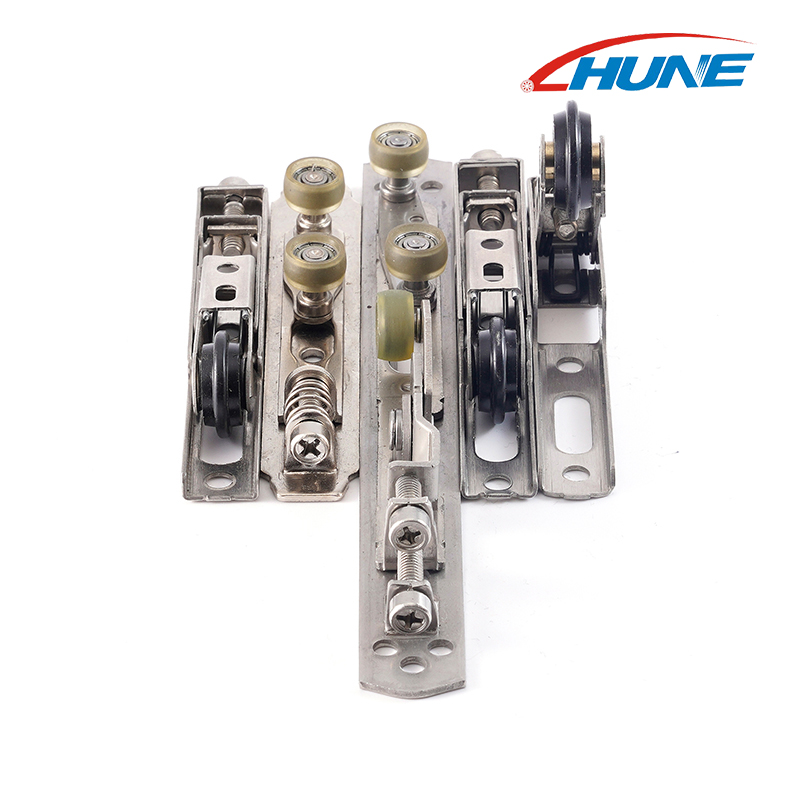
- Adjustable Roller Assembly: An adjustable assembly lets the installer correct the panel's height or position within a set range. This helps absorb installation tolerances and improves how the panel lines up.
- Recessed Roller Assembly: A recessed assembly sits inside a dedicated cavity in the frame. It suits projects that need a low-profile or concealed roller. Check the available space and mounting geometry carefully before choosing this option.
Why Wheel Profile and Track Compatibility Matter
A wheel has to match the shape and dimensions of the track it runs on. Each wheel profile is designed for a particular rail geometry.
| Wheel Profile |
General Design Characteristics |
Selection Consideration |
| Flat Wheel |
Has a fairly flat running surface |
Needs a compatible flat or suitably shaped track |
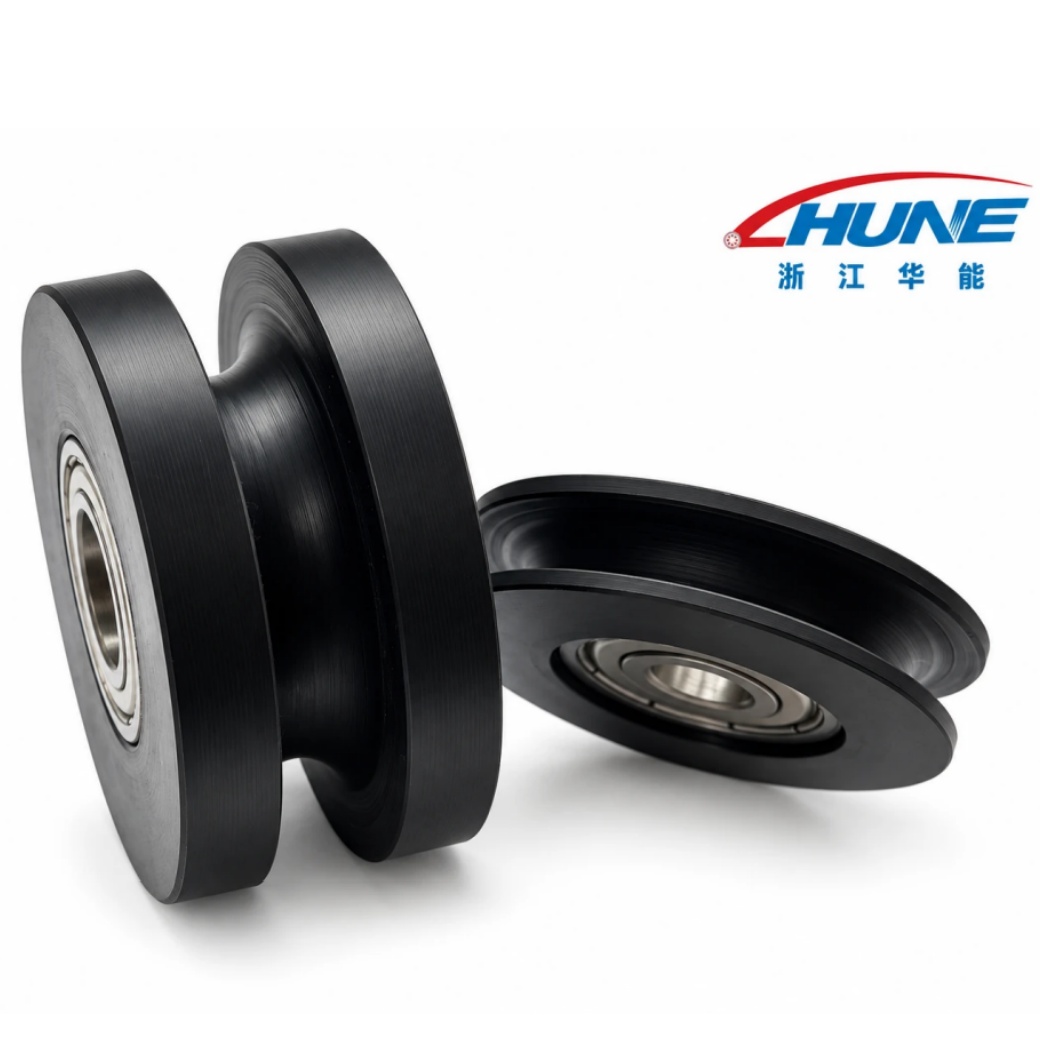
| U-Groove Wheel |
Has a concave groove |
Must match the rail's shape and dimensions |
| V-Groove Wheel |
Has a V-shaped running groove |
Needs a matching V-shaped rail profile |
| Special-Shaped Wheel |
Uses a profile designed for one application |
Must be checked against the mating track dimensions |
A mismatched profile can cause uneven contact, vibration, faster wear, or unstable movement. Before you choose a replacement or develop a new part, compare the wheel's geometry with the actual cross-section of the track.
How to Choose the Right Sliding Door and Window Roller Assembly
Choosing a roller assembly means more than comparing two sets of outside dimensions. The part has to fit the frame, carry the intended load, run on the right track, and survive the conditions where the door or window will be used.
The following framework covers the factors that matter most.
1. Identify the Door or Window Application
Start with the type of sliding system. Aluminum sliding windows, glass doors, wardrobe doors, and furniture panels each have different needs for space, load, noise, and adjustment.
| Application |
Main Factors to Evaluate |
Possible Design Considerations |
| Aluminum Sliding Windows |
Narrow frame cavities, track fit, and panel alignment |
Compact housing, accurate mounting dimensions, suitable wheel profile |
| Sliding Glass Doors |
Panel weight, track structure, and mounting layout |
Verified load capacity, stable support, compatible bearing and wheel setup |
| Patio and Balcony Doors |
Moisture, dust, and temperature changes |
Suitable corrosion resistance, easy maintenance access, track compatibility |
| Wardrobe Sliding Doors |
Smooth movement, noise, and concealed installation |
Compact roller structure, suitable polymer wheels, compatible guide rail |
| Cabinet and Furniture Doors |
Limited space, panel weight, and frequent use |
Small wheel dimensions, secure mounting, low running resistance |
| Specialized Sliding Systems |
Application-specific geometry and performance needs |
Custom wheel profiles, bracket dimensions, or mounting structures |
These are general guidelines. The right choice always depends on the full system specification.
2. Confirm Load Capacity and Load Distribution
Panel weight is central to roller selection. However, the rated capacity of a single roller cannot be treated as the permitted weight for the entire door.
The load each roller carries depends on how many rollers there are and where they sit, the panel's center of gravity, installation accuracy, track support, and how the panel moves.
When you evaluate a roller assembly, confirm the following:
- The total weight of the door or window panel
- The number of roller assemblies and their positions
- The manufacturer's rated load for the specified assembly
- Whether that rating applies to a static load, a moving load, or another defined test condition
- The track's ability to carry the applied load
- Any extra forces caused by misalignment or uneven installation
A tandem design has two wheels in one assembly, but that doesn't mean each wheel takes exactly half the load. Wheel alignment, track geometry, and the complete installation determine the actual split.
3. Match Wheel Dimensions to the Frame and Track
Wheel diameter, width, groove profile, and mounting height decide whether the assembly will work inside the sliding system.
- Wheel diameter affects rolling geometry and the space needed in the frame.
- Wheel width determines the contact area and must suit the track design.
- Groove profile controls how the wheel engages the rail.
- Housing dimensions determine whether the whole assembly fits the available frame cavity.
- Mounting-hole positions affect installation compatibility and how securely the assembly can be fixed.
For Hune's listed 158 mm tandem assembly, the overall size of 158 × 12.5 × 20 mm is a useful first comparison point. Still, outside dimensions alone don't prove compatibility. Use a confirmed dimensional drawing to check hole spacing, wheel geometry, mounting clearance, and how the assembly sits relative to the track.
4. Select Suitable Wheel, Bearing, and Housing Materials
Each material plays a different role. The wheel material influences track contact and wear. The bearing materials and housing affect rotation, structural support, and suitability for the environment.
| Material |
General Characteristics |
Typical Considerations |
| Nylon |
Lightweight engineering polymer with good wear and impact resistance in suitable grades |
Wheel noise, moisture-related dimensional change, load, and temperature |
| POM (Polyoxymethylene) |
Engineering plastic known for dimensional stability and relatively low friction |
Fit, wear conditions, operating temperature, and track compatibility |
| Stainless Steel |
Corrosion resistance that varies by grade |
Humidity, salt exposure, surface condition, and mechanical demands |
| Carbon Steel |
Structural strength and wear resistance when properly specified and treated |
Surface protection, moisture exposure, and component loading |
| Bearing Steel |
Standard choice for rolling elements and bearing races |
Hardness, contact stress, lubrication, and bearing design |
Choose materials based on the actual part and its use. A polymer-coated wheel and a metal housing, for example, can do different jobs inside the same assembly.
Hune's product information for the listed tandem assembly describes a nylon-coated outer layer and bearing steel in the bearing. Confirm the exact material grades and full specifications before approving the product for a final application.
5. Consider Bearing Design and Running Noise
The bearing lets the wheel turn and affects rolling resistance, noise, and load performance. Quiet operation, however, depends on the whole sliding system.
Assess these factors:
- Bearing dimensions and load rating
- How well the bearing fits inside the wheel
- Lubrication and sealing
- Wheel concentricity and dimensional accuracy
- Track surface condition
- Bracket rigidity and mounting alignment
- How the panel's weight is shared across the rollers
A dust cover or sealed bearing can keep contaminants out, provided it suits the operating environment. How much protection you get depends on the actual sealing design.
If a door becomes hard to slide or starts making unusual noise, check the track, alignment, wheel surface, and bearing condition. Don't assume the bearing is the culprit until you've looked at the rest.
6. Evaluate Corrosion Resistance and Environmental Conditions
Roller assemblies used in humid rooms, exterior doors, or salty air often need different materials and surface treatments than those used in dry indoor furniture.
When you assess environmental suitability, consider:
- How often and how long the assembly is exposed to moisture
- Condensation and cleaning habits
- Exposure to salt or other corrosive substances
- The corrosion resistance of the housing, shaft, fasteners, and bearing components
- Whether any protective coating or seal is compatible with the application
Stainless steel grades don't all resist corrosion equally. A stainless steel housing also doesn't guarantee that every internal part is corrosion-resistant. For harsh environments, confirm the material grades and any relevant corrosion-test results before you choose the assembly.
7. Check Installation and Adjustment Requirements
Correct installation is essential for stable sliding. Before selecting a roller assembly, confirm the frame cavity, fastening method, mounting-hole locations, and access for adjustment.
An adjustable assembly can correct minor installation errors, but its adjustment range has to suit the frame design. Don't rely on adjustment to fix a fundamentally incompatible wheel or track.
For replacements, compare the existing part's overall dimensions, mounting features, wheel profile, and operating height. Two assemblies that look alike can have different mounting geometry and may not fit the original frame.
How Are Sliding Door and Window Roller Assemblies Manufactured and Customized?
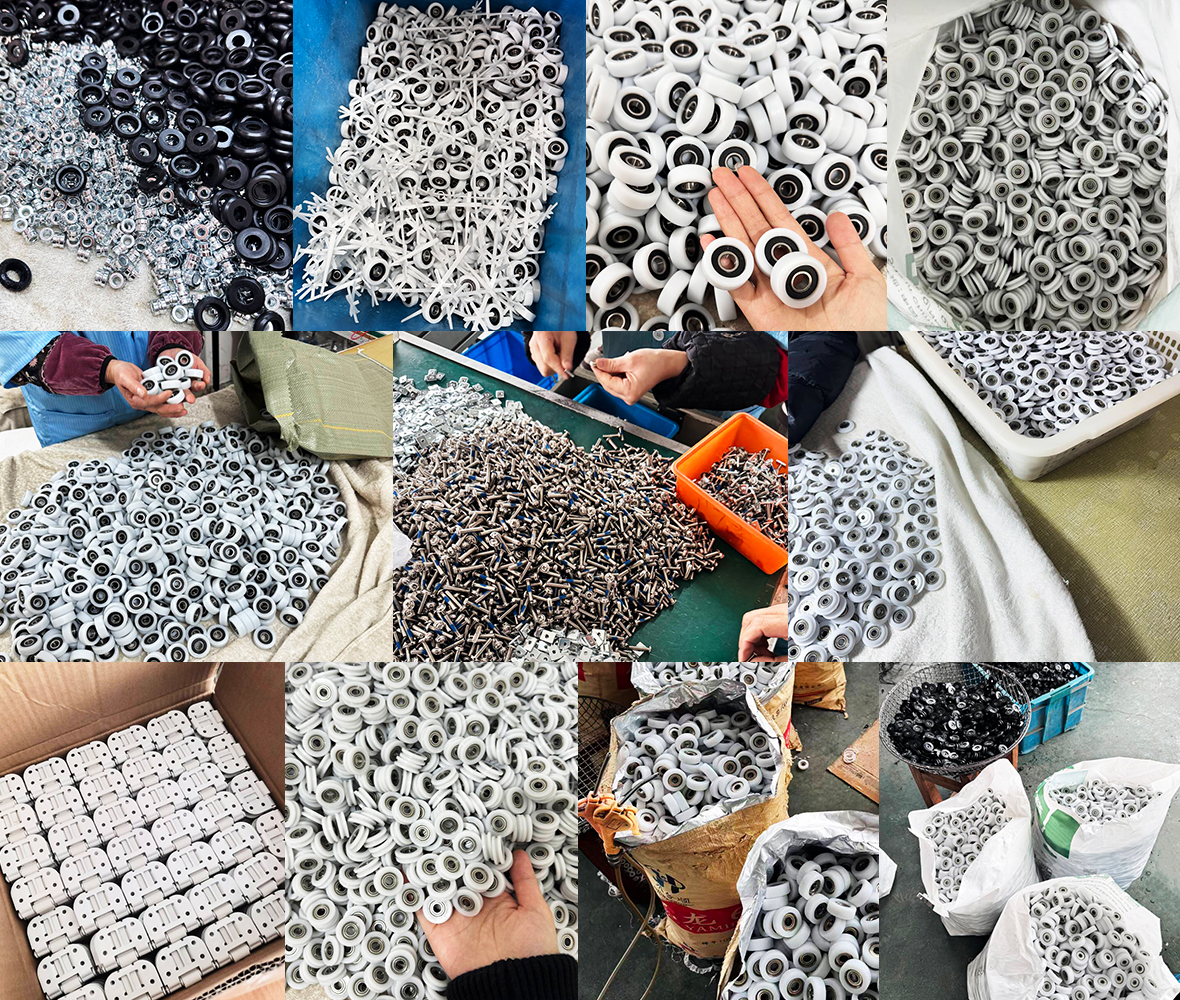
Making a sliding door and window roller assembly means producing several parts that must work together within a fixed dimensional envelope. Depending on the design, the process can include plastic molding, metal forming, machining, bearing assembly, surface treatment, and functional testing.
Hune, operated by Zhejiang Huaneng Micro Bearing Co., Ltd., focuses on miniature and medium-sized bearings, non-standard bearings, and pulley systems. Its range includes sliding door and window roller assemblies, and according to its product information, dimensions, materials, and colors can be customized.
Key Manufacturing Processes
- Component Design and Dimensional Planning: Development starts with the intended application and the dimensions of the mating frame and track. Engineers weigh wheel diameter, groove geometry, housing size, mounting-hole locations, bearing setup, and the clearance available during installation. For custom work, drawings, physical samples, and aluminum profile dimensions give a practical basis for checking fit.
- Plastic Injection Molding: When the design calls for a molded polymer wheel or a plastic-coated part, injection molding can produce the required shape. Material choice and molding conditions affect dimensional consistency, surface finish, and how well the wheel fits its internal components. Not every roller assembly uses molded parts, so the production route depends on the chosen design.
- Metal Stamping and Machining: Metal housings, mounting brackets, and other structural parts may be stamped, machined, or formed. These steps set the shape, thickness, mounting openings, and fit with the rest of the assembly. The housing has to provide enough support while still fitting into the limited space inside the frame.
- Bearing and Wheel Assembly: The wheel, bearing, shaft, spacer, and housing come together according to the design. Accurate fit and alignment matter, because assembly errors can affect rotation, clearance, and noise. Where spacers are used, their dimensions and position must keep enough clearance even after the mounting fasteners are tightened.
- Surface Treatment and Protective Features: Metal parts may receive surface treatment suited to their material. Dust covers, seals, and other protective features can be added where the design requires them. Treatments should be chosen for the material and the operating environment, not assumed to be the same across every roller product.
Quality Control for Roller Assemblies
Inspection should confirm that the finished assembly meets its dimensional, mechanical, and functional requirements.
| Inspection Area |
What to Check |
Why It Matters |
| Overall Dimensions |
Housing length, width, height, and installation clearance |
Confirms the assembly fits the frame cavity |
| Wheel Geometry |
Diameter, width, groove profile, and concentricity |
Supports correct contact with the track |
| Mounting Features |
Hole positions, slot dimensions, and fastening access |
Helps prevent installation interference |
| Bearing Rotation |
Smoothness, abnormal play, and rotational resistance |
Helps identify assembly or bearing faults |
| Structural Performance |
Relevant load and deformation requirements |
Checks suitability for the specified panel load |
| Surface Condition |
Burrs, visible defects, and surface-treatment requirements |
Supports safe handling and consistent assembly |
| Functional Operation |
Movement on a compatible track and use of adjustment features |
Tests how the complete assembly behaves |
Acceptance limits and test methods should come from the applicable product specification. Quote performance figures only when they are backed by measurements or test reports.
What Can Be Customized?
Custom development can cover a range of dimensional and material parameters:
- Wheel dimensions: Diameter, width, and overall wheel geometry
- Wheel profile: Flat, U-groove, V-groove, or a special profile for a specific rail
- Wheel material: An engineering plastic, metal, or coated construction, depending on the application
- Bearing configuration: Bearing type, dimensions, and mounting arrangement
- Shaft dimensions: Shaft diameter, length, and fit requirements
- Housing design: Length, width, height, material, and structural form
- Mounting features: Hole positions, slot dimensions, fastening method, and adjustment access
- Color and appearance: Wheel color and other finish requirements, where the process supports them
- Performance requirements: Defined load conditions, movement requirements, and test criteria
What's available depends on the specific assembly and its manufacturing requirements. A technical review is recommended before the design is finalized.
How to Prepare for Custom Roller Assembly Development
A clear technical brief reduces the risk of ending up with an incompatible part. Gather as much of the following as you can before starting:
- Application: The door or window type and the operating environment
- Frame and track details: Frame cavity dimensions, track cross-section, and available mounting space
- Existing component: A physical sample or dimensional drawing, if the new part will replace an existing one
- Load requirements: Panel weight, roller quantity, and relevant operating conditions
- Material preferences: Requirements for polymer wheels, metal housings, bearing materials, or surface treatments
- Functional requirements: Expected movement, adjustment needs, and any noise or environmental targets
- Inspection criteria: The critical dimensions and performance tests used to evaluate samples
From there, development moves through drawing review, design confirmation, sample evaluation, fit testing, and performance verification.
For Hune's 158 mm tandem assembly, the listed overall size is a good starting reference. The mating track profile, mounting layout, wheel dimensions, and rated load still need to be confirmed for your specific sliding system.
Frequently Asked Questions
What is a Sliding Door and Window Roller Assembly?
It's a wheel-based mechanical unit that carries or guides a sliding door or window along a track. Depending on the design, it may include roller wheels, bearings, a shaft, a metal housing, spacers, and adjustment features.
What are the advantages of a tandem roller assembly?
A tandem assembly holds two wheels in line within one housing, creating two points of rolling contact. It can help support steady movement when the wheel geometry, frame, track, and load are well matched.
What are the dimensions of Hune's 158 mm tandem roller assembly?
The product information lists overall dimensions of 158 × 12.5 × 20 mm. Check these against the frame cavity, mounting-hole layout, wheel geometry, and track design before installing.
Can the roller assembly be customized?
Hune's product information states that dimensions, materials, and colors can be customized to specific requirements. The changes possible depend on the assembly's structure and what the manufacturing process can deliver.
How do I determine whether a roller assembly fits my track?
Compare the wheel diameter, width, and groove profile, the running clearance, the housing dimensions, and the mounting-hole positions with your track. A dimensional drawing and, where needed, a sample fit test will confirm compatibility.
Why does a sliding door roller make noise?
Common causes include dirt on the track, bearing wear, wheel deformation, poor alignment, excessive clearance, or a wheel profile that doesn't suit the rail. Inspect the entire system to find the real source.
Does a dual-wheel assembly automatically support twice the load of a single-wheel assembly?
No. Load capacity depends on the wheel and bearing design, housing strength, track support, load distribution, and test conditions. Confirm the rated capacity of the complete assembly from its technical documentation.
Which information is needed to develop a custom roller assembly?
Useful inputs include frame and track dimensions, panel weight, wheel profile, mounting layout, material preferences, operating environment, and performance criteria. Drawings or physical samples can make the requirements clearer.
Choosing the right Sliding Door and Window Roller Assembly means weighing wheel geometry, bearing setup, materials, mounting dimensions, load requirements, and track compatibility together. A tandem design gives you two rolling contact points in one housing, and custom dimensions and materials can address specific frame needs. Hune offers sliding door and window roller products with customization options for dimensions, materials, and colors. Confirm the technical drawing, material specifications, and load rating before installation, and you'll have a clear basis for deciding whether an assembly suits your sliding system.





 English
 Español
 日本語
 +86-15058997617