


 English
 Español
 日本語


Special-shaped Bearing Pulley Guide: Custom Profiles, Materials, Bearing Options, Applications, and Selection
Sometimes the difficult part of a pulley design is not making the wheel turn. It is making the wheel fit a track that was never designed for a standard roller.
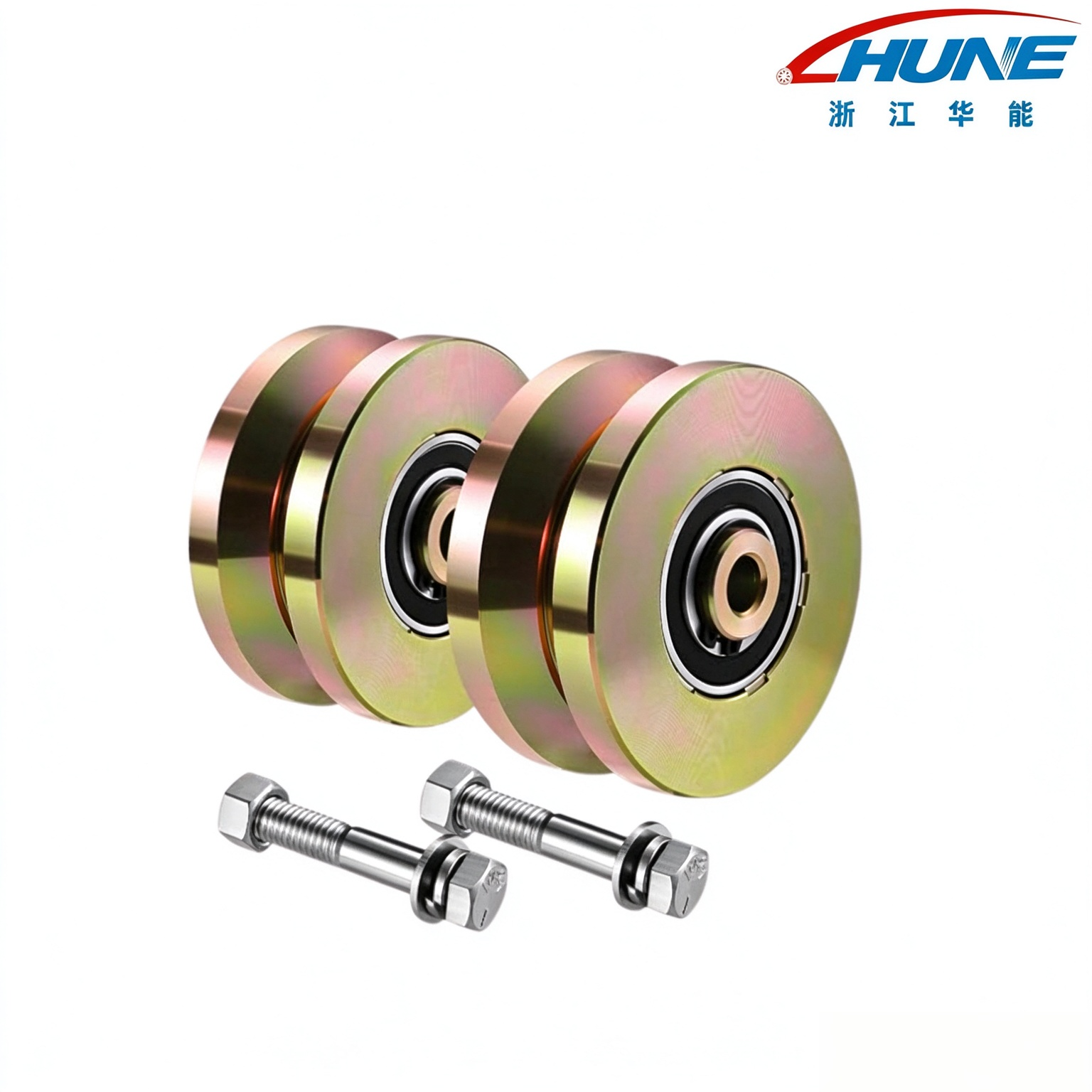
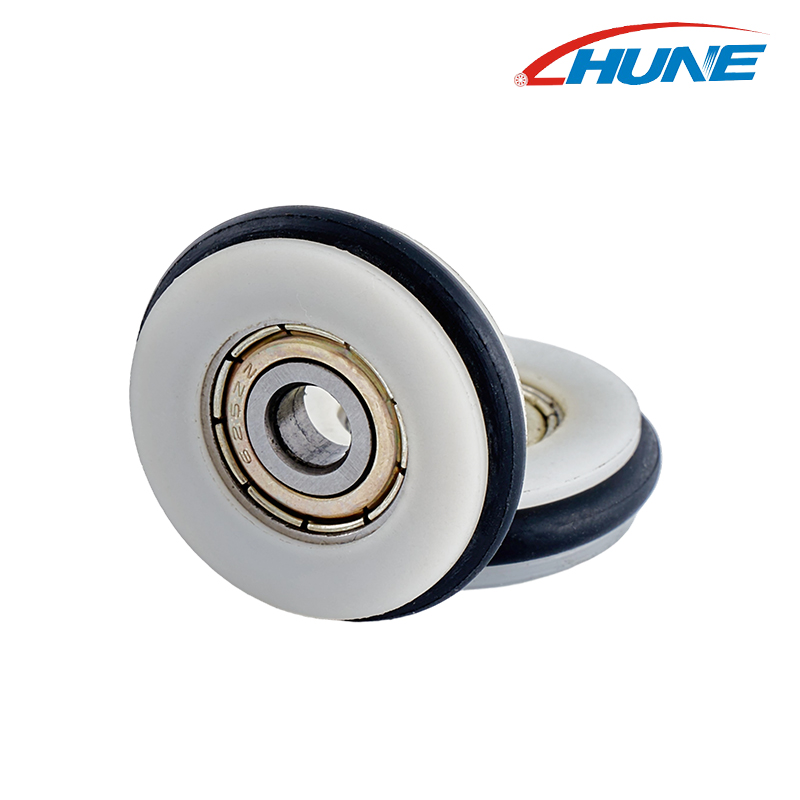
A Special-shaped Bearing Pulley combines an internal bearing with a wheel body made for a particular contact surface, groove, installation space, or material requirement. Its shape may be stepped, angled, unusually narrow, or formed to retain a rubber O ring. The purpose is to create the right contact with the surrounding assembly—not simply to make the pulley look different.
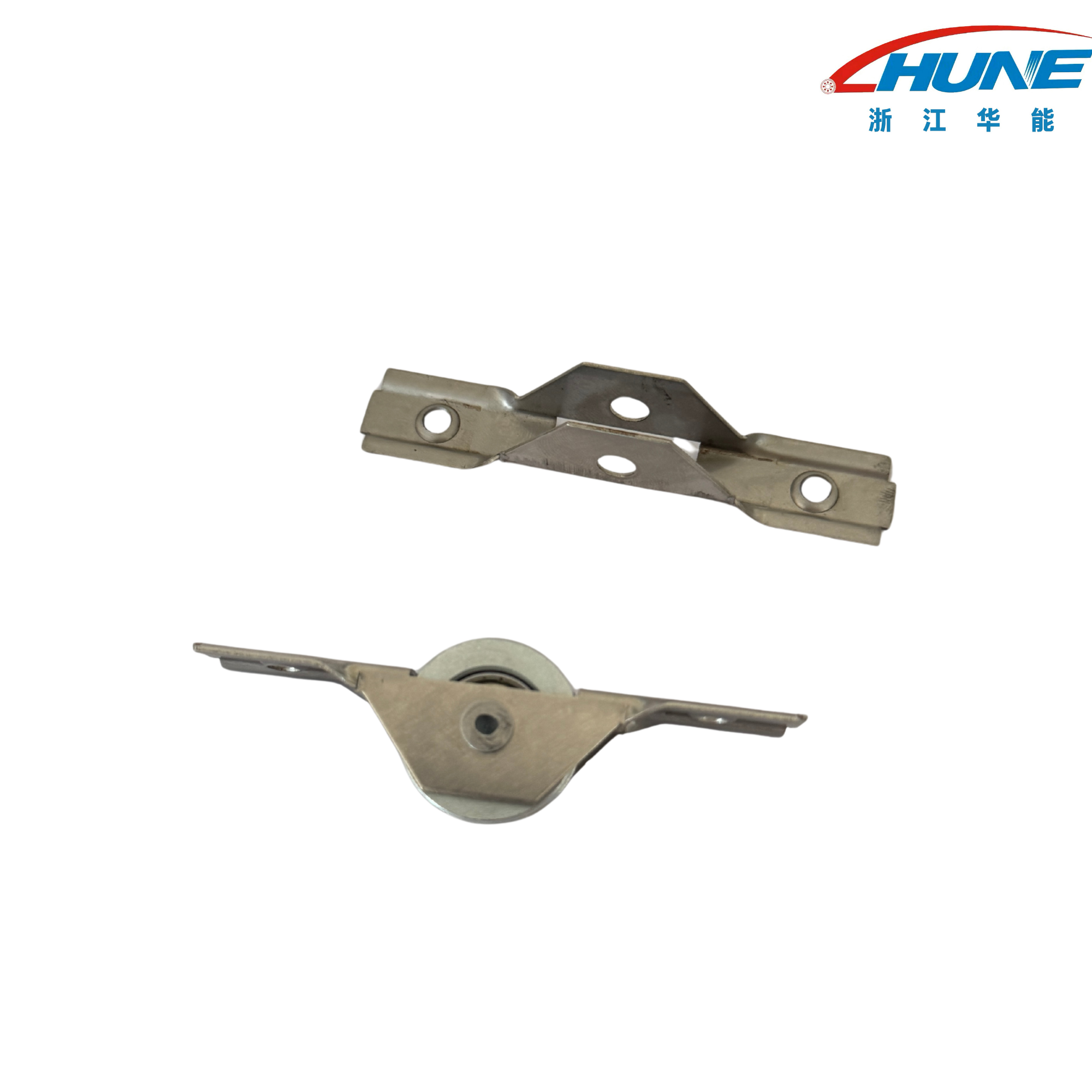
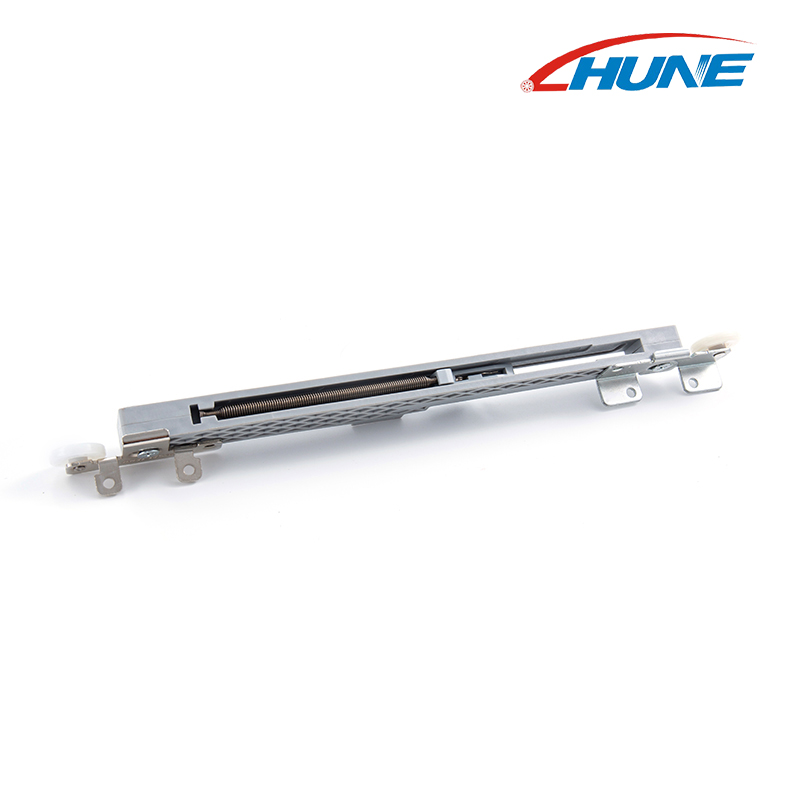
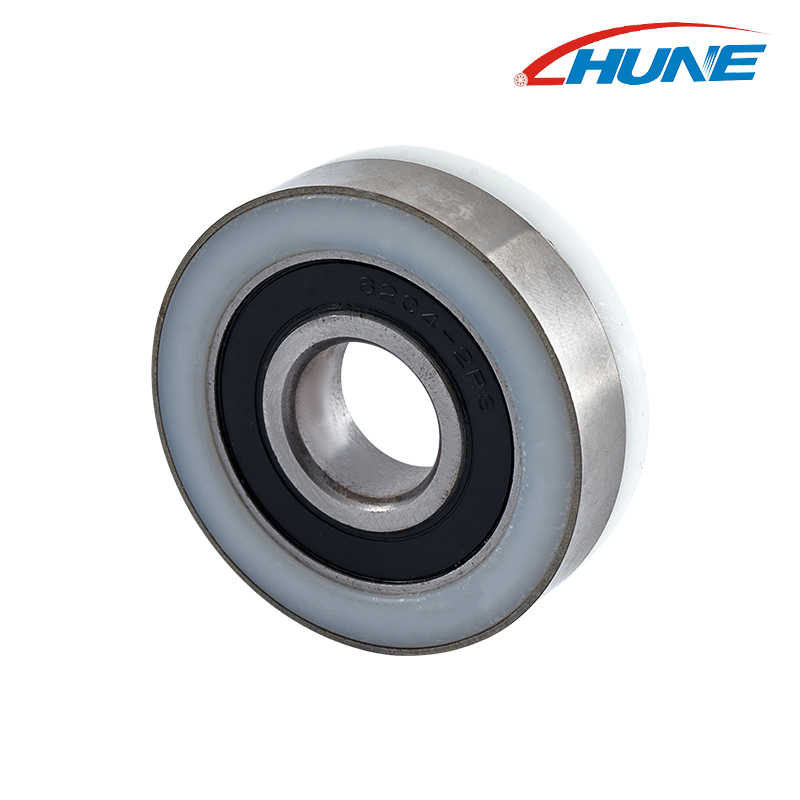
Huaneng Micro Bearing manfuacturer provides Special-shaped Bearing Pulley and custom bearing pulley options for drawer slides, mini sliding hardware, furniture tracks, selected 3D printer motion systems, guide roller systems, automation devices, and mechanical equipment. Depending on the application, a design may be described as a nylon bearing wheel, plastic bearing pulley, silent pulley wheel, sealed bearing pulley, or plastic roller with O rubber ring.
What Is Special-shaped Bearing Pulley?
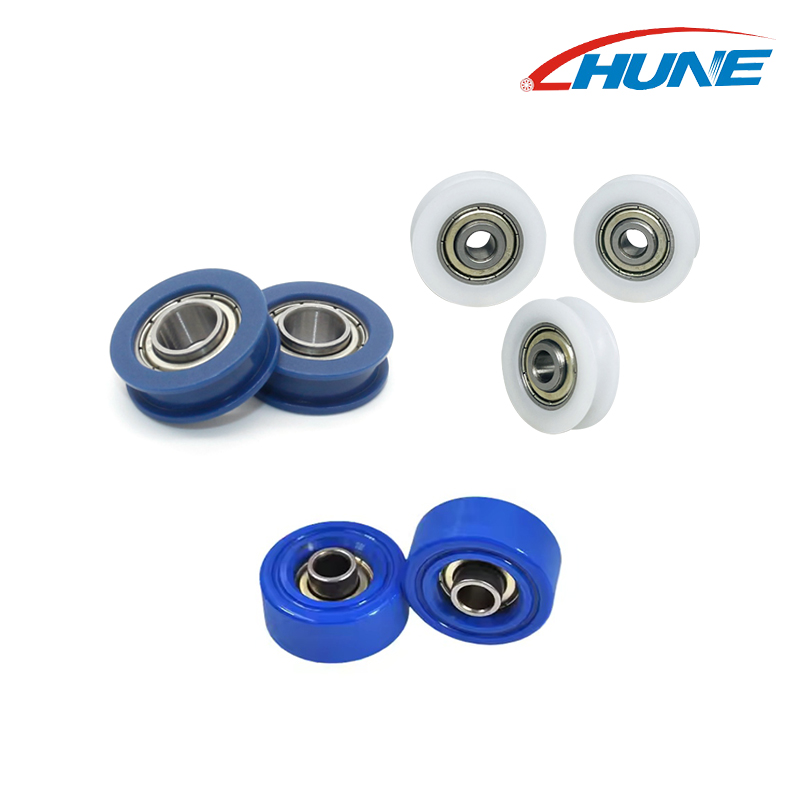
A Special-shaped Bearing Pulley is a bearing-supported wheel whose outer profile or material structure is specified for a non-standard assembly. It may be needed when a conventional R-shaped, U-shaped, V-shaped, F-shaped, H-shaped, or Y-shaped wheel does not match the mating track or leaves insufficient installation clearance.
The wheel body can be made from nylon, POM, PA, or another engineering plastic. Some designs add a rubber O ring or PU contact layer. Inside, a ball bearing allows the wheel to rotate around a shaft, bolt, or pin.
Depending on the drawing, the assembly may include:
- A nylon bearing wheel, POM wheel body, or custom plastic roller
- A miniature, shielded, sealed, or stainless steel bearing
- A special groove, stepped surface, or compact outer profile
- A rubber O ring and its retaining groove
- A central bore matched to the mounting shaft
"Special-shaped" does not identify one standard product size. It tells the buyer that the wheel must be defined by its mating parts and intended contact pattern. A sample wheel is useful, but drawings of the rail, bracket, and shaft provide a clearer basis for development.
How a Special-shaped Bearing Pulley Works
The bearing supports rotation between the mounted shaft and the wheel body. The outer wheel profile then rolls against a track, guide, panel, or other contact surface.
In a standard pulley, that outer profile may already be established. In a special shaped pulley, it is designed around a specific problem: a narrow drawer slide, an unusual guide rail, a protected contact surface, or a rubber ring that must remain seated during repeated movement.
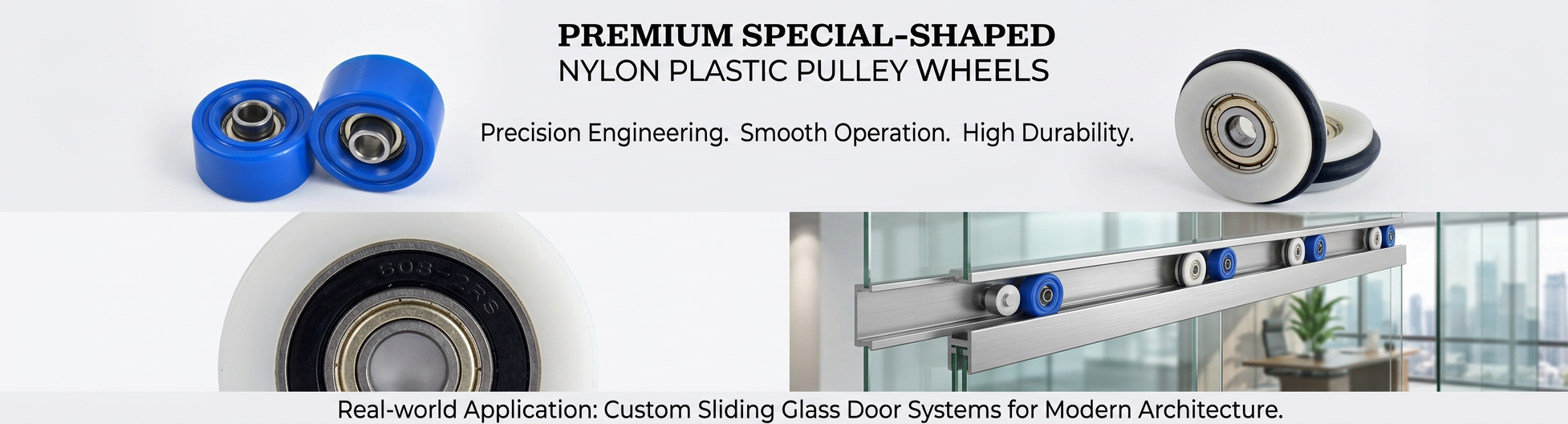
A plastic roller with O rubber ring, for example, uses the plastic wheel to hold the bearing and support the ring. The rubber O ring becomes the contact surface. Whether it reduces noise or vibration depends on its material, compression, load, speed, and retention groove. If the ring shifts or stretches excessively, the added layer can make movement less consistent rather than better.
The complete pulley should therefore be assessed for wheel dimensions, profile accuracy, bearing fit, shaft alignment, load direction, and behavior on the intended track. A wheel that spins smoothly off the machine may still bind after installation.
Common Bearing Options for Special-shaped Bearing Pulley
There is no single bearing model for every Special-shaped Bearing Pulley. The available wheel envelope and shaft size often narrow the choice before other performance requirements are considered.
Common configurations include:
- Sealed bearing pulley
- Miniature ball bearing pulley
- Shielded bearing pulley
- Stainless steel bearing pulley
- Skate wheel bearing structure
- Compact drawer slide bearing wheel
- 3D printer roller bearing wheel
A shielded bearing has metal shields that help limit the entry of larger particles. A sealed bearing generally offers more substantial contaminant protection, with possible differences in rotational resistance. Neither choice should be assumed suitable for every dusty or wet environment without checking its construction and duty conditions.
A stainless steel bearing pulley may be considered where corrosion resistance is important, but the bearing is only one component. The shaft, fasteners, lubricant, and any exposed metal parts also need review.
Confirm bearing bore, outside diameter, width, clearance, load direction, speed, environmental exposure, and fit within the wheel body before finalizing a design.
Common Materials Used in Special-shaped Bearing Pulley
Material choice should follow the contact conditions. The wheel body, elastic contact layer, bearing, and shaft each perform a different task.
| Material | Main characteristics | Typical applications |
| Nylon | Tough plastic suited to many repeated-rolling designs | Nylon bearing wheel, nylon bearing pulley |
| POM | Dimensionally stable with a smooth running surface | Compact guide roller, selected silent pulley wheel designs |
| PA | Polyamide material family; properties depend on grade | Special shaped pulley, furniture sliding components |
| Engineering Plastic | Can be formed into non-standard wheel profiles | Custom plastic roller, mini sliding hardware roller |
| Rubber O Ring | Elastic contact layer; performance depends on formulation and fit | Plastic roller with O rubber ring |
| PU Coating | Compliant contact surface when suitably specified | Selected guide rollers and surface-protective designs |
| Bearing Steel | Common material for bearing rings and rolling elements | Miniature ball bearing pulley, shielded bearing pulley |
| Stainless Steel Bearing | Improved corrosion resistance, depending on grade | Selected exposed or moisture-prone assemblies |
| Carbon Steel Shaft or Bolt | Structural mounting support when properly specified | Shafts, bolts, and brackets |
PA is the polyamide material family commonly associated with nylon. A specified grade is more useful than treating "PA" and "nylon" as guaranteed, distinct performance levels.
Key Functions of Special-shaped Bearing Pulley
A special-shaped pulley is usually designed around one primary requirement, with other benefits depending on the finished assembly.
- Custom profile matching: The wheel contacts a non-standard rail, groove, or guide as intended.
- Smooth rolling: The bearing allows the wheel to rotate around its mounting shaft.
- Guided movement: A shaped running surface can help the wheel follow a defined path.
- Compact installation: Wheel and bearing dimensions can be developed for restricted space.
- Load support: The wheel, bearing, shaft, and bracket carry the specified force together.
- Surface protection: Plastic or elastic contact can separate harder mating parts.
- Rubber O ring cushioning: A properly retained ring can soften certain contact or impact forces.
- Sealed bearing protection: A suitable seal can help limit contaminant entry into the bearing.
Noise reduction, vibration control, and wear resistance must be evaluated under the intended load and movement cycle. They are design targets, not automatic properties of every non-standard wheel.
Applications of Special-shaped Bearing Pulley
Special-shaped wheels are most useful where a standard pulley is close to fitting—but not close enough to run reliably.
Ultra-compact Drawer Slide Rollers
In ultra-compact drawer slide rollers, the wheel must fit a narrow rail and bracket arrangement. Bearing envelope, wheel width, shaft position, and clearance across the full slide travel are key checks.
Mini Sliding Hardware Rollers
Mini sliding hardware rollers may guide cabinet doors, panels, or compact fittings. Their small size makes bearing retention and track matching especially important.
3D Printer Roller Wheels
For 3D printer roller wheels, the wheel must match the printer's actual rail or profile. Dimensional consistency, contact wear, and adjustment within the motion assembly should be evaluated together.
Silent Pulley Wheels
A silent pulley wheel may use a plastic running surface or elastic contact layer to address a known noise source. Testing should identify whether the noise comes from contact, the bearing, alignment, or nearby hardware.
Anti-corrosion Skate Wheel Bearing Applications
An anti-corrosion skate wheel bearing arrangement may be considered for humid or exposed service. Specify the exposure first, then review bearing material, closure, lubrication, shaft, and wheel body.
Plastic Roller with O Rubber Ring Structures
A plastic roller with O rubber ring can provide a compliant running surface. Ring retention and replacement considerations are as important as the ring's initial softness.
Guide Roller Systems
In guide roller systems, a special bearing wheel may follow a rail or groove that does not suit a standard profile. Side load, wheel concentricity, and contact location should be checked.
Furniture Sliding Systems
Furniture tracks may require a particular wheel diameter, color, groove, or running material. A custom plastic roller should be evaluated with the actual cabinet, wardrobe, drawer, or panel hardware.
Mechanical Equipment
Mechanical equipment may need a non-standard guide or support wheel because of layout constraints or unusual contact geometry. Load, speed, contamination, and access for maintenance affect the design.
Automation Devices
Automation devices can place repeated demands on a small roller. A Special-shaped Bearing Pulley should be checked for consistent contact, bearing fit, and wear over the intended duty cycle.
Custom Rotating Assemblies
Custom rotating assemblies may combine an unusual profile, rubber ring, bearing closure, and mounting method. A test assembly can reveal interference or movement that a standalone wheel drawing does not show.
How to Select the Right Special-shaped Bearing Pulley
Start with the problem the standard pulley cannot solve. That gives the custom design a clear purpose and avoids adding complexity without benefit.
- Document the mating structure. Provide track or groove cross-sections, shaft dimensions, bracket location, and available installation space.
- Identify the intended contact. Mark which wheel surfaces should carry load and which require clearance.
- Define operating conditions. Include load direction, side force, speed, movement frequency, dust, moisture, and temperature.
- Select the wheel material. Compare nylon, POM, PA, rubber O ring, PU, or another specified material against the contact surface.
- Choose bearing and mounting. Check bore, outside diameter, width, retention, shaft fit, and closure type.
- Specify special features. For a rubber O ring, define its material, cross-section, retaining groove, and expected compression.
- Test the complete assembly. Check rotation, contact marks, noise, wear, and retention under representative conditions.
An incorrect profile may cause jamming or uneven wear. An incorrectly retained rubber ring may shift or come loose. A sealed bearing cannot compensate for a wheel body that does not fit the guide.
Why Special-shaped Profile Design Matters
A non-standard profile should solve a specific contact or packaging problem. It may add an angled face, compact step, rounded edge, special groove, or seat for a rubber O ring. Each feature changes where the wheel touches its mating part.
That contact pattern affects:
- Whether the wheel tracks consistently
- How load reaches the wheel and bearing
- Whether nearby parts have sufficient clearance
- Where wear appears after repeated movement
- Whether an elastic ring remains in position
For example, a groove that visually resembles a rail may still contact only its sharp edges under load. A rubber-ring wheel may feel quiet during a short test but lose consistency if the ring can move in its seat. Profile drawings and functional testing should be considered together.
Customization Options for Special-shaped Bearing Pulley
Hune can review Special-shaped Bearing Pulley requirements from drawings, samples, and mating-part dimensions. Depending on the project, customization may cover:
- Wheel outer diameter, width, and compact outer geometry
- Special groove profile and contact surface shape
- Nylon, POM, PA, or other wheel material
- Rubber O ring size, material, and retaining groove
- PU coating, where appropriate
- Bearing model, bore, clearance, and shield or seal type
- Shaft or bolt fit
- Color and hardness
- Corrosion-resistance requirements
- Mold development and assembly method
The most useful specification describes the complete contact arrangement: wheel, bearing, shaft, bracket, rail, and working environment. That makes it possible to judge whether a custom feature is necessary and how it should be measured.
Why Choose Hune Special-shaped Bearing Pulley
Hune / Hunepulley / Zhejiang Huaneng Micro Bearing Co., Ltd. works with plastic bearing pulleys, miniature bearings, guide rollers, and sliding hardware components. This provides a basis for reviewing a non-standard wheel as part of its mounting and guide system, rather than as an isolated shape.
Experience with Non-standard Pulley Structures
Hune's product scope includes Special-shaped Bearing Pulley, special shaped pulley, special bearing wheel, nylon plastic pulley wheels, plastic bearing pulley, sealed bearing pulley, and custom plastic roller designs.
Matching of Wheel Body, Bearing, Profile, and Shaft
The important fits occur between the wheel and track, bearing and wheel body, and bearing and shaft. Hune can review these interfaces against drawings or samples of the intended assembly.
Support for Rubber Ring and Low-noise Designs
A plastic roller with O rubber ring or silent pulley wheel needs more than a soft running surface. Ring retention, contact pressure, bearing fit, and track condition should be considered in the design.
Bearing Options for Different Working Conditions
Possible configurations include shielded bearing, sealed bearing, miniature ball bearing, stainless steel bearing, and skate wheel bearing structure. Selection depends on dimensions, load, speed, and exposure conditions.
Attention to Functional Details
Special-profile dimensions, bearing seating, wheel concentricity, surface finish, rubber O ring fit, and mounted behavior all affect whether the finished pulley performs as intended.
Application Coverage
Potential applications include ultra-compact drawer slide rollers, mini sliding hardware rollers, 3D printer roller wheels, silent pulley wheels, anti-corrosion skate wheel bearing applications, plastic roller with O rubber ring structures, guide roller systems, furniture sliding systems, mechanical equipment, automation devices, and custom rotating assemblies.
FAQ About Special-shaped Bearing Pulley
What is a Special-shaped Bearing Pulley used for?
It is used when a standard wheel profile or size does not suit the track, available space, or contact requirement. Depending on its design, it can provide rolling support, guidance, compact installation, or a specialized contact surface.
What is the difference between a Special-shaped Bearing Pulley and a standard pulley?
A standard pulley follows an established profile and size range. A Special-shaped Bearing Pulley is defined around a particular groove, contact geometry, material combination, or installation constraint.
Can Special-shaped Bearing Pulley be used for 3D printer roller wheels?
Yes, if its profile, bearing, shaft fit, and wheel material match the printer's specific guide system. The printer's actual rail design should determine the wheel geometry.
What materials are used for Special-shaped Bearing Pulley?
Wheel bodies may use nylon, POM, PA, or other engineering plastics. Some designs include a rubber O ring or PU coating. Bearings and shafts may use bearing steel, suitable stainless steel, or carbon steel components.
How does a rubber O ring affect pulley performance?
A rubber O ring creates a more compliant contact surface. It may help cushion contact or reduce certain noises, but its performance depends on material, size, compression, groove retention, and operating load.
What bearing types are commonly used in Special-shaped Bearing Pulley?
Options may include miniature ball bearings, shielded bearings, sealed bearings, and stainless steel bearings. The correct choice depends on shaft size, wheel envelope, load, speed, and environmental exposure.
Can Special-shaped Bearing Pulley be customized?
Yes. Wheel dimensions, groove profile, contact surface, rubber O ring, material, bearing, bore, coating, and assembly details can be specified for a particular application.
How do I choose a Special-shaped pulley for drawer slides, mini hardware, 3D printer rails, or guide systems?
Start with the mating rail or track and the available installation space. Then check load, intended contact points, wheel material, bearing and shaft fit, side force, environment, and operation across the full travel.
Why is profile accuracy important for Special-shaped Bearing Pulley?
The special profile defines where the wheel contacts the guide. An inaccurate profile can shift load to an unintended edge, increase friction, or cause inconsistent movement.
Is a sealed bearing useful for Special-shaped Bearing Pulley?
A sealed bearing can help limit contaminant entry in suitable dusty or humid conditions. Its effectiveness depends on the seal design and operating environment; it does not make the complete pulley waterproof.
A Special-shaped Bearing Pulley is developed when the contact geometry, material combination, or installation space calls for more than a standard bearing wheel. Its design may use a custom groove, compact profile, rubber O ring, coating, or selected bearing closure.
The key to selection is matching the wheel, bearing, shaft, and mating guide as a complete assembly. Hune provides Special-shaped Bearing Pulley, special shaped pulley, special bearing wheel, custom bearing pulley, nylon bearing wheel, nylon bearing pulley, plastic bearing pulley, nylon plastic pulley wheels, silent pulley wheel, anti-corrosion skate wheel bearing, plastic roller with O rubber ring, 3D printer roller wheels, wear resistant nylon plastic roller, mini sliding hardware roller, ultra-compact drawer slide roller, sealed bearing pulley, guide roller, and custom plastic roller options for appropriately specified sliding and rotating systems.