


 English
 Español
 日本語
日本語


Screw Thread Bearing Pulley: Structure, Applications and Environmental Selection
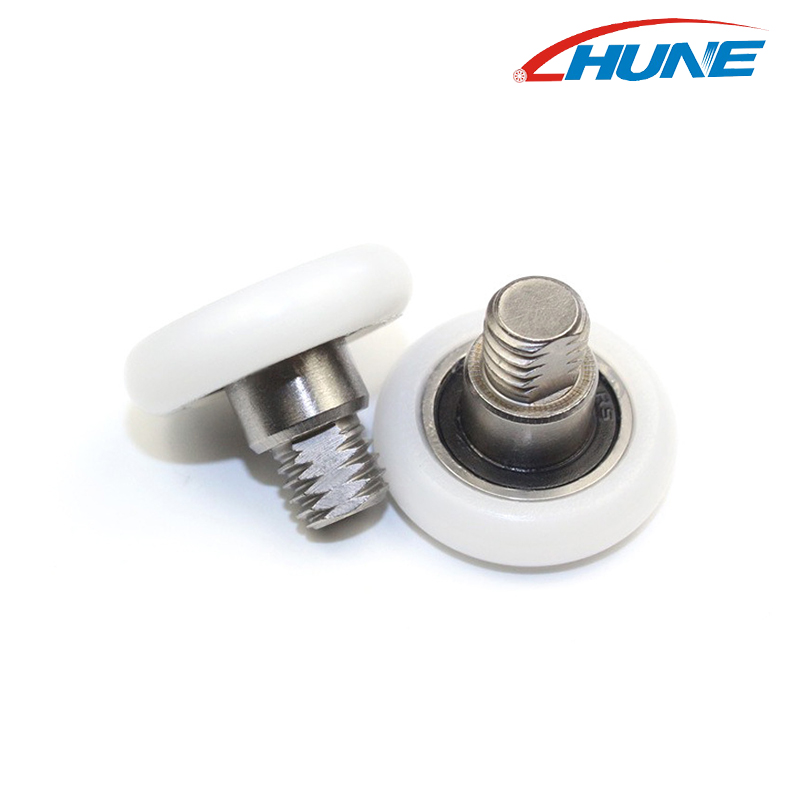
A screw thread bearing pulley combines a rotating wheel, a bearing arrangement and a threaded mounting shaft in one component. The threaded shaft fixes the pulley to a bracket or mounting hole, while the wheel rotates to guide a moving part. It is useful where a separate mounting axle would complicate a compact assembly. For POM-containing versions, temperature and chemical suitability must be checked against the complete component design—not the plastic alone.
What Is a Screw Thread Bearing Pulley?
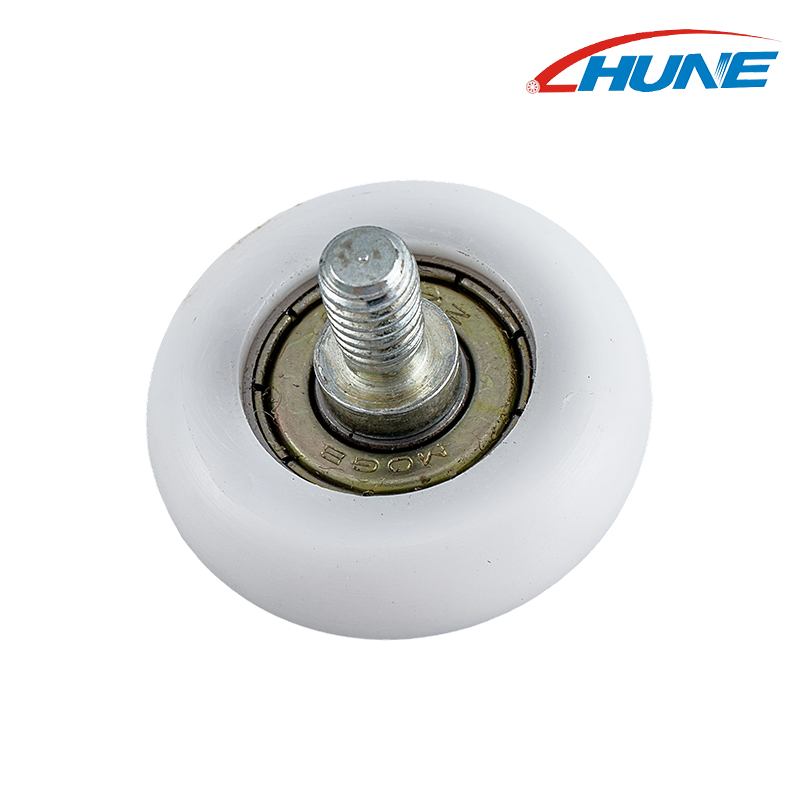
A screw thread bearing pulley is a guide pulley supplied with an attached threaded shaft or stud. The shaft provides a mounting point; the bearing supports rotation of the wheel around that fixed point.
Compared with a pulley that requires a separately selected axle, this arrangement brings the wheel, bearing and mounting shaft together. It does not, by itself, convert rotary motion into linear motion. Any change in the position of a guided cable, belt or moving part depends on the surrounding mechanism.
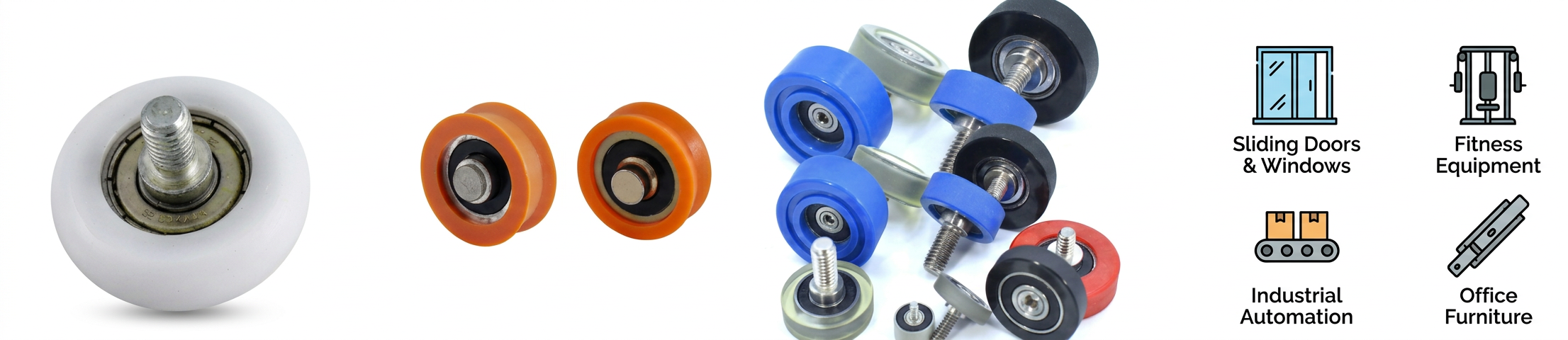
The term POM bearing pulley needs closer inspection when selecting a product. POM, or polyoxymethylene, may describe a wheel, bushing or another component, depending on the construction. It should not be assumed that every part of the pulley—including its bearing, shaft and seals—is made from POM.
How does the component work?
Installation and operation follow a straightforward sequence:
- The threaded shaft is secured to a compatible bracket or mounting hole.
- The wheel turns around the fixed shaft through its bearing arrangement.
- The wheel surface guides a contacting part along the intended path.
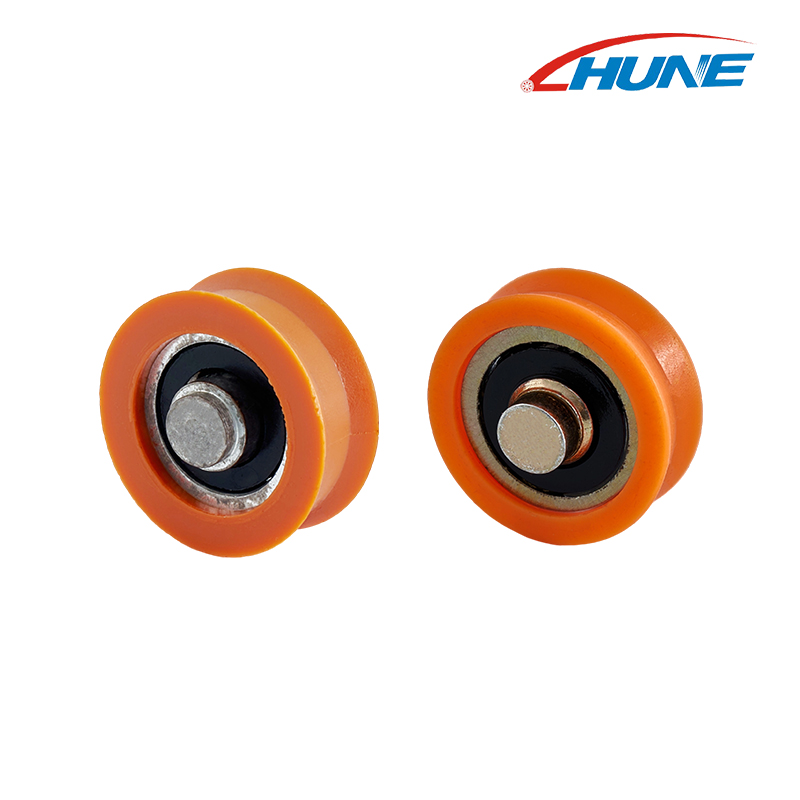
- The contacting part must match the wheel’s profile. A pulley intended for a cable is not automatically suitable for a belt, and a smooth wheel should not be assumed to have a groove.
Applications of Screw Thread Bearing Pulley
The threaded shaft is useful when the installation point is defined by a bracket or hole and there is limited space for separate axle hardware. The operating load and contact geometry still determine whether a particular pulley is suitable.
| Application | Role of the pulley | What to check |
| Equipment guide positions | Mounts directly to a bracket to guide a moving part | Thread fit, bracket rigidity and path alignment |
| Compact sliding mechanisms | Provides a rotating guide point within a confined assembly | Available space, wheel clearance and applied load |
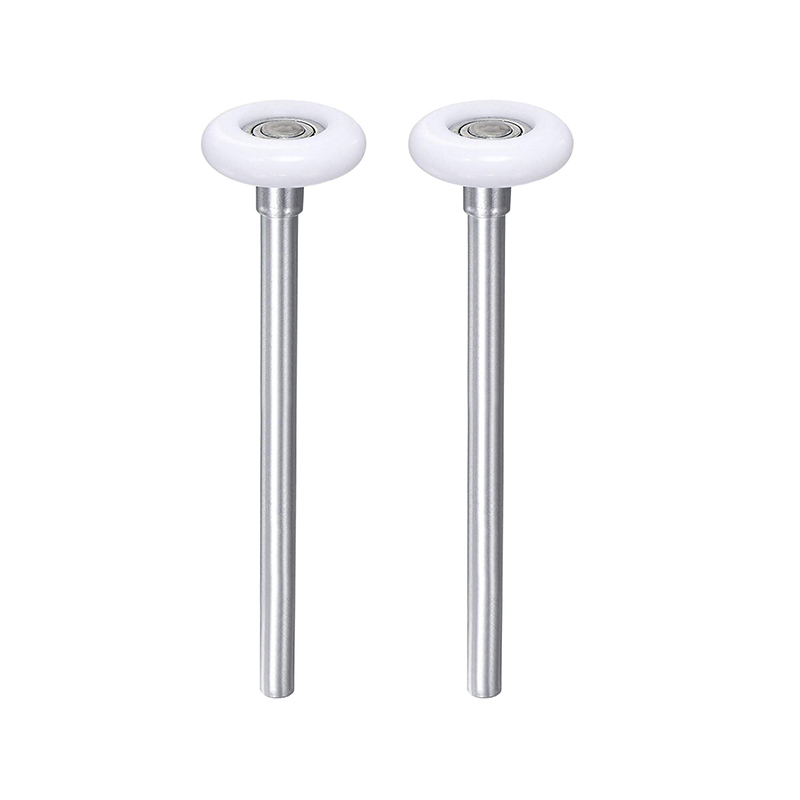
| Cable-guiding mechanisms | Helps guide a cable along a defined path when the wheel profile is suitable | Groove geometry, cable size and contact conditions |
| Assemblies with adjustable roller positions | Acts as a guide at a position set by the mounting structure | Slot or hole design, adjustment range and locking method |
Position adjustment comes from the surrounding assembly, such as a slotted bracket or alternative mounting holes. A threaded shaft alone does not mean the pulley has a built-in adjustment mechanism.
How should a screw thread bearing pulley be selected?
Start with the installation and the part being guided, then confirm the pulley’s published specifications or drawing:
- Wheel geometry: Check diameter, width and wheel surface or groove profile against the contacting part.
- Threaded shaft: Confirm thread diameter, pitch, threaded length and the required mounting engagement.
- Installation space: Allow clearance for the wheel to rotate without rubbing against the bracket or adjacent parts.
- Operating load: Consider radial load and any axial or side load created by misalignment.
- Bearing arrangement: Confirm that it is appropriate for the intended load, speed and operating conditions.
- Environment: Identify operating temperature, chemical exposure, moisture and cleaning methods.
These are selection checks, not a claim that a particular Hune model is available in every listed size, material or bearing configuration.
Can a POM Pulley Work in High Temperature or Chemical Environments?
It may be suitable for some conditions, but suitability cannot be determined from the name “POM pulley” alone. The answer depends on the POM grade, exposure conditions and the limits of the entire assembly.
High-temperature operation
POM is an engineering plastic, but elevated temperature can affect its stiffness, dimensions and wear behavior. A pulley that rotates briefly in warm surroundings presents a different requirement from one that runs continuously under load near a heat source.
Before specifying a POM-containing pulley, confirm:
- The continuous and peak operating temperatures at the pulley’s actual location;
- The POM grade and its relevant temperature guidance;
- The load, speed and duration of operation;
- The temperature limits of the bearing, lubricant, seals and mounting hardware;
- Whether thermal expansion could reduce wheel clearance or affect alignment.
A metal threaded shaft does not make a POM wheel suitable for a higher temperature. Likewise, a temperature rating for a raw material does not establish a working limit for an assembled pulley.
Chemical exposure
POM’s response to chemicals varies with the substance, concentration, temperature and exposure time. Occasional cleaning contact is different from continuous immersion or repeated contact under load.
Compatibility must be checked separately for the POM component and any other exposed parts, including the shaft, bearing elements, seals and lubricant. Do not assume that resistance to one cleaning agent establishes resistance to acids, alkalis or solvents as a group.
For a chemically exposed installation, document the exact chemical and cleaning process before assessing a configuration. Where the operating conditions are demanding, material compatibility information and application-specific testing provide a sounder basis than a general “chemical-resistant” description.
Installation and Maintenance Considerations
Correct installation helps the pulley perform the guiding role it was selected for. Match the shaft thread to the mounting thread, use a sufficiently rigid support, and align the wheel with the intended travel path. After securing the shaft, verify that the wheel turns freely and does not contact the bracket.
During service, inspect the wheel surface for wear, check for looseness at the mounting point, and note any change in rotational smoothness or alignment. Inspection intervals and tightening torque should be set from the actual design and operating conditions rather than assumed from the product category.
Why Choose Hune Screw Thread Bearing Pulley?
The relevant reason to consider a Hune screw thread bearing pulley is its integrated mounting concept: a wheel, bearing arrangement and threaded shaft provide a rotating guide point that can be fixed to a suitable bracket or mounting hole. This can simplify the layout of equipment guide positions, compact sliding mechanisms and other assemblies that would otherwise need a separately selected axle.
The final choice should be based on the specific Hune product drawing and published details. Confirm the wheel profile, thread dimensions, bearing construction, materials and operating conditions for the model under consideration. For heat or chemical exposure, request confirmation of the complete assembly’s suitability rather than relying on the presence of POM—or on the shaft material—alone.
Frequently Asked Questions
Does a screw thread bearing pulley need a separate mounting axle?
Generally, no. Its threaded shaft serves as the mounting point. The bracket or mounting hole must still match the shaft dimensions and provide adequate support.
Can it guide a cable?
It can be used in a cable-guiding mechanism when the wheel profile and operating conditions are suitable. Check the cable diameter, contact path, load and wheel surface or groove geometry.
Does the threaded shaft provide precision linear adjustment?
Not by itself. Position adjustment depends on the design of the bracket and its locking method. The pulley’s primary role is to provide a rotating guide at the installed position.
Can a POM configuration operate near a heat source?
Only after checking the temperature at the component, the POM grade, operating load and the limits of the bearing and other parts. No universal high-temperature rating follows from the term POM.
Is a POM pulley suitable for chemical cleaning?
Suitability depends on the exact cleaning chemical, concentration, temperature, contact duration and exposed assembly materials. Confirm compatibility for the complete pulley before use.
For application assessment, provide the mounting thread requirements, wheel-contact details, load and speed, along with the expected temperature and any chemical exposure. These details allow the proposed pulley configuration to be checked against the installation rather than selected by name alone.