

 English
 Español
 日本語


 +86-15058997617

A compact sliding system leaves little room for a roller that almost fits.
A compact sliding system leaves little room for a roller that almost fits. The wheel must meet the correct part of the rail, the bearing must turn freely after installation, and the threaded connection must hold the pulley at its intended position.
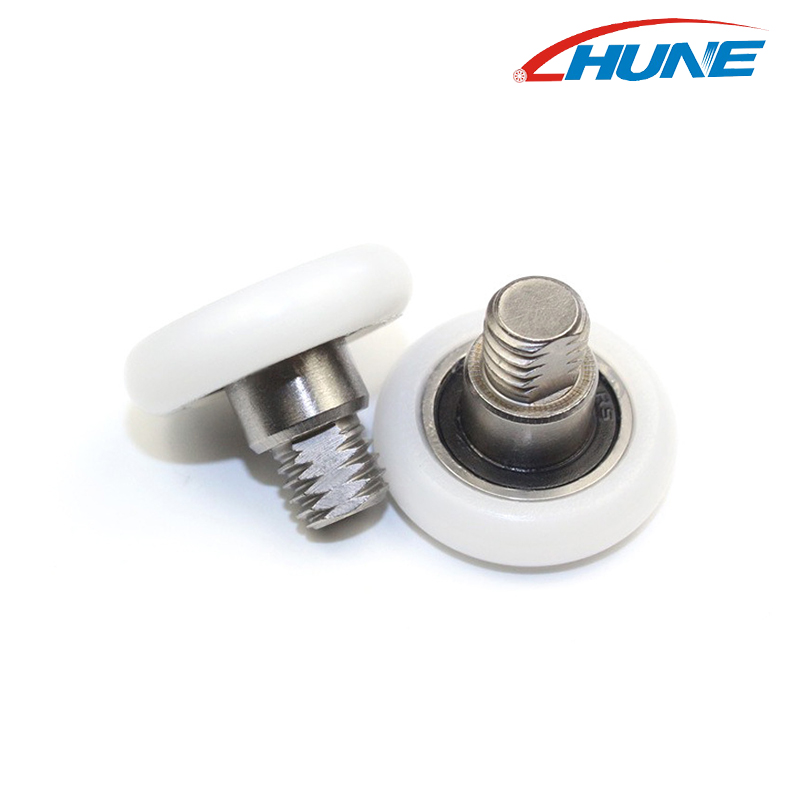
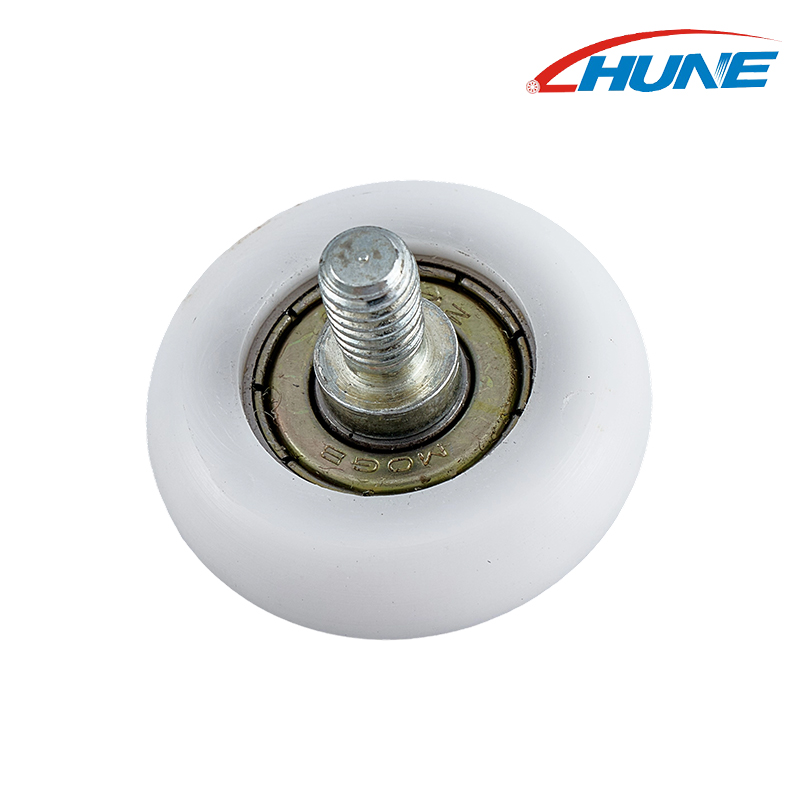
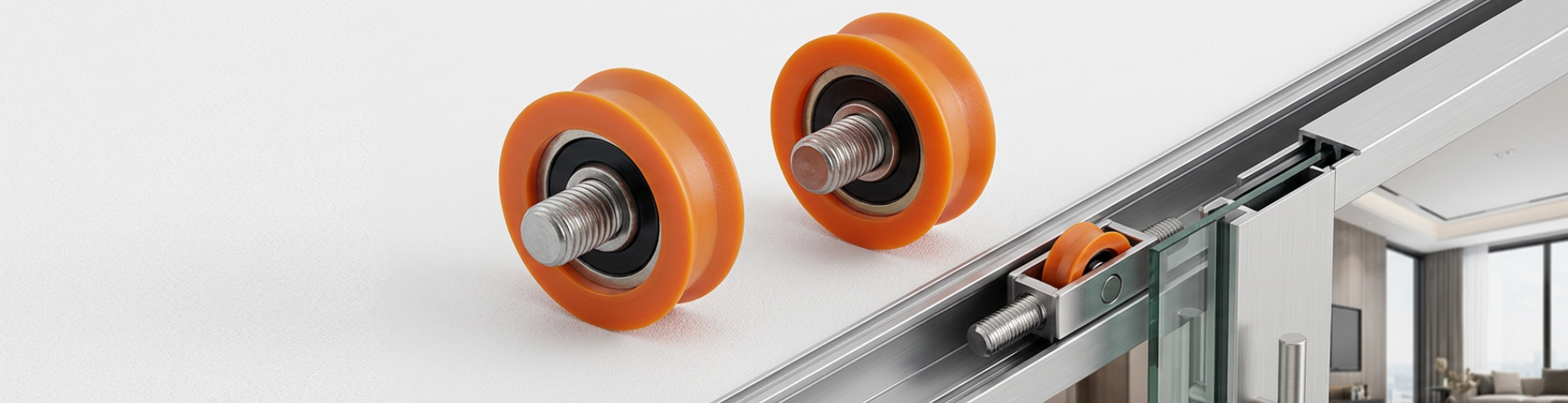
The Plastic/Nylon Bearing Pulley With Screw Thread Roller for Sliding Door combines a plastic or nylon running wheel with an internal bearing and a threaded mounting structure. It can be specified for compatible sliding doors, windows, wardrobes, cabinets, display racks, guide rails, and compact mechanical tracks. Its suitability depends on the moving panel's load, the track profile, mounting space, and the strength of the threaded connection.
Hune / Hunepulley / Zhejiang Huaneng Micro Bearing Co., Ltd. can review samples or drawings for a Bearing Pulley Wheel, Screw Pulley Wheel, Plastic Pulley Bearing, or custom sliding door roller hardware assembly. For accurate development, provide both the roller dimensions and the track and mounting details it must fit.
Product Structure and Components
The roller’s components perform different jobs: the wheel contacts the rail, the bearing supports rotation, and the threaded part secures the assembly. Selecting these parts together helps prevent a pulley that fits the mounting hole but runs poorly on the track.
Plastic or Nylon Outer Wheel
The outer wheel provides the rolling contact surface. Its diameter, width, material, and groove profile determine how it sits on the guide rail.
Available material directions include POM, Nylon6, Nylon66, Nylon66+GF, PU, and rubber, subject to the required wheel construction. A non-metallic wheel can avoid direct metal-wheel contact with the rail and may reduce contact noise. It cannot prevent wear if the track contains abrasive debris or the wheel runs on an unintended edge.
Precision Bearing
The internal bearing allows the wheel to rotate around its mounting shaft. Bearing dimensions, fit within the wheel, axle fit, lubrication, and seal or shield type all affect installed performance.
Chrome steel, carbon steel, and stainless steel may be considered according to the bearing design and operating environment. The bearing material alone does not establish the pulley's load capacity; the wheel, shaft, threaded mounting, and track must also be assessed.
Screw Thread Roller Structure
The screw thread roller uses a threaded connection to mount the pulley to a panel, bracket, or frame. This can be useful where the available installation space does not accommodate a larger roller housing.
The thread must match the mating hole or fastener in size, pitch, engagement length, and mounting method. A secure connection also needs adequate support in the part receiving the thread.
Threaded Shaft or Screw Mounting Structure
Depending on the design, the threaded feature may be part of a fixed shaft or a separate screw-mounted assembly. Its position establishes the wheel's distance from the mounting surface.
Some structures permit position adjustment; others provide a fixed mounting location. Threaded mounting should not be assumed to provide height adjustment unless the approved design includes a means to set and retain that adjustment.
Spacer Design
A spacer maintains the intended clearance between the wheel, bearing, mounting surface, and fastener. Correct spacer dimensions allow the connection to be tightened without clamping a component that must rotate.
After assembly, the pulley should be securely mounted and the wheel should turn freely. If tightening makes it bind, check the spacer and bearing contact surfaces before changing the bearing.
Dustproof Cover
A dustproof cover may help limit particles entering the bearing area. Its effectiveness depends on the cover fit and whether the bearing itself is open, shielded, or sealed.
A cover does not make the complete pulley waterproof. Exposed tracks still need cleaning, particularly in sliding systems where grit can accumulate on the running surface.
Wheel Groove Profile
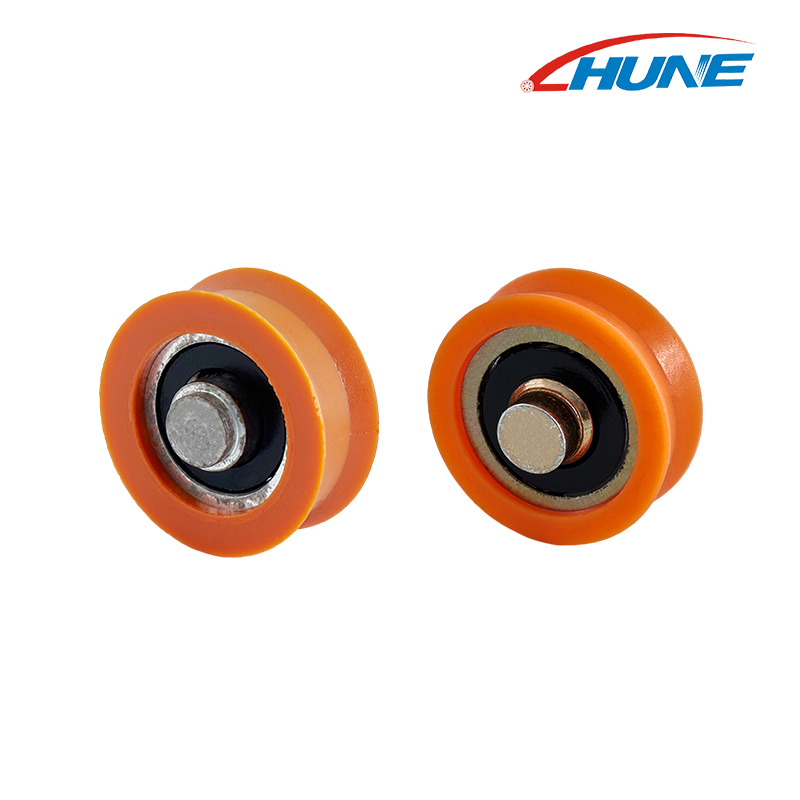
The groove determines where the wheel contacts and follows the rail. Flat, U-groove, V-groove, and custom profiles serve different track shapes and are not interchangeable by name alone.
A matching profile should contact the rail on its intended running surface while maintaining sufficient side clearance. Incorrect contact can cause noise, uneven wear, or unstable guidance.
Housing Options
Where a housing is required, potential materials include plastic, nylon, steel, zinc alloy die casting, aluminium profile, and aluminium alloy die casting. Housing selection depends on the mounting arrangement, load path, available space, and environment.
Some nylon pulley roller with screw designs mount directly through the threaded shaft and may not use a separate housing. The assembly drawing should show which structure is supplied.
Optional PU or Rubber Coating
A PU or rubber contact layer may be specified for a softer wheel-to-track interface. It can change contact noise and cushioning, but its wear, deformation, and attachment to the wheel core must be evaluated under the intended load.
A solid PU or rubber wheel and a coated wheel are different constructions. The specification should state which one is required.
Key Features
The Plastic/Nylon Bearing Pulley With Screw Thread Roller for Sliding Door can be configured for a defined rail and mounting layout. Depending on the approved version, it may offer:
- Screw Pulley Wheel construction for direct threaded mounting
- Plastic or nylon wheel contact for compatible tracks
- Internal bearing for rotation around the mounting shaft
- Flat, U-groove, V-groove, or custom wheel profile
- Spacer design to preserve clearance after fastening
- Open, shielded, or sealed bearing options
- Dustproof cover or housing options where required
- Material, color, and metal-finish choices
- Custom wheel dimensions, thread specification, and bearing model
Related product terms include nylon screw thread bearing pulley, threaded bearing pulley, plastic threaded pulley wheel, sliding door screw pulley, plastic roller bearing pulley, nylon bearing roller, and plastic guide roller.
These terms help identify the product category. They do not replace a check of the track cross-section, threaded mounting, load, and installed wheel clearance.
Material Options
Material combinations should be chosen for the complete assembly rather than for one component in isolation. The table below summarizes common specification directions.
| Component | Material options | Selection consideration |
| Bearing | Chrome steel, carbon steel, stainless steel | Bearing design, load, and exposure |
| Wheel | POM, Nylon6, Nylon66, Nylon66+GF, PU, rubber | Track contact, wear, and noise |
| Housing | Plastic, nylon, steel, zinc alloy die casting, aluminium profile, aluminium alloy die casting | Mounting strength and available space |
| Threaded Part | Steel or stainless steel | Thread engagement and environment |
| Surface Finish | Zinc plating, nickel plating, black treatment, painting, electrophoretic treatment | Metal protection and appearance |
| Color | Original, black, white, red, green, orange, custom | Identification or product appearance |
Material names alone do not establish corrosion resistance, maximum load, or operating noise. For example, a stainless steel threaded part does not protect an uncoated bearing, and a soft wheel does not correct a damaged track. Specify the environment and evaluate the assembled pulley accordingly.
Technical Parameters and Custom Options
For a replacement pulley, measure the existing part and its mating rail and threaded mounting point. For new development, define the intended contact and load path in the drawings.
| Parameter | What to specify | Why it matters |
| Wheel Diameter and Width | Running dimensions | Track contact and clearance |
| Inner Diameter | Bearing bore or shaft fit | Assembly compatibility |
| Outer Diameter and Roller Height | Overall installed envelope | Space within the sliding system |
| Thread Size and Screw Length | Diameter, pitch, and engagement length | Secure mounting |
| Screw Type | Threaded shaft or separate screw arrangement | Installation method |
| Bearing Model and Material | Dimensions and construction | Wheel and shaft fit |
| Bearing Seal Type | Open, shielded, or sealed | Contaminant exposure |
| Wheel Material | POM, nylon, PU, rubber, or specified construction | Running-surface requirements |
| Housing Material | Material and structural form | Mounting and load path |
| Wheel Groove Profile | Flat, U-groove, V-groove, or custom | Match with rail cross-section |
| Spacer Size | Width and bearing contact position | Free rotation after tightening |
| Dustproof Cover Type | Cover dimensions and fit | Bearing-area protection |
| Surface Treatment and Color | Finish specification | Exposure and appearance |
| Load Requirement | Moving-part weight and roller arrangement | Complete-system assessment |
These are customization inputs, not fixed product ratings. Hune can develop a Plastic/Nylon Bearing Pulley With Screw Thread Roller for Sliding Door from a sample or technical drawing that identifies the track profile, mounting thread, available space, moving-part load, and operating environment. The final fit should be verified with the pulley tightened in its intended position and tested across the full travel of the sliding system.