

 English
 Español
 日本語
There's a particular kind of frustration that comes from installing a new cabinet door, stepping back to admire the work, and then watching it wobble or catch halfway through its first slide. Nine times out of ten, the door itself isn't the problem. Neither is the cabinet frame. The real issue usually traces back to something much smaller: a roller that doesn't actually fit the track it's riding on.
This happens more often than people expect. Tracks and rollers come in a surprising range of shapes, and the differences between them aren't always something you'd notice just by glancing at a hardware bin. What follows is a practical look at how these two pieces need to work together, so the next installation or swap-out doesn't end in a door that drags, squeaks, or slowly drifts out of alignment.
The Mismatch Problem Nobody Warns You About
A roller might look like a simple wheel, and in a sense, it is. But the shape of that wheel, how it nests into the track beneath it, and how much weight it's built to carry all determine whether it's actually compatible with a given setup. None of this is obvious at first glance.
Track grooves aren't standardized the way a lot of people assume. Some curve into a rounded U-shape. Others angle sharply into a V. Some barely have a groove at all, just a shallow, flat channel. A roller built for one of these won't sit right in another, even when the two look close enough in size to seem interchangeable.
What Happens When the Fit Is Off
Here's the tricky part: a mismatched roller rarely fails right away. There's no dramatic snap or obvious break on day one. Instead, the problems creep in slowly, a door that drags just slightly more than it used to, a faint grinding noise that gets written off as "probably just needs oil," or wear that concentrates on one edge of the roller instead of spreading evenly across the surface.
Left alone, that slow wear pattern tends to snowball. What started as a five-dollar roller issue can end up chewing through the track itself, turning a simple swap into a repair job that involves replacing more than just the wheel.
Getting to Know the Common Track Shapes
Before grabbing a replacement roller off a shelf, it helps to actually look, really look, at the track currently in use. Most cabinet tracks fall into a handful of recognizable shapes, though individual manufacturers occasionally throw in their own twist.
U-Shaped Tracks
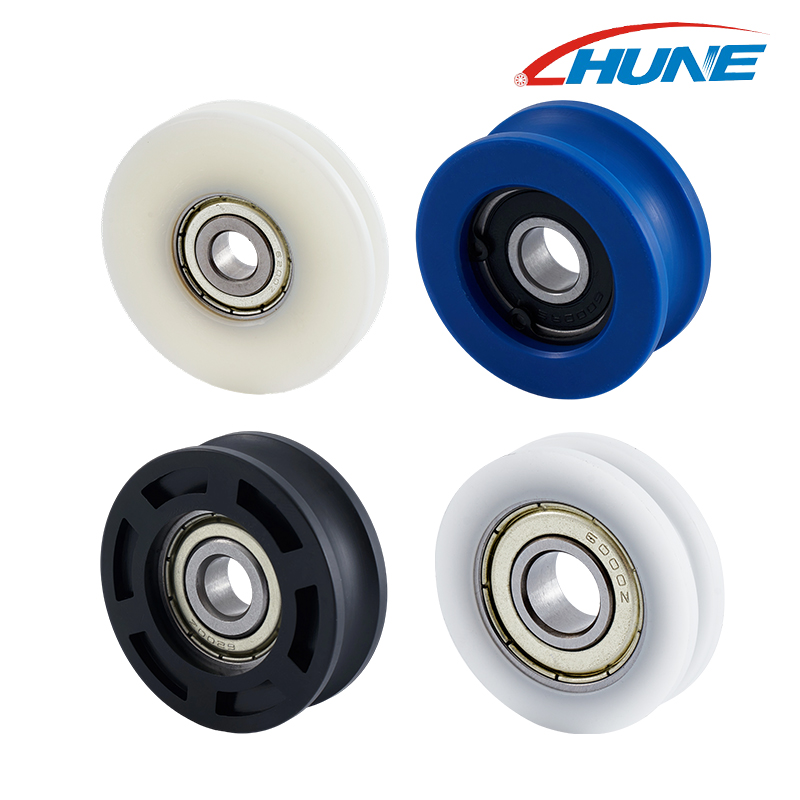
This is probably the shape most people picture when they think of a sliding cabinet track: a rounded groove that cradles the roller from below. The curve spreads weight fairly evenly across the roller's surface, which is a big part of why this profile shows up so often in everyday cabinet and drawer hardware.
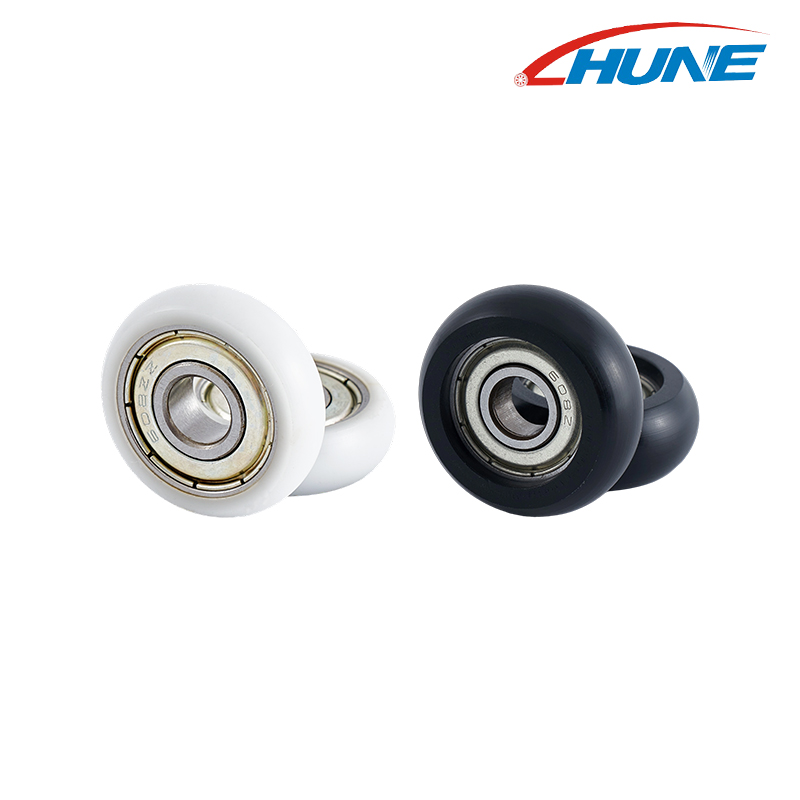
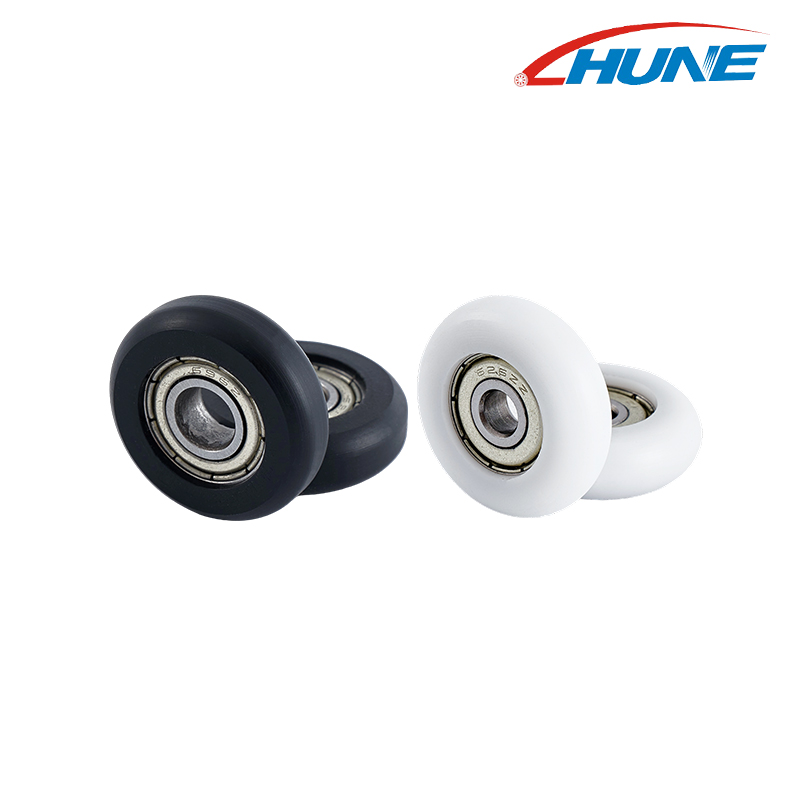
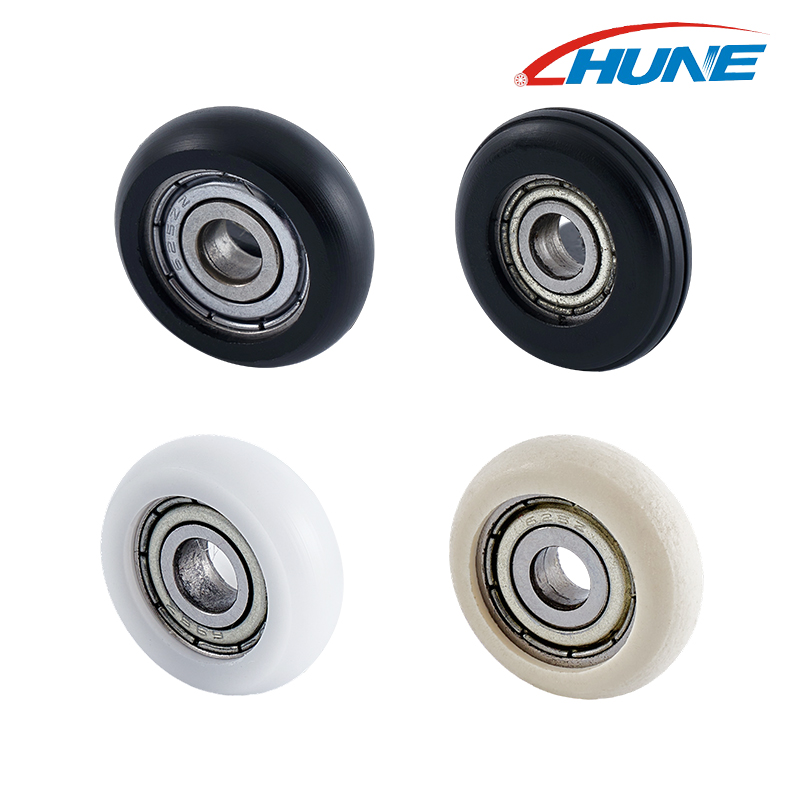
Rollers meant for this kind of track are usually rounded themselves, sometimes slightly convex, so they nestle into the curve rather than balancing on a thin edge.
V-Shaped Tracks
A V-groove track cuts a sharper, angled channel instead of a smooth curve. The rollers built for this shape typically taper to a point or angled edge that slots into that V, which helps keep the door centered and cuts down on side-to-side wobble.
This pairing tends to show up where keeping the door from drifting sideways matters more than raw weight capacity. The angled fit does a lot of that centering work on its own.
Flat or Shallow Channel Tracks
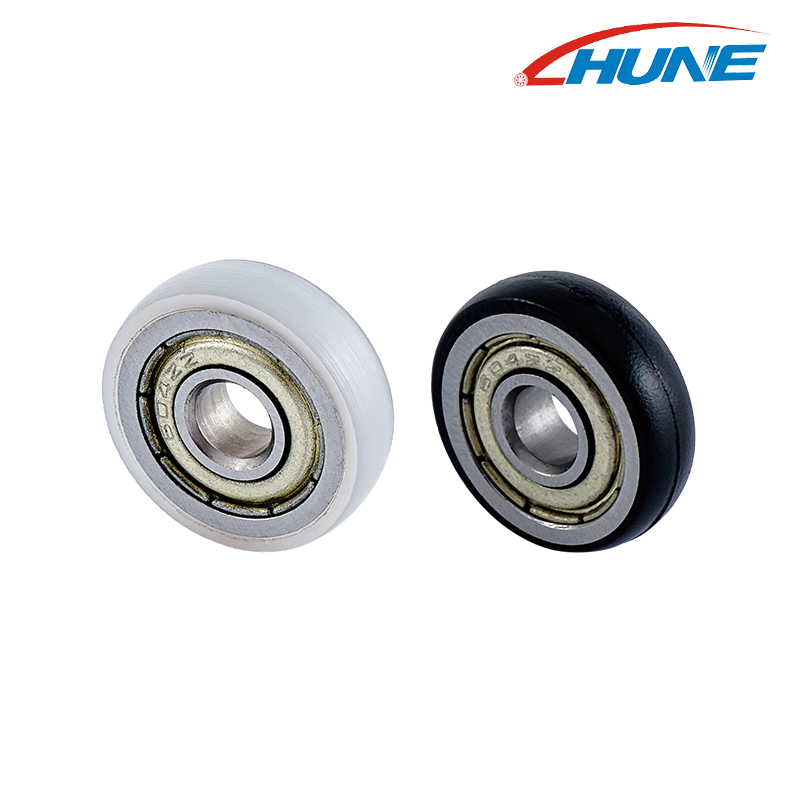
Not every track has a deep groove. Some cabinet systems, especially ones going for a slimmer, more minimal look, use a flatter track with barely any channel at all. Rollers made for this style have a flatter running surface too, since there isn't much depth for a rounded or tapered wheel to sink into.
You'll see this profile a lot in lighter cabinet doors, the kind where the hardware is meant to disappear visually while still doing its job underneath.
| Track Profile | Roller Shape Needed | Where It Shows Up |
|---|---|---|
| U-Shaped | Rounded or slightly convex | General cabinets, drawers |
| V-Shaped | Tapered or angled edge | Doors that need side stability |
| Flat/Shallow | Flat running surface | Slim, minimal cabinet designs |
Manufacturers sometimes blend these shapes or add proprietary variations, so this table is more of a starting point than a complete map, but it covers what you'll run into most of the time.
Material Matters Just as Much as Shape
Getting the shape right solves half the problem. The material a roller is made from decides how it actually performs once it's spinning inside that track day after day.
Nylon Rollers
Nylon tends to be the quiet option, and it holds up well against moisture and corrosion, which is why it shows up so often in kitchens and bedroom furniture where noise is a real consideration. It's lighter too, which helps in smaller cabinets, though it can wear down faster than metal under heavy, repeated use.
Metal or Steel-Core Rollers
For cabinets that get opened and closed constantly, think commercial kitchens or workshop storage, metal rollers, or ones built with a metal core under a softer wrap, tend to handle that repetition better. The trade-off is noise. Metal running against a track can be louder, though a lot of designs soften that with an outer coating.
Rubber-Coated Rollers
Somewhere in between sits the rubber-coated option, combining a sturdier core with a quieter exterior. It's often the pick when neither pure durability nor pure silence is the only priority, but a mix of both matters.
A Simple Process Before Buying a Replacement
Rather than grabbing the first roller that looks close enough, a few minutes of checking beforehand saves a lot of back-and-forth trips to the hardware store.
- Look closely at the existing groove. Is it rounded, angled, or basically flat? Roughly how wide is the channel?
- Hang onto the old roller if you still have it. Even worn down, it can tell you a lot about the original shape and how it mounted.
- Pay attention to how the door's been acting. Dragging, uneven wear, odd noises, these often hint that the current roller was never quite right to begin with.
- Factor in where the cabinet actually lives. A kitchen cabinet dealing with humidity and grease has different needs than one sitting in a dry hallway closet.
- Line up a couple of options before deciding. Holding two or three candidates against the actual track tends to reveal fit problems that are easy to miss otherwise.
When the original hardware info is long gone, suppliers who work across a wide range of track styles, Hune among them, can be a helpful resource for figuring out which roller shape and material actually belongs with a given track.
Telling Signs the Fit Is Wrong
Sometimes you don't catch the mismatch until after everything's installed and the door's already in motion. A handful of clues tend to point straight to the problem.
- The door drifts to one side instead of sliding in a straight line.
- A grinding or clicking sound shows up that wasn't there with the original hardware.
- Up close, the roller looks like it's sitting loosely or jammed too tight in the groove.
- Wear on the roller looks lopsided, concentrated on one edge rather than even across the surface.
- The door occasionally jumps the track entirely during normal use, often a sign the groove depth or width just isn't right.
Catching these early beats waiting around hoping they'll work themselves out. They usually don't, and the longer a mismatched roller stays in place, the more wear it puts on the track alongside itself.
A Few Things Worth Remembering
None of this requires specialized tools or deep hardware knowledge. Mostly it just takes a bit of patience and a willingness to actually compare before buying.
- Bring the old roller with you when shopping. Comparing shapes side by side beats trying to describe one from memory.
- A rough measurement with a ruler or caliper clears up groove-depth guesswork fast.
- Think about how often the door actually gets used. A pantry opened fifty times a day needs different hardware than a rarely touched linen closet.
- Don't assume every roller labeled "for cabinet doors" fits every cabinet door. That category covers a lot of ground.
Matching a roller to its track isn't complicated once you understand the basic shapes and what they're built for, but it does take a bit more care than reaching for whatever looks vaguely similar to what came out. Taking a few extra minutes to check the groove shape, think through where the cabinet sits and how it gets used, and compare a couple of options before installing tends to head off that slow slide toward dragging doors, odd noises, and repeat trips back to the store.