

 English
 Español
 日本語
日本語
 +86-15058997617
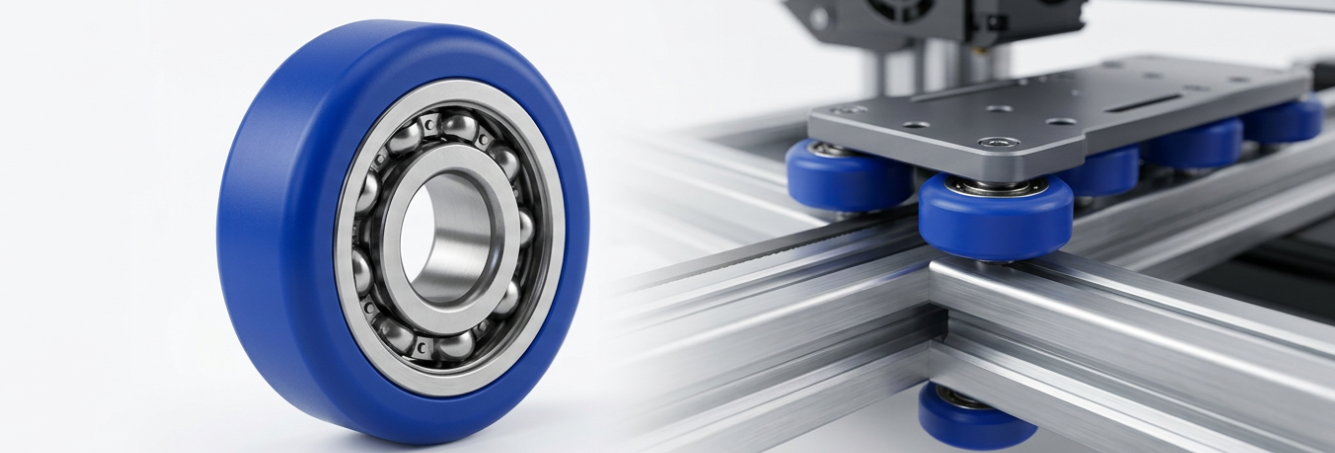
A 3D Printer V Slot Wheel works through several interfaces: the running profile meets the extrusion, the bearing fits the wheel, and the mounting hardware holds the assembly on the carriage. Each interface needs enough accuracy to guide movement without binding.
Nylon or Plastic Wheel Body
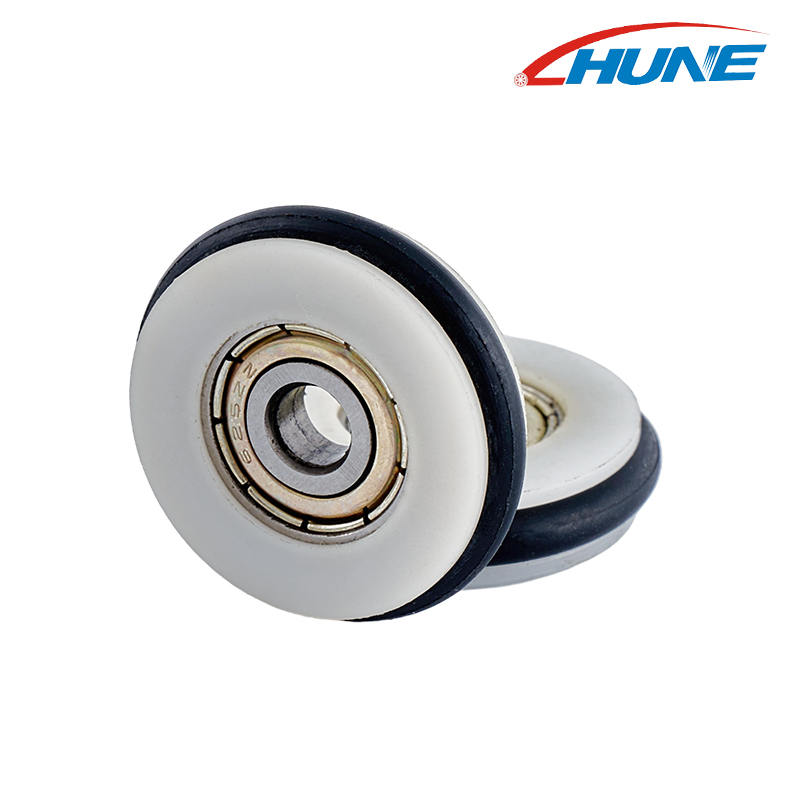
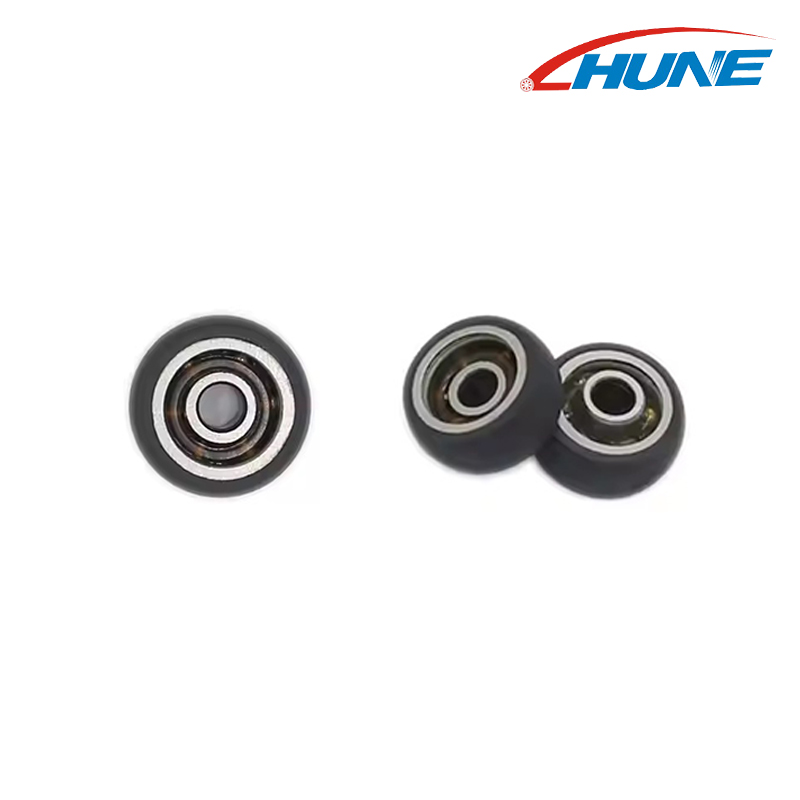
The wheel body provides the running surface and holds the bearing or bore structure. Nylon and other engineered plastics can reduce moving mass and avoid direct metal-wheel contact with an aluminum rail.
A nylon V wheel should be selected for its actual load, temperature, humidity, and wear conditions. The phrase wear resistant nylon roller wheel describes a design goal, not a universal service-life rating. Material grade, rail finish, contact pressure, and adjustment all affect wear.
V-Groove Running Surface
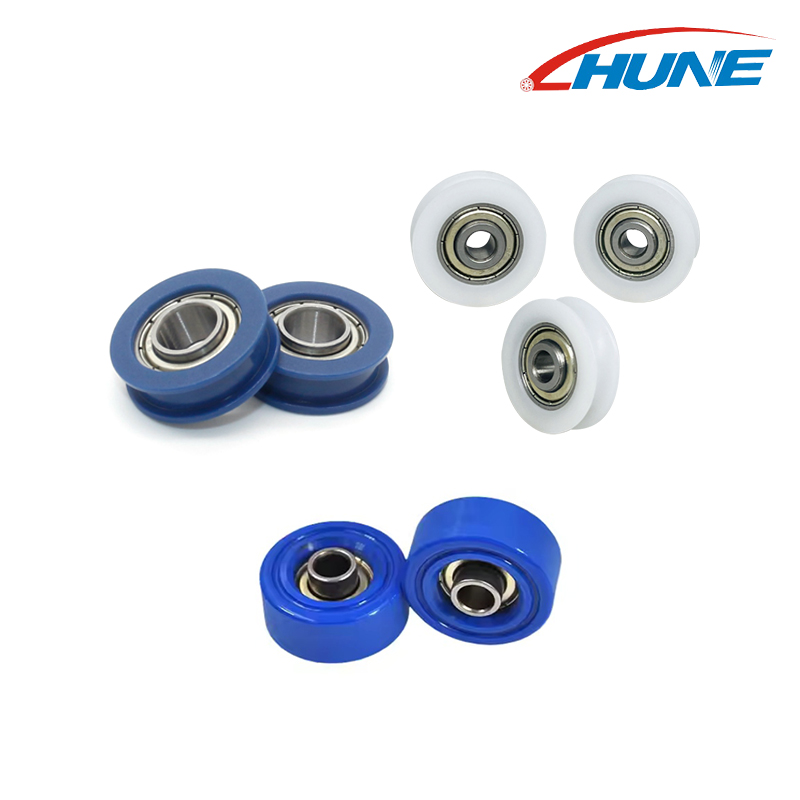
The V-groove contacts the corresponding running faces of a compatible extrusion. Its angle, depth, width, and edge shape determine how the V slot guide wheel sits on the rail.
The groove should engage the intended faces without bottoming out or contacting an unintended edge. V-slot profiles from different systems may look similar but have different dimensions; compare the wheel and rail drawings before treating them as interchangeable.
Precision Bearing
The bearing lets the wheel rotate around a fixed mounting screw or axle. Bearing size, fit within the wheel, lubrication, and internal clearance influence rotation after installation.
A wheel that spins freely in your hand may still feel rough on a machine if its bearing is misaligned, its mounting hardware clamps the rotating part, or the carriage is adjusted too tightly against the rail.
Bearing Seat or Bore Structure
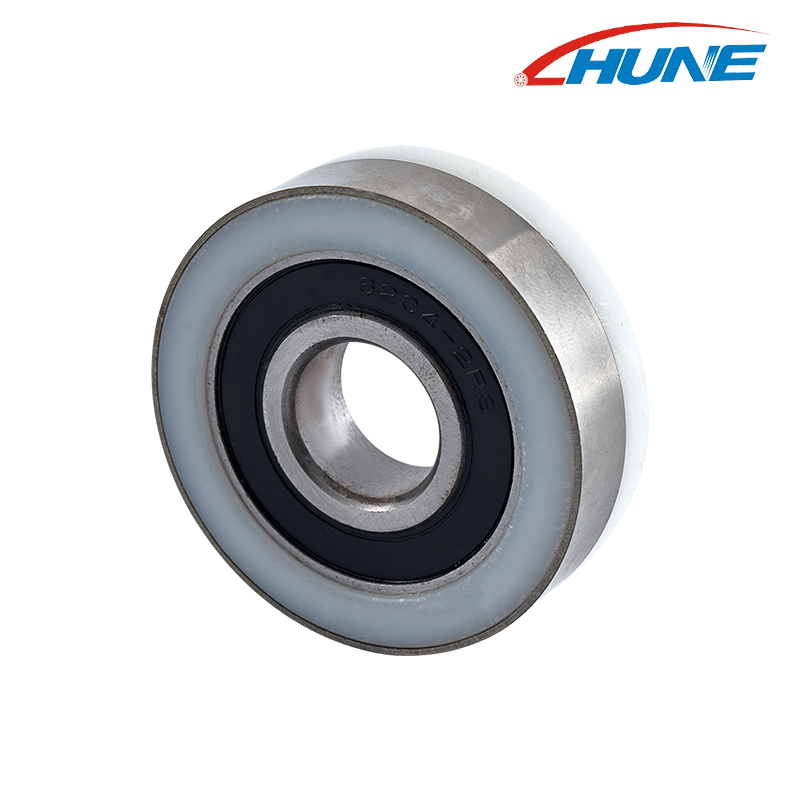
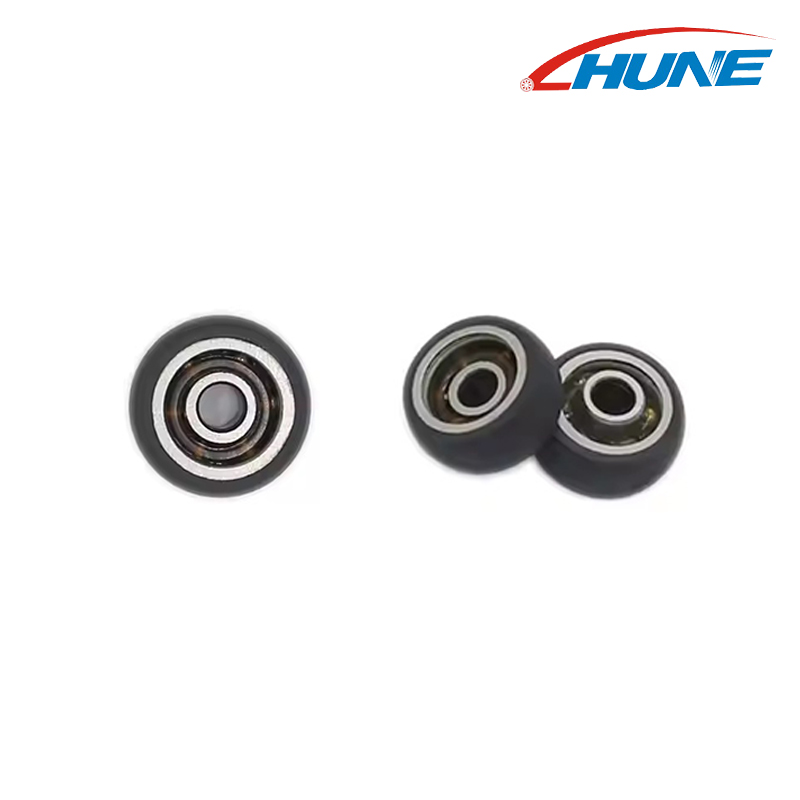
A 3D printer bearing wheel may have a seat for an installed bearing. Other wheel designs use a plain bore, bushing, or sleeve. These are different constructions and should be identified in the specification.
For a bearing-installed design, the seat must retain the bearing without distorting the wheel or preventing rotation. For a replaceable bearing, the removal and installation method should also be considered.
Spacer Design
A spacer can establish the intended distance between the wheel, bearing, carriage plate, and fastener. Its dimensions help ensure the mounting screw can be tightened while the wheel remains free to rotate.
A spacer is not necessarily an adjustment component. In some V-slot carriages, wheel-to-rail contact is adjusted by separate eccentric mounting hardware. The supplied assembly drawing should distinguish between spacing and adjustment functions.
Dustproof Structure
Shielded or sealed bearing options can help limit particles entering the bearing. They do not keep dust, filament fragments, or workshop debris off the extrusion's running surfaces.
Where the equipment produces fine particles—such as a laser engraver or CNC module—bearing protection and rail cleaning should be considered together.
Smooth Wheel Surface
A consistent running surface helps the wheel meet the rail without burrs or abrupt changes in contact. Surface finish, profile accuracy, and concentricity matter more than a visual description such as “smooth.”
Inspect a wheel for edge damage, flat spots, or an uneven wear band if a carriage develops repeating vibration during travel.
Custom Running Profile
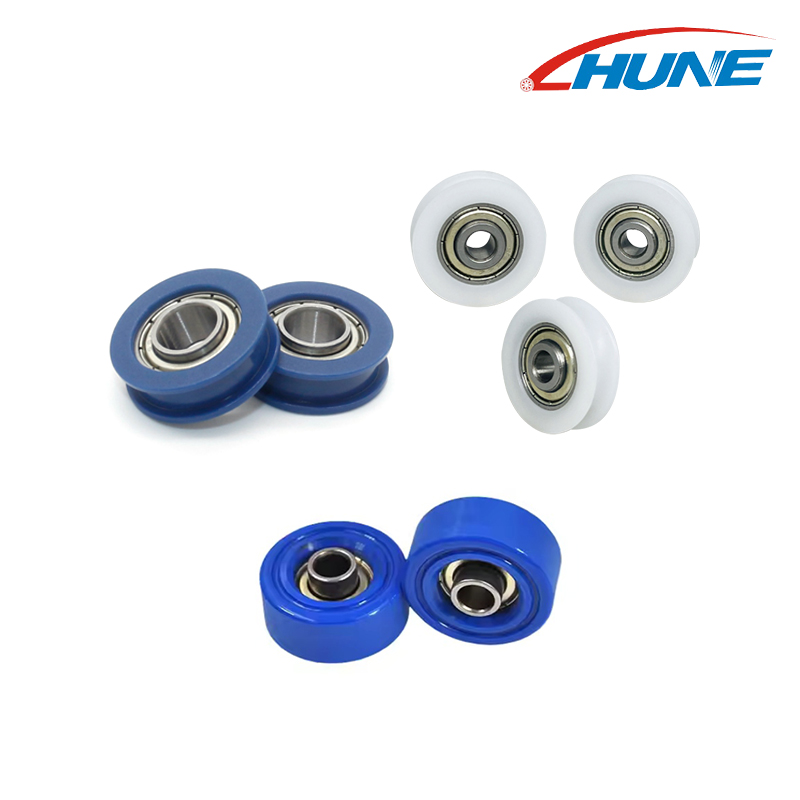
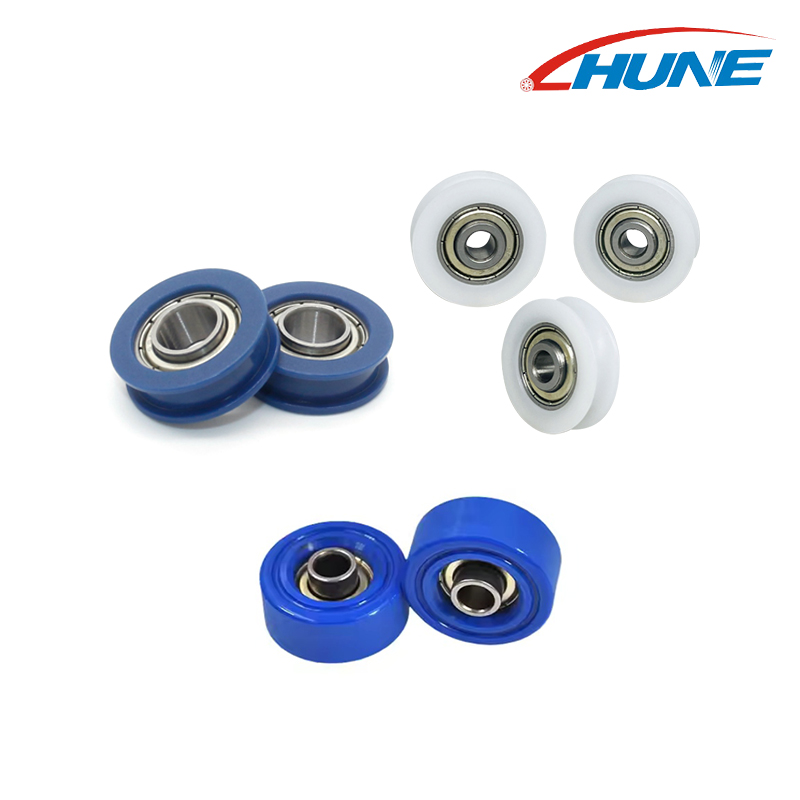
Hune can review V-groove, U-groove, flat, concave, and application-specific wheel profiles. A custom profile should be based on the mating rail's cross-section and intended contact faces, rather than the name of the groove alone.
Key Features
The 3D Printer Roller Wheels Wear Resistant Nylon Plastic product can be specified for a defined carriage and rail system. Available features depend on the approved design:
- 3D Printer Wheels with a profile for compatible V-slot linear motion systems
- Printer Pulley and 3D Printer V Rollers for specified carriage layouts
- 3D Printer V Slot Wheels with defined groove dimensions
- V Slot Wheels using a nylon or other engineered-plastic running surface
- Plastic V slot wheel construction that avoids direct metal-wheel contact with the rail
- Bearing-installed, plain-bore, bushing, or sleeve configurations
- Spacer and bearing-protection options where required
- Custom wheel diameter, width, bore, groove angle, material, and color
Related applications and search terms include V groove bearing pulley, linear motion roller wheel, plastic nylon bearing pulley, 3D printer carriage wheel, CNC V wheel, laser engraver roller wheel, V slot extrusion wheel, plastic guide roller wheel, custom nylon roller wheels, and special-shaped bearing pulley.
These terms identify potential uses. They do not confirm that one wheel fits every extrusion, carriage plate, or load arrangement.
How the 3D Printer V Slot Wheel Works
A 3D Printer V Slot Wheel mounts to a carriage or guide plate and rolls along the intended faces of a V-slot aluminum profile. As the carriage travels, the wheel turns on its bearing while the groove and opposing wheels help constrain movement relative to the rail.
Correct adjustment matters. Too little contact can allow carriage play; too much contact can increase rolling resistance and accelerate wheel or bearing wear. The goal is stable guidance with free movement across the axis's full travel, using the adjustment method specified for that carriage.
Performance depends on the interaction of:
- Wheel diameter, width, groove angle, and groove depth
- Bearing dimensions and fit
- Wheel material and running-surface condition
- Spacer and mounting arrangement
- Rail profile and surface condition
- Carriage load, belt tension, and axis alignment
- Travel speed, acceleration, temperature, and debris exposure
On a vertical axis, the design must also account for how the carriage is supported and retained when the equipment is idle or power is removed. The wheel alone should not be assumed to provide a safety or holding function.
Technical Parameters and Custom Options
The table below lists specification inputs for custom V slot wheels and custom nylon roller wheels. It does not represent fixed dimensions or load ratings for every version.
| Parameter | What to specify | Why it matters |
| Wheel Diameter and Width | Running and overall dimensions | Rail contact and carriage clearance |
| Bore or Inner Diameter | Bearing, bushing, or shaft fit | Mounting compatibility |
| Assembled Height | Wheel and hardware envelope | Clearance from the carriage plate |
| V-Groove Angle and Depth | Running-profile geometry | Contact with the extrusion |
| Bearing Model and Fit | Size and installed arrangement | Rotation and wheel retention |
| Wheel Material and Nylon Grade | Polymer specification | Load, wear, and environment |
| Spacer Size | Width and contact position | Free rotation after tightening |
| Mounting Arrangement | Screw, sleeve, or other hardware | Installation and adjustment |
| Running Profile | V-groove, U-groove, flat, or custom | Matching the guide rail |
| Load Requirement | Static and moving carriage loads | Complete assembly assessment |
| Supply Format | Wheel only or assembled components | Production and replacement needs |
For drawing-based or sample-based development, provide the rail cross-section, carriage layout, moving load, installation space, and operating conditions. Those details help determine which dimensions are critical and whether the proposed wheel can be tested on the intended profile.
Material and Working Condition Considerations
A wheel on a desktop 3D printer may operate under different conditions from one on a laser engraver, light CNC guide, or automation frame. Material and bearing choices should reflect the actual duty rather than the equipment category alone.
Review static and dynamic load, travel speed, acceleration, operating temperature, humidity, dust, contact with oils or chemicals, and the expected inspection interval. Also consider whether the rail is straight, securely mounted, and free from damage along the full travel path.
For a 3D printer carriage wheel, useful installed checks include free rolling after fasteners are tightened, minimal carriage play, consistent movement from end to end, and no unusual wear marks on the wheel or extrusion. Clean the running faces before judging a noisy wheel: trapped debris can imitate a bearing problem.
The 3D Printer Roller Wheels Wear Resistant Nylon Plastic product is best specified as part of a complete V-slot motion assembly. Hune provides related 3D Printer Wheels, Printer Pulley, 3D Printer V Rollers, 3D Printer V Slot Wheels, V Slot Wheels, nylon V wheel, plastic V slot wheel, and custom V slot wheels for rail and carriage designs defined by drawings, samples, and operating requirements.