

 English
 Español
 日本語
日本語A sliding screen door should move smoothly with minimal effort. If yours drags, sticks, rattles, or jumps off the track, the rollers are usually the problem — not the frame itself. Fortunately, adjusting sliding screen door rollers is a straightforward repair most homeowners can complete in under an hour.
This step-by-step guide covers:
- Clearing a dirty track
- Cleaning the door's wheels
- Adjusting tension screws to balance the door
- Repairing a door that keeps coming off its tracks
By the end, your screen door should glide quietly and sit square in the frame — the way it was designed to.
Why Sliding Screen Doors Start Sticking
Before adjusting anything, it helps to understand the cause. In most homes across the U.S. and Europe, sliding screen doors fail for three common reasons:
- Dirt and debris buildup in the track
- Worn or clogged rollers
- Incorrect tension screw adjustment
Wind, dust, pollen, pet hair, and moisture gradually collect in the lower rail. As friction increases, the door becomes harder to slide. Many people assume the rollers are broken, when often they just need cleaning and minor adjustment.
Tools, Supplies, and a Fast Diagnosis
Before turning screws, you'll get better results if you confirm why the door is misbehaving.
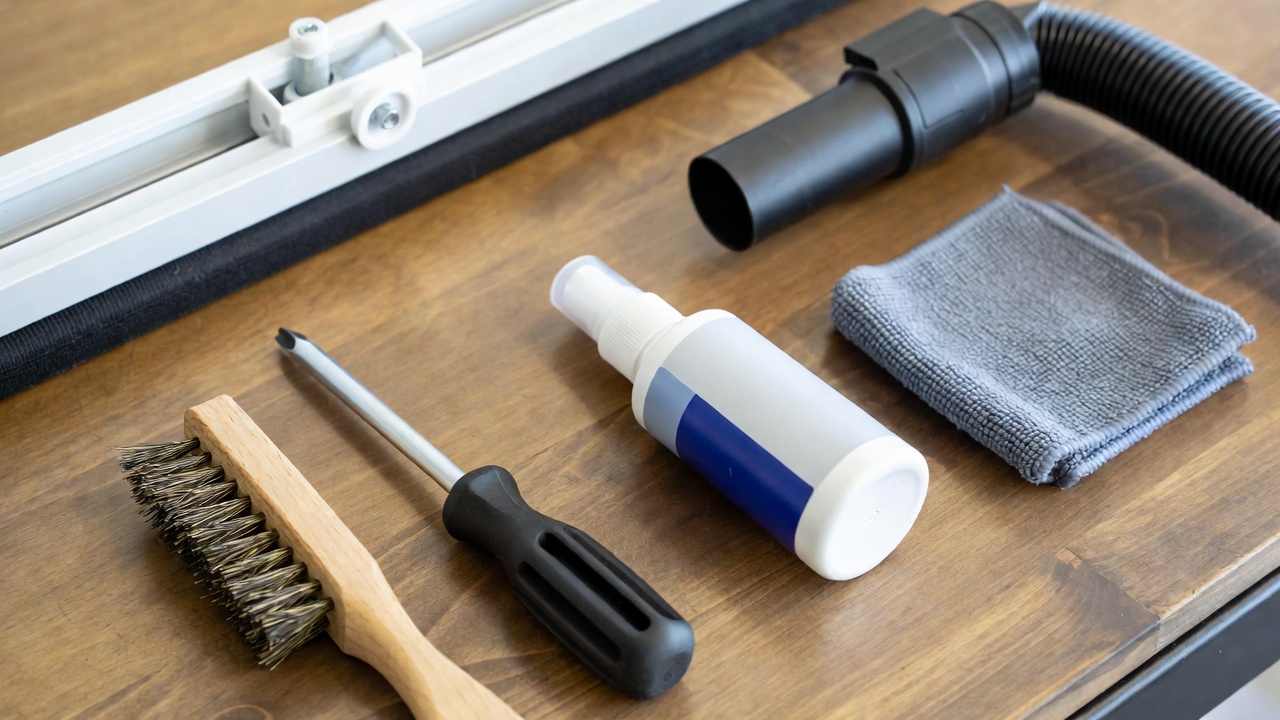
- What you'll need
- Phillips screwdriver (sometimes flathead)
- Vacuum with a crevice tool
- Stiff nylon brush / old toothbrush
- Mild dish soap + warm water
- Microfiber cloths or paper towels
- Silicone spray lubricant (non-greasy, track-safe)
- Optional: putty knife, needle-nose pliers, replacement rollers
Quick symptom check (what it usually means)
- Door drags on the bottom track: rollers set too low, debris in track, worn wheels
- Door feels "crooked" or rubs one side: rollers uneven left vs. right
- Door jumps or pops out: rollers too high/loose, damaged track, bent frame, missing guide
- Grinding noise: sand in track or flat-spotted wheels
Step 1: Clearing a Dirty Track
Start with the simplest fix first. 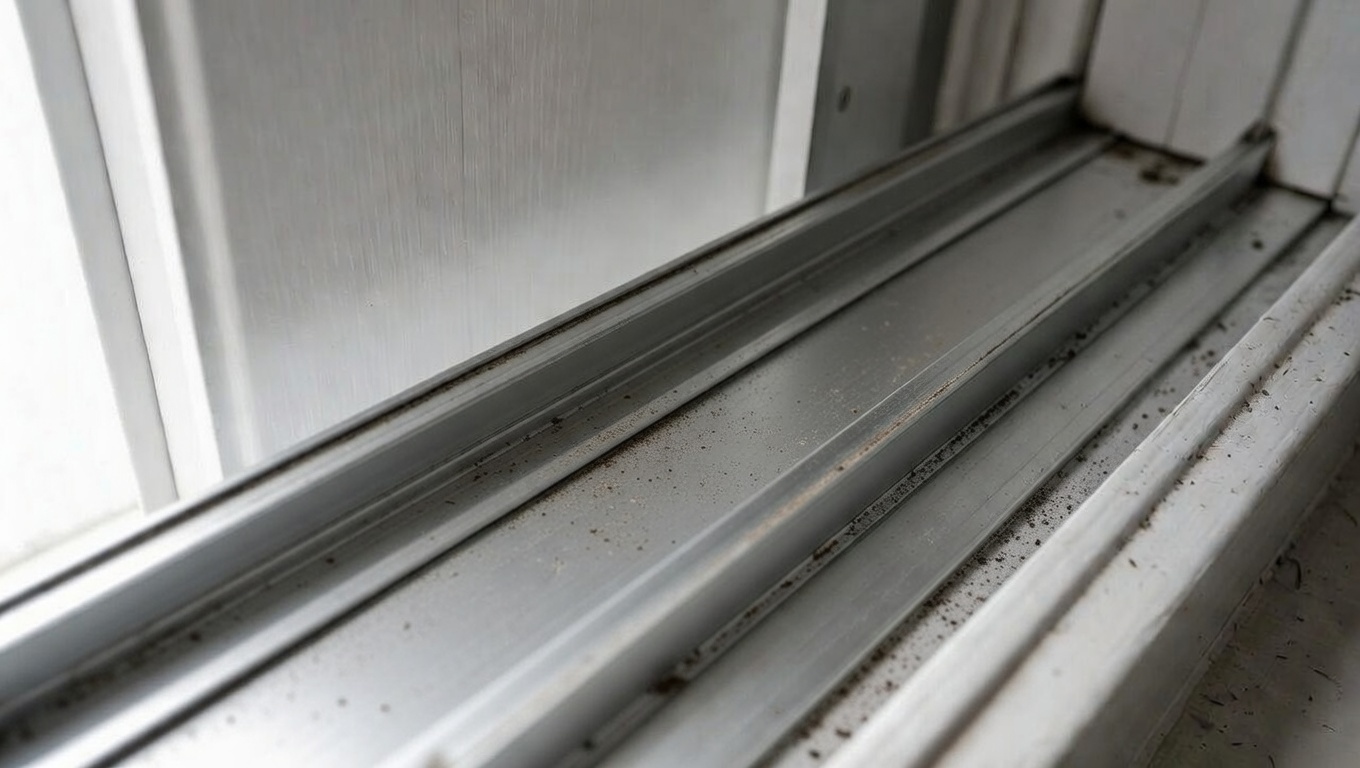
Even a small amount of compacted debris can prevent rollers from turning properly.
- How to Clean the Track Properly
- Open the door fully.
- Vacuum the entire lower track using a narrow nozzle attachment.
- Use a stiff nylon brush or old toothbrush to loosen compacted dirt.
- Wipe the track with a damp microfiber cloth.
- For stubborn grime, apply warm water mixed with mild dish soap.
- Dry thoroughly.
Avoid heavy oil-based lubricants. These attract dust and make the problem worse over time. If lubrication is necessary, use a dry silicone spray sparingly.
Step 2: Cleaning the Door's Wheels
If the track is clean but the door still drags, remove the door and inspect the rollers.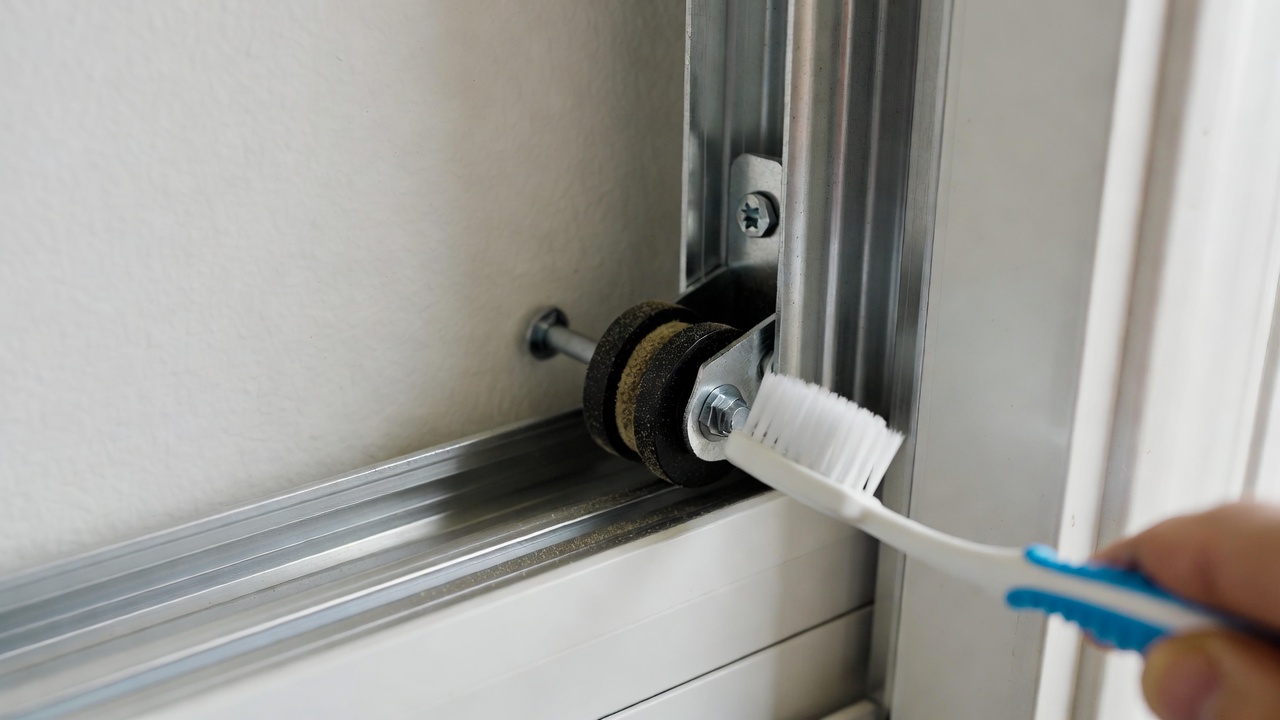
- Removing the Screen Door Safely
- Locate the tension screws at the bottom corners.
- Turn them counterclockwise to retract the rollers upward.
- Lift the door into the top track.
- Gently pull the bottom outward and remove the door.
- Place the door on a flat surface.
- Inspect and Clean the Rollers
- Look for:
- Hair wrapped around the wheels
- Dust buildup inside the housing
- Cracked or flattened roller edges
- Use:
- A small brush
- Compressed air
- Mild cleaner if necessary
If rollers are cracked or worn down unevenly, replacement is usually more effective than adjustment.
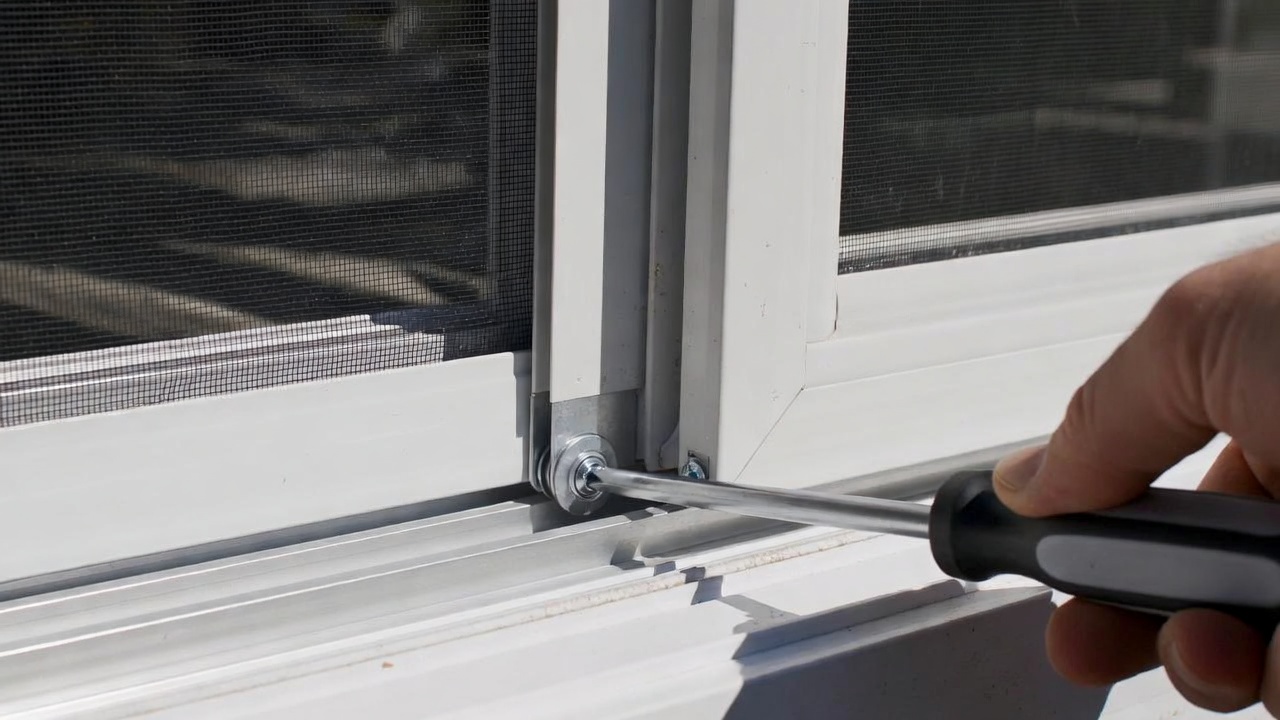
Step 3: Adjusting Tension Screws to Balance the Door
This is the most critical step in roller adjustment.
Sliding screen doors use tension screws to raise or lower the rollers. Proper adjustment ensures the door sits level and rolls evenly on both sides.
- How Tension Adjustment Works
- Turning the screw clockwise → lowers the roller → raises the door.
- Turning counterclockwise → retracts the roller → lowers the door.
The goal is even contact with the track while maintaining smooth movement.
- Step-by-Step Adjustment
- Reinstall the door into the frame.
- Slide it back and forth to test resistance.
- Adjust one side slightly (¼ turn at a time).
- Test again.
- Repeat on the opposite side if needed.
Avoid over-tightening. If one side is higher than the other, the door will tilt and rub against the frame.
- How to Tell If the Door Is Balanced
- The gap between door and frame is even.
- The latch lines up cleanly.
- The door slides with minimal force.
- No scraping noise from the bottom rail.
Step 4: Repairing a Door That Comes Off Its Tracks
If your sliding screen door keeps popping out, roller height or alignment is usually incorrect.
- Common Causes
- Rollers extended too far downward
- Bent lower track
- Worn roller housing
- Loose frame screws
- Fixing the Problem
- Remove the door.
- Inspect track for dents or warping.
- Gently straighten minor bends using pliers.
- Check roller alignment inside the frame.
- Reinstall and carefully adjust height again.
If the track itself is severely bent, replacement may be necessary.
When to Replace Rollers Instead of Adjusting Them
Adjustment won't fix:
- Flat-spotted wheels
- Cracked nylon rollers
- Rusted metal assemblies
- Severely worn bearings
Replacement rollers are inexpensive and widely available at hardware stores. Be sure to match:
- Wheel diameter
- Housing shape
- Screw placement
Taking the old roller with you helps ensure compatibility.
Pro Tips for Long-Term Smooth Operation
- Clean the track every 3–6 months.
- Avoid oil-based lubricants.
- Check screw tension seasonally.
- Replace damaged weather stripping if airflow causes vibration.
Preventative maintenance extends the lifespan of your sliding screen door system and avoids costly replacements.
Troubleshooting Quick Reference
|
Problem |
Likely Cause |
Solution |
|
Hard to slide |
Dirty track |
Clean track thoroughly |
|
Door tilts |
Uneven roller height |
Adjust tension screws |
|
Pops off track |
Rollers too low/high |
Rebalance door height |
|
Grinding noise |
Debris in wheel |
Remove door and clean rollers |
Adjusting rollers on a sliding screen door is one of the most effective DIY home maintenance tasks. In most cases, cleaning and proper tension adjustment restore smooth operation without replacing the entire door.
By following a methodical process — track cleaning, wheel inspection, tension adjustment, and alignment correction — you can fix sticking, dragging, and off-track issues with confidence.
If your door still resists movement after adjustment, replacing worn rollers is typically the next step — not replacing the whole door.
With routine care, a properly adjusted sliding screen door should glide effortlessly for years.