

 English
 Español
 日本語
日本語Large-format sliding doors have become a defining feature of contemporary architecture, commercial fit-outs and high-end residential projects. When specifying systems capable of spanning openings from 3 m to more than 12 m, the fundamental decision is whether to select a top-hung system or a bottom-rolling system.
Although both achieve the same functional outcome — smooth lateral movement of heavy glazed panels — the structural philosophy, performance characteristics, installation requirements, long-term durability and cost implications differ profoundly. This article provides a formal, detailed and strictly original comparison of the two systems to assist architects, specifiers, builders and discerning property owners in making an informed selection.
1. Fundamental Structural Principles
Top Hung Sliding Door Rollers Systems
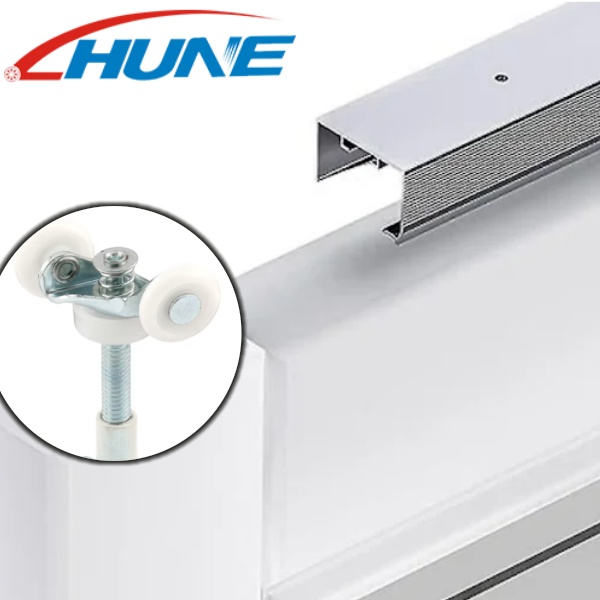
- 100 % of the panel weight is carried by an overhead track fixed to the structural lintel, ring beam or suspended ceiling framework.
- Rollers or hanger carriages are attached to the top rail of each door panel and run inside an enclosed or semi-enclosed aluminium track.
- Floor-level guide only (typically 3–10 mm high channel or brush strip) prevents lateral swing but carries negligible load.
Bottom Sliding Door Rollers Systems
- 95–100 % of the panel weight is supported by rollers or bogies fixed to the bottom rail of each panel.
- Rollers run on a recessed or surface-mounted track anchored to the concrete slab or raised floor.
- Overhead track functions solely as an anti-tilt guide and weather-seal receptor.
This reversal of load path is the single most important differentiator and influences every subsequent aspect of design and performance.
2.Threshold and Floor Continuity
Top-Hung Systems The floor can remain completely uninterrupted. With properly designed recessed drainage and careful coordination of the slab, the transition from inside to outside can be made perfectly flush or with only the slightest shadow gap. The same flooring material – whether timber, natural stone, polished concrete or large-format tiles – flows seamlessly across the opening, creating a true indoor-outdoor connection. This characteristic makes top-hung systems the preferred choice whenever genuine level access is required, such as in universal-design homes, aged-care projects, or high-end residences where even a small step is considered unacceptable.
Bottom-Rolling Systems A visible threshold is unavoidable. Even the most refined low-profile designs still present a raised track at floor level. When the track is recessed, a channel must be formed into the slab and a concealed drainage arrangement provided beneath; when surface-mounted, the track sits proud of the finished floor. In either case, a noticeable change in level remains, which can act as a trip point and interrupts the continuity of the flooring material.
For projects where strict compliance with accessibility standards or an absolutely seamless floor plane is mandatory – particularly across wider openings – top-hung systems remain the only practical solution.
3. Structural Implications
Top-Hung
· Requires a rigorously engineered header capable of supporting the full dead load plus wind-induced uplift or suction.
· Deflection limited to L/500 or better under full design load is standard to prevent binding.
· Common solutions include rolled steel joists (RSJs), reinforced concrete upstands, laminated veneer lumber (LVL) beams or proprietary suspended pelmet systems.
· In retrofit scenarios, significant strengthening or replacement of the existing lintel is frequently required.
Bottom-Rolling
· Load transferred directly to the floor slab, which is almost always adequate in modern construction.
· Minimal or zero additional structural input required above the opening.
· Ideal for renovations, lightweight timber-framed buildings and projects with limited headroom.
4. Weathertightness and Wind Performance
Top-Hung Systems Large panels tend to lift slightly under strong wind pressure, which can open small gaps at the vertical interlocks and allow driven rain to penetrate. Performance can be improved by using narrower panels, additional meeting stiles and heavier compression seals, yet inherent physical limitations remain. Consequently, top-hung doors are usually recommended only for sheltered or moderately exposed locations unless panel widths are deliberately kept modest.
Bottom-Rolling Systems Wind pressure acts in favour of the system: it pushes the panels downward onto the track, compressing the weather seals more firmly and actually enhancing water resistance. This behaviour makes bottom-rolling doors the natural choice for exposed coastal sites, high-wind zones and cyclonic regions. Heavy-duty commercial versions, with standard detailing, consistently deliver excellent resistance to driving rain even in severe conditions.
5. Maximum Panel Weights and Sizes (2025 commercial realities)
|
System |
Typical Maximum Panel Weight |
Common Maximum Panel Dimensions (single panel) |
Notes |
|
Top-Hung |
300–500 kg (domestic) |
3,000 mm wide × 3,300 mm high |
1,000 kg systems exist but require exceptional structural provision |
|
Bottom-Rolling |
500–800 kg (heavy commercial) |
3,600 mm wide × 4,000 mm high |
Readily achievable with standard twin-rail recessed tracks |
6. Maintenance and Long-Term Durability
Top-Hung
· Overhead track largely protected from dirt, sand and foot traffic.
· Annual vacuuming and occasional roller lubrication sufficient for most installations.
· Roller replacement possible without removing panels in most modern systems.
Bottom-Rolling
· Floor track exposed to grit, leaves, pet hair and moisture.
· Requires regular cleaning (recommended quarterly in coastal areas).
· Anodised or stainless tracks can suffer abrasive wear if neglected; replacement is costly and disruptive.
7. Thermal Performance
Top-hung systems generally exhibit superior U-values because the primary structural track can be positioned entirely within the heated envelope and thermally broken. Bottom-rolling tracks invariably cross the thermal line at floor level, creating a cold bridge unless expensive thermally broken sill sections are specified.
8. Acoustic Performance
Both systems can achieve Rw 40+ with laminated acoustic glass, but bottom-rolling configurations usually provide marginally higher sound reduction due to the continuous compressive floor seal.
9. Security
Bottom-rolling doors are inherently more resistant to forced lifting. Top-hung panels can theoretically be lifted off their rollers if insufficient anti-lift measures are incorporated (modern systems include concealed anti-lift blocks).
10. Recommended Applications
Top-Hung Systems are preferred when:
· The project demands flawless, uninterrupted floor continuity between inside and outside Universal design, accessibility requirements or aged-care standards must be met without compromise The doors are used as internal room dividers where structural load on the ceiling is acceptable The architectural vision calls for very tall panels in a sheltered setting Maximum thermal performance or Passive House-level insulation performance is a priority
Bottom-Rolling Systems are preferred when:
The building is in an exposed coastal location or high-wind area The installation is for commercial, retail or public-access environments with heavy daily use The project is a renovation or extension to an existing structure Overall budget is a significant consideration Exceptionally heavy or oversized individual panels are required
No single system can claim universal superiority; each embodies a distinct engineering approach carefully developed for specific project demands.
Top-hung systems, such as those manufactured by Hune, provide exceptional aesthetic elegance and genuine barrier-free access, yet they require robust overhead structural support, greater upfront investment and thoughtful consideration of wind exposure.
Bottom-rolling systems, also part of the comprehensive Hune product range, prioritise structural simplicity, outstanding weather resistance, long-term robustness and straightforward installation — particularly valuable in renovations — while accepting the presence of a visible threshold and the need for occasional track care.
The appropriate choice ultimately depends on establishing clear project priorities: seamless aesthetics and accessibility, exposure to weather, available budget, structural possibilities and the client's willingness to perform future maintenance.