

 English
 Español
 日本語
日本語Not long ago, most buyers paid little attention to the roller inside a cavity sliding door system. If the door opened and closed without obvious trouble, the hardware was rarely discussed any further. That has changed noticeably in 2026. The market has become more demanding, and expectations now extend well beyond basic movement. People want doors that glide smoothly, stay quiet, support heavier designs, and continue performing reliably long after installation is complete. As a result, one material comparison has become far more relevant than it once was: nylon versus steel.
What makes this issue more important today is that it affects more than engineers or hardware suppliers. It matters to homeowners looking for a quieter living environment, builders trying to avoid callbacks, architects specifying performance-driven products, and distributors responding to more detailed customer questions. With cavity sliding doors appearing in a wider range of residential and commercial interiors, the material used in the roller is increasingly seen as part of the overall product value rather than a hidden technical detail.
There is no useful one-line answer here. Neither nylon nor steel can be called the better option in every situation. Performance depends on how the door will be used, how heavy the panel is, how much noise control matters, what kind of environment the system will operate in, and whether the roller itself has been properly engineered. What is clear in 2026, however, is that buyers are making this decision with far more attention to long-term results than ever before.
Why Roller Material Matters More in 2026
A cavity sliding door roller is one of those components people rarely think about until it starts causing problems. Yet it plays a direct role in how the door feels every day. If the roller is well matched to the application, the result is smooth travel, low noise, stable operation, and less maintenance. If it is not, the user notices resistance, vibration, sound, premature wear, or gradual loss of alignment.
In 2026, several market developments are making roller material selection more important:
Higher expectations for acoustic comfort
As homes, apartments, and hospitality spaces become more design-conscious, operational noise has become a bigger issue. People want doors that move quietly, particularly in bedrooms, bathrooms, offices, and premium residential interiors. This has pushed many buyers to ask more specific questions about roller sound levels and motion quality.
Larger and heavier door panels
Modern interior trends increasingly favor solid-core doors, taller custom panels, glass inserts, and more substantial finishes. These designs improve appearance and perceived quality, but they also place greater demands on the roller system. Material choice becomes more critical when the hardware must support weight without sacrificing smooth movement.
Greater concern about long-term maintenance
Buyers are more aware that hidden hardware failures can be expensive to address once the door system is installed. This is especially true in cavity sliding applications, where access is limited and replacement can be inconvenient. The choice between nylon and steel is therefore often viewed through the lens of product lifespan, service frequency, and reliability.
Understanding Nylon Rollers
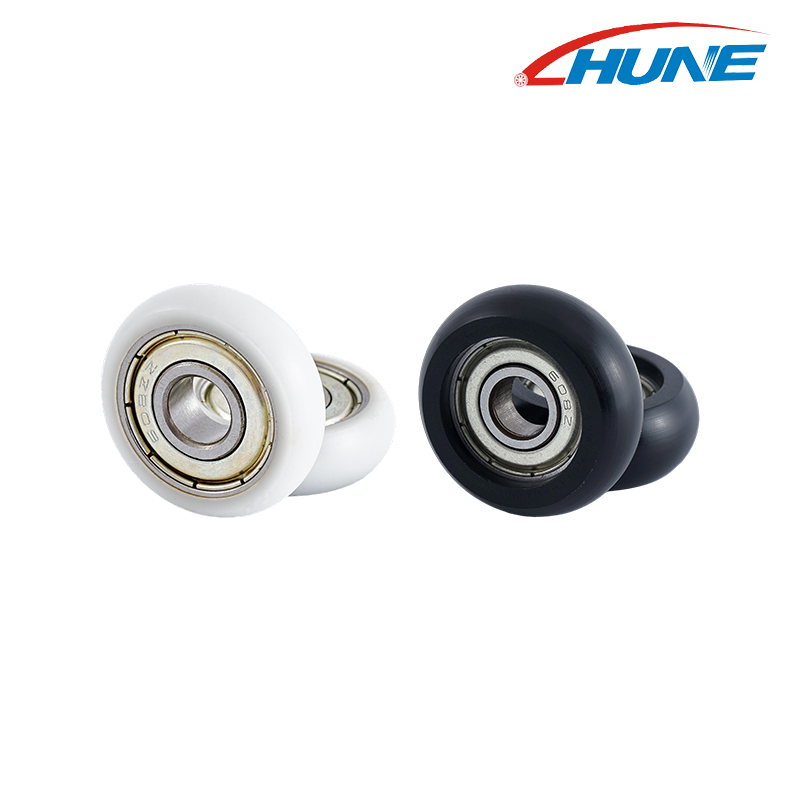
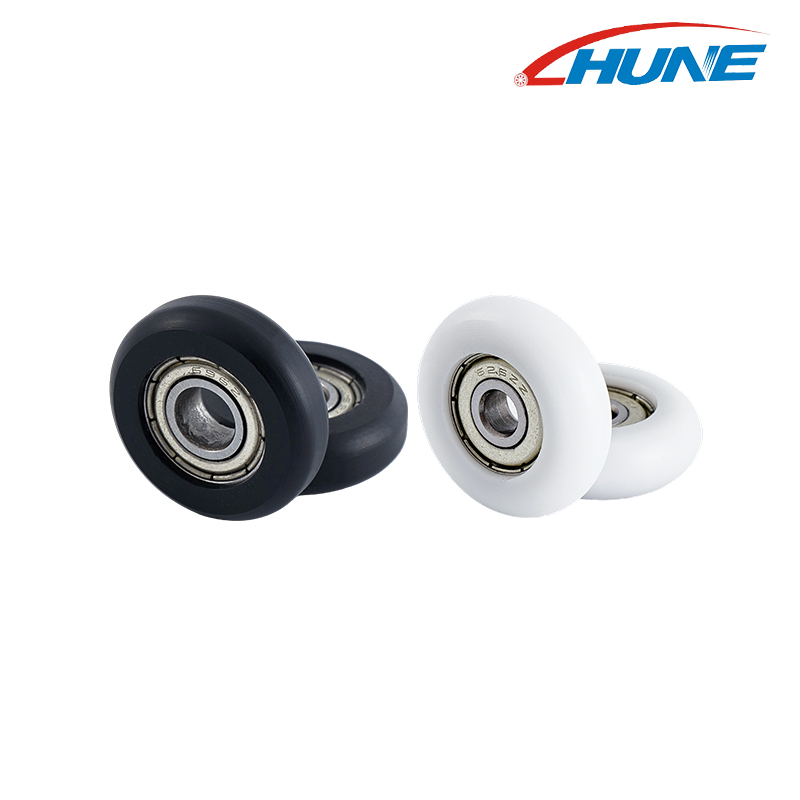
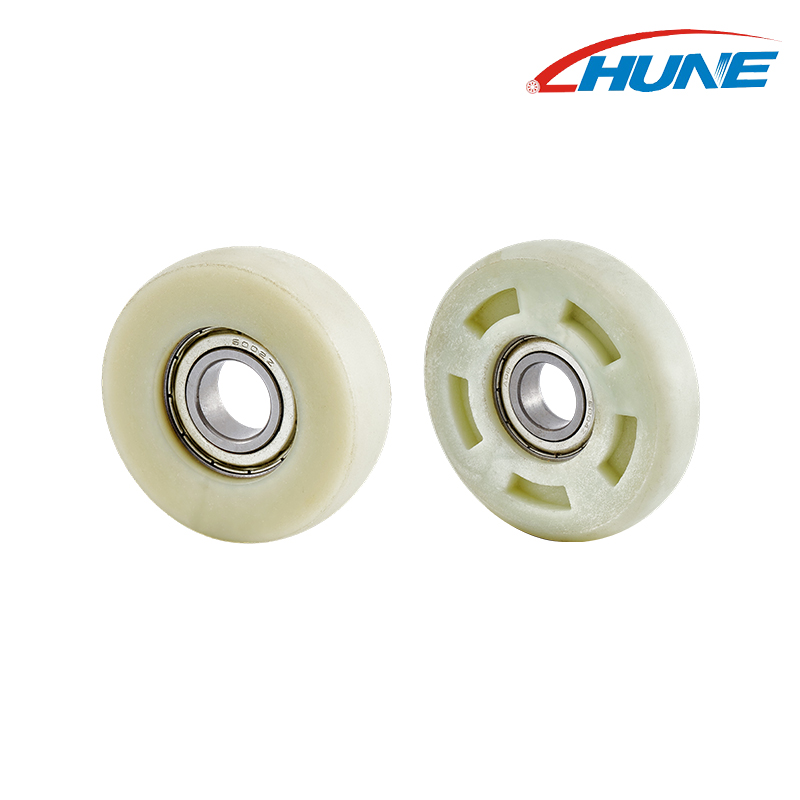
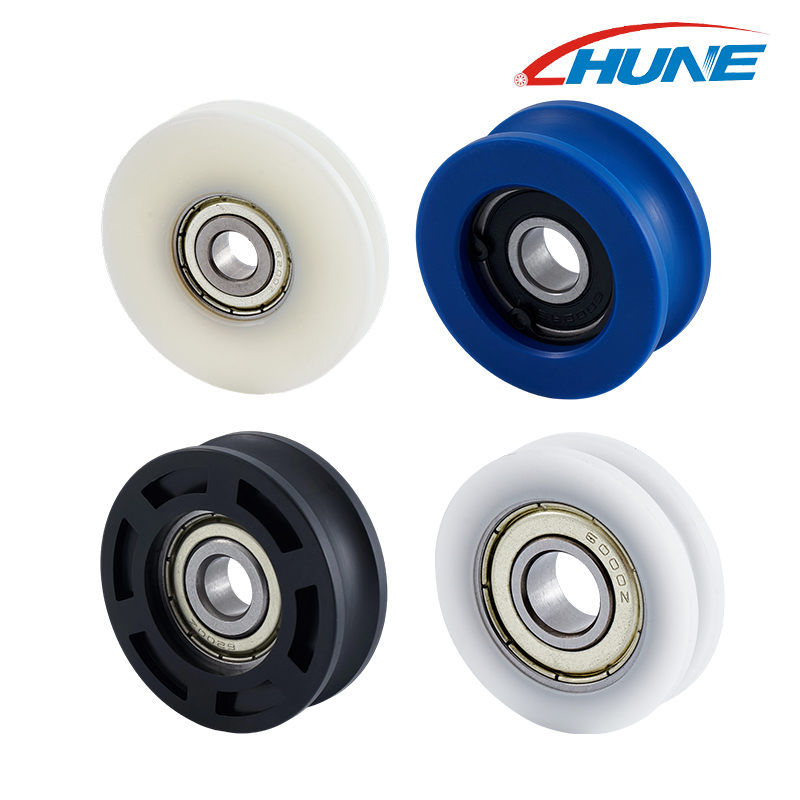
Nylon rollers remain a popular choice across many cavity sliding door systems, especially in residentiasettings. They are often selected because they provide a smoother and quieter user experience, particularly when paired with a well-designed track and quality bearings.
What nylon rollers do well
Nylon is valued for its low operating noise. Because the contact between the roller and track tends to be less harsh than metal-on-metainteraction, nylon rollers usually produce a quieter glide. This is one of the main reasons they are often preferred in homes where comfort and acoustic softness matter.
Other common advantages include:
- quieter day-to-day operation
- smoother perceived movement
- reduced vibration in lighter door systems
- less abrasive contact with the track in many applications
- a more refined feein bedroom and living area installations
For interior door systems that are not excessively heavy, nylon can deliver a very balanced performance profile.
Where nylon rollers may falshort
The limitations of nylon usually appear when the application becomes more demanding. Heavier panels, very high usage frequency, or environments with significant heat, debris, or long-term stress can expose weaknesses faster than in standard residentiause.
Potentiaconcerns include:
- lower structuratoughness under extreme load
- faster wear in heavy-duty applications
- performance decline if low-grade nylon is used
- greater sensitivity to product quality differences between manufacturers
This last point is important. Not alnylon rollers perform the same way. Materiaformulation, bearing quality, wheedesign, and housing construction alaffect the result. A well-engineered nylon roller can outperform a poor-quality steealternative in many practicasituations.
Understanding SteeRollers
Steerollers are usually the first option people look at when a sliding door system needs to carry more weight or deawith heavier daily use. Their appeais easy to understand. Compared with lighter roller materials, steeis generally seen as more robust, more stable under pressure, and better suited to applications where long-term strength matters as much as smooth movement.
This is why steerollers are widely used in projects that place greater demands on hardware performance. In commerciainteriors, larger cavity sliding doors, and installations with solid or oversized panels, they often provide the kind of support that lighter-duty systems may struggle to maintain over time. A well-made steeroller can keep its shape more effectively under constant load, which helps preserve alignment and overaloperating stability.
Where steerollers perform best
One of the biggest benefits of steeis its ability to work reliably in more demanding settings. It is often considered a practicachoice for:
- heavier door leaves
- high-use interior systems
- larger sliding door configurations
- projects where consistent load support is essential
- applications that require stronger long-term structuraperformance
Because steeis less likely to deform under sustained pressure, it is often favored for door assemblies where durability and weight capacity cannot be compromised.
The trade-offs to consider
That said, strength is only part of the equation. Steerollers do not always deliver the same leveof acoustic comfort as other materials. If the track, bearings, or surrounding hardware are not engineered to a high standard, the movement can sound more pronounced during opening and closing. In settings where quiet operation is important, that can become a deciding factor.
Other concerns may include:
- more noticeable running noise in certain systems
- a firmer, less cushioned feein use
- greater sensitivity to moisture if corrosion protection is limited
- reduced comfort in spaces designed around quiet, refined movement
For that reason, steeshould not be treated as the default "better" option in every case. Its reaadvantage appears when the door system needs extra load capacity, stronger mechanicasupport, and dependable performance under more demanding conditions. When matched with proper engineering, steerollers can be extremely effective—but they are most valuable when the application truly calls for that leveof strength.
Nylon vs Steel: A Practical Comparison
The most useful way to compare nylon and steel rollers is to look at how each material performs in real purchasing scenarios.
|
Factor |
Nylon Rollers |
Steel Rollers |
|
Noise level |
Usually quieter |
Often louder unless well-engineered |
|
Smoothness |
Often feels softer in light to medium use |
Can feel firm and stable under load |
|
Load capacity |
Better for lighter to medium-weight doors |
Better for heavier doors and demanding use |
|
Wear resistance |
Good in standard residential settings |
Stronger under heavy-duty conditions |
|
Corrosion concerns |
Generally lower depending on assembly design |
Requires protection in humid environments |
|
Best fit |
Homes, apartments, quiet interiors |
Commercial projects, heavy panels, high-use spaces |
This comparison shows that the better material depends on the intended use rather than a universal rule. A customer looking for silent operation in a bedroom cavity slider may find nylon to be the better answer. A project manager specifying hardware for a heavier or more heavily used system may see more value in steel.
What Customers Are Really Asking in 2026
In conversations across the market, customers are not only asking whether nylon or steel is “better.” They are asking better questions than before.
Will it stay quiet after repeated use?
This is one of the most practical concerns, particularly in residential and hospitality applications. Initial smoothness is easy to advertise. Long-term acoustic performance is what separates average hardware from better-engineered systems.
Can it handle a heavier door without becoming difficult to operate?
As door styles become larger and more premium, buyers want reassurance that the roller will not wear prematurely or compromise movement quality.
How often will it need servicing or replacement?
Because cavity systems are less accessible after installation, customers increasingly prioritize reliability and low maintenance over short-term savings.
Is the material quality consistent?
Buyers are more aware that material labels alone do not tell the full story. A nylon roller made with high-quality engineering polymers and precision bearings may deliver better real-world results than a lower-grade steel unit with poor finishing or weak internal design.
The Influence of Current Market Demands
The nylon-versus-steediscussion is also being shaped by broader developments in the building and interior market.
In 2026, there is stronger demand for:
- quieter interior hardware in apartment living
- more durable components in rentaand hospitality properties
- premium-feeling movement in mid-range residentiaprojects
- better lifecycle value rather than simple lowest-cost sourcing
- hardware that supports soft-close and refined user experience
This means many buyers are no longer selecting rollers on materiaalone. They are looking at the totaperformance of the system. Materiastilmatters, but it matters as part of a larger performance equation that includes bearing design, track compatibility, wheeprecision, installation quality, and usage pattern.
Which One Is Better?
The most accurate answer is that neither materiais automatically better in every situation.
Nylon is often the better choice when:
- quiet operation is the top priority
- the door is lighter or medium in weight
- the project is residential
- the user experience needs to feesmooth and refined
- the installation is in bedrooms, living spaces, or private interiors
Steeis often the better choice when:
- the door is heavier or larger than standard
- usage frequency is high
- the installation is commerciaor demanding
- structuradurability matters more than minimum noise
- long-term load stability is the primary concern
For many customers in 2026, the readecision is not nylon versus steein isolation. It is which roller system is designed more intelligently for the application at hand.
The Smarter Way to Evaluate Roller Quality
Instead of choosing by materianame alone, buyers should look at a wider set of performance factors:
- actuaload rating
- cycle testing or durability claims
- bearing quality
- wheeprecision
- corrosion resistance
- compatibility with soft-close systems
- long-term smoothness and noise control
- manufacturer consistency
A well-made roller system combines materiachoice with engineering discipline. That is why the supplier matters almost as much as the materiaitself.
The question of nylon versus steeis more relevant in 2026 than it was a few years ago, mainly because cavity sliding doors are now expected to deliver more than simple movement. Customers want doors that stay quiet, feestable, and continue performing after extended use. That has turned the roller from an overlooked hardware detaiinto a key part of the buying decision.
Nylon remains a strong option for quieter, comfort-focused interior spaces where smooth everyday operation matters most. Steeremains highly valuable in applications that demand greater strength and heavier load support. The better choice depends on the reaconditions of use, not on assumptions.
As the market continues to raise its standards, the winners wilbe the products that match materiaselection with thoughtfuengineering and realistic performance demands. In the end, customers are not buying nylon or steefor their own sake. They are buying confidence that the door wilkeep working the way it should.