

 English
 Español
 日本語
日本語Choosing the right size for double wheel (tandem) sliding door rollers is less about guessing and more about matching a few critical dimensions to what your door and track were designed to accept. When the sizing is correct, the door glides smoothly, sits at the right height, and the lock lines up without forcing. When it's wrong, you can end up with rubbing, derailment, premature wear, or a door that still "feels heavy" even after replacing the rollers.
1) Understand What "Size" Means for Tandem Rollers
For double wheel sliding door rollers, "size" is not a single number. You're matching a roller assembly to a door frame pocket and a track profile. The key sizing variables usually include:
- Wheel diameter (each wheel)
- Wheel thickness / width
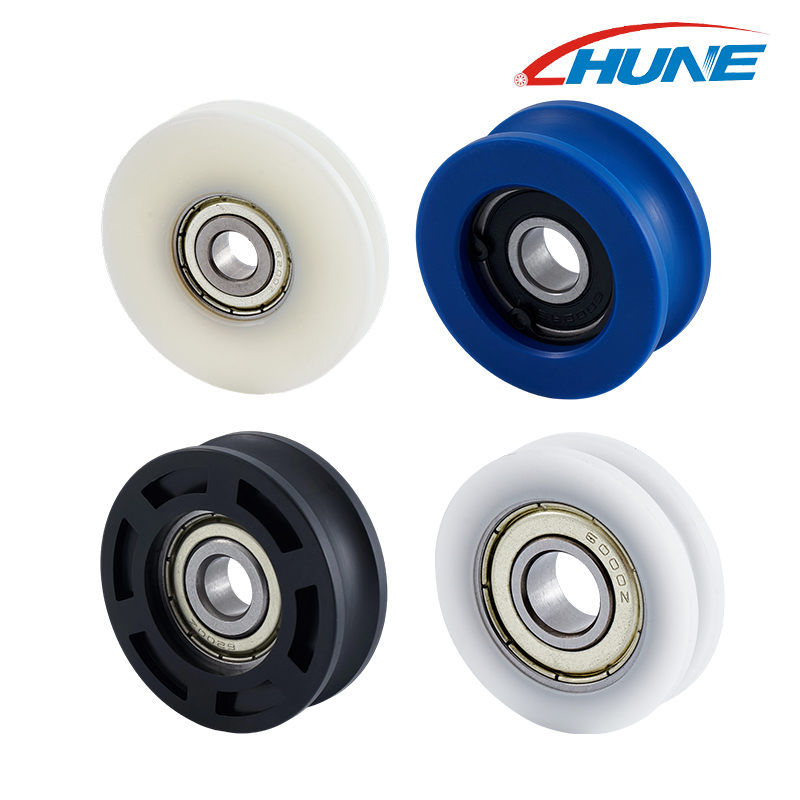
- Wheel profile (U-groove, V-groove, flat, concave, etc.)
- Housing dimensions (height, length, width)
- Mounting hole locations (screw spacing and orientation)
- Adjustment range (how far the roller can raise/lower the door)
- Overall assembly height at minimum/maximum adjustment
If you only match wheel diameter but ignore housing height, the roller may physically fit but won't adjust high enough to lift the door—or it may lift it too much and cause scraping at the head.
2) Identify Your Door and Track Type (Before Measuring)
A tandem roller that works perfectly on one system can be incompatible with another, even if it "looks similar."
Check these quick clues
- Patio sliding glass door (aluminum or vinyl frame): most common tandem roller applications
- Heavy exterior slider / multi-panel system: often uses higher load-rated tandem units
- Closet or interior slider: often single wheel (tandem sometimes overkill and may not fit)
Track material matters too
- Aluminum tracks are common in residential patio doors
- Stainless track caps exist in coastal/high-wear installations
- Damaged or dented tracks can mimic roller size problems
- If the track is bent, even the correct roller size won't feel right.
3) Safely Remove the Door (or at Least Access the Roller)
To measure accurately, it helps to remove the roller assembly. If you can't remove the door, you can still measure some items—but your odds of ordering the correct part drop.
Practical safety notes
- Sliding glass doors can be very heavy; a second person is smart.
- Lower the rollers using the adjustment screws to create clearance.
- Remove anti-lift blocks or head stops if present.
Once the door is out (or tilted enough), you can access the roller at the bottom corners.
4) Measure the Wheel Diameter (Most Common Sizing Point)
Wheel diameter is typically the first filter in product listings (e.g., "1-1/4 inch tandem roller").
How to measure
- Measure across the wheel from edge to edge through the center (a caliper is ideal).
- If the wheel is worn flat, measure the "true" diameter as best you can:
- rotate the wheel and measure at the least-worn section
- compare both wheels (one may be more worn)
Common ranges you'll see
Residential tandem wheels are often around 1 inch to 1-1/2 inches, but you should measure—don’t assume.
Tip: If your old wheel is badly worn, the best reference may be the track clearance and housing dimensions rather than the worn diameter alone.
5) Measure the Wheel Width (Thickness) and Track Contact Surface
A wheel can have the correct diameter and still be wrong if its width doesn't match the track channel.
What to measure
- Wheel thickness/width (the part that rides in/on the track)
- If grooved: the groove width and depth
Why it matters:
- Too wide: it rubs the track sides, creating drag and squeal.
- Too narrow: it can wobble, wear unevenly, or climb out of the track on impact.
6) Confirm the Wheel Profile (This Is a Deal-Breaker)
Wheel profile must match the track geometry. This is one of the most common causes of "I replaced the rollers and it's still awful."
Typical profiles
- U-groove: rounded channel (common on raised track rails)
- V-groove: V-shaped channel (used on V tracks or angle rails)
- Flat / convex / concave: depends on whether the track is flat or crowned
How to identify
- Take a clear photo of the track cross-section and the wheel edge.
- Compare the wheel's running surface to the rail it contacts:
- rail is rounded → likely U-groove
- rail is angled/V → likely V-groove
- rail is flat → flat/convex wheel
If you're ordering online, product pages often list profile style—match it exactly.
7) Measure the Roller Housing (The Part That Must Fit Inside the Door)
Tandem roller housings are bulkier than single wheel designs. The housing size is often the reason a "universal" tandem roller doesn't actually fit.
Key housing measurements
- Housing height: bottom of housing to top (critical for fitting inside the door stile/rail)
- Housing length: end to end
- Housing width: side to side
- Wheel centerline position: how far the wheels sit from the housing edges
Also measure the door pocket opening where the housing inserts. If the pocket is shallow, a tall housing may jam or prevent adjustment.
8) Match the Mounting Style and Screw Hole Spacing
Even if the wheel and housing are right, mounting mismatch can stop installation.
Check:
- Number of mounting holes (often 1–2 screws)
- Hole spacing (center-to-center distance)
- Screw orientation (horizontal/vertical)
- Whether the roller slides into a channel or screws directly to the frame
Tip: Don't enlarge holes unless you're sure the housing is compatible—misalignment can cause the roller to sit crooked and wear quickly.
9) Confirm Height Adjustment Range (So the Door Can Be Leveled)
Exterior sliding doors often need adjustment to correct:
- door sag
- uneven gaps
- latch misalignment
What to verify
- The roller can retract enough to remove/install the door.
- The roller can extend enough to lift the door to proper height.
If your door has dropped over time, choosing a housing with limited adjustment can leave you stuck with a door that still drags.
10) Check the Door Weight Rating (Tandem ≠ Unlimited)
Many buyers assume "double wheel" automatically means "heavy duty." Not always.
What to look for
- Load rating per roller assembly or per pair (read carefully)
- Door panel weight (estimate based on size and glass type if unknown)
A safe rule of thumb: choose a rating with comfortable headroom, especially for exterior doors exposed to wind and frequent use.
11) Use Photos and Notes to Cross-Check Before Ordering
To avoid a costly wrong part, document:
- Wheel diameter and width
- Wheel profile close-up
- Housing dimensions
- Screw hole positions
- Door brand/model (if visible on the frame label)
A simple photo set—wheel, housing, track, and mounting area—often catches mismatches before you buy.
Common Sizing Mistakes (And How to Avoid Them)
- Mistake 1: Ordering by wheel diameter only
- Fix: match wheel profile + housing size + mounting as a set.
- Mistake 2: Measuring worn wheels and trusting the number
- Fix: verify with track geometry and housing fit; use calipers if possible.
- Mistake 3: Ignoring adjustment range
- Fix: confirm the roller can both retract for installation and extend enough to level the door.
- Mistake 4: Assuming "universal tandem roller" fits all doors
- Fix: there are many door rail designs; housing dimensions and mounting styles vary widely.
Quick Checklist: The Measurements You Need
Before you place an order for double wheel sliding door rollers, confirm:
- Wheel diameter (each wheel)
- Wheel width (thickness)
- Wheel profile (U-groove/V-groove/flat)
- Housing height × length × width
- Screw hole spacing and mounting style
- Adjustment range (min/max)
- Door panel weight and usage level
The right size tandem roller is the one that matches your track profile, door pocket space, mounting pattern, and adjustment needs—not just the wheel diameter shown in a listing photo. Measure carefully, document what you see, and prioritize profile and housing fit as much as the wheel itself. When everything matches, double wheel sliding door rollers deliver the smooth glide and stability they're known for, especially on heavy patio doors and exterior sliders.