

 English
 Español
 日本語
日本語A glass sliding door has one job: move like it's floating. When it doesn't—when it scrapes, rattles, shudders over tiny bumps, or requires a two-handed shove—the door stops feeling like a design feature and starts acting like a chore. The surprising truth is that the "effortless" part isn't mainly about the glass panel or the track. It's about the rollers, and specifically how the roller material behaves under light-to-moderate loads.
Plastic rollers (more accurately, polymer wheels—often nylon, POM/acetal, or reinforced engineering plastics) have become a go-to choice for many glass sliding systems because they deliver a combination that's hard to beat: smooth rolling, quieter operation, track friendliness, and consistent feel over time. They aren't the right answer for every door in every environment, but for many interior and light commercial applications, they're exactly what makes the door glide like it should.
1) "Effortless" Is Really About Controlling Friction and Vibration
When people describe a door as smooth, they're reacting to two sensations:
- Low, consistent resistance (the door moves with minimal push)
- Low noise and low vibration (no rattles, no grinding, no "zipper" sound)
A roller system can have low friction but still feel terrible if it transmits vibration—every tiny defect in the track becomes a bump you can feel and hear. Plastic wheels help because they tend to reduce both the amount of friction and the harshness of contact.
2) Plastic Rolls Quietly Because It Damps Micro-Impacts
Tracks aren't perfect. Even good ones have small seams, dust, minor dents, or changes in finish. A very hard wheel (especially metal) can "announce" these imperfections with clicking, ringing, or chatter.
Plastic wheels are slightly more compliant. That tiny flexibility lets them:
- Absorb micro-impacts rather than bouncing over them
- Reduce the sharp, high-frequency vibrations that turn into noise
- Maintain steadier contact with the rail surface
For glass doors, that matters more than you'd think. Glass doesn't absorb vibration much—it transmits it. So a roller that softens the contact can make a premium-looking door sound premium too.
3) Plastic Is Friendlier to the Track (and That Protects Smoothness)
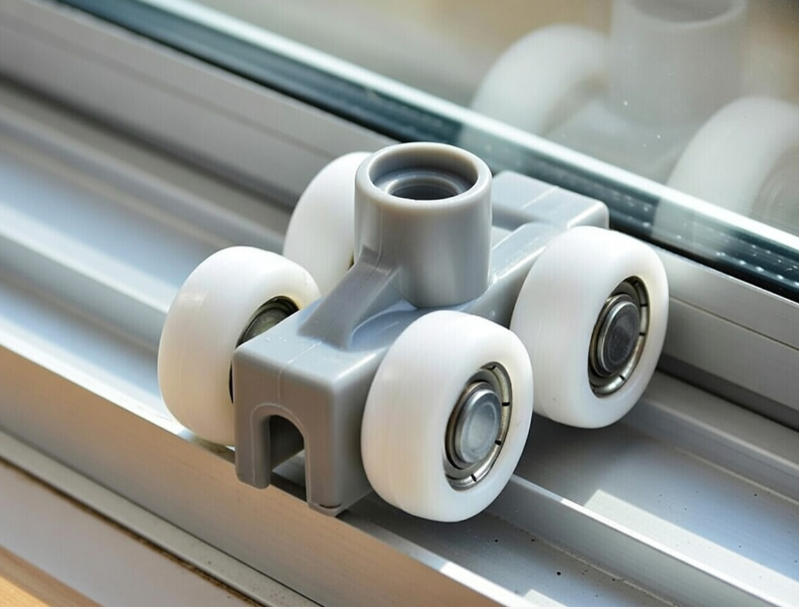
Many glass sliding systems—especially interior ones—use aluminum tracks or coated rails. These tracks can be durable, but they're not always designed for metal-on-metal punishment.
Plastic rollers tend to be gentler on track surfaces because they reduce abrasion and gouging. That creates a virtuous cycle:
- The roller wears less aggressively on the track
- The track stays smoother for longer
- The door keeps gliding smoothly instead of slowly getting rougher over time
In practical terms: the system ages better. You're less likely to reach that annoying point where the door "used to be smooth" but now feels gritty.
4) The "Glide" Feeling Comes From Consistency, Not Just Low Resistance
People often assume the best roller is the one with the absolute least friction. In reality, an effortless feel comes from consistent rolling—the resistance stays uniform from start to stop.
Plastic wheels help create that consistency in a few ways:
- They're more forgiving of minor misalignment
- They tolerate small variations in track geometry without binding
- They reduce stick-slip behavior
This is especially useful in real-world installations where the track might be slightly out of level, the door might not be perfectly plumb, or the frame has tiny dimensional variations.
5) Good Plastic Rollers Still Use Bearings—That's a Big Part of the Magic
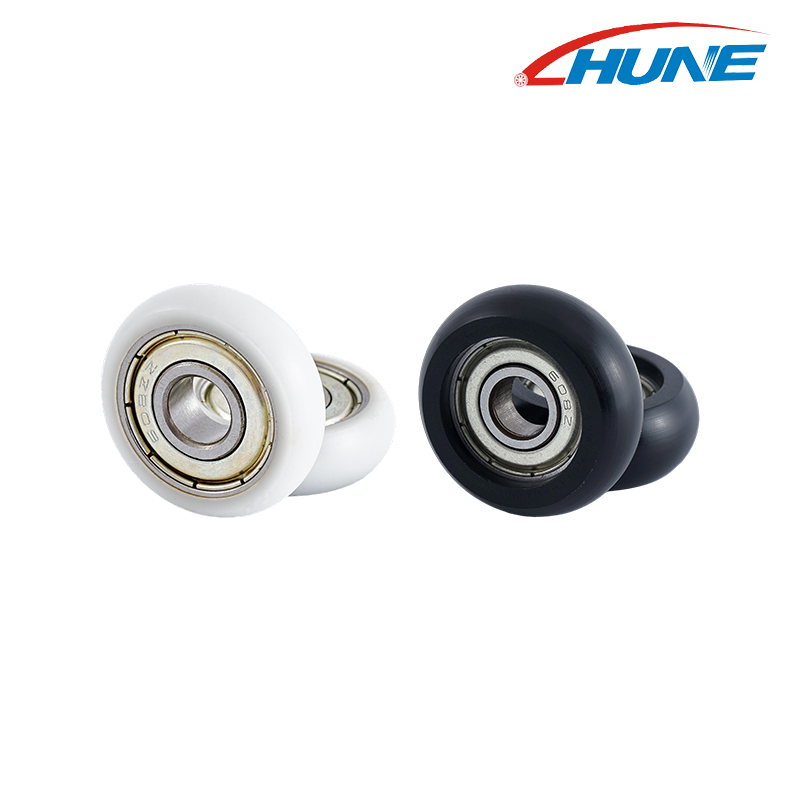
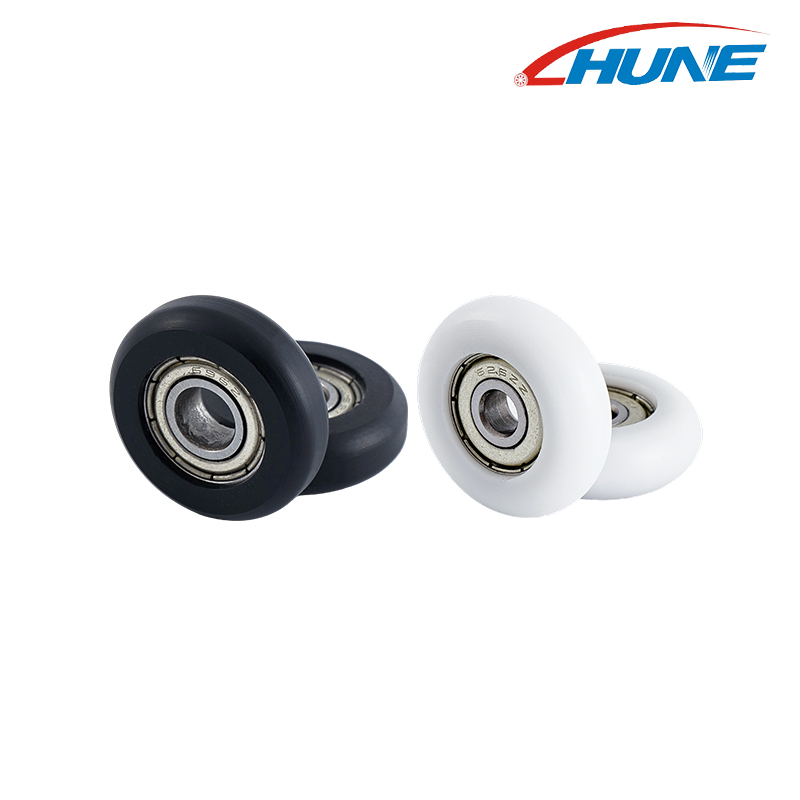
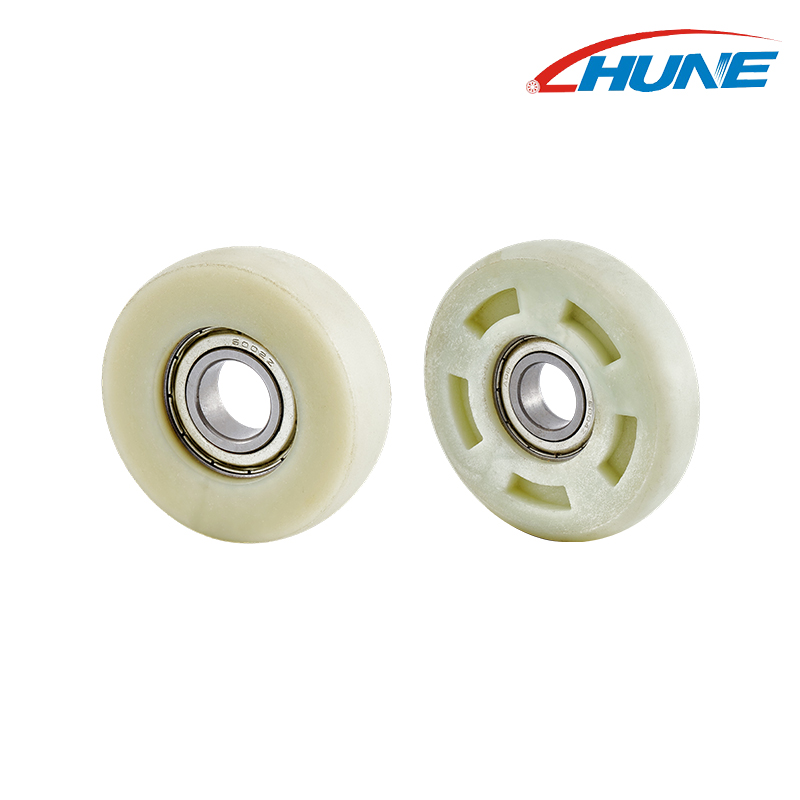
A key point: the "plastic" part is typically the wheel, not the entire rolling mechanism. High-quality systems combine a polymer wheel with:
- Ball bearings (often sealed)
- A stable axle and housing
- Proper spacing and guidance so the wheel tracks correctly
That means you get the best of both worlds: bearings for low rolling resistance, plastic for quiet contact and track protection. If you've ever experienced a plastic wheel that squeaks or drags, it's usually not because "plastic is bad"—it's because the bearing, axle, or wheel geometry is poor.
6) Plastic Performs Well in Humidity and Cleaning Environments
Glass doors show up in places that get cleaned a lot: bathrooms, offices, partitions, display areas. Moisture and cleaning chemicals can be hard on some materials.
Polymer wheels offer natural advantages:
- No rust on the wheel material
- Less risk of surface pitting that can create noise and rough rolling
- Stable performance in normal indoor humidity
(Important nuance: bearings and metal brackets still matter. A corrosion-resistant wheel won't save a low-grade bearing from moisture. But the wheel material itself is rarely the weak link.)
7) Design Flexibility: Better Fit in Slim, Modern Door Systems
Modern glass sliding doors often aim for minimal visible hardware. That means compact tracks and tight tolerances.
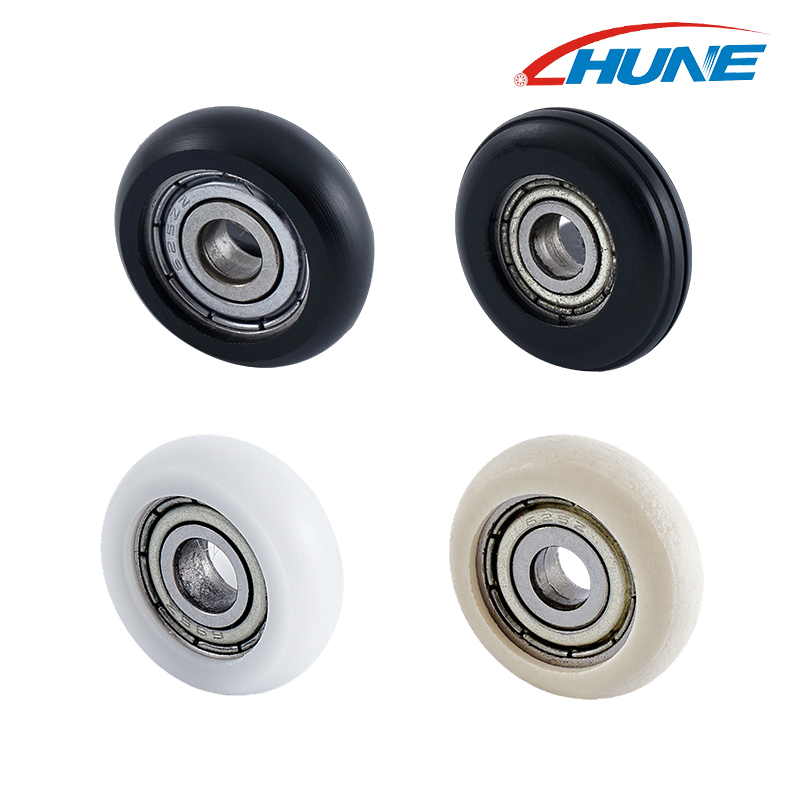
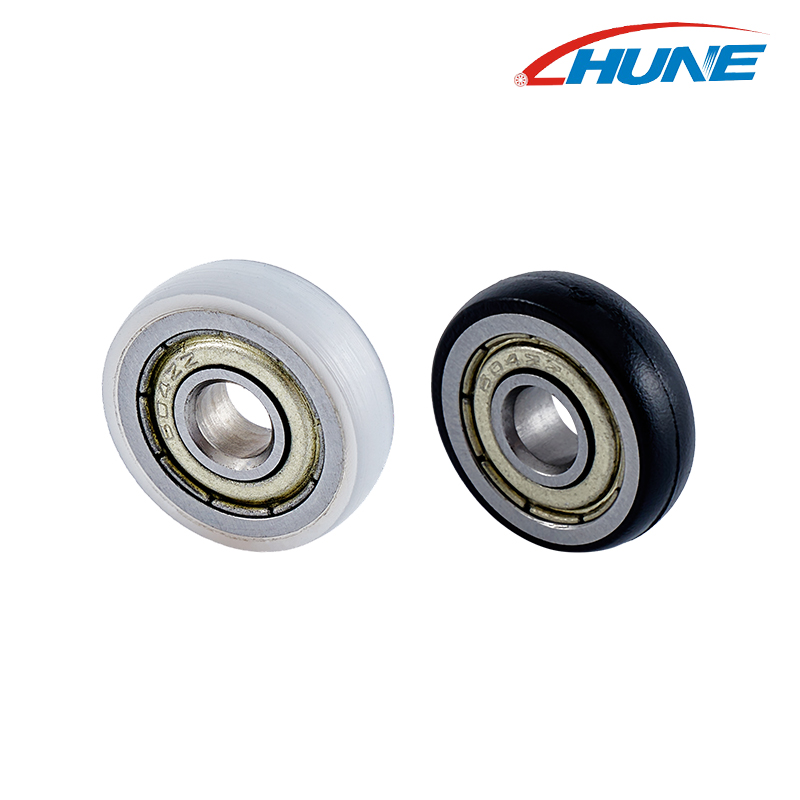
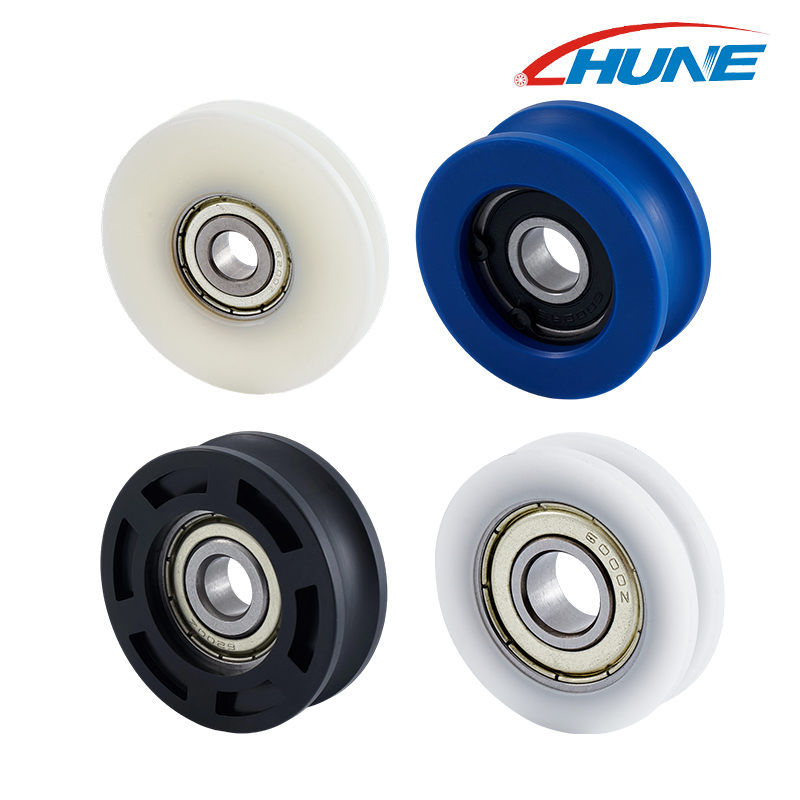
Plastic wheels can be engineered in many profiles and sizes—U-groove, V-groove, flat, concave—to match a specific rail design without adding bulk. This flexibility helps manufacturers create systems that are:
- Slimmer and cleaner looking
- Easier to adjust
- Less prone to rattling (because the wheel profile can match the track more precisely)
If the wheel and track "nest" properly, the door feels guided and stable—another ingredient in effortless glide.
8) When Plastic Rollers Are the Wrong Choice (So You Don't Overpromise)
Plastic rollers excel in many glass sliding applications, but they're not universal heroes. They may be a poor fit when:
- The door is very heavy (large glass panels, high-traffic commercial partitions)
- The environment includes high heat or harsh industrial chemicals
- The system sees continuous heavy cycles with high impact loads
- The track is heavily damaged (which will defeat almost any roller)
In those cases, you might need reinforced wheels, specialty polymers, or a different wheel material altogether. The "effortless glide" goal still applies—the spec just changes.
9) What to Look For in Plastic Rollers That Truly Glide
If you want the smooth experience people associate with premium sliding doors, focus on these practical indicators:
- Sealed bearings for dust/humidity resistance
- Appropriate wheel material (POM/acetal and quality nylon are common for smooth rolling)
- Correct wheel profile for the track (mismatch causes noise and premature wear)
- Load rating with margin (under-specced rollers flatten, bind, or wear fast)
- Adjustability to fine-tune door height and alignment
A good plastic roller doesn't feel "plastic." It feels quiet, stable, and almost frictionless.
A glass sliding door feels truly effortless when its roller system skillfully balances friction, vibration, alignment, and long-term wear. Hune, a specialized manufacturer of plastic glass door rollers, has perfected this balance for a wide range of interior and light commercial applications. Our plastic rollers stand out because they deliver exceptionally quiet operation, are gentle on tracks, and remain forgiving even with minor misalignments or installation tolerances — all while maintaining very low rolling resistance when equipped with high-quality bearings.
When engineered and installed correctly, the result is exactly the experience users desire: a door that glides smoothly with the lightest touch, stays consistently fluid year after year, and moves with the refined, almost silent grace that matches its modern, elegant appearance.
Hune is dedicated to creating precisely this kind of solution — quiet, reliable, durable, and excellent value — so every push or pull feels effortless and premium.