

 English
 Español
 日本語
日本語Sliding doors look simple, but they behave like small machines: weight, friction, vibration, alignment, dirt, moisture, and daily user habits all collide at one tiny point—the bottom roller. In OEM projects, choosing the wrong bottom roller doesn't just cause complaints like "it's hard to slide." It can trigger warranty returns, track wear, rattling noise, door sag, and repeated service calls that quietly eat your margin.
Choosing the right OEM sliding door bottom roller is less about finding a "strong" part and more about selecting a matched system: door weight + track geometry + environment + expected cycles + manufacturability.
1) Start With the System, Not the Roller
A bottom roller only performs well when the surrounding system is defined. Before you compare catalogs, lock down these basics:
- Door leaf weight (including glass, frame, inserts, handles, and any accessories)
- Door width/height (affects moment loads and wobble)
- Number of rollers per leaf (2 is common; 4 for stability on larger panels)
- Track type and material (aluminum, stainless, coated steel, polymer insert)
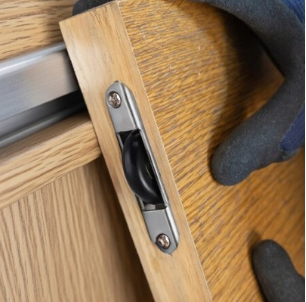
- Mounting style (surface mount, mortised, bracket, hidden carriage)
- Travel length and stop style (soft-close, bump stop, magnetic catch)
- Environment (humidity, cleaning chemicals, sand/dust, temperature range)
In practice, many "roller failures" are track failures (bent lips, debris traps, poor drainage) or alignment failures (cabinet out of square, frame twist). If you design the roller without controlling the system, you're gambling.
2) Specify Loads the Way the Door Actually Uses Them
OEM specs often list a single number: "load capacity per roller." That's necessary—but not sufficient.
Key load concepts to include in your spec
- Static load: the door's weight distributed across rollers at rest
- Dynamic load: extra load during motion, starting/stopping, and impacts at end stops
- Eccentric/moment load: load increase on one roller when the door is pushed at a corner
- Misalignment load: additional drag and side-loading when track/door isn't perfectly straight
Practical rule (non-formula version)
If your door weighs 40 kg and uses two rollers, don't spec "20 kg per roller" and call it done. Real use almost never distributes perfectly. Give margin for:
- user slamming,
- uneven floors/cabinet sag,
- manufacturing tolerance stack-ups,
- debris in track.
A conservative OEM approach is to design so the roller runs comfortably below its rated limit in normal use, not at the edge.
3) Match Wheel Profile to Track Geometry (This Is Where Smoothness Lives)
Wheel profile mismatch is one of the fastest paths to noise, drag, and premature wear.
Common wheel/track pairings
- Flat wheel + flat track: simple, forgiving, but can wander laterally
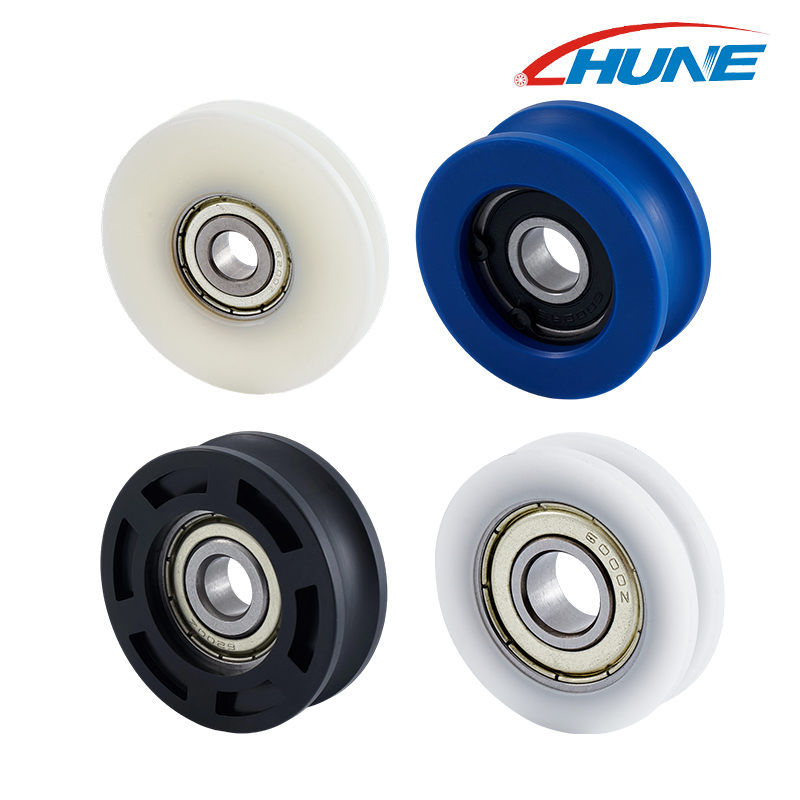
- Concave/U-groove wheel + round rail: self-centering, smooth guidance
- V-groove wheel + V-track/angle rail: precise guidance, sensitive to debris and denting
- Flanged wheel + flat track: lateral control, can be noisy if flange rubs
OEM tip
Ask for a cross-section drawing of the track and wheel together (or build one in CAD). You want:
- stable contact,
- minimal edge riding,
- clearance where debris might pass,
- no "two-point" rubbing that acts like a brake.
4) Choose Wheel Material Based on Noise, Wear, and Environment
Wheel material is not just a cost decision; it's a performance decision.
Quick material guidance (typical OEM use cases)
- POM/Acetal: low friction, stable, good wear, smooth feel
- Nylon (PA): tough, good impact resistance; moisture uptake can slightly change dimensions
- TPR/Rubberized: quietest, but can add rolling resistance and attract grime
- Steel/Stainless: high durability, higher noise, can wear softer tracks; good for abrasive environments
- Reinforced polymers: improved load and wear; often best for mid-to-high cycles with noise control
Environment checks
- Humid/bathroom: prioritize corrosion-resistant hardware and stable polymers
- Dust/sand: prioritize sealed bearings and debris-tolerant track profile
- Cleaning chemicals: confirm chemical compatibility (especially for rubberized wheels)
5) Don't Treat Bearings as an Afterthought
Two rollers can use the same wheel material and still feel completely different depending on the bearing and axle design.
Bearing options you'll see
- Plain bushing (sleeve): cheaper, adequate for light duty; can squeak and wear faster
- Ball bearing: smoother rolling, better for higher cycles and heavier doors
- Sealed ball bearing: best for dust/humidity; slightly higher cost
OEM specification details that matter
- Bearing sealing type (open, shielded, sealed)
- Axle material and plating (corrosion resistance)
- Lubricant type (if any) and temperature range
- Radial play limits (too much play = rattle; too little clearance = binding)
If the product is meant to feel "premium," bearings are usually where the premium feel is born.
6) Prioritize Adjustability (But Keep It Manufacturable)
Bottom rollers often need height adjustment to compensate for:
- floor unevenness,
- cabinet/frame tolerances,
- door warp,
- installation variation.
What "good adjustment" looks like
- predictable adjustment range (enough to correct real-world conditions)
- adjustment that holds under vibration (anti-backout design)
- access that installers can reach without removing the whole door
- markings or detents that help repeatability
But don't overcomplicate it: fancy adjustment mechanisms can increase assembly time and failure modes. The OEM sweet spot is simple, stable, and easy to inspect.
7) Think About Debris Management Like a Field Engineer
Bottom tracks collect everything: hair, dust, crumbs, grit, packaging foam. A roller that works in a clean lab can fail in a real home.
Design/spec tips
- Select wheel profiles that are less likely to "plow" debris into jams
- Ensure track has a path for debris to move aside rather than compress
- Consider slightly larger wheel diameter where possible (often rolls over small debris better)
- Use sealed bearings in dusty or wet markets
- If your track design naturally traps dirt in the running line, no roller will save you long-term.
8) Validate Noise and Feel With Simple, Repeatable Tests
OEM roller selection isn't complete until it's tested in a representative assembly. You don't need a fancy lab to catch the big issues early.
Simple qualification tests
- Push force test: measure the force to start motion and keep motion (dry and after dust exposure)
- Cycle test: thousands of open/close cycles with periodic inspections
- Misalignment tolerance test: simulate slight track/door skew and evaluate sticking
- Contamination test: add standardized dust/grit and re-test force/noise
- End-stop impact test: repeated closes into the stop to see if the roller flats, loosens, or rattles
Track "feel" is subjective, but push force and noise levels are measurable. Combine both to guide decisions.
9) Control Quality and Consistency (The OEM Pain Point)
One reason OEM projects struggle is variation: wheel diameter tolerance, bearing play, plastic shrinkage, or inconsistent plating. A roller that's “fine” at prototype can become noisy or sticky in mass production.
Quality controls worth specifying
- Wheel diameter tolerance and roundness
- Axle hardness and surface finish
- Bearing brand/spec equivalency rules
- Incoming inspection plan (AQL) for critical dimensions
- Traceability for batches (especially for bearings and molded wheels)
Consistency is often more important than absolute performance, because inconsistency creates random customer experiences—and random returns.
10) Ask the Right Questions to Your Supplier (Short, Powerful List)
When you're choosing an OEM bottom roller, these questions cut through vague marketing:
- What is the tested load rating and under what conditions (track type, speed, cycles)?
- What wheel material grade is used (generic "nylon" vs specific resin)?
- Is the bearing sealed? What is the bearing spec and allowable substitute?
- What are the critical tolerances: wheel diameter, concentricity, bearing play?
- What failure modes have you seen in the field, and what changes fixed them?
- Can you provide cycle test data, salt spray results (if relevant), and chemical compatibility notes?
Suppliers who can answer precisely usually build parts that behave precisely.
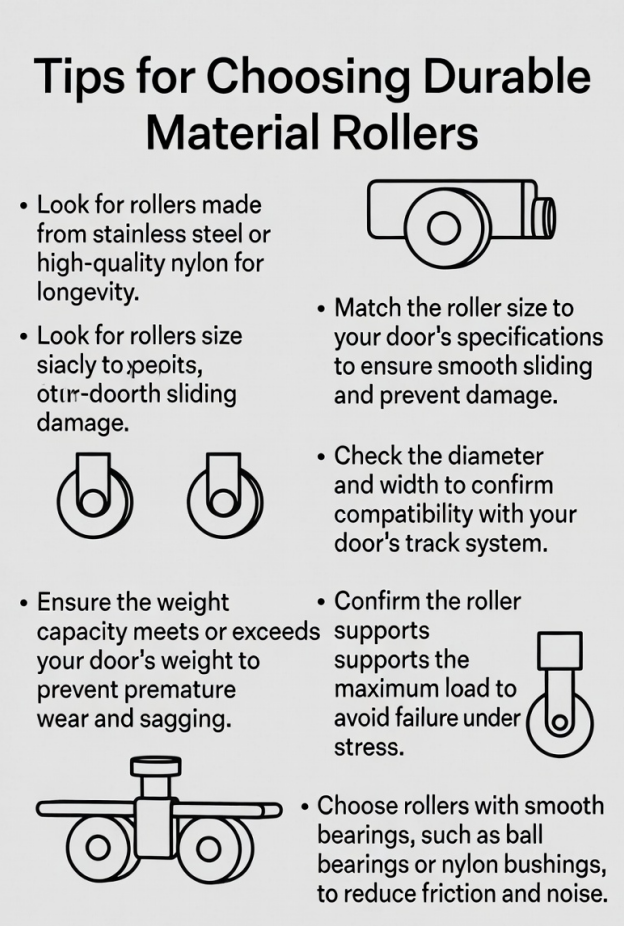
|
Tip |
Why It Matters |
What to Check |
|
Choose Durable Material |
Rollers last longer and handle weight better |
Look for stainless steel or high-quality nylon |
|
Match Roller Size |
Ensures smooth sliding and prevents damage |
Check diameter and width specifications |
|
Check Weight Capacity |
Prevents premature wear and sagging doors |
Confirm max load the roller can support |
|
Look for Smooth Bearings |
Reduces friction and noise during sliding |
Check if roller has ball bearings or nylon bushings |
|
Consider Easy Installation |
Saves time and avoids installation errors |
Check mounting type and included hardware |
Selecting the right OEM bottom roller for sliding doors is a true system-level decision. The best choices come from carefully evaluating these key aspects:
Real-life operating loads — not just the door's static weight, but dynamic forces from opening/closing, slight misalignment, occasional rough handling, and long-term daily use.
Wheel profile perfectly matched to track geometry — this single factor determines how smoothly and stably the door runs, how quietly it moves, and how well it resists derailment.
Material and bearing design tailored to the environment — choosing the right combination for noise reduction, wear resistance, corrosion protection, and performance in humid, dusty, or temperature-varying conditions.
Built-in adjustability and tolerance to real-world imperfections — rollers that allow easy height/alignment tuning during installation and that continue to perform well even when minor dust, debris, or frame settling occurs.
Uncompromising manufacturing consistency — so every single roller delivers the same smooth, reliable feel as the best prototype, batch after batch.
When these elements are correctly addressed, the roller itself "disappears" in the best way possible: the door glides with almost no effort, stays whisper-quiet, feels rock-steady, and performs reliably for years—leaving your warranty and support channels refreshingly quiet.
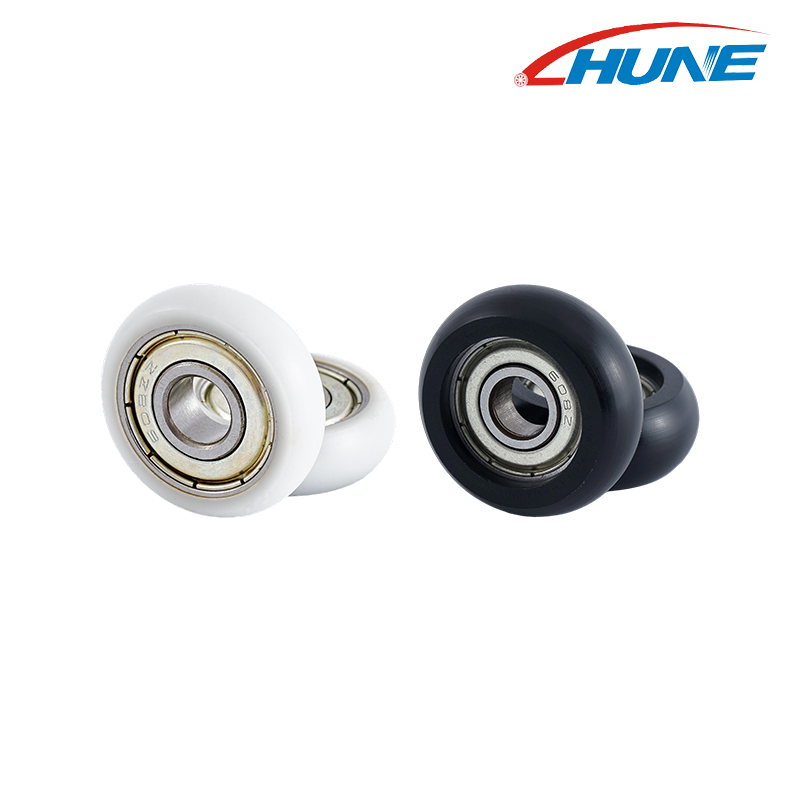
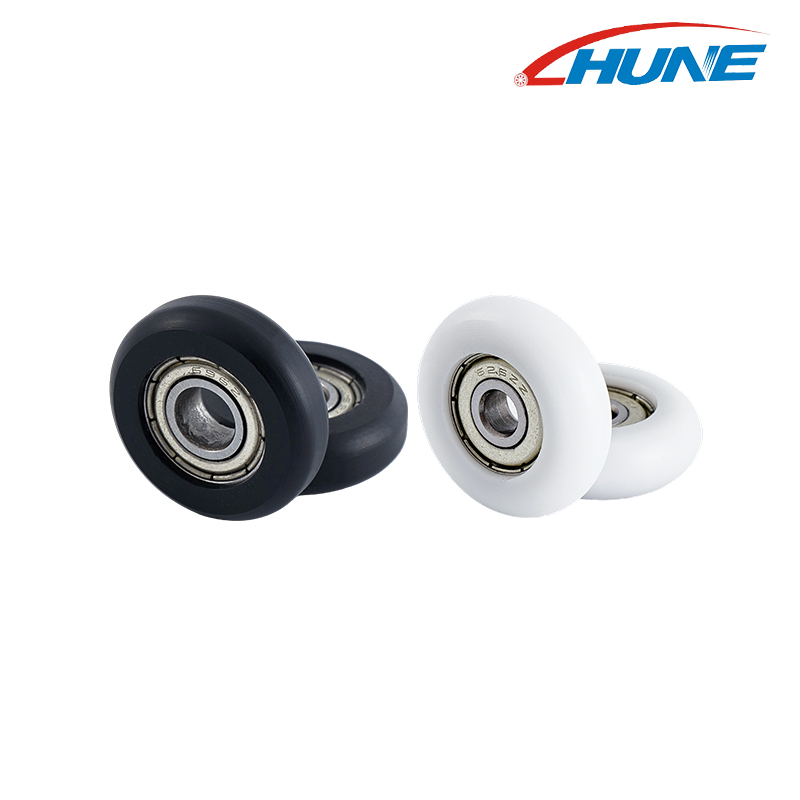
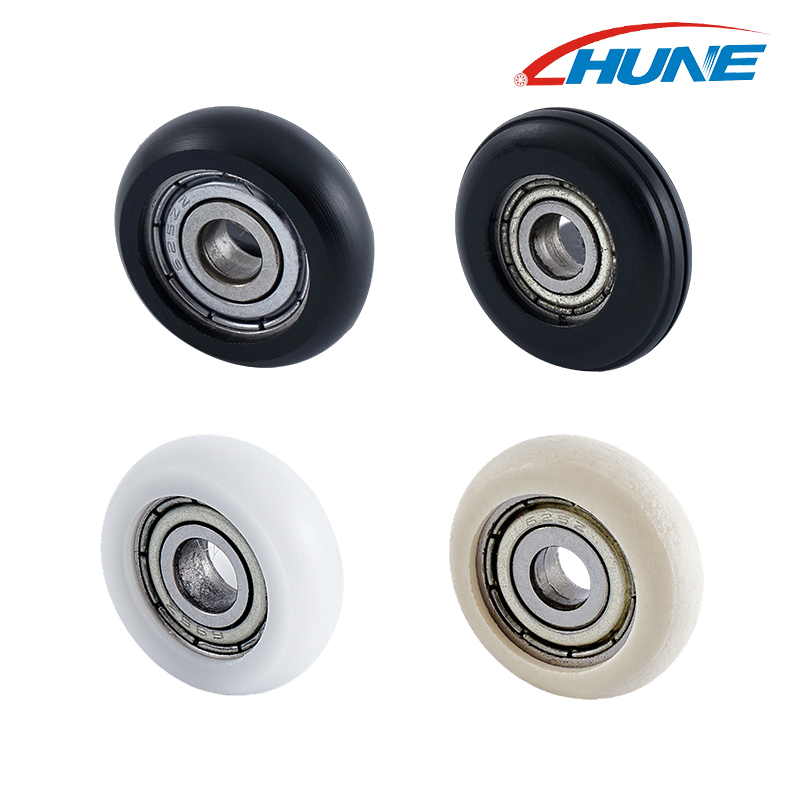
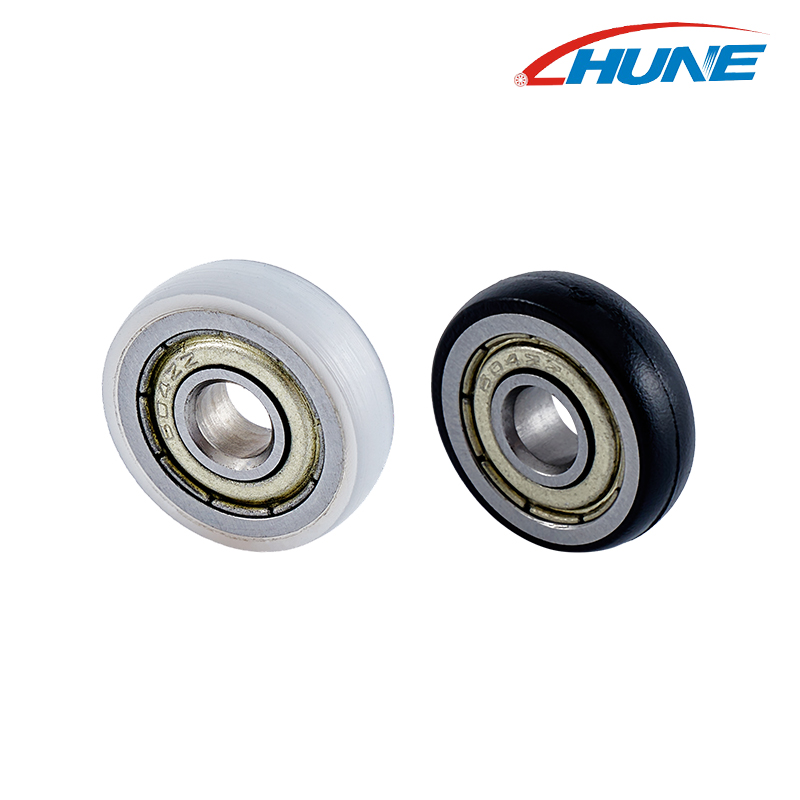
Hune Sliding Door Bottom Rollers are engineered and produced with exactly this holistic approach in mind, so every installation delivers the smooth, dependable, low-maintenance sliding experience users expect and love.