

 English
 Español
 日本語
日本語Stainless steel tandem rollers are one of those upgrades you only notice after you've lived with them: the door feels steadier, it glides with less effort, and you stop fighting that annoying "catch" that shows up when a track isn't perfectly clean. If you're dealing with a heavy sliding door—or you simply want hardware that holds up in real weather and real usage—tandem rollers in stainless steel are often the most reliable path.
What Are Stainless Steel Tandem Rollers?
A tandem roller assembly uses two wheels on one housing (instead of one). That simple change spreads the load and stabilizes the door as it moves.
Most stainless steel tandem rollers include:
- Dual stainless wheels (sometimes with a specific groove/profile)
- Ball bearings (better rolling efficiency than plain bushings)
- An adjustable housing (to raise/lower the door for alignment)
- Mounting points designed for common sliding door frames (patio doors, wardrobe doors, commercial sliders)
Think of it like switching from a single caster to a small set of wheels: the door tracks straighter, "bridges" minor imperfections, and resists wobble.
Why Choose Stainless Steel Tandem Rollers? Top Benefits
Stainless steel is already a strong material choice for exterior and heavy-duty sliding doors. Combining it with a tandem design is where the day-to-day improvement shows up.
1) Better load distribution for heavy doors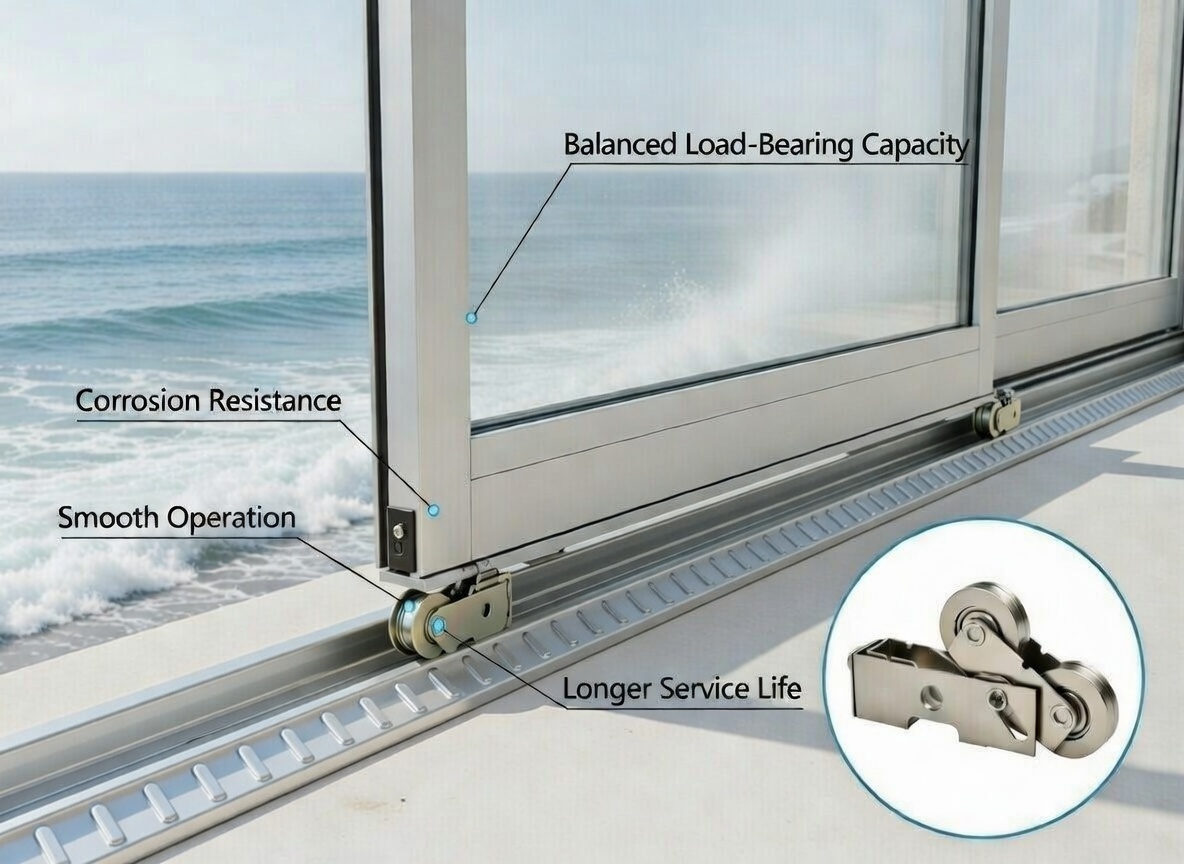
Two wheels share the weight, which helps reduce:
- Flat spotting
- Premature wheel wear
- Door sagging over time
- Uneven pressure that chews up the track
This matters most for large glass patio doors, multi-panel sliders, and commercial doors that get constant use.
2) Smoother rolling on imperfect tracks
In real homes, tracks collect dust, pet hair, sand, and tiny stones. A tandem setup is more forgiving because:
- The assembly stays more stable over the contact area
- Minor dents or track seams feel less "jolting"
- The door is less likely to bind when the track isn't spotless
3) Stronger resistance to corrosion and harsh environments
Quality stainless components help in:
- Coastal regions (salt in the air is relentless)
- High-humidity areas
- Exterior openings exposed to rain splash or condensation
Important note: "stainless" isn't a single grade. If corrosion resistance is the main goal, confirm the stainless grade and whether the bearings are protected/sealed.
4) Reduced wobble and better door alignment
A single-wheel roller can allow more rocking, especially if the frame is tall or the door is slightly out of square. Tandem rollers improve stability by:
- Increasing the effective wheelbase
- Reducing lateral play
- Maintaining straighter travel along the track
The result is often less rubbing at the jamb and fewer alignment adjustments over time.
5) Longer service life (and fewer "mystery problems")
Many sliding door complaints—dragging, scraping, "it gets stuck in the same spot"—are wear-related. Tandem stainless assemblies tend to last longer because they handle load and debris better, especially when paired with ball bearings.
Stainless Steel Tandem vs Single Rollers: Quick Comparison
Here's what you're typically trading off when you upgrade.
|
Feature |
Stainless Tandem Rollers |
Single Rollers (Steel or Nylon) |
|
Load handling |
Excellent (weight shared) |
Moderate to high (depends on design) |
|
Smoothness on rough tracks |
Better |
More sensitive to dents/debris |
|
Door stability |
Higher |
Can wobble more |
|
Track wear risk |
Moderate (hard wheel) |
Nylon is gentler; metal varies |
|
Cost |
Higher upfront |
Lower upfront |
|
Best for |
Heavy doors, exterior use, frequent traffic |
Light/medium doors, quiet residential priorities |
Practical takeaway: For heavy or frequently used doors, tandem is often the "buy once, cry once" choice.
What to Check Before You Buy (So the Roller Actually Fits)
Rollers fail early most often because they're mismatched—not because the material was wrong.
Measure and confirm these basics
- Wheel diameter (match existing or verify clearance)
- Wheel profile/groove (U-groove, V-groove, flat, etc.)
- Housing dimensions (height, width, screw hole spacing)
- Adjustment range (enough to level the door)
- Door weight rating (per roller pair / per assembly)
Pay attention to bearings
For exterior or dusty conditions, look for:
- Ball bearings (smoother, longer-lasting under load)
- Sealed or shielded bearings (less grit intrusion)
- Tight manufacturing tolerances (reduces rattling and uneven wear)
Easy Installation Guide (DIY-Friendly, No Guesswork)
Installing tandem rollers is usually straightforward if you work safely and don't rush the alignment steps. The exact details vary by door brand, but the process below fits most sliding patio doors and many aluminum-framed sliders.
Tools you'll want
- Screwdrivers (Phillips/flat) or driver bits
- Tape measure
- Utility brush/vacuum for the track
- Silicone-based dry lubricant (not grease)
- Shims/wood block (to support the door)
- A helper (recommended for heavy doors)
Step-by-Step: How to Replace Sliding Door Rollers
1) Support the door and create working clearance
- Open the door partially.
- Locate the height adjustment screws (often at the bottom corners).
- Turn them to raise the rollers into the door so the panel drops slightly and clears the track lip.
For heavier panels, use a wood block or shims under the frame as a safety support.
2) Lift the panel out (or remove it through the correct side)
Many doors lift up and swing out from the bottom. If there's an anti-lift block or head stop, remove it first.
- Tilt the bottom out
- Lower the panel carefully
If the panel won't come out, don't force it—look for hidden stops, clips, or screws along the top track.
3) Remove the old roller assemblies
- Locate the roller housings at the bottom corners.
- Unscrew and slide them out.
- Note the orientation (which side faces the track, where the adjustment screw sits).
4) Clean and inspect the track (this step matters more than people think)
Before installing new rollers:
- Vacuum debris
- Brush the track corners
- Wipe down the rolling surfaces
Check for dents, sharp burrs, or misaligned track sections. New rollers can't "outperform" a damaged track forever.
5) Install the stainless steel tandem rollers
- Slide the new housing into position.
- Tighten mounting screws firmly (don't strip the frame).
- Ensure both wheels spin freely.
If the assembly includes a handed design (left/right), confirm you're placing each on the correct side.
6) Reinstall the door and set the height
- Set the door back into the top track first.
- Swing the bottom in and place it on the track.
- Adjust both sides gradually until:
- the door is level
- the gap is even
- the latch aligns cleanly
7) Final checks: glide, latch, and seal
- Slide the door slowly end-to-end.
- Listen for clicking (often a sign of debris or misalignment).
- Confirm the lock engages smoothly.
- Apply a light coat of dry silicone to the track if needed.
Common Installation Mistakes (and How to Avoid Them)
- Over-tightening adjustment screws
- Cranking one side too high can twist the frame and cause binding. Adjust in small increments and keep the reveal even.
- Skipping track prep
- Even premium stainless tandem rollers will sound rough on a gritty track. Clean first, then test.
- Choosing the wrong wheel profile
- A roller that "almost fits" will wear quickly and may damage the track. Profile match is non-negotiable.
- Ignoring door weight
- If the door is beyond the roller rating, you'll get repeat failures. When in doubt, spec higher.
Who Benefits Most from Stainless Steel Tandem Rollers?
These rollers make the most sense if you have:
- A heavy glass patio door or oversized panel
- A door used dozens of times per day (families, rentals, commercial)
- An exterior slider exposed to humidity, rain splash, dust, or coastal air
- Persistent issues with dragging, wobble, or frequent roller replacements
Stainless steel tandem rollers solve three problems at once: load, stability, and durability. The tandem design spreads the weight and smooths travel over imperfect tracks, while stainless construction stands up to demanding environments. If you confirm fit (diameter, profile, housing size) and install with careful alignment, the payoff is simple: a door that feels solid and glides the way it should—quietly, predictably, and for the long haul.