

 English
 Español
 日本語
日本語Stainless steel sliding door rollers look like small, forgettable components—until a door starts grinding, wobbling, sticking, or jumping the track. Then you quickly learn that "a roller is a roller" is a myth. The roller's design, bearing type, wheel material, mounting style, and stainless grade all change how smoothly a door moves, how much weight it can carry, and how well it survives water, salt air, cleaning chemicals, dust, and daily abuse. Here's a clear, practical guide to the main types of stainless steel sliding door rollers and how to choose the right one.
Stainless grade matters
The two common families you'll see in hardware:
- 304 stainless: great general corrosion resistance; solid for indoor/outdoor non-coastal use.
- 316 stainless: better in salt air, chlorides, and harsher environments; preferred for coastal, pool areas, or frequent washdowns.
If your rollers will see seawater breeze or chloride-heavy cleaners, 316 is often worth it.
Types by wheel design: single, tandem, and multi-wheel assemblies
The wheel arrangement largely determines load capacity, stability, and ride feel.
Single-wheel rollers
These use one wheel per carriage.
- Best for:
- Light to medium doors
- Tight mounting spaces
- Simple replacements where the original design is single-wheel
- Pros
- Fewer parts; often cheaper
- Easier to fit into thin door rails
- Cons
- Less stable under heavy loads
- More likely to develop a "flat spot" feeling if overloaded or if the track is imperfect
Tandem (double-wheel) rollers
Two wheels run in-line under one carriage.
- Best for:
- Medium to heavy doors
- Smoother travel over slightly uneven tracks
- Heavier glass/patio doors and higher-traffic openings
- Pros
- Better weight distribution
- Smoother glide, less wobble
- Often quieter because each wheel carries less load
- Cons
- Requires more mounting space
- More components to maintain
Multi-wheel (3+ wheels) or bogie-style
Used in very heavy systems and specialized doors.
- Best for:
- Large, heavy sliding panels
- Commercial or architectural systems
- Long spans where stability is critical
- Pros
- High load capacity and stability
- Can handle imperfect track conditions better
- Cons
- Typically more expensive
- More sensitive to correct alignment and proper track condition
Types by bearing: plain (bushing), ball bearing, and sealed bearing
This is where "smoothness" really comes from.
Plain bearing / bushing rollers
The wheel rotates around a bushing (often metal, polymer, or a sleeve).
- Best for:
- Light loads
- Low-speed, occasional-use doors
- Dusty environments where tiny particles can destroy ball bearings (with the right bushing material)
- Pros
- Simple, often tolerant of grit
- Fewer precision parts to corrode
- Cons
- Higher friction than ball bearings
- Wear increases over time; can develop play and noise
Ball bearing rollers
A classic design: balls between inner/outer races.
- Best for:
- Medium to heavy doors
- Doors used frequently
- Situations where "effortless glide" matters
- Pros
- Very low rolling resistance
- Handles load well when sized correctly
- Cons
- If unsealed, can ingest water/dirt and fail early
- If bearing steel isn't truly stainless (or is lower grade), corrosion can seize it
Sealed ball bearing rollers (recommended for most exterior doors)
Bearings protected by seals/shields that reduce water and debris entry.
- Best for:
- Exterior doors
- Bathrooms, laundry areas
- Coastal or wet environments (especially with 316 components)
- Pros
- Longer service life in dirty/wet areas
- Maintains smooth rolling longer
- Cons
- Slightly higher cost
- Once contaminated, sealed bearings are usually replaced rather than serviced
Types by wheel material: stainless wheel vs polymer wheel (with stainless hardware)
This is a big one: many "stainless roller assemblies" actually use non-metal wheels for good reasons.
All-stainless wheel rollers
Wheel is stainless steel (often with stainless axle/bearing/bracket).
- Best for:
- High temperatures
- Environments where polymers degrade (certain chemicals/UV/heat)
- Tracks designed for metal-on-metal rolling (common in some industrial/commercial systems)
- Pros
- Excellent durability and compressive strength
- Resistant to deformation under heavy loads
- Cons
- Can be noisier on metal tracks
- If track is soft (e.g., aluminum), steel wheels can wear the track
- Metal-on-metal can transmit vibration and sound
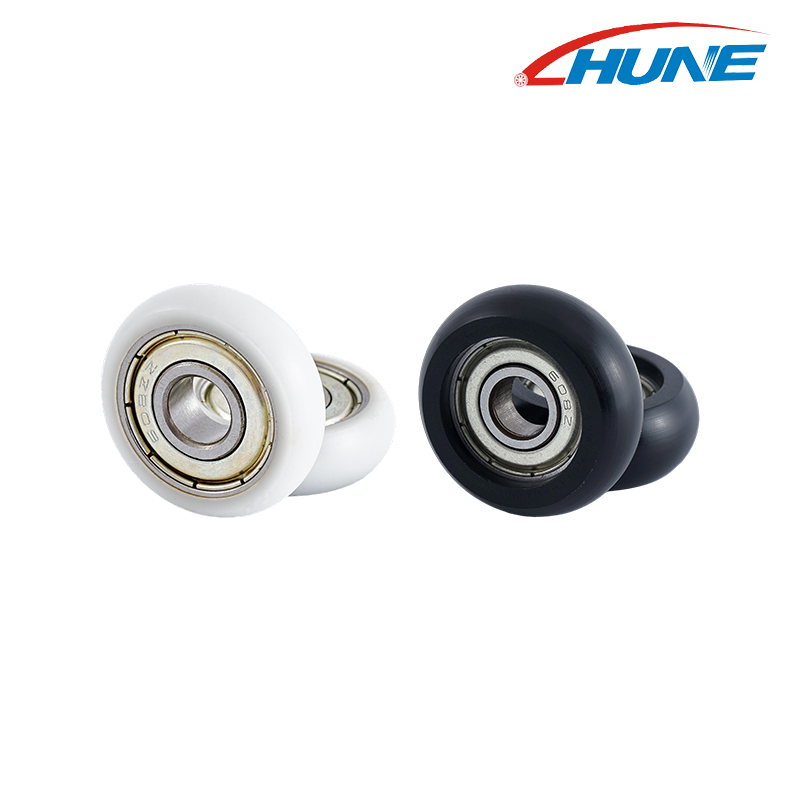
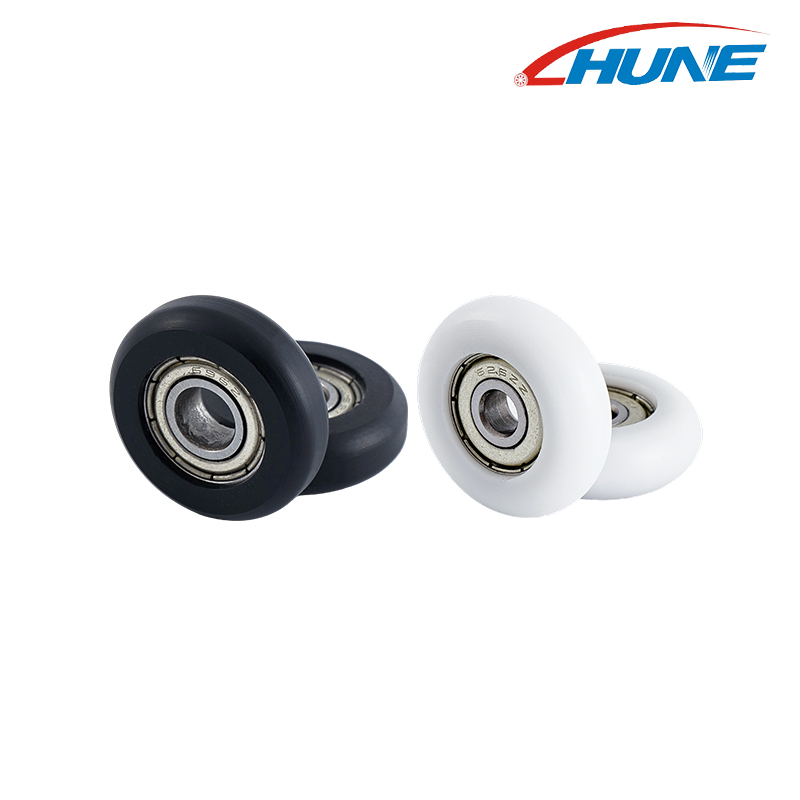
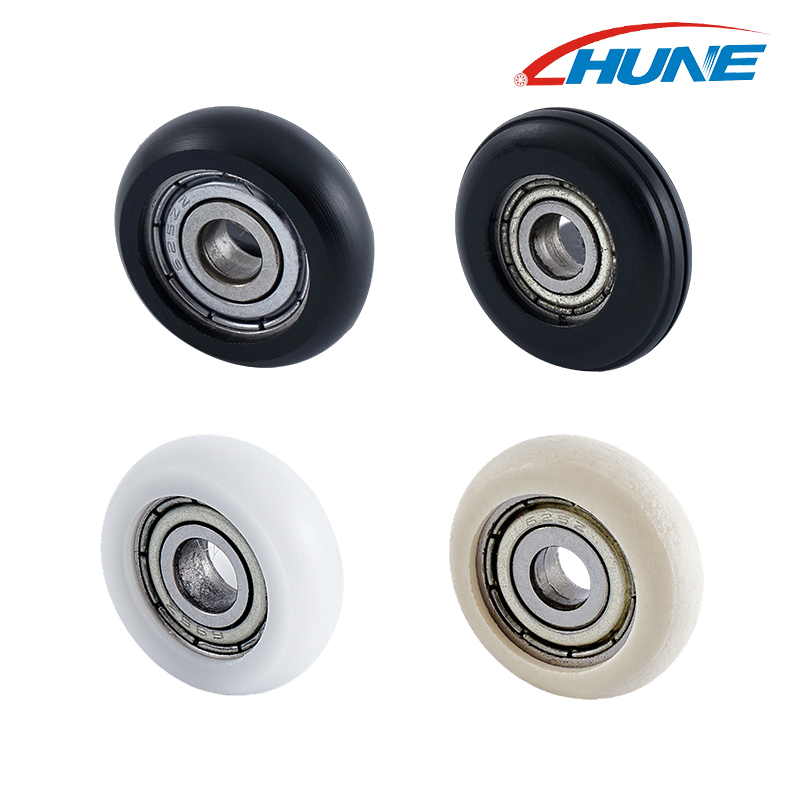
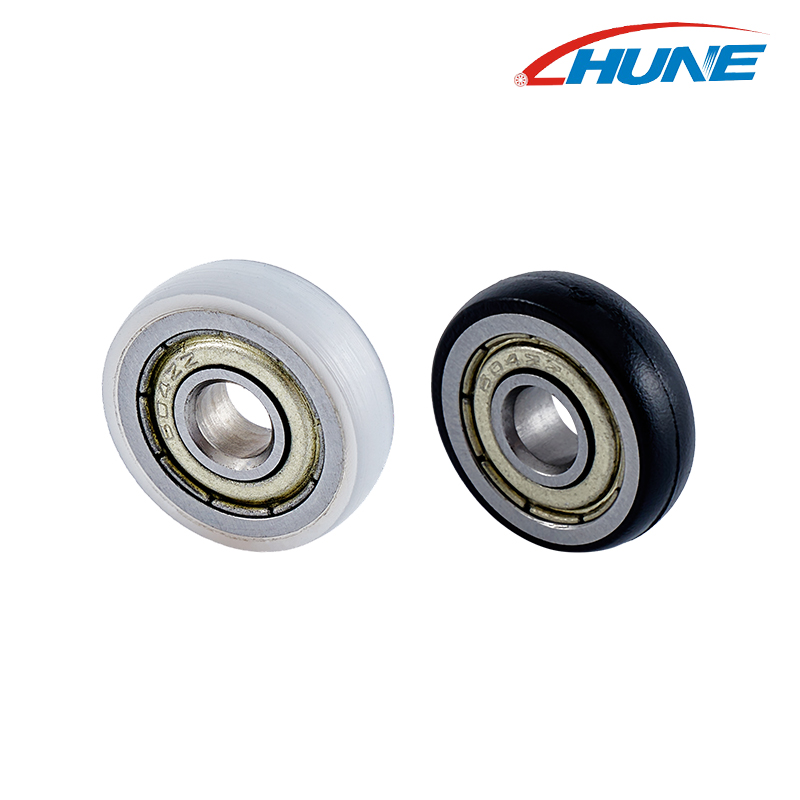
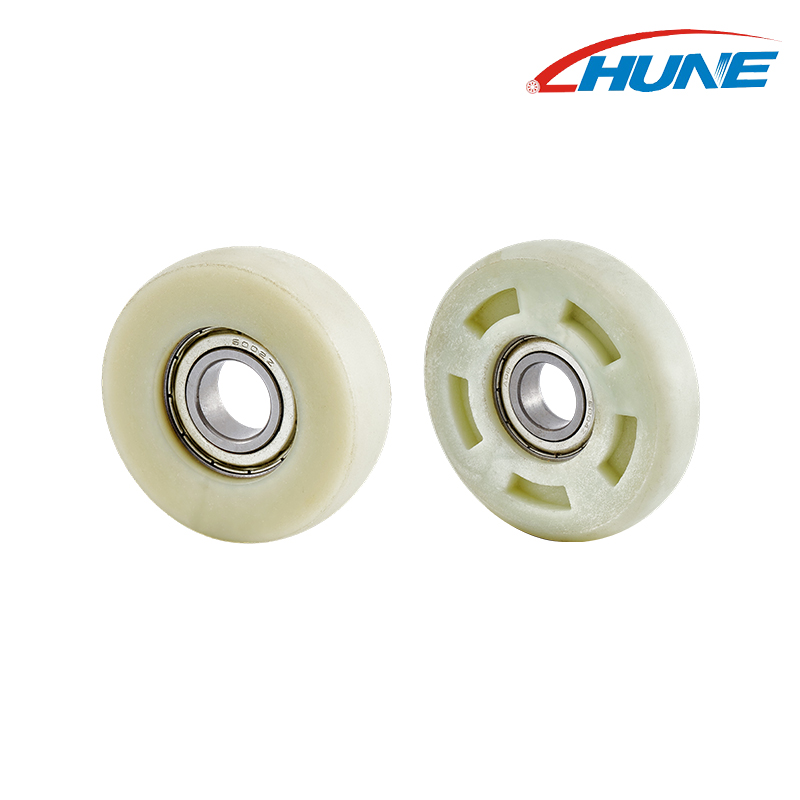
Polymer wheel rollers with stainless housings (nylon, acetal/POM, polyurethane)
This is extremely common in residential sliding doors.
- Best for:
- Quiet operation
- Aluminum tracks
- Smooth glide with lower track wear
- Pros
- Quieter and smoother
- Often gentler on aluminum tracks
- Some polymers self-lubricate and resist dirt
- Cons
- Can flat-spot if overloaded or if door sits in one position for long periods under high load
- Certain plastics can become brittle with UV exposure if not formulated for it
Quick practical note: If you have an aluminum track, a polymer wheel often extends track life. If you have a stainless track and heavy loads, stainless wheels can make sense.
Types by track interface: convex, concave, V-groove, and flat
The wheel profile must match the track profile. Mismatch causes noise, jumping, or rapid wear.
Flat rollers
Run on a flat track surface.
- Best for:
- Common patio door tracks
- Many aluminum sill tracks
- Watch-outs:
- Dirt on flat tracks can cause bumpiness; cleaning matters
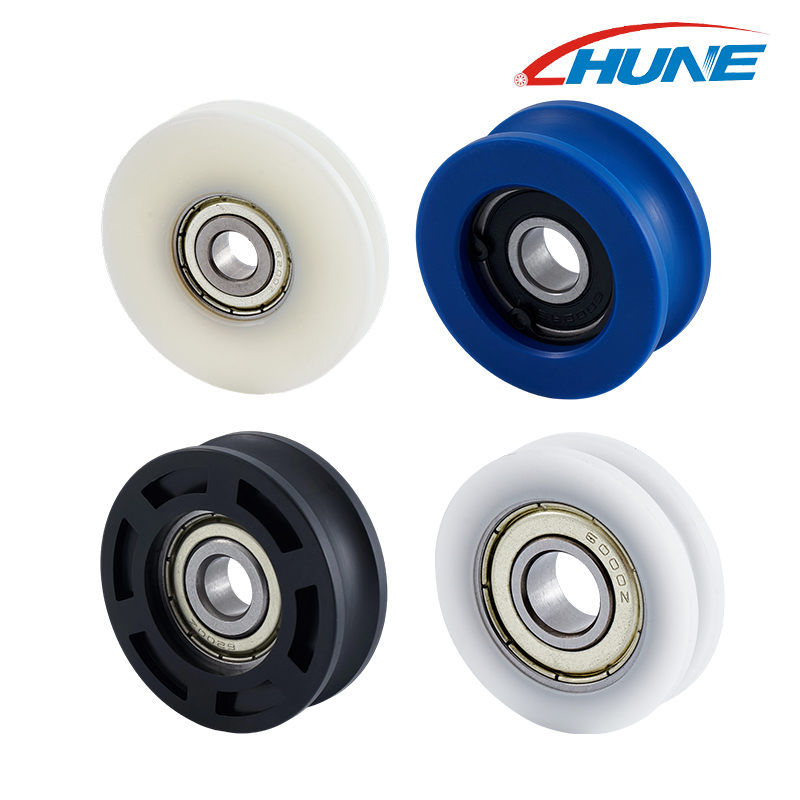
Concave (U-groove) rollers
Wheel has a channel that rides on a raised round track or rail.
- Best for:
- Systems with a rounded or bead-like rail
- Where lateral guidance is needed
Convex rollers
Wheel has a rounded exterior, often running inside a channel track.
- Best for:
- Channel-type tracks that guide the wheel from both sides
V-groove rollers
Wheel has a V profile that rides on an angle iron or V track.
- Best for:
- Gates, barn-style exterior sliders, industrial doors
- Applications needing strong tracking and debris shedding
Why people like V-groove: it naturally centers on the track and tends to push debris aside rather than plow through it.
Types by mounting and adjustment: top-hung vs bottom-rolling, fixed vs adjustable
Rollers don't just roll—they also determine door alignment.
Bottom-rolling (most common for patio/sliding glass doors)
Weight is carried by the bottom rollers on the track.
Pros
Handles heavy panels well
Straightforward replacement
Cons
Track cleanliness is critical
Water intrusion at the sill can accelerate corrosion if materials are mismatched
Top-hung (suspended) rollers

Door hangs from an overhead track; bottom guide prevents swinging.
- Pros
- Floor track can be minimal or absent (cleaner look, less trip hazard)
- Better for interior applications and some modern architectural systems
- Cons
- Requires strong header/support
- Hardware must be sized correctly; failures are more dramatic
Fixed rollers vs height-adjustable rollers
Most quality assemblies include a height adjustment screw to raise/lower the door and set the reveal.
- Adjustable rollers are best for:
- Doors that settle over time
- Installations where the floor/track isn't perfectly level
- Fine-tuning latch alignment and weatherstripping compression
- Common adjustment mechanisms
- Screw-adjust: easiest; typically accessible through the side or bottom edge.
- Cam-adjust: rotates an eccentric to change height; compact and stable.
Types by bracket/carriage style: mortise, surface mount, and integrated assemblies
Mortise (inset) roller assemblies
Fit into a pocket in the bottom rail of the door.
- Pros
- Clean look
- Protected from impact
- Cons
- Must match dimensions closely (width, height, screw holes, offset)
- Replacement requires careful measuring
Surface-mount roller assemblies
Mount externally to the door frame/rail.
- Pros
- Easier to access and replace
- More forgiving for retrofits
- Cons
- More exposed; aesthetics vary
- Can snag or collect debris depending on location
Integrated systems (brand/system-specific)
Some doors use rollers that are proprietary to a track and frame profile.
- Pros
- Excellent performance when matched
- Often engineered for high cycles and tight tolerances
- Cons
- Replacements may be limited to specific parts
- More expensive and less universal
Stainless steel roller "subtypes" by environment: where each shines
Here's how the same roller category can behave differently depending on conditions.
Coastal / pool / high-chloride areas (the "rust finds a way" zones)
- Priorities:
- 316 stainless wherever possible (wheel, bearing, bracket, axle, fasteners)
- Sealed bearings
- Minimal dissimilar metal contact (or isolate it)
Why: chloride ions attack weaker stainless, plated parts, and bearing steels quickly.
Wet rooms and frequent cleaning (chemicals matter)
- Priorities:
- Sealed bearings
- Chemical-resistant wheel material (often acetal/POM or quality nylon)
- Avoid low-quality rubber seals that swell or crack
Dusty or sandy environments
- Priorities:
- Wheel profile that sheds debris (often V-groove in exposed tracks)
- Sealed bearings or robust bushings
- Easy-to-clean track geometry
Sand is basically sandpaper; smooth today can become gritty tomorrow.
How to choose the right type (a practical checklist)
Choosing rollers is mostly about matching the door's reality, not chasing the "best" spec on paper.
- Step 1: Identify the door system
- Bottom-rolling patio door vs top-hung interior slider vs gate/barn system
- Track shape: flat, U-rail, V-track, channel, etc.
- Step 2: Measure what matters
- Wheel diameter and thickness
- Roller housing dimensions (height/width/depth)
- Mounting hole positions
- Offset distance from wheel centerline to mounting face
- Adjustment screw location and access
- A roller can be "close" and still cause the door to sit crooked or rub.
- Step 3: Match capacity to real load (with margin)
- If your door is heavy, use:
- Tandem rollers
- Larger diameter wheels
- Proper bearings (sealed ball bearings for most exterior doors)
- Under-rating rollers leads to flat spots, wobble, and track wear.
- Step 4: Pick materials for your track and noise expectations
- Aluminum track + quiet preference → polymer wheel + stainless hardware
- Stainless/steel track + heavy load → stainless wheel (or heavy-duty polymer) + sealed stainless bearing
- Step 5: Decide on corrosion strategy
- Standard outdoor: 304 may be fine
- Coastal/pool: lean toward 316 and sealed bearings
- Avoid mixing unknown metals in wet areas if you can
Quick reference: roller types at a glance
Below is a simple selection guide based on the most common real-world needs.
|
Need / Condition |
Best-Fit Roller Type |
Why |
|
Quiet residential patio door on aluminum track |
Polymer wheel + stainless housing, sealed bearing |
Smooth, quiet operation and gentle contact with aluminum tracks |
|
Heavy sliding glass panel |
Tandem roller with sealed ball bearings |
Improved load distribution and enhanced door stability |
|
Coastal or poolside door |
316 stainless steel components with sealed bearings |
Superior corrosion resistance in chloride-rich environments |
|
V-track gate or exterior slider |
Stainless steel V-groove wheel (bearing or bushing) |
Self-centering design helps shed debris and maintain alignment |
|
Dusty or sandy location |
Sealed bearing or robust bushing with debris-tolerant track |
Minimizes grit intrusion and reduces premature wear |
|
Tight space with a light door |
Single-wheel adjustable roller |
Fits compact rail systems and allows fine height adjustment |
The key takeaway: match wheel profile to track, then choose bearing style and stainless grade based on load and environment.
Think of rollers as a complete setup—wheel, bearing, housing/bracket, and track all working together. When those pieces are properly matched (and the stainless grade fits your environment), your Hune sliding door rollers will deliver a smoother, longer-lasting glide instead of a short-lived fix.