

 English
 Español
 日本語
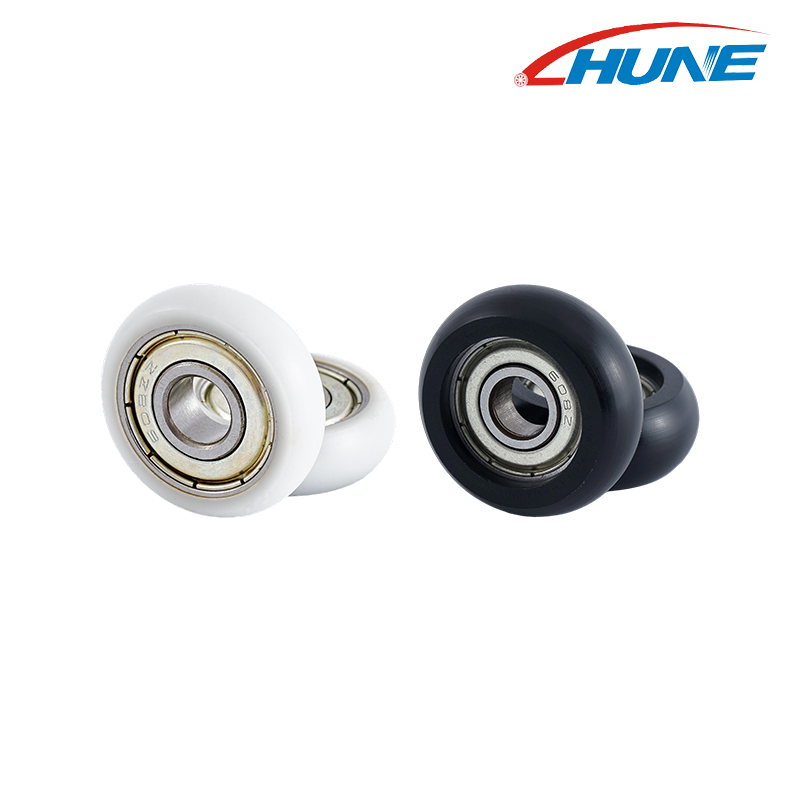
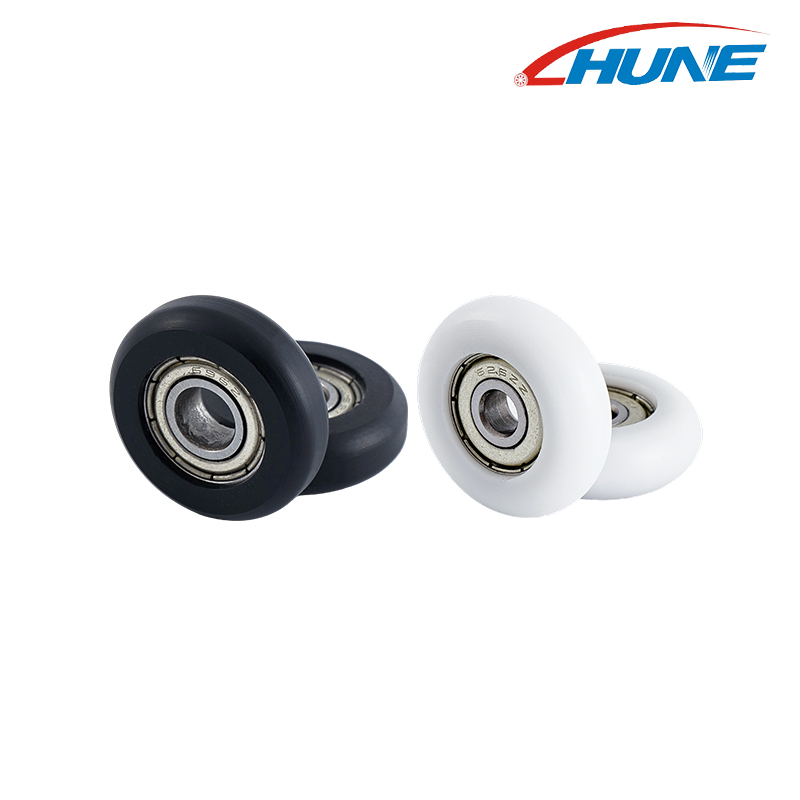
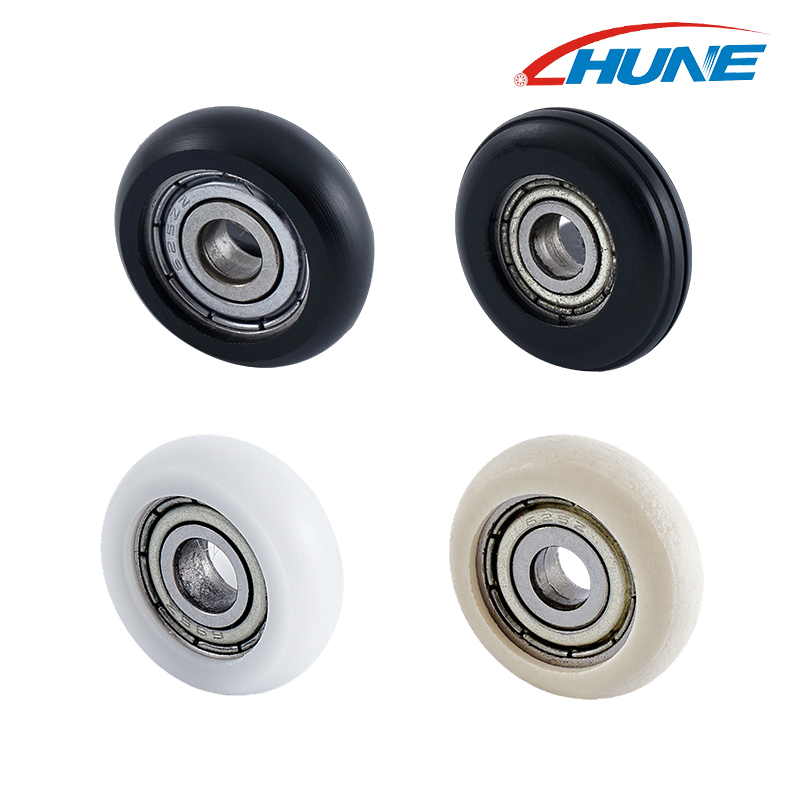
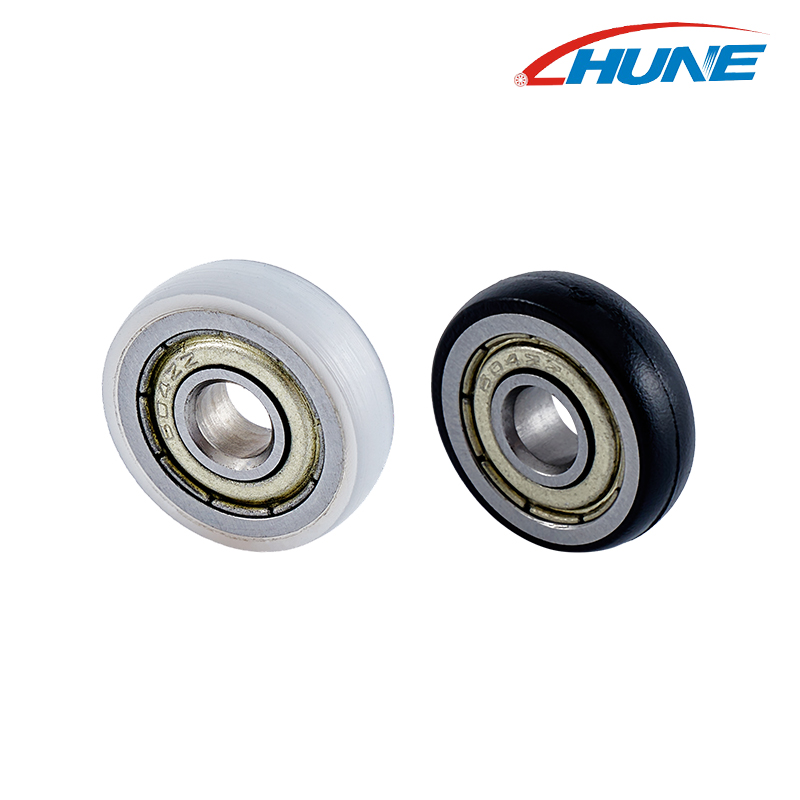
日本語Bearing pulleys with different groove shapes are widely used in mechanical systems where movement needs to stay guided, stable, and repeatable over long operating cycles. U-shaped and V-shaped designs appear in sliding tracks, conveyor lines, automation equipment, cable routing systems, and various light to medium industrial structures.
At first glance, the difference feels small. Both guide movement, both rotate through bearings, and both sit in similar assemblies. But once the system starts running under real conditions, especially under load or slight misalignment, the behavior begins to separate in a way that is easy to notice in practice.
The key is not how the groove looks on drawings, but how it reacts when conditions are not perfectly controlled.
When Groove Shape Starts Controlling Real Movement Behavior
Inside a bearing pulley, the groove is the only part that continuously interacts with the moving element. Whether it is a cable, wire, rope, or rail, that contact point defines how motion is guided.
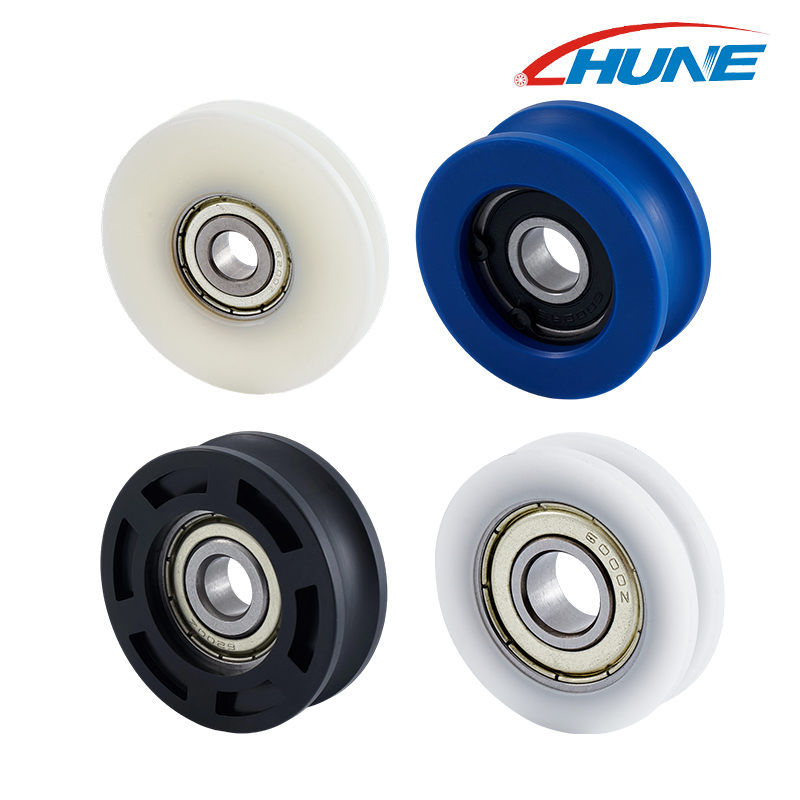
A U-shaped groove creates a rounded seating area. Contact spreads across a wider surface, and the guiding element sits without being forced into a strict directional constraint.
A V-shaped groove, however, naturally pulls the element toward a center line. The contact becomes narrower and more directional, which changes how the system behaves once load is applied.
Even though this seems like a small geometric difference, it affects:
- movement smoothness under real load
- sensitivity to alignment shifts
- long-term wear behavior
- stability of motion path
U-Shaped Groove — "Flexible Contact Under Real Conditions"
In practical systems, U-shaped pulleys usually behave in a more forgiving way. The wider groove allows the guiding element to sit comfortably without being forced into a tight alignment path.
What it feels like during operation
In real movement cycles, this type often shows:
- smoother response even when alignment is slightly off
- lower sensitivity to small structural movement
- more even pressure distribution across contact surface
- gradual wear development instead of concentrated marking
Because of this behavior, U-shaped grooves are often selected in systems where flexibility matters more than strict positioning accuracy.
Where this behavior becomes useful in practice
Instead of listing rigid categories, it is better to think in working patterns:
- systems with repeated movement but slight structural variation
- cable or rope-based guiding setups
- light mechanical assemblies with moderate load variation
- sliding structures where smoothness matters more than fixed path control
In these environments, the system benefits from tolerance rather than strict constraint.
V-Shaped Groove — "Directional Control That Holds the Line"
V-shaped pulleys behave differently once the system starts running under real load. The angled groove naturally guides the moving element toward a defined center path.
What it feels like during operation
In actual use, this design typically results in:
- stronger directional stability
- reduced side movement or drift
- more defined alignment behavior
- concentrated contact along specific lines
The motion feels more structured, especially in systems where consistency of direction is important.
Where this behavior becomes useful in practice
This groove type is commonly seen in situations where movement needs to remain predictable:
- rail-guided mechanical systems
- positioning structures with repeated motion paths
- assemblies requiring stable directional control
- setups where lateral deviation is not desirable
The focus here is not flexibility, but controlled movement behavior.
Real-World Comparison — What Actually Changes in Operation
When both designs are placed under real working conditions, differences become clearer over time.
U-shaped grooves tend to absorb small imperfections. Even if installation is not perfectly aligned, the system often continues running without major change in feel.
V-shaped grooves react more directly to alignment conditions. Once properly installed, they maintain direction well, but they also reflect setup accuracy more clearly.
This is why selection is rarely about appearance. It is about how stable the working environment actually is.
Load Distribution — The Hidden Factor Behind Performance
Load behavior is one of the most important reasons these two designs feel different in operation.
U-shaped groove:
- force spreads across a wider contact area
- pressure is more evenly distributed
- system feels more tolerant under variable movement
V-shaped groove:
- force is guided into a narrower contact line
- directional stability is stronger
- contact stress is more concentrated
| Behavior Point | U-Shaped Groove | V-Shaped Groove |
|---|---|---|
| Contact area | Wider spread | Narrow line |
| Motion feel | Flexible response | Controlled direction |
| Alignment tolerance | Higher | Lower |
| Wear pattern | Distributed | Defined |
| System role | Adaptable movement | Fixed guidance |
This difference is structural, not preference-based.
Installation Reality — Where Many Performance Differences Start
Even when the correct pulley type is selected, installation conditions often decide real-world performance.
If the track or frame is slightly uneven, U-shaped grooves usually continue operating without noticeable disruption. The wider contact helps absorb variation.
V-shaped grooves are more sensitive to these changes. The system may still function, but motion feel can shift when alignment is not stable.
Other influencing factors include:
- guiding element fit inside groove
- consistency of mounting frame
- adjustment accuracy during setup
- structural rigidity over time
In many cases, performance issues come from installation conditions rather than the pulley itself.
Material Behavior — The Second Layer of Influence
Groove shape does not work alone. Material selection also affects real behavior.
| Material Type | Typical Behavior | Common Application |
|---|---|---|
| Nylon-based materials | smoother contact, lower noise | indoor systems |
| Metal structures | stronger rigidity | industrial equipment |
| Stainless variations | better moisture resistance | humid environments |
| Composite blends | balanced mechanical response | mixed conditions |
When combined with groove shape, material influences:
- movement feel
- noise level
- wear progression
- long-term stability
Wear Development — What Appears After Long-Term Use
Wear is not immediate. It develops gradually based on movement cycles and load behavior.
U-shaped grooves usually show wear that spreads across a wider surface area. Changes are gradual and less concentrated in one specific point.
V-shaped grooves tend to form wear along defined contact lines. This reflects the more focused load path inside the groove.
Environmental conditions such as dust, vibration, and usage frequency can influence how quickly these patterns appear.
Working Environment — Why the Same Pulley Behaves Differently
Real environments often highlight differences more clearly than design specifications.
In stable indoor conditions, both groove types can operate smoothly. U-shaped designs often feel more forgiving in such environments.
In dusty or particle-rich environments, both require maintenance, but tighter contact zones in V-shaped grooves may show changes more clearly over time.
In high-frequency systems, repeated motion cycles make wear patterns and alignment behavior more visible.
In mixed industrial conditions, selection usually depends on whether flexibility or directional control is more important for the system.
Maintenance Behavior — Simple but Often Overlooked
Maintenance is usually straightforward, but consistency matters.
Basic checks include:
- groove surface condition
- bearing smoothness
- alignment stability
- mounting tightness
- movement resistance
Dust accumulation can gradually change movement behavior, especially in enclosed systems.
Over time, small adjustments may be needed as mechanical structures naturally shift during repeated use cycles.
Selection Issues Seen in Real Projects
A frequent issue in practice is assuming both groove types can be used interchangeably. While they may fit similar assemblies, their behavior under load is not the same.
Another common issue is ignoring the guiding element type. Cable, rail, and wire systems interact differently with groove geometry.
Installation accuracy is also often underestimated. Even well-designed components can behave differently if alignment is not stable.
How Both Groove Types Are Used Together
In many real engineering systems, U-shaped and V-shaped pulleys are not treated as alternatives. They are used together in different sections of the same structure.
One part of the system may require flexible response, while another section needs stable directional control.
This combined usage is common in practical mechanical design, especially in systems where multiple motion behaviors exist in one framework.
U-shaped and V-shaped bearing pulleys are not competing designs. They represent different motion behaviors inside mechanical systems.
U-shaped grooves support smoother contact and flexible response under variation. V-shaped grooves support stronger directional control and stable alignment in fixed-path movement.
When matched correctly with real working conditions, both perform reliably within their intended role. The real decision is not about which design looks better, but which movement behavior the system actually needs over time.