

 English
 Español
 日本語
Most custom pulley inquiries stall for the same reason. The supplier receives a photo and a wheel diameter, and nothing else. That's not enough to quote a Custom Rope Pulley, and it's rarely enough to build a sample that fits.
What a supplier normally needs is short: outer diameter, groove width and depth, bore size, wheel width and mounting details. If you're ordering a housing or bracket along with the wheel, add their sizes. Then add the rope specification and a few lines on how the part will be used. The sections below cover each item and explain why it gets asked for.
What Basic Rope Pulley Dimensions Should Buyers Measure?
Start with the wheel. Use calipers if you have them, write down the unit, and mark where each reading was taken. "30" means little until someone knows whether it's millimeters, and whether it's the rim or the flange.
Pulley Wheel Diameter
Measure the wheel body only. Don't include the bracket or housing. Diameter has to be read alongside the space you have and the path the rope takes, so a number alone won't settle whether it works. If you're replacing a worn part, send the old one or its drawing. A worn groove can mislead, but the outer size and bore usually still help.
Pulley Groove Width and Depth
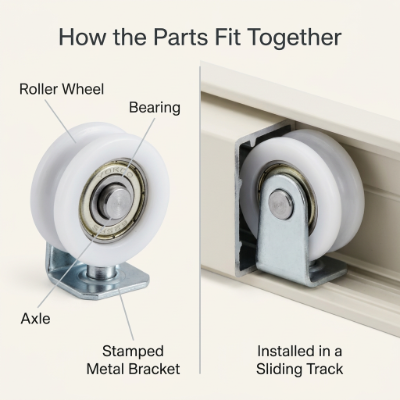
This is where the wheel and rope meet, and it's the dimension pair buyers most often leave out. Width sets how much room the rope has. Depth affects how far it seats and how well it stays guided. Check both against the actual rope, including its cross-section. If the profile isn't a plain rounded channel, a sectional sketch saves a lot of emails.
Pulley Bore Size
Give the center hole diameter and say what runs through it: a shaft, a pin or something else. Stepped or countersunk holes belong on the drawing. A hole size without the intended fit leaves the supplier guessing about tolerances.
Overall Pulley Width
Measure the body side to side. List flanges, side walls or raised hubs on their own lines. When a housing wraps the wheel, report that outer width separately so the two figures don't get mixed up in the quote.
What Additional Dimensions Are Needed for a Metal Pulley Assembly?
Plenty of orders include the metal parts that hold the wheel. This is where inquiries usually run short, because people measure what's easiest to reach.
Housing Dimensions
Send length, width and height, plus the clearance between housing and wheel. Say what the housing is for: supporting, protecting or locating the wheel. For an irregular shape, front, side and top views are the quickest way to explain it.
Mounting Hole Position and Spacing
Holes decide whether the part installs at all. List the hole count, each diameter, the center-to-center distance, the distance to the nearest edge, and how the part gets fixed. Being a millimeter or two off on spacing is enough to stop a part from fitting.
Bracket and Connection Dimensions
A Metal Pulley Bracket needs its own outline sizes and a note on where it meets the wheel. Add the axle or pin size. For stamped metal parts, a structural drawing or a sample works best. The same applies to any Custom Pulley Assembly: describe the wheel, shaft and bracket together, since they have to work as one unit.
How Does Rope Diameter Affect Cable Pulley Size?
You can't settle Cable Pulley Size from the wheel alone. The rope sets a lot of the conditions.
Tell the supplier the rope diameter first. Then add the material, because it can change flexibility and surface behavior. State the cross-section (round or otherwise) and the construction, such as steel wire or fiber. Finally, say how the rope runs: held in a fixed guide path, or moving back and forth.
One thing worth stating plainly: rope diameter doesn't convert directly into groove width. The right channel depends on how the rope is built and used, so confirm it with the supplier instead of working from a rule of thumb.
What Application Information Should Buyers Provide?
Dimensions describe the part. Application notes describe what it has to do.
Equipment and Application Type
Name the product it goes into, such as a door or window system, machinery, furniture hardware or another rope-guiding structure. Also say whether the pulley guides, transmits motion or supports.
Load and Operating Conditions
Describe the duty. Is the load steady or intermittent? Does the wheel sit still or turn repeatedly? Is there shock, vibration or frequent starting and stopping? Is a working load specified? Keep in mind that wheel, bearing, shaft and bracket each take load differently. Outer diameter or material won't tell you what the full assembly can carry.
Installation Space and Environmental Conditions
Give the available room, the gap to neighboring parts and whether the setting is indoor or outdoor. Mention moisture, dust or other substances that could affect the material or finish.
What Drawings or Samples Should Buyers Send to a Custom Pulley Supplier?
Send what you have. Each file type answers a different question.
A 2D drawing carries key sizes, tolerances and mounting positions. A 3D CAD file shows how parts relate. A physical sample is the safest route for replacements or when no drawing exists. Photos from several angles help, especially with measuring points marked. For combined wheel, shaft and bracket orders, details of the existing assembly fill in the rest.
Photos can show a structure, but they can't stand in for dimensioned drawings or measured figures.
What Should Buyers Confirm Before Placing a Custom Rope Pulley Order?
Run through this table before you hit send. It condenses everything above.
| Item | Information to Provide |
|---|---|
| Wheel Diameter | Outer diameter of the wheel body |
| Groove Dimensions | Width, depth and profile shape |
| Bore Size | Hole diameter and structure |
| Wheel Width | Total width, plus flange sizes if present |
| Housing Dimensions | Length, width and height |
| Mounting Details | Hole count, diameter, spacing and fixing method |
| Rope Specifications | Diameter, material, type and cross-section |
| Material Requirements | Preferences for wheel and metal parts |
| Operating Conditions | Load, motion pattern and environment |
| Drawings or Samples | 2D drawing, CAD file or physical part |
If a figure can't be measured, send a sample, photos of the current part and the spot where it will be installed. The supplier can then flag which values still need checking.
Common Mistakes When Measuring a Custom Rope Pulley
These come up often.
Sending only the outer diameter. Groove, bore and width matter just as much to the final fit.
Measuring the wheel but not the assembly. Housing and bracket sizes belong in the same inquiry.
Leaving out rope details. Without diameter and type, the groove is a guess.
Skipping hole positions. Spacing and edge distance decide whether installation works.
Relying on photos alone. An image shows shape, not exact figures.
Omitting working conditions. Load, motion and surroundings shape structural choices.
Frequently Asked Questions About Rope Pulley Dimensions
What Are the Key Dimensions of a Rope Pulley?
The main figures are outer diameter, groove width, groove depth, bore diameter and wheel width. A product with a housing or bracket also needs overall sizes, mounting hole positions and spacing. Note the measuring point for each value so nothing is misread during review.
How Do I Measure a Pulley Groove?
Measure channel width and depth with calipers, then record the profile shape, such as rounded or angled. Compare the readings with the rope you plan to use. For an unusual contour, a cross-section sketch or a close photo of the edge helps the supplier.
Does Rope Diameter Determine Pulley Groove Size?
Rope diameter is an important reference, but it doesn't decide groove size alone. Rope type, cross-section, construction and channel profile also count. Share the full rope specification so the groove can be reviewed against your actual operating needs.
Can I Order a Custom Rope Pulley Without a Technical Drawing?
You can start with a sample, clear photos, key measurements and application details. Simple parts may be reviewed that way. Complex structures usually still need a drawing or further size confirmation before the supplier moves to production.
What Information Is Needed for a Custom Pulley Assembly?
Beyond wheel measurements, provide housing and bracket sizes, mounting hole positions, bore details, rope specifications and working conditions. Drawings or a physical sample make review smoother, especially when several parts must fit together.
Prepare the Right Measurements for Your Custom Rope Pulley
A usable inquiry covers more than wheel diameter. Groove, bore, width, housing and mounting structure all count, and so do the rope specification and the conditions the part will run in. For a complete assembly, check how the wheel meets its metal bracket as well.
HUNE supplies pulley-related products for a range of machinery and hardware uses, including bearing pulleys and roller assemblies with brackets. Buyers can send drawings, samples or application requirements, and the team can discuss which measurements still need to be confirmed.