

 English
 Español
 日本語
日本語Take the cover off almost any desktop 3D printer and you'll find a handful of small plastic wheels tucked along the rails, quietly doing a job nobody thinks about until it stops working properly. These wheels carry the gantry and carriage back and forth thousands of times over the life of a machine, and how well they fit their track has a direct hand in whether your prints come out clean or slightly off in ways that are hard to pin down.
What These Wheels Are Actually Doing
Most 3D printers built on aluminum extrusion frames don't let the moving parts drag directly against metal. Instead, small wheels are fitted into a channel running along the extrusion, and the carriage rolls on those wheels rather than sliding on bare metal. This keeps friction low and motion steady, which matters because inconsistent movement during a print shows up as visible flaws on the finished part.
A wheel that's developed a flat spot, or one that's lost its snug fit within the track, changes how the carriage travels. Instead of smooth, even motion, you get tiny variations in speed as the wheel rolls over its own imperfection. Print a tall object with fine layer lines, and that inconsistency tends to show up as a faint repeating texture running up the side of the part.
A Small Part With an Outsized Job
It's easy to overlook wheels when troubleshooting a printer, since attention usually goes toward the extruder, the hotend, or bed leveling first. But a printer with perfectly tuned settings can still produce rough prints if the wheels underneath aren't rolling the way they should. Worth keeping in mind before assuming a print issue always traces back to firmware or slicer settings.
Getting to Know POM as a Material
POM, short for polyoxymethylene, is an engineering plastic that shows up constantly in printer wheel construction, along with a lot of other machinery that relies on rollers and linear rails.
Why This Particular Plastic Became So Common
A few practical qualities explain why POM ended up as such a frequent choice:
- It holds its shape under repeated stress rather than deforming after a few thousand cycles of use.
- It has naturally low friction against metal surfaces, so it doesn't demand constant lubrication to keep rolling smoothly.
- It machines to fairly tight tolerances, which matters when a wheel needs to fit a specific groove consistently.
- It's reasonably priced, which keeps replacement costs manageable for anyone maintaining a printer over the years.
None of this makes POM immune to wear. Every wheel degrades eventually, plastic or otherwise, but for the loads and speeds typical of desktop 3D printers, it tends to hold up well relative to its cost.
Typical Settings Where POM Wheels Show Up
POM wheels are mostly found on desktop and small workshop printers, machines that aren't hauling heavy loads or running at speeds where plastic would genuinely struggle.
If a printer came with POM wheels originally, sticking with the same material for replacements usually keeps the fit consistent with how the machine was designed to run.
Understanding the V Slot Groove Shape
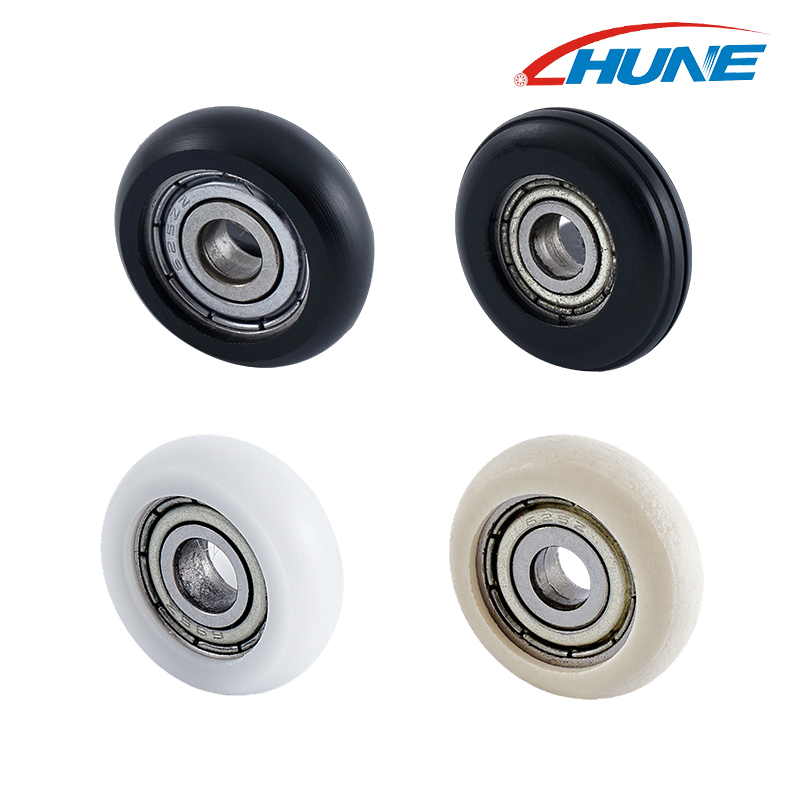
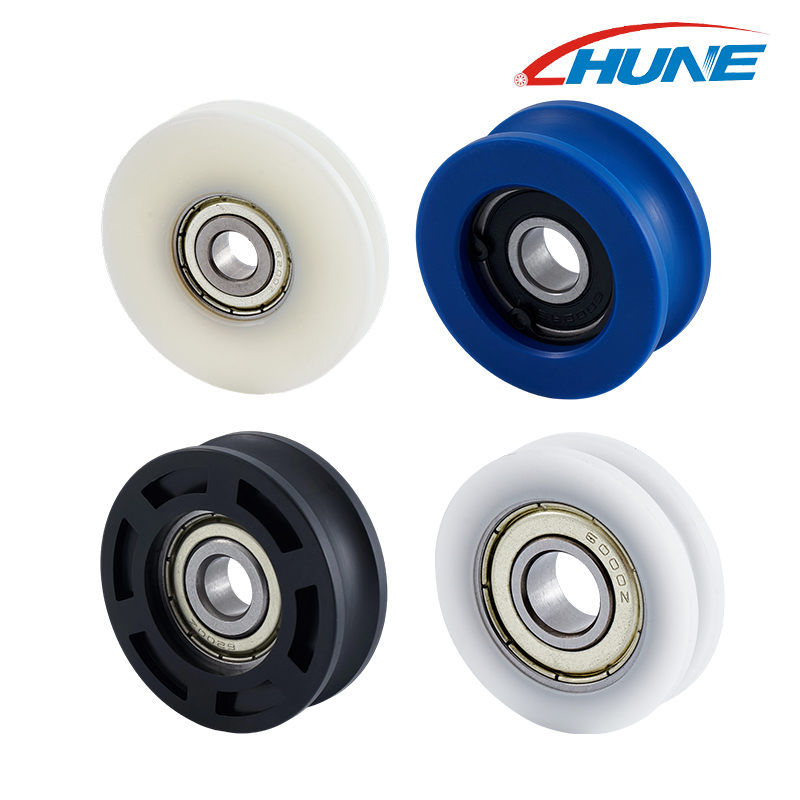
V slot is a different kind of term entirely. It doesn't describe a material, it describes the shape of the groove cut into a wheel, one that matches the angled V shaped channel found in V slot aluminum extrusion.
Why the Angle Matters
A flat wheel riding in a flat track has some freedom to drift slightly side to side. A V shaped groove resists that drift because the angled walls naturally guide the wheel toward center as it rolls.
Picture a marble settling into the bottom of a shallow bowl rather than rolling freely across a flat table. That self-centering behavior is one of the main reasons V slot wheels get paired with V slot extrusion in the first place.
The Bearing Hidden Inside
Most V slot wheels aren't solid plastic all the way through.
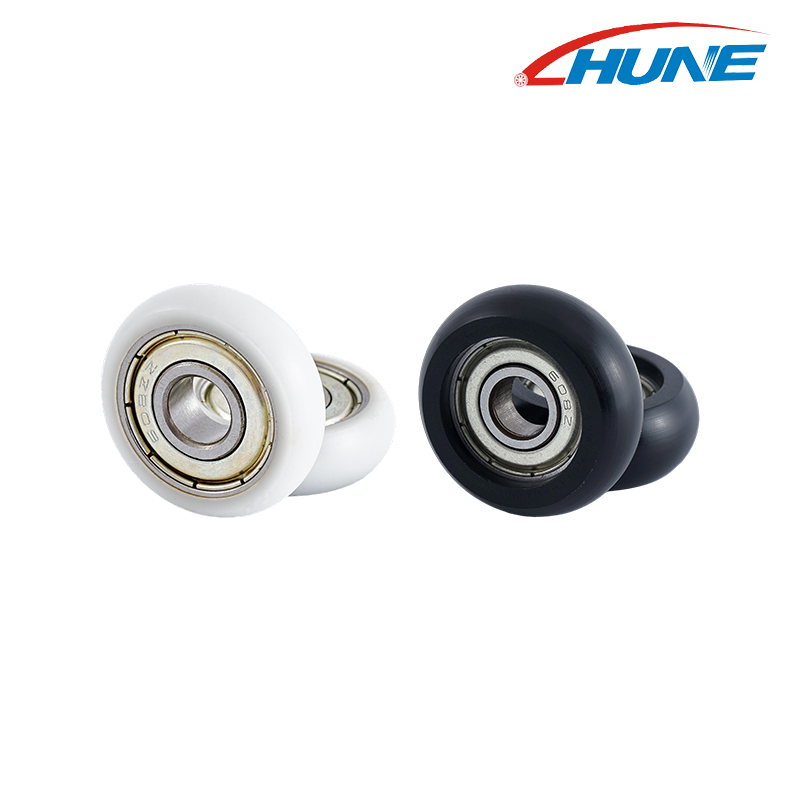
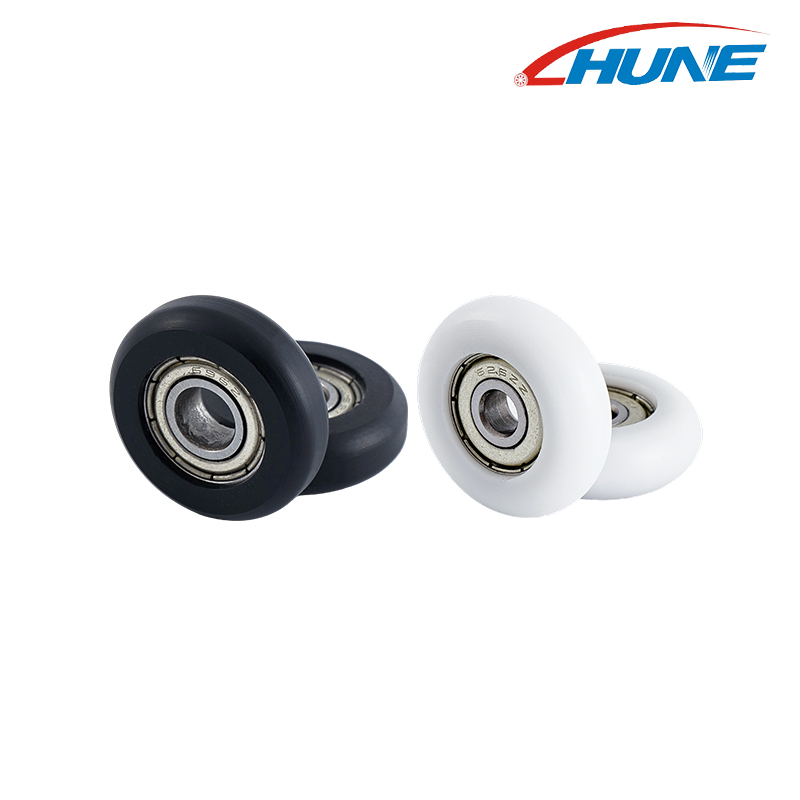
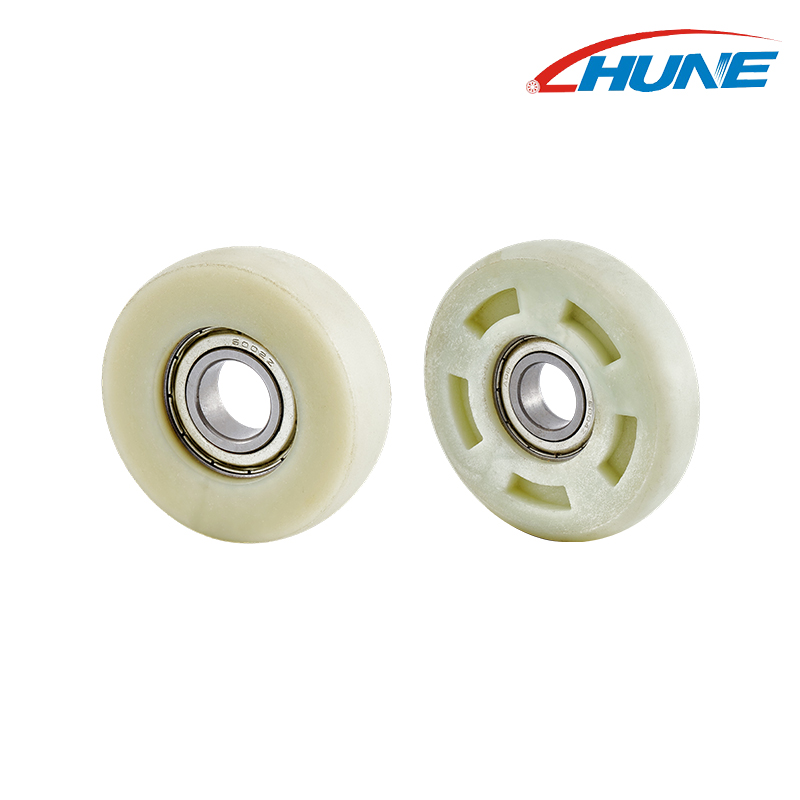
A bearing sits inside the wheel body, handling the actual rotation around the axle, while the outer plastic shell, often POM, forms the groove that contacts the track.
Two components working together, one for shape and contact, one for smooth spinning.
Bearing quality varies between suppliers, and a wheel that looks identical to another on the outside can behave quite differently over time depending on what's tucked inside it. Worth factoring into a purchase decision rather than judging by outer appearance alone.
Comparing the Two Terms Directly
| Question | POM Wheels | V Slot Wheels |
|---|---|---|
| What the term describes | The plastic material | The groove shape |
| Groove profile | Can vary, flat or grooved | Always angled to a V shape |
| Track compatibility | Depends on the specific groove | Requires V slot extrusion specifically |
| Centering behavior | Depends on groove design | Built in through the angled shape |
| Common use | General linear motion setups | Printers and machines built on V slot frames |
Other Wheel Materials Worth Knowing
POM covers a large portion of the market, but it isn't the only option available.
Similar Acetal Materials
Beyond generic POM, there are branded variations of acetal resin sold under different commercial names, all belonging to the same broad chemical family.
Functionally, these tend to behave similarly to standard POM in most printer applications, and the differences usually come down to manufacturing consistency rather than a fundamentally different set of properties.
Metal Wheels for Heavier Duty
Some printers built for larger loads or more demanding use cycles use metal wheels instead of plastic.
Metal holds up under stress that would eventually flatten a plastic wheel, but the tradeoff usually includes more noise during operation and a bit more wear transferred to the track surface over time.
Coated Wheels for Vibration Control
Wheels with a rubber or polyurethane coating occasionally appear in specific spots on a printer, usually where vibration dampening matters more than raw rigidity.
Belt tensioners and idler wheels are more likely candidates for this than the primary carriage wheels.
Working Through the Buying Decision
Once the terminology makes sense, choosing rollers for an actual build or repair comes down to a handful of practical questions.
Does the Groove Actually Match Your Track
This is the question that matters most, and it's the one people skip when they're in a hurry to order a replacement.
A V groove wheel needs V slot extrusion beneath it, and forcing a flat wheel onto a V shaped track, or the other way around, simply won't function properly no matter how close everything else lines up.
Checking the existing wheel's groove shape against the printer's frame before ordering saves a lot of wasted time and money.
How Much Load Is This Specific Wheel Carrying
Different wheels on the same printer often deal with different amounts of stress.
A wheel supporting a heavier gantry section works harder than a lighter idler wheel elsewhere on the frame.
For most home and small workshop setups, standard POM or V slot wheels handle these loads without trouble, since desktop printing generally doesn't push weights anywhere near what would challenge a well made plastic wheel.
Does Noise Level Matter in Your Setup
A printer running in a shared office, a bedroom, or anywhere people are nearby for long stretches benefits from quieter components.
Plastic wheels generally run quieter than metal ones, which is worth factoring in if the printer operates for hours at a time within earshot of daily activity.
Is the Internal Bearing Actually Solid
Since most V slot wheels contain a bearing, that bearing's quality shapes how long the wheel performs well before developing play or noise.
A listing that doesn't mention bearing details at all is sometimes a sign worth noting before committing to a purchase.
A Short Checklist Before Ordering Replacements
- Confirm the groove shape and extrusion type on your specific printer.
- Match axle diameter and mounting hardware against your current wheels.
- Note whether existing wheels are original parts or a prior replacement, since fit can shift slightly across generations.
- Ask about bearing type if a listing doesn't specify one clearly.
- Physically measure your existing wheel if there's any doubt, rather than relying on a model number alone.
Recognizing Wear Before It Affects Your Prints
Wheels rarely fail suddenly. They wear down gradually, and catching the early signs helps avoid bigger print quality issues later.
A flat spot is one of the more common problems, often developing when a printer sits parked in the same position for an extended stretch between uses.
That flat section creates a small bump every time it rotates through contact with the track, which can show up as a faint, repeating texture on finished prints, particularly on tall or slow moving sections.
Wobble in a wheel, checked by pressing gently and feeling for side to side movement, usually points to a worn internal bearing rather than damage to the outer wheel body.
This distinction matters because it affects whether a full wheel replacement is necessary or whether a bearing alone might solve the issue, depending on how the wheel is built.
Unusual noise during printing, particularly a grinding or clicking sound localized to one section of the gantry rather than the whole machine, often traces back to a wheel or bearing problem in that specific spot.
Small Habits That Keep Wheels Running Well
A bit of routine care extends how long wheels perform properly before replacement becomes necessary.
Keeping the extrusion track free of dust and filament debris matters more than it might seem, since buildup inside the groove adds friction and speeds up wear on the wheel surface over time.
Using a lubricant suited for plastic components, rather than a heavy grease meant for metal machinery, keeps things moving smoothly without attracting extra dust and grime.
Checking wheel tension periodically, especially on printers using adjustable spacers to fine tune the fit within the track, helps catch a loosening wheel before it turns into a bigger alignment problem.
POM and V slot aren't rival categories competing for space in your printer's parts bin.
POM describes a material, V slot describes a groove shape, and a large number of wheels on the market fit both descriptions at once.
What actually determines whether a wheel performs well comes down to matching its groove to your printer's extrusion, sizing appropriately for the load it carries, and paying attention to bearing quality rather than judging purely by outer appearance.
Get those fundamentals right, watch for the early signs of wear, and the wheels on your printer become one less thing to worry about, which frees up more attention for the parts of printing that actually deserve it.