

 English
 Español
 日本語
日本語If you've ever noticed your patio door sliding smoothly in spring, then suddenly dragging or sticking once the temperature climbs in July, you're not imagining things. That same door might loosen up again come winter, only to feel tight and stiff a few months later when the cold sets in. It's a pattern a lot of homeowners notice but rarely understand the reason behind, and it usually comes down to something people don't think about much: the rollers underneath the door respond to temperature changes just like everything else in a house does.
The Basic Reason Temperature Affects Your Door
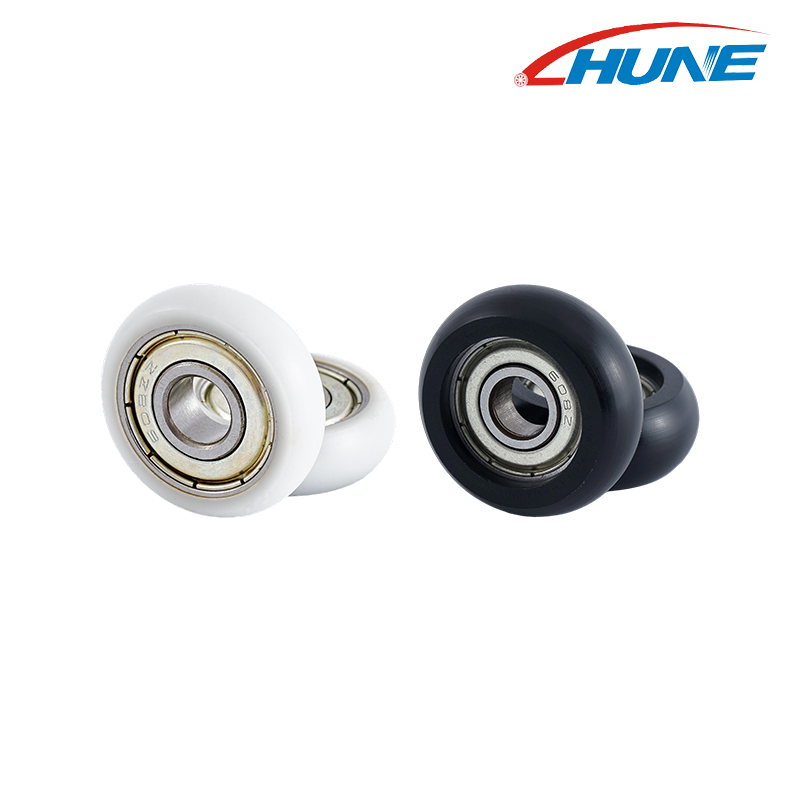
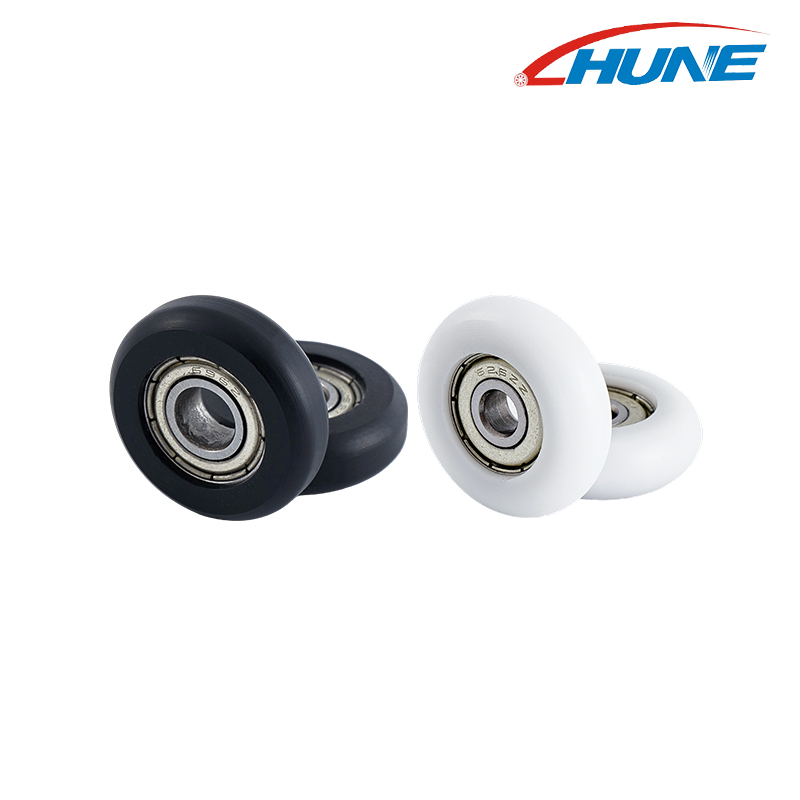
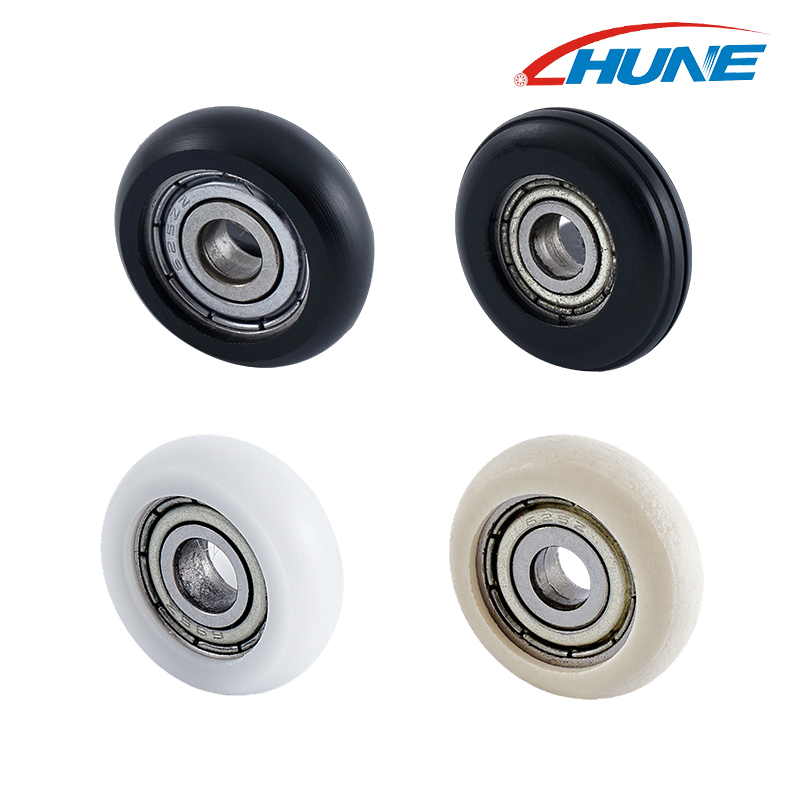
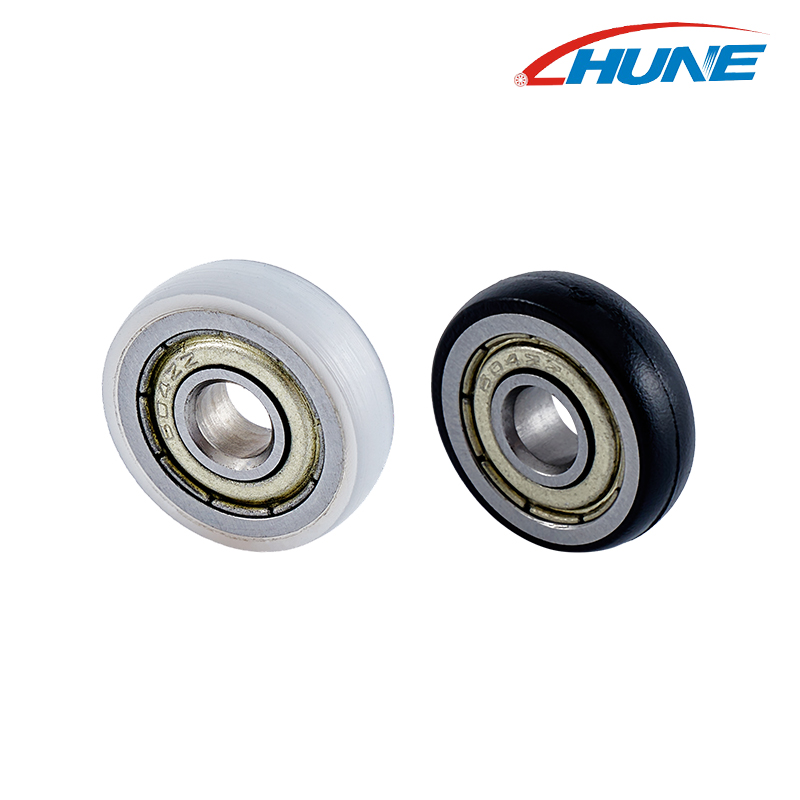
Materials expand when they get warm and contract when they get cold. This is true for the door frame, the track, and the rollers themselves, though not always at the same rate. Aluminum frames, which show up often in patio door systems, tend to expand more noticeably in heat compared to vinyl or wood frames. Meanwhile, the rollers, which are usually made of nylon, steel, or a similar durable material, respond to temperature changes in their own way too.
When these different materials expand and contract at slightly different rates, the tight fit that worked perfectly in April might not work the same way in August. The track might widen slightly, the frame might shift a bit, and the roller that used to sit just right inside the track suddenly has either too much room or too little.
Why This Matters More Than People Expect
A door that's slightly misaligned because of a seasonal roller issue doesn't always announce itself right away. Sometimes it's subtle, a bit more resistance than usual, a faint scraping sound, or the door needing a firmer push to slide open. Other times it's more obvious, the door jams partway, or it feels loose enough to wobble in the track. Either way, ignoring these small signs for too long tends to lead to bigger issues down the road, since a door that's constantly rubbing against a track it doesn't fit properly wears down faster than one that's adjusted correctly.
What Happens to Rollers in the Summer Heat
Summer brings a specific set of challenges for patio door rollers, mostly tied to expansion and, depending on where you live, humidity as well.
Frame and Track Expansion
As outdoor temperatures rise, and especially if your patio door gets direct sun exposure for part of the day, the frame and track can expand slightly. Aluminum frames are particularly sensitive to this, since metal generally expands more than materials like vinyl under the same temperature increase. Even a small amount of expansion in the track width can be enough to change how snugly the roller sits inside it.
If the rollers were adjusted for a tighter fit during cooler months, that same setting might now be too loose once the track has expanded slightly in the heat. This can result in a door that feels a bit wobbly, or one where the panel doesn't sit as evenly in the frame as it should.
Humidity and Material Softening
In more humid climates, summer also brings moisture into the mix. Wood-framed doors, in particular, can absorb a small amount of moisture from the air, which causes the wood to swell slightly. Even doors with mostly metal or vinyl components sometimes have wood elements in the frame or surrounding structure, and that swelling can shift how the whole door sits, indirectly affecting how the rollers interact with the track.
Nylon rollers, which are common because they tend to run quietly, can also soften very slightly in extreme heat, though this effect is usually more gradual and tied to long-term wear rather than something that happens overnight.
Signs Your Rollers Need Attention in Summer
- The door feels looser or wobblier than it did in spring
- There's a rattling sound when the door is pushed along the track
- The door doesn't sit flush against the frame when closed
- Increased resistance in certain sections of the track, even though other parts feel loose
What Happens to Rollers in the Cold of Winter
Winter presents almost the opposite problem. Instead of things expanding and loosening up, cold weather tends to cause contraction, which can lead to tightness, stiffness, and in some cases, a door that's genuinely harder to move.
Contraction Creates Tightness
As temperatures drop, metal and plastic components contract, sometimes just slightly, but enough to change the fit between the roller and the track. A door that moved freely all summer might suddenly feel like it's dragging or catching once winter sets in, simply because the track has narrowed a bit and the roller no longer has quite the same clearance it did before.
This is especially noticeable with aluminum-framed doors, since aluminum's higher rate of thermal contraction means the track dimensions can shift more compared to a vinyl frame under the same temperature drop.
Cold and Lubricant Thickening
Lubricants applied to rollers and tracks can behave differently in cold weather too. Some lubricants thicken slightly when temperatures drop, which adds a bit of extra resistance to the rolling motion. This isn't usually a dramatic change, but combined with a track that's already tightened up due to contraction, it can be enough to make the door noticeably harder to slide.
Ice and Frost as an Added Factor
In climates where temperatures drop below freezing, moisture that gets into the track can freeze, creating a physical obstruction that has nothing to do with the roller's adjustment at all, but can feel very similar in terms of the door being hard to move. It's worth ruling this out before assuming the issue is purely about roller tension or spacing.
Signs Your Rollers Need Attention in Winter
- The door requires noticeably more force to open or close compared to warmer months
- A grinding or scraping sound that wasn't present before cold weather set in
- The door sticks at a particular point along the track consistently
- Visible frost or moisture buildup inside the track itself
A Side-by-Side Look at Seasonal Differences
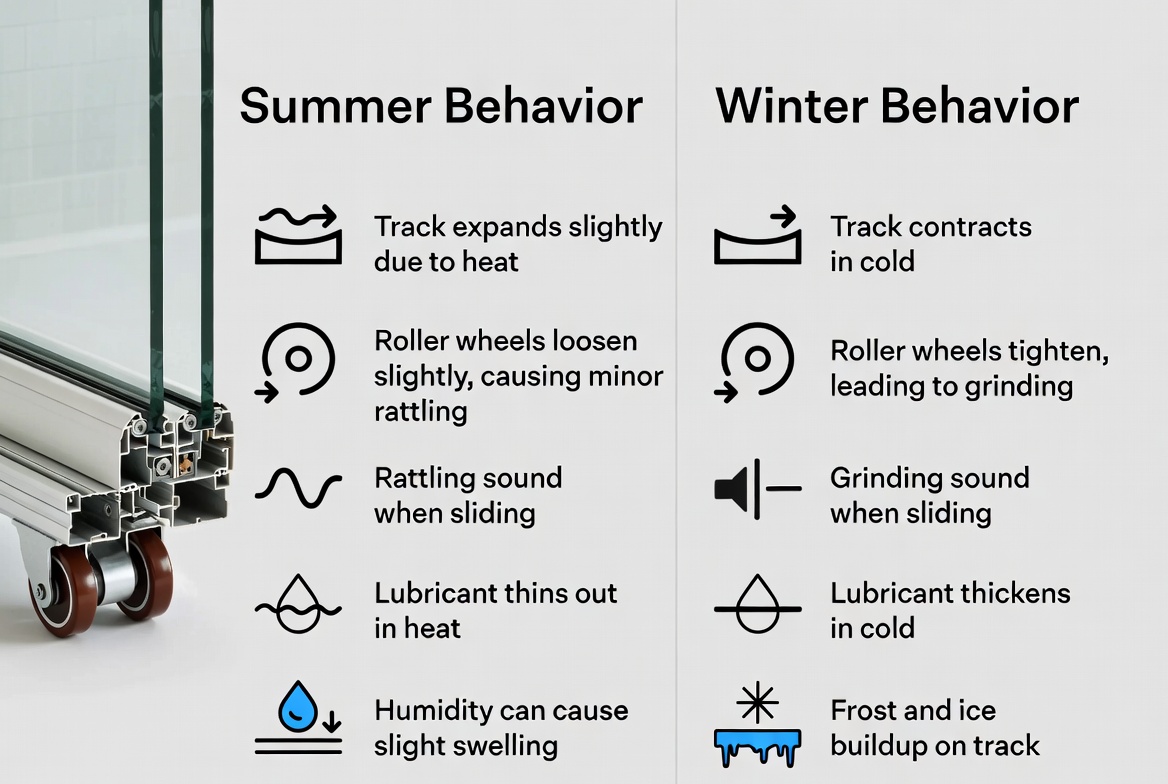
It can help to see these seasonal patterns laid out together, since the contrast makes the underlying cause a bit easier to follow.
| Factor | Summer Behavior | Winter Behavior |
|---|---|---|
| Track width | Tends to expand slightly | Tends to contract slightly |
| Roller fit | May feel looser, more play | May feel tighter, more resistance |
| Common sound | Rattling or wobbling noise | Grinding or scraping noise |
| Lubricant behavior | Can thin out slightly in extreme heat | Can thicken and add resistance |
| Added seasonal factor | Humidity and moisture swelling | Frost or ice buildup in track |
None of this means every door will show every symptom listed here. Climate, door material, how much direct sun or shade the door gets, and how well maintained the track already is all play a role in how noticeable these seasonal shifts actually are.
Why a Single Adjustment Doesn't Work Year Round
It might seem simpler to just find one adjustment setting and leave it alone permanently, but that approach tends to work only in climates with fairly mild, consistent temperatures throughout the year. In places with real seasonal swings, hot summers and genuinely cold winters, a fixed setting usually ends up being wrong for at least part of the year.
Think of it this way: if you adjust the rollers for a snug fit in the middle of winter, that same setting is likely to feel too tight once the track expands in summer heat, causing binding or extra friction, well before the rollers actually start showing physical wear. Adjust for a slightly looser fit to accommodate the summer heat, and that same door might rattle and feel loose all winter long, since the track has contracted, and now there's simply more room in a track that's now narrower than the loose midsummer setting was designed for.
This is part of why professionals in the door and window industry sometimes recommend a seasonal check, not necessarily a full adjustment every single time, but at least a quick inspection when the weather shifts significantly from one extreme to another.
How to Approach Seasonal Roller Adjustment
Timing Your Adjustment Checks
Rather than waiting until the door becomes genuinely difficult to operate, it helps to check things at the transition points between seasons, late spring before the peak summer heat arrives, and again in late fall before winter cold really sets in. Catching a slight misalignment early is usually easier to correct than waiting until the door is jammed or making a lot of noise.
What Adjustment Generally Involves
Most sliding patio doors have adjustment screws located near the bottom of the door panel, which raise or lower the roller assembly slightly. Turning this screw one direction typically raises the door slightly within the track, while turning it the other way lowers it. This changes how much of the roller sits within the track and, by extension, how much resistance or play the door has as it moves.
The specific process can vary between door brands and models, so checking the manufacturer's guidance for your specific door is generally a good starting point before making adjustments, since forcing an adjustment screw that isn't turning easily can sometimes cause more harm than good.
A General Seasonal Adjustment Checklist
- Clean the track thoroughly before making any adjustments, since dirt or debris can make the door feel stuck even when the roller adjustment itself is fine.
- Test the door's movement across its full range, not just a quick push, to see where resistance or looseness shows up.
- Locate the adjustment screws, usually near the bottom corners of the door panel.
- Make small adjustments, testing the door's movement after each small turn rather than making one large adjustment all at once.
- Apply a suitable lubricant designed for door tracks after adjusting, since this helps smooth out minor friction that remains even after a proper adjustment.
- Recheck the door a few days later, since some materials continue settling slightly after an adjustment, especially right after a big temperature shift.
When Adjustment Alone Isn't Enough
Sometimes a door that's struggling isn't actually a roller adjustment issue at all, but a sign of something else going on. If a door that's freshly adjusted still drags, rattles, or grinds shortly afterward, a few other possibilities are worth ruling out.
Worn rollers that have developed flat spots or cracks won't be fixed by adjustment alone, since the problem isn't the roller's position but the roller itself no longer rolling smoothly. Debris or buildup deep within the track, beyond what a quick wipe-down addresses, can also mimic the symptoms of a seasonal adjustment issue. And in some cases, especially with older doors, the track itself may have developed a slight warp or bend over the years, which no amount of roller adjustment will fully correct.
If seasonal adjustments stop resolving the issue the way they used to, it might be worth having someone take a closer look at the rollers themselves, since replacement, rather than adjustment, may be the more appropriate fix at that point.
Practical Tips to Reduce Seasonal Roller Stress
A few habits, practiced consistently, can help reduce how dramatically your patio door rollers react to seasonal temperature swings in the first place.
Keeping the track clean year round matters more than people realize, since dirt and debris amplify whatever seasonal tightness or looseness is already happening. A door with a spotless track has one less variable working against it.
Choosing a lubricant rated for a wide temperature range, rather than a generic household oil, tends to hold up better across seasonal extremes, since some lubricants are specifically formulated to resist thickening in cold weather or thinning out too much in heat.
Providing some shade or partial coverage for a patio door that gets intense direct sun for much of the day can also reduce how much the frame and track heat up and expand during summer months, which in turn reduces how dramatic the seasonal roller adjustment needs to be.
Patio door rollers aren't static parts that, once adjusted, stay perfectly set no matter what's happening outside. Heat causes expansion, cold causes contraction, and the track your rollers ride in shifts slightly with every seasonal change, sometimes enough to turn a smoothly sliding door into one that sticks, rattles, or drags depending on the time of year.
Understanding this pattern, and checking your door's rollers at the transition points between seasons rather than waiting for a problem to become obvious, tends to keep the whole system running more smoothly year round. A few minutes of attention each spring and fall, cleaning the track, testing the door's movement, and making small adjustments as needed, usually goes a long way toward avoiding the bigger headaches that come from ignoring these seasonal shifts altogether.