

 English
 Español
 日本語
日本語Sliding door roller replacement sounds like a quick hardware swap, but the door system is a tight balance of weight, alignment, and track condition. When any one of those is off—even slightly—the door may still feel rough, sit low, or refuse to lock cleanly. That's why "new rollers" don't always equal "smooth operation" on the first try.
Common challenges homeowners face
Homeowners typically run into problems for three reasons:
- Hidden wear: The rollers may be bad, but the track is also worn or dented, so the new wheels still bind.
- Load and leverage: Patio doors can be heavy; moving the panel to access rollers can shift alignment or damage the track if unsupported.
- Compatibility: Many rollers look similar, but small differences in wheel diameter, housing depth, axle type, or offset can change door height and how it rides.
Importance of proper installation for smooth operation
Rollers don't just "roll"—they set the door's geometry. Proper installation ensures:
- Even weight distribution across both rollers (less drag and longer life)
- Correct panel height so the lock aligns and weather seals contact evenly
- Stable travel so the door doesn't wobble, chatter, or grind the rail
In practice, good installation is what prevents repeat failures and premature track damage.
Top Mistakes to Avoid During Roller Replacement 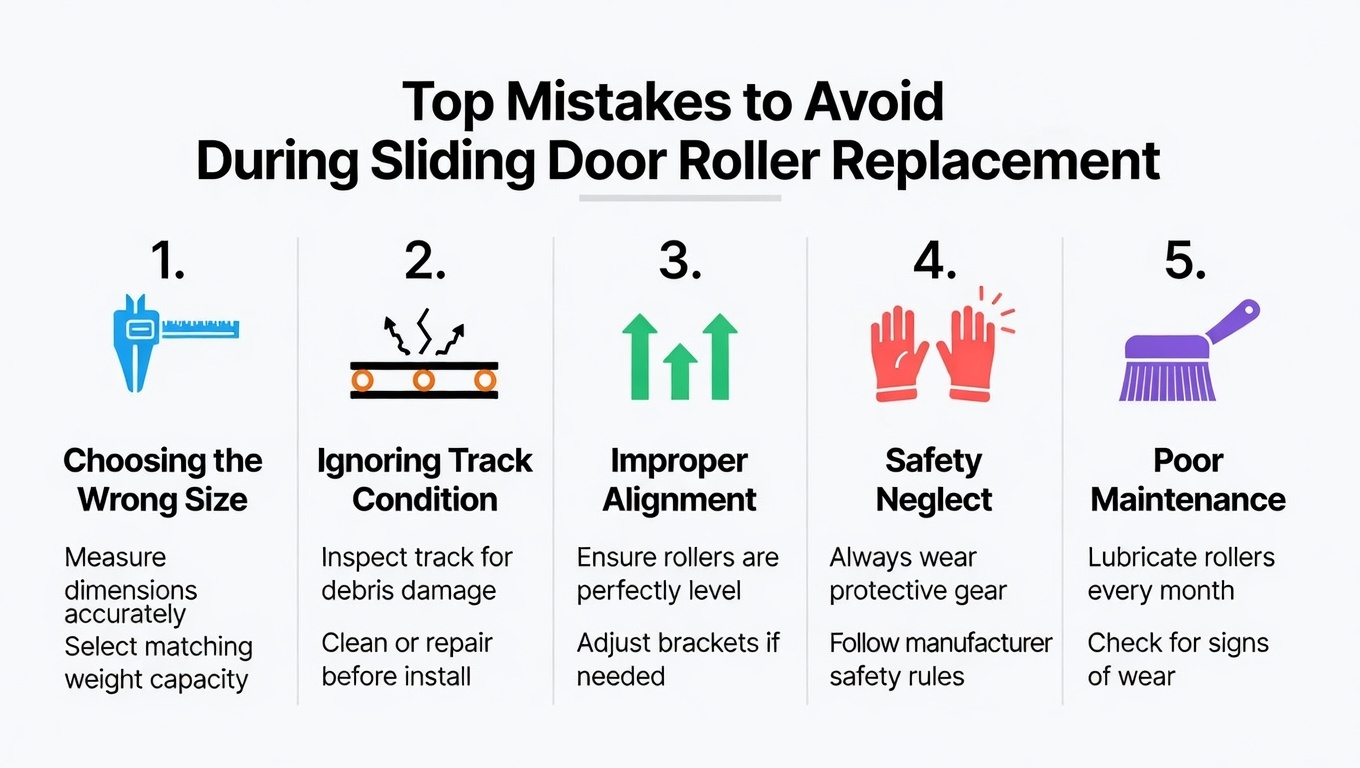
Roller replacement goes best when you treat it as a system check—not a single-part fix. These are the mistakes that most often lead to "it's worse than before."
1) Using the Wrong Roller Size
Even a small sizing mismatch can change how the door sits and moves.
- Incorrect wheel diameter can make the panel ride too high or too low.
- Wrong housing profile or offset can push the door out of square in the frame.
- Mismatched load rating can cause early flattening, noise, or bearing wear.
2) Ignoring Track and Frame Condition
New rollers can't compensate for damaged rails or a shifted frame.
- Dents and gouges create repeat sticking points and can chip wheels.
- Deep track wear can make the door "hunt" for a groove and feel unstable.
- Frame misalignment (out-of-plumb jambs) forces rollers to carry uneven load, shortening lifespan.
3) Poor Height Adjustment
Uneven adjustment is one of the fastest ways to create drag and lock issues.
- One side too low → the door drops and scrapes.
- One side too high → the latch won't line up, seals may gap, and the panel can bind.
- Over-adjusting can overstress the roller bracket and strip adjustment hardware.
4) Skipping Safety Precautions
Sliding glass panels can be deceptively heavy and awkward.
- Dropping or twisting the panel can crack glass, bend the frame, or deform the track.
- Pinched fingers and back strain are common when the door isn't properly supported.
- If you can't safely control the panel, replacement becomes a liability, not a savings.
5) Not Cleaning or Inspecting Before Installation
Installing new rollers onto a dirty, corroded system is like putting new tires on a road full of nails.
- Grit and corrosion accelerate bearing wear and create grinding noise.
- Debris in the channel can score new wheels within days.
- A quick pre-install inspection often reveals the real cause: track damage, loose fasteners, or alignment drift.
Quick-reference table (for a more visual, scannable section)
|
Mistake |
What you’ll notice |
Why it happens |
What to do instead |
|
Wrong roller size |
Door sits oddly, won’t lock, still drags |
Diameter/offset/load rating mismatch |
Match roller specs to original; verify wheel diameter & housing depth |
|
Ignoring track/frame |
Sticks at same spot, rough glide |
Dents, grooves, frame out of square |
Inspect and clean track; address dents/misalignment before installing |
|
Poor height adjustment |
Door drops, rubs, latch misaligned |
Uneven roller height/load |
Adjust in small increments; confirm even gaps and smooth travel |
|
Skipping safety |
Injury risk, bent frame, damaged glass |
Heavy/awkward panel handling |
Support the panel; use proper lifting method or pro help for heavy doors |
|
No cleaning/inspection |
New rollers wear fast, noisy operation |
Debris/corrosion remains |
Vacuum + brush + wipe track; check fasteners and rail condition |
DIY vs Professional Replacement
Replacing sliding door rollers sits in that awkward middle ground of DIY: it's not technically complex, but the panel weight, tight clearances, and alignment sensitivity can turn a "simple swap" into a frustrating afternoon—or an expensive mistake. 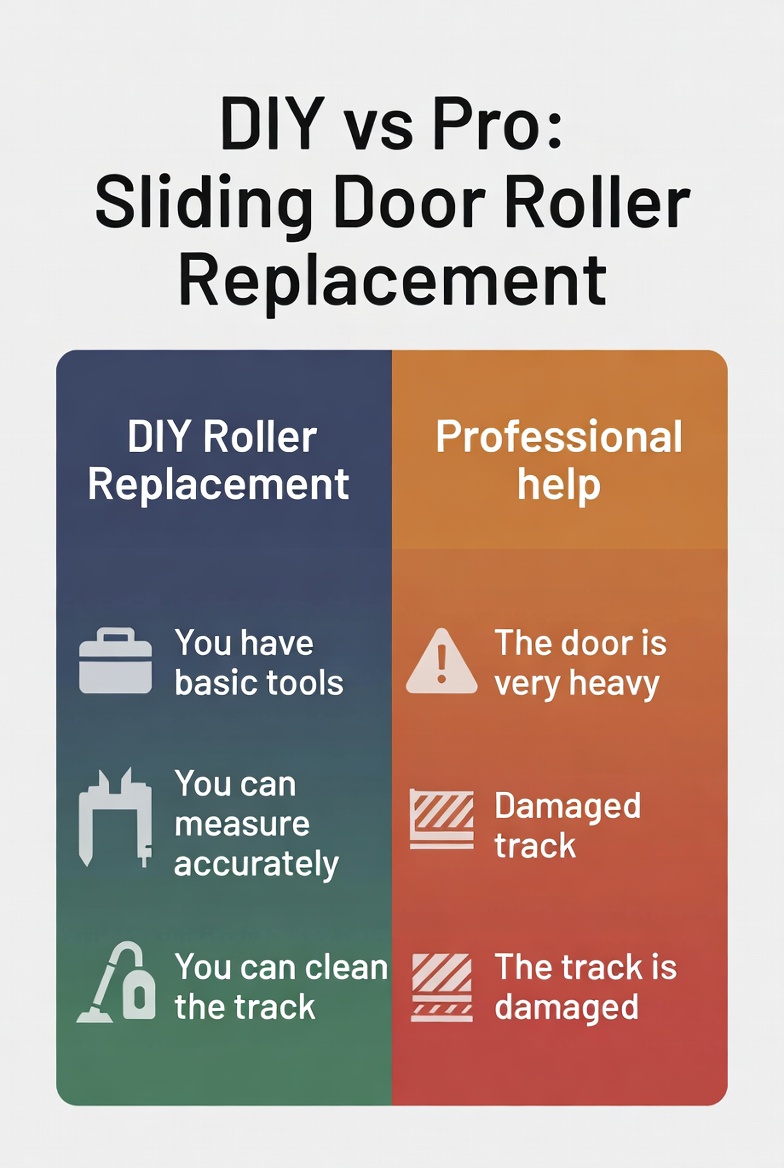
When a homeowner can safely replace rollers
DIY is usually reasonable when the door is manageable, the track is intact, and you can access the roller assemblies without wrestling the panel.
- The sliding panel is light to medium weight and can be controlled by two adults
- The track is straight and undamaged (no deep dents, gouges, or severe wear grooves)
- You can identify a matching replacement roller (wheel diameter, housing depth, adjustment style, load rating)
- The door is mostly aligned and you're addressing sticking/noise, not major sagging or frame issues
- You have a safe space to set the panel down without twisting or stressing the frame
When it's best to call a technician
- A pro is the safer (often cheaper) option when the job involves heavy glass, structural alignment issues, or track repair.
- The panel is heavy, oversized, or multi-panel (higher risk of glass/frame damage)
- The door drops, drags hard, or won't stay adjusted after you set height
- The track is bent, deeply scored, loose, or separating
- The frame looks out of square (rubbing corners, uneven gaps that change along travel)
- You suspect water intrusion/corrosion around the sill or hardware
- You can't confirm the correct roller model/specs with confidence
Tips for a Smooth Roller Replacement
A smooth result depends more on preparation and setup than on the actual screw-turning. The goal is simple: clean rolling surfaces + correct roller choice + even height and load.
Tools and preparation checklist
- Vacuum + stiff nylon brush (track debris removal)
- Clean rags + mild cleaner (avoid oily residue that traps grit)
- Screwdrivers / hex keys (matching your door hardware)
- Tape measure or caliper (confirm wheel diameter and housing size)
- Shims/wood blocks (support the panel safely during removal)
- Gloves + eye protection (glass and sharp aluminum edges)
- Silicone-based dry lube only if recommended for your track type (light use; don't "grease the dirt")
Best practices for alignment and adjustment
- Clean first, then test. If cleaning dramatically improves glide, you've learned the system's baseline.
- Replace rollers as a pair when possible to keep load balanced.
- Adjust height in small, alternating increments (left-right-left) to avoid twisting the panel.
- After adjustment, verify:
- Even reveal/gaps along the jambs
- Smooth travel without chatter
- Lock aligns without forcing
- Weatherstrip contacts evenly (no obvious daylight gaps)
Preventive maintenance for long-term performance
- Vacuum the track regularly (especially with pets, kids, or nearby landscaping).
- Keep the sill area dry and drainage paths clear.
- Don't ignore early scraping—continuous drag can destroy the track faster than you expect.
- If you're near salt air or high humidity, inspect roller hardware more often for corrosion.
Signs You've Made a Mistake
A fresh set of rollers should make the door feel noticeably better. If the door is still fighting you, the problem is usually incorrect roller geometry, uneven height, or track/frame damage.
How to spot misaligned or improperly installed rollers
- Door feels smooth in one section, then suddenly binds in another
- Panel sits "crooked" (one corner low) or the gaps aren't consistent
- Lock/latch only works if you lift or shove the panel
Common indicators of poor installation
- Grinding or clicking that persists after cleaning
- Repeating bump-bump-bump sensation (flat spot, wrong wheel profile, debris in track)
- Rollers maxed out at adjustment limits but the door still drags
- Door "wobbles" or rattles at the meeting stile
- New rollers show visible wear unusually fast (often a track problem, not the roller)
Roller replacement works best when you treat it as a system refresh: correct roller size, a clean and sound track, careful height adjustment, and safe handling of the panel. Avoiding the common mistakes—wrong parts, ignoring track/frame condition, and uneven adjustment—protects the door hardware, improves lock alignment, and restores that effortless glide that sliding doors are supposed to have.