

 English
 Español
 日本語
Someone leans back to reach a shelf, the front of the chair lifts, and for a second the whole balance of the machine hangs on two tiny wheels nobody ever talks about. That is the moment an anti-tip wheel earns its keep. Yet plenty of people who use a chair every day, and plenty of buyers sourcing components for mobility products, still treat this little assembly as an afterthought.
So, What Exactly Is an Anti-Tip Wheel?
An anti-tip wheel is a small auxiliary wheel mounted behind the rear wheels of a manual chair, on short arms that extend backwards. When the chair tips past a certain angle, these small wheels touch the ground before the chair can rotate any further. They act as a mechanical stop, not as a driving wheel and not as a brake.
The idea sounds almost too plain to deserve a name. But the plainness is the point. A back-tipping accident happens fast, usually while the user reaches, transfers, or climbs a kerb. There is no time to react. A passive stop that needs no input from anyone is the only kind of protection that works in that moment.
In trade language you will see the parts called anti-tippers, anti-tip casters, or rear stabiliser wheels. All three descriptions point to the same assembly.
Where the Assembly Sits and How It Does Its Job
Look at a manual chair from the side and trace an imaginary line from the user's centre of gravity down to the floor. That line falls somewhere over the rear wheel. Tip the chair backwards and the line travels rearward too. The anti-tip arms place a contact point just behind the rear wheel contact patch, so the tipping line hits the auxiliary wheel and stops there.
Three details decide whether this actually works in practice:
- Height adjustment. The arms can usually be set at a couple of heights. Set them low and the wheel drags on every slope; set them high and they only catch a deep tip. A sensible setting lets the wheel hover just clear of the ground during normal rolling.
- Ground clearance during normal use. The wheel should never touch down on flat ground while the user rolls normally, or every kerb becomes an obstacle.
- Bracket rigidity. If the mounting arm flexes when loaded, the protection shrinks exactly when it matters.
That last point is where the component quality conversation starts, and it is worth understanding what is inside the assembly before going further.
What the Wheel Itself Is Made Of
From a component supplier's view, an anti-tip assembly is a small stamped bracket, a short axle, and a compact wheel with a bearing in the middle. Nothing dramatic. But each element carries a specific job.
The Wheel
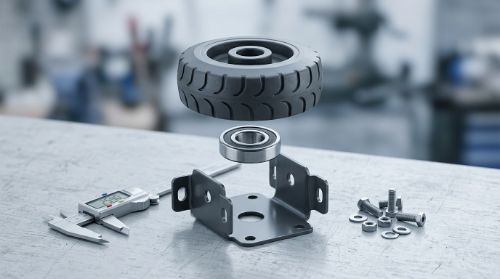
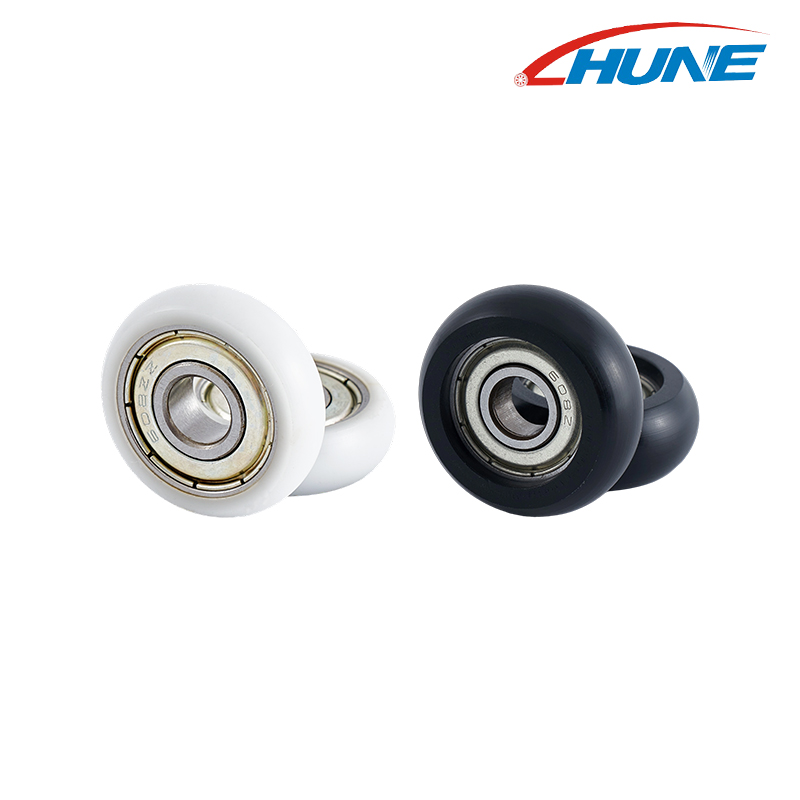
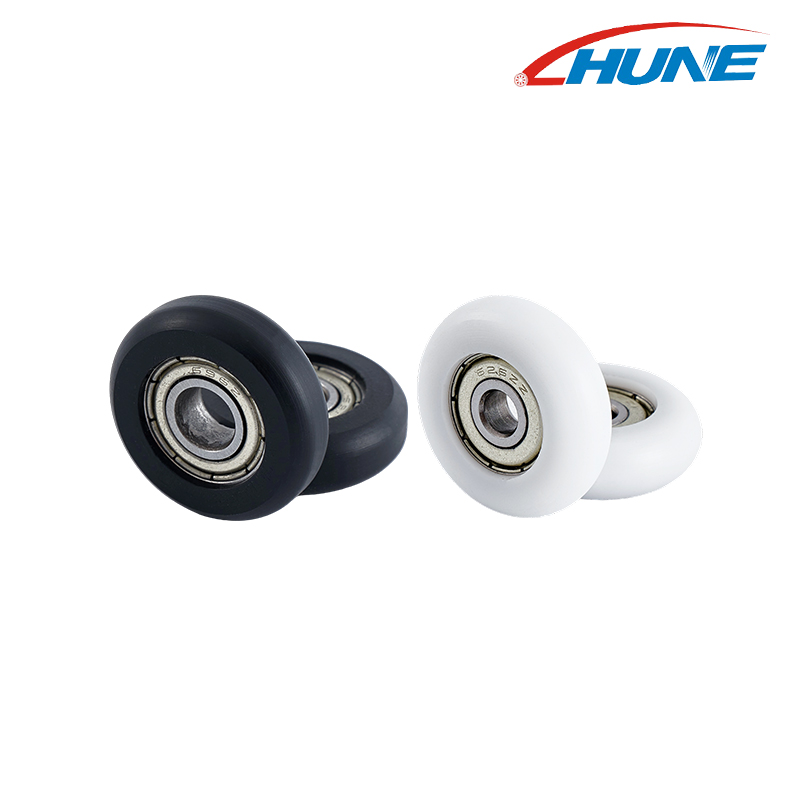
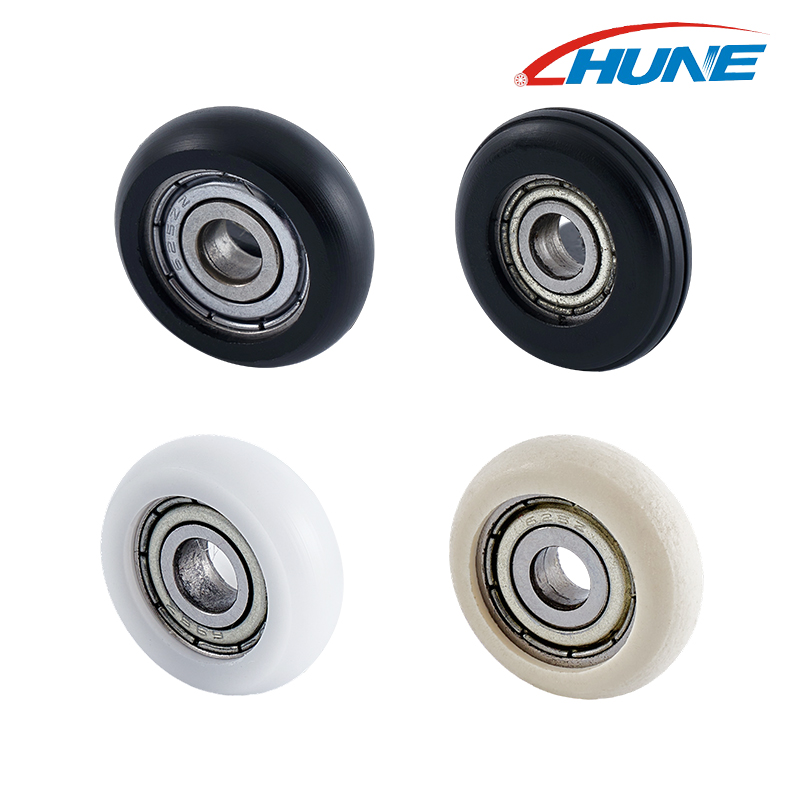
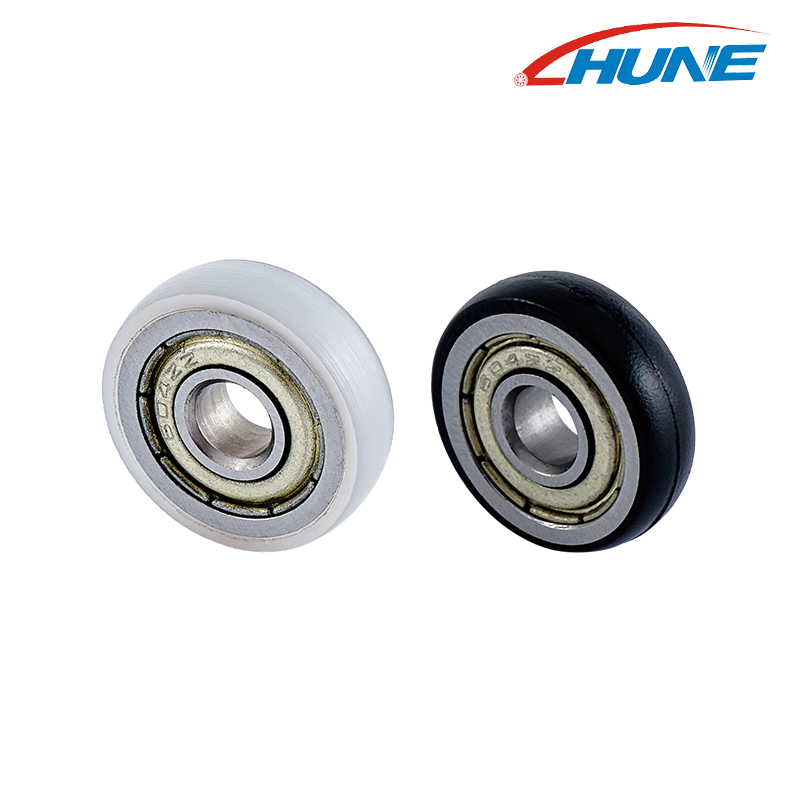
Small in diameter, fairly narrow, and made from a compound that grips without marking floors. Polyurethane and rubber blends are common because they stay quiet and hold grip on smooth institutional flooring. Nylon versions exist where durability matters more than silence, for example on chairs that live outdoors.
The Bracket
Usually stamped from steel strip, then plated or finished for corrosion resistance. The bracket takes the entire impact load when the chair tips, so the stamping geometry and the thickness of the metal strip both matter. This is also where designers decide whether the arm flips up, slides off, or stays fixed.
The Bearing
A sealed miniature bearing lets the wheel spin freely so it does not screech or chatter when it suddenly catches the floor. An unsealed bearing collects dust and lint, then starts grinding. Anyone who has heard a neglected caster squeal across a ward knows how quickly a small part becomes a large annoyance.
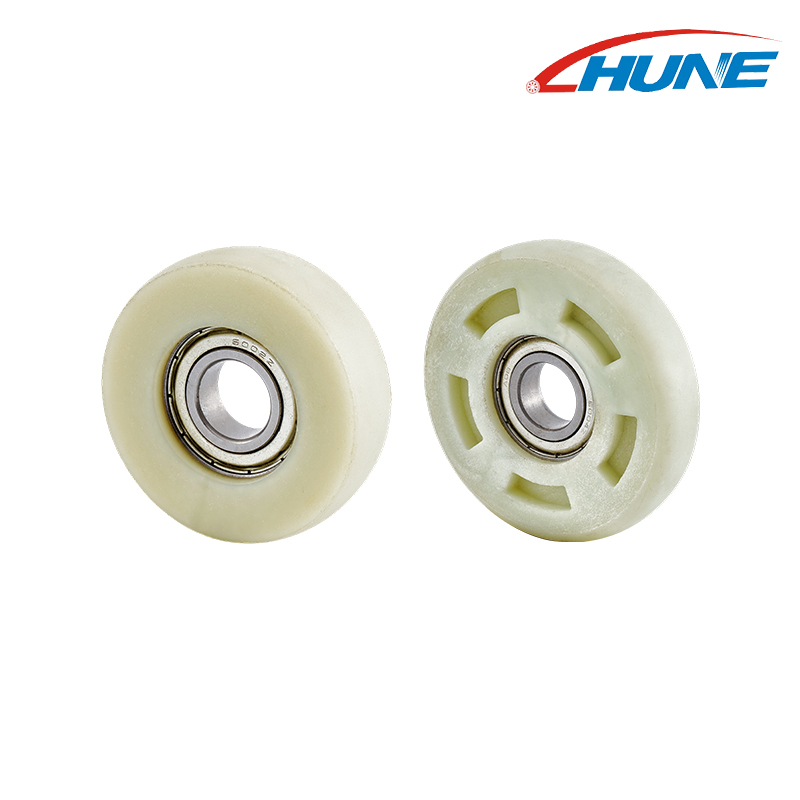
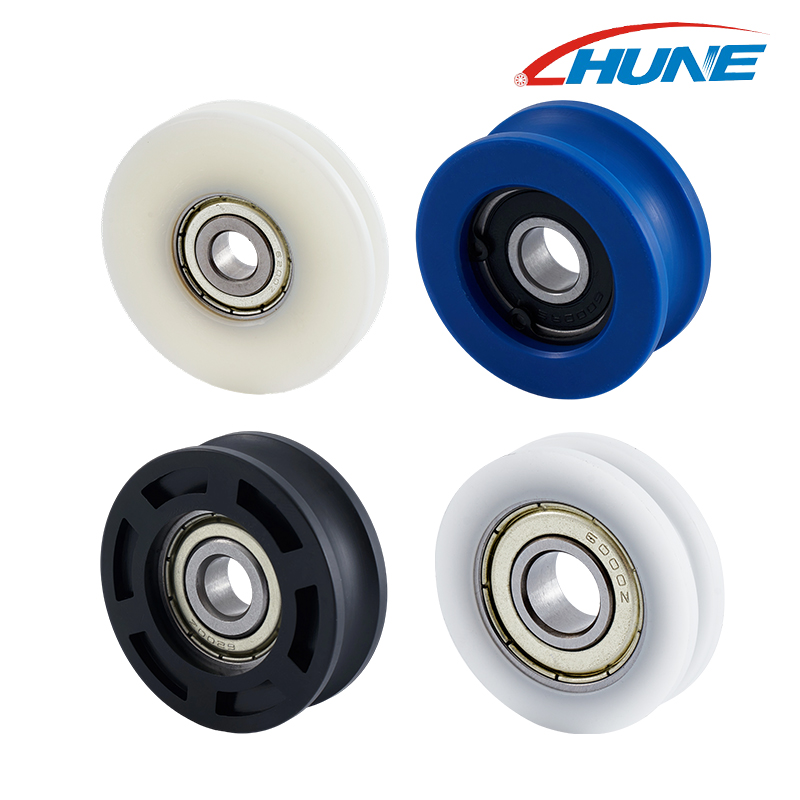
Manufacturers who already build bearing wheels for sliding systems often adapt the same construction for mobility applications. Bearing wheel components of this type follow the same logic: a precision race inside a quiet outer compound, pressed onto a steel axle.
When Are Anti-Tippers Actually Required?
Not every chair needs them, and knowing the difference keeps users comfortable without sacrificing safety. The scenarios below are where fitting a pair is close to non-negotiable.
Rehabilitation and New Users
Someone learning to balance in a chair has not yet calibrated their reach. Leaning backwards for a door handle or a shelf is the classic tipping scenario, and trainers rely on the rear stop while the user builds confidence.
Facilities With Slopes and Ramps
Care homes, hospitals, and rehabilitation centres are full of ramps, thresholds, and gentle inclines. Any slope shifts weight rearward. On a steep enough grade, even an experienced user can rotate past the recovery point. Rear stabilisers convert that risk into a mild bump instead of an injury.
Users With Limited Trunk Control
Conditions that weaken core muscles or affect reflexes mean the user cannot catch themselves mid-tip. For this group the assembly is a clinical requirement, often written directly into the equipment specification by a therapist.
Heavy-Duty and Bariatric Chairs
Higher loads move the tipping point and make recovery harder. Reinforced rear stops with sturdier stamped arms are part of the specification on these models.
Transport and Attendant-Propelled Chairs
When an attendant pushes a chair up a kerb using the tipping levers, the rear of the chair swings high. A rear stop limits how far the chair can rotate if the attendant misjudges the kerb, protecting both the user and the person pushing.
Situations Where the Pair Can Stay Off
Experienced users with strong trunk control sometimes remove the arms on purpose. Why? Because the stop limits one skill they rely on: the wheelie. Balancing on the rear wheels lets an experienced user cross kerbs, turn in tight spaces, and travel over rough ground with less effort. For that user, a permanently fitted stop removes capability rather than adding safety.
Many assemblies solve this with a flip-up or quick-release design. The arms lift out of the way for skilled manoeuvres and drop back down for everyday use. Competition and sports chairs go further and omit them entirely, since the whole sport depends on controlled tipping.
The honest summary: remove them only when the user has been trained, has the reflexes to match, and understands the trade.
Quick Answers to the Questions People Ask
These are the queries that come up again and again in searches and in customer service inboxes, answered plainly.
- Do they slow the chair down? Set at the correct height, they hover clear of the floor and add nothing to rolling effort. Drag only appears when the height is set wrong or the arms have bent.
- Can one side be fitted alone? No. The pair works together, and a single side creates uneven loading during a tip.
- Do they replace wheel locks? Not at all. Wheel locks hold a stationary chair still. Rear stops protect against rotation. A safe chair uses both.
- How do I know the height is right? On flat ground, the wheel should hang just above the floor. Ask a technician to check after any adjustment to the rear wheels or the seat.
- Are they standard across brands? Mounting interfaces vary, which is why replacement and OEM sourcing both require measurements of the frame tube, the bracket spacing, and the wheel width.
Why the Small Parts Deserve Serious Sourcing
Here is the part that procurement teams learn the hard way. The assembly looks trivial on a drawing, yet it is a safety component. A wheel that locks up, a bracket that bends, or a bearing that seizes turns a protective device into a hazard. Complaints in this category are expensive precisely because the part is cheap.
That is why experienced buyers evaluate the stamping, the bearing, and the wheel compound as a system rather than as separate items. Suppliers with in-house bearing assembly and metal stamping, such as HUNE, approach it that way, because the failure modes live in the joints between the three elements, not inside any single one of them.
Fitting a Pair: Where Installations Go Wrong
Whether the assembly is fitted in a workshop or at home, the mistakes that follow it around have a familiar ring. Knowing them in advance saves a return trip to the fitter.
Mounting Too High, Out of Habit
Installers often position the arms so the wheels sit well clear of the ground, on the reasoning that clearance prevents drag. Clearance matters, yes, but too much of it turns the stop into decoration: by the time the wheel touches down, the chair has already rotated far enough to frighten the user. The setting that works hovers a finger's width above flat ground, catching a tip early without interfering with normal rolling.
Ignoring the Hardware Beneath
The clamp that grips the frame tube loosens as tubes compress slightly under repeated loads and as vibration works through the joint. A fitting that felt solid on installation day can rotate within a month if the fastener was never torqued properly. Tighten to specification, mark the clamp position with a dab of paint, and any movement becomes visible at a glance.
Skipping the Slope Test
A height setting that behaves on a flat floor can drag badly on the gentlest ramp. Every installation deserves a slow roll down the nearest incline before the user takes over. Drag on a slope means the setting wants raising a notch; the trade-off between early catch and clean clearance is always settled by testing, never by theory.
A Care Routine That Takes Five Minutes
This is not a component that demands attention, but it rewards a small amount of it. A monthly routine keeps the pair ready for the day they are needed:
- Spin each wheel by hand. Free, quiet rotation passes; anything gritty or rough wants cleaning or replacement.
- Push the arm sideways gently. Solid resistance passes; noticeable flex or play at the clamp means a fastener check.
- Wipe the wheels and brackets with a damp cloth. Dust and hair bind small wheels faster than people expect, especially in homes with pets.
- Confirm the height settings on both sides still match. A knocked arm that sits a notch lower than its partner creates uneven catching during a tip.
- Look at the wheel surface for flat spots or embedded debris. A flat spot creates a rhythm of thumps and should retire the wheel.
Five minutes, once a month, and the assembly stays in the condition that makes the tipping test uneventful. Skip the routine entirely and the failure arrives quietly, discovered at the exact moment the part was supposed to earn its keep. That timing is worth avoiding.
An anti-tip wheel is a passive guard with one job: catch a backward tip before it becomes an accident. Required? For new users, facility environments, medically complex cases, and transport chairs, yes, without hesitation. Optional for trained users who depend on rear-balance skills, and removable by design in many assemblies.
If you source these components, judge the assembly by its bracket rigidity, its bearing sealing, and its wheel compound. If you use a chair, judge it by one simple test: on flat ground you should never notice it, and on a bad day you should be grateful for it.