

 English
 Español
 日本語
日本語Commercial sliding door rollers are small mechanical parts used inside sliding door systems to support the movement of door panels along a fixed track. They are commonly found in commercial buildings where doors are used many times every day, such as office buildings, airports, shopping malls, hospitals, and public transport stations.
At first glance, they don't look like something important. Most people pass through sliding doors without ever noticing them. The door just moves, quietly and smoothly, and that's it. But in reality, the roller is doing most of the physical work in the system. It carries the load, controls the movement path, and keeps the door stable even after long-term repeated use.
In modern building environments, sliding doors are no longer just about saving space. They are part of how people move through buildings. In places with constant traffic, even small changes in door performance can affect user experience. That's why the roller system inside becomes more important than it looks.
Why sliding door systems rely on rollers in real construction environments
Sliding doors are used mainly because they solve a practical problem: space limitation. A traditional hinged door needs an opening area, which is not always available in busy environments.
Sliding systems move sideways instead of swinging outward. That sounds simple, but without a proper rolling mechanism, the movement would feel heavy and inconsistent.
If a door moves directly on a surface, friction becomes a problem very quickly. The door will not only feel difficult to push, but also wear faster over time.
Rollers solve this by turning sliding friction into rolling motion. Instead of dragging, the door moves on rotating wheels along a track.
In real engineering projects, sliding systems are usually used in:
- Commercial entrances with continuous foot traffic
- Glass partition systems in office layouts
- Airports and transportation hubs
- Shopping mall storefronts
- Hospitals and clean-access environments
What they all share is not design style, but usage intensity. These doors are not used occasionally. They are used all day, every day, sometimes thousands of cycles without stopping.
Basic structure of a commercial sliding door roller system
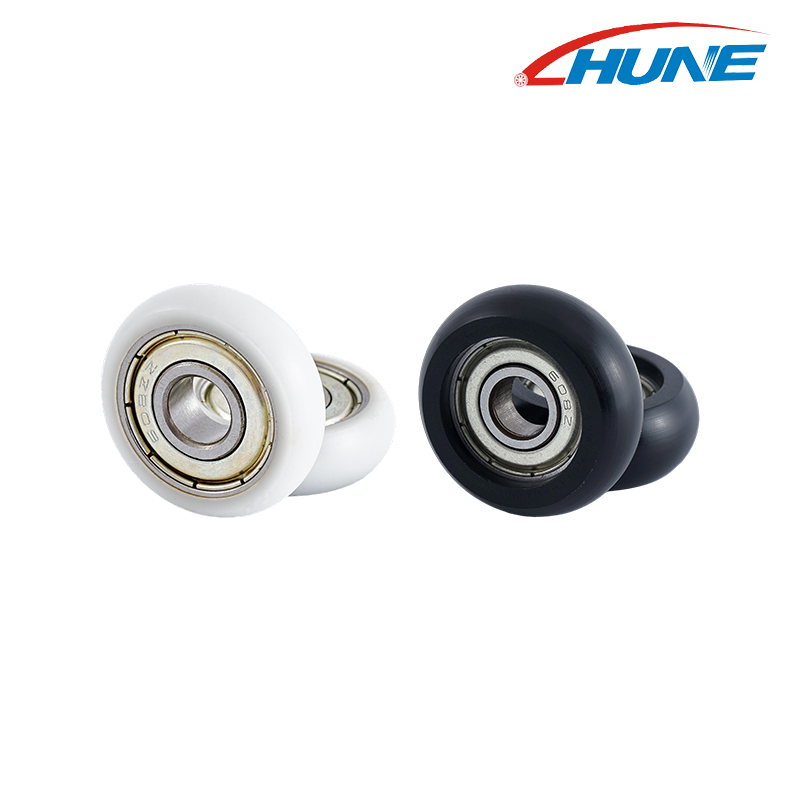
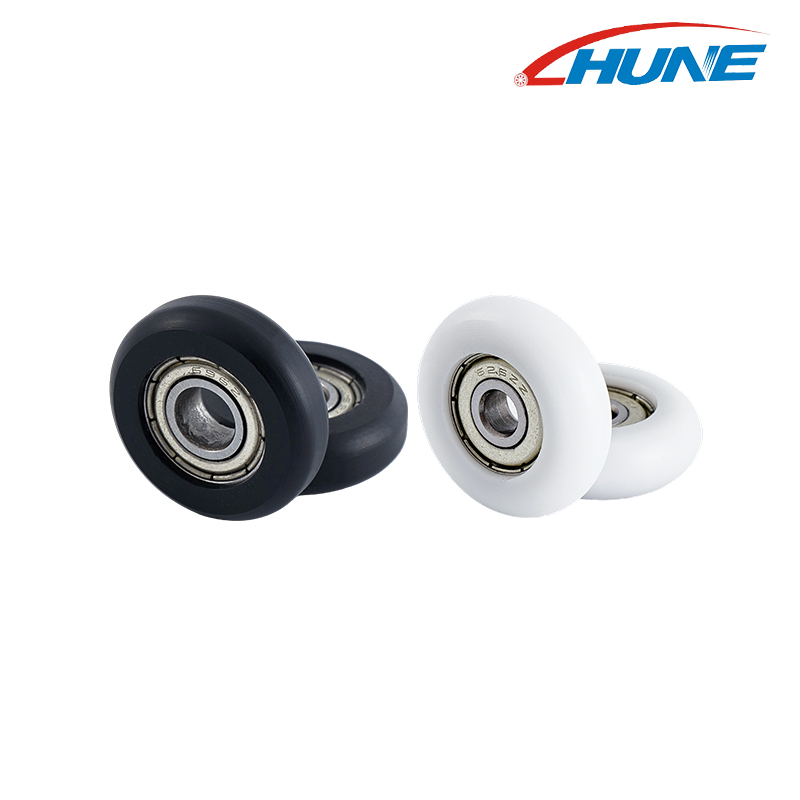
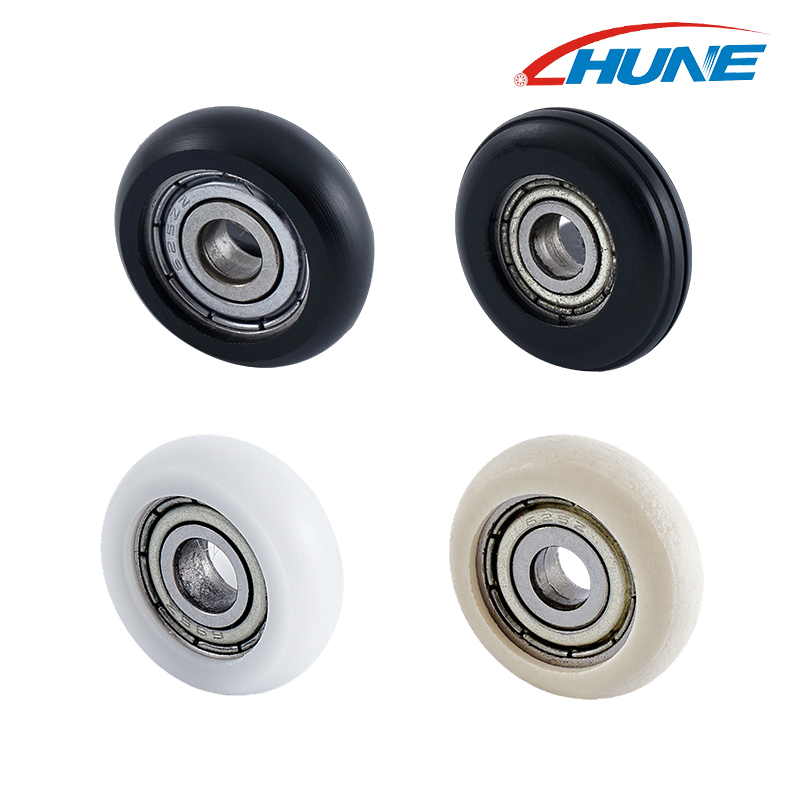
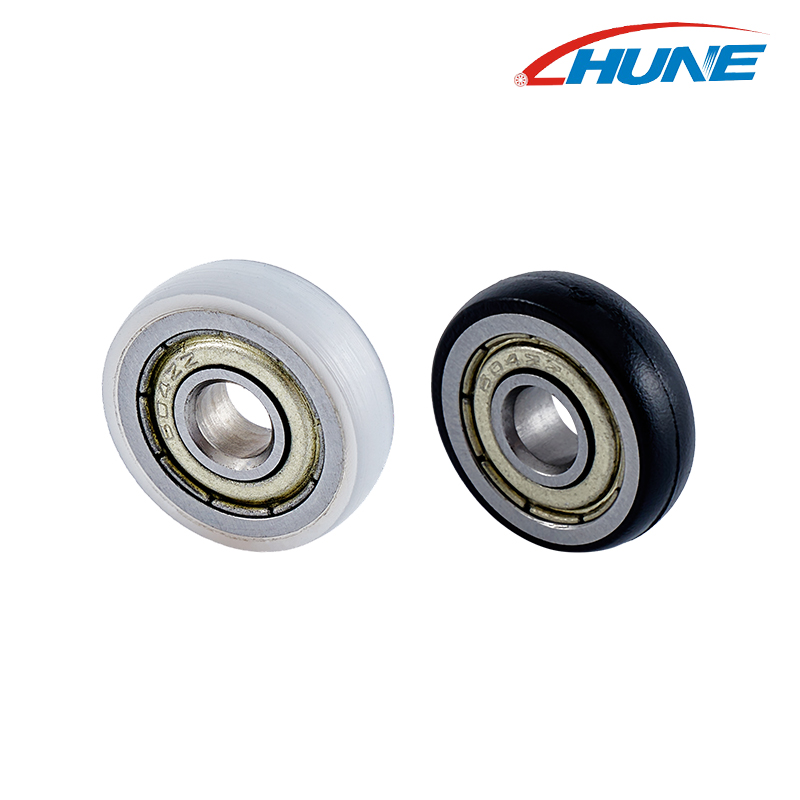
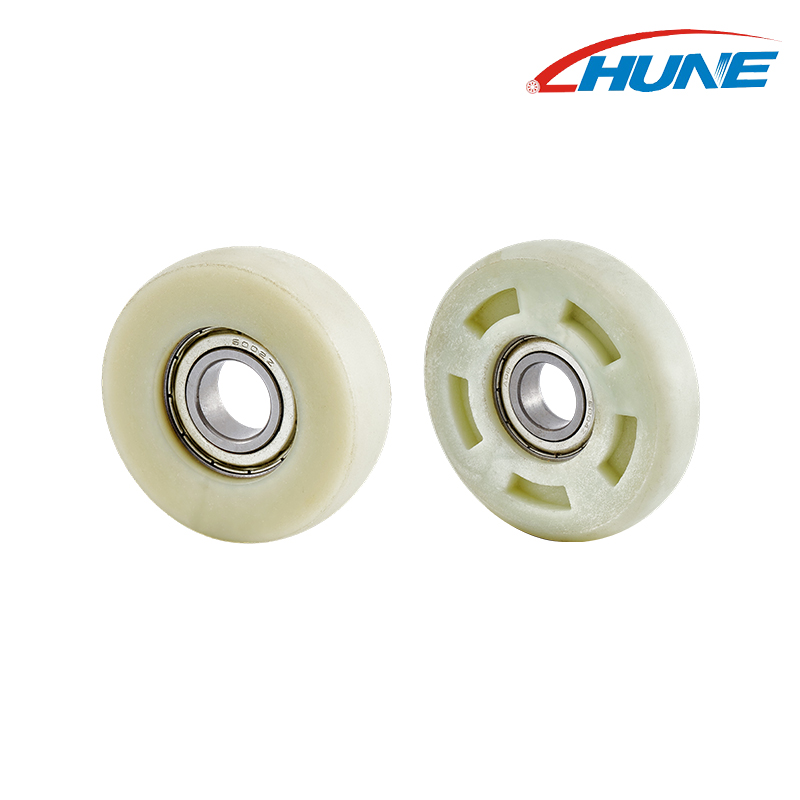
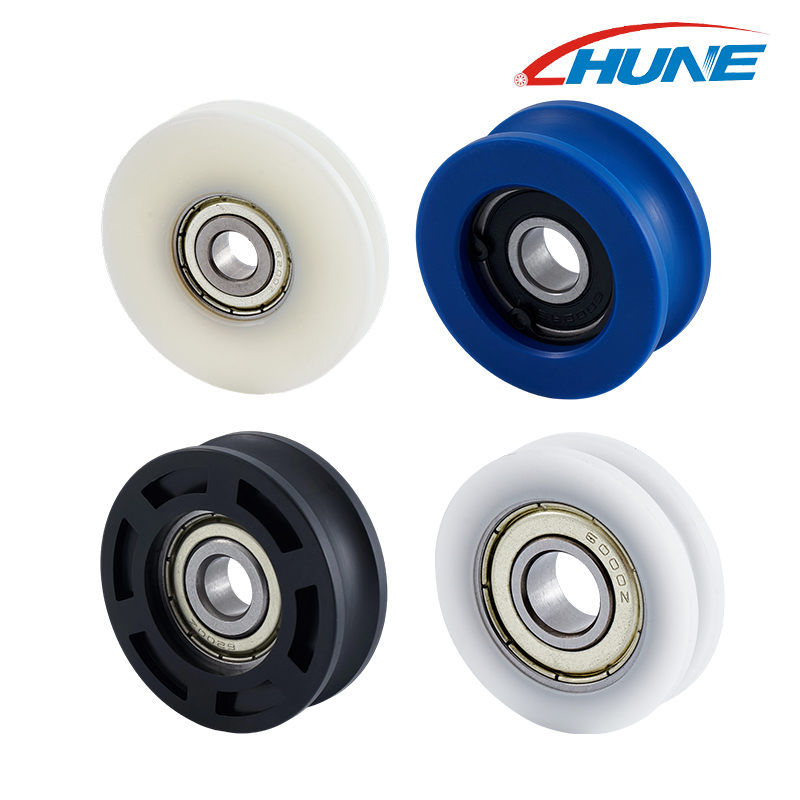
The wheel is the part that touches the track. It rotates when the door moves and carries part of the load. The feel of the door is often linked to this part more than anything else. A smoother surface usually gives lighter movement, while a rougher surface increases resistance and noise.
Inside the wheel is a bearing. This is what allows smooth rotation under pressure. When everything is in good condition, the door feels easy to push. When dust enters or wear starts to develop, the movement slowly becomes heavier. It is not an instant change. It happens gradually, which is why people often don't notice it at the beginning.
The housing holds everything together. It connects the roller system to the door structure and keeps alignment stable during repeated movement. It doesn't move, but it plays a quiet role in keeping the system consistent.
The mounting connection is what fixes the roller onto the door panel. If this part becomes slightly loose, the whole system can start to feel uneven. In real projects, this is often where small problems begin.
How commercial sliding door rollers work during real operation
When someone pushes the door, force goes into the door panel and then into the roller system. The wheels start rotating and guide the door along the track.
In real movement, it usually happens in a natural sequence:
- A push force is applied to the door surface
- Load transfers into multiple roller points
- Wheels begin rotating along the track
- Door moves in a controlled horizontal direction
In places like airports or shopping centers, this cycle happens all day long. There is no break. Because of that, even small issues like dust, slight misalignment, or surface wear can slowly build up and affect how the system feels.
This is also why sliding doors are often checked not just at installation, but again after months or years of use.
Key factors that influence performance in real environments
Material behavior is one of the first things engineers consider. Different environments behave differently. Some places need quieter operation. Some need better wear resistance. Others deal with humidity or temperature changes. That's why material choice is usually based on project conditions rather than a fixed rule.
Load distribution is another important factor. Most sliding doors use multiple rollers to share weight. If the balance is not correct, one side will carry more pressure. Over time, this leads to uneven movement or faster wear on specific points.
Bearings play a quiet but important role. When they are clean and stable, movement feels smooth. When dust builds up or wear begins, resistance slowly increases. It is usually a slow change, not a sudden failure.
Track condition is often underestimated. Even a good roller system cannot perform well if the track is not properly aligned or has surface issues. In real projects, track installation quality is often as important as the roller itself.
Common Types of Commercial Sliding Door Rollers
| Type | Typical Application | Practical Focus |
|---|---|---|
| Heavy duty rollers | Airports, railway stations, large public buildings | Designed for continuous operation and long-term stability under frequent use |
| Light duty rollers | Office interiors, meeting rooms, partition systems | Focus on smooth movement and quieter operation in moderate usage environments |
| Adjustable rollers | Installation projects, renovation work | Allow fine tuning on site to correct alignment and improve fitting accuracy |
| Protective surface rollers | Humid areas, semi-outdoor or exposed environments | Focus on material stability and performance consistency over time |
Common issues that appear after long-term use
Sliding door systems rarely fail suddenly. Most changes happen slowly and are easy to ignore at the beginning.
Noise is one of the most common signs. It usually comes from dust inside the track or natural wear inside the bearing.
Another common situation is uneven sliding. One side may feel slightly heavier than the other. This usually happens when alignment shifts or load distribution becomes unbalanced over time.
There is also gradual resistance increase. The door still works normally, but it no longer feels as light as it did in the beginning.
These are not unusual problems. In fact, they are expected in systems that are used frequently every day.
How to choose the right commercial sliding door rollers
Selection is usually based on real conditions, not appearance.
- Door weight and structure
- Daily usage frequency
- Indoor or outdoor environment
- Track compatibility
- Long-term maintenance expectations
Different environments naturally lead to different priorities.
In busy public spaces, stability is more important than anything else.
In office environments, quiet movement becomes more noticeable.
In humid or outdoor conditions, material resistance matters more.
In installation-heavy projects, adjustability becomes useful.
It is always about matching the situation, not choosing a "better" product in general terms.
Installation impact on long-term behavior
Installation quality often decides how the system behaves after months of use.
The track needs to stay level from start to end. Even small deviations can change movement feel.
Mounting points should be tightened properly so nothing shifts during repeated operation.
Door balance also needs attention. If weight is uneven, one side will slowly wear faster than the other.
After installation, simple movement testing is usually done to check whether the system runs smoothly and consistently.
Maintenance in real working environments
- Cleaning dust from the track
- Checking if movement feels consistent
- Listening for unusual noise changes
- Making sure mounting points are still stable
These small checks often prevent bigger problems later. In many real cases, performance issues are not caused by design, but by long-term neglect.
Industry trends affecting sliding door systems
Building design trends continue to shape how sliding systems are used.
Glass architecture is becoming more common, especially in commercial buildings. This increases demand for smoother and quieter movement systems that match modern visual design.
Energy efficiency is also influencing system design, especially in larger buildings where long-term operation matters.
Automation is slowly being introduced in some environments, where sliding doors are connected with sensors or access systems.
At the same time, large infrastructure projects like airports and metro systems continue to expand, which increases demand for stable and durable sliding mechanisms.
Common misunderstandings in product selection
One common misunderstanding is thinking all roller systems behave the same. In real use, differences in structure and materials become more obvious over time.
Another assumption is that maintenance is not needed after installation. In reality, even simple systems benefit from occasional checks.
There is also a tendency to focus on external appearance, while internal structure is what actually determines long-term performance.
Simple selection checklist
- Door weight
- Usage frequency
- Environmental conditions
- Track compatibility
- Maintenance plan
- Installation requirements
These are basic but important checks that help avoid problems later.
Frequently asked questions
What are commercial sliding door rollers used for?
They support door movement by reducing friction and guiding the door along a fixed track.
Do sliding door rollers wear out over time?
Yes, but gradually. Wear depends on usage frequency, load, and environment.
Can roller parts be replaced individually?
In many systems, yes, depending on the design structure.
Why does a sliding door become noisy?
Usually due to dust, wear inside bearings, or slight alignment changes.
Does installation affect performance?
Yes, installation quality has a direct influence on long-term movement stability.
Commercial sliding door rollers may look like small components, but they play a real role in how door systems behave in everyday environments.
When they are selected and installed properly, the system usually stays stable and predictable for a long time. When they are not matched correctly, even a simple door system can slowly become inconsistent during daily use.