

 English
 Español
 日本語
日本語If your 3D printer rides on rollers—most commonly V-wheels running on aluminum V-slot extrusions—the wheel material is not a cosmetic choice. It affects noise, vibration, wear, calibration stability, and even how forgiving the machine is when your frame isn't perfectly square.
Three wheel material families show up most often in the hobby and prosumer world: POM (acetal/Delrin-type plastics), nylon (PA), and metal (usually aluminum or steel wheels, depending on the system). Each has a "personality." Pick the wrong one and you may end up chasing artifacts in slicer settings that are actually coming from contact mechanics.
1) First: What a Roller Wheel Actually Has to Do
A V-wheel on a printer typically does four jobs at once:
- Support load (bed mass, gantry mass, toolhead inertia)
- Guide motion (keep the carriage constrained with minimal play)
- Dampen vibration (reduce resonance and transmitted noise)
- Survive contamination (dust, filament particles, occasional grit)
Your belts/lead screws may provide the "motion," but the wheels decide whether that motion is smooth, repeatable, and quiet.
2) Material Snapshot: POM vs Nylon vs Metal (At a Glance)
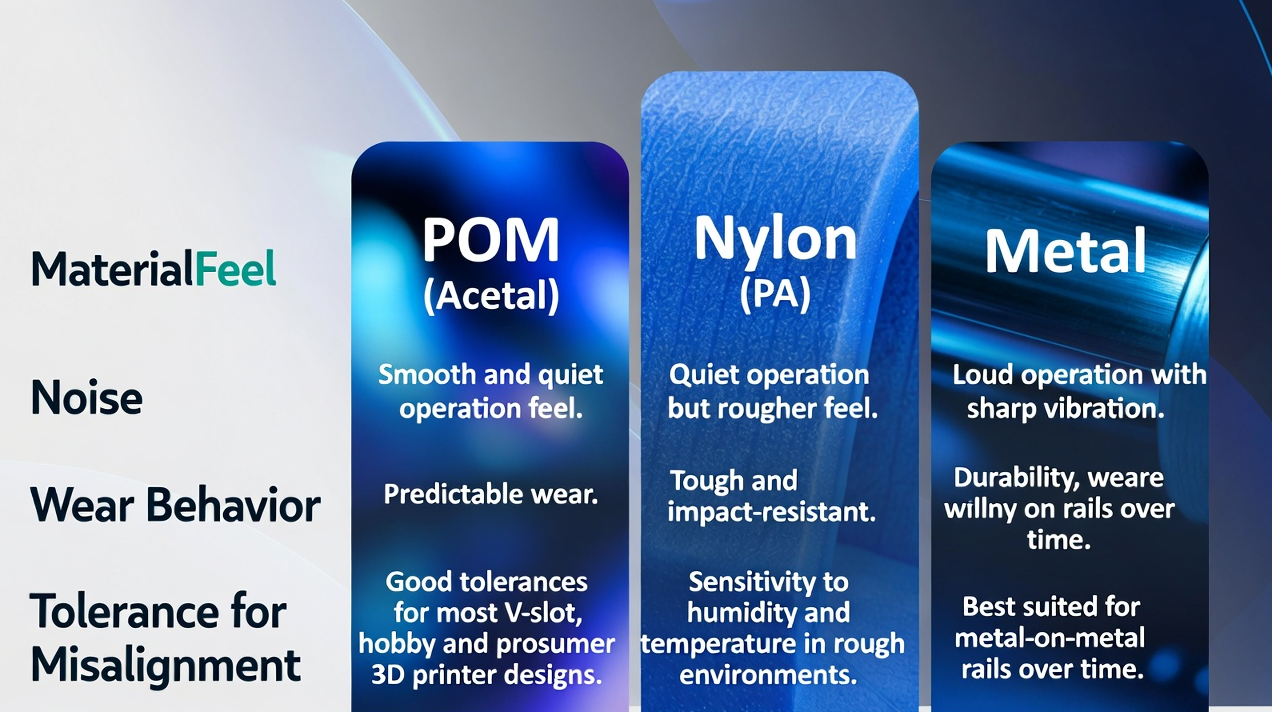
Here's a quick, practical comparison. I'll explain each line in the sections below.
|
Material |
Feel / Noise |
Wear Behavior |
Tolerance for Misalignment |
Best Use |
|
POM (Acetal) |
Smooth, quiet, “buttery” |
Predictable wear; flat spots if overtightened or parked |
Good |
Most V-slot hobby and prosumer printers |
|
Nylon (PA) |
Quiet, slightly softer feel |
Tough and impact-resistant; humidity-sensitive |
Very good |
Rough environments, shock loads, forgiving setups |
|
Metal |
Loud, transmits vibration |
Wheel lasts; rail wears instead |
Low |
Metal rail systems, high heat or abrasion cases |
The key theme: plastics protect the rail and damp vibration; metal protects the wheel but may punish everything else.
3) POM (Acetal): The Default for a Reason
POM wheels are common on V-slot machines because they hit a sweet spot between rigidity and damping.
- What POM does well
- Low friction and smooth rolling on aluminum V-slot
- Good dimensional stability in typical indoor conditions
- Quiet operation (reduces "singing" and chatter)
- Predictable wear pattern: you can often "tune out" small issues with proper eccentric adjustment
- Typical failure modes
- Flat spots if wheels are overtightened or the printer sits parked under load for long periods
- Glazing (shiny hardened band) from excessive pressure/heat at the contact point
- Black dust buildup when the wheel is being abraded (often a sign of too much preload or misalignment)
- When POM is the best choice
- You want the classic quiet V-wheel experience
- Your printer lives indoors and doesn't face abrasive dust
- You care about print surface quality and low vibration
- Your frame is decent but not metrology-grade square (POM tolerates "real life")
If you're upgrading a typical Ender-style or V-slot Cartesian/bed-slinger machine and nothing else is changing, POM is usually the safest, most proven choice.
4) Nylon (PA): Tough, Forgiving, Slightly More Variable
Nylon wheels tend to feel a bit softer than POM and are known for toughness and impact resistance.
What nylon does well
- High toughness: handles shock and rough handling without chipping easily
- Great damping: can be very quiet and forgiving
- Good resilience when your printer sees occasional bumps, minor crashes, or vibration-heavy use
The big trade-off: moisture sensitivity
Nylon can absorb moisture from the air, which can slightly change:
- dimensions,
- stiffness,
- and feel over time.
In most home environments this is not catastrophic—but if you're chasing ultra-repeatable mechanics, it can be a factor.
Typical failure modes
- Creep under constant load (slow deformation), especially if overtightened
- "Mushy" constraint if the system is tuned too loosely (can show up as carriage play)
- In humid environments, slight changes can make a once-perfect eccentric adjustment feel "off"
When nylon is the best choice
- You want maximum forgiveness and shock tolerance
- Your machine lives in a workshop where the occasional grit happens
- You value quietness and don't mind re-checking adjustment periodically
- You run moderate speeds/accelerations and prioritize reliability over absolute crispness
Nylon is often a good choice for users who prefer "robust and tolerant" over "sharp and precise."
5) Metal Wheels: Durable… but Only in the Right System
Metal wheels sound appealing: hard, long-lasting, and "premium." The catch is that V-slot printers were largely designed around plastic wheels on aluminum extrusions. Switch to metal without redesigning the contact pair and you can create new problems.
What metal wheels do well
- High wear resistance of the wheel itself
- High stiffness: less wheel deformation under load
- Potentially better behavior at higher temperatures (though most printers don't heat wheels directly)
The downsides on typical V-slot aluminum
- Noise and vibration transmission: metal-on-metal contact tends to be louder and harsher
- Track wear: if something must wear, it may become your aluminum extrusion instead of the wheel
- Less debris forgiveness: grit becomes an abrasive grinder
- Less tolerance for misalignment: the system can bind or chatter if squareness and preload aren't excellent
When metal wheels make sense
- Your printer is not relying on aluminum V-slot as the primary precision guide, or:
- the system is explicitly engineered for metal wheels on hardened tracks, or
- you're in an abrasive/industrial use case where plastic wheels are being consumed rapidly and you accept track wear/noise as trade-offs.
For most mainstream hobby V-slot printers, "metal wheels" are often a lateral move at best and a downgrade at worst unless the rest of the motion system is upgraded accordingly.
6) What Print Problems Each Material Tends to Influence
Wheel material affects the "feel" of motion, which shows up as specific print symptoms.
POM-related symptoms (when worn or misadjusted)
- repeating vertical banding (flat spots),
- sudden increase in ringing (loose preload),
- black dust and rough travel (over-preload).
Nylon-related symptoms
- slight drift in tuning over weeks/months in humid conditions,
- occasional "soft" feel leading to micro-wobble if too loose,
- otherwise similar to POM.
Metal-related symptoms (in V-slot contexts)
- more audible resonance and sometimes more visible high-frequency artifacts,
- rail wear leading to long-term inconsistency,
- binding or chatter if alignment is not excellent.
Material won't fix a crooked frame or a loose belt, but it can absolutely decide whether your machine is quiet and forgiving or stiff and temperamental.
7) How to Choose: A Practical Decision Path
Here's a simple way to decide without overthinking it:
- Is your printer a typical V-slot aluminum extrusion design?
- Yes → choose POM unless you have a specific reason not to.
- Do you print in a dusty workshop or want extra toughness/forgiveness?
- Yes → consider nylon, and plan to re-check adjustment occasionally.
- Are you operating in an abrasive environment or on a track designed for metal wheels?
- Yes → metal can make sense, if the rail/track is appropriate and you accept noise/wear trade-offs.
- Do you hate noise and value smooth "glide"?
- Favor POM (or nylon).
- Do you want the least maintenance variability over time?
- Favor POM (generally more dimensionally stable than nylon in humidity swings).
8) Two "Boring" Factors That Matter More Than Material
This is the part most people skip, then blame the wheel material.
(1) Preload / eccentric nut adjustment
Overtightening kills plastic wheels (flat spots, dust, drag). Undertightening causes wobble and ringing. A correct adjustment:
- removes play,
- keeps motion smooth end-to-end,
- doesn't require "force" to move by hand.
(2) Clean rails and realistic contamination control
A tiny amount of grit can turn any wheel into a wear machine. Keep V-slots clean and avoid sticky lubricants that trap dust.
If you only change the wheel material but keep the same misalignment and overtightening, you'll just get different failures, not fewer.
- POM (Acetal): Best all-around choice for most V-slot 3D printers — smooth, quiet, stable, and predictable wear.
- Nylon (PA): Tougher and more forgiving, usually quiet, but more sensitive to humidity and long-term creep under high load.
- Metal: Very durable, but louder and less forgiving; can wear down aluminum V-slot rails faster unless the system is specifically designed for it.
For classic silent, smooth, and consistent motion on aluminum V-slot machines, POM is usually the best option. Choose nylon when toughness and tolerance for misalignment matter more.
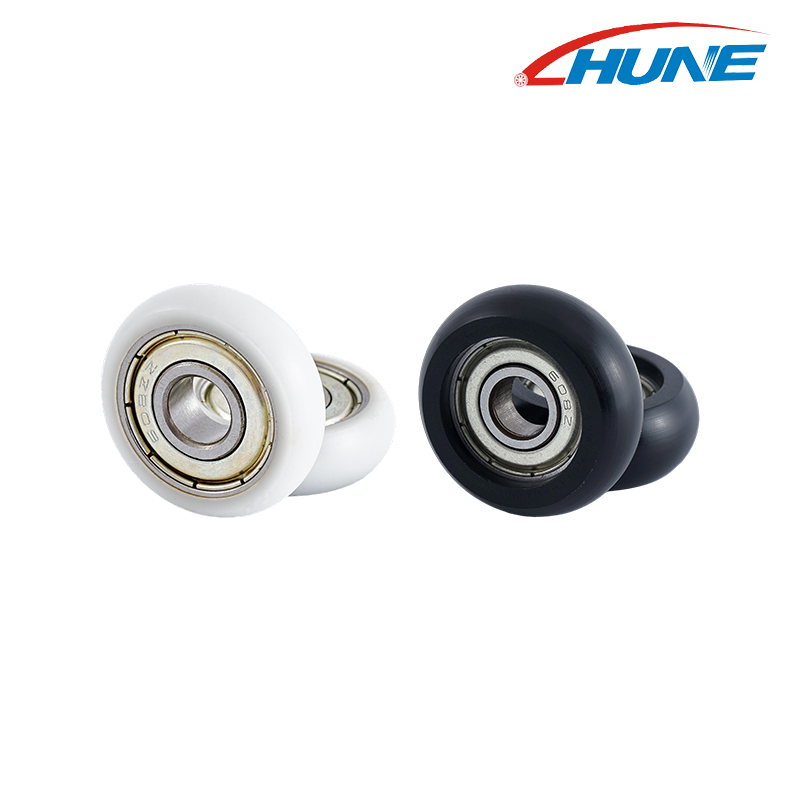
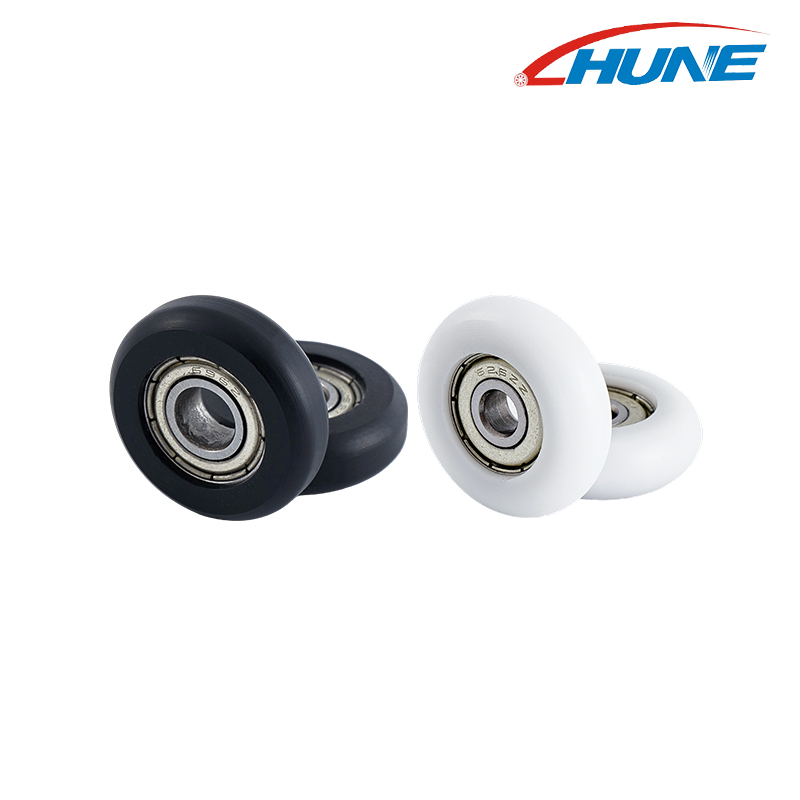
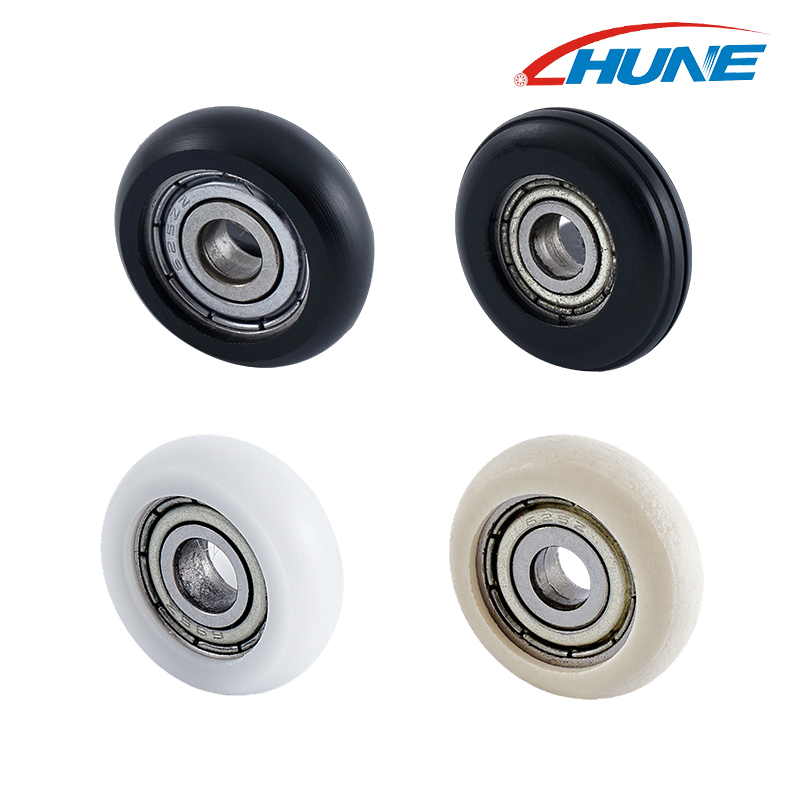
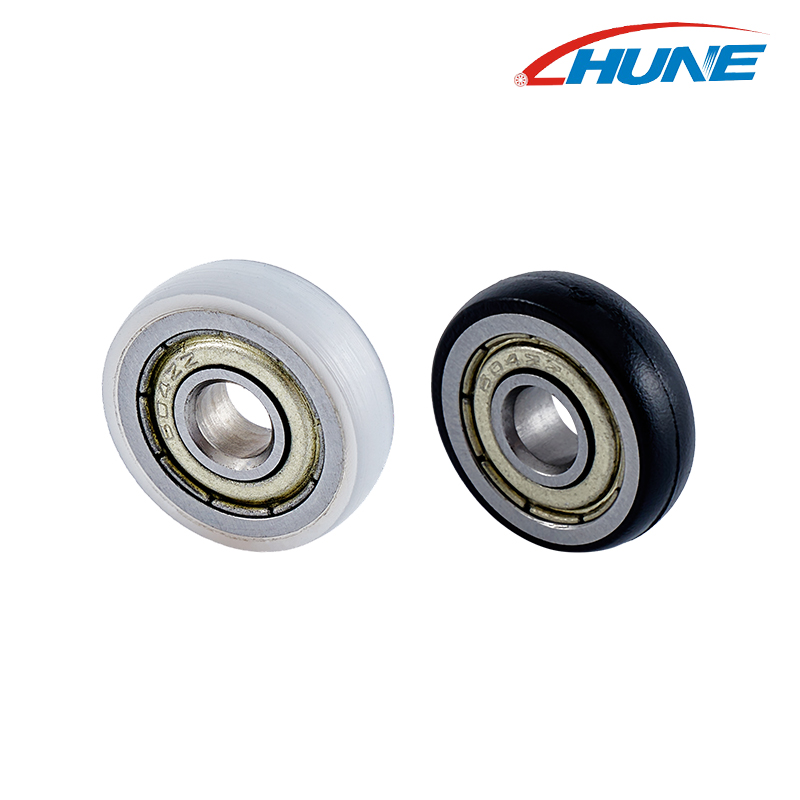
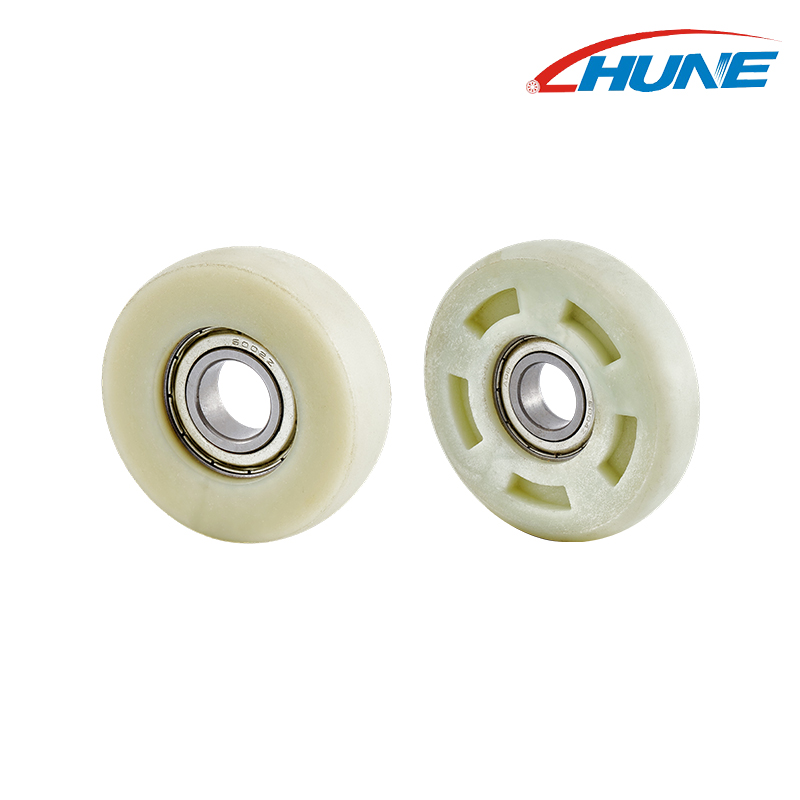
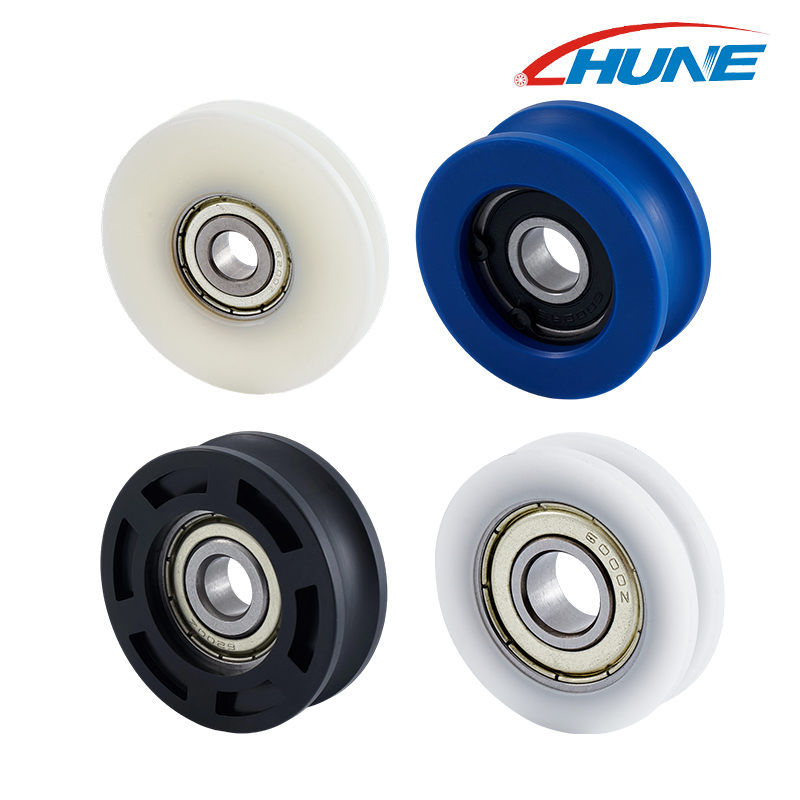
professional 3D Printer Rollers factory – HUNE offers high-quality POM and nylon rollers designed for precision, low noise, and long-term reliability in 3D printer applications.