

 English
 Español
 日本語
Walk down a hospital corridor at two in the morning and listen. The machines hum, the ventilation breathes, and every so often a piece of equipment rolls past with a faint, steady whisper of wheels. That whisper is deliberate. Somewhere in the design phase, an engineer decided that this cart, chair, or bed would move without announcing itself.

Sealed, quiet-running small wheels are a signature of medical equipment, and the reasons behind that signature reveal a lot about how component choices ripple through an entire facility.
Noise Is a Clinical Matter, Not a Courtesy
In plenty of industries, a squeaky wheel is an annoyance. In a care facility, it is closer to a clinical problem.
Patient rooms host people who sleep in fragments, often with pain, anxiety, and heightened sensitivity to sound. Night-shift rounds involve frequent movement of IV stands, monitoring carts, and supply trolleys. Every squeal or chatter from an unmaintained wheel registers on a patient who is trying to rest, and repeated small disturbances have a measurable effect on rest quality.
There is a second layer as well. Caregivers develop a trained ear. A change in the sound of an approaching trolley often signals a mechanical change, a seized race, a cracked compound, a loosened fastener. Quiet, consistent rolling makes abnormalities audible. In a facility full of noisy wheels, that early-warning signal drowns.
This is why acoustic performance shows up in equipment specifications, and why the humble wheel sits at the centre of it.
What "Sealed" Actually Means on a Miniature Wheel
The word gets printed on countless datasheets, yet its meaning on a small wheel deserves a closer look.
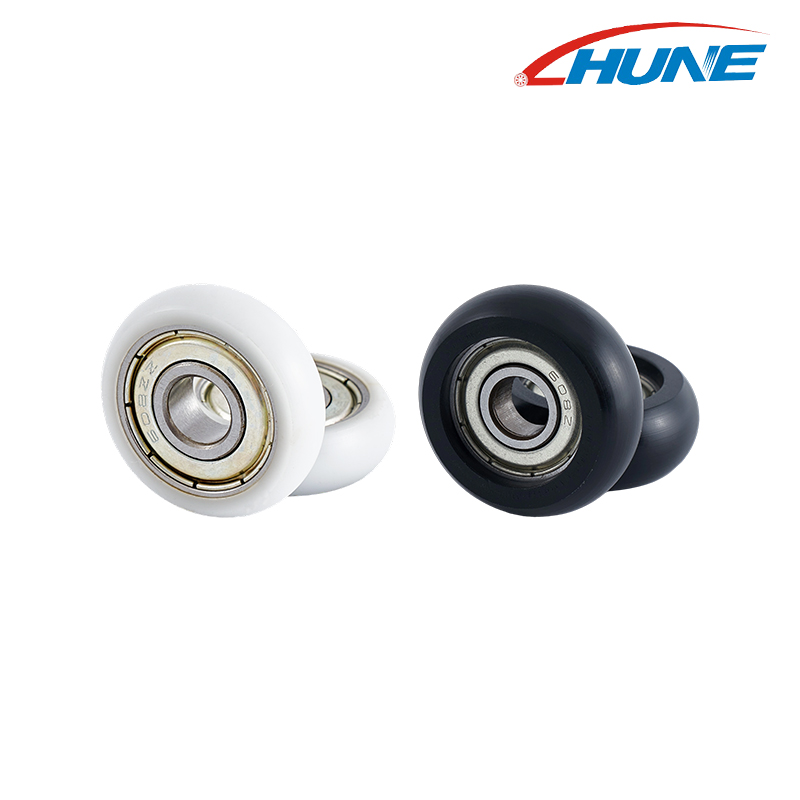
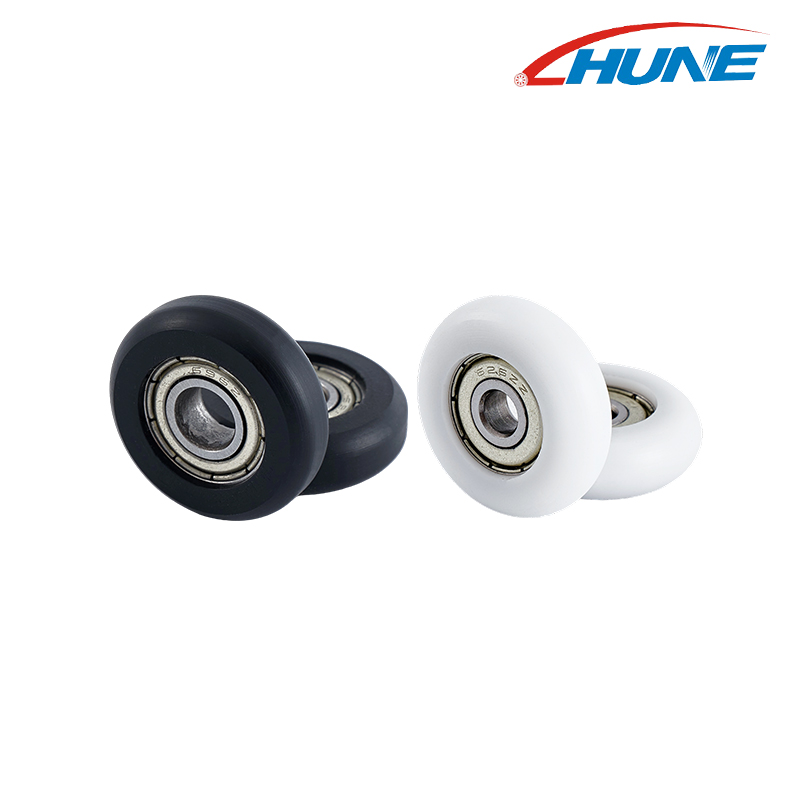
A sealed bearing uses contact elements that ride against the rotating inner ring, closing the gap between the moving and stationary parts. This design keeps out the three enemies of a care-facility wheel: liquids, lint, and cleaning residue.
The Enemies Arrive Daily
Consider what a hospital floor endures. Mopping solutions, disinfectant sprays, powdered detergents, hair, paper fibres, and the occasional spill. Each of these can enter an open race. Liquids wash lubricant away and invite corrosion. Fibres wind around the race and bind it. Detergent residue dries into an abrasive paste.
An open bearing in that environment degrades on a schedule no maintenance plan can fix. A sealed one simply shrugs the same exposure off.
Shielding Versus Sealing
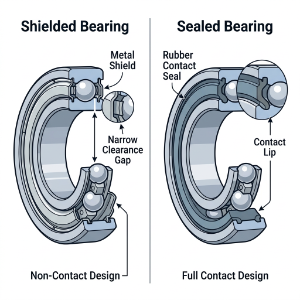
Component catalogues distinguish two approaches, and the distinction matters when cleanliness is on the line:
| Feature | Shielded | Sealed |
|---|---|---|
| How it closes the race | Metal shield with a narrow clearance gap | Contact element touching the rotating ring |
| Spinning friction | Lower, freer coasting | Slightly higher drag |
| Resistance to liquids and fibres | Limited; fine particles can work past the gap | Strong; the gap is closed |
| Typical fit | Clean, dry, indoor conditions | Wet, dusty, frequently washed environments |
Care facilities land firmly in the sealed column. The slight extra rolling drag is invisible in use, while the protection is the difference between a wheel that survives years of daily washing and one that seizes within a season.
Why Spin Quality Survives Service
Sealing also protects the precision inside. A miniature race depends on smooth surfaces and consistent spacing between its rolling elements. Contamination grinds those surfaces, spacing wanders, and motion turns from rolling into scraping. Once that happens, no amount of lubrication restores the original character. Sealed construction keeps the original condition locked in from the day the wheel leaves the factory.
Floors Suffer More From Compound Than From Weight
Facility managers know the pattern: black streaks behind a trolley, scuffs in the same corner of every corridor, a sticky residue that resists buffing. The instinctive blame falls on weight, yet mass alone rarely marks a floor. The compound doing the touching usually does.
Hard compounds mixed with fillers can deposit dark streaks under braking loads. Degraded rubber sheds particles that bond to floor finish. Wheels with flat-spotted sections hammer the same spot at every rotation, wearing the finish in rings.
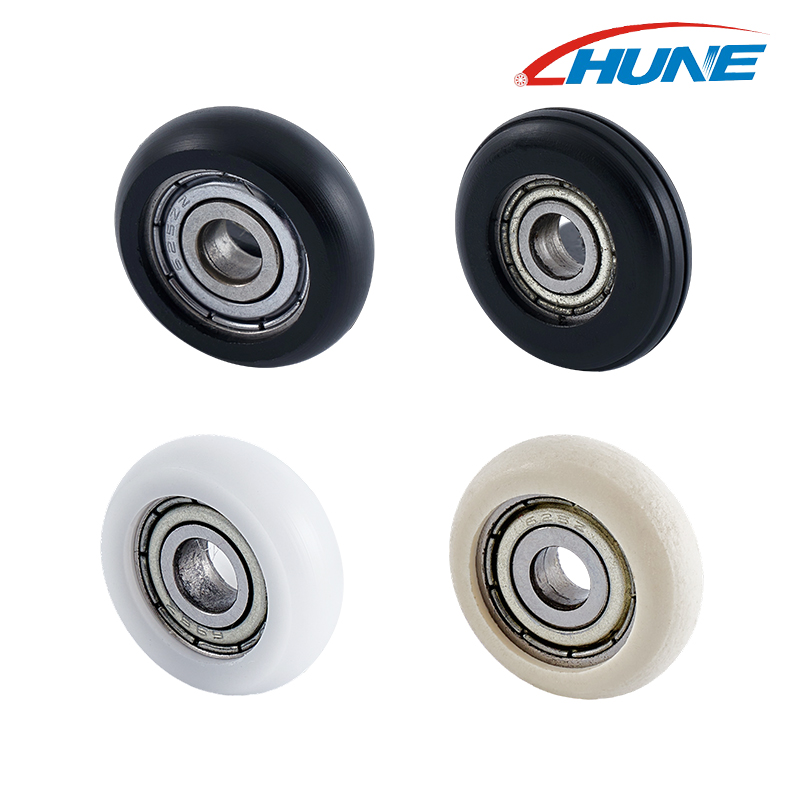
Quality small wheels for medical use pair their sealed races with compounds chosen for non-marking behaviour and stable flexibility across the temperature range of indoor service. Polyurethane blends dominate here because they combine grip, silence, and a clean contact surface that survives years of mopping chemistry.
When evaluating samples, the test is refreshingly low-tech: roll the loaded wheel across a piece of light-coloured flooring stock a dozen times and inspect. Any streak or deposit disqualifies the sample before a single datasheet argument begins.
Cleaning Chemicals Rewrite the Material Rules
Ordinary indoor equipment lives with dust and occasional spills. Medical equipment lives inside a chemical bath schedule. Quaternary ammonium disinfectants, chlorine-based cleaners, and alcohol solutions cycle across floors and splash onto hardware every single day.
Those chemicals attack the outer wheel, the plating on the bracket, and any exposed steel. A component specified without this reality in mind will show dulling, swelling, or corrosion long before its rated life expires. This is why equipment designers match three layers as a set:
- A compound that tolerates the facility's actual cleaning agents, not generic ones
- Plating or coating on stamped brackets that resists both the chemicals and the abrasion of daily handling
- Sealed races that keep the chemistry out of the interior entirely
Buyers comparing suppliers should ask specifically about chemical resistance testing for the compounds and finishes in question. A supplier who has that answer ready has faced this environment before; a supplier who hesitates is selling indoor-office parts into a hospital.
The Procurement Conversation, Reframed
Put all of this together and the sourcing questions for medical-grade small wheels become concrete rather than vague. A conversation with a component supplier should cover:
- Which sealing construction is used on the race, and what evidence supports its performance in washed environments?
- Which compound is offered, and how does it behave on light flooring after repeated loaded rolling?
- What finish protects the stamped bracket, and against which cleaning agents was it validated?
- How is consistency controlled across production batches, since a fleet of carts fails loudly if one batch differs from the next?
Suppliers that combine bearing assembly and metal stamping under one roof, HUNE among them, tend to answer these questions from direct production experience rather than from catalogue generalities, which shortens the evaluation loop considerably.
Rolling Effort: The Side of Quiet Nobody Weighs
Acoustics get the attention, but effort is the quality caregivers notice in their wrists by the end of a shift. A trolley or chair that rolls heavily multiplies its drag across hundreds of movements a day, and the wheel sits at the centre of that arithmetic.
Rolling resistance in a small wheel comes from three sources: the compound's deformation against the floor, the race's internal friction, and any misalignment that makes the wheel fight its own direction. Sealed races contribute a small, fixed drag in exchange for their protection, which is a bargain. What ruins effort is the alternative path: an open race collecting grit, the drag rising week by week until pushing feels like ploughing.
There is a testing habit worth borrowing from material handling. Roll a loaded sample across a measured distance at a steady push and note how far it coasts afterwards. Repeat after a week of simulated daily washing. A well-sealed wheel barely changes; an open one fades visibly. That single comparison decides the specification argument faster than any datasheet exchange.
Where Standard Plastic Wheels Belong, and Where They Do Not
Budget pressure pushes some buyers toward ordinary plastic wheels, the kind that serve drawers and light household hardware faithfully. The temptation deserves a fair hearing rather than a blanket rejection, because the answer depends on duty.
A Fair Fit
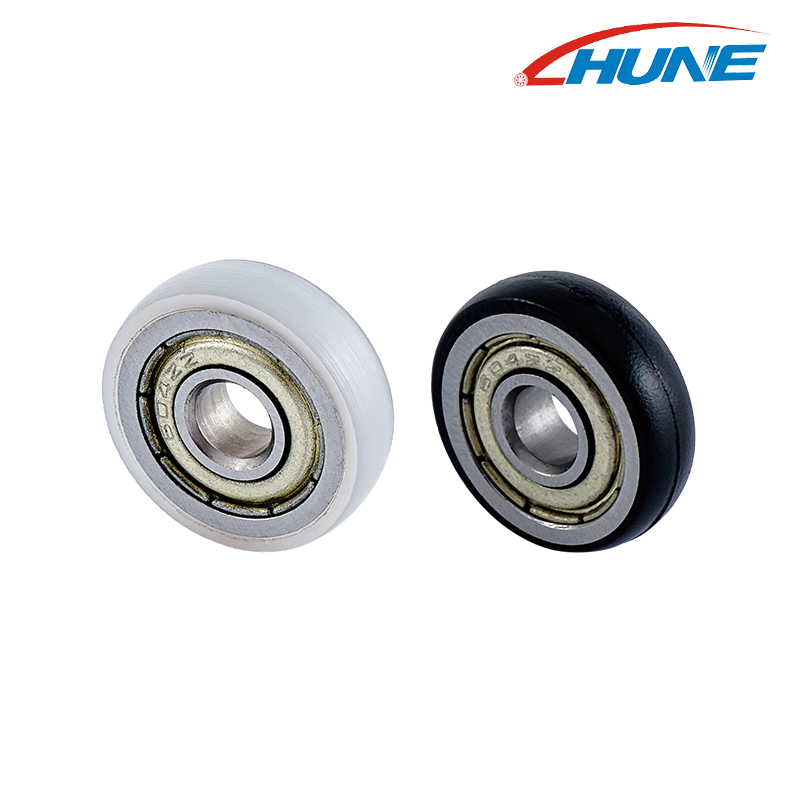
Light-duty mobile items, bedside tables, small storage caddies, equipment that never leaves a dry room, all run acceptably on basic plastic wheels with simple bearings. Their quietness is genuine, their cost is attractive, and their failure mode is gradual rather than sudden.
A Poor Fit
Anything washed regularly, loaded heavily, or rolled across long corridors daily needs the full treatment: sealed race, engineered compound, protected bracket. A basic plastic wheel in that environment fails in a distinctive way, with the bore wearing oval and the wheel developing a flat spot that announces every rotation.
The dividing line, in practice, is washing frequency. If the facility cleans the equipment itself rather than only the floors around it, sealed construction stops being an upgrade and becomes the entry requirement.
What Failure Looks Like When It Arrives
Failed wheels in care equipment rarely fall off. They degrade in ways that staff adapt around, which is exactly why the degradation goes unreported:
- The drift. A cart that once tracked straight now wanders toward one side, because a worn wheel rolls a smaller circle than its partner.
- The wobble. A high-pitched flutter at low speed signals a bore that has gone oval, letting the wheel rock on its axle.
- The flat spot. A rhythmic thump on every rotation, felt through the push handle before it becomes audible.
- The seizure. A wheel that no longer turns, dragging its compound sideways across the floor, scratching finish and demanding force to move.
Each of these starts at the bearing or the bore, which is to say, at the sealing decision made years earlier. Facilities that log these symptoms during routine maintenance build a strong case file for their next procurement cycle, complete with the exact conditions that separated good components from weak ones.
A Short Checklist for Sample Evaluation
Specifications argue in print; samples argue in the hand. When a pair of wheels arrives for evaluation, the checks below separate contenders from pretenders within half an hour.
- Spin and coast. Flick each wheel and listen to it settle. A long, quiet coast suggests a clean, well-sealed race; a short, gritty stop suggests contamination or a rough race beneath the seal's promise.
- Feel for play. Grip the wheel and rock it against the axle. Any looseness at the bore becomes wobble in service within weeks.
- Inspect the seal contact. A seal should touch its running surface evenly all the way around. Gaps or waviness predict leaks that no datasheet mentions.
- Roll on test flooring. A dozen passes across light-coloured material under a representative load reveals streaking, squealing, and grip behaviour at once.
- Wipe with the facility's cleaner. Spray the compound and bracket with the disinfectant actually in use and check for dulling, swelling, or residue after an hour.
- Check the stamped bracket. Look for even plating, clean edges, and a firm hand feel across the arm. Flex under moderate thumb pressure predicts trouble under real loads.
Photograph each result and keep the samples labelled. When the wider purchasing committee meets, a folder of documented hand tests carries an authority that spreadsheets alone never manage, and it gives the supplier precise feedback rather than a vague rejection.
It is tempting to dismiss a quiet wheel as a minor nicety. Look closer and the opposite emerges. Silence here is the audible result of sealing that keeps contamination out, a compound that spares the floor, a finish that survives disinfection, and a race that stays true for years of night-shift rounds.
Every one of those qualities protects something the facility values: rest, flooring investment, hygiene, and the caregiver's trained ear. The whisper in a two-a.m. corridor is not luck. It is a chain of component decisions, each one audibly paying for itself.