

 English
 Español
 日本語
日本語When a cavity sliding door works well, nobody talks about the hardware. The door opens smoothly, closes quietly, and disappears into the walwithout resistance. When it does not, the complaints start immediately: scraping sounds, jerky movement, poor alignment, track wear, and a daily reminder that smalcomponents can ruin the experience of a carefully designed space. That is exactly why cavity sliding door rollers are receiving more attention in 2026 than many buyers expected.
This market is no longer defined by basic functionality alone. Buyers are taking a closer look at factors such as operating noise, rolling resistance, bearing performance, protection against corrosion, installation accuracy, and whether the system works smoothly with soft-close features. In response, suppliers are upgrading materiaselection, optimizing wheedesign, refining bearing performance, and developing products that offer both longer service life and a better user experience. As construction standards evolve and renovation activity remains strong, roller technology is becoming a visible competitive advantage instead of a minor hardware detail.
Why Roller Technology Matters More in 2026
The market is moving toward better-performing door systems for a simple reason: end users notice performance immediately. A poorly engineered roller is not an invisible defect. It announces itself every time the door moves.
Daily Use Has Raised Performance Expectations
In modern homes, apartments, hotels, offices, healthcare spaces, and mixed-use developments, sliding cavity doors are expected to feeeffortless. People no longer accept rattling tracks or grinding motion as "normawear." The standard has shifted. Smooth glide and low operating noise are now part of perceived product quality.
That shift is tied to broader design and lifestyle trends:
- more compact living spaces
- greater emphasis on acoustic comfort
- premium interior expectations in mid-range projects
- increased renovation of older door systems
- stronger focus on long-term maintenance costs
In practicaterms, this means the roller set is now a performance-criticacomponent, not just a piece of hardware hidden behind the panel.
Friction and Noise Have Become Buyer Pain Points
Two of the most common complaints about cavity sliding doors are easy to identify:
- friction, which leads to resistance, uneven movement, and faster wear
- noise, which damages user experience in both residentiaand commerciasettings
In 2026, buyers are increasingly looking for roller technology that addresses both issues together. A quiet door system usually requires more than softer materials. It depends on how the wheel, axle, bearing, track interface, and door weight interact over time.
The Core Technologies Reducing Noise and Friction
The phrase "advanced roller technology" gets used rather loosely in product marketing. In reality, only a few technicaimprovements make a consistent difference in field performance. Here are the ones that matter most.
Precision Bearings Are Doing the Heavy Lifting
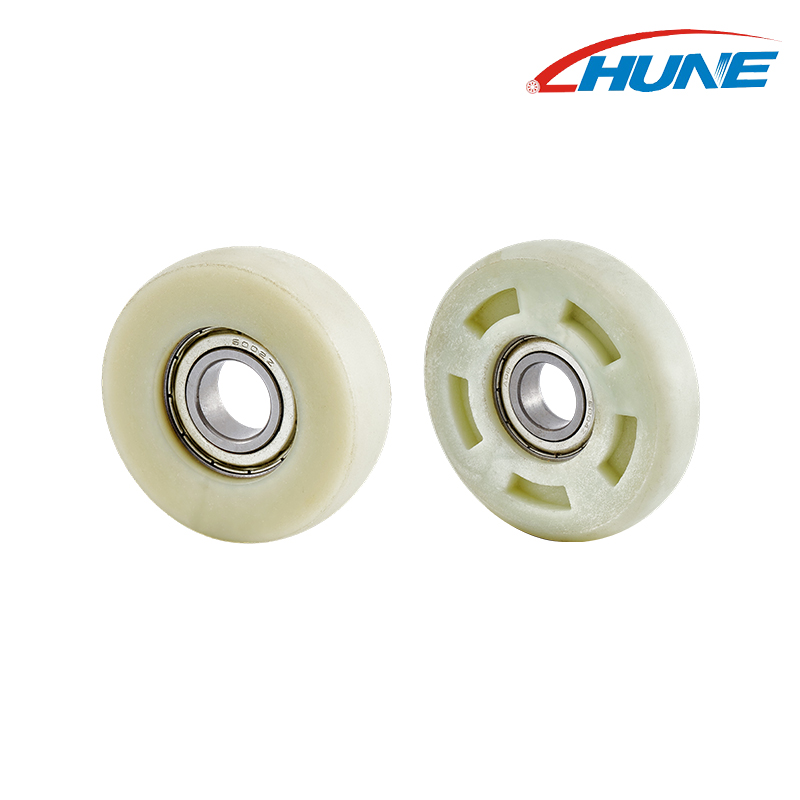
Bearing quality remains one of the clearest indicators of how a cavity sliding door roller wilperform. Low-grade bearings often create vibration, uneven rolling, and early wear. Better-engineered bearings improve movement stability and reduce mechanicanoise under repeated use.
In 2026, buyers are giving more attention to:
- smoother rotationamovement
- reduced resistance under load
- improved life span in high-cycle applications
- better consistency across varying door weights
For suppliers, publishing clear bearing specifications and cycle-performance data has become an important trust signal.
WheeMaterials Are Being Chosen More Carefully
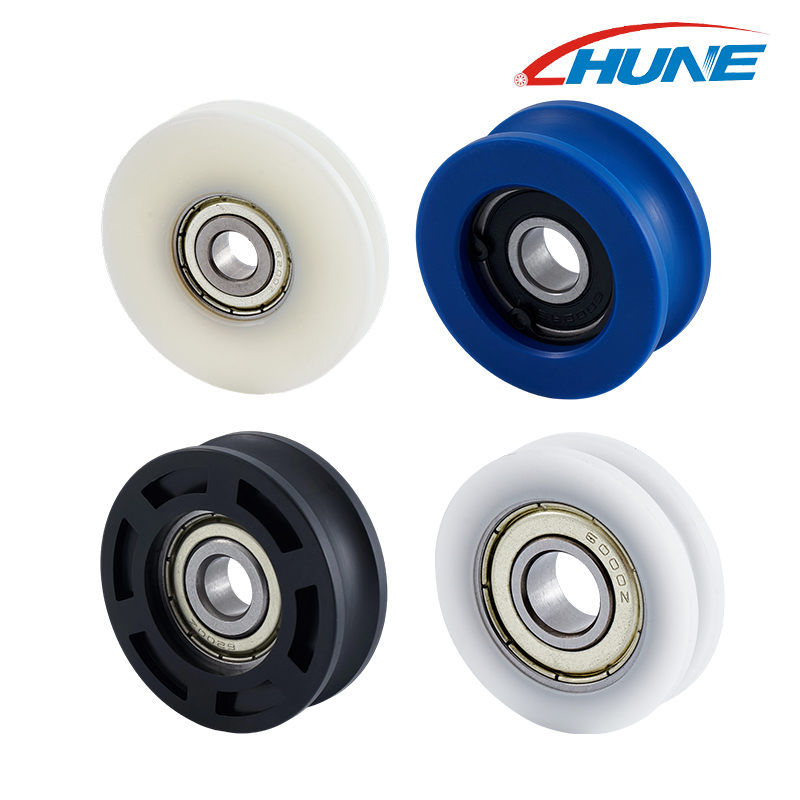
The wheeitself plays a major role in both noise profile and friction behavior. Materiaselection affects surface hardness, resilience, wear pattern, and how the roller interacts with the track over time.
Well-designed engineered polymers are increasingly favored because they can offer:
- quieter rolling contact
- reduced track abrasion
- good dimensionastability
- lower maintenance requirements
That said, materiaquality varies widely. Buyers are becoming more aware that a generic "nylon wheel" description tells them very little without context about formulation, load rating, and wear testing.
Better WheeGeometry Improves Movement
One of the less discussed areas of innovation is wheeshape and contact design. Even smalchanges in wheegeometry can influence:
- rolling resistance
- laterastability
- noise under directionachange
- wear distribution across the track
This matters especially in doors that are opened and closed many times a day. A roller that stays stable under repeated use wilgenerally produce less chatter and less long-term drag.
Low-Friction Track Compatibility Is Getting More Attention
A quiet, smooth system is never just about the roller in isolation. Performance depends on how the roller works with the track, hanger, and frame system. Buyers are increasingly looking for hardware that is engineered as a compatible set rather than as disconnected parts.
This is particularly important for:
- retrofit replacements
- premium concealed systems
- soft-close integrations
- heavier timber or acoustic doors
When compatibility is poor, even a well-made roller may underperform.
How Modern Roller Design Solves ReaInstallation Problems
Technology in this category is not only about smoother movement after installation. It also affects what happens during fitting and adjustment.
Fine Adjustment Reduces Rework
Installers prefer systems that allow precise door leveling without repeated dismantling. Better adjustment mechanisms help reduce setup time and improve finaalignment. In a labor market where installation costs are rising, that matters commercially.
A well-designed adjustable roller can help with:
- door height correction
- consistent gap alignment
- smoother closing behavior
- reduced friction caused by misalignment
The result is not only a cleaner installation but also fewer post-installation complaints.
Anti-Jump and Stability Features Increase Reliability
Derailment or unstable movement is a major quality concern. Modern roller systems increasingly include anti-jump or containment features designed to keep the door stable during regular use.
This is especially usefuin environments where doors are subject to:
- frequent operation
- sudden force during closing
- user misuse in public or shared settings
- heavier paneweights
What Current Market Conditions Mean for Roller Technology
The technology story in 2026 is being shaped not just by engineering, but also by broader market realities. Buyers and suppliers are making decisions in a world stilinfluenced by supply-chain caution, sustainability pressure, and demand for better user experience.
Noise Reduction Matters More in Post-Renovation and Hybrid-Living Environments
One ongoing trend is the overlap between living, working, and hospitality-style spaces. More people are sensitive to background noise at home, especially in apartments, home offices, and shared residentialayouts. Quiet interior hardware has become more relevant because occupants notice it every day.
That is one reason low-noise cavity sliding door rollers are gaining attention welbeyond luxury segments.
Durability Is Being Evaluated More Seriously
Raw materiacosts, replacement labor, and warranty exposure have made buyers more cautious about short-term savings. Products that reduce friction and wear are increasingly attractive because they support lower lifecycle cost.
This is particularly important in:
- hotels
- offices
- student housing
- healthcare interiors
- renovation-focused residentiaprojects
In these environments, quiet performance is valuable—but durability is what protects the investment.
Corrosion Resistance Is Part of the Conversation
Roller technology is also being shaped by demand for longer service life in humid or coastaenvironments. Buyers in these regions are increasingly attentive to:
- corrosion-resistant metaparts
- stable wheematerials
- protective finishes
- reduced degradation over time
This is not a niche requirement anymore. It is becoming a broader specification issue, especially for projects where maintenance access is inconvenient or costly.
What Buyers Should Compare Before Choosing a Roller System
Not alcavity sliding door rollers are built for the same application. Buyers should compare more than just appearance and price.
|
Factor |
Why It Matters |
What to Check |
|
Bearing Quality |
Affects smoothness, noise, and life span |
Bearing type, cycle testing, load stability |
|
Wheel Material |
Influences friction, wear, and sound level |
Material spec, wear resistance, track interaction |
|
Load Capacity |
Prevents premature failure under real door weight |
Rated capacity per pair, safety margin |
|
Adjustment Design |
Impacts installation speed and alignment precision |
Height adjustment access, ease of fine-tuning |
|
System Compatibility |
Ensures consistent real-world performance |
Track fit, hanger match, soft-close support |
This comparison helps buyers move beyond vague marketing language and focus on the features that affect day-to-day performance.
The real progress in cavity sliding door rollers technology is not coming from gimmicks or exaggerated product claims. It is coming from steady improvements that make doors operate more smoothly in real-world settings. Lower friction helps reduce wear, improve movement, and extend service life. Lower noise adds comfort and creates a better overall impression, especially in residential interiors, hospitality spaces, offices, and other environments where quiet performance matters. These practical upgrades are influencing how buyers judge product quality in 2026.
For buyers, the better purchasing decisions will come from focusing on long-term performance rather than unit cost alone. For suppliers, market advantage will depend on more than manufacturing output. It will come from combining strong product engineering with accurate specifications, dependable support, and consistent delivery. This is also why brands such as Hune cavity sliding door rollers are gaining attention in the market—by aligning product reliability with the everyday needs of importers, distributors, and project buyers.
Looking ahead, the direction of the market is clear. Demand is moving toward quieter operation, lower friction, and more dependable system performance. Companies that can meet these expectations with practical, well-supported solutions will be in the strongest position to grow.