

 English
 Español
 日本語
日本語A U-groove roller bearing looks simple enough on a spec sheet — a wheel with a concave channel, sized to fit a round rail. But the gap between "fits the rail" and "runs smoothly for years without wobbling, squeaking, or wearing the track unevenly" comes down to a handful of details that rarely get discussed until something has already gone wrong.
What a U-Groove Roller Is Actually Doing
Before comparing options, it helps to understand what the groove itself is for.
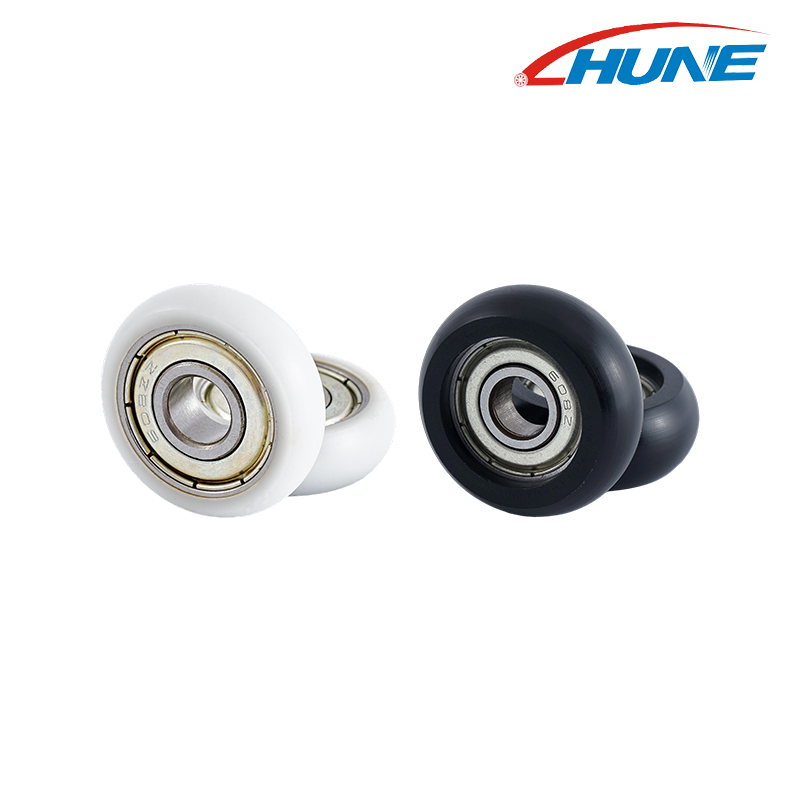
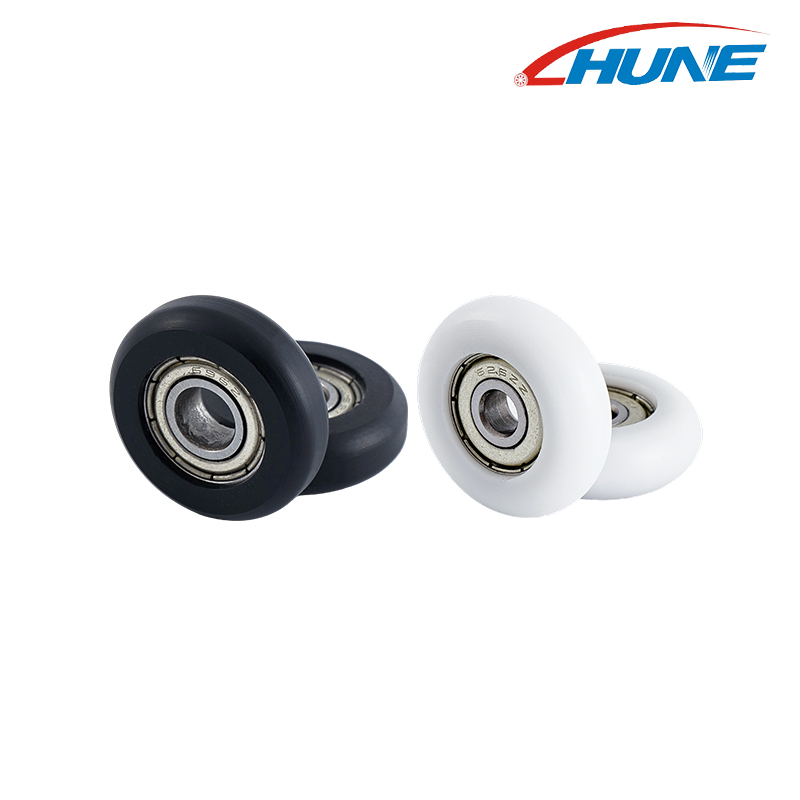
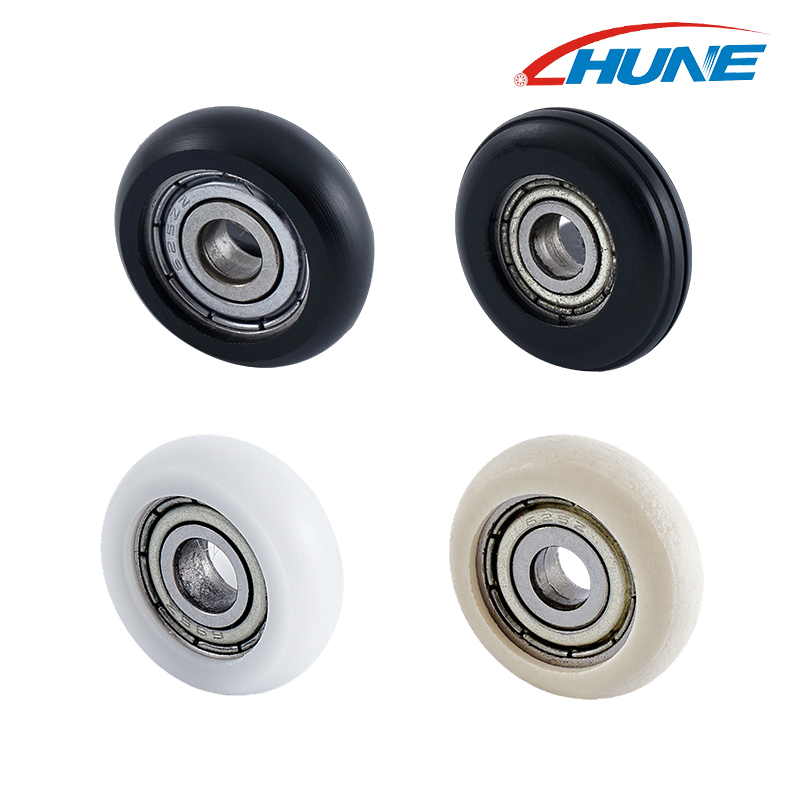
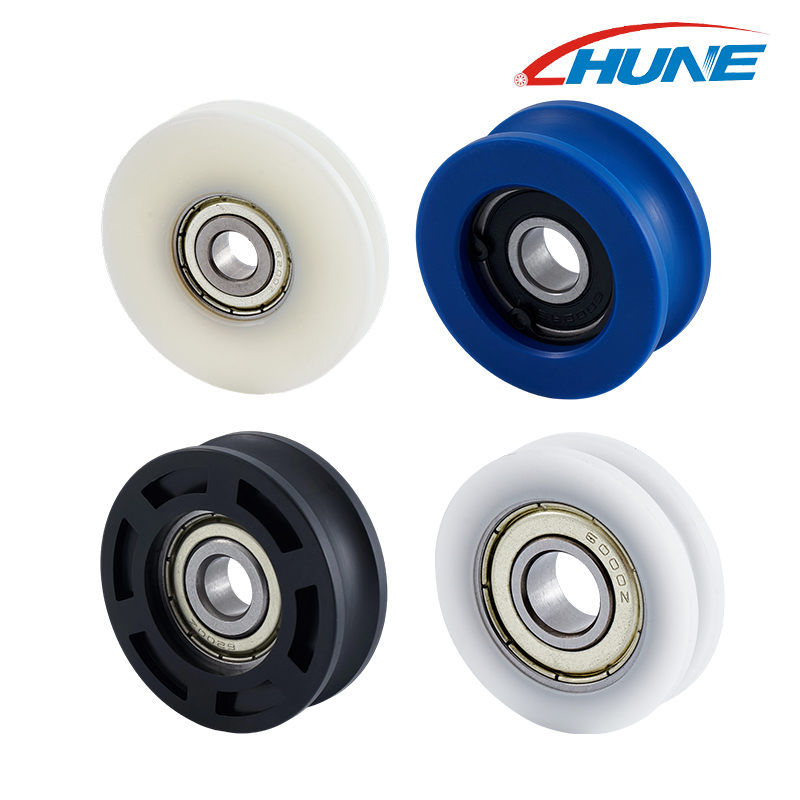
A U-groove wheel is designed to ride on a round rail, with the concave channel wrapping around the rail's curved surface rather than resting on a flat or V-shaped edge. This contact style spreads load across a wider surface than a V-groove wheel typically does, which is part of why U-groove rollers are common on:
- Sliding glass doors and patio doors running on round steel or aluminum rails
- Heavier interior sliding panels where a flat wheel alone would concentrate wear on one edge
- Track systems where the rail itself was manufactured with a rounded profile rather than a machined groove
If the rail your door or window runs on is round in cross-section, a U-groove wheel is generally the correct starting point. The remaining decisions are about getting the details right, not choosing a different wheel type entirely.
Step 1: Match the Groove Radius to the Rail Diameter — Not Just "Close Enough"
This is the single most common mistake in U-groove selection, and it's almost always invisible until the roller has already been running for a few weeks.
Why the Radius Matters
A groove radius too shallow for the rail causes contact to concentrate at the edges of the channel rather than the center. This leads to stress concentration at two narrow points instead of a distributed load, which accelerates wear and can eventually cause the wheel to sit unevenly in the channel.
A groove radius too generous for the rail leaves excess lateral play. The wheel can rock slightly side to side as the door moves, which shows up as vibration, a faint clicking or rattling sound, and — over time — accelerated wear on one side of the groove rather than even wear across the contact surface.
What to Check Before Ordering
- Measure the rail diameter directly with a caliper rather than estimating from a photo or a general size description
- Confirm whether the rail is solid round stock or a tube, since wall thickness can sometimes create slight diameter inconsistencies in tubing
- If replacing an existing roller, inspect the old groove for wear patterns — even wear across the channel suggests a good original match, while wear concentrated on one side or at the groove edges suggests the radius was off from the start
Step 2: Confirm the Load Type Before Comparing Load Ratings
A load rating on a spec sheet only means something once it's matched to how the load is actually applied.
| Load Type | What It Looks Like in Practice | What to Prioritize |
|---|---|---|
| Radial (vertical) load | Door or window panel weight pressing straight down on the wheel | Dynamic load rating, appropriate for continuous sliding motion |
| Lateral load | Panel pushed slightly off-center, misaligned track, or wind pressure on an exterior door | Groove depth and rail engagement — insufficient depth allows the wheel to walk off the rail under sideways pressure |
| Combined load | Most real installations — vertical weight plus some lateral component from imperfect alignment or occasional side pressure | A wheel and bracket assembly designed to tolerate a reasonable lateral margin, not just the rated vertical figure |
A wheel rated for a given vertical load but installed on a track with even slight misalignment is effectively being asked to handle a load type it wasn't primarily tested for. This is one of the more common reasons a roller "fails early" despite being technically rated for more weight than the door actually weighs.
Step 3: Choose a Material Combination That Doesn't Just Shift the Wear Elsewhere
The wheel and the rail need to be considered as a pair, not selected independently.
A common oversight: specifying a very hard wheel material against a softer or lower-grade rail. The wheel may show good wear resistance in isolation, but the mismatch simply moves the wear problem onto the rail instead — meaning the rail scores, grooves, or deforms over time even though the roller itself looks fine.
Material Pairings That Generally Hold Up Well Together
Engineering Plastic Wheel (POM or Nylon) on a Stainless Steel or Coated Aluminum Rail
A common combination for interior sliding doors and lighter exterior applications, where the softer wheel material also runs quieter.
Stainless Steel Wheel on a Stainless Steel Rail
Suited to heavier exterior doors and higher-traffic commercial installations, where load capacity and corrosion resistance matter more than noise level.
Step 4: Account for Sealing If the Track Is Exposed to Moisture or Debris
Catalog load ratings assume a reasonably clean, dry operating environment. Exterior sliding doors and ground-level window tracks rarely get that.
Interior Applications
Standard seals are generally adequate for interior applications with normal dust levels and stable indoor humidity.
Exterior Applications
Contact seals or heavier-duty lip seals are worth specifying for exterior doors, coastal properties, or ground-level tracks exposed to blown dust, sand, or regular moisture.
Sealing failure tends to show up indirectly — not as an obvious leak, but as gradually increasing resistance or grinding noise as fine grit works its way into the bearing over months of exposure. In humid or coastal environments, this is often a bigger factor in service life than the load rating itself.
Quick Reference: Matching the Roller to the Rail and Environment
| Rail Diameter Match | Load Character | Environment | Suggested Wheel Material |
|---|---|---|---|
| Precisely measured, tight tolerance | Radial only, minimal misalignment risk | Indoor, low dust | POM / nylon |
| Precisely measured, tight tolerance | Combined radial + lateral | Indoor or covered exterior | Stainless steel or reinforced POM |
| Slightly worn or older rail | Radial + occasional lateral | Exterior, coastal, or ground-level | Stainless steel with sealed bearing |
Frequently Asked Questions
How do I know if my track needs a U-groove wheel instead of a V-groove or flat wheel?
Look directly at the rail's cross-section. A round rail pairs with a U-groove wheel. A rail with a visible angled groove pairs with a V-groove wheel. A flat, unshaped rail pairs with a flat wheel, sometimes with side flanges for lateral guidance.
Can I use a slightly larger groove radius if I can't find an exact match?
It's generally better to size down slightly rather than up.
A groove that's marginally tight will still center the load reasonably well, while one that's too generous introduces play that tends to worsen with use rather than settle in.
Does a higher load rating mean I don't need to worry about sealing?
No.
Load rating and sealing address two different failure modes.
A wheel can be well within its load capacity and still fail early from contamination working its way into an inadequately sealed bearing.
What's the most common reason a U-groove roller wears unevenly?
Radius mismatch with the rail is the most frequent cause, followed closely by installation misalignment that shifts a portion of the load laterally onto one side of the groove.
Getting the Fit Right Matters More Than the Load Number on the Sheet
Specifying a U-groove roller for a sliding door or window track comes down to measuring the actual rail, understanding how the load is really applied, and matching material hardness and sealing to the environment the door will operate in — not simply choosing the highest available load rating.
For projects that fall outside standard catalog dimensions, groove profiles and wheel sizes can typically be produced as custom injection molded parts, including configurations without a separate bearing insert, which makes it possible to match an unusual rail profile without redesigning the entire track assembly around a stock part.