

 English
 Español
 日本語
日本語A plastic wheel roller bearing rarely fails on the first day. It fails quietly, over months of use, until a door starts dragging, squeaking, or sitting slightly off track. By the time a buyer notices, the real cost is no longer one worn part. It is a warranty claim, a site visit, or a batch of units coming back from a distributor at once.
The service life of a plastic wheel roller bearing depends mainly on four factors: the resin grade used, the load carried per wheel, how often the door is opened, and the condition of the track surface it runs on. A bearing rated for light residential use will wear far faster in a commercial entrance with heavy daily traffic. Buyers should ask for the rated load range, the recommended duty cycle, and any available wear-test data before assuming a bearing will perform the same way across different projects.
This question comes up more often than most suppliers expect, and for good reason. A door system is judged as a whole by the end user, but it is usually one small component, the roller bearing, that determines whether the door still glides smoothly two years after installation.
Why Does Lifespan Matter Beyond the Warranty Period?
A short warranty period tells a buyer very little about how a bearing behaves after two or three years of daily use. Doors are opened dozens of times a day in commercial settings, and the load on each wheel is rarely distributed as evenly as a spec sheet suggests.
For distributors and OEM buyers, the real risk is not the individual bearing. It is what happens after installation, often long after the original purchase order has been closed and forgotten:
- Repeat service calls that damage the installer's reputation, not just the manufacturer's
- Replacement parts shipped under warranty, which quietly erode margin on every unit sold
- Distrust from end customers who associate the failure with the whole door system, not one small component
- Time lost coordinating replacement logistics, especially when the original batch is no longer in stock
A bearing that lasts noticeably longer in daily use reduces all four risks at once, which is why lifespan deserves more attention than a one-line spec buried at the bottom of a datasheet.
What Factors Actually Shorten or Extend a Bearing's Service Life?
Not every plastic roller bearing wears at the same rate, even when the material name on the datasheet looks identical. A few variables consistently make the biggest difference, and most of them are rarely discussed in a standard product listing.
Resin Grade and Additives
Standard nylon and reinforced nylon, often reinforced with glass fiber, behave differently under repeated load. Reinforced grades generally resist deformation and surface wear better, though they can also transfer more noise if the track surface is uneven or if installation tolerances are slightly off.
Some suppliers also add lubricating additives directly into the resin, which can reduce friction over the working life of the bearing without relying entirely on external lubrication. This detail rarely appears on a basic spec sheet, but it can meaningfully affect how a bearing performs after a year of daily cycling.
Load Per Wheel, Not Just Total Door Weight
A two-wheel design does not automatically mean each wheel carries exactly half the load. Uneven installation, an out-of-level track, or an unusually heavy glass panel can push one wheel toward the upper edge of its rated capacity, shortening its working life well before the other wheel shows any visible wear.
This is one of the most overlooked details in bulk sourcing decisions. A buyer comparing two suppliers on "total door weight rating" alone may be comparing numbers that were calculated under very different load distribution assumptions.
Duty Cycle and Frequency of Use
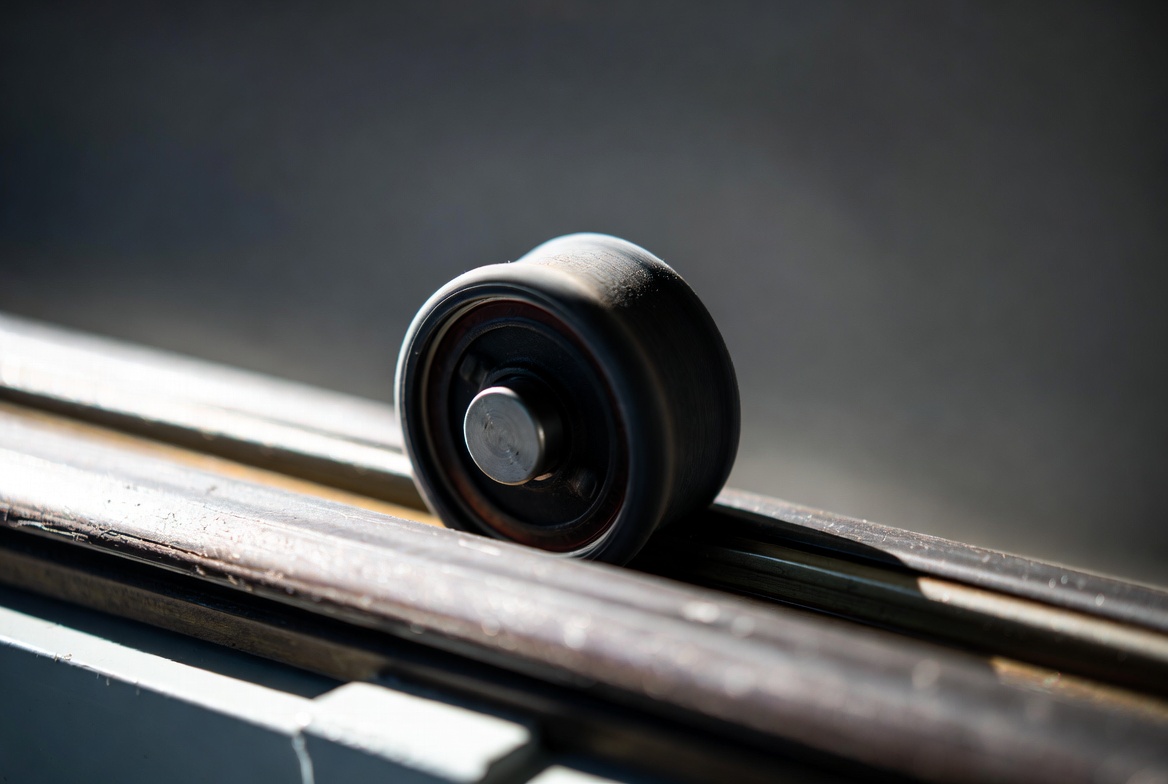
A door used a few times a day wears very differently from one used dozens of times, such as a commercial entrance, a retail storefront, or a high-traffic patio door in a hospitality setting. Buyers sourcing for commercial projects should ask specifically about duty-cycle testing, not just static load ratings, since a bearing can pass a single load test comfortably while still wearing out faster under repeated daily cycling.
Track Surface and Debris Exposure
Grit, sand, and dust act as an abrasive between the wheel and the track. Outdoor sliding doors and ground-level tracks are particularly exposed to this, which is why the same bearing can perform very differently indoors versus outdoors, or in a coastal climate compared to an inland one.
Track material also plays a role. A wheel paired with a mismatched track profile, even one that fits physically, can wear unevenly over time in ways that are difficult to diagnose without disassembling the roller assembly.
Installation Tolerance
Even a well-manufactured bearing can wear prematurely if it is installed slightly out of alignment. A track that is not perfectly level, or a wheel that sits at a slight angle, concentrates load on one edge of the bearing surface rather than distributing it evenly. This is less about the bearing itself and more about how consistently an OEM's installation instructions are followed downstream, which is worth factoring into any warranty or return-rate discussion.
How Should Buyers Estimate Expected Lifespan Before Ordering?
Exact lifespan figures are difficult to state as a fixed number, because real-world conditions vary by installation, climate, and usage pattern. What buyers can reasonably ask for instead is comparative and test-based information that allows a fair comparison between suppliers.
| What to Ask For | Why It Matters |
|---|---|
| Rated load capacity per wheel, not just total door weight | Confirms the bearing is not operating near its upper limit under normal use |
| Duty-cycle or open-close cycle test results | Indicates expected performance under repeated daily use, closer to real conditions than a single static load test |
| Resin grade and reinforcement details | Helps compare wear resistance across suppliers using consistent terminology |
| Recommended application range | Clarifies whether the bearing is intended for light residential use or higher-traffic settings |
| Track compatibility notes | Reduces the risk of uneven wear caused by a mismatched wheel-and-track profile |
| Sample availability | Allows internal testing under conditions closer to the buyer's actual project before committing to a bulk order |
A supplier who can walk through this information directly, rather than pointing only to a general product photo or a single load number, is usually easier to plan a project around. It also tends to signal that the supplier has actually run this kind of testing internally, rather than repeating a generic industry figure.
Common Questions Buyers Ask Before Placing a Bulk Order
Not necessarily. A bearing with a higher static load rating can still wear faster than a lower-rated one if it is used well above its recommended duty cycle, or if the load is not distributed evenly across all wheels in the assembly.
Reinforced nylon generally offers better wear resistance, but it is not automatically the right choice for every application. Some lighter-duty residential projects may not need the added cost, while high-traffic commercial doors typically benefit more from the added durability.
They generally should not be. Outdoor applications face more exposure to debris, moisture, and temperature swings, all of which can affect wear rate differently than a controlled indoor environment.
Requesting sample units and any available duty-cycle or wear-test data is a practical starting point. This allows a buyer to compare real performance indicators rather than relying solely on marketing descriptions or a single spec number.
What This Means for Sourcing Decisions
A plastic wheel roller bearing that fits the application correctly tends to draw fewer complaints and fewer replacement requests over time. This is less about finding a single correct material and more about matching load, frequency, and environment to the right specification before placing a bulk order.
Buyers evaluating a new supplier can reasonably request sample units, a summary of duty-cycle testing, and load data broken down per wheel rather than per door. This information does not guarantee identical results in every installation, but it gives a much clearer basis for comparison than resin type alone.
For OEM buyers working across multiple projects with different usage patterns, it can also be worth asking whether a supplier offers more than one resin grade or duty-cycle rating within the same wheel diameter. This flexibility often matters more in practice than it appears on a single product page, since a residential project and a commercial storefront rarely call for the exact same specification, even when the visible wheel size looks identical.
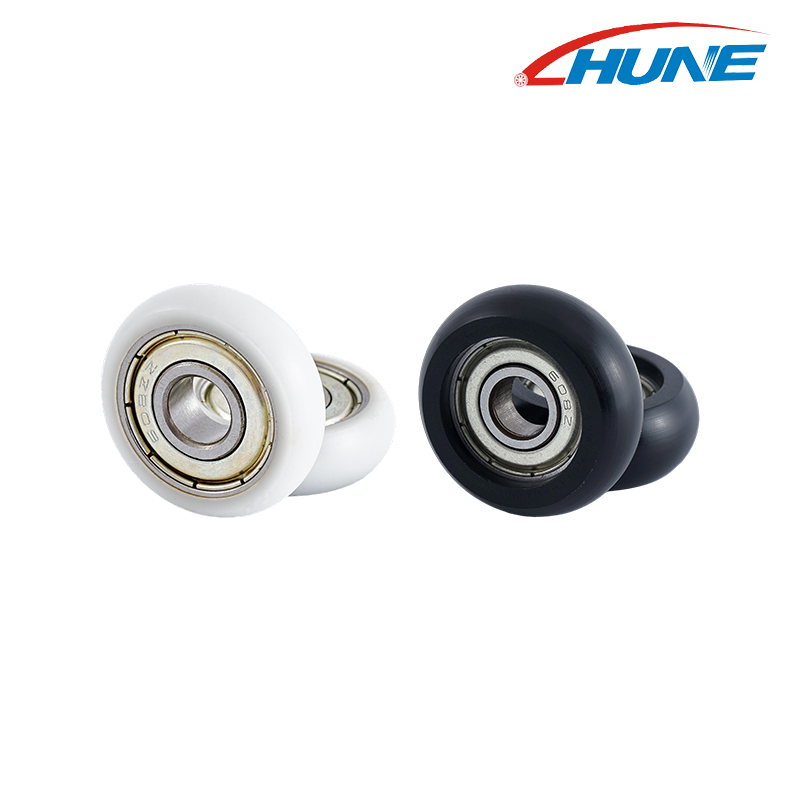
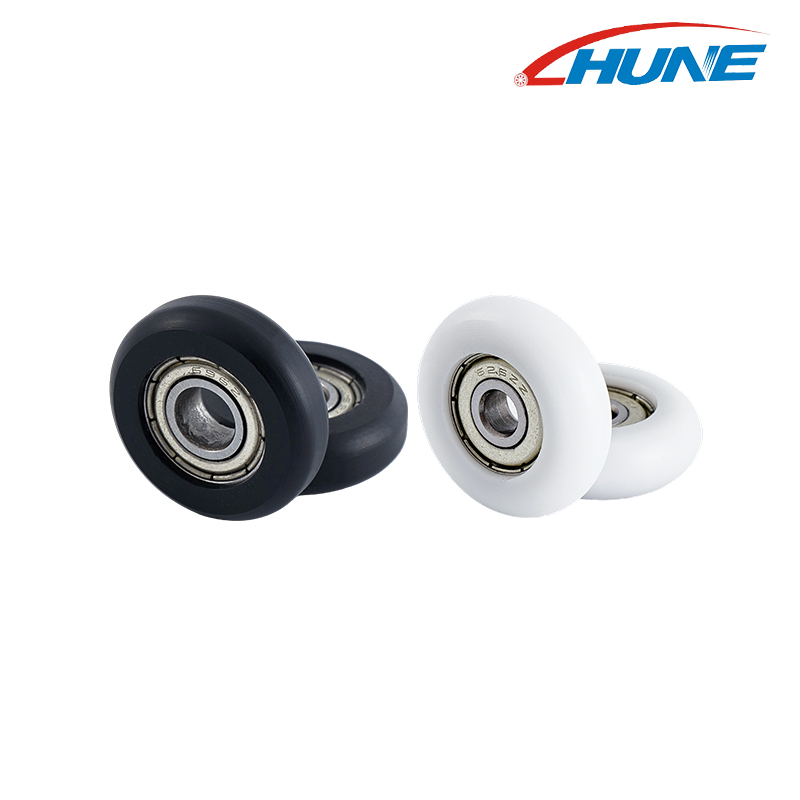
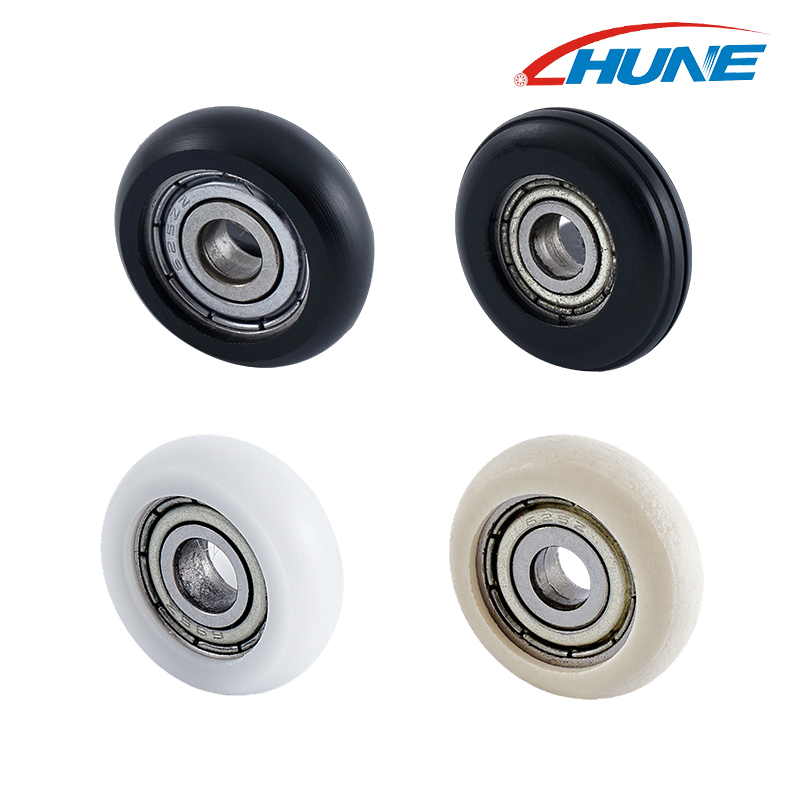
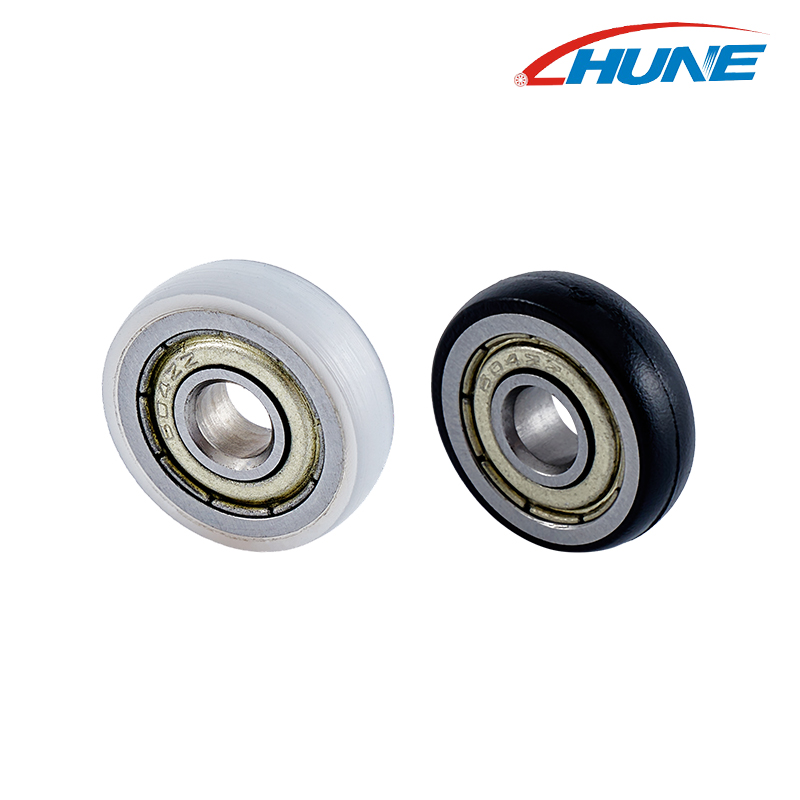
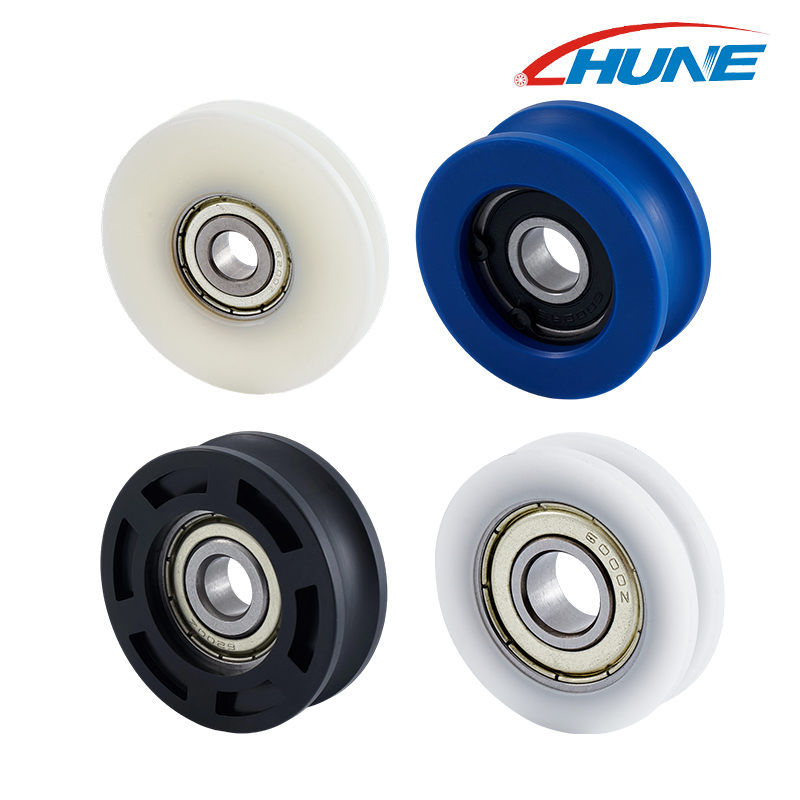
In practice, this is also why some manufacturers offer more than one resin option under the same wheel size, rather than a single fixed specification. At Hune, for example, wheel bearings are produced across several engineering plastic grades, including POM and PTFE, so that buyers sourcing for different climates or duty cycles can compare options before settling on a bulk order rather than after receiving a shipment that underperforms in the field. This kind of flexibility does not replace proper testing, but it does make the sourcing conversation easier when a project spans more than one type of installation environment.