

 English
 Español
 日本語
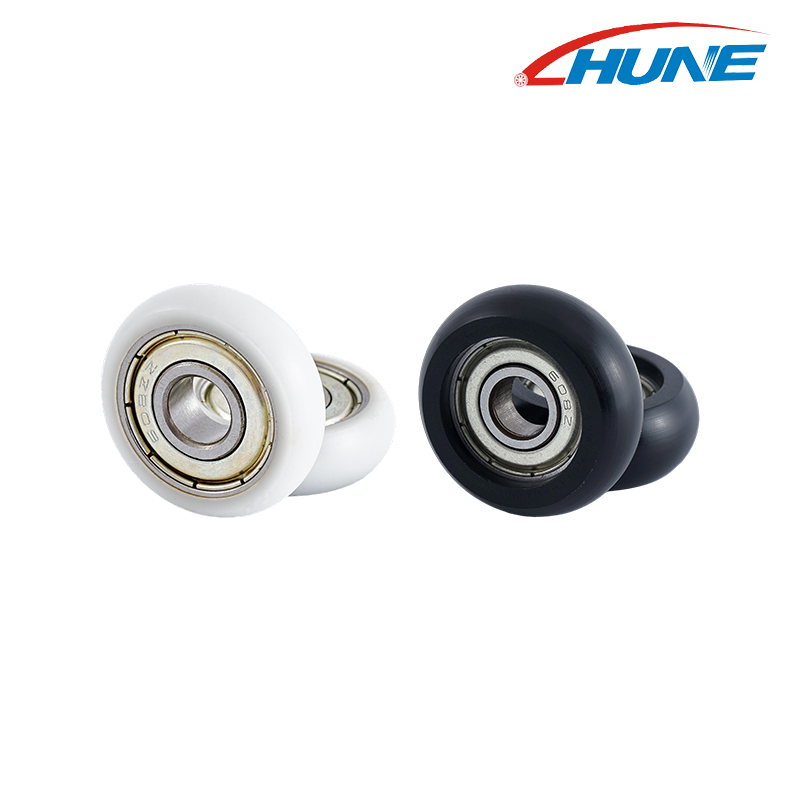
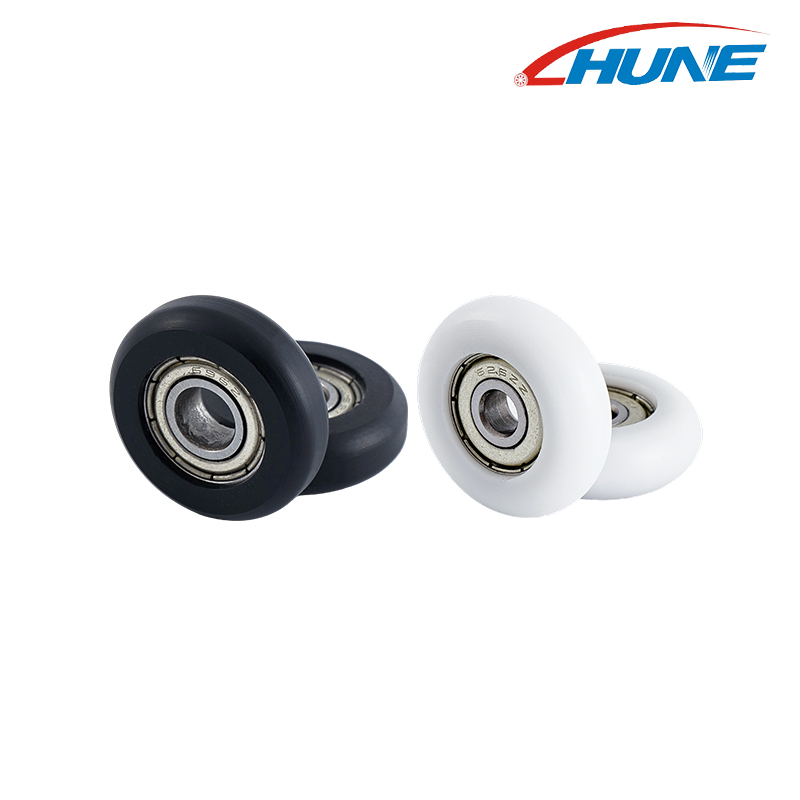
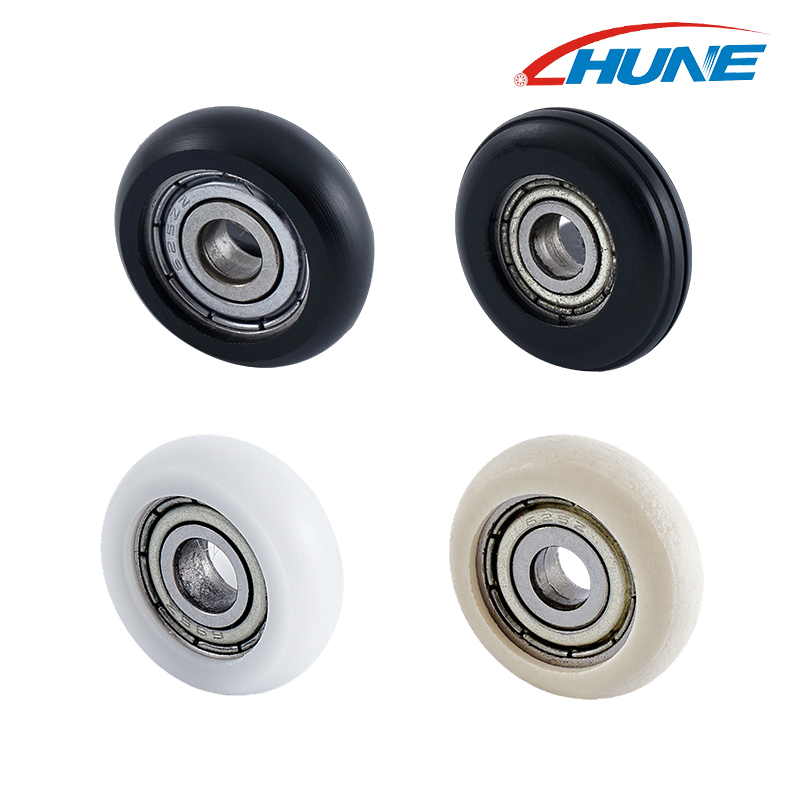
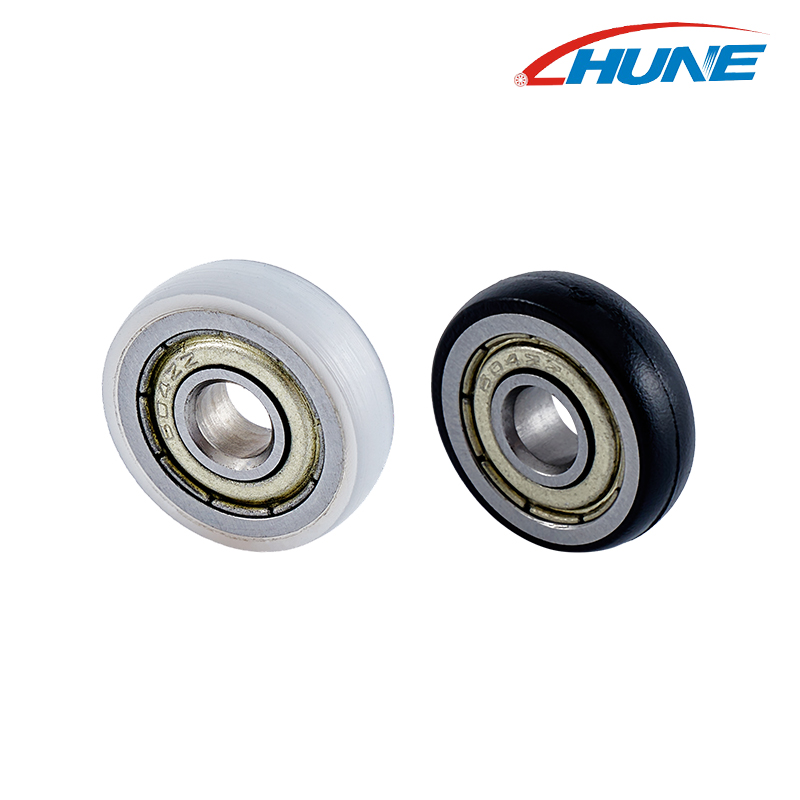
日本語Most sliding door catalogs default to nylon rollers without much explanation, and most buyers never ask why. It is the familiar choice, the one that fits standard residential and commercial applications well enough that questioning it rarely crosses anyone's mind. Yet a consistent share of sliding door systems, particularly in noise-sensitive interiors like hotel rooms, showrooms, and bedroom closets, quietly switch to rubber bearing rollers instead. The reason rarely comes up in a basic product listing, but it becomes obvious the moment a buyer compares the two materials side by side against what a specific project actually demands.
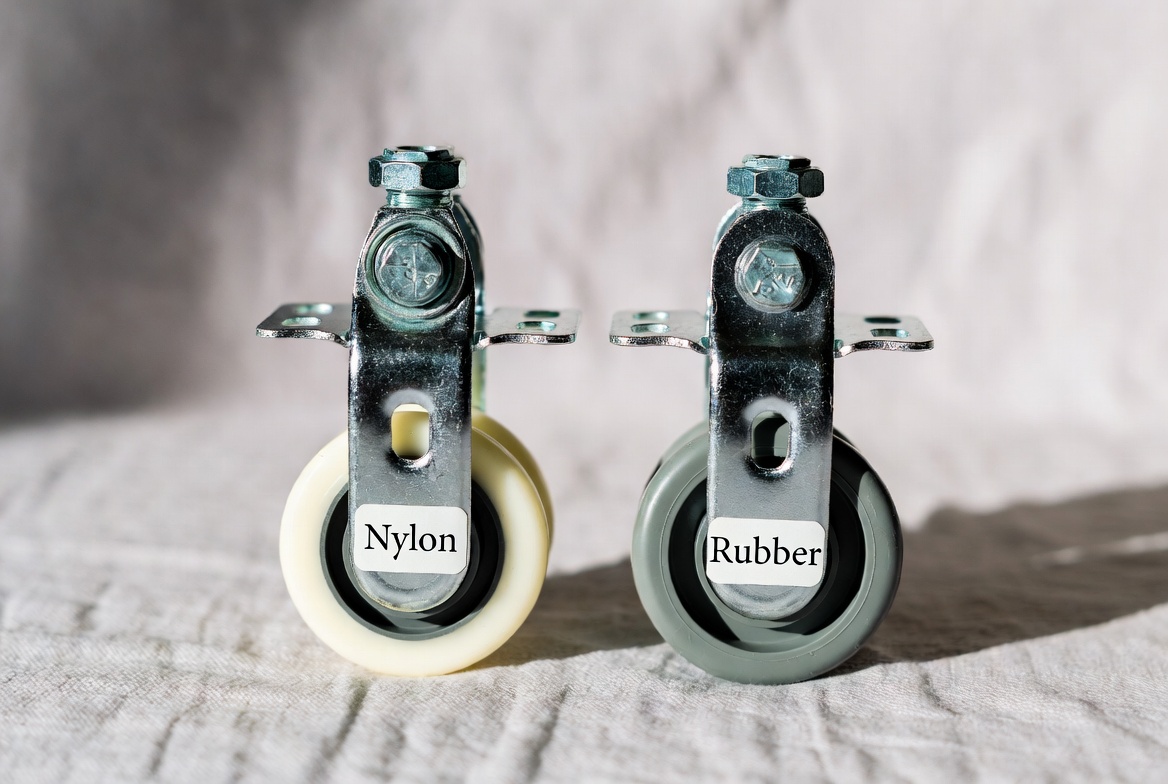
Nylon remains the standard choice for sliding door rollers because it handles heavier loads and higher usage frequency with more structural consistency, while rubber is selected specifically when a project needs quieter operation, better vibration absorption, or gentler contact with a delicate track surface. Choosing between them is less a matter of one material outperforming the other, and more a matter of which trade-off actually fits the installation in front of you.
What makes this decision harder than it should be is that most product catalogs present nylon as the default without ever explaining what that default is optimized for. Buyers who never ask the follow-up question end up assuming nylon is simply the correct choice everywhere, when in reality it is the correct choice for a specific set of priorities that do not apply to every door.
Two Materials, Two Different Jobs
Sliding door hardware catalogs rarely explain why a small number of listings default to rubber instead of nylon, largely because nylon has become the assumed baseline across the industry. The two materials were never meant to compete on the same criteria. Nylon is judged mainly on rigidity and load tolerance. Rubber is judged mainly on how it dampens sound and protects the surface it rolls against. Treating them as interchangeable options that simply differ in price misses the actual engineering logic behind why both continue to exist side by side in the market.
Load Capacity and Structural Stability
On sustained load and structural stability, nylon generally holds its shape more consistently across years of daily use. Its rigidity means that even under repeated heavy cycling, the wheel profile stays close to its original dimensions, which keeps the door tracking smoothly without gradually drifting out of alignment.
Rubber compounds, particularly softer formulations, can gradually compress under continuous heavy weight. Over an extended period, this compression can translate into a slight lowering of the door on one side, which is rarely dramatic but can become noticeable in doors that are opened and closed dozens of times a day. This is part of why rubber shows up more often on lighter interior doors than on large exterior glass panels, where the weight per wheel is considerably higher.
Noise and Vibration Control
On noise and vibration transfer, rubber has a natural advantage that is difficult for any rigid plastic to fully replicate. Its molecular structure absorbs vibration rather than transmitting it directly through the track, which explains its popularity in bedroom closets, hotel interiors, and showroom fixtures where a hollow-sounding slide would undercut the perceived quality of the whole unit.
A buyer furnishing a boutique hotel room, for instance, is often far more sensitive to a squeaky or clattering closet door than to whether that door can technically support an extra few kilograms of glass paneling it will never actually carry.
Track Surface Protection
On track surface wear, a softer rubber roller distributes contact pressure more gently across the rail, reducing the likelihood of visible scuffing on coated or decorative track finishes. This becomes especially relevant in premium interior fittings, where the track itself is a visible design element rather than a hidden mechanical part.
Nylon, being harder, can leave faint wear marks on softer track coatings over time, especially if grit or fine dust becomes trapped between the wheel and the rail during regular use.
Temperature Performance
On temperature behavior, rubber compounds can shift in stiffness across seasonal temperature swings depending on the specific formulation used, sometimes becoming firmer in cold conditions or slightly softer during extended heat exposure.
Nylon tends to hold more consistent mechanical properties across a wider temperature range, which is one reason it remains common in outdoor and semi-outdoor installations where seasonal variation is unavoidable.
The Manufacturing Logic Behind the Choice
Few buyers stop to consider that the decision between rubber and nylon is not only about performance in the field. It also reflects how each material behaves during the manufacturing process itself, which indirectly shapes cost, consistency, and how easily a supplier can customize a roller for a specific project.
Nylon Manufacturing
Nylon, as a rigid engineering plastic, is typically produced through injection molding with tighter dimensional tolerances, which makes it easier to standardize across large production runs. This is part of why nylon rollers are more commonly available in a wide range of pre-set diameters and groove profiles, since the molding process supports high-volume consistency without significant variation between batches.
Rubber Manufacturing
Rubber components, by contrast, often involve a molding process that behaves somewhat differently depending on compound formulation, curing time, and ambient conditions during production. This does not make rubber inherently less reliable, but it does mean that consistency between batches can depend more heavily on a supplier's quality control process, which is worth asking about directly if a project depends on precise dimensional matching across a large order.
Some manufacturers address this by using a rubber outer layer bonded to a more rigid inner core, combining part of rubber's noise-dampening benefit with more of nylon's dimensional stability. This hybrid approach is not universal, but it is worth asking whether a supplier offers it, particularly for projects that sit awkwardly between the two extremes of pure load capacity and pure noise reduction.
How Installation and Maintenance Affect the Outcome
Even the correct material choice can underperform if the installation process does not account for how that material actually behaves. This is a detail that rarely appears in supplier literature, yet it often determines whether a buyer's experience with a given roller material turns out to be positive or disappointing.
Track Cleanliness
Rubber rollers generally benefit from a track that is kept relatively free of debris, since soft compounds can embed small particles of grit into their surface over time, which then acts as an abrasive against the track itself rather than simply sliding past it.
Nylon rollers are somewhat more tolerant of debris in this regard, though not immune to it, since trapped grit can still scratch both the wheel and the rail under enough repeated pressure.
Installation Accuracy
Installation tolerance also affects each material differently. A door that hangs slightly out of level places uneven pressure across the roller assembly regardless of material, but rubber's softer surface tends to show the resulting compression asymmetry sooner than nylon's more rigid structure, simply because rubber deforms more visibly under concentrated pressure.
This is not a flaw specific to rubber. It is a reminder that installation quality matters more for softer materials than it does for rigid ones.
Maintenance Expectations
Buyers sourcing in bulk should also consider that maintenance expectations differ slightly between the two. Nylon rollers typically require little beyond occasional cleaning of the track.
Rubber rollers can benefit from periodic inspection for surface embedding of debris, particularly in dustier environments, since this is one of the more common reasons a rubber roller's noise-dampening performance gradually declines over time.
Matching the Material to the Installation
| Project Type | Load Priority | Noise Priority | Generally Suited Material |
|---|---|---|---|
| Commercial storefront, high daily traffic | High | Low | Nylon |
| Hotel or residential bedroom closet | Low to moderate | High | Rubber |
| Exterior glass sliding door | High | Low | Nylon |
| Showroom or retail display partition | Low | High | Rubber |
| Office partition, moderate daily use | Moderate | Moderate | Depends on track material and finish |
| Wide door with uneven wheel loading | High on one side | Moderate | Hybrid or mixed configuration |
Buyers managing a wide product range across multiple client types often find it useful to keep both materials available rather than standardizing on one, since a single hospitality contract and a single commercial storefront contract rarely share the same priorities even when the visible hardware specification looks similar on paper.
Questions That Come Up Once Buyers Start Comparing Options
How much quieter is rubber compared to nylon in real installations?
Noticeably quieter in most cases, though the final result also depends on installation tolerance, track alignment, and door weight, not the roller material in isolation. A well-installed nylon roller on a level track can still outperform a poorly installed rubber roller on an uneven one.
Will switching to rubber rollers weaken the door's overall load capacity?
It can, depending on the compound and design used. Rubber generally suits lighter interior applications better than heavy exterior doors, which is why load requirements should be confirmed with the supplier before switching materials on an existing product line rather than assuming the swap is purely cosmetic.
Does a rubber roller need a different track profile than a nylon one?
Sometimes. Certain rubber roller designs are built to fit standard track profiles without modification, while others require a specific groove width or depth to seat correctly. This is worth confirming directly with the supplier before finalizing a design change, since a mismatched profile can cause more noise and wear than either material would produce on its own.
Is there a situation where mixing both materials on the same door makes sense?
Occasionally, particularly on wider doors where one wheel absorbs more load and could benefit from a firmer material, while noise reduction elsewhere in the assembly is still a priority. This is a more advanced configuration and typically requires direct supplier input rather than a standard catalog selection.
How does climate affect the choice between rubber and nylon?
Rubber compounds can shift in stiffness with seasonal temperature changes depending on formulation, which makes nylon a more common choice for outdoor or semi-outdoor installations exposed to consistent seasonal swings. Indoor applications with stable temperatures give rubber more room to perform consistently over time.
Is one material simply the more advanced or modern option?
Not really. Both materials have remained in active use for years because each solves a different problem well. The choice depends entirely on whether a project values quiet operation and surface protection more, or load capacity and long-term dimensional stability more.
Choosing the right roller material rarely comes down to a single spec number on a datasheet. It comes down to understanding what a specific door is actually being asked to do, day after day, in the environment it will actually sit in. A supplier who takes the time to ask about noise sensitivity, expected load, track material, and installation environment before recommending a material is generally worth more to a sourcing team over the long run than one that offers a single default answer regardless of the project.
Sourcing teams that regularly handle both hospitality interiors and commercial storefronts often find it more efficient to work with a supplier who can produce both roller types within the same mounting dimensions, and who is transparent about manufacturing consistency between batches for whichever material is chosen. That way, switching between projects does not require redesigning the door assembly itself, only swapping the roller material to match what the next installation actually needs, without introducing a new set of compatibility questions each time a new project comes in.