

 English
 Español
 日本語
日本語Sliding glass doors are one of those things people barely think about when everything is working properly. You open it, you close it, and it quietly does its job in the background. No sound, no resistance, no attention needed. That's usually the normal expectation.
But over time, the feeling changes in a way that is hard to ignore.
The door might still move, but it does not feel the same. It can start with a small increase in effort. Then a slight roughness appears in certain parts of the slide. Later, a faint noise shows up, sometimes only when the weather changes or when the door has not been used for a while. Eventually, even something as simple as opening the door becomes noticeable.
At that point, most people face the same question: is this coming from Sliding Glass Door Rollers underneath, or is it a problem with the track itself?
The confusing part is that both issues often create very similar symptoms, especially in older doors that have seen years of daily use. Understanding the difference is less about guessing and more about recognizing patterns in how the door behaves.
Why Roller Issues and Track Problems Feel So Similar in Real Use
From a user perspective, there is no visible separation between rollers and track. You only feel one thing: how the door moves. That is why problems often get mixed together.
Both parts work as a system. The rollers carry weight and create movement, while the track guides that movement in a fixed direction. If either side changes, the whole experience changes with it.
A small amount of dust inside the track can feel like mechanical resistance. At the same time, worn rollers can feel like something is blocking the path. Even alignment shifts can create sensations that seem unrelated at first.
This overlap is the main reason people often clean the track, feel temporary improvement, and then notice the problem coming back later. The surface looks fine, but the deeper issue is still there.
The key is not just noticing that the door feels different, but understanding how that difference shows up during movement.
How Sliding Glass Door Rollers Usually Change Over Time
When Sliding Glass Door Rollers begin to wear, the change is usually gradual rather than sudden. Most people do not notice the exact moment it starts. Instead, they notice the result after some time has passed.
Movement starts to require more effort
One of the earliest signs is a subtle increase in force. The door still opens, but it does not glide freely anymore. At first, it might only be noticeable during quick use. Later, it becomes part of daily experience.
Smooth sliding becomes inconsistent
Instead of a steady motion from one side to the other, the movement may feel slightly uneven. Some sections feel normal, while others feel heavier or less responsive.
This does not always mean something is broken. It often means the rolling surface or internal components are no longer working as efficiently as before.
Small vibrations during operation
As wear continues, slight vibration can appear. It is usually not strong enough to be alarming, but it changes the feeling of the door enough that users notice something is off.
Occasional noise without a fixed pattern
Another common sign is sound. It might not happen every time. Sometimes the door is quiet, other times there is a faint squeak or low grinding feeling. This inconsistency often makes it harder to trace the cause.
All of these signs point toward changes happening inside the roller system rather than surface-level obstruction.
How Track Problems Usually Show Up Differently
Track-related issues behave in a slightly different way because the track is a fixed surface. It does not rotate or carry internal components. Instead, it guides the movement path.
Problems appear in specific locations
One of the clearest differences is location-based resistance. The door may slide smoothly for most of its travel, then suddenly feel like it is hitting a rough point, and then continue normally again.
This pattern often repeats in the same area.
Visible debris inside the channel
Unlike rollers, track issues are sometimes easier to spot visually. Dust, sand, and small debris can accumulate inside the channel. In some cases, it is clearly visible without close inspection.
However, even when the track looks clean, fine particles can still remain inside the surface grooves.
Scraping or dragging sensation
Instead of general heaviness, track issues often create a more direct "contact" feeling, like something is physically in the way of movement. This can feel like scraping or dragging rather than smooth resistance.
Inconsistent behavior depending on usage
Track-related resistance can sometimes change based on conditions such as humidity, temperature, or how often the door is used. This makes the problem feel less stable compared to roller wear.
A Practical Way To Separate The Two Without Tools
Even without technical knowledge, there are simple ways to get a general idea of where the issue might be coming from.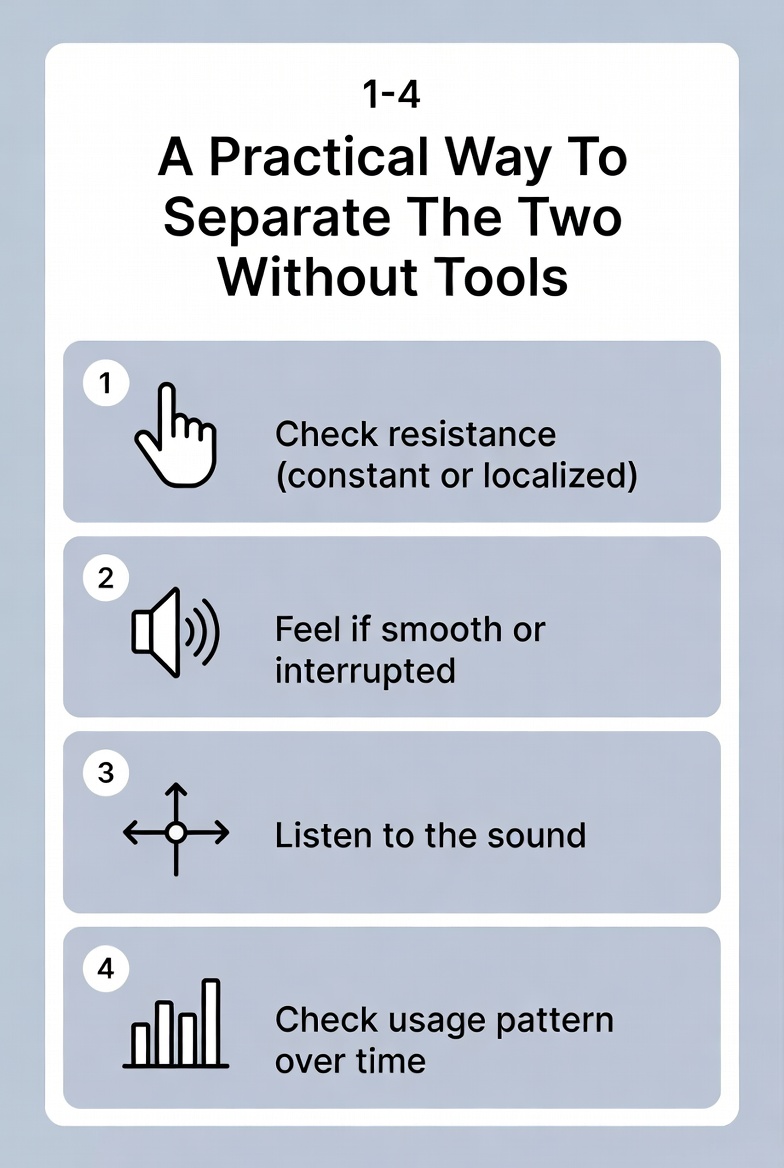
Check if resistance is constant or localized
If the door feels heavy throughout the entire movement, Sliding Glass Door Rollers are more likely involved. If resistance only appears in certain sections, the track is more likely part of the issue.
Observe whether the feeling is smooth or interrupted
Roller wear usually creates a more consistent "heaviness." Track issues often feel interrupted, with smooth sections followed by rough spots.
Listen carefully during movement
Continuous sound throughout the slide often points toward rollers. Sound that appears only in one position often suggests something in the track area.
Look at usage pattern changes over time
If the door has been getting gradually harder to use over months or years, rollers are often a strong factor. If the issue appeared more suddenly in a specific area, track contamination is more likely.
When Sliding Glass Door Rollers And Track Problems Happen Together
In real situations, especially in older doors, it is very common for both issues to exist at the same time. One problem rarely develops in isolation.
When rollers start wearing, they increase friction against the track. That added friction can accelerate track wear or make existing dirt more noticeable. At the same time, a rough track increases stress on the rollers, creating a cycle of gradual decline.
When both are involved, the door may show a combination of symptoms:
- Overall movement feels heavier than before
- Certain sections feel rough or uneven
- Noise appears during most of the sliding process
- The door does not feel stable or consistent
In these cases, fixing only one side may improve the situation slightly but not fully restore smooth operation.
Why Usage Conditions Affect Both Parts
Not all sliding doors age at the same speed. Usage patterns and environment play a big role in how fast wear develops.
A door used as a main backyard entrance will naturally experience more cycles than one used occasionally. More cycles mean more movement, more friction, and more exposure to dust and debris.
Environmental factors also matter. Homes in dusty or windy areas tend to accumulate more particles in the track. Humid environments can influence how materials behave over time. Even small differences in daily conditions can lead to noticeable variation after a few years.
This is why two similar doors installed in different homes can feel completely different after the same amount of time.
Small Signs That Usually Appear Before Major Problems
Before the door becomes clearly difficult to use, there are usually early indicators that something is changing.
These signs are often ignored because the door still works normally:
- Slight increase in opening effort
- Occasional sticking in one area
- Small changes in sound during movement
- Subtle vibration through the frame
- Uneven smoothness depending on direction
Individually, none of these seem serious. Together, they often indicate that the system is slowly shifting away from its original condition.
Sliding glass door issues rarely come from a single obvious failure. Instead, they develop gradually through a combination of wear, debris, alignment changes, and long-term use.
Sliding Glass Door Rollers usually affect the overall smoothness and effort required to move the door. Track problems tend to create localized resistance and visible buildup inside the channel. In many older systems, both conditions appear together and influence each other over time.
By paying attention to how the door moves, where resistance appears, and how consistent the behavior feels, it becomes much easier to understand what is happening underneath the surface. The door may look simple from the outside, but the way it moves often tells a much deeper story about what is happening inside the system.