

 English
 Español
 日本語
日本語Sliding windows rely on compact mechanical assemblies fitted into the bottom rail of the moving sash. These assemblies, commonly called rollers or roller bearings, support the weight of the sash and allow it to travel horizontally along the track. The internal arrangement of parts determines the level of resistance that develops during ordinary use.
|
CORE PART
Housing
|
CORE PART
Wheel & Axle
|
CORE PART
Bearing Interface
|
How Rollers Carry the Weight of a Sliding Sash
A sliding window sash moves horizontally inside a fixed frame. The complete weight of the glass, frame sections, and weather seals rests on the rollers. Two assemblies are normally positioned near the outer corners of the bottom rail. As the sash travels, the wheels rotate against the track surface while upper guides keep the sash in vertical alignment.
The rollers convert vertical load into rolling contact and thereby limit sliding friction. Without functional rollers the sash would drag or bind against the track. Dust, moisture, and temperature fluctuations act gradually on the internal surfaces over successive cycles of movement. Understanding the internal layout helps explain why the feel of the sash can change over time.
What the Complete Assembly Looks Like From the Outside
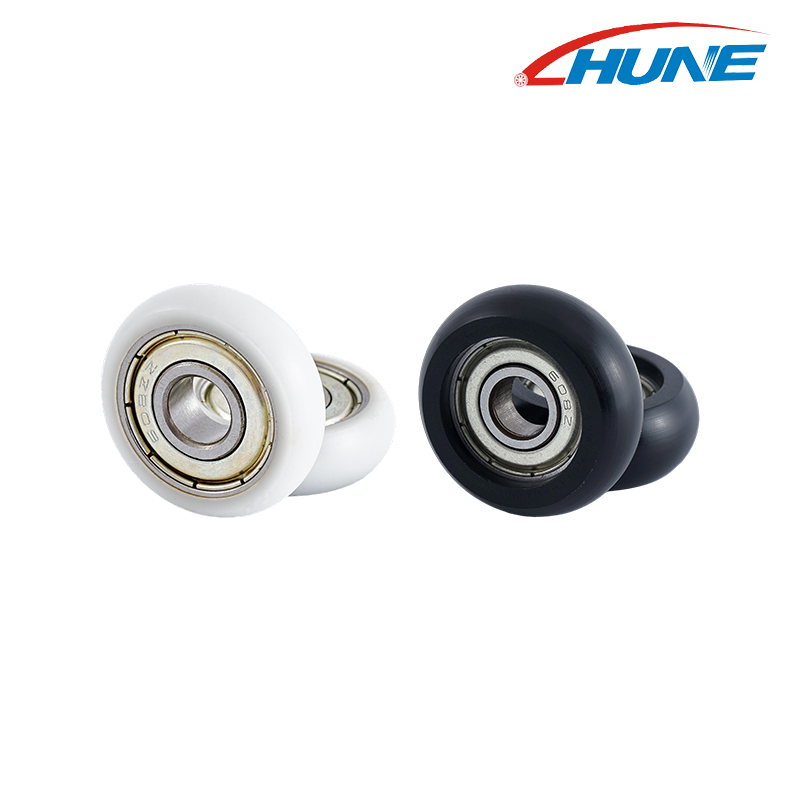
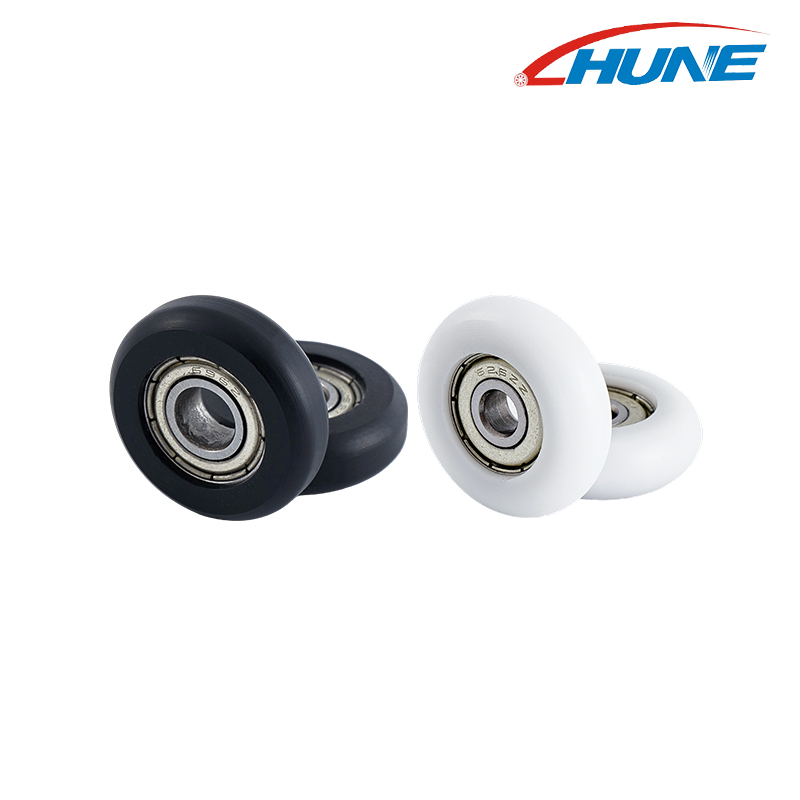
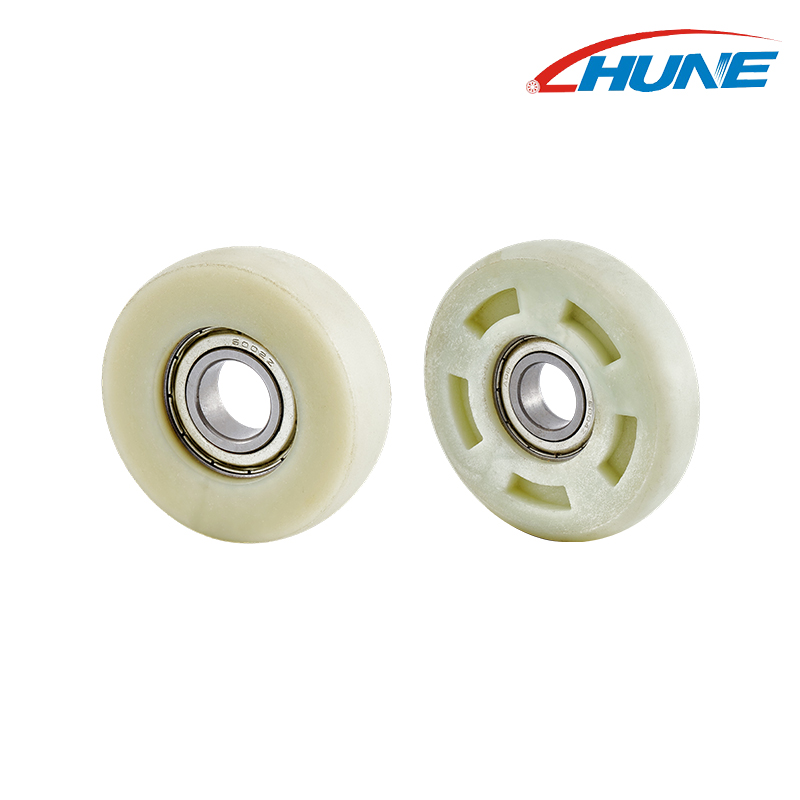
When a roller assembly is removed from the sash, the housing is the first visible element. This housing encloses one or two wheels and may be formed from nylon, other engineered polymers, aluminum, or steel. Polymer housings appear frequently in residential installations because they resist corrosion and reduce the transmission of vibration. Metal housings are selected when greater rigidity is required.
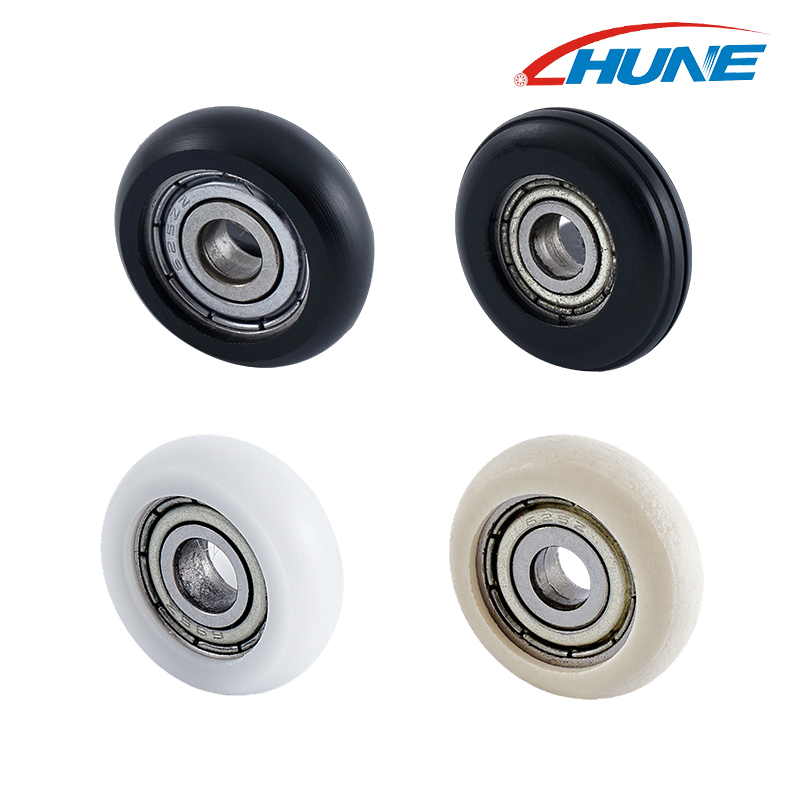
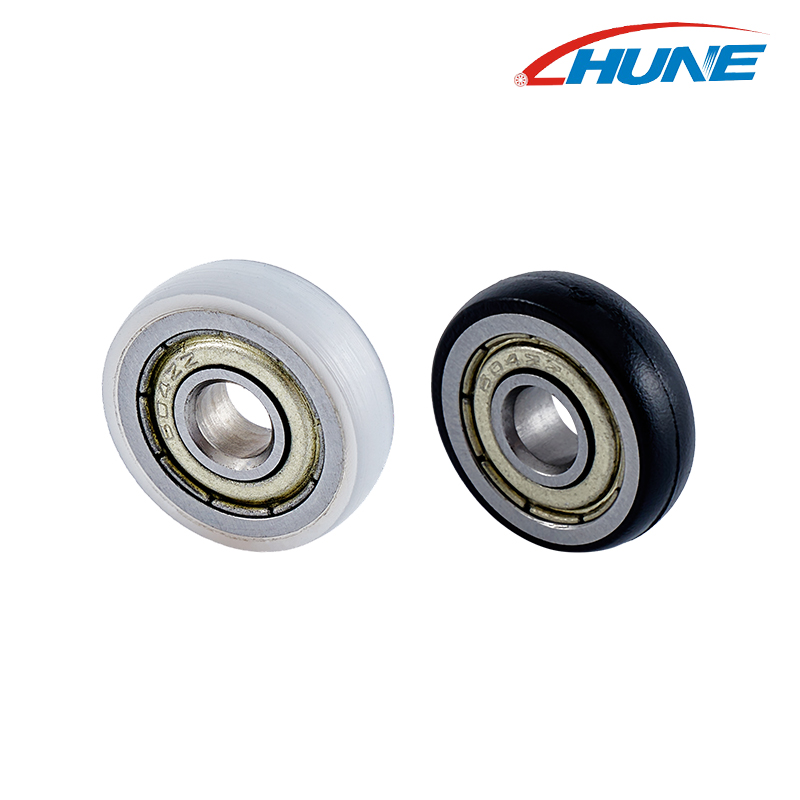
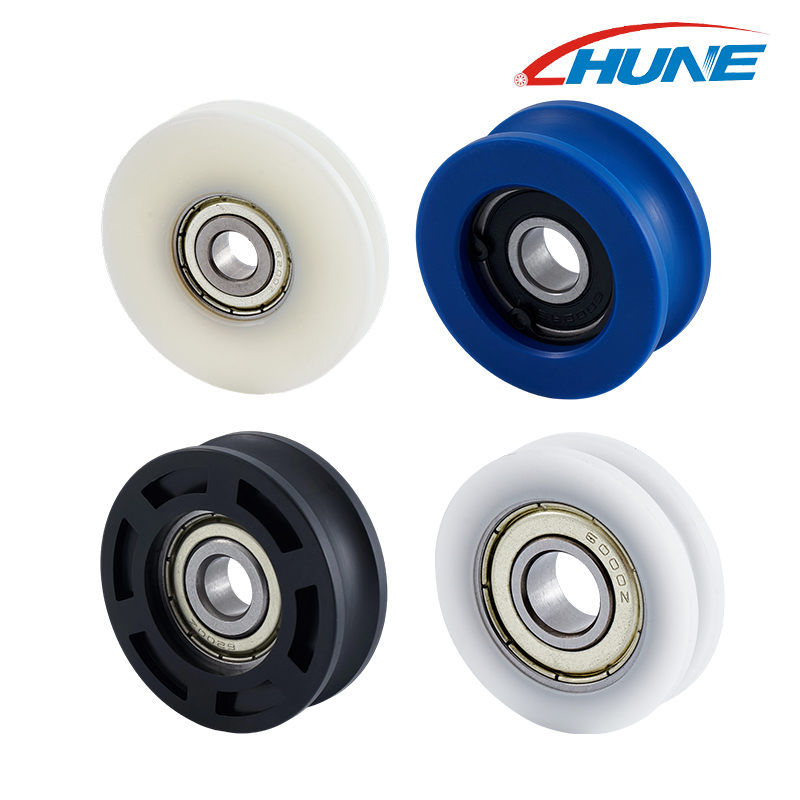
The wheel is the only part that makes contact with the track. Its edge profile may be flat, slightly crowned, or grooved to match the shape of the rail. An axle passes through the center of the wheel and is retained within the walls of the housing. Many designs include an adjustment screw on one face of the housing. Turning this screw raises or lowers the wheel relative to the housing and thereby changes the height of the sash inside the frame. Rivets, screws, or snap-in tabs secure the housing inside a pocket or groove cut into the sash rail.
Looking Inside the Housing
The housing forms the structural framework of the entire assembly. It receives the weight of the sash through the mounting interface and directs that force toward the axle and wheel. Internal seats locate the ends of the axle. In adjustable designs a threaded boss or cam mechanism allows the axle height to change while remaining parallel to the track surface.
Where the Axle Sits and How It Is Held
Some housings incorporate two nested elements. An outer shell remains fixed in the sash while an inner carrier holds the wheel and can move up or down. This arrangement permits height adjustment or replacement of the wearing portion without disturbing the outer mounting.
Fasteners such as rivets or stake pins keep the axle ends captive. Dust tends to collect in the corners of the housing. Once abrasive particles enter these spaces they interact with the moving surfaces and gradually raise rotational resistance.
The Simple Mechanism That Changes Height
The connection between the housing and the sash must remain secure under repeated cycles of movement. Riveted or screwed attachments are common. Adjustment mechanisms ordinarily rely on a simple screw that acts on an eccentric or threaded carrier.
The available range of movement compensates for minor settling of the building structure or gradual wear of the track and wheel surfaces. Parallelism of the axle with the track remains essential because any tilt concentrates load on one side of the wheel or the friction-reducing interface.
The Wheel That Meets the Track
The wheel supplies the rolling contact surface that meets the track. Nylon and related polymers are widely used because they generate lower noise levels and cause less abrasion on aluminum or vinyl tracks. Steel or stainless-steel wheels appear when greater resistance to deformation under sustained load is required. Certain wheels carry a thin outer layer of a quieter compound that further reduces sound transmission.
The outer profile of the wheel must correspond to the geometry of the track. A flat edge pairs with a flat rail, while a V-groove or concave form centers the wheel on a matching ridge. The hub of the wheel contains a bore that receives the axle. The character of the interface inside that bore governs the amount of friction generated during rotation.
The Stationary Pin at the Heart of Rotation
A metal pin functions as the axle. Steel is the customary material, while stainless steel or protected coatings are chosen where moisture exposure is frequent. The axle remains stationary relative to the housing while the wheel rotates around it.
Diameter, surface finish, and the method of end retention all influence free rotation and the service life of the contact surfaces.
In simpler constructions the axle is a straight rod staked or riveted at both ends. In adjustable units the axle may form part of an eccentric arrangement that produces the height change. Parallel alignment with the track surface is critical. Any deviation introduces uneven loading that accelerates wear on one side of the wheel or the friction-reducing interface.
The Quiet Space Between Wheel and Axle
The zone between the rotating wheel and the stationary axle forms the functional core of the roller. Three common constructions appear in ordinary sliding-window hardware.
| Direct Contact | The wheel bore rotates directly on the axle. Construction remains simple, yet friction is higher than in alternative designs. Any grit that enters the clearance increases resistance relatively quickly. Typically found on lighter sashes with infrequent operation. |
| Wear Sleeve | A separate wear sleeve is positioned between the wheel bore and the axle, selected for its wear properties, made of polymer or sintered metal. Direct contact between wheel and axle is reduced, extending the interval before resistance rises. |
| Ball Bearing | Small steel balls roll between an inner race fixed to the axle and an outer race pressed into the wheel hub, spaced by a cage. Light lubricant is retained by shields or seals. Rolling action lowers friction relative to plain or bushing designs. |
Over extended service the lubricant can dry or become contaminated, the balls can develop surface pits, and the raceways can exhibit polishing or wear tracks. These changes gradually increase rotational resistance.
How the Pieces Work Together as the Sash Moves
Force applied to the sash handle travels through the frame into the housing and onward to the axle. The axle presses against the inner race or bushing surface. The balls or the sliding interface then transfer the force outward to the wheel, which presses downward on the track.
As the wheel rotates, successive portions of its circumference carry the load for short intervals.
In a tandem housing the two wheels share the vertical force, distributing contact pressure across a greater length of track. Upper guides of the window prevent tipping of the sash and thereby keep the primary load direction nearly vertical.
Side thrust arising from track irregularities or mismatched profiles must also be resisted by the same bearing surfaces. Temperature variations produce differential expansion between the sash and the frame. Adjustable rollers permit restoration of the intended relationship between the sash and the weather seals after such changes.
Materials and the Ways They Respond Over Time
Nylon wheels limit noise and protect softer track surfaces. Under prolonged static load in elevated temperatures the material can develop temporary flat spots.
Steel wheels maintain roundness more readily but transmit greater vibration and can mark a soft track if surface hardness is insufficient. Stainless-steel wheels resist corrosion in humid or coastal environments while retaining dimensional stability.
Housing materials follow comparable practical considerations. Polymer housings avoid rust and dampen vibration, while metal housings supply greater rigidity for heavier sashes.
Axles benefit from corrosion-resistant finishes because surface rust rapidly elevates friction. Ball-bearing races are typically steel, and their longevity depends on the condition of the lubricant and protection from contaminants.
One Wheel or Two: Common Layout Choices
A single-wheel assembly concentrates the local load on one contact patch. The design remains compact and is common in lighter residential windows.
A tandem arrangement places two wheels in one housing, spreading the load over a greater length of track. The longer footprint reduces the influence of small track imperfections on continuity of movement.
Both configurations can incorporate plain, bushing, or ball-bearing interfaces. Selection depends on the balance among cost, smoothness, and expected service under ordinary operating conditions.
How Wear Develops Inside the Assembly
Grit that enters the housing acts as an abrasive between the wheel and axle or within the ball races. Moisture promotes corrosion on unprotected steel surfaces. Repeated cycles gradually polish or groove the raceways.
Nylon wheels may develop flat spots when the sash remains stationary under load for extended periods in warm conditions. Adjustment screws can seize when packed with dirt and left unturned for long intervals.
When internal surfaces wear, the sash often requires greater force to move, may stick at intermediate positions along the track, or produce grinding or clicking sounds.
Uneven wear on one roller can introduce a slight tilt in the sash, reducing the effectiveness of weather seals and making lock engagement more difficult. Because the two rollers share the sash weight, replacement of only one unit can leave the remaining older assembly carrying a disproportionate share of the load. Standard practice favors simultaneous replacement of both assemblies when wear becomes evident.
Signs That Point to Internal Changes
Several observable indicators can suggest changes inside the roller assemblies:
- Greater force required to move the sash, particularly in the middle of its travel range, frequently indicates rising internal friction.
- Vertical bounce or chatter during movement can signal flat spots on the wheel or degraded bearing surfaces.
- Visible corrosion on exposed metal portions of the housing or axle suggests prolonged moisture exposure.
- Accumulated dust on the track surface indicates that abrasive particles are available to enter the roller interiors.
Thorough cleaning of the track followed by verification that adjustment screws still turn freely constitutes a practical first response. Persistent resistance after cleaning usually means the internal interfaces have reached a condition where replacement restores free movement.
Everyday Steps That Support Ongoing Movement
Several practical measures help maintain the function of the internal parts:
- Regular removal of sand, insects, and household debris from the track limits the volume of abrasive material that reaches the bearings. A soft brush or vacuum nozzle is effective for routine cleaning.
- Heavy oils or greases that attract additional dirt are generally avoided. A light, dry lubricant formulated for window hardware may be applied sparingly if needed.
- Height adjustment should restore proper alignment with the weather seals and lock without lifting the sash into the upper guides, which can create binding.
- Periodic movement of the sash, even when ventilation is not required, helps prevent flat spots on nylon wheels and redistributes lubricant inside sealed bearings.
- In coastal or high-humidity locations, assemblies that incorporate stainless or protected metal components reduce the likelihood of corrosion seizing the axle or races.
How the Roller Fits With the Rest of the Window
The roller functions as one element within a coordinated set of components. Track profile, upper guides, weather stripping, and overall frame squareness all influence the loads experienced by the roller.
A track that has been dented or has accumulated corrosion accelerates wear on the wheel and bearing surfaces. A wheel profile that no longer matches the track generates side loads that the internal interfaces must resist.
Replacement rollers are selected to match the original housing dimensions, wheel profile, and mounting method so that the intended geometric relationships are preserved.
A Clear Summary of the Main Parts
| Component | Primary Function | Common Materials | Typical Changes Over Time |
|---|---|---|---|
| Housing | Locates axle, attaches to sash | Nylon, polymers, aluminum, steel | Dirt accumulation; seizure of adjustment threads |
| Wheel | Provides rolling contact with track | Nylon, steel, stainless steel, composites | Flat spots (nylon); surface wear |
| Axle | Fixed center of rotation | Steel, stainless steel, coated steel | Surface corrosion or scoring |
| Bearing interface | Reduces friction between wheel and axle | Plain surface, bushing, or ball set | Lubricant drying; grit entry; race or surface wear |
| Adjustment mechanism | Alters wheel height relative to housing | Steel or coated steel | Dirt packing of threads |
The internal construction of a sliding window roller assembly centers on a housing that supports a wheel, an axle, and a friction-reducing interface. Materials and arrangements are selected according to expected sash weight, frequency of operation, and environmental exposure.
Dust exclusion, moisture resistance, and maintenance of parallel alignment remain the principal factors that influence continued free rotation under ordinary conditions. When these elements remain in functional balance, the sash continues to travel along the track with the intended level of resistance.