

 English
 Español
 日本語
日本語Most people don't think about their garage door rollers until something starts sounding wrong. It's one of those parts that quietly does its job for years, then one day you notice the door isn't moving the way it used to. Maybe there's a new noise. Maybe it just feels off. Either way, rollers tend to give you a heads-up before they actually fail completely, and knowing what that heads-up looks like can save you a headache later.
Below are five signs that usually show up before a roller gives out for good, plus some context on why they happen and what you can do about them.
Sign 1: Strange Noises You Didn't Notice Before
This is usually the first thing people mention when their rollers start going bad. A door that used to open with a fairly consistent sound suddenly starts doing something different, and it's hard not to notice.
The Grinding Sound
If the door starts making a grinding or scraping noise as it moves, that's often a roller that's no longer rolling the way it should. Instead of smoothly turning inside the track, it's dragging or catching against the metal. This tends to happen once the bearing inside the roller wears down, or when the wheel itself stops being perfectly round.
The Clunk That Repeats
There's also a different kind of noise worth paying attention to, a clunk or thud that seems to happen at the same point every single time the door moves. This pattern usually means a roller has developed a flat spot, or possibly a small crack, and that damaged section is bumping against the track each time it passes through.
Here's a rough guide for sorting out what different sounds might mean:
| Sound | What it probably means | How urgent is it |
|---|---|---|
| Light squeak | Needs lubrication, not much else | Not urgent, but don't ignore it forever |
| Grinding or scraping | Roller bearing is wearing out | Worth checking soon |
| Repeated clunking | Flat spot or crack on the roller | Should be looked at |
| Loud bang | Roller came off track or snapped | Stop and inspect immediately |
A single odd noise every now and then probably isn't a big deal. But once it becomes a pattern that repeats every time the door opens or closes, that's your cue to take a closer look.
Sign 2: You Can Actually See the Damage
Sometimes you don't even need to guess. Grab a flashlight, open the door partway, and look at the rollers directly. It only takes a couple of minutes.
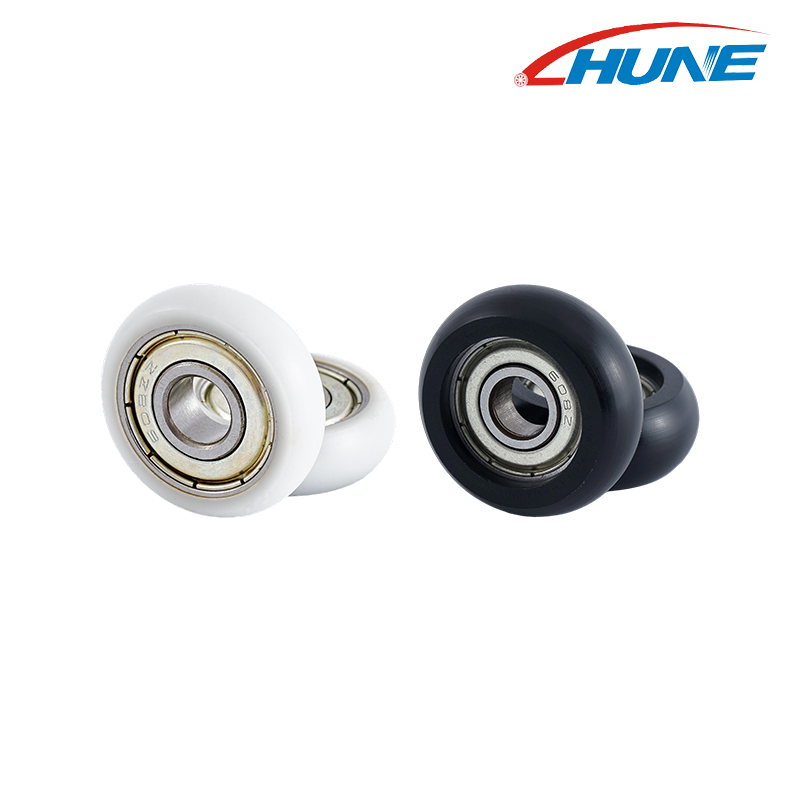
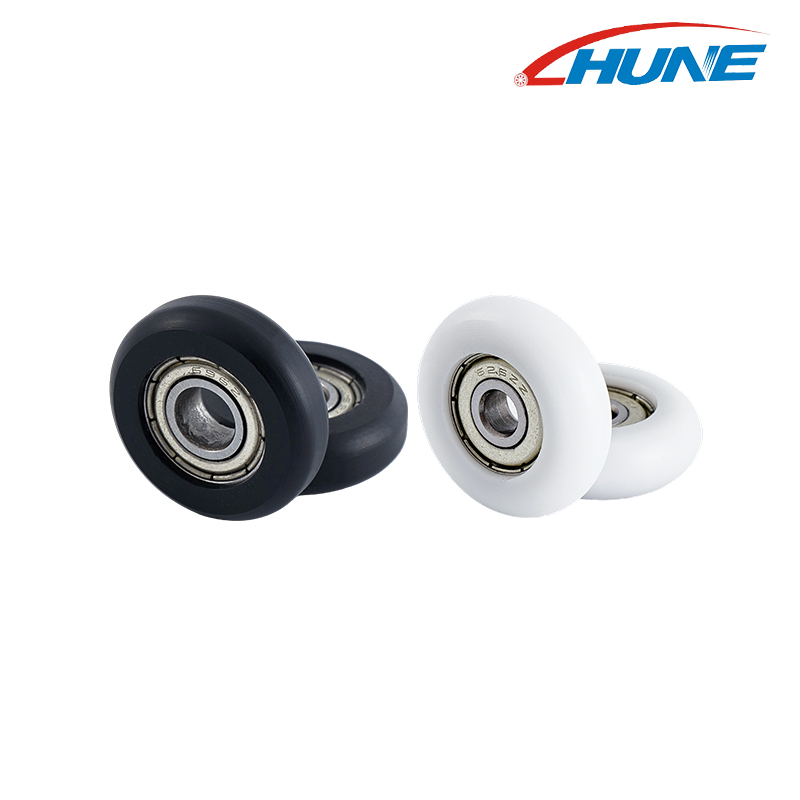
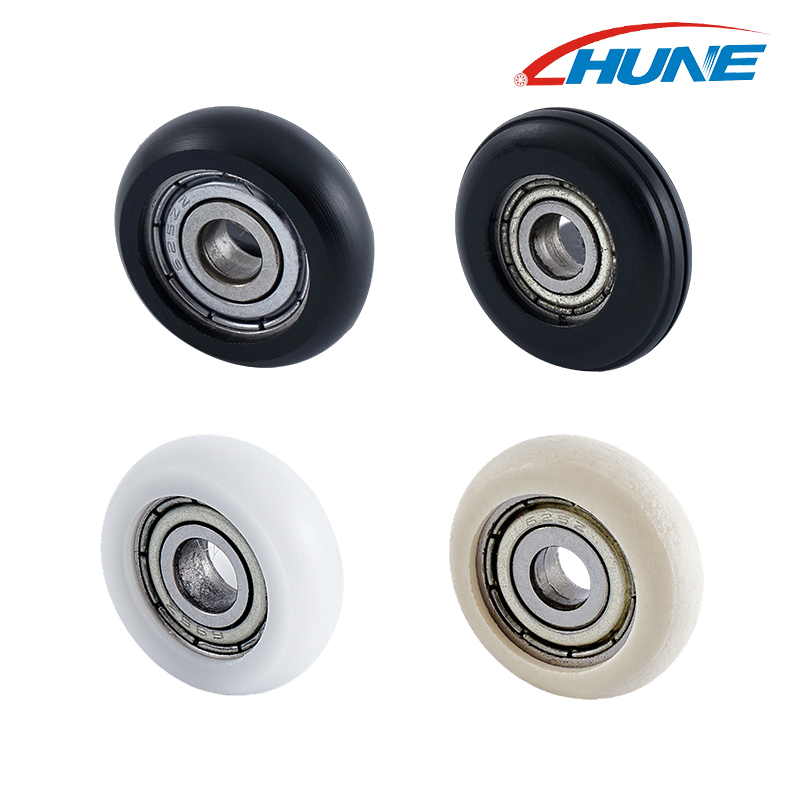
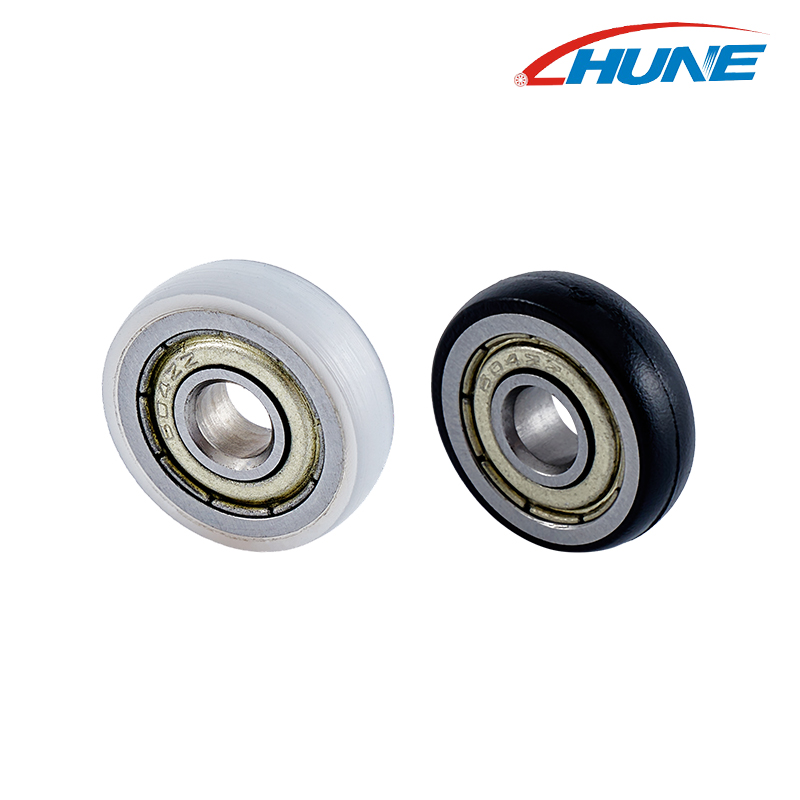
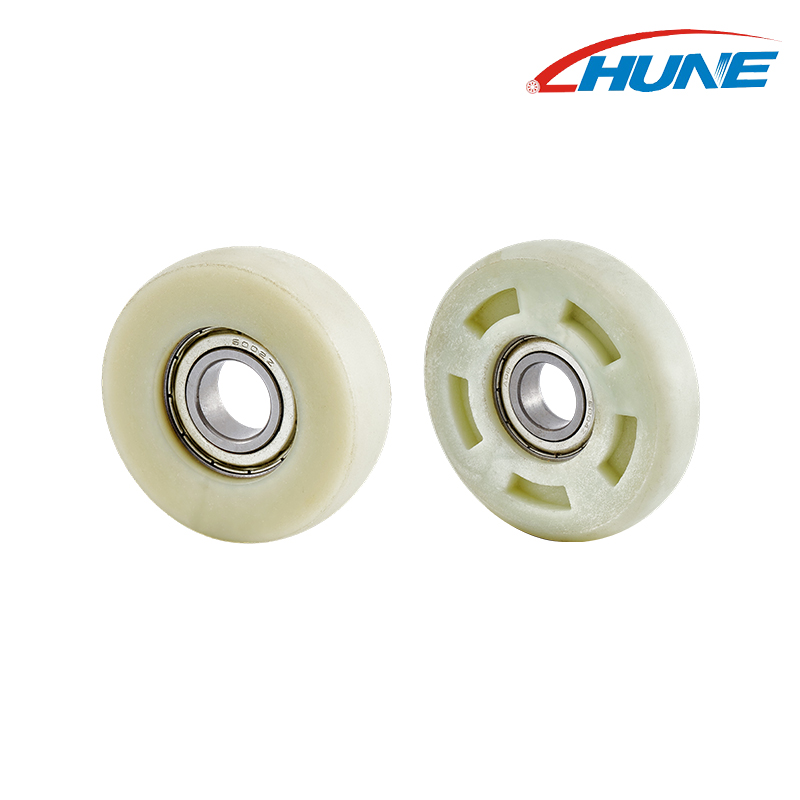
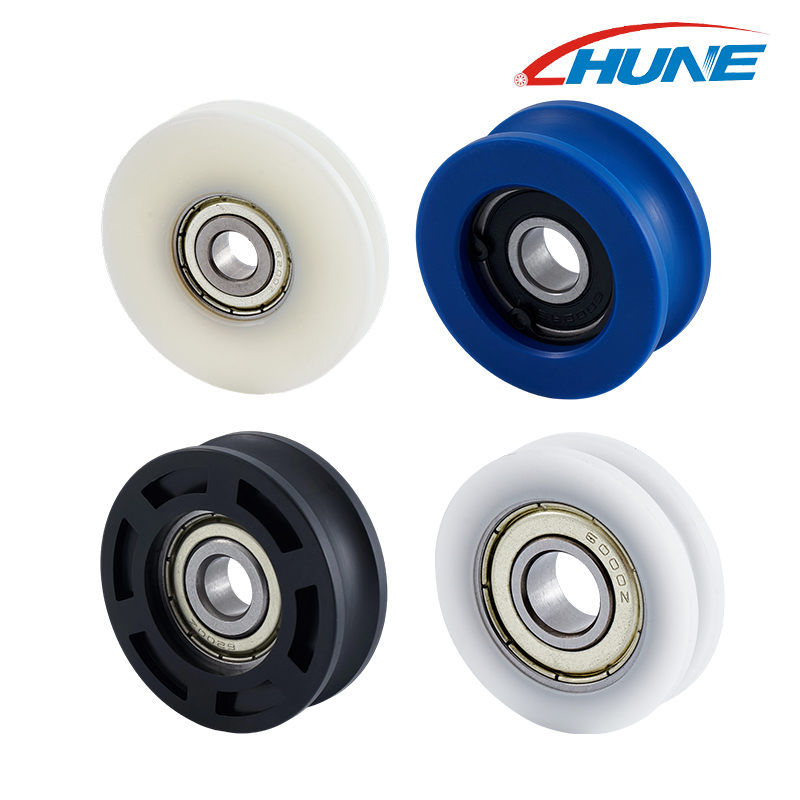
Nylon rollers, which show up on a lot of residential doors, tend to crack or chip along the edges after enough time and enough temperature swings. Cold weather especially can make some materials more brittle than they'd otherwise be. Once there's a visible crack running through the wheel, that roller isn't distributing weight evenly anymore, which means the rollers next to it end up picking up the slack.
Steel rollers behave a little differently. They don't crack as often, but they can wear down flat spots on the surface after years of repeated pressure hitting the same point over and over. A flat spot means the roller isn't perfectly round anymore, so instead of a smooth rotation, you get a slight bump every time that spot rolls through.
Things worth checking for during a visual inspection:
- Uneven or worn wheel surfaces
- Rust forming around where the roller connects to its stem
- Bearings that look loose, cracked, or missing pieces
- Plastic parts that look faded or feel brittle to the touch
If you check a few rollers and they all show similar wear, that's usually a sign the whole set is reaching the end of its life together, not just one bad roller in isolation.
Sign 3: The Door Doesn't Move Evenly Anymore
A garage door that's working properly should glide up and down in one smooth motion, no hesitation, no jerking. Once rollers start failing, that smoothness tends to disappear pretty quickly.
You might notice the door pausing at a specific point every time, or moving faster on one side than the other. Sometimes there's a slight shake as it travels. This happens because a damaged roller can't stay in consistent contact with the track the way it used to, so when it catches or drags while the rest of the rollers keep moving normally, it pulls that section of the door out of sync.
This isn't only about the annoyance factor either. A door moving unevenly puts more strain on the opener motor and the springs than they'd normally deal with. What starts as a roller problem can end up putting stress on other parts of the system if it goes unaddressed for too long.
A few things to keep an eye on while the door is operating:
- Does it hesitate at the same spot every time?
- Does one side seem to lag behind the other?
- Does the door look like it's tilting slightly as it moves?
- Is there noticeable vibration alongside the jerking?
If you're seeing more than one of these at once, it's probably worth pausing regular use until someone takes a closer look.
Sign 4: More Vibration Than Usual
A bit of vibration is fairly normal, especially with older doors that have been through a lot of cycles. But a noticeable jump in shaking or rattling usually points back to the rollers.
Once rollers stop fitting snugly in the track, or once the bearings inside wear down, the door loses some of the stability it had before. You can often feel this if you rest a hand against the door or a nearby wall while it's moving. In some cases the vibration is strong enough that things on a nearby shelf start rattling too.
Over time, that extra vibration can loosen other hardware nearby, hinges, brackets, the screws holding the track in place. It sort of becomes a cycle, one worn part contributes to wear somewhere else, which is part of why catching roller problems early tends to be easier than waiting until several things need fixing at once.
Sign 5: The Door Gets Harder to Open or Close
This is often the sign that finally gets people to do something about it, mostly because it's hard to ignore. The door just doesn't move the way it should anymore.
This might look like:
- The opener straining or making odd sounds while lifting the door
- The door getting stuck partway through its cycle
- Needing to give it a manual push at certain points
- The opener reversing on its own because it senses too much resistance
When rollers stop moving freely inside the track, they create resistance that the motor has to fight against. Openers are built to handle a certain amount of load, but they're not really meant to compensate indefinitely for rollers that aren't doing their job. Keep running the door like this long enough, and you risk shortening the opener's life too, turning a relatively small roller fix into something bigger and more expensive.
What Happens If You Just Leave It
It's tempting to put this off, especially since the door usually still works, just with some extra noise or roughness. But waiting too long comes with a few risks.
Worn rollers dragging against the track can slowly bend or groove the metal, and fixing a damaged track is a bigger job than swapping out rollers. Uneven wear can also show up on the door panels themselves, since one section ends up carrying more weight than it should. There's also a safety angle here, a door that jerks or sticks unpredictably has a higher chance of coming off the track entirely, which isn't something you want happening while someone's standing nearby.
None of this means every roller issue turns into a disaster. But dealing with it while it's still just a roller problem is usually simpler than waiting until it spreads to other parts of the system.
A Quick Look at Roller Types
Not every roller is made the same way, and the material affects both the noise level and how it tends to wear.
| Roller type | Noise level | Typical wear pattern |
|---|---|---|
| Nylon | Quieter | Cracks or chips over time |
| Steel | Louder | Flat spots, bearing wear |
| Sealed bearing | Somewhere in between | Bearings can seize eventually |
How long any of these actually last depends a lot on how often the door gets used, the climate, and how well the track has been maintained. A door that opens and closes several times a day is going to put more wear on its rollers than one used once or twice.
Small Habits That Help Rollers Last Longer
Rollers will need replacing eventually no matter what, but a few habits can stretch that timeline out a bit.
Keeping the track free of dust, dirt, and small debris helps reduce the friction that speeds up wear. A cloth wipe-down every so often goes a long way. Adding a light coat of lubricant made for garage door parts, on the roller stems and hinges specifically, also helps things move more smoothly. Just don't overdo it, too much lubricant tends to attract more dirt than it prevents.
It's also worth checking the track alignment now and then. A track that's shifted even slightly forces the rollers to work harder than they should, which speeds up wear over time. And if you've added anything heavy to the door, decorative panels, extra insulation, that kind of thing, it's worth double checking whether the door and its components were actually built to handle that additional weight.
DIY or Call Someone?
Swapping out a roller or two is something a lot of homeowners handle themselves, especially if they're reasonably comfortable with basic tools. That said, there are a few situations where it makes more sense to call in a technician.
If the door has come off the track, if you're seeing damage to the springs or cables alongside the roller wear, or if you're not confident about safely handling the tension on the springs, those are all good reasons to bring in someone with more experience. On the other hand, if it's just a few worn rollers and everything else seems to be working fine, that's usually a manageable project for someone comfortable with basic maintenance.
Garage door rollers rarely just snap without any kind of warning first. Between the noises, the visible wear, the uneven movement, the vibration, and the door getting harder to operate, there are usually a handful of signs along the way before things actually break. Taking a few minutes now and then to check the tracks and rollers can genuinely extend how long the whole system lasts.
If any of this sounds familiar, now's a reasonable time to take a look at your rollers rather than waiting to see if the noise goes away on its own. Catching it early is almost always the easier path compared to dealing with a roller that fails while the door's mid-motion.