

 English
 Español
 日本語
日本語Outdoor awning systems operate in an environment that is very different from indoor furniture or window hardware. Sunlight, rain, humidity, dust, temperature changes, and repeated movement can all affect a small roller component over time. For manufacturers, choosing the material for an awning roller is therefore not simply a matter of selecting a hard or soft wheel. The material needs to work with the track, surrounding components, operating conditions, and expected movement of the system.
For retractable awnings, folding canopies, patio shading structures, and similar systems, roller wheels may be produced from engineered polymers, metals, or combinations of materials. Each option has a different balance of wear behavior, surface contact, corrosion resistance, dimensional stability, and manufacturing flexibility.
The right choice depends on the application rather than a single material being suitable for every outdoor awning design.
Why Does Roller Material Matter In An Outdoor Awning?
A roller may look like a relatively small part of an awning assembly, but its material affects how it interacts with the track and nearby components.
During operation, the wheel repeatedly contacts a guide surface while the awning opens, closes, folds, or adjusts. The contact area needs to move without creating unnecessary resistance or damaging the surrounding track.
Outdoor conditions add another layer to the material selection process. A component that performs well inside a dry workshop may behave differently after repeated exposure to moisture, sunlight, dust, and changing temperatures.
For this reason, manufacturers normally consider several characteristics together:
- Resistance to moisture and corrosion
- Wear behavior during repeated movement
- Contact with the track material
- Dimensional stability
- Surface condition
- Mechanical load
- Temperature exposure
- Manufacturing requirements
- Assembly method
- Expected maintenance conditions
The material decision should be made as part of the complete roller design rather than in isolation.
What Materials Are Commonly Considered For Awning Rollers?
Several material families can be considered for outdoor roller applications.
Engineered Polymer Rollers
Engineered polymers are widely used for wheels and rollers where controlled surface contact, low component weight, and corrosion resistance are useful.
Nylon is one example. It can provide a practical combination of mechanical strength, wear resistance, and relatively low friction. Nylon rollers are also commonly considered when reducing metal-to-metal contact is desirable. However, different grades and formulations can behave differently under heat, moisture, load, and prolonged outdoor exposure.
Polymer selection should therefore be based on the actual operating environment rather than simply choosing a material by name.
Acetal And Similar Engineering Plastics
Acetal is another engineering plastic used in precision mechanical components. It is valued for dimensional stability, low friction characteristics, and resistance to moisture-related dimensional changes compared with some other plastics.
For awning roller applications, these characteristics can be useful when the wheel needs to maintain a consistent relationship with its track during repeated movement.
The suitability of acetal still depends on the design. Wheel geometry, load distribution, bearing arrangement, and surrounding materials can influence how the finished roller behaves.
Stainless Steel And Other Metal Options
Metal rollers may be considered when the application requires a different combination of load handling, rigidity, or structural strength.
Stainless steel is particularly relevant when moisture exposure and corrosion are important considerations. However, using metal does not automatically make a roller suitable for every outdoor system.
A metal wheel running directly against a metal track can produce different noise, friction, and wear characteristics compared with a polymer wheel. The contact pair needs to be considered as a complete system.
For some awning designs, a metal structure with a polymer contact surface may offer a practical compromise.
How Does The Track Material Affect The Choice?
The roller should never be selected without considering the surface on which it runs.
A wheel and track work together. Their interaction affects movement, wear, noise, and maintenance.
For example, a polymer wheel running on a compatible metal guide can behave differently from a steel wheel running on the same guide. The difference is not only related to wheel hardness. Surface finish, wheel profile, alignment, load distribution, and contamination can also influence the result.
Wheel And Track Should Be Evaluated Together
When developing a new awning system, manufacturers can review:
| Consideration | Why It Matters |
|---|---|
| Wheel material | Influences contact and wear behavior |
| Track material | Determines the opposing surface |
| Wheel profile | Affects how the component sits in the guide |
| Load distribution | Changes contact pressure |
| Surface finish | Can influence rolling behavior |
| Alignment | Helps prevent uneven contact |
| Environment | Affects moisture, dust, and material stability |
| Operating frequency | Influences cumulative wear |
This approach is more useful than asking which material is generally suitable for outdoor use.
When Does Nylon Make Sense For An Awning Roller?
Nylon can be considered when a manufacturer wants a lightweight engineering polymer with useful mechanical properties for repeated movement.
One advantage is that polymer contact can reduce the direct metal-on-metal interaction found in some mechanical assemblies. This can be useful where operating noise and track contact are design considerations.
However, nylon is not a single standardized material with identical behavior in every application. Different grades, additives, manufacturing methods, and wheel designs can produce different results.
Outdoor exposure should also be considered. Moisture absorption and temperature changes can affect some nylon components, so the specific grade and design should be reviewed before it is selected for a long-term outdoor application.
For this reason, manufacturers should discuss the actual operating conditions with the roller supplier rather than specifying nylon without further evaluation.
What About Acetal Rollers?
Acetal can be useful where dimensional consistency and smooth mechanical movement are important.
Compared with some other engineering plastics, acetal has relatively low moisture absorption, which can help maintain dimensional characteristics in changing environments. This can be relevant when the roller must maintain a controlled relationship with a guide or track.
Its use may be considered for:
- Retractable awning mechanisms
- Sliding canopy components
- Guide rollers
- Compact outdoor mechanisms
- Furniture and architectural hardware
- Mechanical assemblies requiring polymer contact surfaces
Again, the material should be matched with the wheel geometry and operating conditions.
A roller made from a suitable material can still perform poorly if its profile does not match the track or if the assembly is misaligned.
Are Metal Rollers Suitable For Outdoor Awnings?
Metal rollers can be appropriate in applications where stiffness and mechanical load handling are important.
Steel and stainless steel offer characteristics that engineering polymers do not provide. They can be useful where a rigid wheel structure is required or where the component is integrated into a heavier mechanical assembly.
The outdoor environment needs careful consideration, especially where the roller may be exposed to rain, humidity, salt-containing air, or condensation.
Stainless steel can be considered in environments where corrosion resistance is an important part of the component specification. Other metals may require an appropriate surface treatment or protective finish depending on the application.
However, corrosion resistance is only one part of the decision. A metal roller can also change the noise and contact behavior of an awning system.
Could A Combination Of Materials Be More Practical?
In some designs, the answer is not simply polymer or metal.
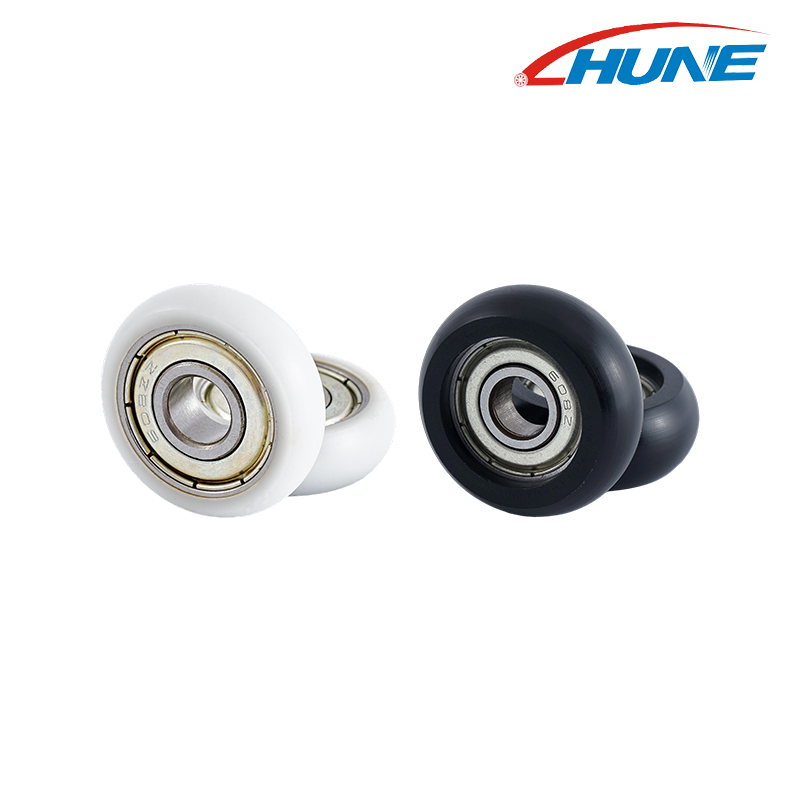
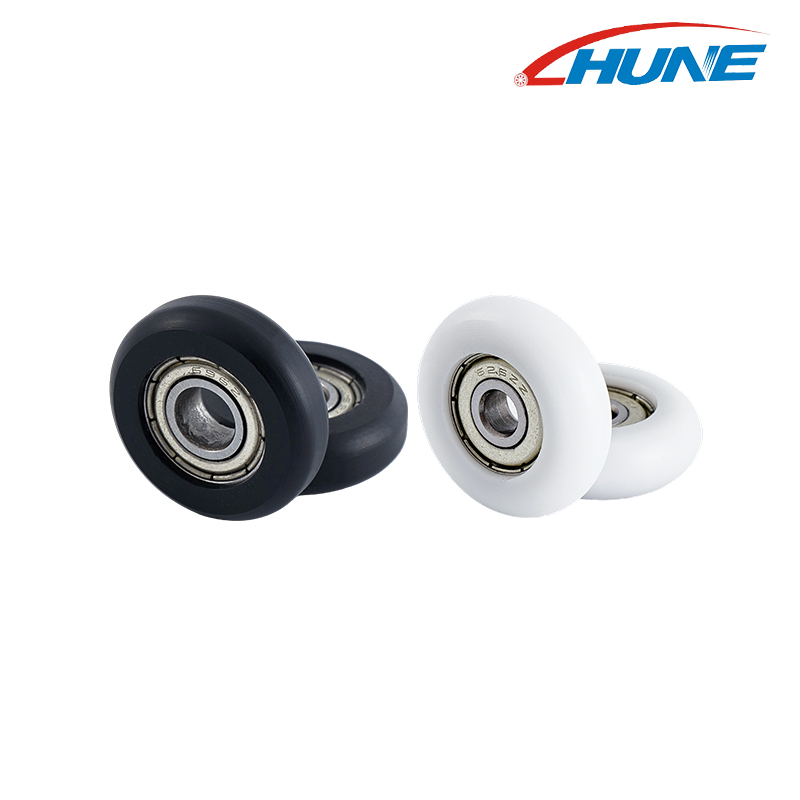
A roller assembly may use different materials for different functions. For example, a polymer wheel can provide the contact surface while a metal axle or bearing supports the internal structure.
This type of construction allows the designer to assign different responsibilities to different materials.
The wheel surface can be selected according to track contact, while the internal structure can be designed around load transfer and assembly requirements.
A Typical Material Combination
A simplified roller assembly may contain:
- Polymer wheel
- Metal axle
- Bearing or bushing
- Metal mounting bracket
- Retaining component
The exact construction varies by awning design.
This approach can be particularly useful when manufacturers want to balance movement characteristics with structural requirements.
How Do Outdoor Conditions Change Material Selection?
An awning used on a sheltered patio does not necessarily experience the same conditions as one installed in a coastal or highly exposed location.
Climate should therefore be part of the sourcing discussion.
Dry And Sunny Areas
Strong sunlight and temperature cycling can influence polymer selection. UV exposure may affect certain plastics over time, while repeated heating and cooling can contribute to dimensional changes.
For these applications, manufacturers can ask suppliers about the suitability of the proposed material for prolonged outdoor exposure.
Wet Or Humid Environments
Moisture introduces different concerns.
Metal components need appropriate corrosion consideration, while polymer components need to be evaluated for moisture absorption and dimensional behavior.
Drainage, cleaning practices, and the position of the roller within the awning structure can also influence the environment around the component.
Coastal Locations
Salt-containing air can create additional corrosion concerns for exposed metal components. Stainless steel or suitable protective treatments may therefore be considered depending on the design.
The wheel material should also be considered together with the track and mounting hardware rather than evaluated separately.
Does Temperature Affect Roller Material Selection?
Temperature changes can influence both polymers and metals.
Polymers can expand, contract, soften, or change their mechanical behavior depending on the material and operating conditions. Metals also expand and contract, although the degree and practical effect depend on the material and geometry.
For an awning roller, the important question is whether these changes could affect:
- Wheel-to-track contact
- Rotation
- Alignment
- Mounting clearance
- Bearing operation
- Overall movement
A supplier can help review these points when the operating environment is known.
What Should Manufacturers Check During Sample Testing?
Material selection should not stop when a material name appears on a quotation.
A physical sample provides an opportunity to evaluate the roller within the actual assembly.
Manufacturers can inspect how the wheel fits the track, whether the mounting arrangement is correct, and whether the component moves as expected.
Practical Sample Checks
Before approving a roller, consider checking:
- Fit within the intended track.
- Wheel rotation.
- Contact between wheel and guide.
- Mounting stability.
- Assembly compatibility.
- Surface condition.
- Material identification.
- Movement under the intended load.
- Behavior after repeated operation.
- Condition of the track after testing.
The exact testing procedure should depend on the application and the manufacturer's internal quality requirements.
Why Is Wheel Geometry Just As Important As Material?
A common mistake is to focus heavily on material while overlooking the shape of the wheel.
Two wheels made from the same polymer can behave differently if their profiles are different.
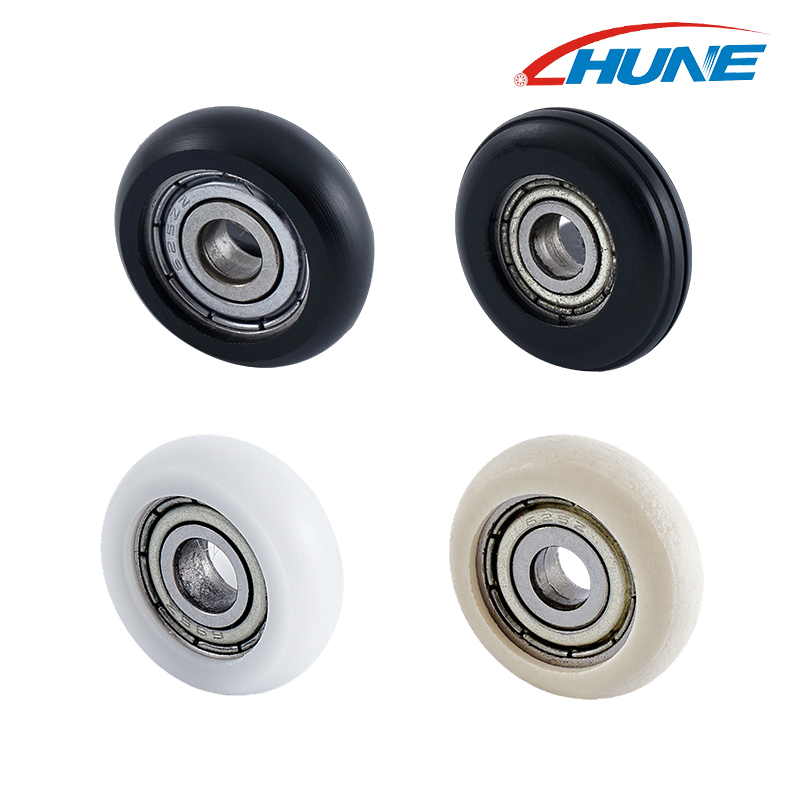
The wheel diameter, groove shape, edge design, axle position, and contact width can all influence how the component interacts with the guide.
This is particularly relevant for custom awning rollers.
A supplier should therefore evaluate the complete component rather than simply recommending a material based on a short product description.
What Should Manufacturers Tell A Roller Supplier?
A supplier can make a more useful recommendation when the application information is clear.
A manufacturer preparing an inquiry can provide:
- Existing roller sample
- Technical drawing
- Track sample or photograph
- Assembly photograph
- Intended outdoor environment
- Approximate operating conditions
- Material preferences, if already defined
- Expected production quantity
- Inspection requirements
- Packaging requirements
Not every project will have all of this information available.
Even a photograph and physical sample can provide a useful starting point for discussing the component.
How Can Hune Pulley Help With Material Selection?
Hune Pulley works with manufacturers on roller and pulley components for different mechanical applications, including outdoor systems where material selection needs to be considered alongside wheel design and assembly requirements.
For an awning roller project, the available sample, drawing, or application information can be reviewed before discussing the appropriate manufacturing approach. This allows material, wheel construction, mounting details, and production requirements to be considered together.
For OEM and replacement applications, this type of discussion can also help manufacturers determine whether an existing roller should be reproduced, modified, or developed into a new configuration.
A Simple Material Selection Checklist
Before choosing a roller material for an outdoor awning, manufacturers can ask a few practical questions.
About The Environment
- Will the component be exposed to rain?
- Is the installation exposed to direct sunlight?
- Is the location humid?
- Could salt-containing air be present?
- Will the system experience large temperature changes?
About The Mechanism
- What material is the track made from?
- How does the wheel contact the guide?
- What load will the roller carry?
- How frequently will the awning move?
- Is low operating noise important?
- Is corrosion a concern?
About Production
- Is the component standard or customized?
- Is an existing sample available?
- Does the wheel require a specific profile?
- Are there particular bearing or axle requirements?
- Will the roller be ordered repeatedly?
These questions can make the sourcing conversation much clearer.
The Material Should Fit The Whole Awning System
There is no single roller material that should be selected for every outdoor awning application. Nylon, acetal, stainless steel, other engineering polymers, and different material combinations can each have a role depending on the environment and mechanical design.
The useful starting point is not simply asking which material is stronger or harder. Instead, manufacturers should consider how the wheel interacts with the track, how the assembly will be exposed to weather, how frequently it will move, and what production requirements need to be maintained.
For custom and OEM awning components, Hune Pulley can work from samples, drawings, photographs, and application information to discuss roller construction and material options according to the project.
A practical material decision comes from looking at the complete assembly. When wheel material, track, geometry, mounting method, environment, and production requirements are considered together, manufacturers have a clearer basis for selecting a roller that fits the intended awning system.