

 English
 Español
 日本語
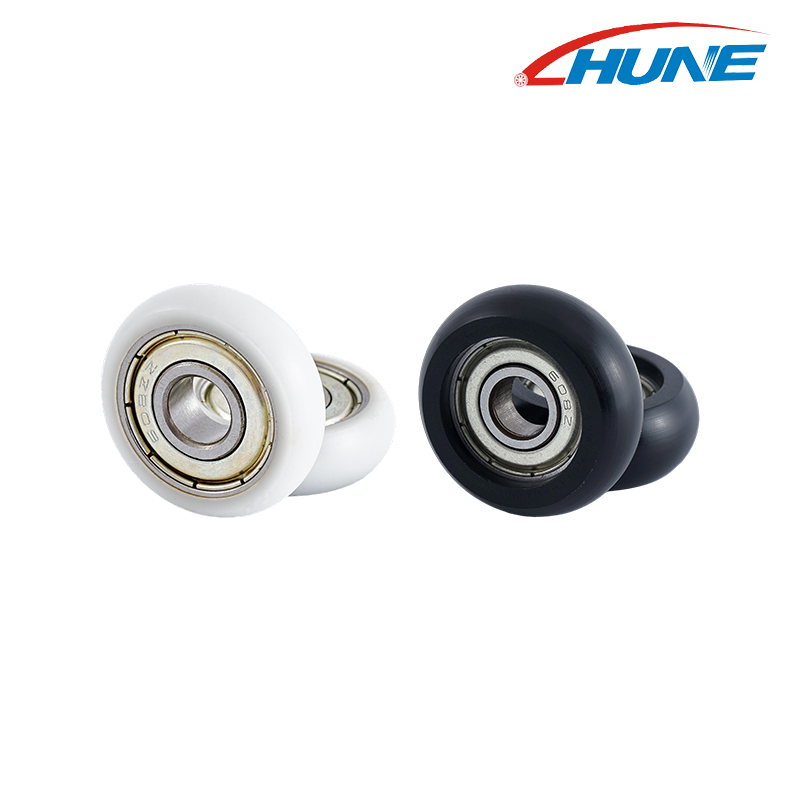
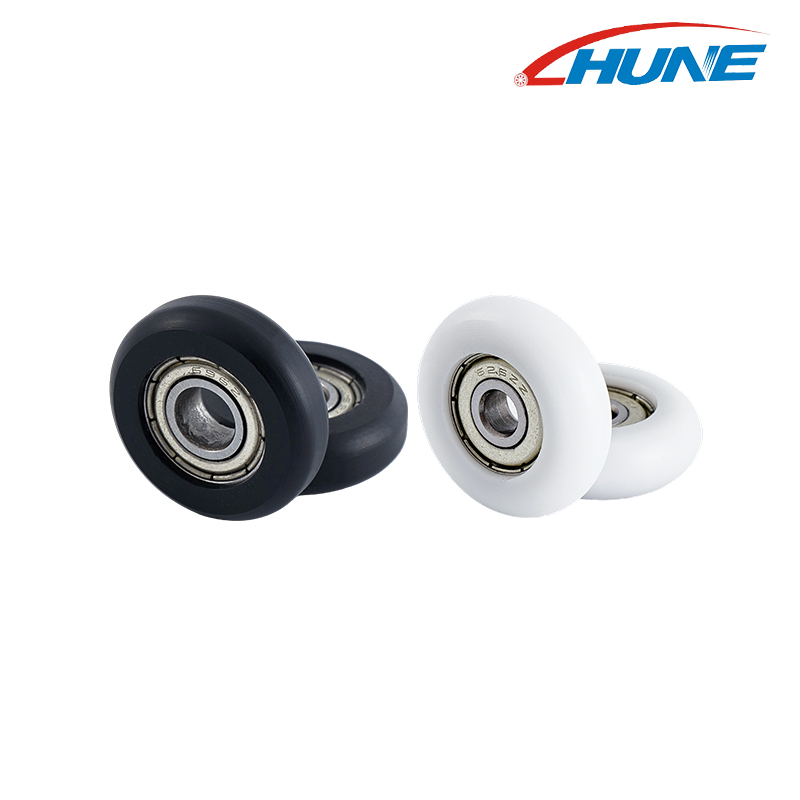
日本語3D Printer V Wheels are small components, but they have a direct connection with the way a printer carriage travels along its guide system. When a wheel develops a flat section, the carriage may no longer move with the same rolling pattern throughout its travel. The result can be a noticeable bump, repeating resistance, vibration, or an irregular motion that becomes easier to notice during printing.
A flat spot does not usually appear without a reason. It can be related to how firmly the wheel contacts the rail, how long the printer remains in one position, the condition of the running surface, wheel material, bearing support, or the way the carriage has been assembled.
For users and equipment manufacturers, understanding what happens between the wheel and rail is more useful than simply treating a damaged wheel as a replacement part.
What Does A Flat Spot Actually Mean?
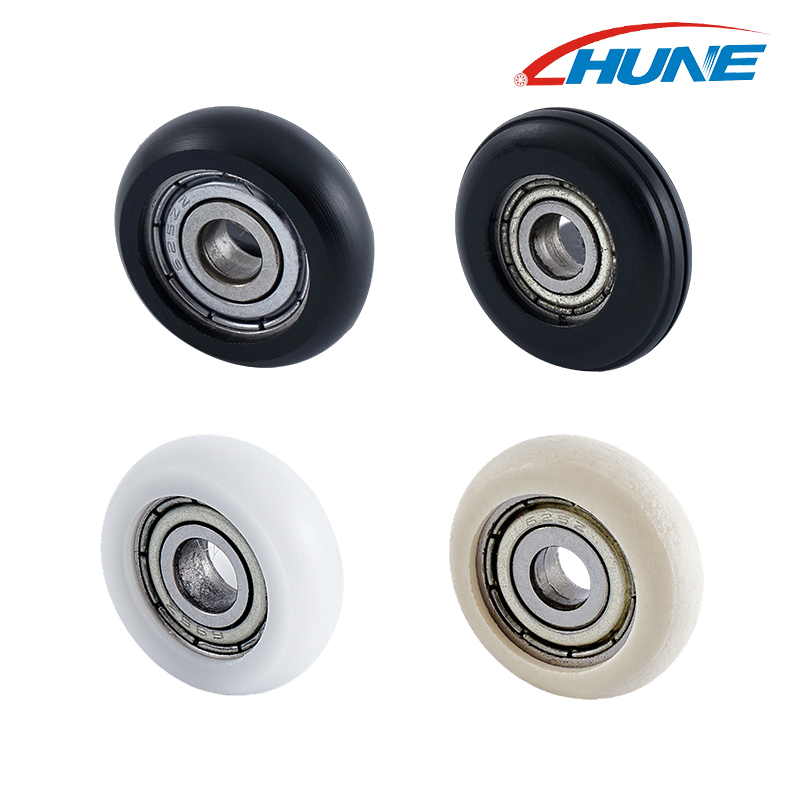
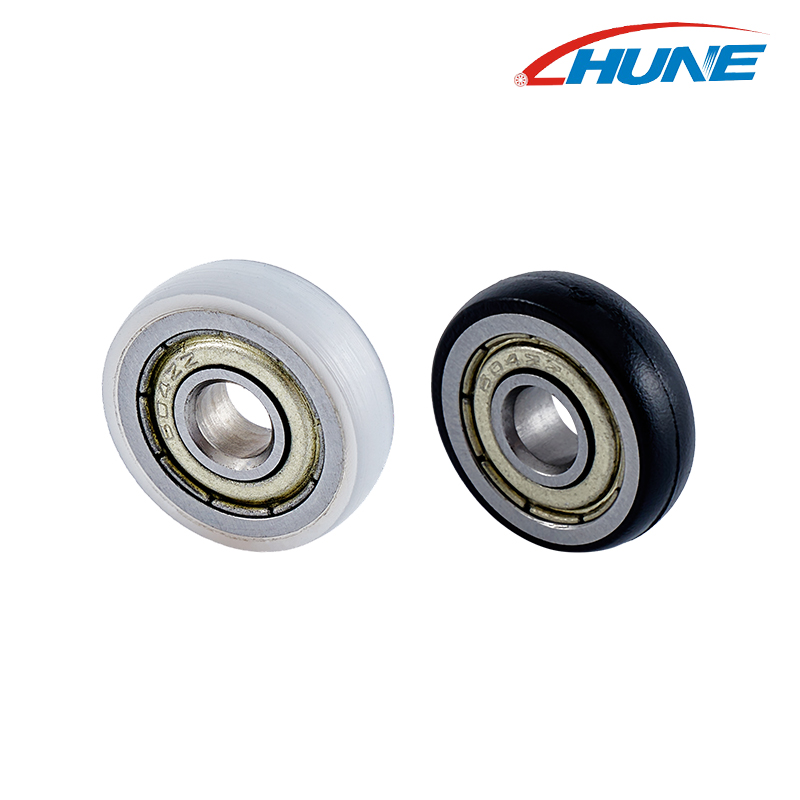
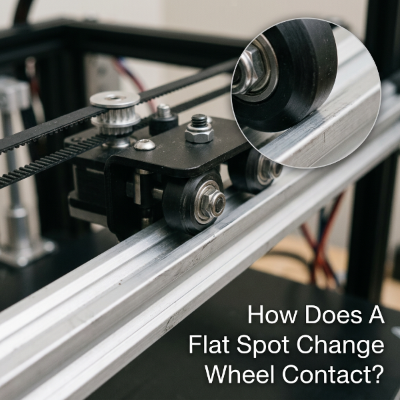
A V wheel normally has a continuous curved outer surface that follows the profile of its guide rail. As the carriage moves, the wheel rotates and transfers the contact point around its circumference.
A flat spot changes that relationship.
Instead of maintaining a rounded contact surface, one section of the wheel becomes slightly compressed or deformed. When that section reaches the rail, the wheel may not roll in exactly the same way as it does through the rest of its rotation.
The change can be small enough to escape a quick visual inspection. In some cases, the problem becomes easier to notice by moving the carriage slowly by hand.
Why Does The Wheel Become Flat?
There are several possible causes, and they can occur together.
| Possible Cause | What Happens At The Wheel |
|---|---|
| Excessive contact pressure | The wheel surface remains under unnecessary compression |
| Long periods in one position | One section of the wheel stays pressed against the rail |
| Incorrect adjustment | Contact force may become uneven |
| Contamination | Particles can affect the contact between wheel and track |
| Wheel material deformation | The outer surface may gradually change shape |
| Alignment problems | Force may be concentrated on part of the wheel |
| Bearing problems | Rotation may become less consistent |
This is why simply installing a new wheel may not solve the underlying situation if the same mechanical condition remains.
The Connection Between Wheel Pressure And Flat Spots
One of the easiest ways to understand flat spots is to think about contact pressure.
A V wheel needs enough contact with the rail to keep the carriage stable. At the same time, excessive pressure can place unnecessary stress on the wheel.
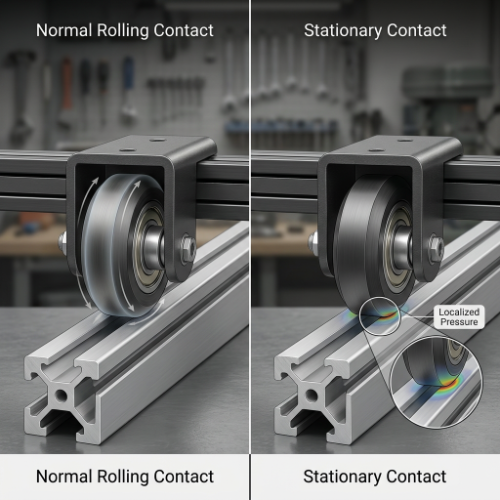
If the adjustment is too tight, the wheel can be pressed firmly against the rail even when the carriage is not moving. The outer material is then subjected to continuous compression.
For a wheel made from an engineering polymer, prolonged compression can gradually change the shape of the contact area.
The Printer Does Not Need To Be Running
This is an important detail.
A wheel can develop a flat area while the printer is sitting still.
If a carriage remains in one position for a long period, the same portion of the wheel stays against the rail. The effect becomes more relevant when the contact force is higher than necessary.
When the machine starts moving again, that deformed section passes through the contact point repeatedly.
This can create the familiar feeling of a small bump or notch during manual movement.
Why Does Parking Position Matter?
Think about a printer that remains unused for an extended period.
The carriage stays near one area of the frame, and the wheels remain in the same rotational position. Nothing appears to be happening because the machine is switched off.
Mechanically, however, the wheels are still supporting the carriage.
If the contact pressure is excessive, the stationary load is concentrated at the same part of each wheel. Over time, that can contribute to localized deformation.
This does not mean that every parked printer will develop flat spots. Wheel construction, material, contact force, temperature, machine alignment, and storage conditions all influence the outcome.
Movement Changes The Contact Point
During normal operation, the wheel rotates and different sections of its circumference meet the rail.
That spreads the contact around the wheel.
When the printer remains stationary, there is no such redistribution. One small section stays under load.
This is one reason a printer that feels smooth when regularly used can develop a noticeable notch after sitting unused for a long period.
Could Incorrect Adjustment Be The Real Cause?
Yes.
The wheel should maintain appropriate contact with the guide surface without creating unnecessary resistance.
If the adjustment is too loose, the carriage may have unwanted play. If it is too tight, the wheel can experience excessive pressure and the carriage may require more force to move.
Neither condition is desirable.
A Simple Mechanical Check
With the printer safely powered down and the relevant axis free to move, the carriage can usually be moved slowly by hand.
Pay attention to whether:
- Movement feels consistent across the rail.
- A repeating bump appears at regular intervals.
- The carriage becomes noticeably tighter at one point.
- A wheel appears to hesitate during rotation.
- The carriage rocks when gentle pressure is applied.
The exact inspection procedure depends on the printer design, so the manufacturer's assembly instructions should be followed when making adjustments.
What Role Does The V Groove Play?
The shape of a V wheel is designed to work with a compatible V shaped running surface.
The angled contact helps constrain the carriage while allowing the wheel to roll along the extrusion.
That geometry also means that the condition of both surfaces matters.
If the wheel profile changes, its relationship with the rail changes as well. A flat section, chipped edge, worn groove, or uneven surface can affect how the carriage travels.
A Small Change Can Be Repeated
This is where flat spots become interesting from a motion perspective.
Suppose a wheel has one flattened area.
Each time the wheel rotates to that position, the same irregularity returns to the contact point. If the carriage continues moving, the effect can appear repeatedly.
That repeated mechanical pattern can sometimes be more noticeable than a general reduction in smoothness.
Can Debris Contribute To Wheel Deformation?
The running surface of a 3D printer can collect dust, filament particles, workshop debris, and other small contaminants.
A clean contact surface allows the wheel and rail to interact as intended.
When debris becomes trapped between them, the contact condition can change. A hard particle may create a localized pressure point, while fine material can become embedded in the wheel surface.
This does not automatically create a flat spot, but contamination can contribute to uneven contact and accelerated surface changes.
Check The Rail Before Blaming The Wheel
A damaged wheel is easy to replace, so it can be tempting to focus on the wheel immediately.
However, the rail deserves attention too.
Look for:
- Visible debris inside the groove.
- Marks along the running surface.
- Unusual contamination.
- Damage around the contact area.
- Sections where the carriage behaves differently.
A replacement wheel installed against a contaminated or damaged running surface may develop similar symptoms again.
Does Wheel Material Affect Flat Spot Formation?
Material selection has a role in how a wheel responds to long-term contact.
Many desktop 3D printers use engineering polymer wheels because they provide a useful combination of mechanical strength, low friction characteristics, and compatibility with aluminum extrusion systems.
Different polymers do not respond identically to pressure, temperature, moisture, or long-term loading.
Metal wheels behave differently from polymer wheels, while other engineered materials can provide their own combination of stiffness and contact characteristics.
The important point is that material cannot be evaluated separately from the complete guide system.
| Wheel Consideration | Why It Matters |
|---|---|
| Material | Influences deformation and contact behavior |
| Surface profile | Determines how the wheel meets the rail |
| Bearing support | Allows the wheel to rotate around the axle |
| Wheel hardness | Affects response to repeated contact |
| Dimensional consistency | Helps maintain predictable carriage movement |
| Environmental conditions | Can influence material behavior |
For replacement components, matching the wheel construction to the original mechanical system is usually more practical than selecting a material based on appearance alone.
What About The Bearing Inside The Wheel?
The outer wheel receives most of the attention, but there is another component inside it.
The bearing supports rotation around the axle. If the bearing does not rotate smoothly, the wheel may experience irregular movement even when its outer surface looks normal.
A bearing problem and a flat spot can produce somewhat similar sensations during manual movement.
For example, a rough bearing may create repeated resistance as the wheel rotates. A damaged wheel can create a similar repeating sensation when the deformed section reaches the rail.
Look At The Wheel And Bearing Together
When investigating unusual movement, it makes sense to consider both parts.
A useful inspection can include:
- Checking the outer wheel surface.
- Looking for a visible flattened section.
- Rotating the wheel slowly.
- Checking for unusual roughness.
- Inspecting the axle and mounting position.
- Looking at the rail contact surface.
This gives a more complete picture than inspecting the wheel alone.
How Can Flat Spots Affect Printing?
The effect depends on how severe the deformation is and where the affected wheel is located.
A small change may barely be noticeable during ordinary movement. A larger irregularity can introduce periodic changes in carriage movement.
Possible signs include:
- Repeating surface patterns.
- Uneven motion along an axis.
- A noticeable bump during manual movement.
- Carriage vibration.
- Changes in first-layer consistency.
- Additional noise during travel.
These symptoms do not prove that a wheel has a flat spot. Belts, frame alignment, bearings, mounting hardware, extrusion condition, and other parts of the motion system can produce similar results.
That is why checking the mechanical system as a whole is useful.
Why Tightening The Wheel Is Not Always The Answer
When a carriage feels loose, tightening the adjustment can seem like an obvious solution.
But more pressure does not automatically mean better movement.
If the wheel already has a damaged or uneven surface, increasing contact pressure may make the irregularity more noticeable. It can also increase resistance and place additional stress on the wheel.
A better approach is to adjust the system according to the printer design and check whether the carriage moves consistently without unwanted play.
There Is A Difference Between Firm And Overloaded
The wheel needs to remain in contact with the rail.
It does not need to be compressed unnecessarily.
This distinction is particularly important with polymer wheels because their response to long-term pressure differs from that of rigid metal components.
Can A Flat Spot Disappear On Its Own?
Sometimes users notice that a wheel feels better after the printer has been moved repeatedly.
This can happen because the wheel is no longer resting in exactly the same position, or because a minor deformation becomes less noticeable during continuous rotation.
However, that does not mean every flat spot will correct itself.
If the wheel has permanent deformation, material damage, or a clearly changed profile, continued use may simply keep the irregularity in the system.
A visible damaged wheel should therefore be evaluated rather than assuming that additional printing will restore its original shape.
When Should A V Wheel Be Replaced?
Replacement becomes worth considering when the wheel has a visible damaged area or when its condition is clearly affecting carriage movement.
A few signs deserve attention:
Visible Surface Deformation
A flattened section, chipped edge, or significantly changed groove profile indicates that the contact surface is no longer in its intended condition.
Repeating Movement Notches
If the carriage repeatedly catches or bumps at a particular interval, inspect the wheel rotation and running surface.
Persistent Carriage Instability
If the carriage cannot be adjusted to maintain stable movement without excessive resistance, the wheel assembly may need closer inspection.
Unusual Bearing Behavior
A rough or noisy bearing can affect wheel movement even when the outer surface appears acceptable.
Replacement should be based on the actual condition of the component and the requirements of the printer assembly.
How Can Manufacturers Reduce The Risk During Product Design?
For manufacturers producing 3D printer assemblies, flat spot prevention begins before the printer reaches the user.
Wheel selection, carriage geometry, bearing arrangement, adjustment method, rail compatibility, and storage conditions all have a role.
A well-designed assembly should provide sufficient contact to guide the carriage while avoiding unnecessary compression of the wheel.
Storage Is Part Of The Mechanical Design
Storage instructions can also matter.
If a printer is expected to remain unused for extended periods, the carriage position and wheel loading condition can be considered as part of the product's handling guidance.
This is a small detail, but it can help reduce problems associated with prolonged stationary contact.
What Should Buyers Look At When Sourcing Replacement V Wheels?
For distributors, repair companies, and printer manufacturers, replacement selection should go beyond matching the general appearance of the wheel.
Consider:
| Selection Point | What To Check |
|---|---|
| Wheel profile | Confirm compatibility with the guide rail |
| Outer material | Match the intended application |
| Bearing structure | Check the axle and mounting arrangement |
| Wheel dimensions | Compare with the existing assembly |
| Surface condition | Look for consistent molding or machining |
| Running surface | Make sure the wheel and rail are compatible |
| Application | Consider carriage position and movement |
| Assembly method | Confirm how the wheel is secured |
A drawing or existing sample can make this process much easier, particularly when the wheel is part of a customized printer structure.
A Small Wheel Can Tell You A Lot About The Motion System
A flat spot may look like a simple wheel problem, but it can reveal something about the larger mechanical system.
The wheel may have been exposed to excessive contact pressure. The carriage may have remained stationary for a long period. The rail may need cleaning. The bearing may be contributing to irregular rotation. The assembly may also need an alignment check.
That is why replacing the wheel without understanding the surrounding conditions can sometimes lead to the same problem later.
For 3D printer manufacturers and users, the useful approach is to look at the wheel, bearing, rail, carriage, and adjustment together. Once the contact relationship is understood, it becomes easier to decide whether the issue comes from the wheel itself or from the way the motion system is assembled.
3D Printer V Wheels can develop flat spots when a section of the wheel remains under concentrated pressure for an extended period, particularly when contact force, storage position, alignment, or running conditions are not suitable for the assembly. Material behavior, bearing condition, contamination, and rail geometry can also influence how the problem develops.
The important point is that a flat spot is not simply a cosmetic change. Because the wheel is part of a moving guide system, a change in its roundness can affect how the carriage travels along the rail.
For users, a slow manual movement check can provide an early indication of irregular rolling. For manufacturers, careful attention to wheel material, bearing construction, contact pressure, rail compatibility, and carriage design can help create a more consistent motion system.
A V wheel may be a small part of a 3D printer, but its job is closely tied to the movement of the entire carriage. When the wheel remains properly matched to the rail and the surrounding assembly is correctly adjusted, the motion system has a more predictable mechanical foundation.