

 English
 Español
 日本語
A roller wheel looks like a minor part of a sliding system. Yet the way it is mounted can change how the whole product performs. A wheel may have a suitable diameter and material, but it can still be a poor fit if the bracket doesn't match the equipment frame or the axle sits in the wrong position.
For this reason, many manufacturers choose a complete Roller Wheel Assembly instead of buying wheels and metal supports separately. Pairing the wheel with a stamped bracket lets the component be developed around the real installation conditions.
You will find this approach in sliding doors, window systems, furniture fittings, and mechanical equipment. For OEM buyers, it helps to know how the wheel and bracket interact. That knowledge makes it easier to compare suppliers, prepare drawings, and request a customized Metal Roller Assembly.
1. Why Are Roller Wheels and Metal Brackets Combined?
The wheel provides rolling contact, but something has to hold it in place. In many designs, a stamped metal bracket links the wheel to the equipment.
Take a sliding window as an example. The wheel follows the track, and the bracket ties it to the window sash. If the bracket is too wide, the assembly may not fit in the available space. If the mounting holes are off, installation becomes difficult. In both cases the wheel itself may be fine, and the mismatch lies between the parts.
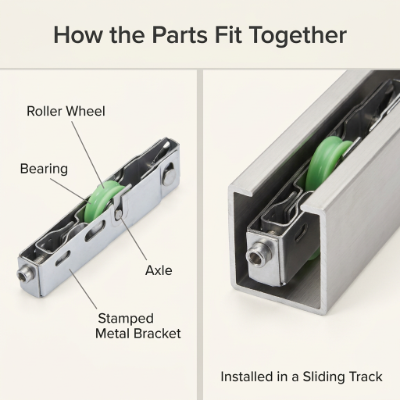
A typical assembly includes:
- Roller wheel: Runs along a track or guide surface.
- Bearing: Supports the wheel's rotation.
- Axle or shaft: The pin around which the wheel turns.
- Stamped metal bracket: Holds the wheel and connects it to the equipment.
- Fasteners: Fix the assembly to the mounting structure.
These parts work as a group, so a change to one often requires a change to another.
Why Manufacturers Choose Integrated Components
- Coordinated dimensions. When the wheel, bearing, axle, and bracket are developed together, they can be checked against one product drawing. Compatibility problems are easier to catch early.
- Simpler installation planning. The equipment maker receives a defined mounting structure and does not need to design a separate support for a loose wheel.
- Clearer purchasing requirements. Buyers can describe one assembly and its application instead of negotiating several unrelated parts.
2. What Role Does a Stamped Metal Bracket Play?
The bracket does more than connect two surfaces. Its shape sets the wheel's position and determines how the assembly attaches to the surrounding equipment.
Metal stamping forms sheet metal into parts with specific openings, bends, and mounting features. These details can follow the available space and the installation method.
Bracket Design Follows the Equipment
A sliding window may need a compact bracket that sits inside the lower frame. A cabinet system may need a different support shape because the roller is installed inside a panel.
Common bracket features include:
- Mounting holes for screws or other fasteners
- Openings for the axle
- Folded edges that create the support shape
- Formed sections that leave room around the wheel
- Contact surfaces that meet the equipment frame
Two brackets can look nearly the same and still differ in hole position or internal clearance. The installation drawing should be the reference.
Material and Finish
Steel is a common choice for stamped hardware. Surface treatments such as electroplating can be specified for appearance or for the operating environment.
When requesting a custom bracket, buyers should state:
- Base metal
- Material thickness
- Surface finish
- Operating environment
- Corrosion protection requirements
Settling these points early reduces confusion during quotation and sample approval.
3. How Do the Wheel, Bearing, Axle, and Bracket Affect Each Other?
The parts may be bought separately, but they still have to fit together as one mechanical structure.
| Component | Main Function | Key Design Details |
|---|---|---|
| Roller wheel | Provides rolling contact | Diameter, width, profile, material |
| Bearing | Supports wheel rotation | Type, dimensions, fit |
| Axle | Sets the rotation point | Position, diameter, retention |
| Metal bracket | Supports and mounts the wheel | Shape, thickness, hole spacing |
| Fasteners | Attach the assembly to equipment | Thread, fixing method, installation space |
If the axle position moves, the wheel sits differently inside the bracket, which can change its alignment with the track. Clearance matters too. The bracket should leave enough room for the wheel to turn without touching nearby sections.
So the external look of a bracket is a weak basis for selection. The internal arrangement deserves equal attention.
4. Where Are Metal Roller Assemblies Commonly Used?
The basic construction adapts to many products. Wheel profile, bracket size, and installation method change with the equipment.
Sliding Doors and Windows
These systems are a common use for integrated roller hardware. The wheel travels along the track, and the bracket connects the assembly to the moving panel while holding the wheel in position.
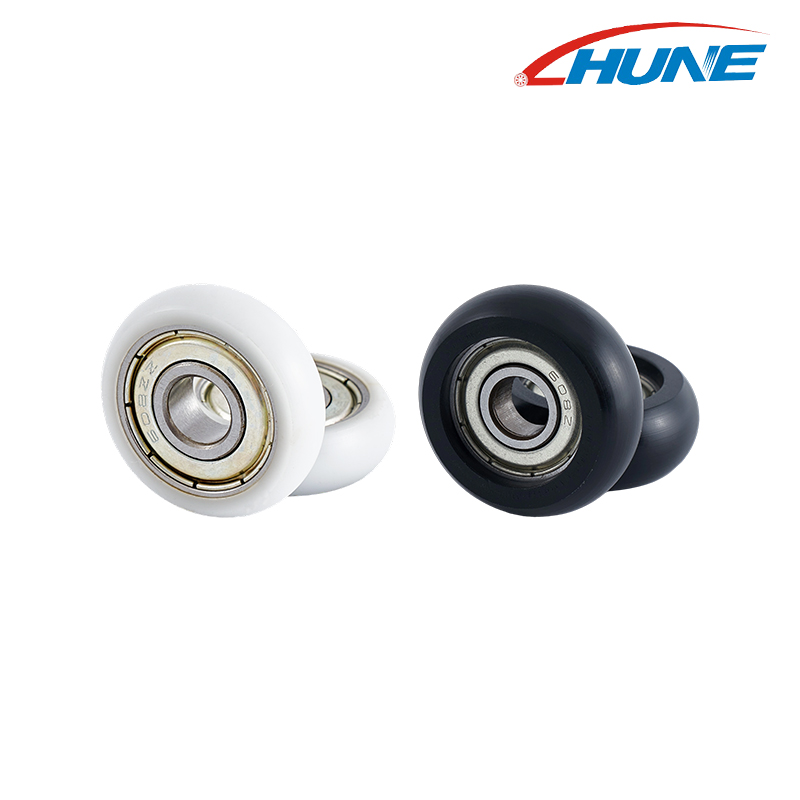
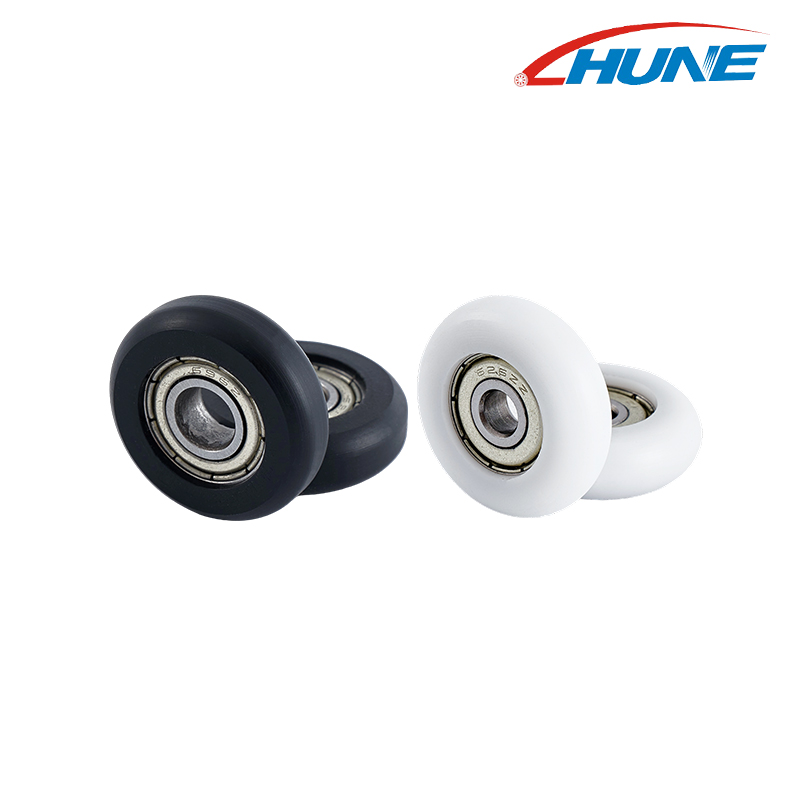
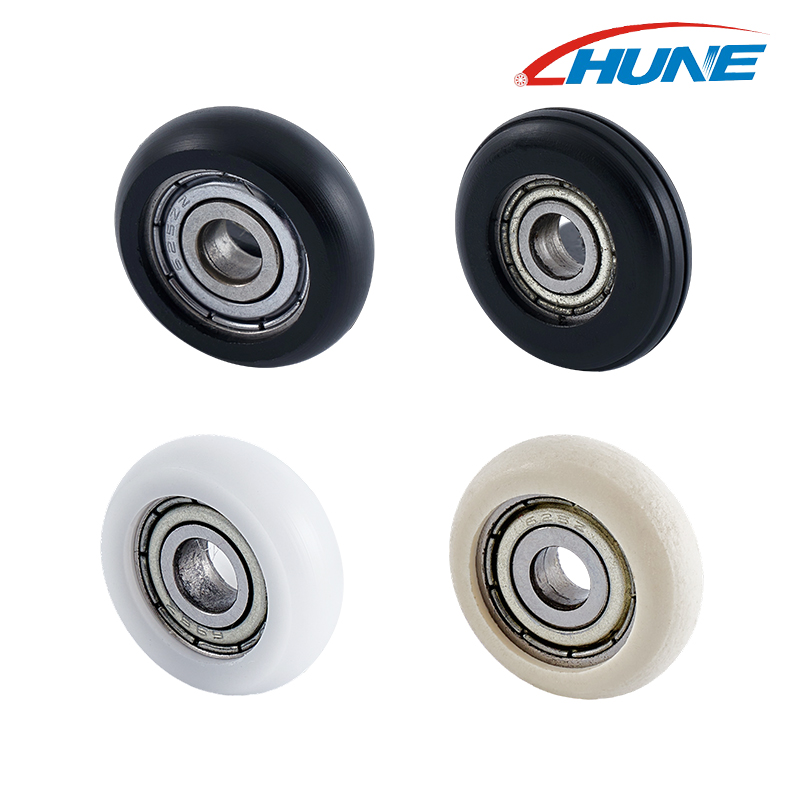
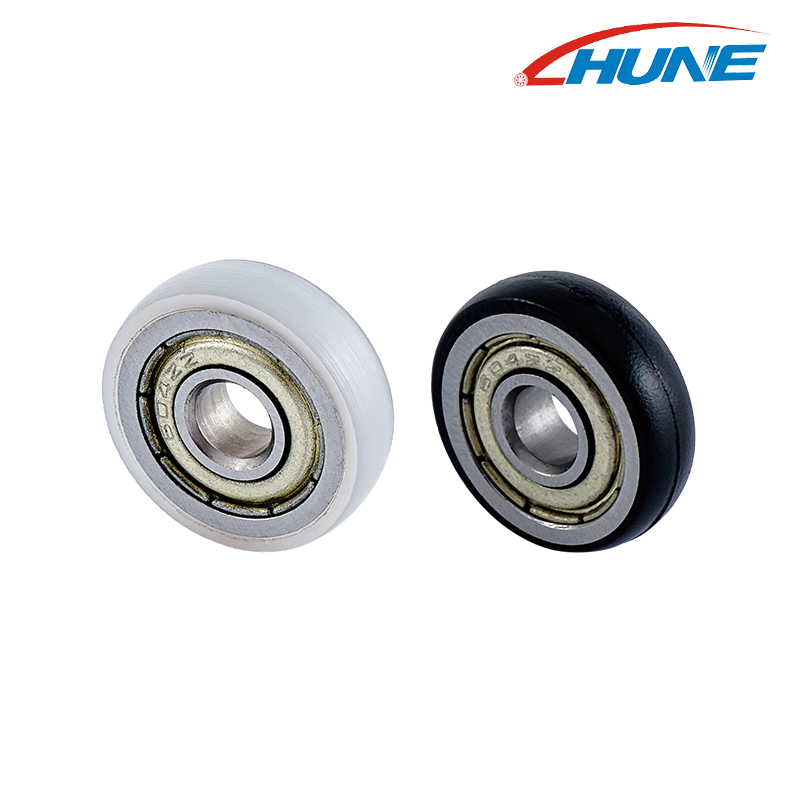
HUNE's sliding roller range includes assemblies that combine steel wheels, bearings, axles, and stamped metal supports. They are relevant to manufacturers sourcing door and window roller hardware.
Buyers can check:
- Compatibility with the track
- Space inside the frame
- Wheel profile and dimensions
- Bracket hole positions
- Bearing and axle arrangement
Furniture and Cabinet Hardware
Cabinet sliding systems often have limited room. The roller must fit in the panel or support structure without interfering with other hardware.
A standard wheel may work, while the bracket needs a different shape to suit the cabinet. Furniture makers therefore often request a customized mounting structure and keep the rolling mechanism unchanged.
Mechanical Equipment
Rollers in machinery guide moving sections along a fixed path. The design depends on the direction of movement, the contact surface, and the mounting layout. Buyers should describe how the part will be used, because a general product name says little about these conditions.
5. Single-Wheel or Double-Wheel Assembly: Which Design Fits?
The number of wheels changes the bracket structure and how the assembly meets the track. A single-wheel design has one wheel, one axle, and one mounting support. A double-wheel design holds two wheels in a coordinated bracket or housing. The equipment layout should decide which one suits the product.
| Comparison | Single-Wheel | Double-Wheel |
|---|---|---|
| Wheel count | One | Two |
| Bracket structure | Supports one wheel position | Holds two wheel positions |
| Installation space | Depends on wheel and bracket size | Depends on overall assembly layout |
| Design focus | Wheel alignment, mounting position | Wheel spacing, alignment |
| Selection basis | Track and equipment structure | Track arrangement and mounting space |
Before choosing, review these questions:
- How much space is available?
- Does the track support one contact point or several?
- Where will the mounting holes sit?
- Is there enough clearance around moving parts?
- Does the drawing specify a wheel arrangement?
A larger assembly isn't automatically a better match, and these checks keep the comparison grounded in the actual product.
6. What Information Should You Provide for a Custom Order?
A supplier can identify a general product type from a photo, but custom manufacturing needs more detail.
| Information | What to Provide |
|---|---|
| Application | Door, window, cabinet, or machinery |
| Wheel dimensions | Diameter, width, profile |
| Wheel material | Required material or reference sample |
| Bearing | Type, dimensions, or existing reference |
| Axle | Connection method and key dimensions |
| Bracket | Shape, thickness, mounting holes, material |
| Surface finish | Required treatment and appearance |
| Quantity | Sample needs and estimated purchasing volume |
Drawings and Samples
If the part already exists, send a physical sample or clear photos from several angles. For a new design, a 2D drawing communicates dimensions and tolerances, and a 3D model shows how the wheel and bracket fit together.
It also helps to say whether the project involves:
- Replacing an existing roller
- Developing a new equipment component
- Modifying a standard assembly
- Purchasing an OEM part for repeat production
7. Why Do OEM Buyers Source Complete Roller Assemblies?
Buying parts individually can seem convenient at first. The buyer then has to coordinate the wheel, bearing, axle, and metal support. If they come from different suppliers, dimensional compatibility must be verified before the parts can be used.
A complete Metal Roller Assembly gives the purchasing team and the supplier one shared product reference. In practice, this offers several benefits:
- Component coordination: The wheel and bracket are evaluated together, including axle position and clearance.
- Purchasing communication: One drawing or sample replaces several separate specifications.
- Repeat orders: Once a sample is approved, the drawing and agreed specifications serve as the reference for later orders.
- Custom development: If the original structure doesn't fit, the bracket, wheel profile, or connection can be revised.
Complete sourcing does not replace quality inspection. Buyers should still confirm dimensions, material requirements, sample approval, and inspection procedures before placing production orders.
8. How Does Custom Development Work?
Some equipment makers can't use a standard roller. Their projects call for a different bracket profile, mounting position, or wheel configuration. A typical discussion follows these stages:
- Requirement discussion: The buyer explains the application and installation conditions.
- Drawing review: Both sides review wheel dimensions, bracket structure, and connection details.
- Design confirmation: Materials, finishes, and assembly requirements are clarified.
- Sample development: A sample is made to the agreed design.
- Sample evaluation: The buyer checks installation fit and relevant requirements.
- Production preparation: After approval, the agreed specifications guide production.
The exact process varies by product and project. Design changes should be confirmed before they enter later orders.
9. Frequently Asked Questions
Can a roller wheel be purchased without a metal bracket?
Yes. Some applications install individual wheels into an existing housing. When the equipment needs a specific support arrangement, a complete Roller Wheel Assembly can make component matching easier.
What information is needed to customize a roller assembly?
Buyers generally provide wheel dimensions, bearing and axle details, bracket drawings, mounting-hole positions, material requirements, and application information. A physical sample can also clarify the existing construction.
Are stamped metal brackets suitable for sliding window rollers?
They are used in a range of sliding window designs. The bracket shape and material depend on the frame structure, wheel arrangement, mounting method, and operating conditions.
What is the difference between a roller wheel and an assembly?
A roller wheel is the rolling component alone. An assembly adds supporting parts such as bearings, axles, brackets, or other mounting hardware, depending on the design.
Can manufacturers request OEM roller components?
Yes. OEM requirements can be discussed through drawings, samples, and application details. The supplier then reviews the requested structure and proposes a development approach.
10. Discuss Your Roller Assembly Requirements With HUNE
For manufacturers developing sliding hardware or sourcing replacement parts, the mounting structure deserves as much attention as the wheel.
HUNE supplies sliding roller products and related hardware for door and window applications, including bearing-supported rollers and assemblies with metal mounting structures. If you need an existing configuration or a custom bracket, a product drawing or sample is a practical starting point. You can then discuss wheel dimensions, bearing arrangement, axle connection, bracket geometry, and installation requirements.
A well-matched Roller Wheel Assembly or Metal Roller Assembly starts with a clear picture of how the part will fit and function in the finished product.