


 English
 Español
 日本語
日本語
Over the past few years, we have diligently pursued higher standards to enhance our product quality, aiming to deliver increased convenience and a better user experience.
Product Categories
Hot Products
Plastic Pulley Wheels with Bearings
-
R-shaped Bearing Pulley Doors And Windows Wear-Resistant Load-Bearing Nylon R-Shaped 628ZZ Plastic Bearing Pulley View More +
-
R-shaped Bearing Pulley Household Appliances High Stability R-Shaped 625ZZ Bearing Pulley View More +
-
R-shaped Bearing Pulley Sliding Door Durable R-Shaped 6200ZZ 6202ZZ 6204ZZ 6004ZZ Big-Size Bearing Pulley View More +
-
U-shaped Bearing Pulley Nylon Pulley Wheels for Sliding Tracks (U-Groove Bearing Rollers) View More +
-
U-shaped Bearing Pulley U-Groove 608ZZ PU Roller Wheel Silent Sliding Door & Track Pulley View More +
-
U-shaped Bearing Pulley Suitable For Furniture Pom Plastic High Wear Resistance 624ZZ Bearing Pulley View More +
-
U-shaped Bearing Pulley Sliding Doors And Windows Pom Pulleys High Load-Bearing U-Shaped 625ZZ Bearing Pulley View More +
-
V-shaped Bearing Pulley Hardware Accessories And Doors And Windows Strong Sealing V-Shaped 626ZZ Bearing Pulley View More +
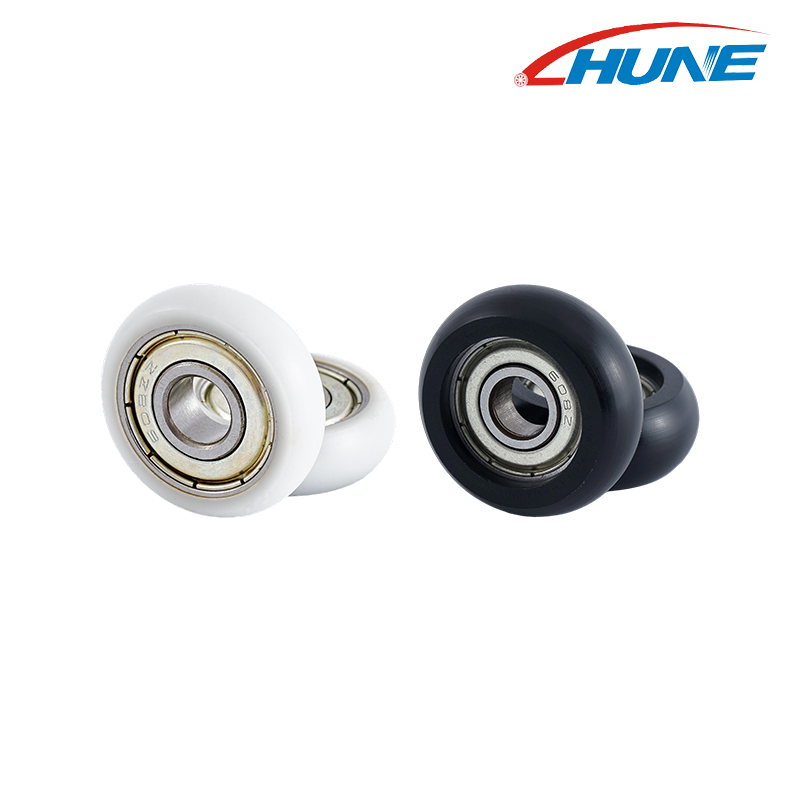
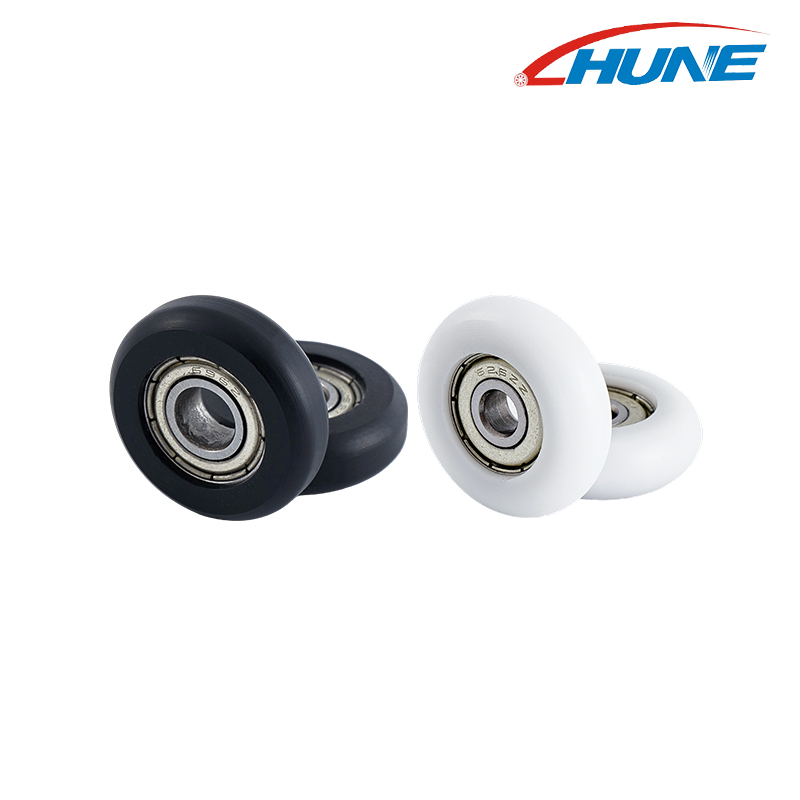
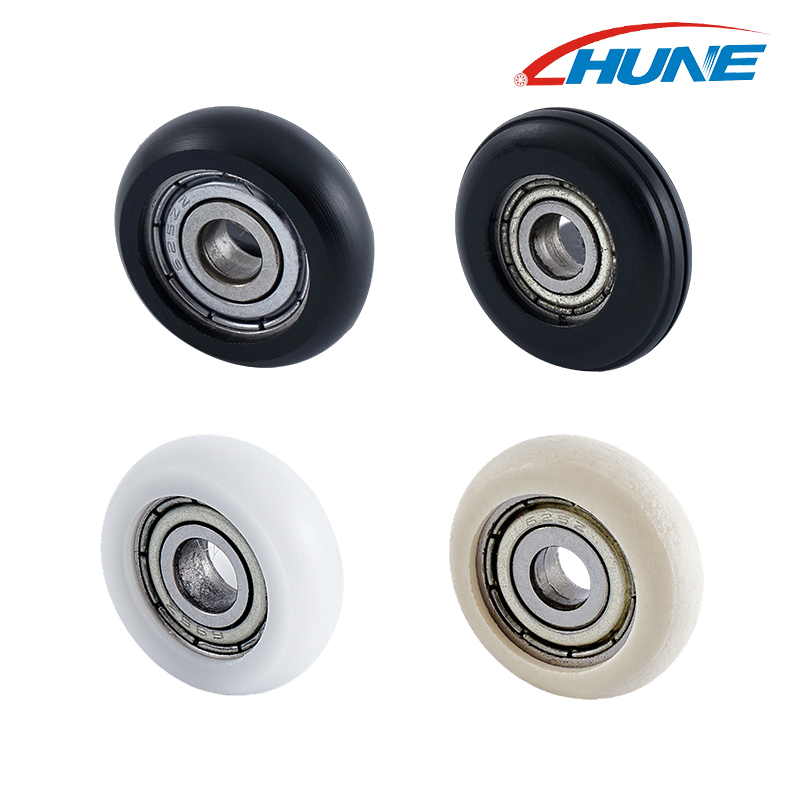
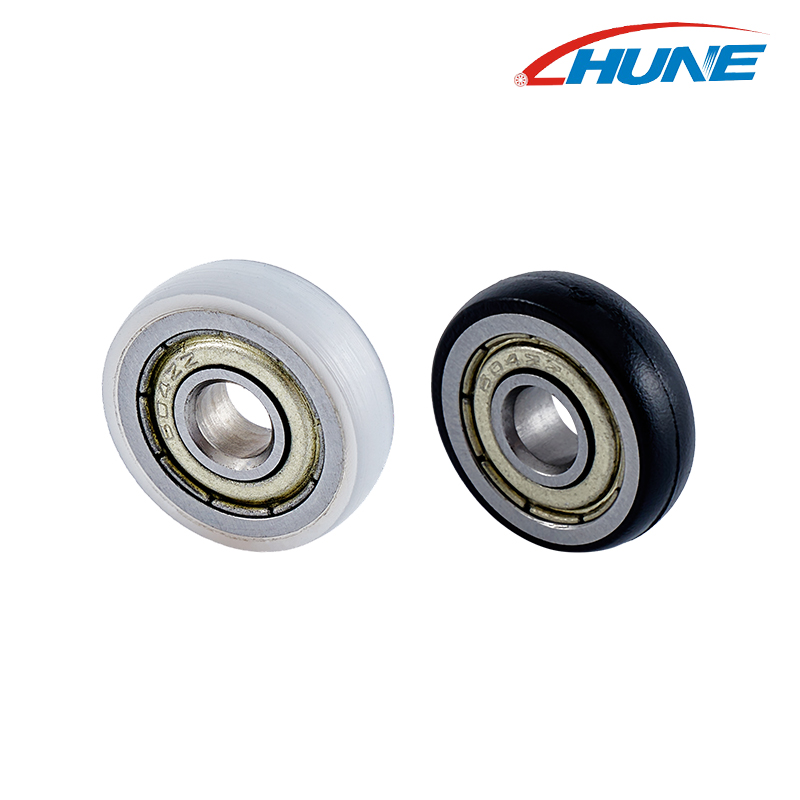
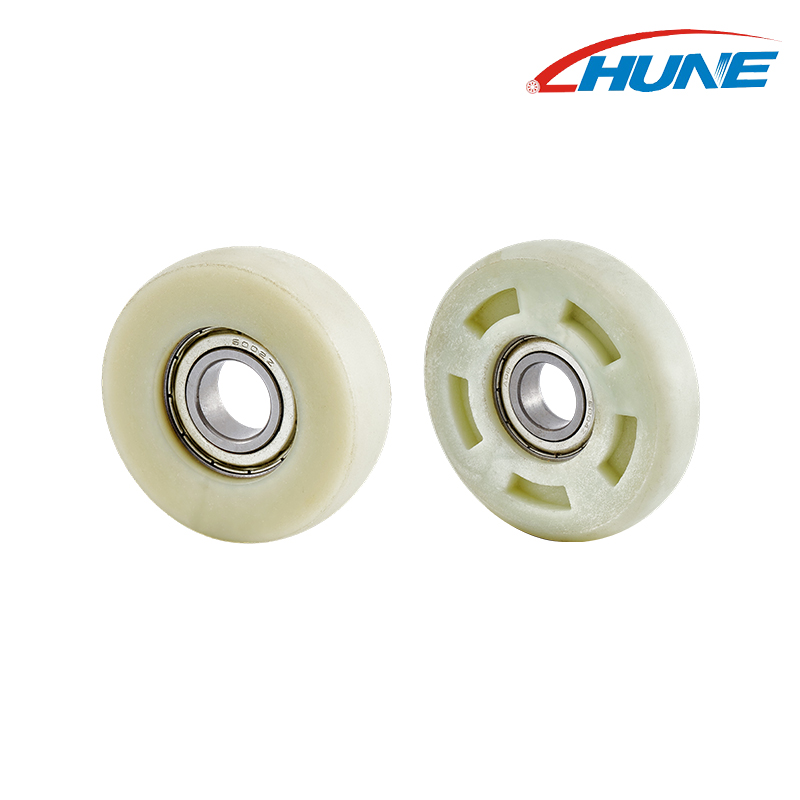
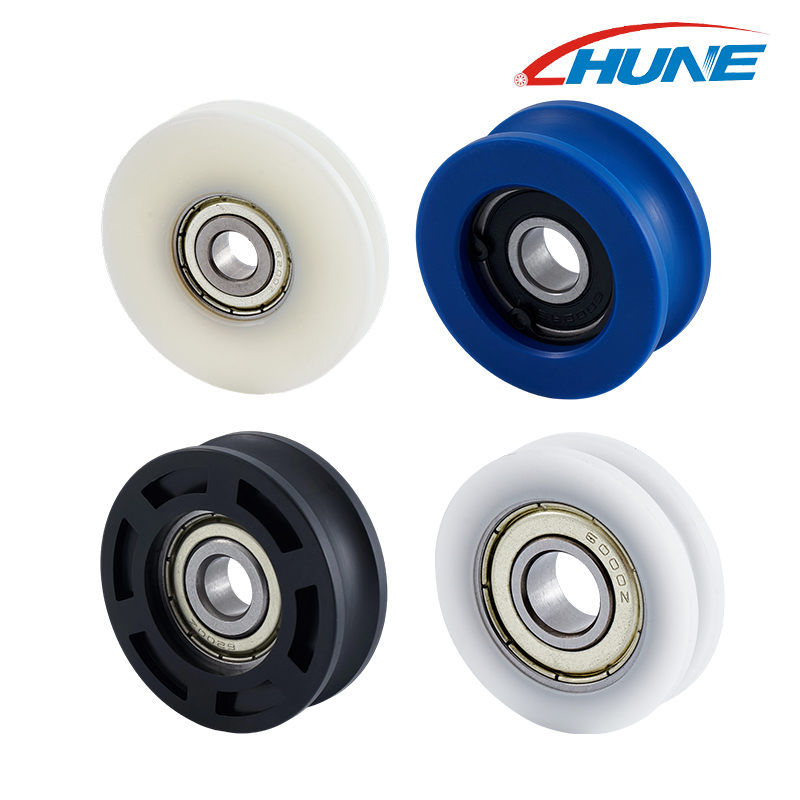
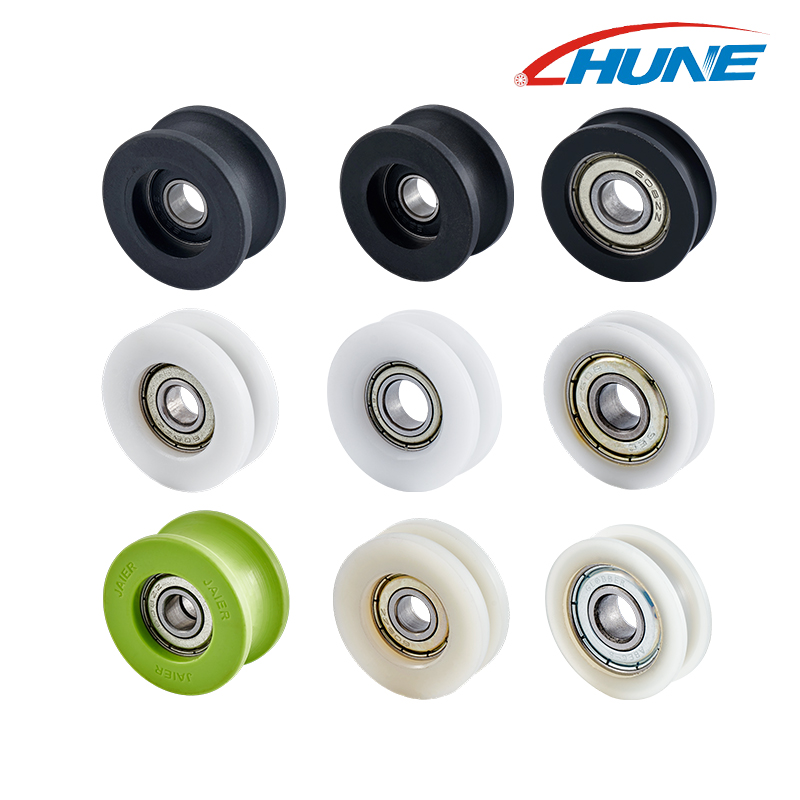
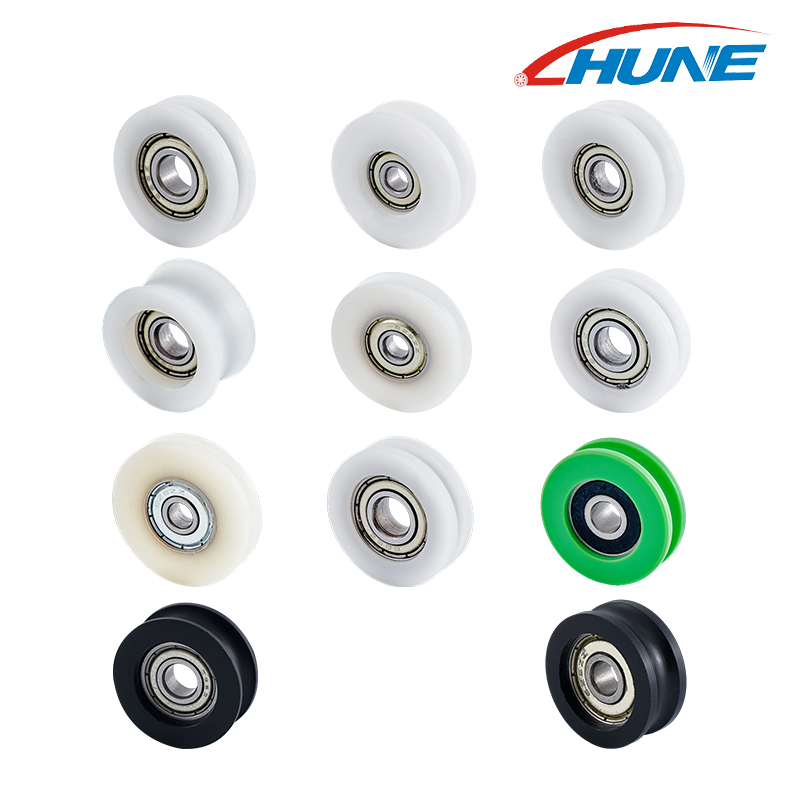
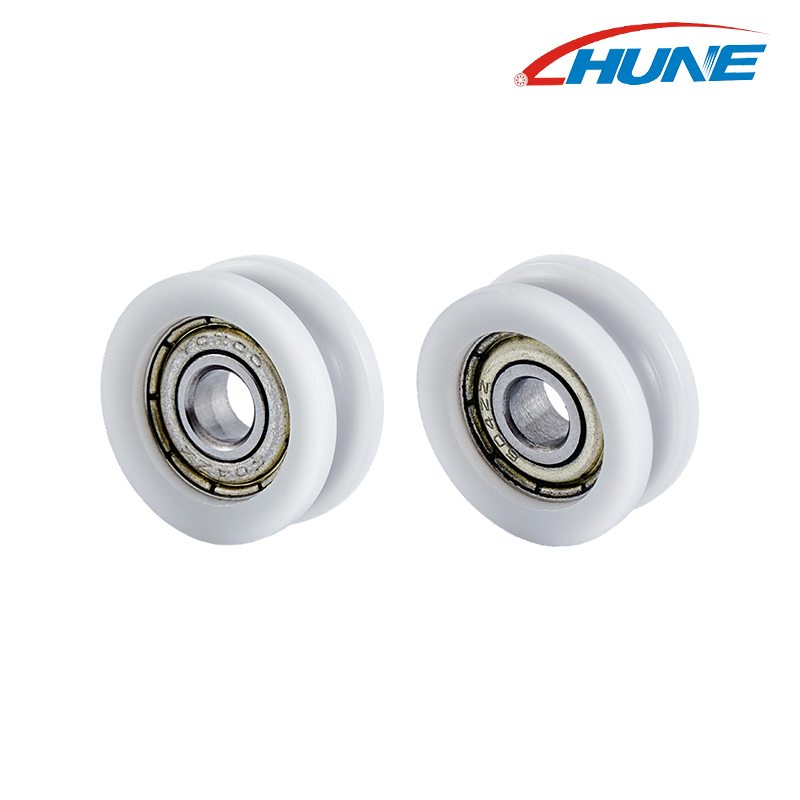
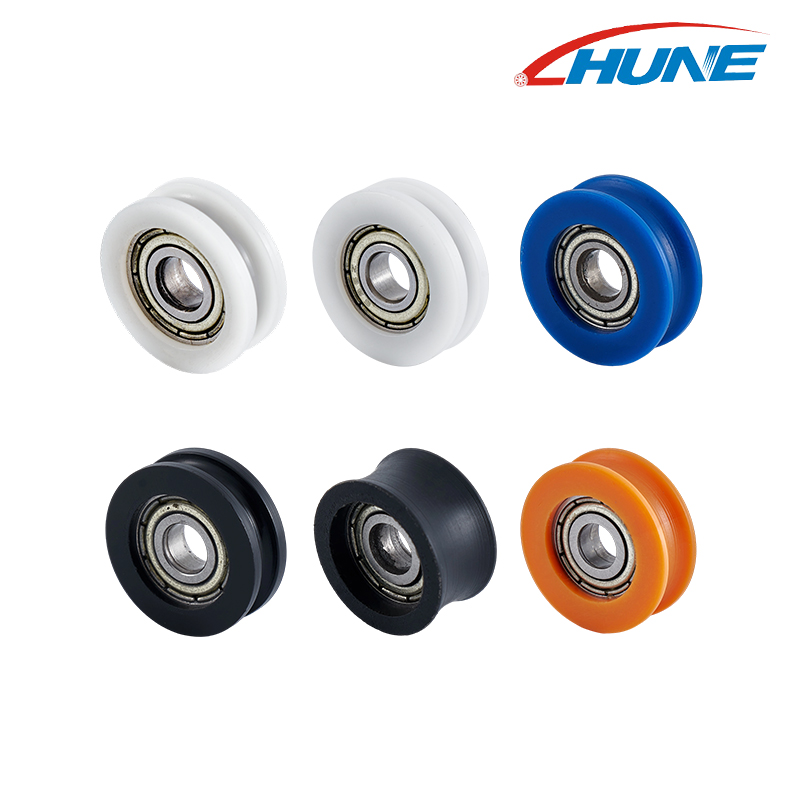
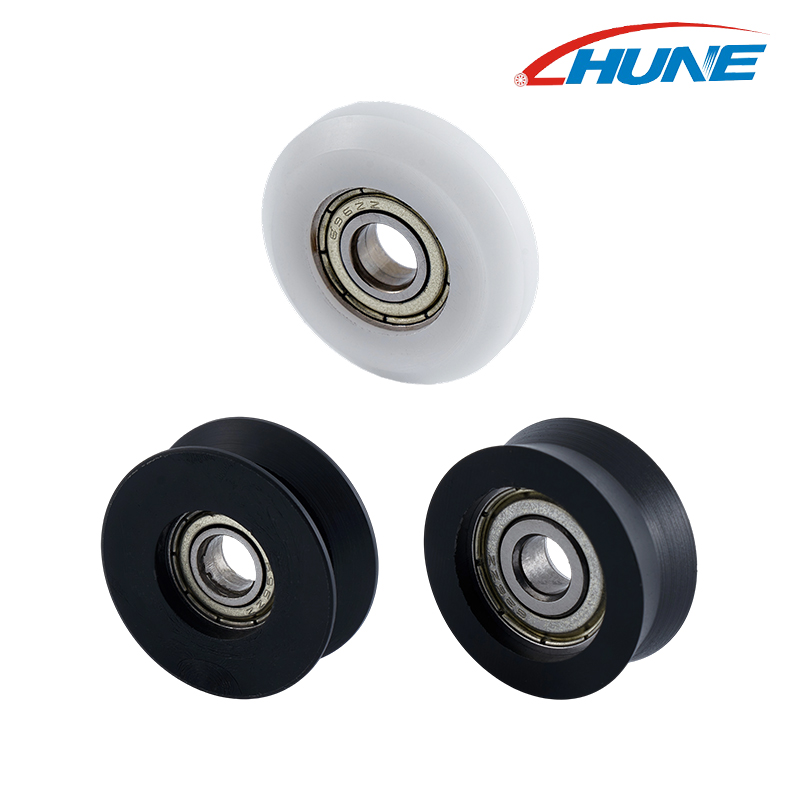
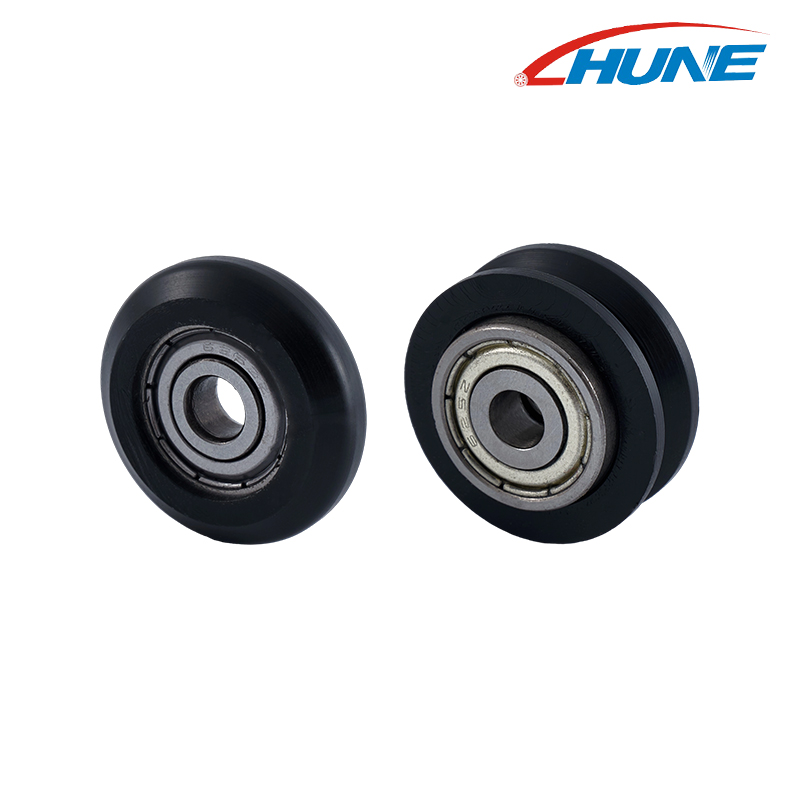
Plastic Pulley Wheels with Bearings – Reliable, Quiet, and Built to Last
Our plastic pulley with built-in bearing is the part you fit once and then forget about. It keeps curtains gliding, drawers opening smoothly, shower doors sliding, gym cables running, window blinds lifting, and light conveyor belts turning – all without squeaks, rust, or sudden failure.
Why customers choose Hune's plastic pulleys:
- Tough engineering plastic that refuses to wear flat even after years of daily use
- Completely corrosion-free – lives happily in steamy bathrooms, salty coastal air, or busy kitchens
- Stays calm when temperatures climb – no softening or binding
- Almost no noise – the sealed bearing spins true and the plastic absorbs vibration, so movement stays whisper-quiet
- Ultrasonic-welded end caps lock everything together permanently – nothing rattles loose over time
- Conductive plastic option available for static-sensitive environments
- Made exactly to your needs – any diameter, groove profile, flange style, bore size, colour, or load capacity you ask for
- From a handful of prototypes to full container orders, we produce it cleanly and on time
Whether you need a few hundred pieces for a new wardrobe system or millions for an appliance production line, we make the pulley that fits perfectly and keeps running silently for years.
Send us your drawing or idea – we'll turn it into a dependable, ready-to-install plastic pulley with bearing that simply works.
-
 0㎡Plant Area
 -
 0+Staff
 -
 0Established in
 -
 0+Exporting Countries
Zhejiang Huaneng Micro Bearing Co., Ltd.
Zhejiang Huaneng Micro Bearing Co., Ltd. specializes in the development and manufacturing of miniature and medium-sized bearings, non-standard bearings, and pulley systems. With over a decade of industry experience, we offer high-precision processing and responsive customization capabilities. As China Plastic Pulley Wheels with Bearings Factory and OEM/ODM Plastic Pulley with Bearing Manufacturer.Our products are widely used in home appliances, industrial equipment, and door/window systems, and are exported to Japan, Korea, Europe, and beyond.
Industry Knowledge
Custom Plastic Pulley Wheels with Bearings – Built Exactly for Your Application
Today's machinery rarely settles for off-the-shelf parts. When precision, longevity, and specific operating conditions are non-negotiable, standard plastic pulleys simply don't cut it. Engineers in automation lines, medical devices, linear guides, sliding doors, and compact conveyor systems now expect pulley wheels with bearings that are built exactly to their application, down to the material, surface finish, groove profile, and bearing setup.
Material selection is usually the starting point.
- Nylon (PA) remains the go-to for most custom Plastic Pulley Wheels because it combines good strength, toughness, and slight flexibility that absorbs shock without cracking.
- POM (acetal) is chosen when dimensional stability, very low friction, and resistance to creep under continuous load are critical.
- For extreme chemical or temperature environments, we move to materials like PET, PEEK, or specially compounded grades.
Surface treatment and tread options are just as important.
A molded-in or overmolded polyurethane layer dramatically improves traction on steel cables or rails, cuts noise, and extends wear life. In cleanroom or noise-sensitive settings (hospitals, labs, precision assembly), a softer rubber or low-durometer PU coating is often specified. Proper bonding between the plastic core and the coating is non-negotiable; poor adhesion leads to delamination and premature failure in the field.
Bearing configuration is where many projects live or die.
Most designs start with deep-groove ball bearings, but we regularly supply:
- Double-row bearings for higher radial loads and better moment resistance
- Fully sealed or shielded bearings for dusty or wash-down environments
- Stainless or ceramic balls when corrosion or non-magnetic properties are required
- Precision press-fit or snap-ring retention to eliminate any play between the bearing outer ring and the plastic hub
The groove itself is frequently the make-or-break feature.
Whether it's a deep V-groove for round belts, a wide U-groove for wire rope, or a flat profile with guide flanges, even a 0.1 mm deviation in depth or angle can cause tracking issues and accelerated wear. Many customers now ask for custom multi-groove or asymmetrical profiles to run two different cables or belts on the same pulley without interference.
Additional customization options that save real money and headaches downstream include:
- Load and life testing in our lab before full production
- Color coding or material tinting for quick visual identification on assembly lines
- Laser-etched serial numbers, Data Matrix codes, or customer part numbers for traceability
- Special packaging or kitting for lean manufacturing cells
Because we use master mold frames with swappable inserts, a new custom pulley is rarely a six-figure tooling nightmare. Most projects are running samples in 3–4 weeks and cost only a small premium over a standard part.
End result: the pulley is no longer the weak point. It becomes the part you forget about because it just works – quietly, accurately, and for years.
If you're replacing pulleys more often than you'd like, or you're adding guides and tensioners just to keep a standard wheel happy, drop us your drawing or a photo of the current failure. We'll build you the pulley your machine has been asking for all along.

Huaneng specializes in the R&D and manufacturing of miniature and medium-sized bearings, non-standard bearings, and pulley systems.
Plastic Pulley with Bearing Supplier.
- PRODUCTS
- Stainless Steel Sliding Door&Window Rollers
- Plastic Bearing Pulley
- Screw Thread Bearing Pulley
- Door & Window Roller Hardware
- Ball Bearing
- Rubber Ring
- Hardware Accessories
- INFORMATION
-
-
Tel+86-15058997617
-
E-mailshirley@cnhune.com
-
AddNo. 118, Development Road, Wengyang Industrial Zone, Yueqing City, Zhejiang Province, China
-
- MOBILE SITE
-