

 English
 Español
 日本語


 +86-15058997617

Bearing Marine 623 624 625 626 627 628 629ZZ 2RS Stainless Steel Deep Groove Ball Bearing
Small bearings used near the coast face a demanding combination of moisture, salt deposits, and limited installation space. Choosing stainless steel is a useful first step, but the bearing also needs the right closure, lubricant, shaft fit, and maintenance plan for its actual working conditions.
The Bearing Marine 623 624 625 626 627 628 629ZZ 2RS Stainless Steel Deep Groove Ball Bearing range covers compact deep groove ball bearings for pulley wheels, guide rollers, boat hardware, sliding hardware, small motors, and other rotating assemblies. Options may include open bearings, ZZ metal shields, or 2RS rubber seals, subject to the selected model and specification.
Available Bearing Models
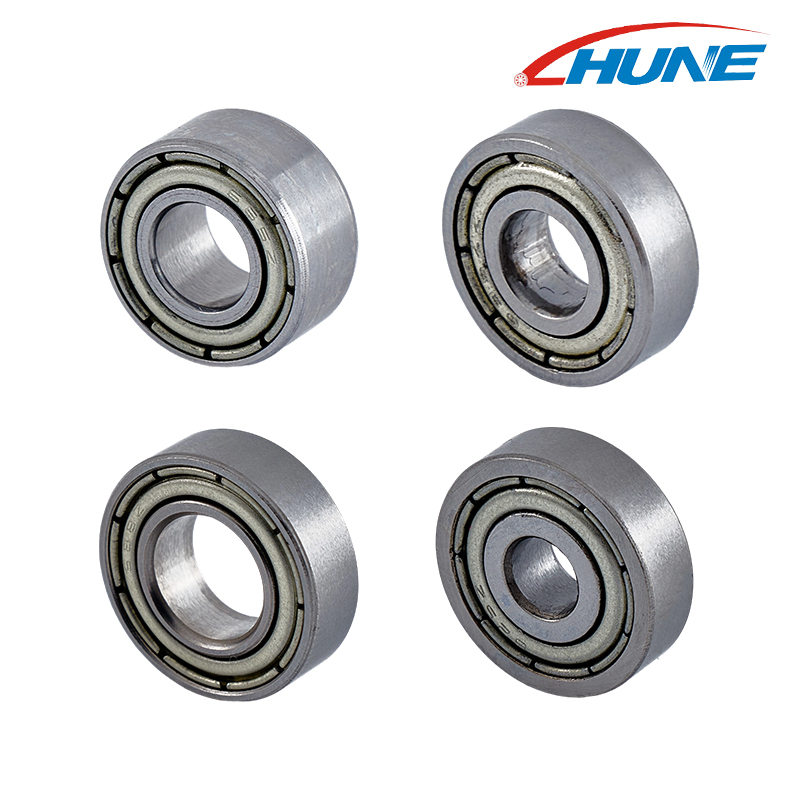
The 623–629 models provide a range of bore and outside diameters for compact assemblies. In a model name such as 626ZZ ball bearing, “626” identifies the bearing size and “ZZ” identifies metal shields on both sides. A different closure may be available under a corresponding model designation.
| Model | Standard size, bore × OD × width | Common design context |
| 623 ball bearing | 3 × 10 × 4 mm | Small shafts and compact guide components |
| 624 ball bearing | 4 × 13 × 5 mm | Miniature pulley wheels and mechanisms |
| 625 ball bearing | 5 × 16 × 5 mm | Compact rollers and sliding hardware |
| 626ZZ ball bearing | 6 × 19 × 6 mm | Shielded pulley and guide-roller designs |
| 627ZZ ball bearing | 7 × 22 × 7 mm | Small mechanical rollers |
| 628ZZ bearing | 8 × 24 × 8 mm | Pulley bearing and sliding door roller bearing designs |
| 629ZZ bearing | 9 × 26 × 8 mm | Larger compact rollers and rotating hardware |
These are nominal standard boundary dimensions for the listed model sizes. Confirm the ordered bearing's material, closure, clearance, lubricant, and tolerances separately. A bearing that fits the shaft is not necessarily suitable for the load or environment.
For assemblies needing a larger bearing envelope, the 6000, 6200, and 6300 series may also be considered according to the design.
Deep Groove Ball Bearing Size Reference
The 623–629 range serves compact shafts. The larger series below provide additional bore and load-design options, but individual model dimensions should always be checked before specifying a housing.
| Series | Model range referenced | Nominal bore range | Selection context |
| 6000 Series | 6000–6030 | 10–150 mm | Motors and rotating equipment |
| 6200 Series | 6200–6230 | 10–150 mm | Machinery, pulley systems, and drive units |
| 6300 Series | 6300–6330 | 10–150 mm | Assemblies requiring a larger bearing cross-section |
The series number does not establish that a bearing is stainless steel or suitable for marine exposure. Material and closure are separate specifications, as are clearance, grease, and precision requirements.
ZZ and 2RS Sealing Options
A shield and a seal are not interchangeable. They provide different levels of contaminant protection and can produce different running resistance.
| Structure | Construction | Typical selection consideration |
| Open | No integral shield or seal | Clean assemblies or separately managed lubrication |
| Z | Metal shield on one side | One-sided protection in a suitable housing |
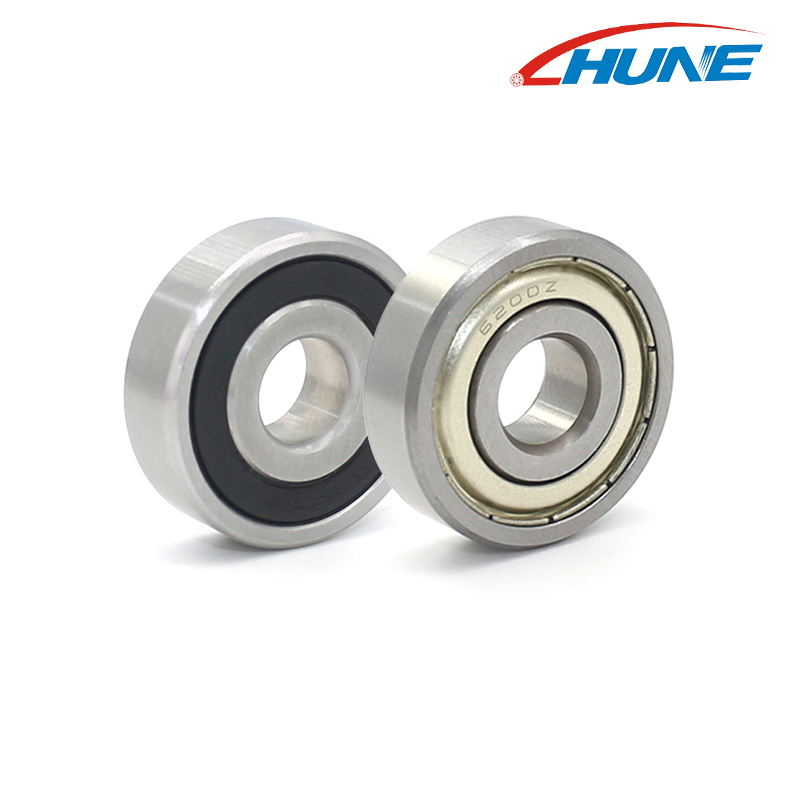
| ZZ | Metal shields on both sides | Helps limit entry of larger particles with low-contact operation |
| 2RS | Rubber seals on both sides | Greater protection against dust and splashes, depending on seal design |
| 2NSE | Manufacturer-specific seal designation | Confirm construction and interchangeability before ordering |
| NR | Snap-ring groove and ring, where available | Axial location in a compatible housing |
| ZNR | Shield and snap-ring arrangement, where available | Closure and housing-positioning requirement |
| ZZNR | Two shields and snap-ring arrangement, where available | Shielding with compatible axial-location design |
A ZZ ball bearing is not watertight: metal shields generally have clearance rather than a full contact seal. A 2RS ball bearing can better limit contaminant entry, but it should not be assumed suitable for continuous seawater immersion or pressure washing.
Designations such as 2NSE, NR, ZNR, and ZZNR should be confirmed against the actual manufacturer's catalog. Not every closure or snap-ring configuration is available for every miniature bearing size.
Product Structure and Working Principle
A stainless steel deep groove ball bearing has an inner ring, outer ring, rolling balls, cage, and raceways. Grease or another specified lubricant separates working surfaces and helps manage friction and wear.
In a typical installation, one ring is supported by the shaft and the other by a housing, pulley wheel, or roller. As the rings rotate relative to one another, the balls roll along the raceways. A deep groove ball bearing primarily supports radial load and can accommodate some axial load in either direction, within the limits of its size and operating conditions.
The bearing's finished performance depends on more than its internal construction:
- Shaft and housing fits affect ring support and internal clearance.
- Load and speed influence bearing size, heat generation, and lubrication needs.
- Grease selection matters where moisture, temperature, or salt deposits are present.
- Shields or seals affect contaminant protection and running resistance.
- Installation practices can prevent damage to raceways and closures before the bearing enters service.
For a pulley bearing or roller bearing, the wheel material and axle arrangement also affect how the complete assembly runs.
Key Features
The 623–629 family offers compact dimensions and several possible configurations for small rotating mechanisms. Depending on the ordered specification, relevant features include:
- Stainless steel deep groove ball bearing options for improved corrosion resistance compared with ordinary bearing steel in suitable environments
- 623, 624, 625, 626, 627, 628, and 629 size options for different shaft and housing dimensions
- ZZ shielded bearing options where larger-particle exclusion and relatively low running resistance are priorities
- 2RS sealed ball bearing options where additional contaminant protection is required
- Compact designs for a pulley bearing, roller bearing, sliding door roller bearing, or small motor bearing
- Selection of clearance, lubricant, and precision requirements for the intended duty
Claims such as salt spray resistant bearing or low-friction operation need to be evaluated against a defined material grade, test method, seal design, lubricant, and service environment. A catalog model number alone does not establish those results.
Material and Surface Characteristics
Stainless steel can improve resistance to corrosion in humid or salt-air conditions, but stainless steel is not one material with one level of corrosion resistance. The grade and condition of the bearing rings and balls should be confirmed when exposure is important.
Corrosion behavior is affected by the complete installation: bearing material, surface condition, lubricant, closures, shaft and housing materials, trapped moisture, salt accumulation, cleaning chemicals, and maintenance. Salt spray in air also differs from direct or continuous seawater contact.
For a marine equipment bearing, specify the exposure as clearly as possible. Is the bearing inside a protected housing? Does it receive occasional splashes? Can salt deposits remain on the assembly? Is regular cleaning possible? These details help determine whether a stainless steel bearing, a different seal, or additional external protection is appropriate.
Hune can review stainless steel bearing and bearing steel options, ZZ metal shields, 2RS rubber seals, grease, clearance, and specified stainless steel grades against the application requirements.
Applications
The bearing series can be considered for compact rotating positions across several industries. Each use still requires its own load, fit, and environmental assessment.
Marine Equipment
A marine stainless steel bearing may be used in small rotating components exposed to humid air or salt deposits. Direct splash and immersion conditions should be specified separately.
Offshore Engineering Equipment
An offshore engineering bearing operates within a larger equipment design. Bearing selection should account for enclosure protection, access for maintenance, and the consequences of bearing failure; miniature size alone does not make it suitable for a critical offshore function.
Boat Hardware
A boat hardware bearing may fit compact rollers, guides, hinges, or pulley wheels. Check whether the position is sheltered, occasionally splashed, or regularly wet.
Ship Water Pumps
Deep groove ball bearings can support a pump shaft where the pump design calls for them. A ship water pump application requires engineering review of shaft loads, sealing arrangement, operating temperature, and the possibility of water reaching the bearing.
Deck Machinery
Small parts of deck machinery may use a corrosion resistant bearing in guides or rotating accessories. Exposure and mechanical load vary considerably across deck installations.
Steering Gear Systems
A bearing in a steering gear system should be selected and validated under that system's safety and reliability requirements. A general-purpose miniature bearing should not be assumed suitable for a safety-critical steering position.
Ventilation Equipment
Bearings in marine or coastal ventilation equipment may encounter humid, salt-laden air. Speed, noise, temperature, and access for replacement influence the selection.
Fishing Gear Machinery
Fishing gear machinery can expose pulleys and guide rollers to splashes and contamination. Bearing closure, corrosion resistance, and routine cleaning should be considered together.
Pulley Wheels and Roller Systems
As a pulley bearing or roller bearing, the 623–629 range supports compact wheel designs when the shaft, bearing seat, load, and speed are compatible.
Sliding Door Roller Bearings
A sliding door roller bearing in a humid or semi-outdoor location may benefit from a suitable stainless steel and closure specification. Track alignment and wheel condition still affect rolling performance.
Miniature Motors and Automation Devices
As a small motor bearing or precision bearing, selection should emphasize shaft fit, operating speed, lubricant, noise requirement, and working temperature—not corrosion resistance alone.
Customization Options
Bearing selection can be tailored to the surrounding assembly, provided the requested combination is available for the chosen model. Specifications may include:
- Bearing model, bore, outside diameter, and width
- Stainless steel grade or bearing steel option
- Open, Z, ZZ, or 2RS construction
- 2NSE, NR, ZNR, or ZZNR configuration where applicable and confirmed
- Lubrication grease
- Bearing clearance and precision grade
- Noise or rotational-resistance requirements
- Corrosion-resistance requirements and defined exposure conditions
- Packaging requirements
- Matching with a pulley wheel, roller, sliding door roller, marine component, or small motor
For a reliable recommendation, provide the shaft and housing dimensions, radial and axial loads, speed, expected temperature, moisture and salt exposure, and desired service interval. Those details turn a broad request for a "marine stainless steel bearing" into a specification that can be checked and supplied.